Aviation
KFA Safari XL vs KFA Explorer: Two Bush Planes Worth a Close Look
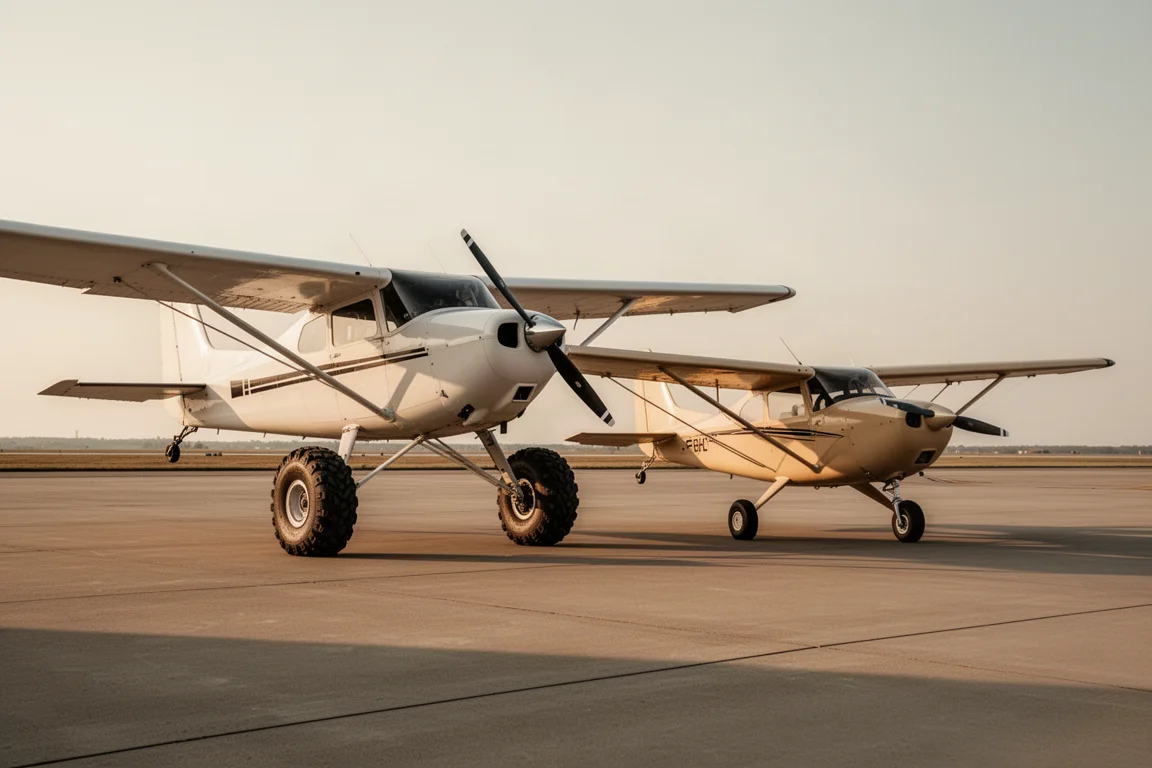
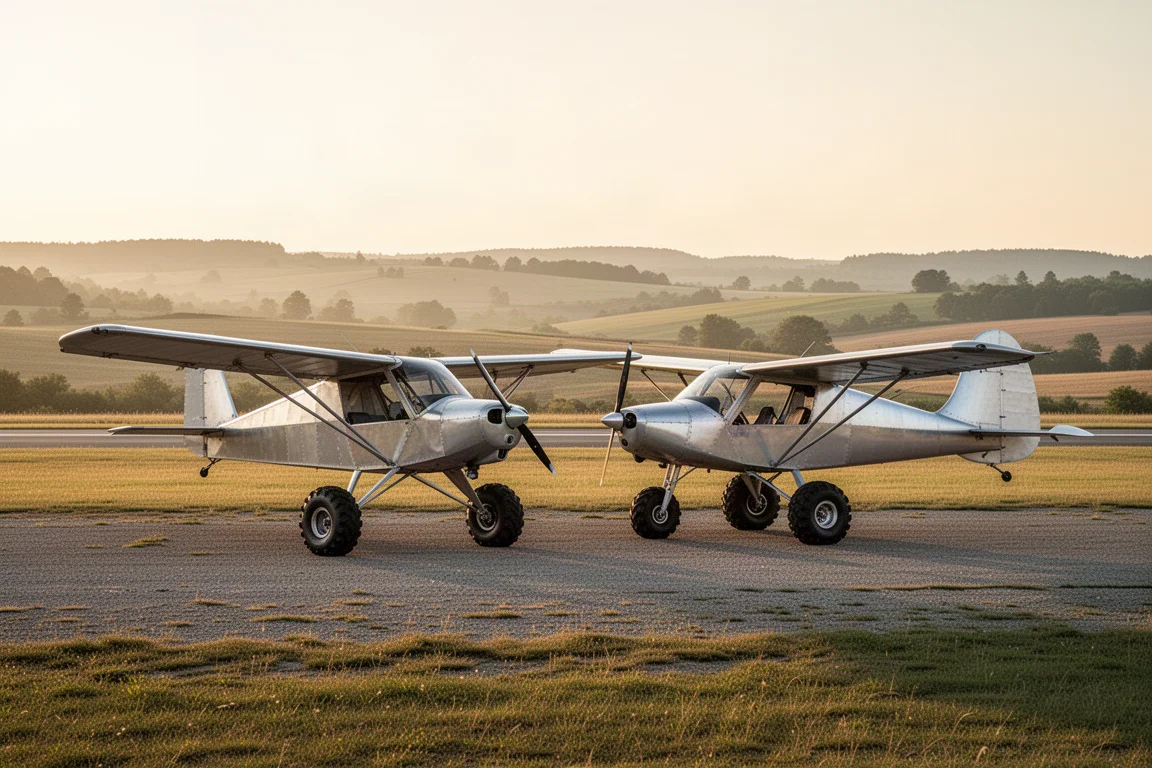
Kit Planes for Africa showed up with two very different bush planes: the carbon-heavy Safari XL experimental and the factory-built LSA Explorer. Here is how they compare.
Introduction
Kit Planes for Africa (KFA) brought two aircraft to showcase: the Safari XL, an experimental kit project built locally, and the Explorer, a factory-built light-sport aircraft. Both come from the same bush plane lineage, but they target different pilots, different budgets, and different missions. Here is what separates them and who each one makes sense for.
KFA Safari XL: The Carbon-Heavy Bush Hauler
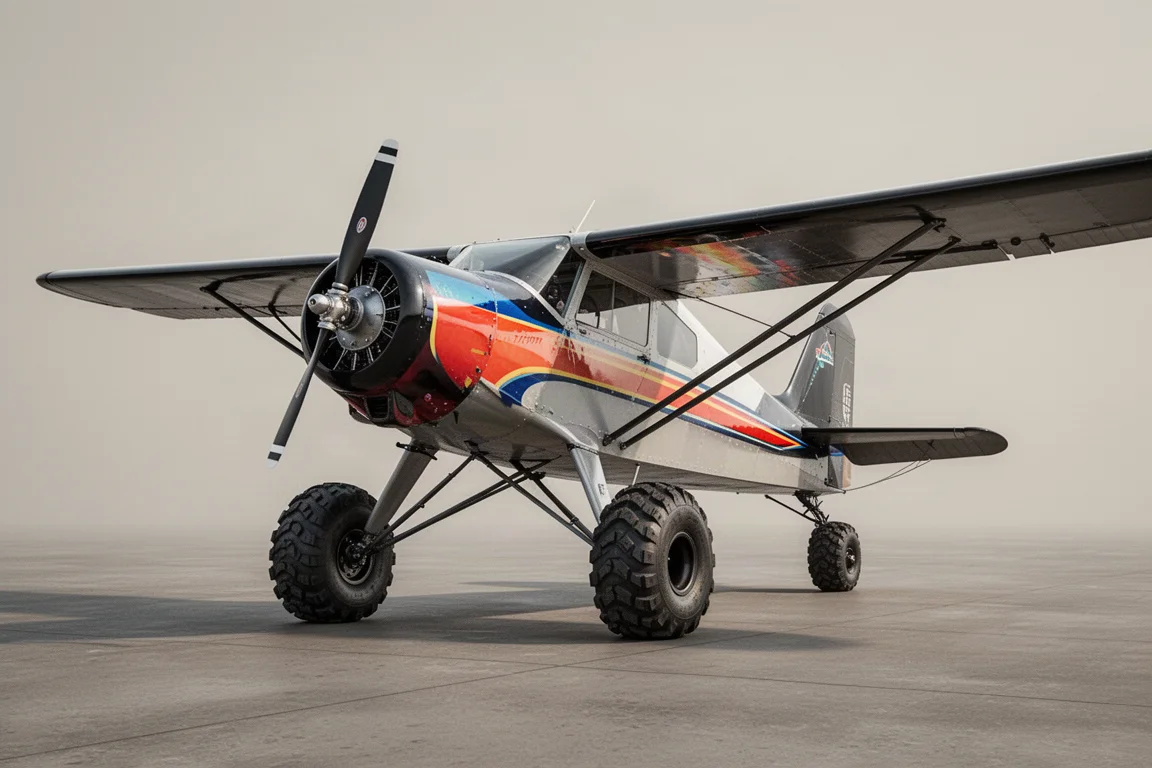
The Safari XL shown is a builder project, and the paint scheme is entirely the builder’s work. It is only available as an experimental, and it differs from earlier models with a new, larger wing that adds 16 square feet over the older design. Carbon fiber is used wherever possible: wing tips, leading edges, fairings, cowlings, boot cowl, interior floorboards, and even the trim tab. The fuel tanks, seats, and flaperons remain conventional materials, since the carbon-kevlar seats are still being tested and the flaperons need flex.
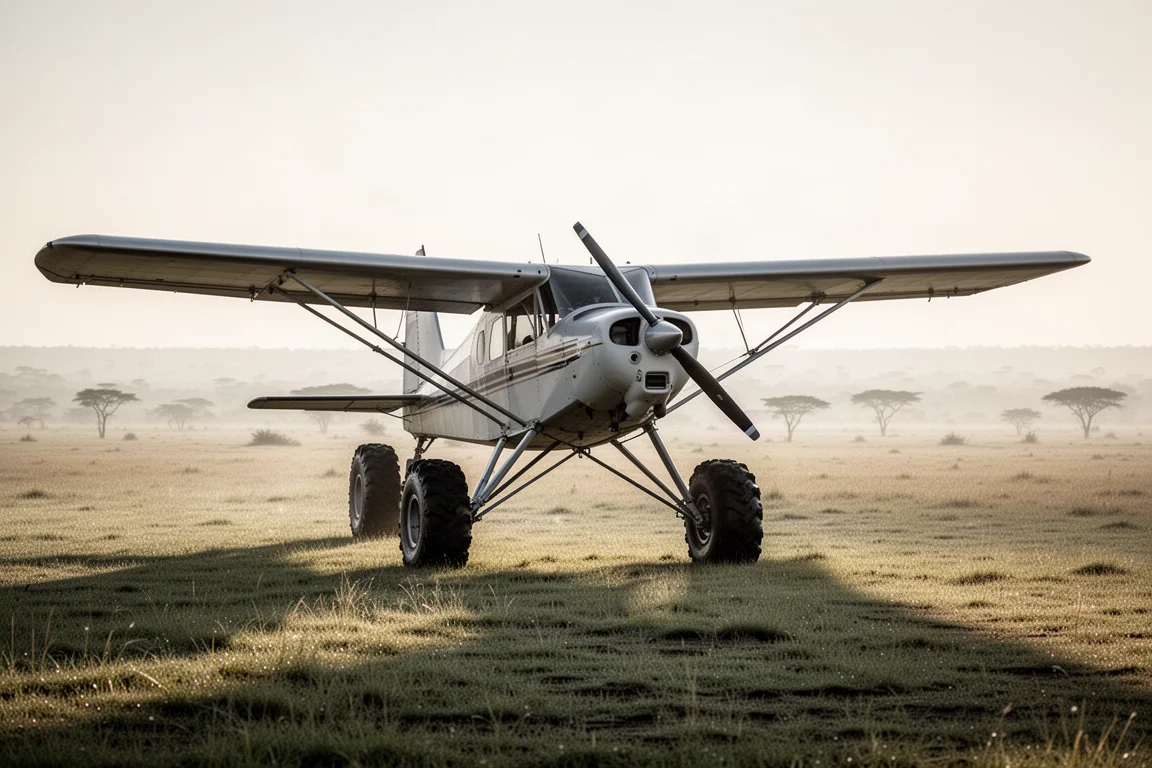
Engine options matter here. A 100 horsepower Rotax will technically make it fly, but the recommended engines start at the Rotax 914 and above, and roughly 95 percent of builders install the Rotax 916 with 160 horsepower. In-flight adjustable propellers are supported, with an E-Prop model fitted to this example.
Buffalo Suspension and Landing Gear
About three to four years ago KFA dropped the bungee gear system, finding bungees high maintenance and the market alternatives expensive. The in-house answer is called Buffalo suspension, a name inspired by an angry buffalo. It is not the best choice for hard slam-it-down arrivals, but as a bungee replacement it excels: long life, very low maintenance, reasonable weight, and an affordable price. The same units have logged 1,500 hours in school aircraft that get hammered daily.
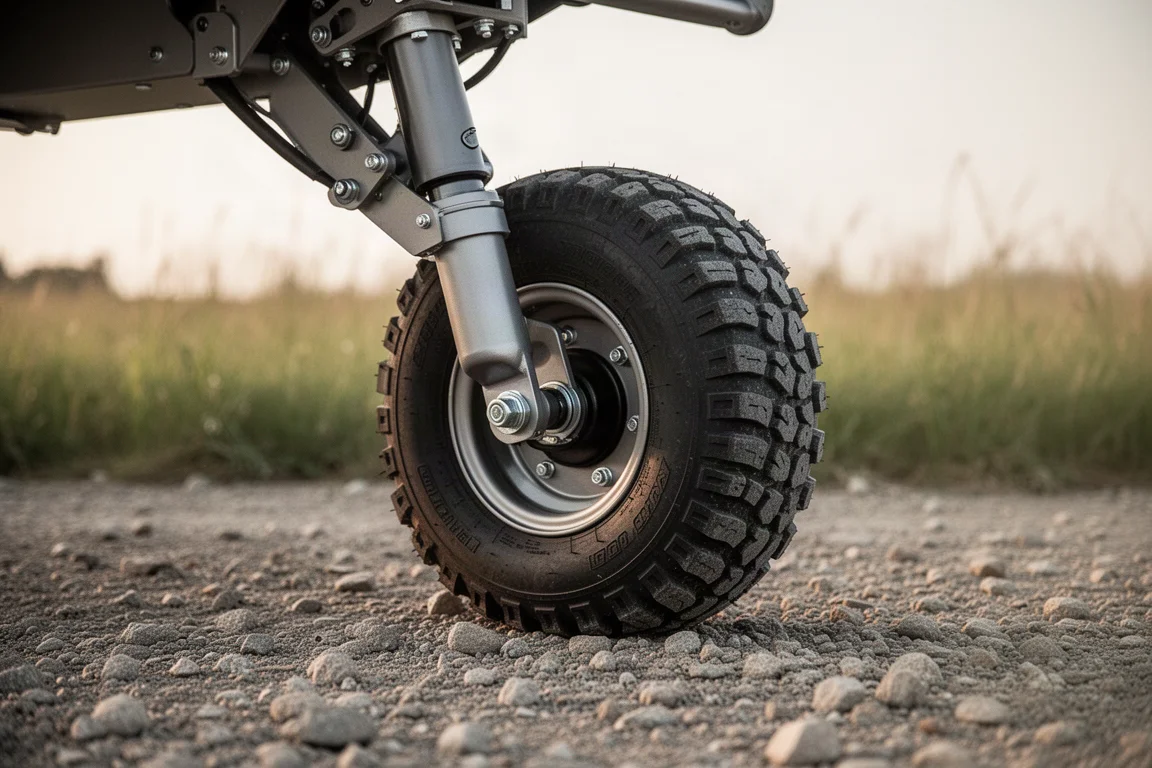
This example ships with Aero Classic 27.5-inch tires on 8-inch wheels as standard, with room to step up to 35-inch tires on Alaskan-style wheels. The extended landing gear adds 4 inches of lift over the standard gear, giving the prop and ground clearance needed for off-field operations.
Performance and Payload
The Safari XL stalls at 28 knots with the stall wing, which translates into genuine short-field capability. Despite the draggy hardware hanging underneath, it cruises at 100 knots while burning 5.6 gallons per hour, with 6 hours of endurance. Two large pilots, full fuel, and 120 pounds of luggage in the rear compartment, which has a side door for easy access, still allow takeoff in under 180 feet and a 1,500 feet per minute climb.
View more details for KFA Safari XL
Practical Details: Folding Wings and Fuel
All current factory models offer a folding wing option, but it is not recommended for daily use. Disconnecting a wing effectively calls for a dual inspection, so it is best treated as a long-term storage or recovery solution for trailering home after an unplanned landing. There is also an honest caveat: the fuel cap is the highest point of an attached wing, but once folded back in taildragger attitude it becomes the lowest point. With more than half tanks, fuel will run out of the cap, so the tanks must be drained via the provided drain valve on the co-pilot side before folding. With no fuel aboard, folding takes less than 10 minutes.
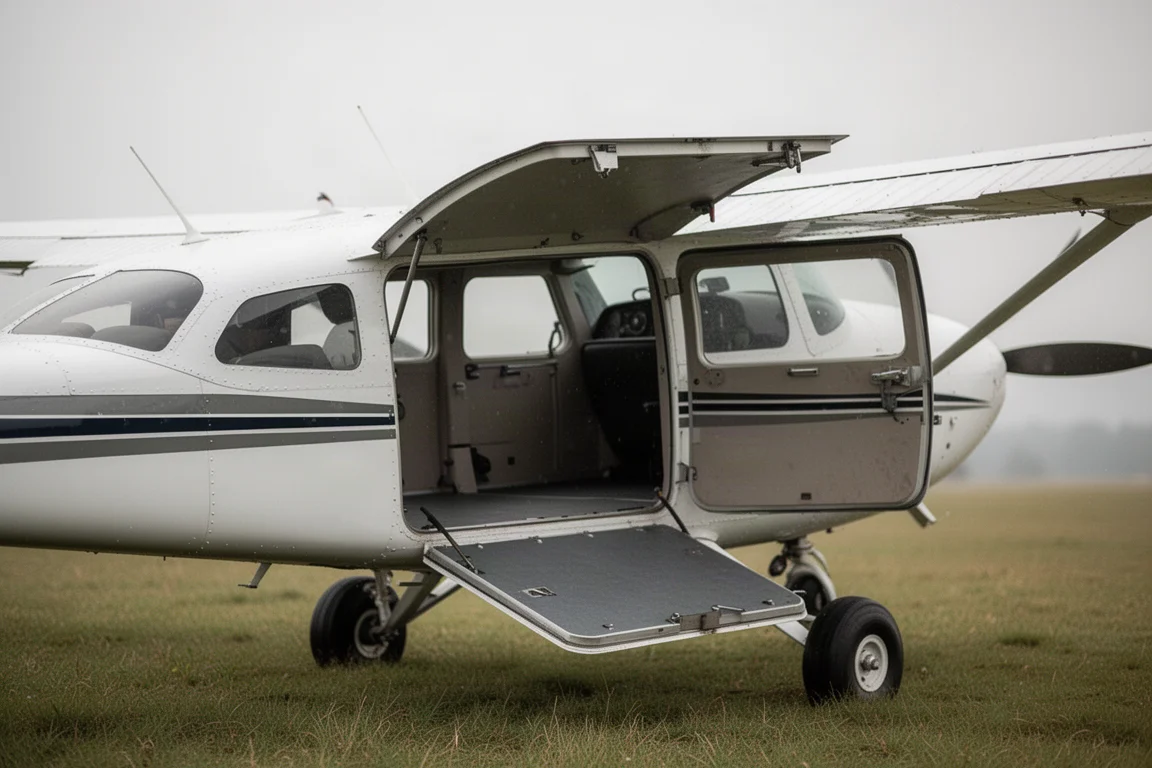
The XL’s cockpit is just over 6 inches wider than the Explorer’s, which also means it will not fit a road-legal trailer with wings on. Trailering requires removing the wings and hauling the fuselage separately.
KFA Explorer: The Factory-Built LSA Option
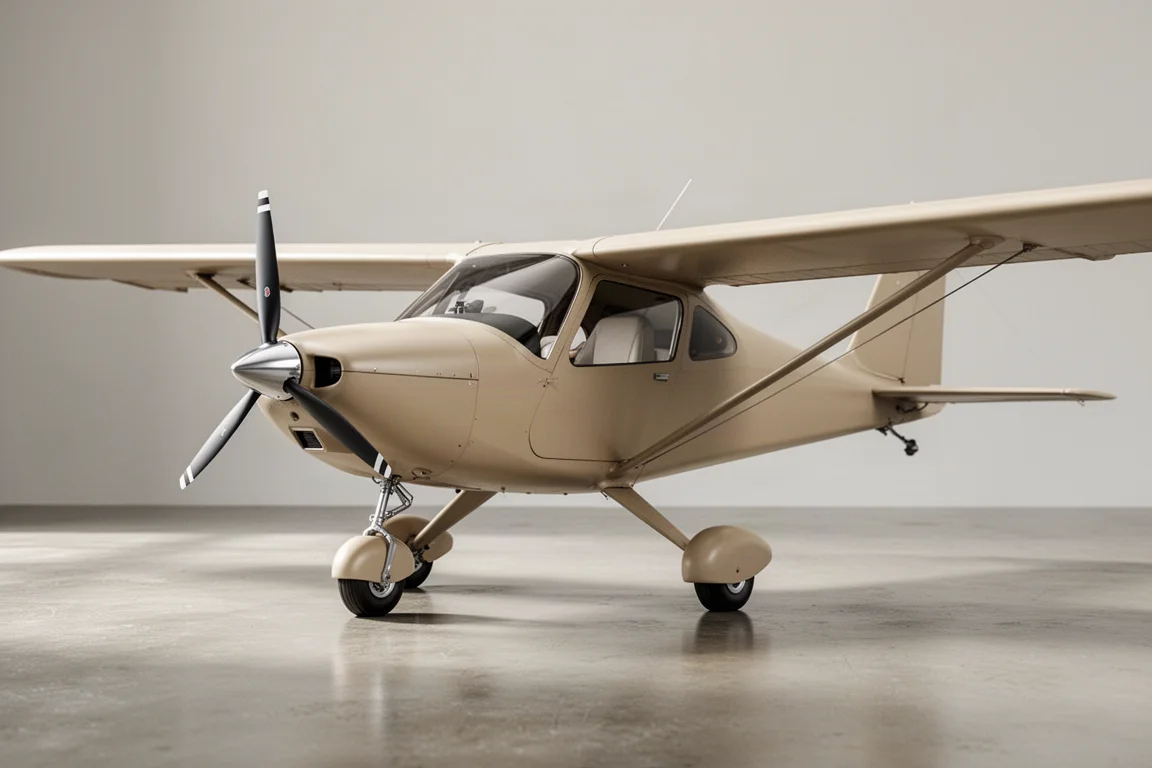
The KFA Explorer is the smaller sibling: a 1,320-pound max takeoff LSA that will be affected by the upcoming MOSAIC rules in the US. It is available as an experimental amateur build, an experimental LSA, or a factory-built LSA flyaway. In Europe it is certified under the German DULV and sold as the Explorer UL600; the Bush Baby Explorer, KFA Explorer, and Explorer UL600 are the same aircraft under different regional names.
The Safari XL requires a PPL to fly, which makes the Explorer the more accessible entry point in much of the world. Factory-standard aircraft come with all carbon options fitted to stay in the UL category, so buyers mainly choose engines, avionics, propeller, and colors.
Propeller Choice and Ownership Costs
Both aircraft on display wore E-Prop propellers. The unit fitted to the smaller Rotax 912 ULS is a three-blade, 72-inch ground-adjustable design weighing just 2.2 kg, a weight with no market rival at that size. It behaves like a variable-pitch prop within a usable range: around 5,600 RPM on takeoff for strong short-field performance and climb, then cruising between 5,000 and 5,200 RPM, roughly 5 to 10 knots faster than a comparable propeller. KFA previously used Italian FP propellers with American composite blades, which are hydraulic constant speed and react immediately; electric props tend to lag on the high-torque 916. The example Safari XL carries an E-Prop whose real-world behavior will be confirmed by the builder’s test flying.
Pricing is concrete for the Explorer: as displayed, with a 10-inch setup, ELT, Mode S transponder, and Rotax 912 ULS, the factory flyaway is $165,000 excluding any customs fees. Flyaway lead time is about 6 months to ship from the factory, plus roughly 6 weeks shipping and US assembly and paperwork, about 9 months total to flying. Kit lead times are shorter: under 3 months to ship, about 5 to 6 months to delivery. North American distributor stock is held in London, Ontario, Canada, and KFA is establishing direct factory support in the US through KFA Aircraft USA.
Buying Advice
Choose the Safari XL if you want maximum bush capability: the bigger wing, the 28-knot stall, extended gear, huge tires, and serious payload, all backed by a 160 horsepower Rotax 916. Accept that it is experimental-only and trailer logistics are harder. Choose the Explorer if you want a factory-built, certified path with shorter footprint, easier trailering, and a known flyaway price, especially if you prefer not to commit to an amateur-build project. Both benefit from the same family DNA: proven Buffalo suspension and now very light, well-reviewed E-Prop propellers.
Conclusion
KFA’s two offerings cover complementary ends of the bush plane market. The Safari XL is the uncompromising backcountry tool, while the Explorer offers a smoother, factory-supported route into the same adventure flying. Match the airframe to your mission, your license, and your patience for build or import lead times, and either one is a credible choice.
Further reading
Related Reviews
Aviation
Aero Technics ACH 212 Solo Review: A Carbon Fiber Solo Kit Aircraft You Can Build Fast
A nearly 30-year-old Czech design still offered only as a kit: 90% carbon fiber, quick-release wings, a 350 to 400 hour build, and performance that surprises.
Aviation
Aeropilot: The 80% Scale Cessna-Style Light Sport Aircraft Winning Over Flight Schools
A full-carbon, two-seat light sport aircraft modeled after the Cessna 182, with a larger cabin, big climb performance, and fuel burn that flight schools love.
Aviation
Aeropro A22 and A32: Two Light Sport Aircraft Worth a Close Look
A side-by-side look at the Aeropro A22 and A32, covering performance, pricing, customization, and what buyers should know before ordering.