Hi-Fi Speakers
Kerr Acoustic K400 Review: Transmission Line Craft in a Smaller Cabinet
A close look at the Kerr Acoustic K400, a compact transmission line floorstander with a ribbon tweeter, Baltic birch ply cabinet and a £4,695 price tag.
Introduction
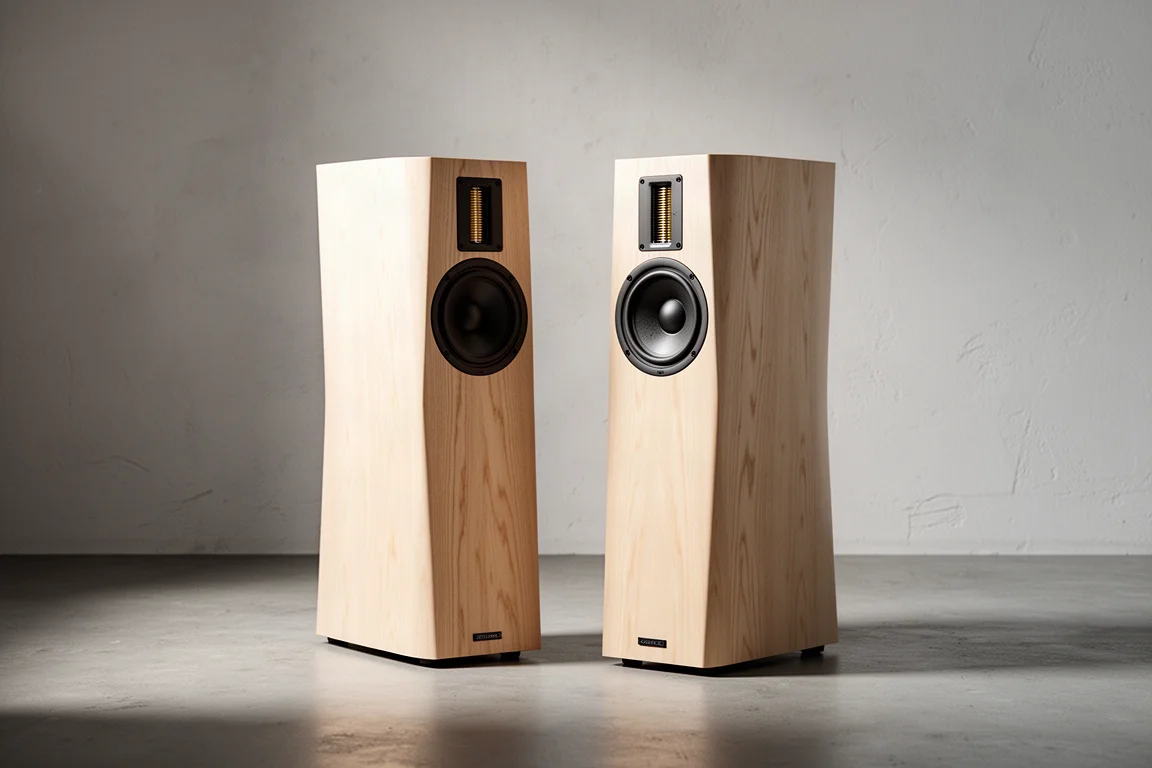
The Kerr Acoustic K400 is a new entry point into the brand’s loudspeaker range. It sits below the K300 Mark III in size and price, yet it carries over the same design priorities that define the larger model: high quality drive units, a carefully specified crossover, a cabinet built from Baltic birch ply rather than MDF, and transmission line bass loading.
The K400 retails at £4,695 per pair in standard real wood veneers, with satin, gloss and custom colours available at extra cost. The proportions are largely those of the K300 Mark III scaled down by approximately 50 percent, which makes this a far more accommodating speaker in a typical European room while keeping the family character intact.
Who This Product Is For
This is a speaker for listeners who prioritise resolution, timing and a clean midrange over raw bass weight. The K400 is one of the most articulate designs in its segment, and it rewards close listening with an ultra black background that lets the smallest details surface.
It also suits people with medium sized rooms who have struggled to place larger floorstanders. The K300 Mark III wants plenty of space around it and a wide spread between the cabinets to keep bass in check. The K400 is far more obliging, and it can work in a room of around 14 by 12 feet without dominating the space.
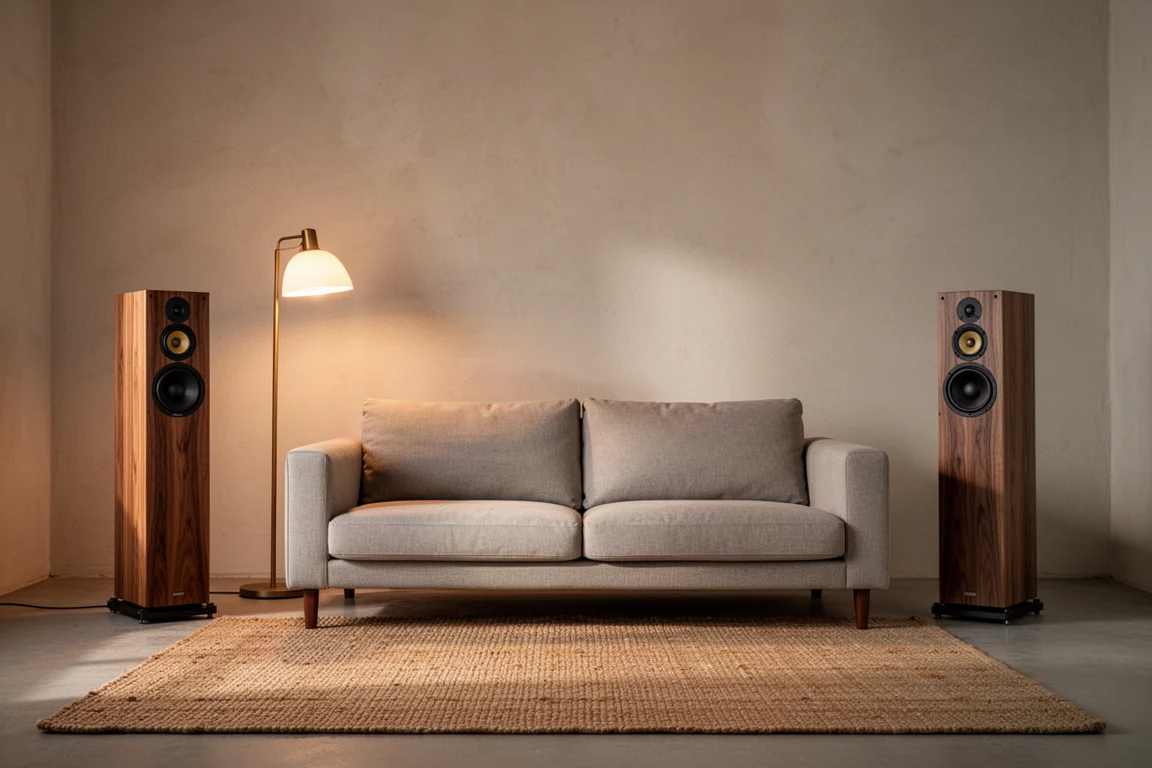
Finally, it is a sensible choice for anyone building a system around a modestly powered amplifier. The K400 presents a fairly benign load, so owners are not pushed toward high powered designs to get a satisfying result.
Design and Build Quality
The cabinet is built from Baltic birch ply for higher structural integrity and better acoustic properties than MDF. The front baffle measures 24 mm, the exterior walls 18 mm, and a mixture of 12 mm and 18 mm panels forms the internal baffles of the transmission line, which also adds stiffness to the enclosure.
The transmission line itself is a 1.35 m tapered labyrinth that exits through a front port and takes advantage of quarter wave resonance. It is damped with two different types of material to control the behaviour of the line.
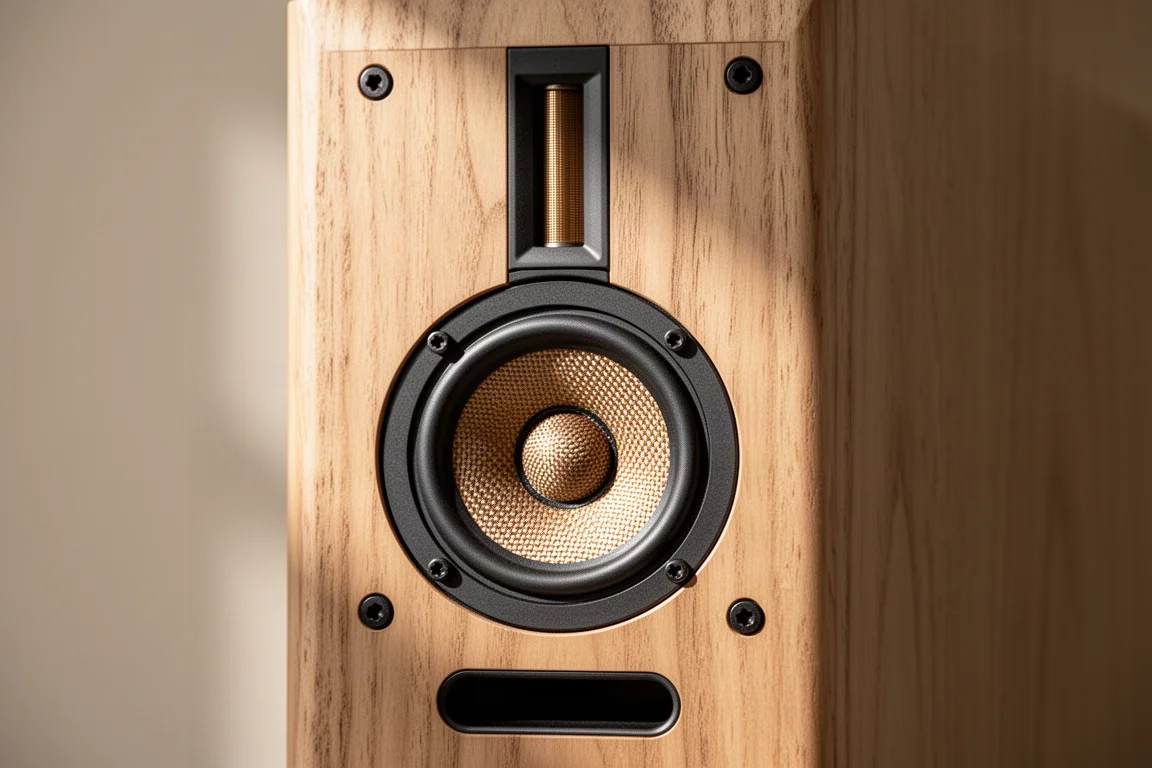
The midwoofer is a 150 mm unit from the upgraded Scanspeak Revelator range, using a sliced cone with long grain wood fibres infused into it for greater stiffness and power handling. The tweeter is a pure ribbon design measuring 45 mm in length. The crossover point sits at 1,950 Hz, using premium clarity film capacitors, hand wound air core inductors and carbon film resistors in a second order 12 dB per octave slope. At the back there is a single set of good quality binding posts, so bi-wiring and bi-amping are not an option.
Main Strengths
Clarity is the headline. The K400 has a remarkable ability to step out of the way of the music, and the way it disappears in the room is striking for a cabinet of this size. It shares the family trait of an ultra black background that lets the finest details emerge.
The transmission line loading does its job. Bass definition is extraordinary, and the speaker appears larger than its physical dimensions when it comes to bass extension. Timing is another strength, and on that count the K400 ranks among the best in its market segment.
The K400 is also forgiving. It is relatively unfussy about amplification and far more tolerant of room placement than the larger model, which means owners can spend less time fighting their room and more time listening.
Sound Character and Trade-Offs
The K400 sounds its size in the lower registers. It does not have the weight and punch of the K300 Mark III, which delivers bass in a way that can be mistaken for a much larger floorstander. What the K400 offers instead is definition rather than weight, and that distinction matters for buyers who listen to acoustic and vocal material.
There is a subtle lack of presence in the upper midrange. On a well recorded big band album, the brass section can feel slightly reticent and percussion lacks a little heft, which gives the speaker a polite character overall. It is a minor observation and reads as a deliberate lean toward measured linearity rather than a flaw in execution. Buyers who want more mid bass punch and a touch more enthusiasm in the tonal delivery may find themselves wishing for a small voicing tweak.
Placement and Amplifier Matching
The K400 is easy to accommodate. In a typical setup it settles around 2 m apart and roughly 92 cm from the wall behind, measured from the centre line of the front baffle. Angling the cabinets in toward the listening position helps extract maximum energy from the ribbon tweeter.
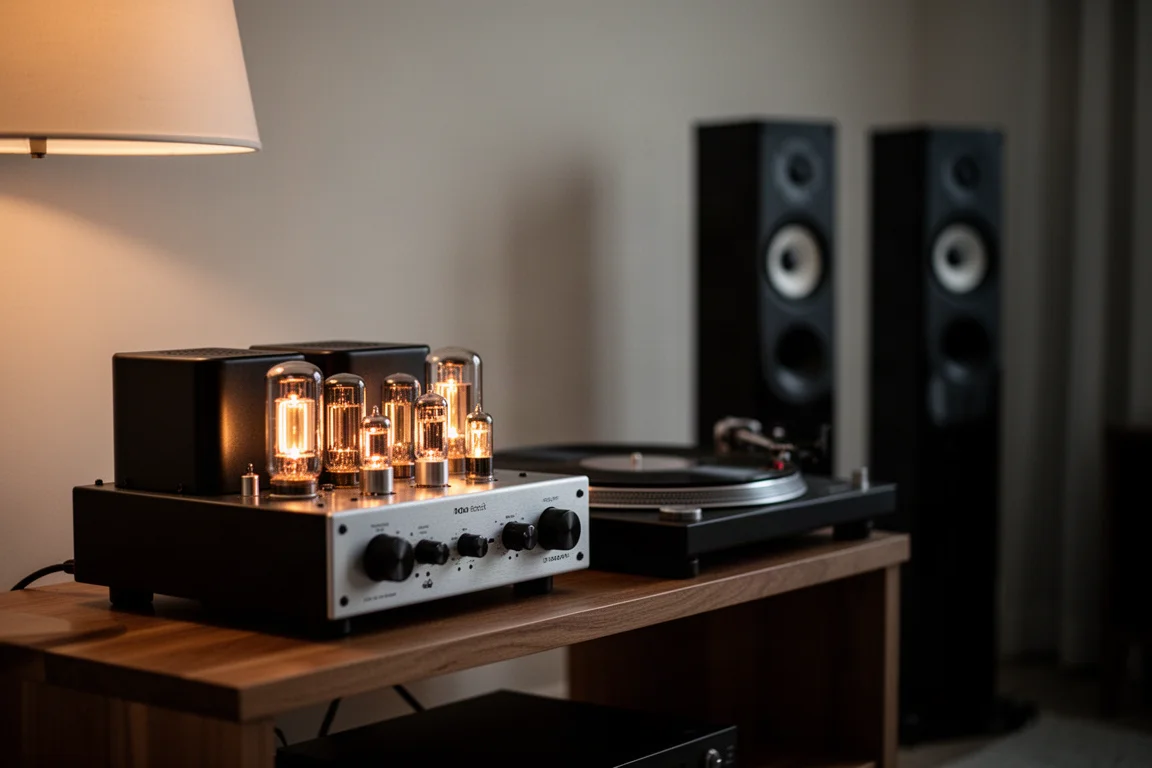
It can also be moved closer to walls to gain some boundary reinforcement in the bass, at the expense of soundstage and imaging quality. On the amplifier side, the speaker is agnostic. A low wattage single ended tube amplifier demonstrates that the load is benign, delivering a lush midrange and an expansive stage at low to moderate levels, though bass can sound plumper, leading edges soften, and the presentation loses composure at higher average levels. A more neutral solid state amplifier tightens and focuses the sound, allowing the character of the K400 to come through with better dynamic headroom and control.
Things to Consider Before Buying
There is no bi-wiring or bi-amping option, which limits experimentation for owners who like to run separate amplification for bass and treble.
Bass weight is the other consideration. Listeners who want a physical, punchy low end may prefer a larger cabinet, because the K400 trades some of that impact for definition.
The upper midrange reticence will matter most to those who listen to dense brass and percussion heavy recordings, where a little more forward presence would add engagement.
Buying Advice
At £4,695 per pair in standard real wood veneers, the K400 sits in a serious price bracket, and it earns its place through driver quality, crossover components and cabinet construction rather than through scale. For buyers who value resolution, timing and a disappearing act over bass heft, it is one of the most articulate options in its segment.
It also makes sense as an entry point into the brand for anyone who admired the K300 Mark III but could not accommodate it. Satin, gloss and custom finish options add cost, so budget for the standard veneer if you want to stay at the listed price.
Conclusion
Producing a transmission line speaker of this size is difficult, with tighter design parameters and less margin for error. Kerr Acoustic has delivered it without compromising on drive units, crossover parts or cabinet construction, and has done so at a much lower entry point into the range.
The gripes are minor. A little more mid bass punch and a touch more upper midrange presence would make the K400 even more engaging. As it stands, this is one of the most articulate and best timed speakers in its segment, forgiving of amplification and room placement, and it earns a very strong recommendation.
Product link
View more details for Kerr Acoustic K400
This product is mentioned in the review. Check the specifications, options, and compatibility before buying.
View more details for Kerr Acoustic K400Further reading
Related Reviews
Hi-Fi Speakers
1723 THX Tower vs 1528 Bookshelf: Which Speaker Fits Your Room?
Two speakers at roughly the same price, built very differently. How the 1723 THX tower and the 1528 bookshelf compare on construction, bass, power needs, and sound.
Hi-Fi Speakers
Acoustic Energy AE 300 Review: Deep Bass From a Compact Standmount
A two-way standmount with real wood veneer, surprising low-end weight, and a warm, easygoing character. Here is what to know before buying.
Hi-Fi Speakers
Acoustic Energy AE1 40th Anniversary Review: A Modern Take on a British Classic
A compact standmount that revives a 1980s favorite with all-new parts, a warm mid-centric balance, and a price of £1,499 per pair.