Camping Tents
Kelty Wireless 4 Review: A Budget Four-Person Tent That Handles Real Rain
A practical look at the Kelty Wireless 4, covering setup time, floor area, vestibules, storage, and how it held up through an hour of heavy rain.
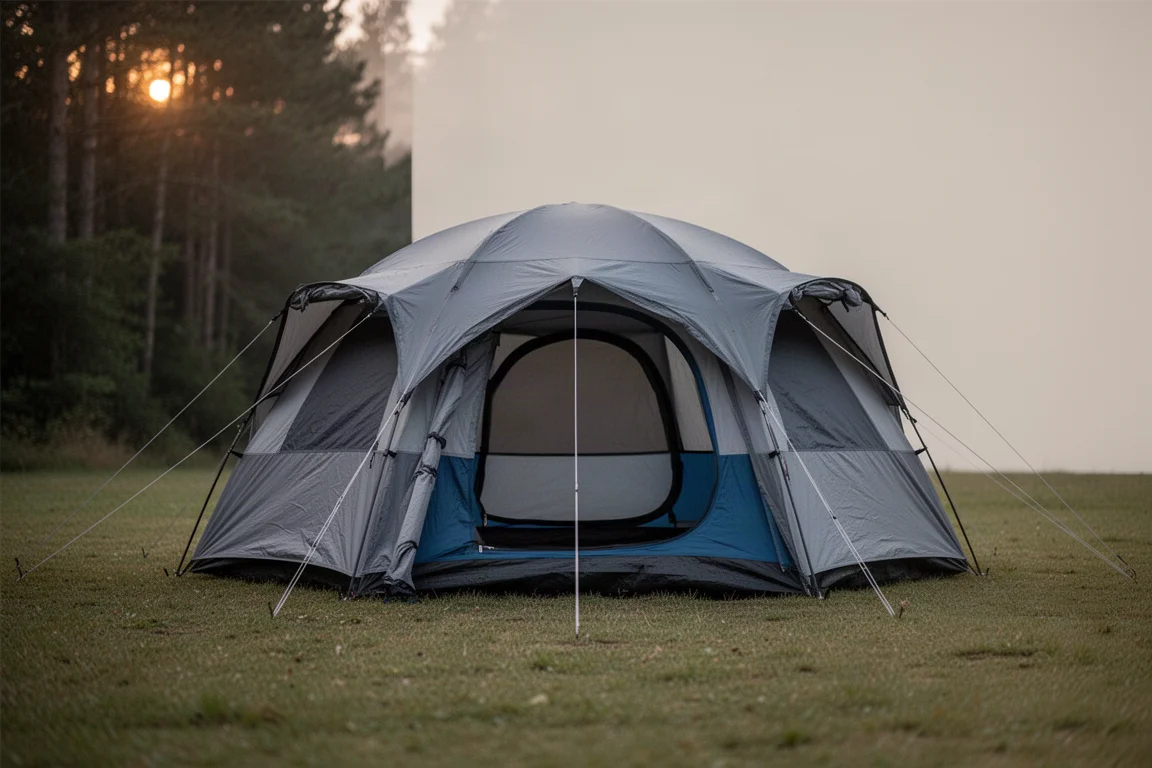
Introduction
The Kelty Wireless 4 is the best-selling tent in Kelty’s camping lineup, and the reason is not hard to find. It is a four-person tent with a three-pole frame, two doors, two vestibules, and a full-coverage rainfly, and at full price it lands at less than $200, with a typical price of around $190.
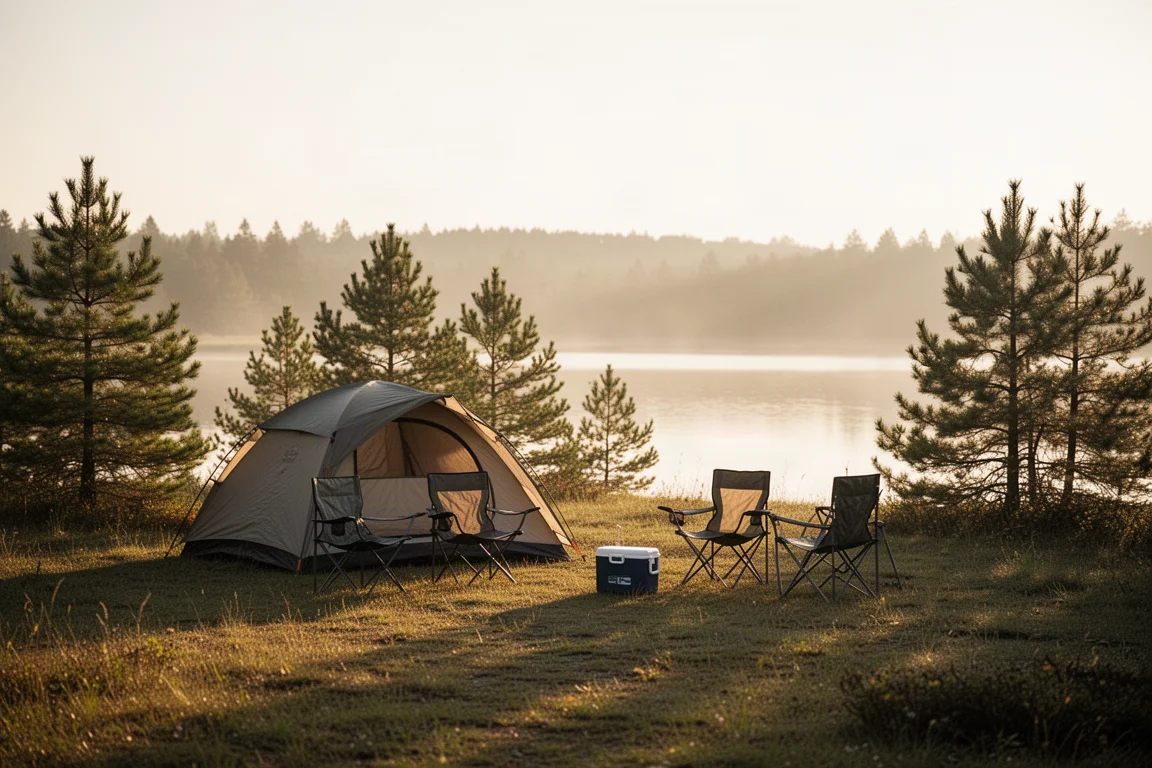
That mix matters because most tents at this price force a choice. You get either a usable floor area or a second door, either weather protection or sensible storage. The Wireless 4 mostly avoids that trade-off, which is why it works as a first family tent and as a dependable weekend shelter for car campers.
This review covers how it goes up, how it lives once pitched, how it performed through a full hour of heavy rain, and the handful of compromises worth knowing before you buy.
Who This Tent Is For
This is a drive-up shelter. It packs to roughly 28.5 by 10.5 by 8 inches and weighs about 13 pounds in total, so it suits campsites you reach by car, not trails you reach on foot. If you carry your shelter in a pack, the weight alone rules it out.
Inside, the tent is at its best for two adults sharing a queen-size bed, which leaves generous room for gear on all sides. Four adults can sleep in it, but they sleep shoulder to shoulder on pads, and sitting up near the edges feels tight.
It is also a sensible choice for anyone who wants a tent that stays dry without studying weather forecasts first. Rain protection is the strongest part of the package.
Main Strengths: Three Poles, Two Doors, and Plenty of Floor Space
Setup is straightforward once you know the order. Two longer grey poles cross in an X, their ends slot into what Kelty calls Quick Corner fabric sleeves, and 13 pole clips lock the tent body to them. A final ridge pole seats into grommets at the top with two more clips. The rainfly then goes on by matching the blue webbing on the fly to the blue webbing on the body, connecting the underside pole wraps, and closing four easy-clip buckles at the corners. Two vestibules get staked and four pre-attached guylines get tensioned. Total setup runs about nine and a half minutes, and takedown is a little quicker at around eight and a half.
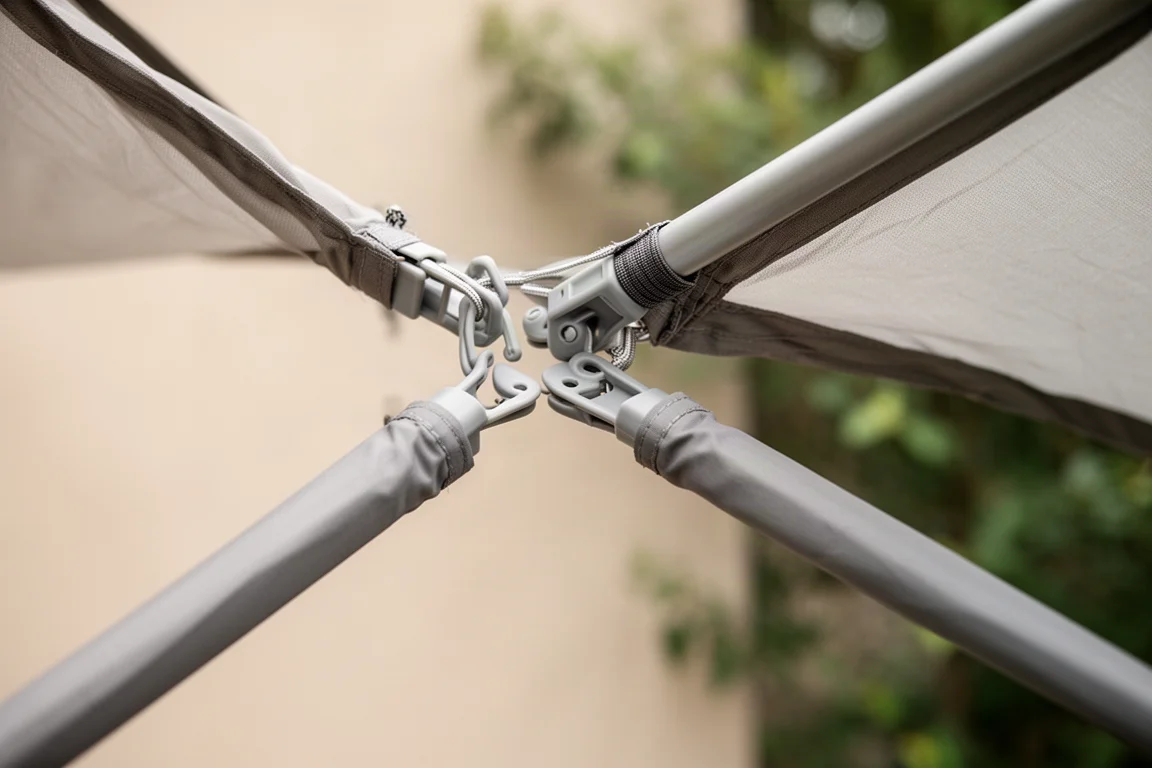
The three-pole frame is the detail that separates this tent from the rest of the range. The ridge pole runs across the top, extending the peak height through the width of the tent and creating two vertical walls. Peak height is about 58 inches, with roughly 50.5 inches at the back end of the ridge pole and 49 inches at the front. It is the only tent in the lineup with three poles for the inner tent, and the only one with this extended peak.
Floor space is solid for the category. The base measures about 95.5 inches long and 86 inches wide, for roughly 57 square feet. Two vestibules, one at each end, add about 13 square feet each, so around 26 square feet of covered storage in total. You also get two doors and six pockets, which is more than most tents at this price offer.
Living Space, Doors, and Vestibules
Two double pads fit inside, and they sit shoulder to shoulder. That leaves only about 5 inches at each end and 3 inches on each side, so sleeping on the outer edge and sitting up can feel cramped. Two people on a single queen bed is the more comfortable arrangement.
The middle of the tent is where the space pays off. There is more than a foot of room on each side across the width and about 8 inches on each side along the length, which is plenty for bags and gear. Headroom stays comfortable too, whether you use 4-inch pads or a 9-inch queen bed.
The doors are generously sized, measuring about 4 feet at the midpoint and 5 feet near the bottom, with a width of about 3.5 feet. The tent is not especially tall, so you still duck on the way in and out. Each door has two large two-way zippers that run without snagging, and a single toggle on the left holds a door open. A stake loop under the door would make one-handed entry easier.
Each vestibule has a mid toggle for leaving it partly open, two toggles for tying it back, and a single webbing loop for re-staking. The vestibule zippers are unbranded but large and genuinely snag-free. A small backpacking chair can be squeezed into a vestibule, though it is a tight fit with the fabric grazing your head, so these are storage spaces rather than seating areas. Inside, four of the six pockets are hand-sized and two are large enough to swallow a camping fan, with five felt loops overhead for hanging small items.
Weather Protection and Materials
The rainfly is full coverage and reaches almost to the ground. The catch is that it can only be pulled away from the body at the two vestibules, since there are no guy-out points along the two widths. That keeps the fly close to the tent, which limits ventilation and lets water run over the body rather than past it.
Seam taping is thorough where it counts. A seam runs across the entire floor and is fully taped, and there is no tub floor, so the floor fabric carries several seams down the sides and at the corners. All of those are taped, and the taping stops at the top of the blue floor fabric. Everything above that is untaped. On the rainfly, every seam is taped cleanly. Two vents, one per side, are propped open with Velcro kickstands, face downward for better rain shedding, and can be opened or closed from inside the tent. The Velcro does not always line up neatly, which is a small annoyance rather than a real problem.
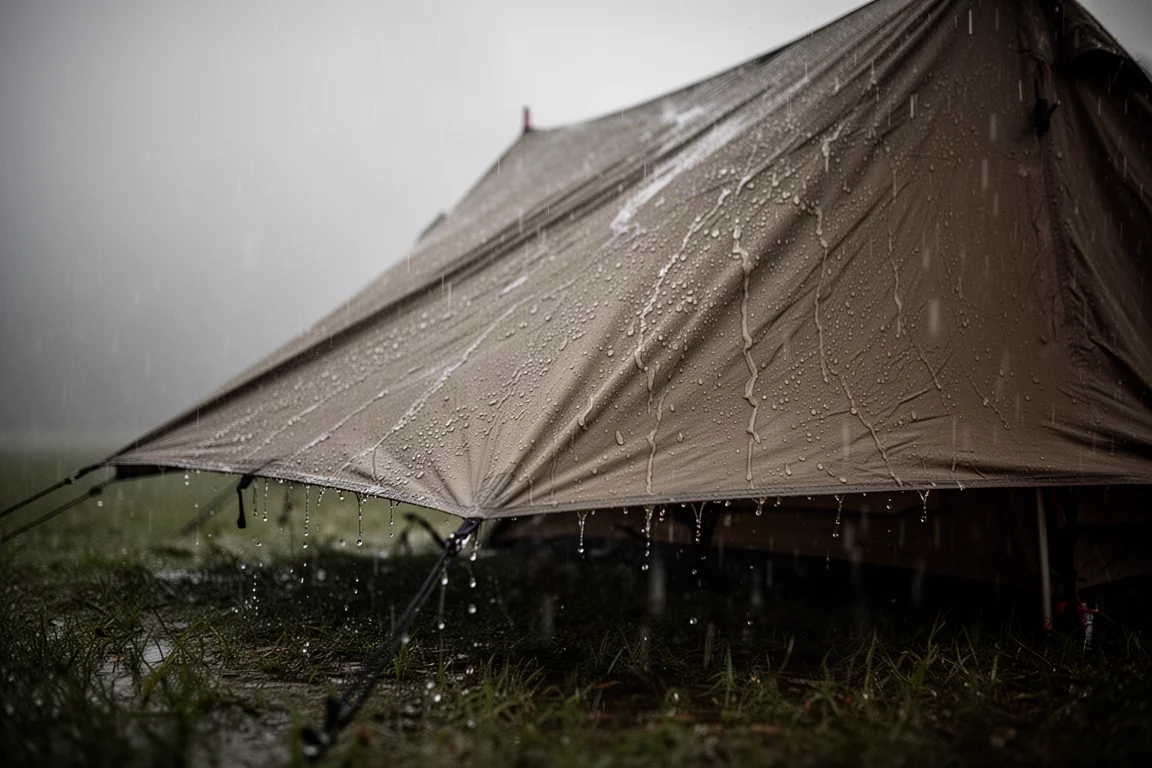
In an hour of heavy rain, there was not a single drop of leakage inside. The seams at the bottom of the tent stayed dry under pressure, the corner seams stayed dry, and so did the floor area not covered by the fly, the vent, and the underside of the rainfly. Only the outer rainfly flap showed water. For a tent in this price bracket, that is an excellent result.
Materials are consistent across the range. The floor, the tent body, and the rainfly are all 68 denier polyester with a 1,200 millimeter waterproof coating. The poles are fiberglass and fairly beefy at about 0.625 inches thick. The mesh is 40 denier no-see-um, and the guylines are shock cord with easy tensioners. Stakes are Kelty’s own lightweight NoBendium super stakes. With the fly removed, the entire top is mesh, which makes for excellent stargazing, though there is less mesh overall than on some other Kelty tents. The tent is intended for three-season summer use, meets flammability requirements, and is made in China.
Things to Consider Before Buying
The biggest limitation is the missing guy-out points along the widths. Without them, the rainfly sits close to the tent body, ventilation is weaker than it could be, and a lot of water runs across the fabric. A few hours of heavy rain may be the practical ceiling, even though a one-hour deluge caused no interior leaks.
The mesh coverage is also lower than on other tents in the lineup, which matters on warm, still nights. The poles are fiberglass rather than aluminum, which is a reasonable compromise at this price but not the most durable option available. At about 58 inches, the peak is tall enough to change clothes but not tall enough to stand in. Anyone who wants standing height in a four-person tent should look at taller models, and a six-person version is the more realistic route if that is a priority. Finally, four of the six pockets are small, and the vent Velcro occasionally needs adjusting.
Buying Advice
If you want a roomy, rain-ready four-person tent for well under $200, the Wireless 4 is one of the easier recommendations in this category. It sets up in under ten minutes, offers two doors and two vestibules, and survived heavy rain without a single interior leak.
Match it to how you actually camp. Two adults on a queen bed get the most comfortable experience, while four sleepers should plan on double pads and accept shoulder-to-shoulder sleeping. If standing room or maximum ventilation matters more than price, spend the extra on a taller or better-ventilated model instead. For everyone else, this is a lot of tent for the money.
Conclusion
The Kelty Wireless 4 earns its reputation as a best-seller. The three-pole frame delivers useful headroom and vertical walls, the floor area and vestibule space are generous for the price, storage is above average, and rain performance is genuinely strong. The compromises, mainly the missing width guy-out points, reduced mesh, and fiberglass poles, are the kind you expect at this price rather than flaws that undermine the design. For car campers and families who want a dependable shelter without spending much, it is a straightforward pick.
Product link
View more details for Kelty Wireless 4
This product is mentioned in the review. Check the specifications, options, and compatibility before buying.
View more details for Kelty Wireless 4Further reading
Related Reviews
Camping Tents
3F UL Gear Taiji Two-Person Tent Review: Field Waterproofing Results and Buying Advice
The Taiji pairs an attached fly with a removable inner, but sustained rain exposed untaped vent seams that need sealing before this shelter can be trusted.
Camping Tents
3FUL Gear Lanshan 2 Pro 4-Season Review: A Sub-$200 Single-Wall Trekking Pole Tent
An early look at the 3FUL Gear Lanshan 2 Pro 4-Season, covering its straightforward pitch, generous interior space, and the condensation and seam-sealing questions that come with any single-wall shelter.
Camping Tents
Alps Mountaineering Lynx 1-Person Tent Review: Big Value in a Small Budget Tent
A close look at the Alps Mountaineering Lynx 1-Person Tent, covering real interior dimensions, materials, setup time, ventilation limits, and who should buy it.