Camping Tents
Kelty Late Start vs Teton Sports Mountain Ultra: Two Budget One-Person Tents Compared
A close look at the Kelty Late Start 1-Person Tent, from its corner-sleeve pole system to its interior space and weather design, plus how the Teton Sports Mountain Ultra Tent compares on price.
Introduction
One-person tents at the entry end of the market usually ask for a compromise. You give up weight, interior volume, or weather protection to keep the price down. The Kelty Late Start 1-Person Tent tries to sidestep that trade-off with a pitching system the company says gets the shelter standing in three minutes or less, at a price of around $140.
That claim is the most interesting thing about the tent, and it deserves a close look, because the same design choices that make pitching simple also shape how the shelter lives once it is up. This guide covers what the Late Start does well, where it falls short, and how it stacks up against the Teton Sports Mountain Ultra Tent, a one-person shelter that weighs close to the same but costs noticeably less.
Why the Kelty Late Start 1-Person Tent Stands Out
The Late Start is a three-season, one-person shelter with a single door and a single vestibule. The fly and the floor both use a 68-denier polyester with a 1,200 mm hydrostatic head rating, and the seams arrive taped. Up close, the stitching and the seam tape are clean, with no loose threads, which is a good sign at this price.
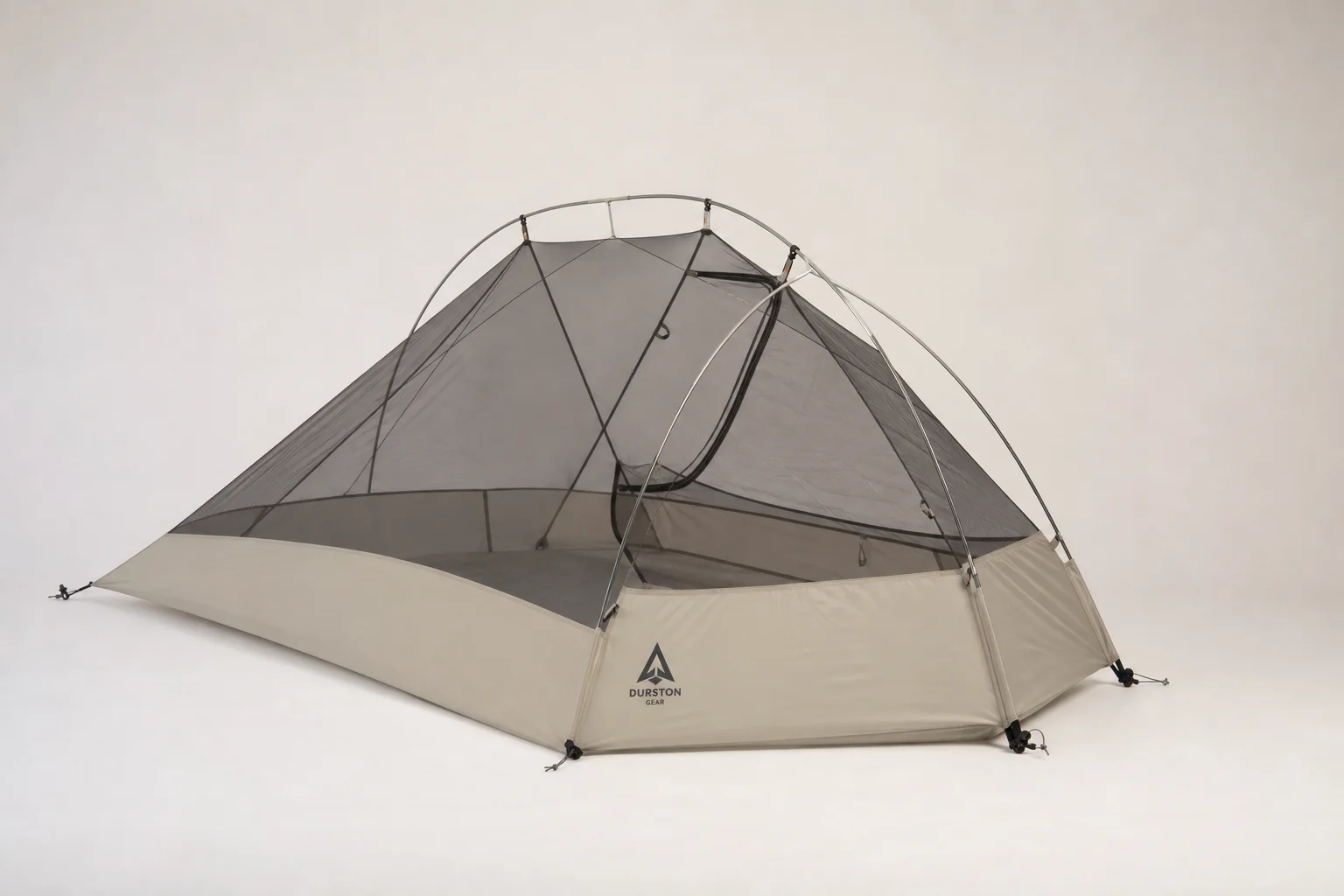
What sets it apart is the pole arrangement. Instead of a conventional clip system, the tent uses two poles that slide into sleeves built into the corners of the body. You seat a pole in one corner sleeve, walk it across to the opposite corner, and repeat on the other side.
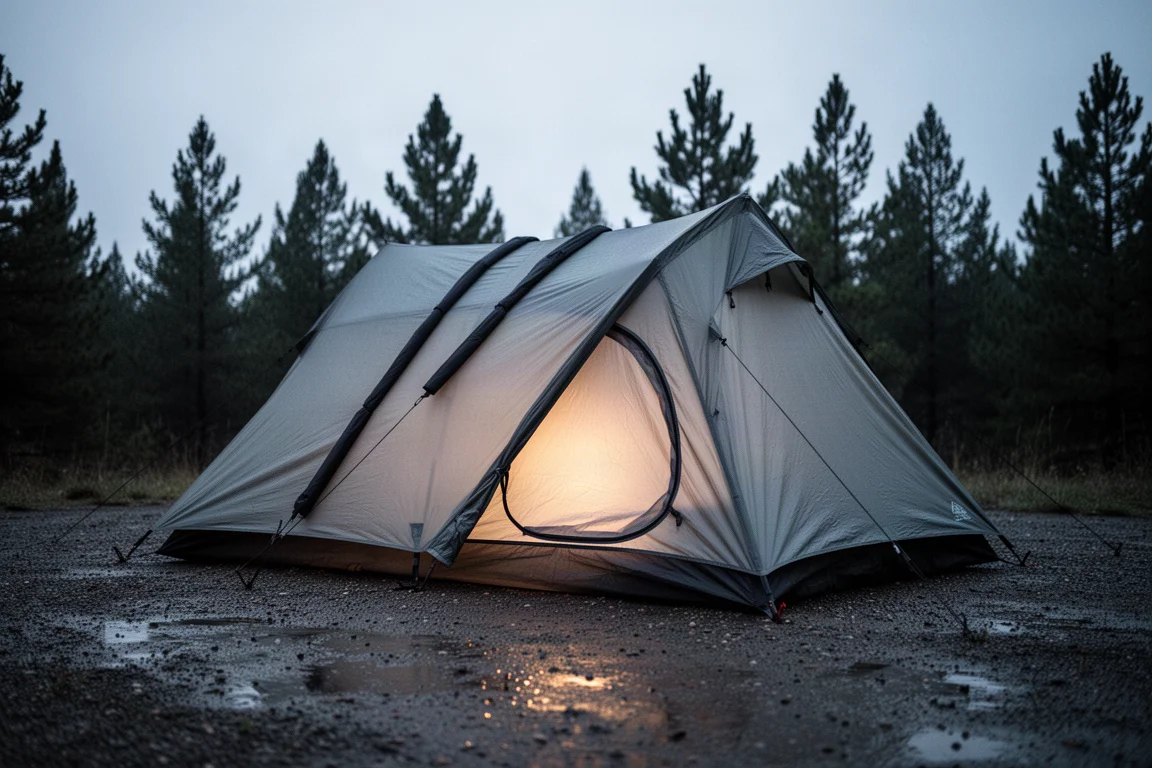
The pitch is genuinely straightforward, and the corner sleeves make the sequence easy to remember. It is not, however, a three-minute job. A realistic setup runs closer to five minutes, and a first-timer working out the order of operations could spend ten.
Setup: What the Corner-Sleeve System Changes
The sleeves remove some of the fiddliness of clips and colour-coded poles, but they add a little weight and bulk compared with a clip-on design. That trade makes sense for casual campers and less sense for anyone counting grams on a long route.
Interior Space and Livability
The floor measures 74 inches long, or 6 feet 2 inches, with 33 inches of width at the base and roughly 22 inches across where your shoulders sit. The walls taper steeply to a narrow peak, so the usable volume at head and shoulder level is smaller than the floor plan suggests.
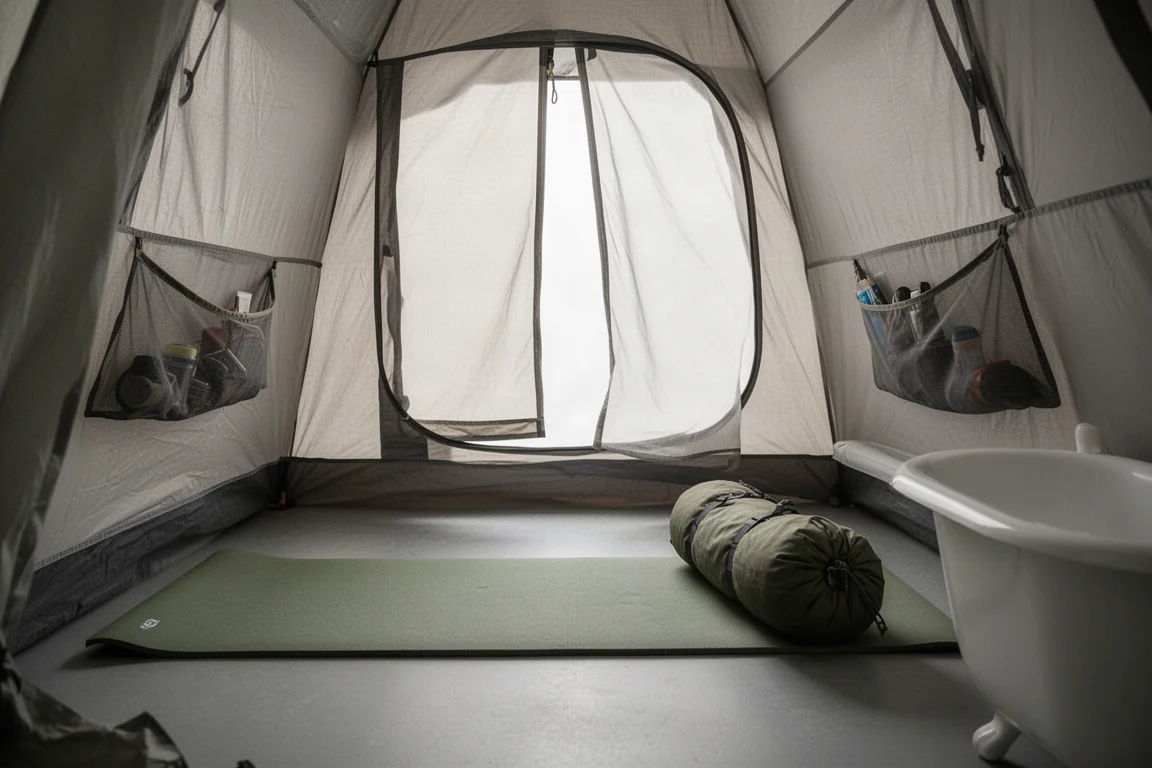
For a solo camper under six feet tall, that is workable. Anyone taller, or broader through the shoulders, will feel the squeeze, and sitting fully upright is difficult. Inside you get one door with two zippers, two mesh pockets on the walls, a small mesh pocket near the top, and a run of lashing points for a gear caddy, which is not included.
Design Trade-Offs and Weather Protection
The fly buckles to the body at the back and is held away from the inner tent at that end, with a vent that is well positioned. Along the sides, though, the fly sits close to the body, and the stake-out points around it are fixed rather than adjustable. On uneven ground that limits how well you can tension the fly, and because the sides cannot be staked out separately, airflow through the shelter is more restricted than it could be. Expect condensation to be a factor on cool, still nights, especially given how little coated polyester breathes.
The vestibule is small. A pack or a pair of boots will fit, but in bad weather you will want your gear inside the tent, and the single vestibule means there is no second sheltered entry point.
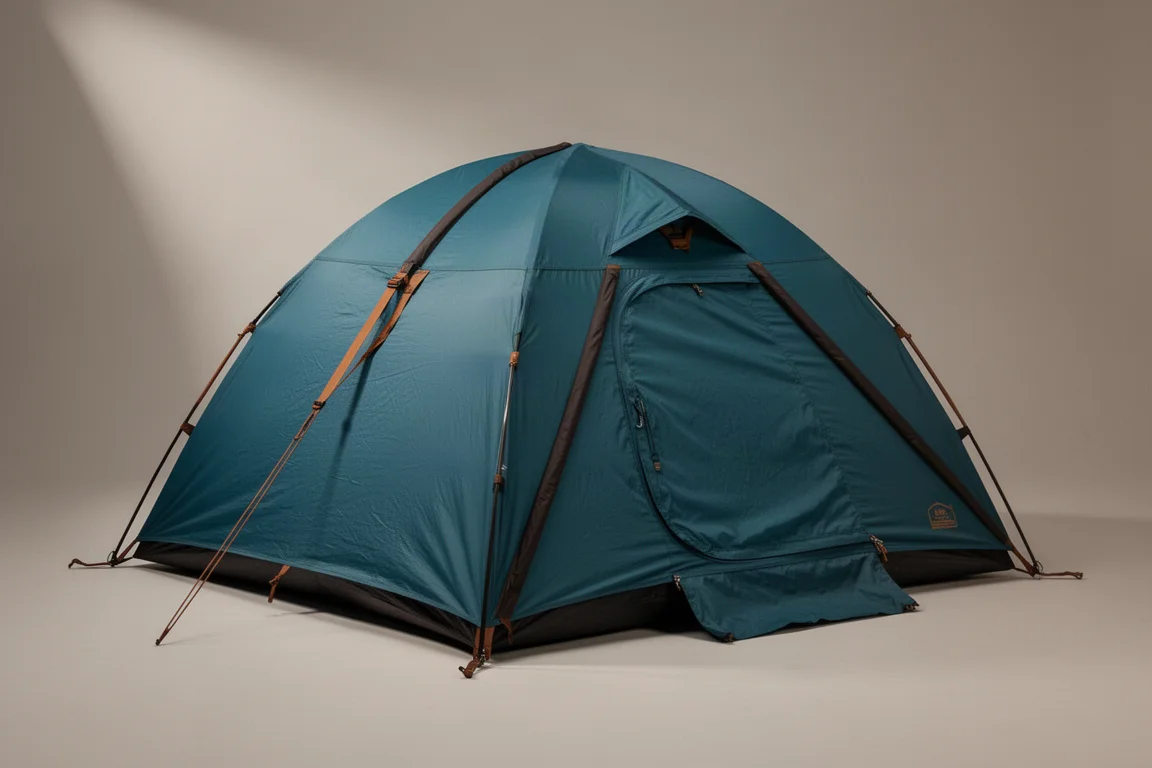
Colour is worth a mention if you are ordering online. The production tent pairs a teal-blue fly with coyote brown straps, which reads quite differently from the brown and blue combination shown in many product photos.
Also worth knowing: no repair kit is included. The package contains the tent, fly, two poles, ten stakes, guy lines with their own storage pockets, and setup instructions, all in a generously sized stuff sack.
The Budget Alternative: Teton Sports Mountain Ultra Tent
The Teton Sports Mountain Ultra Tent is the comparison that matters most if price is the deciding factor. Its one-person version weighs about the same as the Late Start, but it sells for substantially less, around $90.
That gap is hard to ignore. When two shelters carry similar weight, the cheaper option frees up budget for a better sleeping pad, a stronger headlamp, or a warmer bag, and those upgrades tend to matter more on a cold night than a slightly quicker pitch.
If your priority is spending less for a comparable carry, the Mountain Ultra is the more straightforward purchase. The open question with any shelter at this price is how it handles sustained rain and overnight condensation, and that is worth weighing carefully against the savings.
Price, Value, and What You Give Up
At around $140, the Late Start sits in an awkward spot. The materials are inexpensive polyester, the packed weight is 4 pounds 1 ounce, and there are one-person shelters at the same price that use lighter nylon fabrics and offer better weather performance. For a solo tent, that weight is on the heavy side, and a meaningful share of it comes from the fabric choice and the pole sleeve design.
Packed size is reasonable at roughly 16.5 by 6.5 inches, and the included stuff sack is roomy enough that the tent goes back in without a fight. Ten stakes and setup instructions are included, and a repair kit is not.
Which Tent Should You Choose?
Choose the Kelty Late Start if the pole-sleeve system appeals to you and you want a shelter you can pitch without thinking about it. It suits campers under six feet tall, people who pitch at established sites rather than on rough ground, and anyone who values tidy construction over low weight. The taped seams and clean stitching suggest it will hold up well if it is looked after.
Choose the Teton Sports Mountain Ultra Tent if price leads your decision and you are comfortable carrying a similar weight for less money. The savings are the point, and they are real.
If neither feels quite right, it is worth looking at nylon one-person shelters at the same price point before you buy, because lighter fabrics change the value calculation considerably.
Conclusion
The Kelty Late Start 1-Person Tent delivers on the promise of a simple pitch, just not quite on the promise of three minutes. Construction is tidy for the money, the interior suits smaller campers best, and the fixed stake-out points and narrow profile limit comfort in humid conditions. The Teton Sports Mountain Ultra Tent answers the price question more directly, with similar weight for noticeably less. Which one earns a place in your pack comes down to whether you are buying convenience or value.
Further reading
Related Reviews
Camping Tents
3F UL Gear Taiji Two-Person Tent Review: Field Waterproofing Results and Buying Advice
The Taiji pairs an attached fly with a removable inner, but sustained rain exposed untaped vent seams that need sealing before this shelter can be trusted.
Camping Tents
3FUL Gear Lanshan 2 Pro 4-Season Review: A Sub-$200 Single-Wall Trekking Pole Tent
An early look at the 3FUL Gear Lanshan 2 Pro 4-Season, covering its straightforward pitch, generous interior space, and the condensation and seam-sealing questions that come with any single-wall shelter.
Camping Tents
Alps Mountaineering Lynx 1-Person Tent Review: Big Value in a Small Budget Tent
A close look at the Alps Mountaineering Lynx 1-Person Tent, covering real interior dimensions, materials, setup time, ventilation limits, and who should buy it.