Camping Tents
Kelty Late Start One-Person Tent Review: A Clever Pitch With a Tight Interior
A budget three-season tent with a corner-sleeve pole system, clean build quality, and a narrow tapered interior worth checking before you buy.
Introduction
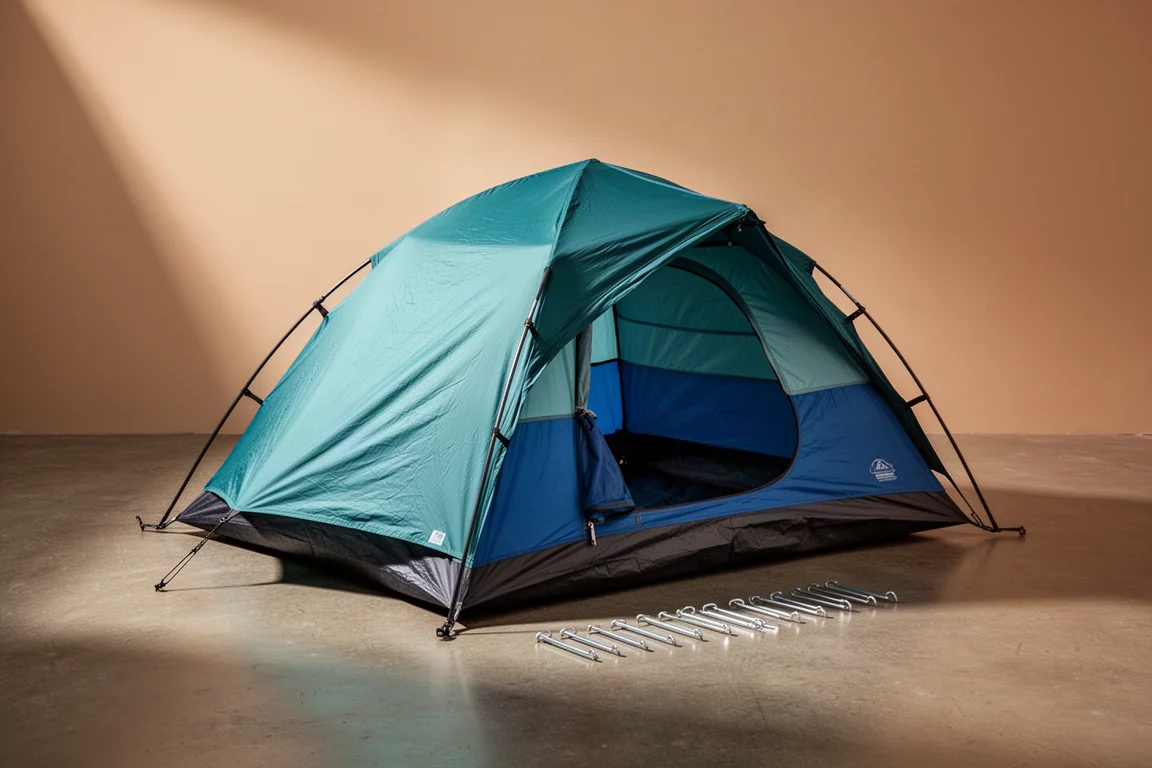
The Kelty Late Start one-person tent is a three-season shelter built around a pitching method that separates it from most budget tents. Rather than threading one long pole through a sleeve across the whole canopy, this tent uses two poles that slot into dedicated sleeves at opposite corners. Kelty states that the shelter can be standing in three minutes or less.
The 2024 version sits in the budget tier, priced around $140 at the time of writing, and it is offered in one, two, and four person sizes. This first look covers what ships in the box, how the tent is built, how it sizes up inside, and where the design asks for compromise.
What Comes in the Box and What the Tent Includes
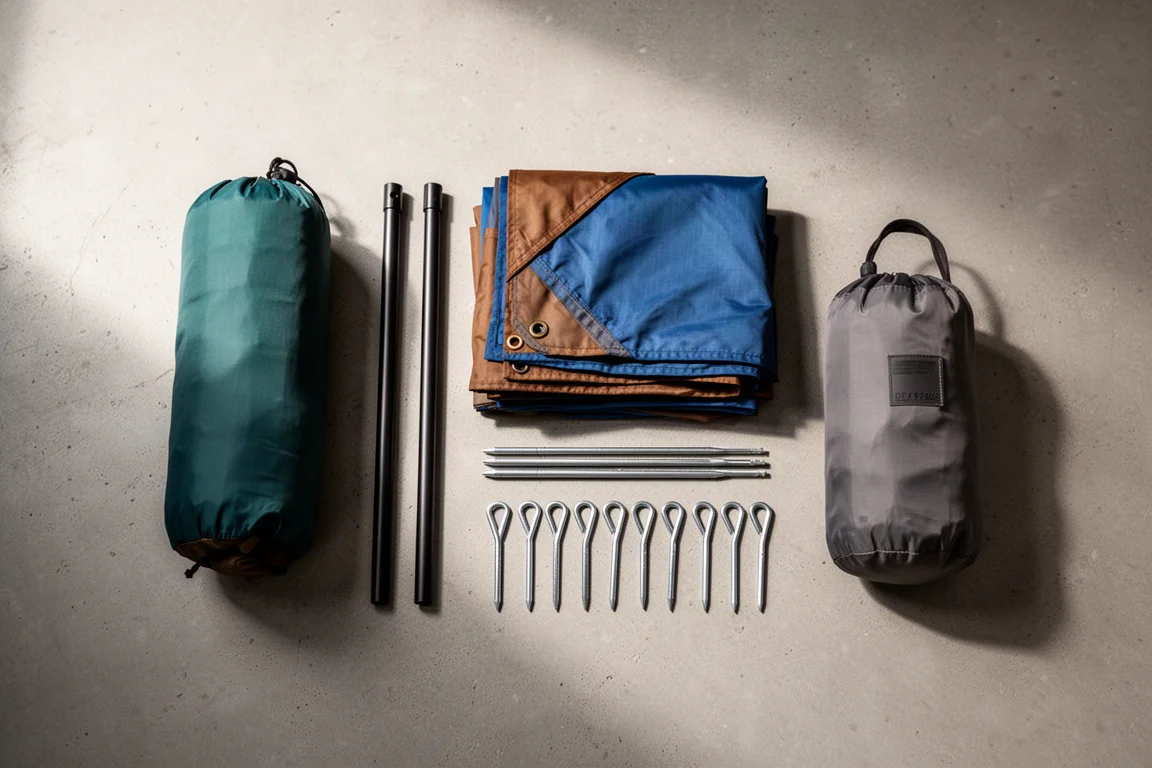
Everything arrives in a storage bag with a grab sleeve on the side and a drawstring pull at the top. The bag is generously sized and swallows the tent without a fight, which matters more than it sounds on a wet morning. Inside, the tent body, the rainfly, and the poles sit under a fabric compression strap, a piece of kit most buyers will never use.
The stake kit contains ten stakes and a set of setup instructions. There is no repair kit in the box.
The body itself is straightforward. One door with two zippers, two mesh pockets inside, and several lashing points near the peak for a gear caddy, though the caddy is not included. A small mesh pocket sits at the top of the interior. The floor uses a bathtub design and the seams are taped.
The fly adds one door with a storm flap over the zipper and guy lines that have their own small stuff pockets. It attaches to the body with buckles at the back.
Main Strengths: Quick Setup and Solid Build Quality
The pole system is the headline feature. Each pole goes into a sleeve at one corner and then into the sleeve at the opposite corner, and the same process repeats with the second pole. It is genuinely simple, and it does save time.
It is not, however, the three-minute pitch the spec suggests. Realistically the tent goes up in around five minutes, and someone new to it could take closer to ten. The system is a nice piece of design rather than a game changer, and it adds weight to the finished package.
Build quality is where the tent punches above its price. The seam tape is clean, the stitching is tidy, and there are no loose threads anywhere on the body or the fly. For the money, the construction looks excellent.
Interior Space and Comfort: Where the Tent Feels Tight
This is the area that will decide whether the tent works for you. The floor is 74 inches long, or 6 feet 2 inches, which reads fine on paper but leaves little margin. Kelty sizes it best for campers under 6 feet.
Width is the bigger constraint. The floor measures 33 inches across, tapering to roughly 22 inches at shoulder height and about 14.5 inches near the top. Peak height is 37.2 inches, enough to sit up but not much more. Kneeling inside is a squeeze, and sitting upright puts your shoulders close to the walls.
The tapered profile is the cause. The tent is wide at the base and narrows to a point, which leaves very little usable volume up high and steep walls at the sides. Broader campers will find it restrictive.
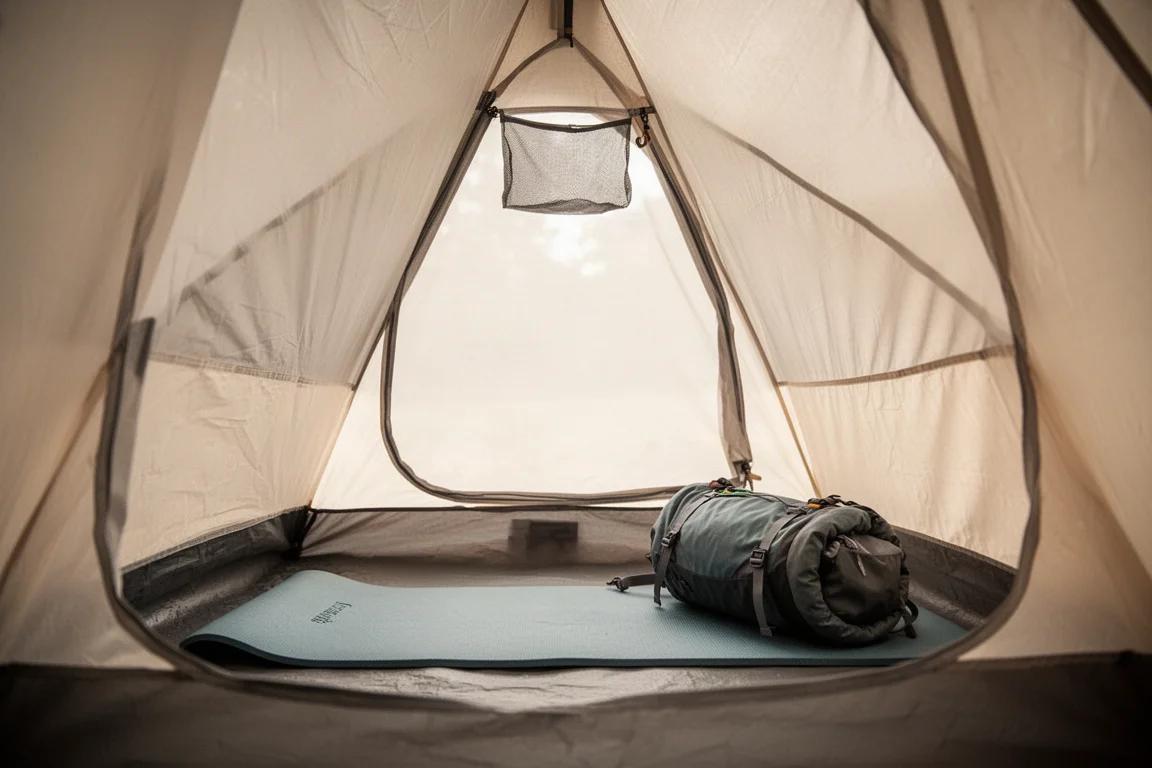
Storage outside the sleeping area is limited too. The single vestibule has room for a backpack or a pair of boots at a push, so in heavy rain there is a real question of where wet gear goes. There is also no way to reach the far side of the tent from inside, which means the one entrance serves everything.
Materials, Weight, and Value at This Price
Both the fly and the floor use 68 denier polyester with a 1,200 mm hydrostatic head rating. It is an inexpensive fabric, and that choice shows up most clearly on the scale. The full package, with every component, weighs 4 pounds 1 ounce. For a one-person shelter, that is heavy. Packed, the tent measures about 16.5 inches by 6.5 inches.
At around $140, the price is hard to justify against the materials and the weight. One-person tents of similar weight can be found for noticeably less, and a comparable one-person shelter from Teton Sports sells closer to $90. Lighter nylon options also exist near this price point, so the polyester build here is the main reason the value argument is difficult.
Weather Protection, Airflow, and Condensation
On paper the weather package is reasonable for the price: a 1,200 mm hydrostatic head on both the fly and the floor, taped seams, and a bathtub floor that keeps ground water away from the sleeping area. The fly is held off the body rather than lying directly against it, and the vent over the door is well placed, so air should move through the shelter reasonably well.
The design limits it in two ways. The sides of the fly cannot be pulled away from the body or staked out, which removes the easiest way to increase airflow on a still night. The stakeout points around the fly are also fixed rather than adjustable, so pitching on uneven ground is more awkward than it should be.

Condensation is the open question. Kelty tents have a history of trapping moisture inside, and with no way to open up the sides, that behavior is worth watching on a cold, humid night.
Who This Tent Is For
The Late Start one-person tent makes the most sense for shorter, narrower campers who want a simple three-season shelter and value a fast, forgiving pitch over low weight. It suits casual weekend trips where the walk in is short and the pack is not tightly optimized.
It is a poor match for anyone over 6 feet, for broader campers, and for anyone counting ounces on a long backpacking route.
Things to Consider Before Buying
Size is the first check. The 74 inch length and narrow shoulder width leave no room for error, and the tapered shape costs headroom and shoulder room.
Weight is the second. Four pounds 1 ounce is a lot to carry for a one-person tent, and the materials do not explain the price of entry.
The fly design is the third. Non-adjustable stakeouts and sides that cannot be pulled out will frustrate anyone who camps on uneven ground or in humid conditions.
The colorway is worth seeing in person. Product photos suggest a brown and blue tent, while the actual build pairs a teal canopy with blue panels and coyote brown straps, a busier combination than the images imply.
Finally, there is no repair kit in the box, so add one before a longer trip.
Buying Advice
If quick pitching and low cost matter more to you than weight, and you fit comfortably inside a 74 inch by 33 inch floor, this tent is a reasonable budget pick with clean construction.

If you are tall, broad, or weight conscious, look at nylon shelters instead. The money is better spent there.
Conclusion
The Kelty Late Start one-person tent delivers a clever corner-sleeve pole system and tidy build quality at a budget price, but the narrow tapered interior, the 4 pound 1 ounce weight, and the non-adjustable fly stakeouts hold it back. Buy it for simple weekend trips if you are under 6 feet. Skip it if interior space or pack weight sits at the top of your list.
Product link
View more details for Kelty Late Start One-Person Tent
This product is mentioned in the review. Check the specifications, options, and compatibility before buying.
View more details for Kelty Late Start One-Person TentFurther reading
Related Reviews
Camping Tents
3F UL Gear Taiji Two-Person Tent Review: Field Waterproofing Results and Buying Advice
The Taiji pairs an attached fly with a removable inner, but sustained rain exposed untaped vent seams that need sealing before this shelter can be trusted.
Camping Tents
3FUL Gear Lanshan 2 Pro 4-Season Review: A Sub-$200 Single-Wall Trekking Pole Tent
An early look at the 3FUL Gear Lanshan 2 Pro 4-Season, covering its straightforward pitch, generous interior space, and the condensation and seam-sealing questions that come with any single-wall shelter.
Camping Tents
Alps Mountaineering Lynx 1-Person Tent Review: Big Value in a Small Budget Tent
A close look at the Alps Mountaineering Lynx 1-Person Tent, covering real interior dimensions, materials, setup time, ventilation limits, and who should buy it.