Camping Tents
Kelty Discovery Basecamp 6 Review: A Budget Six-Person Tent That Pitches Fast
A practical look at the Kelty Discovery Basecamp 6, covering setup speed, interior space, ventilation, rain performance, and who it suits best.
Introduction
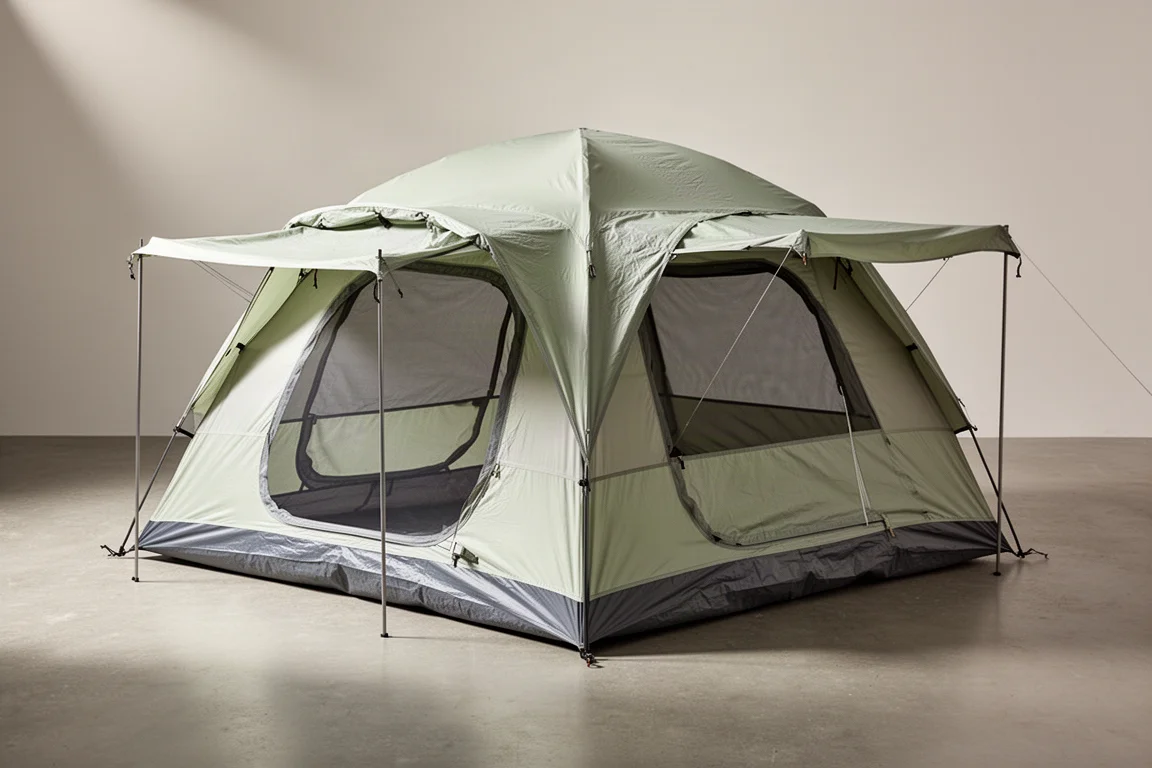
The Kelty Discovery Basecamp 6 is a six-person dome tent built around a fast pitch, generous mesh ventilation, and a budget price. The package includes the tent body, the rainfly, three fiberglass poles, eight shepherd hook stakes, a pole bag, a stake bag, a carry bag, and printed instructions.
Setup came in at about ten and a half minutes, with takedown slightly quicker at around nine and a half. Two longer poles feed into Kelty’s Quick Corner sleeves, thirteen pole clips secure the canopy to the frame, and the rainfly drops into place using color-matched webbing and clip buckles at all four corners. An awning pole props up the front of the rainfly, and the guylines arrive pre-attached.
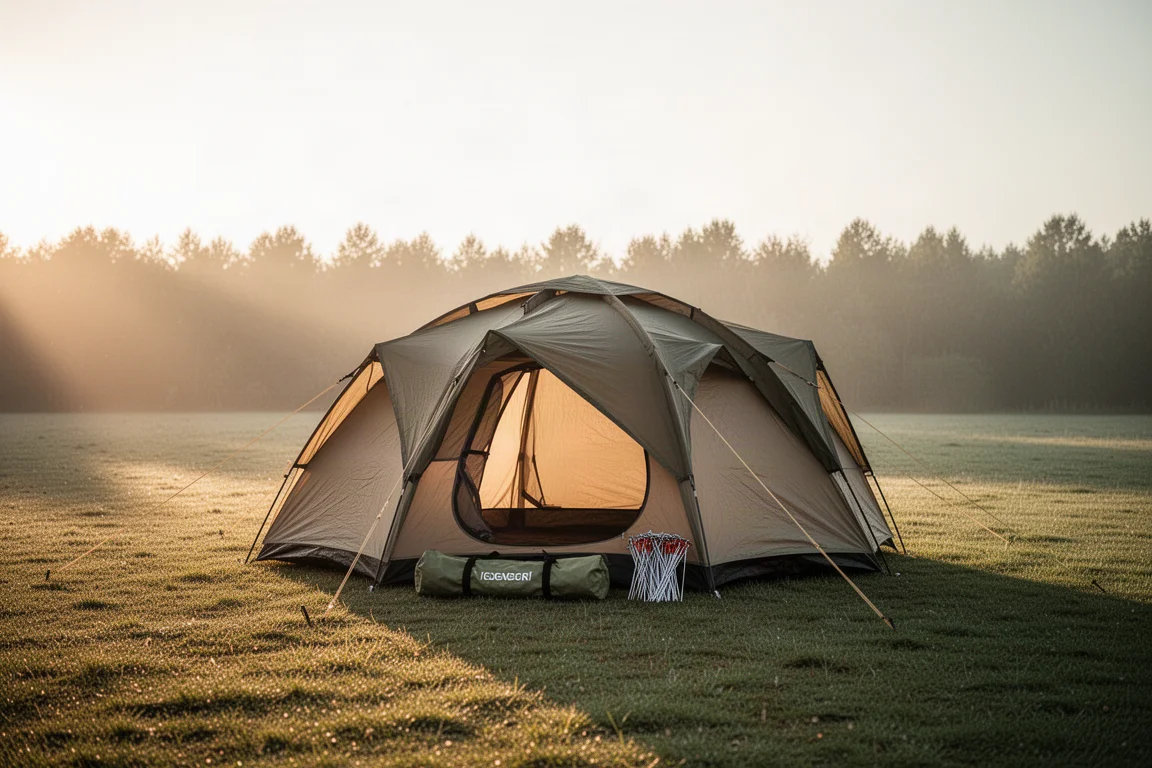
The carry bag uses a wide shark mouth opening, which makes packing the tent away noticeably easier than a narrow drawstring sack. Total weight for everything is about 14.2 pounds, and the packed size measures roughly 26 by 11 by 8 inches, so it stores and transports without much fuss.
Who this product is for
This tent makes the most sense for car campers and families who want a roomy shelter without spending much. At around $150, it sits firmly in the budget six-person category, and it ships with a lifetime warranty.
It suits warm-weather trips best. Three walls are covered in no-see-um mesh, so summer ventilation is strong and stargazing is easy once the rainfly comes off. It also holds up well in wet weather for the price, with no leaks recorded during testing.
It is a less natural fit for campers who want to stand up comfortably throughout the tent, or who plan to spend long rainy days inside. The single door and the low side walls shape how the interior feels in use.
Main strengths
The Discovery Basecamp 6 leans on a handful of practical strengths rather than premium materials.
Fast, straightforward setup
The pole structure is deliberately simple. There are no pole sleeves to thread, and the Quick Corner system replaces conventional grommets, which trims time off the pitch. Setup landed at about ten and a half minutes for a tent of this size, and takedown at about nine and a half.
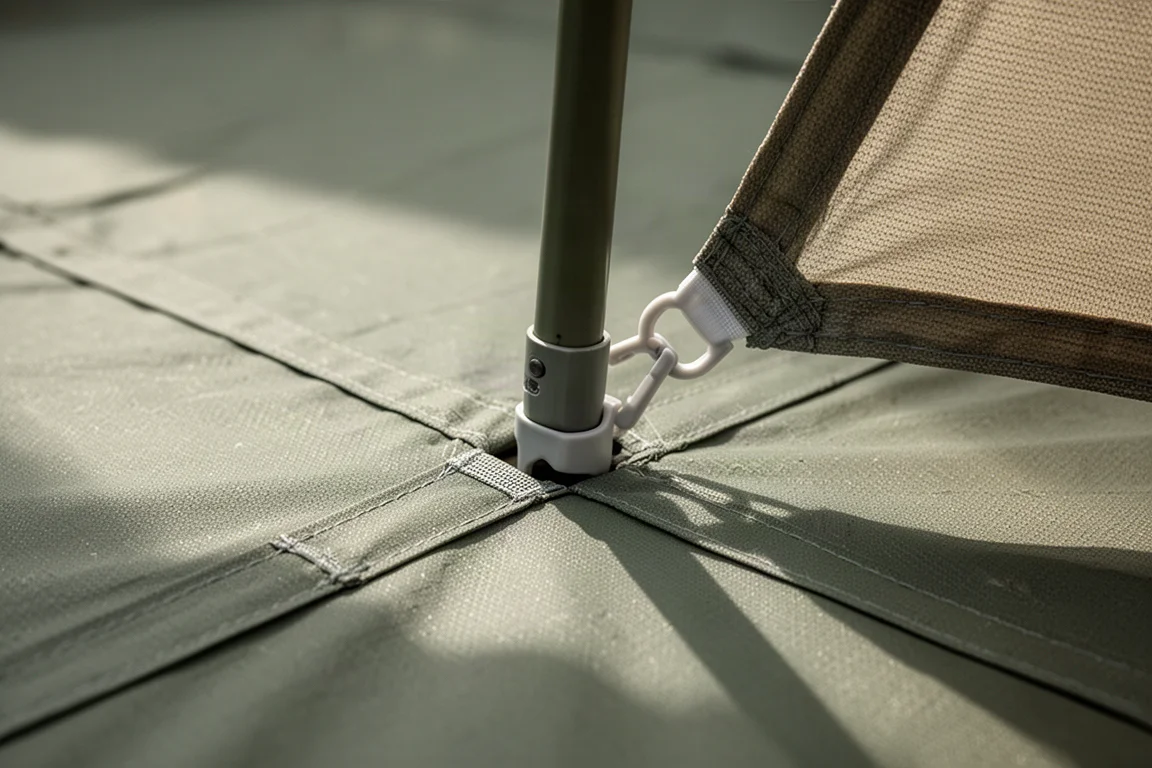
Thirteen clips hold the canopy to the frame, so the body goes up quickly once the poles are seated. The rainfly then attaches with color-coded webbing and four clip buckles, which keeps orientation obvious even in low light.
Packing away is just as straightforward. The shark mouth opening on the carry bag gives plenty of room to fold and stuff the tent, and the bag includes a small side pocket plus an over-the-shoulder sling for carrying.
Ventilation and weather protection
With the rainfly removed, at least 65 to 70 percent of the tent body is mesh, which makes it a strong performer in hot weather. The front wall is solid fabric rather than mesh, so the views are wide but not fully panoramic.
Rain protection is better than the price suggests. The floor is 68D polyester with a 1,200 millimeter coating, the rainfly uses the same 68D polyester and 1,200 millimeter coating, and the seams are taped on the floor, the front wall, the two seams running across the width, and the full rainfly.
During three hours of light rain the interior stayed completely dry with no leaks. An hour of heavy rain also left the seams, the corner seams, the surrounding fabric, and the underside of the rainfly dry, and the rainfly covered the mesh area without overhanging it.
Things to consider before buying
A few design choices matter more than the spec sheet suggests, especially for taller campers or anyone camping in sustained rain.
Interior space and livable height
The floor measures about 116.5 inches long by 101 inches wide, for a base area of almost 82 square feet. Peak height reaches about 68 inches, but only at the center, and the roof slopes downward from there.
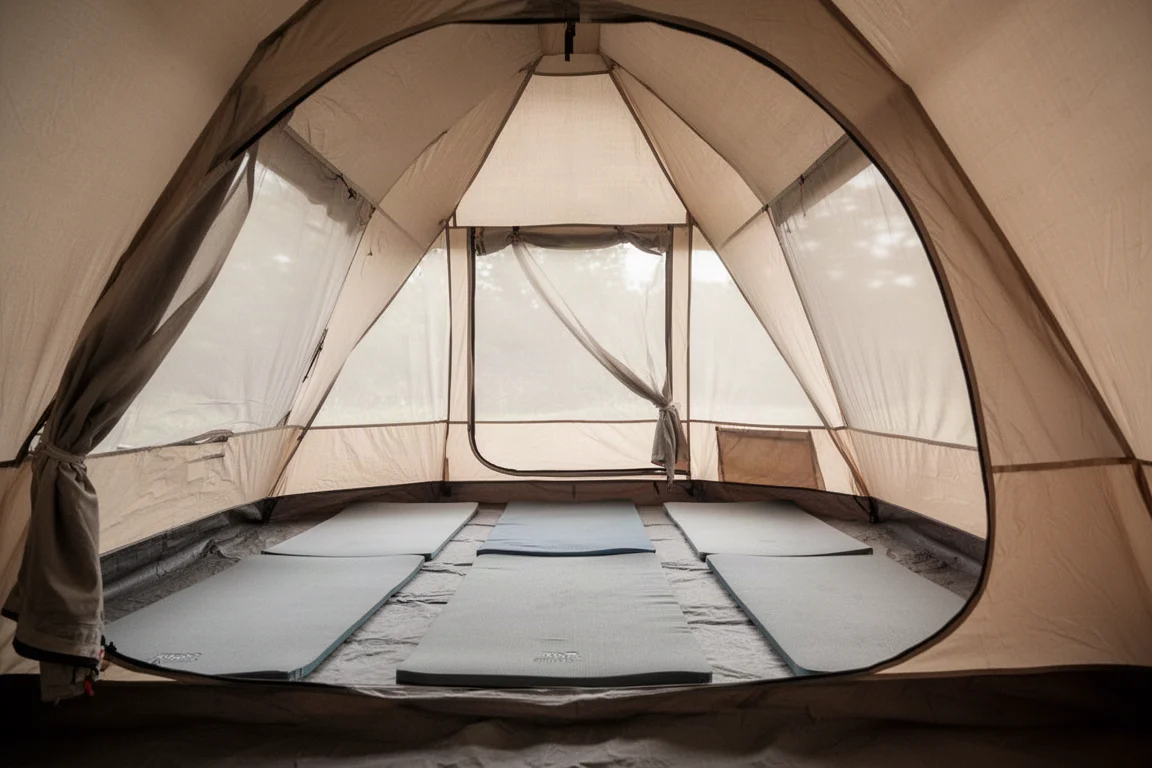
Six single sleeping pads fit shoulder to shoulder, though it is a tight squeeze with only a couple of inches of clearance on each side. Because the pads are thin, they do not eat much into usable space, but there is little room left for other gear. With four people the tent feels roomier, though the low side walls still limit livable space, and the mesh grazes your head when you sit up.
Two queen air beds can be squeezed in, but the beds used were a few inches smaller than a true queen, and they pressed right against the tent walls. A true pair of queen beds will not fit because the tent is not long enough. The peak height is also the shortest among the six-person tents compared here, and the two-pole dome design means there is no extended peak height at all.
Door, awning, and rain behavior
There is one door, at the front, measuring 52 by 52 inches and standing about 54 inches from the ground to the top. Most adults will still need to duck when entering or leaving.
The door zippers snag fairly often. Two rain flaps sit over the door, which doubles the chance of catching, and the door droops inward from the inside, making one-handed zipping difficult. Guiding the zipper with a second hand reduces the snagging considerably. The window zippers were largely snag-free, though tension from the tight awning pole can make the window slightly harder to close.
The awning is the weakest point in wet weather. It does not overhang the tent, so exposed floor stays uncovered, and during heavy rain water rolled off the roof and dripped into the tent through the open doorway. The door also droops inward and drips inside. There are no vents for rainy-day airflow, and no guy-out points at the bottom of the rainfly, which would have pulled the fly away from the body and improved ventilation.
Other practical details are solid. There are about eight storage pockets, with single pockets measuring roughly 10 by 6 inches and double pockets twice that size with a small divider in the middle. Five loops at the top of the tent can hold lanterns for evening light, and a single window at the front measures 43 by 13 inches with a toggle to hold it open.
Buying advice
At roughly $150 with a lifetime warranty, the Kelty Discovery Basecamp 6 is one of the stronger value picks in the budget six-person category. Setup is quick for the size, ventilation is excellent in warm weather, and it stayed leak-free through both light and heavy rain testing.
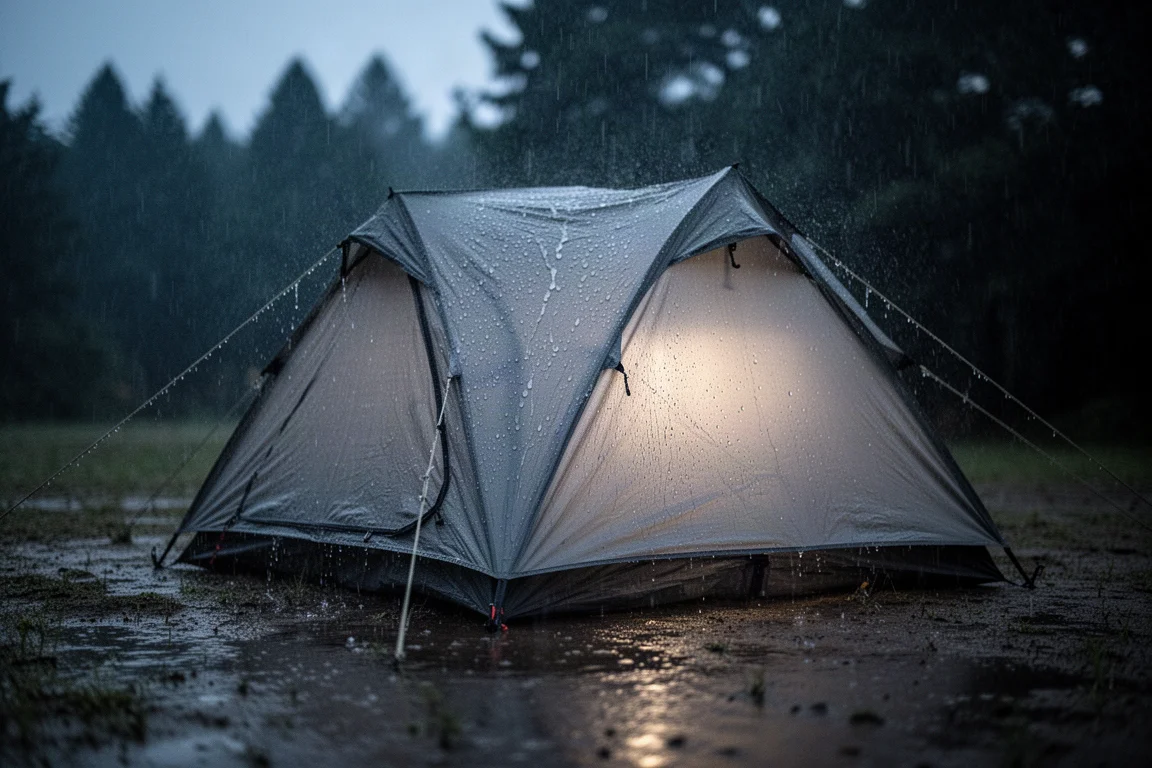
The trade-offs are structural rather than random. The low, sloping peak height and the mesh side walls reduce livable space, and the short awning lets water roll into the tent when the door is open in a downpour. Campers who want to stand up easily or sit out long storms inside should weigh those points carefully.
For everyone else, the pitch is simple, the pack-down is easy, and the materials are reasonable for the price. Fiberglass poles and a thin 68D floor are what you expect at this tier, and they held up through the testing described here.
Conclusion
The Kelty Discovery Basecamp 6 delivers what a budget six-person tent should: a fast, uncomplicated setup, strong summer ventilation, dependable rain protection, and a price that leaves room in the budget for sleeping pads and stakes. Its low peak height, single door, and short awning are real limitations, but for fair-weather family camping and car camping trips, it is a sensible, affordable choice.
Product link
View more details for Kelty Discovery Basecamp 6
This product is mentioned in the review. Check the specifications, options, and compatibility before buying.
View more details for Kelty Discovery Basecamp 6Further reading
Related Reviews
Camping Tents
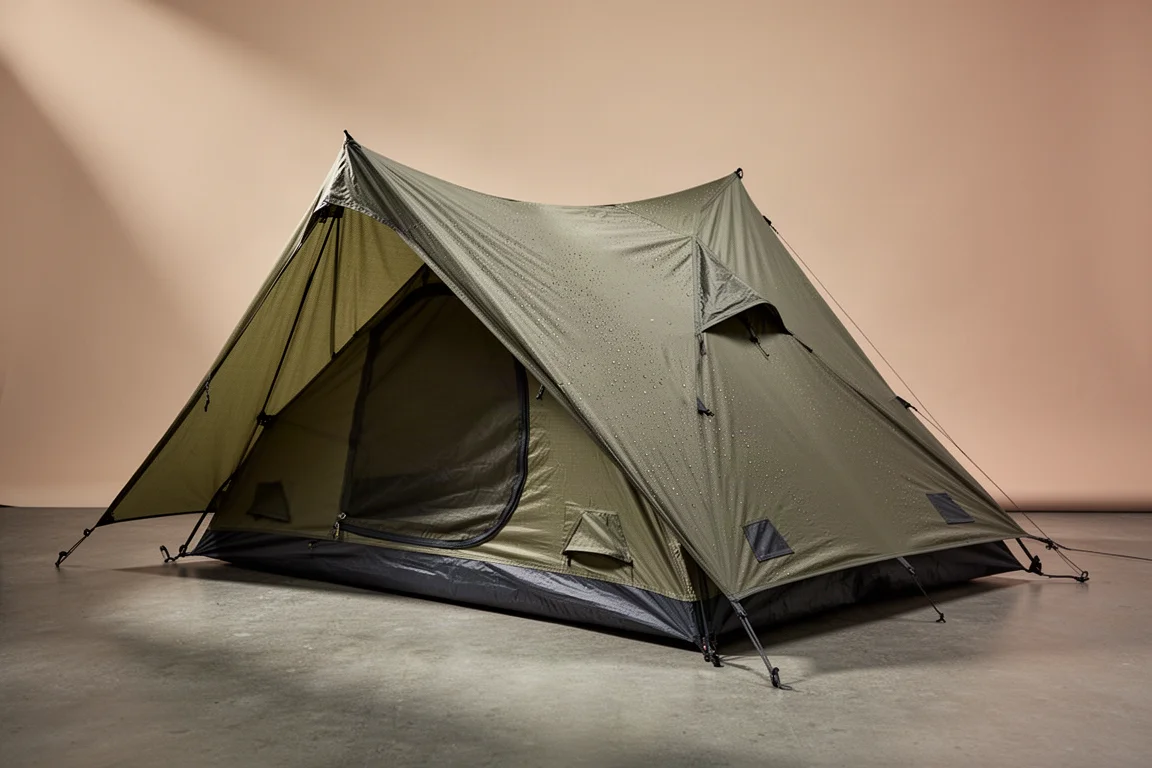
3F UL Gear Taiji Two-Person Tent Review: Field Waterproofing Results and Buying Advice
The Taiji pairs an attached fly with a removable inner, but sustained rain exposed untaped vent seams that need sealing before this shelter can be trusted.
Camping Tents
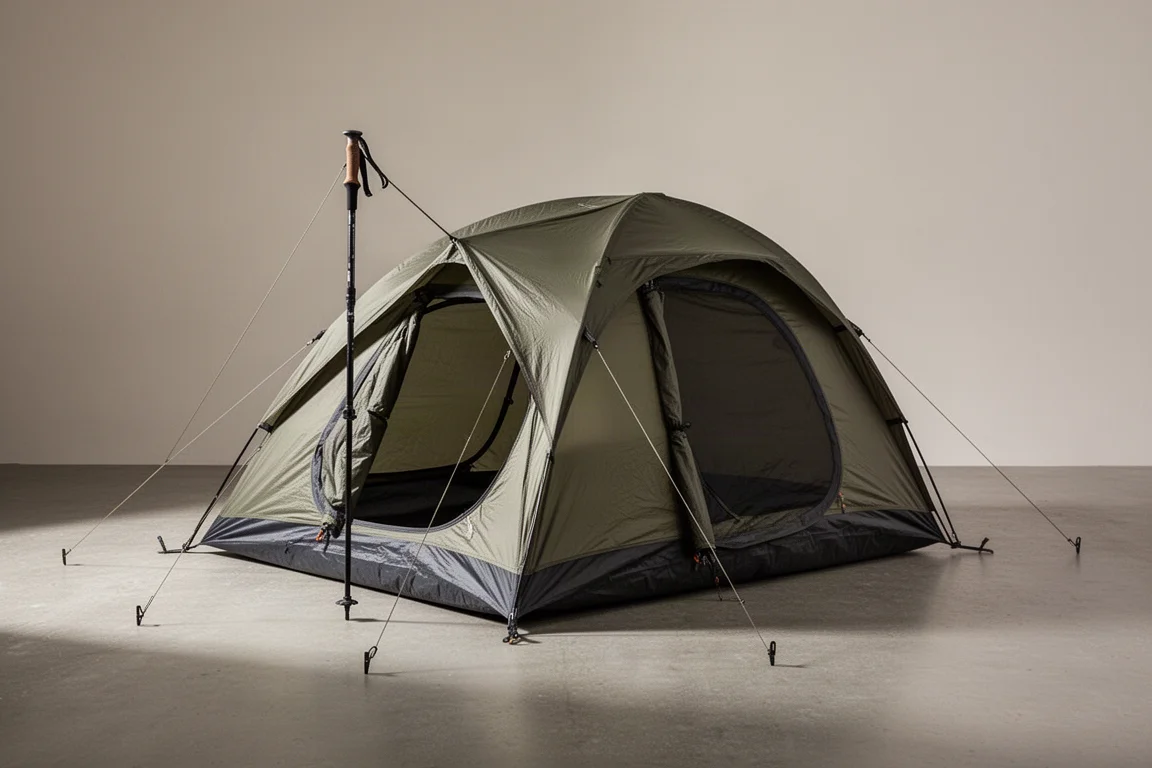
3FUL Gear Lanshan 2 Pro 4-Season Review: A Sub-$200 Single-Wall Trekking Pole Tent
An early look at the 3FUL Gear Lanshan 2 Pro 4-Season, covering its straightforward pitch, generous interior space, and the condensation and seam-sealing questions that come with any single-wall shelter.
Camping Tents
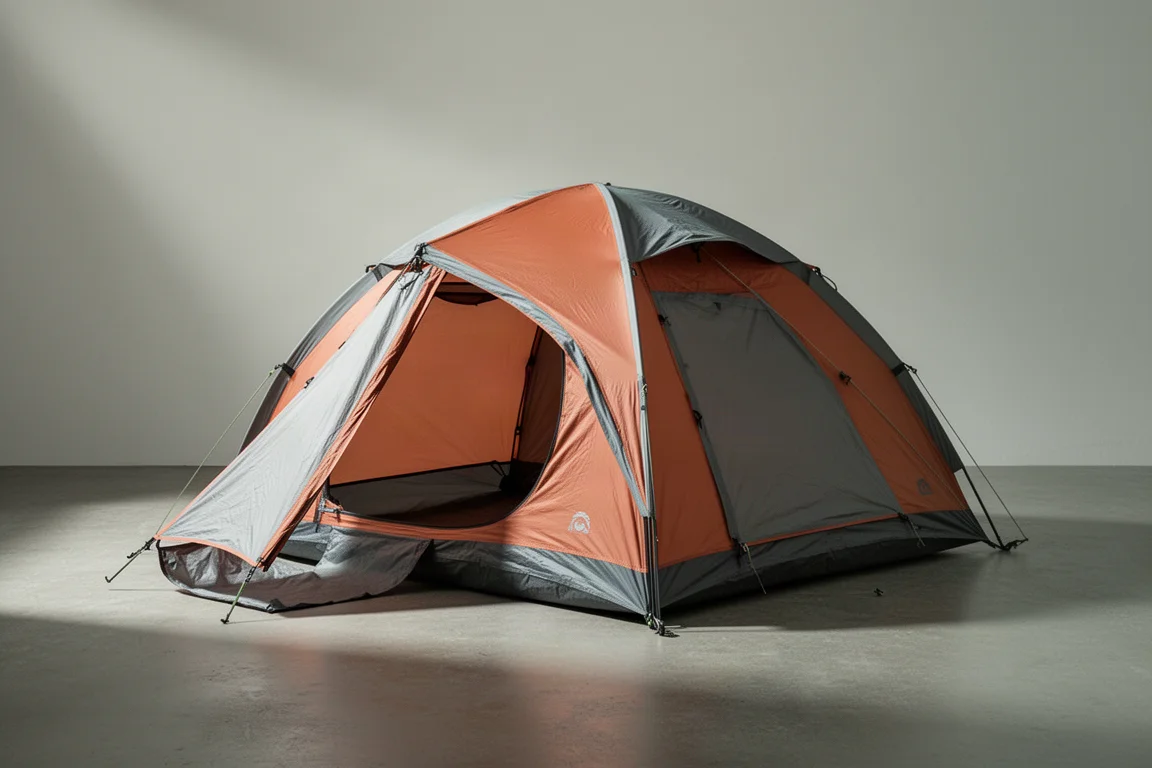
Alps Mountaineering Lynx 1-Person Tent Review: Big Value in a Small Budget Tent
A close look at the Alps Mountaineering Lynx 1-Person Tent, covering real interior dimensions, materials, setup time, ventilation limits, and who should buy it.