Bookshelf Speakers
KEF Reference 1 Meta Review: What a $9,000 Bookshelf Speaker Delivers in a Real Room
A neutral, low-distortion bookshelf speaker with flexible port tuning and a deep soundstage, plus the placement and amplifier details worth weighing before buying.
Introduction
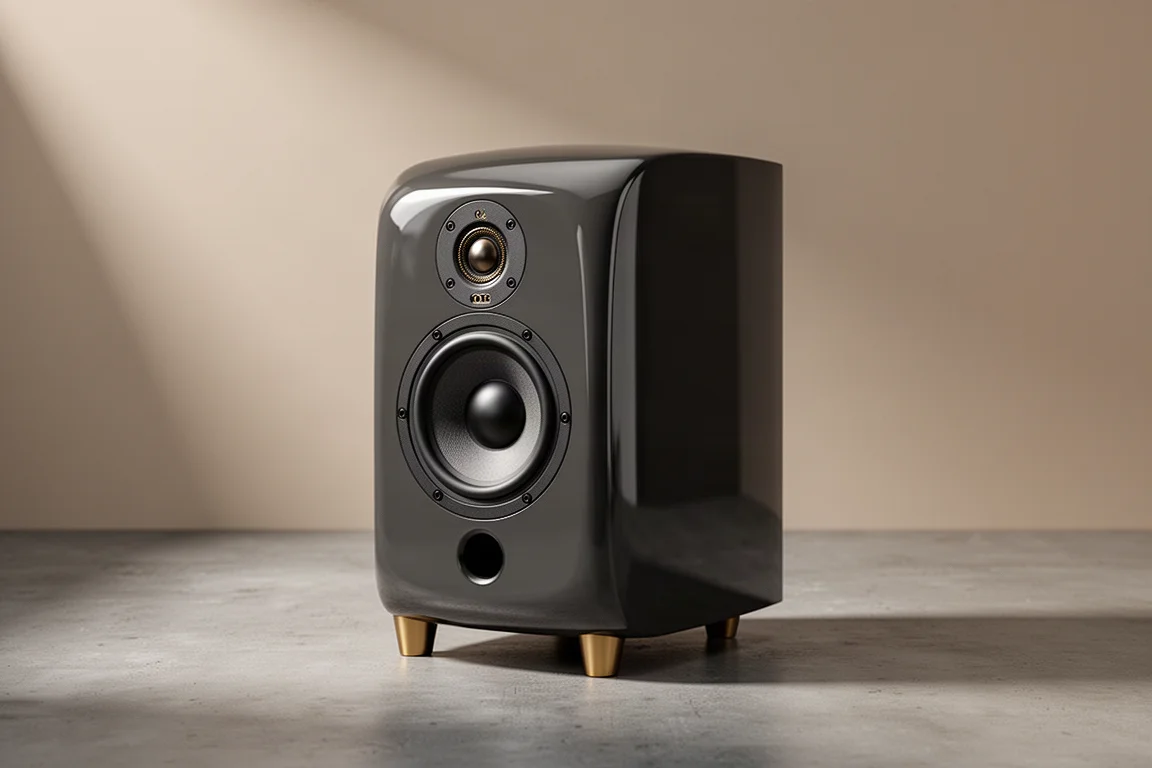
The KEF Reference 1 Meta is a passive two-way bookshelf speaker priced at around $9,000 per pair, which places it close to four times the cost of the brand’s own R3 bookshelf. That gap invites an obvious question: what does the extra engineering actually change once the speaker is sitting in a normal room?
This evaluation works through listening notes gathered in two different rooms, the two port options that ship in the box, and measured performance covering on-axis linearity, directivity, distortion and impedance. The goal is practical: to help you decide whether this speaker fits your system, your room and your listening habits.
Who This Speaker Is For
This is a speaker for listeners who value neutrality over excitement. Its tonal balance is deliberately even, with no boosted treble to create a showroom impression of detail. If you have grown tired of bright speakers that sound impressive for twenty minutes and tiring after that, the Reference 1 Meta is aimed squarely at you.
It also suits buyers who want placement flexibility. Because two port lengths are included, the speaker can be tuned for a position close to a wall or for a position well out into the room. Each pair is individually tested against a reference during production and matched within roughly half a decibel, so the two cabinets in the box behave in the same way.
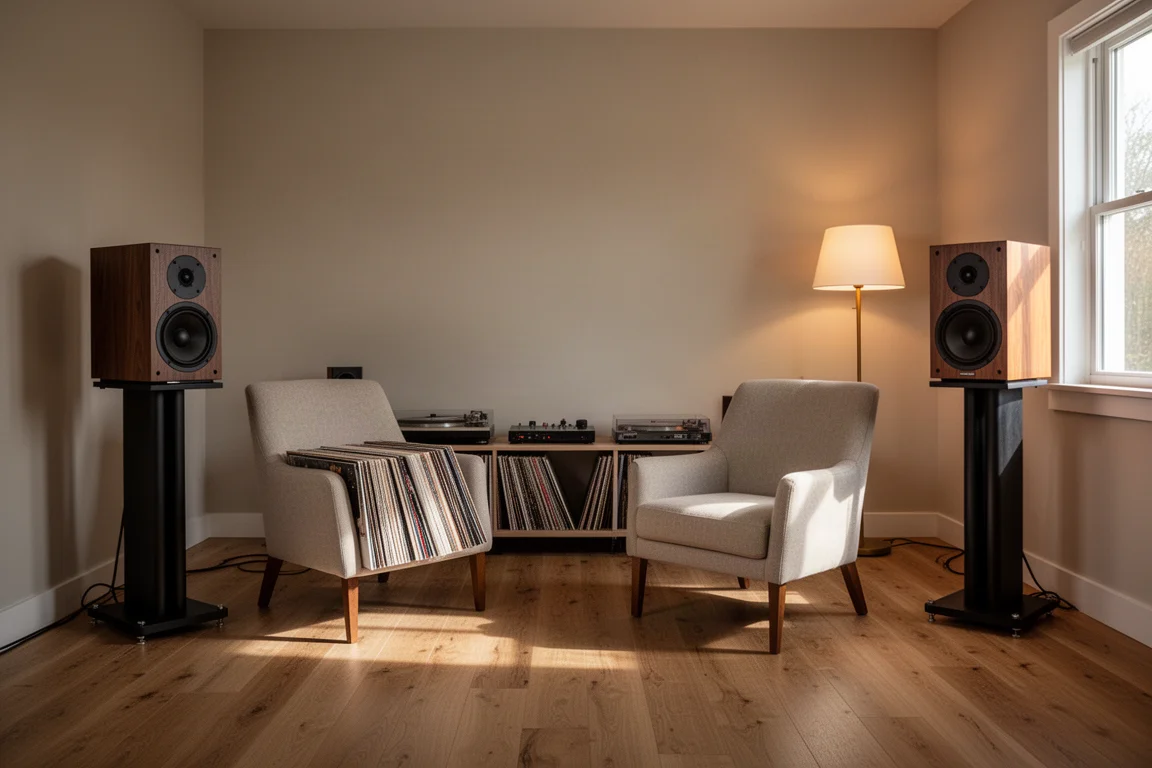
It is less suited to listeners who expect deep low-frequency output without help. In-room response reaches roughly 40 Hz, and very loud listening at longer distances may still leave you wanting a subwoofer.
Design and Setup: Two Ports, One Important Choice
The cabinet ships with the long port fitted as standard. The manual explains that the long port is intended for a speaker placed near a wall, while the short port is meant for a speaker pulled out into the room, where it provides additional bass extension. Swapping them takes seconds: twist the port to unlock it, slide it out, and press the replacement into place.
Both ports are made from foam, which is a deliberate choice rather than a cost saving. Across listening sessions and in the measurements, the ports showed no audible turbulence or vent noise.
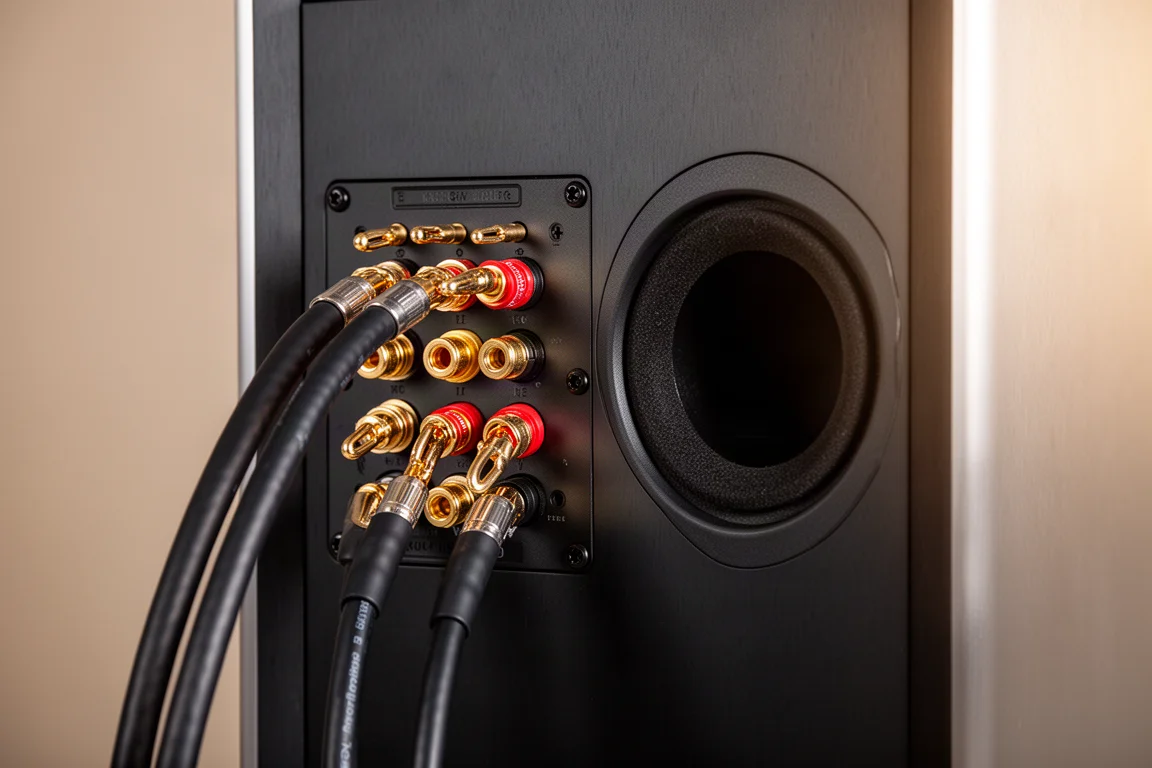
The rear panel also carries multi-way binding posts with a link section, so the speaker can be bi-amped if you want to drive the low-frequency and high-frequency sections separately. In this evaluation the speaker was used in its standard single-wire configuration.
Packaging includes a printed response sheet for the individual unit, the result of a production test that compares each speaker against a reference sample within about half a decibel. For a passive speaker, that level of pair matching is unusual and genuinely useful.
Sound Quality: Neutral Tonality and Detail
Tonally, this is one of the most even speakers in its class. Nothing in the presentation calls attention to itself. Cymbals and hi-hats come through sharp and detailed without ever turning shrill, and there is none of the harshness in the 5 to 8 kHz region that shows up in speakers chasing a bright, overtly detailed signature.
That evenness is worth comparing against the brand’s own R3, which sounds noticeably brighter, with a lift in the upper frequencies and a corresponding shelf in its estimated in-room response. The Reference 1 Meta does not repeat that character, and it is the better balanced of the two as a result.
Placement made a real difference. Aiming the speakers directly at the listening position, with no toe-out, produced the best tonal result. Toeing them outward softened the highs more than expected.
Low-level listening is a genuine strength. At moderate levels the speaker keeps its composure and its dynamics, and it responds very well to EQ. A modest bass boost of about 3 dB between 30 and 50 Hz with a Q of around 2 added useful weight at lower volumes without disturbing the rest of the range.
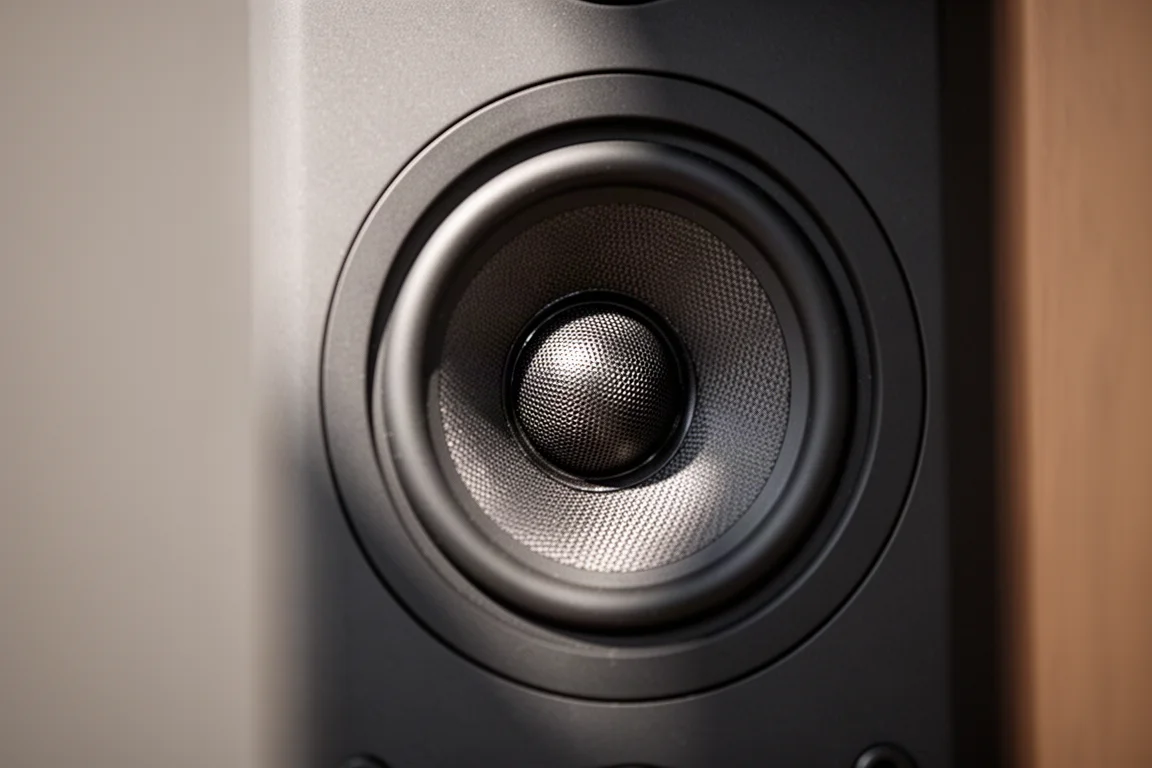
What stands out over long sessions is the absence of fatigue. The speaker stays clean and composed rather than forward, which makes it easy to keep listening well past the point where a brighter design would have you reaching for the volume control.
Soundstage, Dynamics, and Output Limits
Depth and layering are the headline strengths here. Instruments occupy distinct positions with stable focus, and the sense of three-dimensional space is among the best heard from a passive bookshelf pair. Detail appears across the stage without any artificial highlighting.
Horizontal radiation is broad but not the broadest. In the midrange the speaker holds its response out to roughly plus or minus 60 degrees, tapering to about plus or minus 50 degrees at the top end. That is still wider than the R3, which is closer to plus or minus 40 degrees, and the difference is audible. Buyers who want maximum width can toe the speakers out further, though some high-frequency energy will be lost in the process. Because the speaker takes EQ well, that energy can be restored.
Dynamics and distortion control are excellent. Distortion stays below 1 percent down to about 70 Hz at 86 dB, and at 96 dB it stays below 1 percent up to roughly 150 Hz and below 3 percent down to about 70 Hz. There is also no meaningful change in high-frequency response as level rises, which points to a crossover and drivers that stay stable under load.
Output limits are mechanical rather than electrical. Around 98 dB average at 3.5 metres, the woofer began to reach its limits and the bass lost fullness, turning into more of a thud. That is an extreme level for music listening. At more typical volumes, and especially at closer distances, the speaker stays composed.
Measurements and Amplifier Matching
The estimated in-room response is unusually linear, holding within roughly plus or minus 1.5 dB from 80 Hz to 16 kHz with an average level near 82.5 dB, and with a gentle high-frequency taper that keeps the top end from sounding bright. That is a strong result for a fully passive design with no onboard DSP.
Bass extension in room reaches about 40 Hz. Sensitivity measured around 83 to 84 dB at 2.83 volts at one metre, which is on the lower side and worth planning for.
Impedance is the more important number. Above 80 Hz the impedance dips to roughly 2.9 ohms, and the equivalent peak dissipation resistance minimum is about 1.8 ohms. A solid, 4-ohm-stable amplifier is the sensible requirement here. Driven by a roughly 200-watt integrated amplifier, the speaker handled very high levels without complaint, so there is no need to fear the load if your amplifier is genuinely comfortable with low impedances.
Vertical response is uniform, which makes listening height less critical than it can be with some two-way designs, and the mild directivity behaviour around 2 kHz appears to come from the on-axis response rather than from the off-axis behaviour.
Things to Consider Before Buying
Price is the first consideration. At around $9,000 per pair, this speaker costs close to four times as much as the brand’s R3 bookshelf, which sells for roughly $1,800 per pair. The improvements are real, but the value question depends on your budget and on how much weight you place on neutrality and soundstage depth.
Second, this is not a full-range speaker. Without a subwoofer, bass-heavy tracks will show the limits of a 40 Hz in-room result, particularly if you listen loudly at longer distances.
Third, sensitivity is modest at around 83 to 84 dB, and the impedance curve dips low. An underpowered or impedance-sensitive amplifier is the wrong partner for this speaker.
Fourth, the port decision matters. The default long port did not sound right when the speakers were pulled far out from the wall, and switching to the short port changed the bass character substantially. Budget time for experimentation, and use the manual as a guide.
Finally, soundstage width is good rather than exceptional. Listeners who prioritise the widest possible presentation may prefer to toe the speakers out and apply a little EQ.
Buying Advice
If you are building a two-channel system around a capable, 4-ohm-stable amplifier and you value a neutral, low-fatigue sound with a deep and layered stage, this speaker makes a strong case. It rewards careful setup more than most.
Start with placement. Pull the speakers out from the wall and try both ports before settling on a position. Aim them at your listening seat first, then experiment with small amounts of toe-out if you want a wider stage.
Plan the low end deliberately. If your listening is mostly at moderate levels, the speaker can carry the bass on its own, and a small EQ boost in the 30 to 50 Hz region adds useful weight. If you listen loudly over longer distances, or your music leans on deep bass, budget for a subwoofer and cross over above 80 Hz.
Finally, treat amplification as part of the purchase rather than an afterthought. The measured impedance minimum of about 2.9 ohms above 80 Hz, with an EPDR minimum near 1.8 ohms, means the speaker wants an amplifier that stays stable under a demanding load.
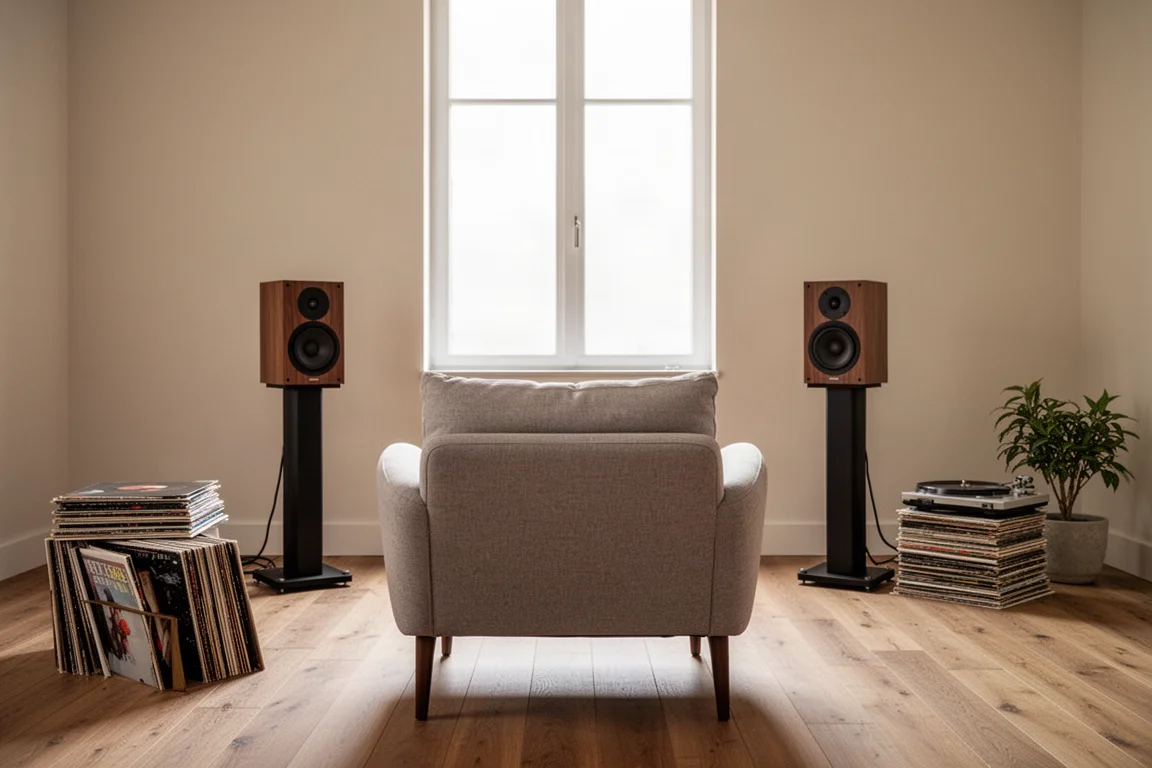
Approached that way, the Reference 1 Meta delivers what its price bracket implies: a passive bookshelf that measures cleanly, sounds neutral, and disappears into the music rather than drawing attention to itself.
Conclusion
The KEF Reference 1 Meta is a carefully engineered passive bookshelf speaker. Its in-room response is remarkably linear, distortion is very low, pair matching is tight, and its soundstage depth is a standout. The trade-offs are equally clear: modest sensitivity, a low impedance dip, limited deep bass without a subwoofer, and a price that sits close to four times the brand’s R3 bookshelf.
For buyers with the right amplifier, a room that allows some placement freedom, and a preference for neutrality over brightness, it is a persuasive choice. Match it to your space, choose the port that suits your position, and it will reward the effort.
Product link
View more details for KEF Reference 1 Meta
This product is mentioned in the review. Check the specifications, options, and compatibility before buying.
View more details for KEF Reference 1 MetaFurther reading
Related Reviews
Bookshelf Speakers
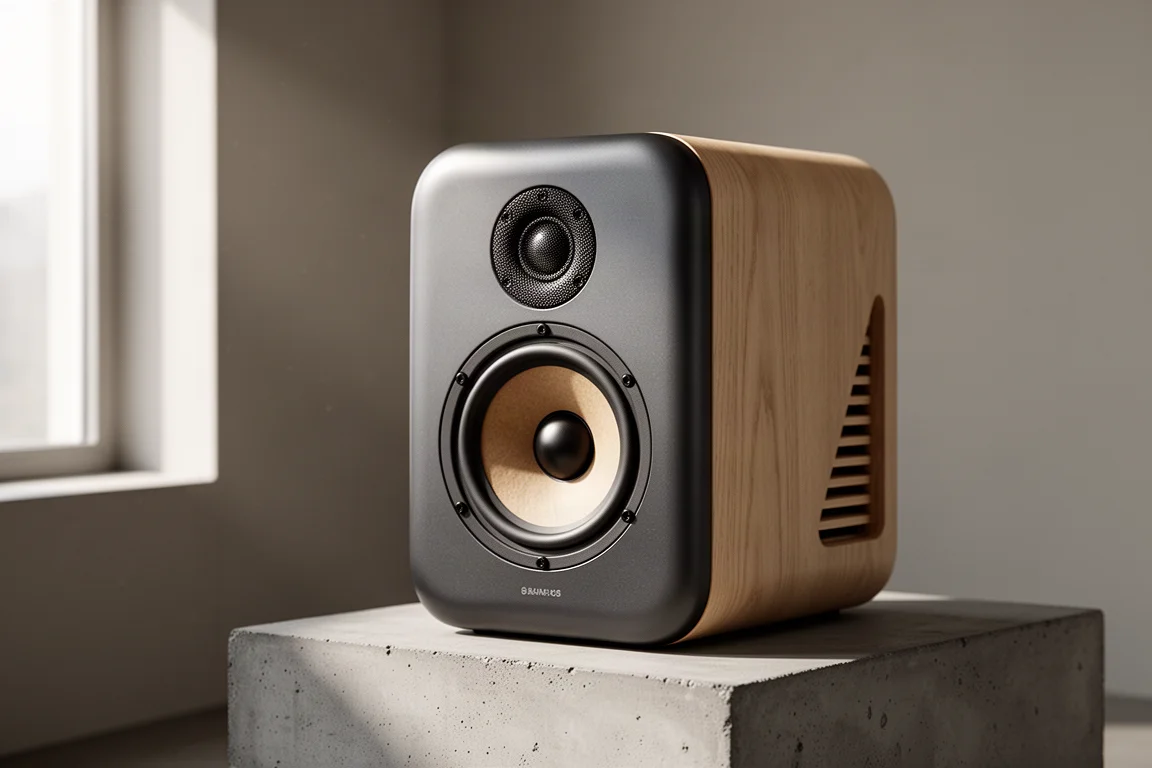
Acoustic Energy A100 Mark II Review: A Compact Standmount With an Expansive Soundstage
The Acoustic Energy A100 Mark II brings clarity, natural tonality and a wide soundstage to an entry-level standmount, with a few setup details worth knowing first.
Bookshelf Speakers
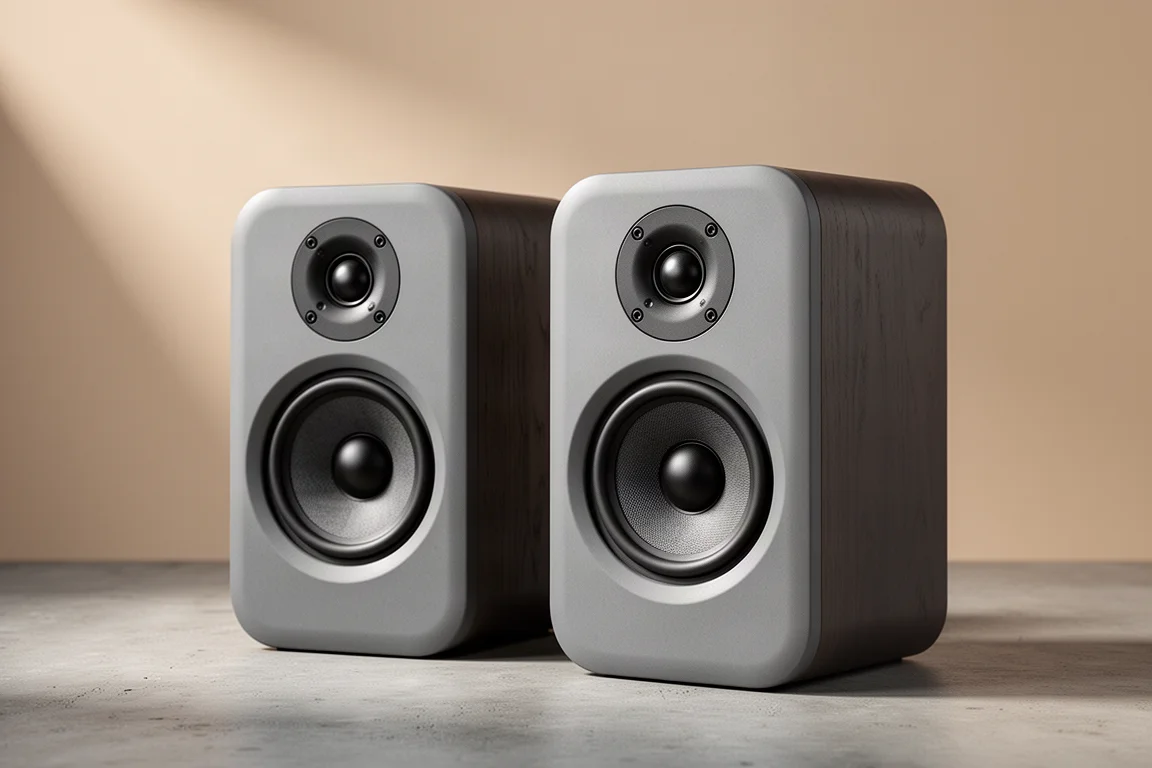
Acoustic Energy AE-100 Mark II Review: Compact Bookshelf Speakers With Standout Imaging
A compact British two-way bookshelf speaker with deep, layered imaging, fast bass, and a slight treble lift to weigh against a crowded $500 field.
Bookshelf Speakers
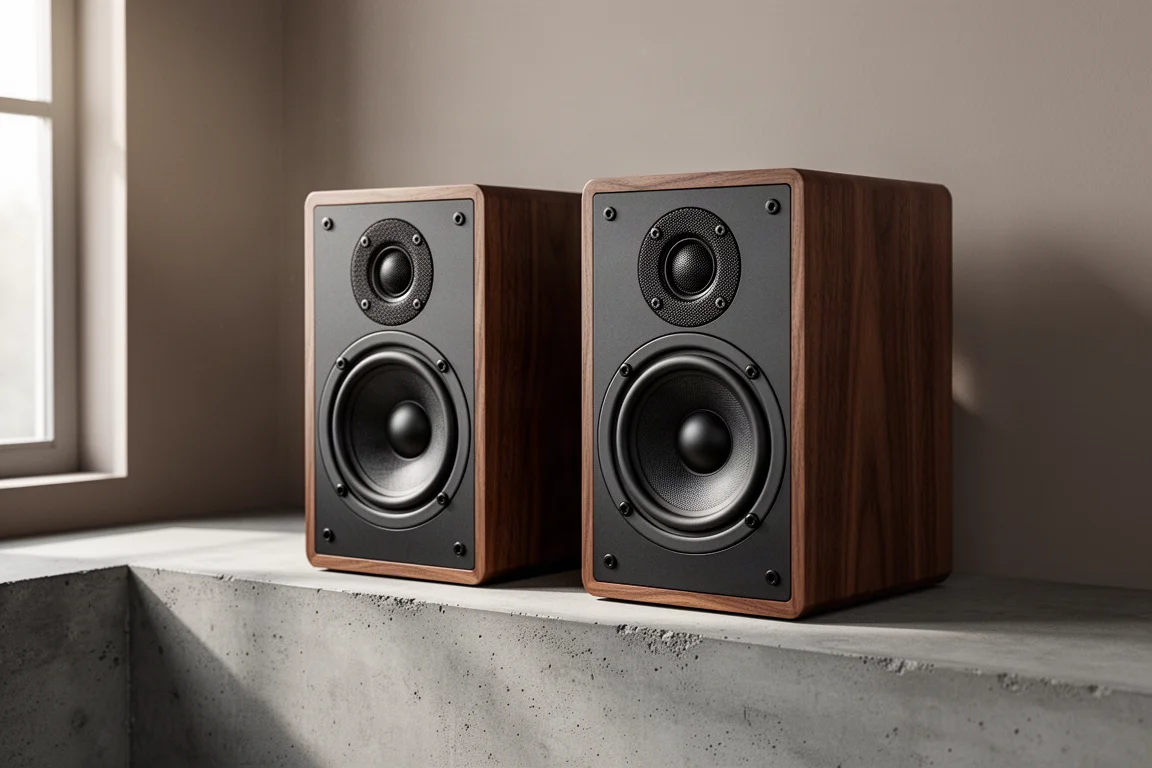
Acoustic Energy AE100 MK2 Review: Measured Performance and Four Alternatives
A close look at the Acoustic Energy AE100 MK2 bookshelf speaker, what its measured performance reveals, and four alternatives with different trade-offs.