Bookshelf Speakers
KEF Q3 Meta Review: Wide Dispersion, Coaxial Design, and the Limits to Know
A close look at the KEF Q3 Meta bookshelf speaker, covering its coaxial driver, wide radiation pattern, bass tuning, output limits, and how to place it.
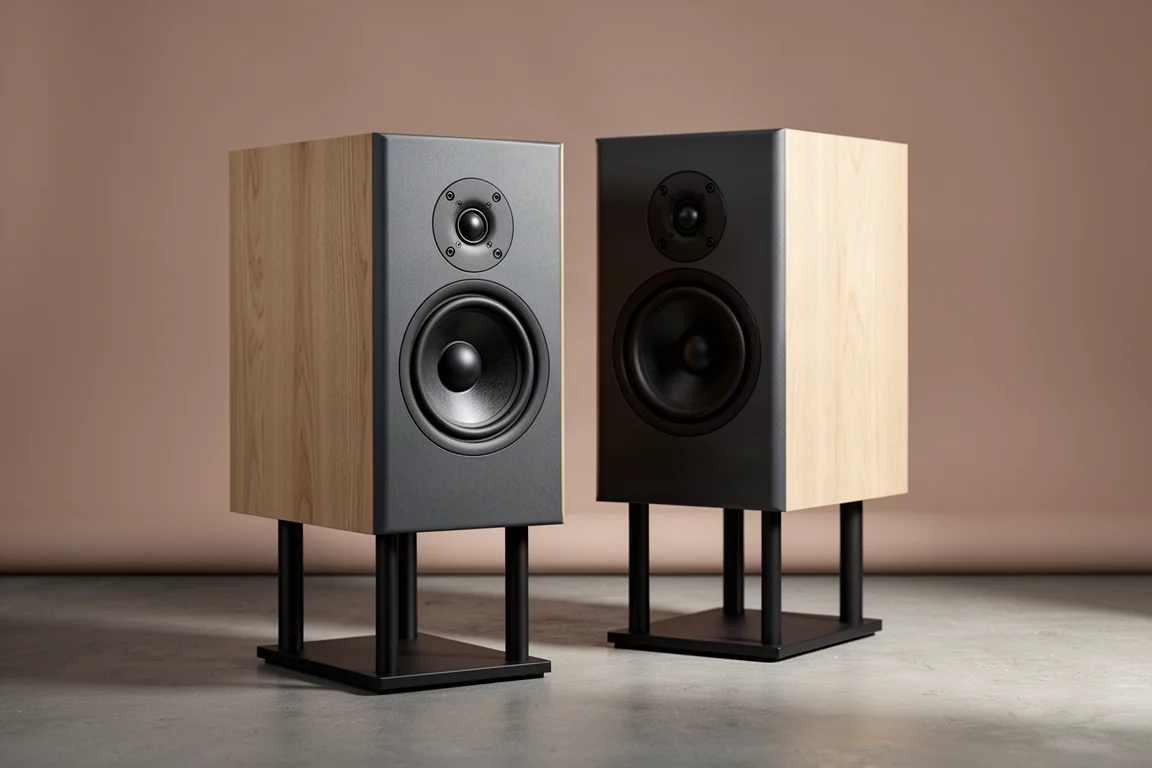
Introduction
The KEF Q3 Meta is a two-way coaxial bookshelf speaker that retails for around $799 per pair. It combines a 1 inch vented aluminium dome tweeter, loaded with a metamaterial absorber, with a 6.5 inch aluminium cone mid bass driver. KEF rates sensitivity at 87 dB and nominal impedance at 4 ohm, and recommends amplification between 15 and 150 watts. Each cabinet weighs roughly 18.1 lb, and the enclosure is ported.
Those figures describe a compact speaker that is easy to drive but has a clearly defined ceiling. The more interesting story is the driver layout. Because the tweeter is mounted inside the mid bass driver rather than above it, the Q3 Meta behaves differently from a conventional two-way design in the way it spreads sound around a room. That single design decision shapes both what the speaker does well and where it runs out of headroom.
Who This Product Is For
The Q3 Meta makes the most sense for listeners who want a wide, generous soundstage from a compact cabinet and who mostly listen at sensible levels. In a living room or an open plan space, the broad radiation pattern means the sweet spot is not a narrow chair-shaped zone. You can move around, cook, read, or sit slightly off to one side and still hear a coherent presentation.
It also works as part of a larger surround system. Used as rear or side surrounds, or as a centre channel that is high passed to a subwoofer, the speaker is not asked to produce extreme output, so its limits matter far less. The trade-off is that anyone chasing cinema level dynamics in a large room should plan on a subwoofer and modest expectations for peak volume.
That flexibility is the core argument for this speaker. It is not a specialist, and it does not need to be.
Design and Build
Most two-way speakers place the tweeter above the mid bass driver. That physical separation creates a vertical discontinuity in the sound field, usually around the 2 to 3 kHz crossover region, and the result is a tight vertical window of roughly 15 to 20 degrees. Sit in the classic sweet spot and it is a non-issue. Stand up, walk to the kitchen, or sit in a second row that is a foot or two higher than the first, and the tonal balance shifts.
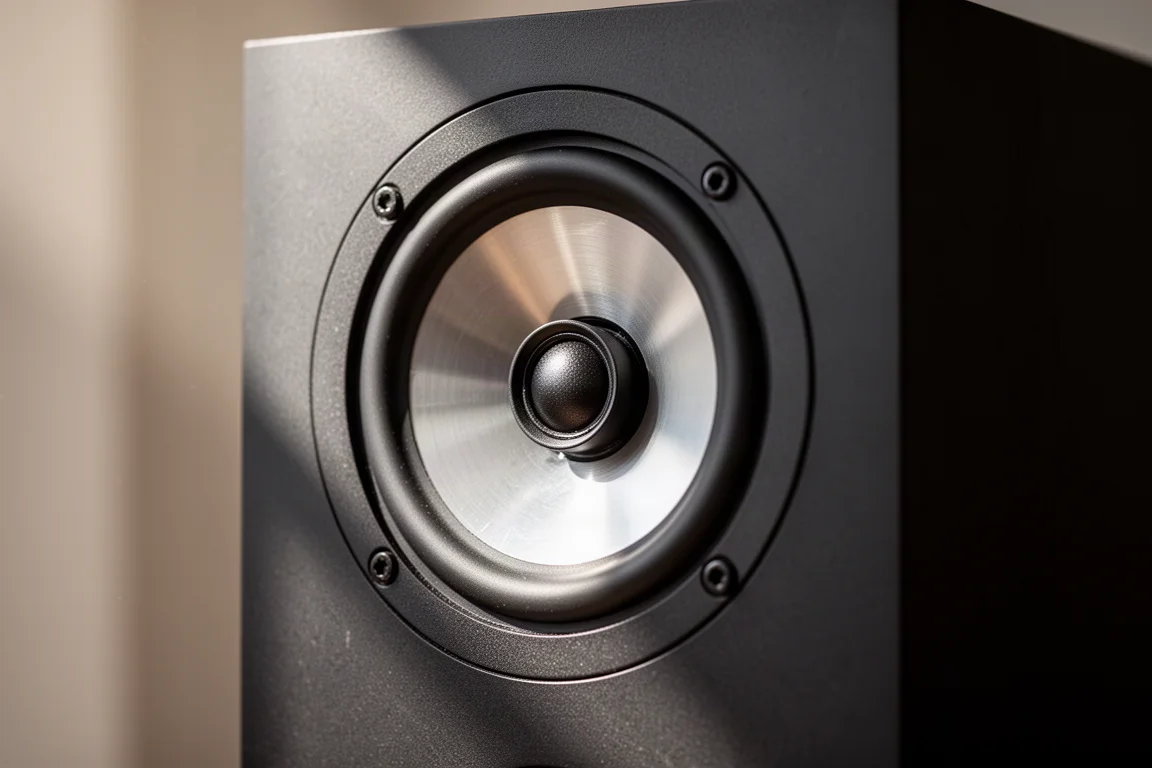
The Q3 Meta avoids that by making the mid bass cone act as a waveguide for the tweeter set inside it. The measured radiation pattern is wide in both planes, roughly plus or minus 60 degrees horizontally and vertically. That is an unusually generous vertical figure for a two-way design, and it is the reason the speaker stays consistent when you are not sitting still.
Physically, the cabinet is a straightforward rectangular enclosure with a clean front baffle, and it feels dense and sturdy for its size. Internally, there is limited damping material from the factory beyond some batting rolled into the corners. The port tuning uses an extended bass shelf alignment, which is a deliberate choice that lets the speaker sit closer to a rear wall without turning boomy.
Main Strengths
The overall sound is genuinely enjoyable, and the timbre is nicely judged. The wide horizontal dispersion gives the soundstage real breadth, and the wide vertical dispersion keeps that presentation stable as you move around the room or listen from different seat heights.
The mid bass has a satisfying punch. Measurements show output extending down to around 50 Hz before rolling off quickly, with an F3 of 52 Hz and an F10 of 37 Hz. There is also a gentle elevation around 120 Hz, and that region is what usually creates the impression of kick drum impact. It gives the low end a sense of weight without demanding maximum excursion from the driver, which in turn eases the compression and distortion that often appear in the 50 to 60 Hz range.
Just as importantly, the off-axis behaviour is consistent. When the response holds together at different angles, the speaker takes equalisation well, which matters if you plan to run room correction or tune the sound to taste in a home theatre setup. Very few compromises here get in the way of that.
The result is a speaker that sounds larger and more relaxed than its cabinet size suggests, provided you stay within its comfort zone.
Things to Consider Before Buying
Two cabinet resonances show up in the measurements, one around 350 to 370 Hz and another around 600 Hz, and the factory damping inside the enclosure is minimal. Adding roughly half a pound of acoustic stuffing to the cabinet reduced those resonances but did not remove them entirely.
The audible impact is smaller than the graphs suggest. These are high Q resonances sitting within about plus or minus 2 dB, and in repeated blind comparison testing across three rounds and 24 trials, the modified and unmodified speakers could not be reliably told apart. That is a useful reminder that a dramatic looking measurement does not automatically translate into a dramatic listening difference.
There is a modest dip in on-axis linearity, which spans roughly minus 5 to plus 3 dB, and a little attack and clarity is missing between about 1 and 2 kHz. The speaker is also not built for high output. Above roughly 90 dB at 10 ft, it runs into compression and audible strain in the upper mid range between 1 and 2 kHz. Harmonic distortion climbs past a 3 percent threshold at 96 dB at 1 metre, and dynamic range compression testing at 102 dB at 1 metre shows the driver losing control. If you plan to stuff the ports with the supplied bungs, expect the low end to roll off into the low 100 Hz region and overall output capability to drop further, so that configuration only makes sense with a subwoofer crossed over above 100 Hz and the speakers placed close to a wall.
Setup and Placement
Run the Q3 Meta in ported mode. That is where it sounds best, and blocking the ports costs far more output than it returns in control.
Position the cabinets roughly one foot from the wall behind them, measured from the back of the speaker to the wall. The extended bass shelf tuning means the speaker rolls off gradually and then more steeply rather than following a typical sealed or ported curve, which is precisely what allows closer wall placement without a resonant, boomy result. If you need to push them nearer the wall, that alignment is on your side.
Aim the speakers directly at the listening position, or only slightly off axis. Pointing them straight out into the room at around 30 degrees off axis widens the radiation further but rolls off the top end, and with this speaker that trade is not usually worth taking. If the sound seems bright in your room, a small amount of toe-out can help, but there is little benefit in going far off axis.
Buying Advice
At around $799 per pair, the Q3 Meta sits in a competitive part of the market, and the decision comes down to matching it to the job. Pair it with an amplifier rated between 15 and 150 watts and a 4 ohm load in mind, though note the minimum impedance dips to roughly 3.7 ohm, so a capable amplifier is worthwhile.
For stereo listening at reasonable levels in a normal room, this is an easy speaker to recommend. Its wide dispersion, even off-axis behaviour, and willingness to accept equalisation make it forgiving of imperfect rooms and imperfect seating. For a high output home theatre system, plan on adding a subwoofer and high passing the Q3 Meta, and accept that it will remain somewhat volume limited even then. Used as surrounds or as a high passed centre channel, those limits rarely come into play.
If you are weighing options, narrow your shortlist to two or three designs that match your priorities, buy from a seller with a straightforward return policy, and compare them in your own room. That process settles more questions than any specification sheet can.
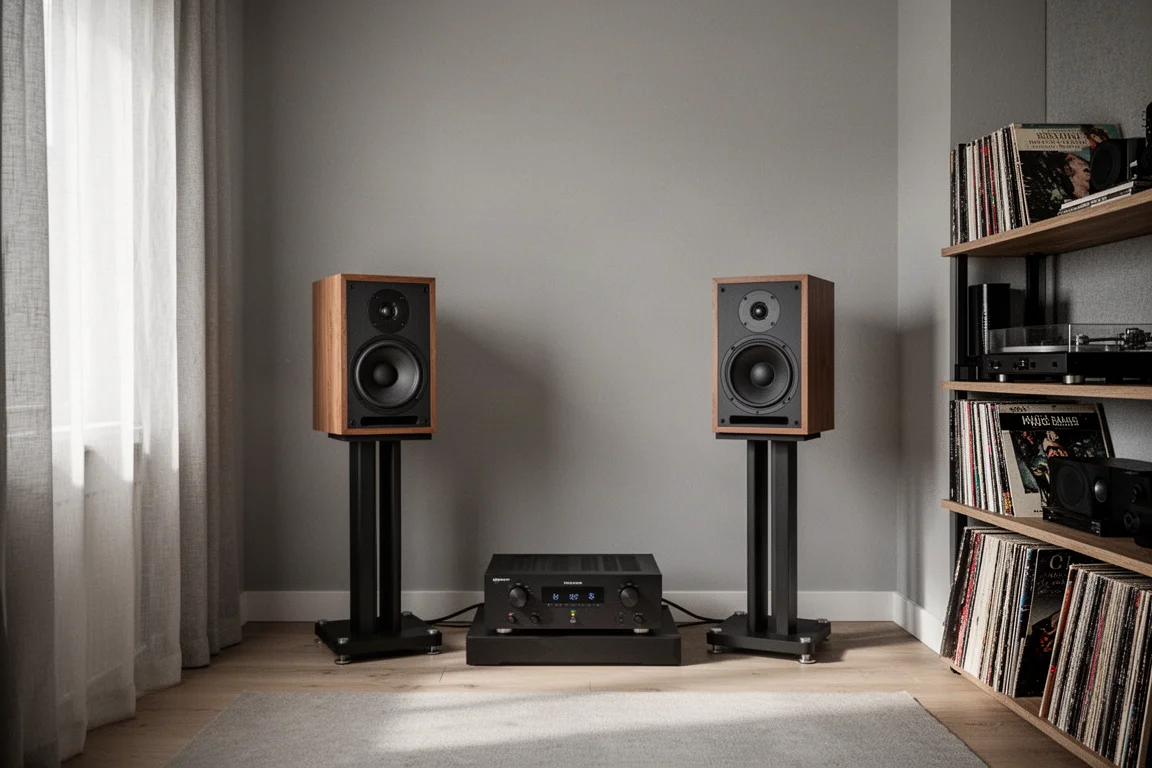
The Q3 Meta earns its place on that shortlist on the strength of its driver design rather than its peak output.
Conclusion
The KEF Q3 Meta is a well executed coaxial bookshelf speaker with a wide, stable radiation pattern, pleasing timbre, and a low end that punches above its cabinet size. Its weaknesses are equally clear: modest internal damping, a small dip in linearity, and a firm ceiling on output that makes it a poor fit for loud, effects heavy home theatre without a subwoofer.
Buy it for what it is good at. In a living room, an open plan space, or a surround system where it is not asked to shout, it delivers a broad, comfortable presentation that holds together as you move around the room.
Product link
View more details for KEF Q3 Meta
This product is mentioned in the review. Check the specifications, options, and compatibility before buying.
View more details for KEF Q3 MetaFurther reading
Related Reviews
Bookshelf Speakers
Acoustic Energy A100 Mark II Review: A Compact Standmount With an Expansive Soundstage
The Acoustic Energy A100 Mark II brings clarity, natural tonality and a wide soundstage to an entry-level standmount, with a few setup details worth knowing first.
Bookshelf Speakers
Acoustic Energy AE-100 Mark II Review: Compact Bookshelf Speakers With Standout Imaging
A compact British two-way bookshelf speaker with deep, layered imaging, fast bass, and a slight treble lift to weigh against a crowded $500 field.
Bookshelf Speakers
Acoustic Energy AE100 MK2 Review: Measured Performance and Four Alternatives
A close look at the Acoustic Energy AE100 MK2 bookshelf speaker, what its measured performance reveals, and four alternatives with different trade-offs.