Home Audio
KEF Q11 Meta Review: A Three-Way Tower That Gets Close to the R Series
The KEF Q11 Meta brings a three-way driver array, MAT tweeter absorption, and a more compact cabinet to the top of the Q Series, with performance that lands close to the pricier R Series.
Introduction
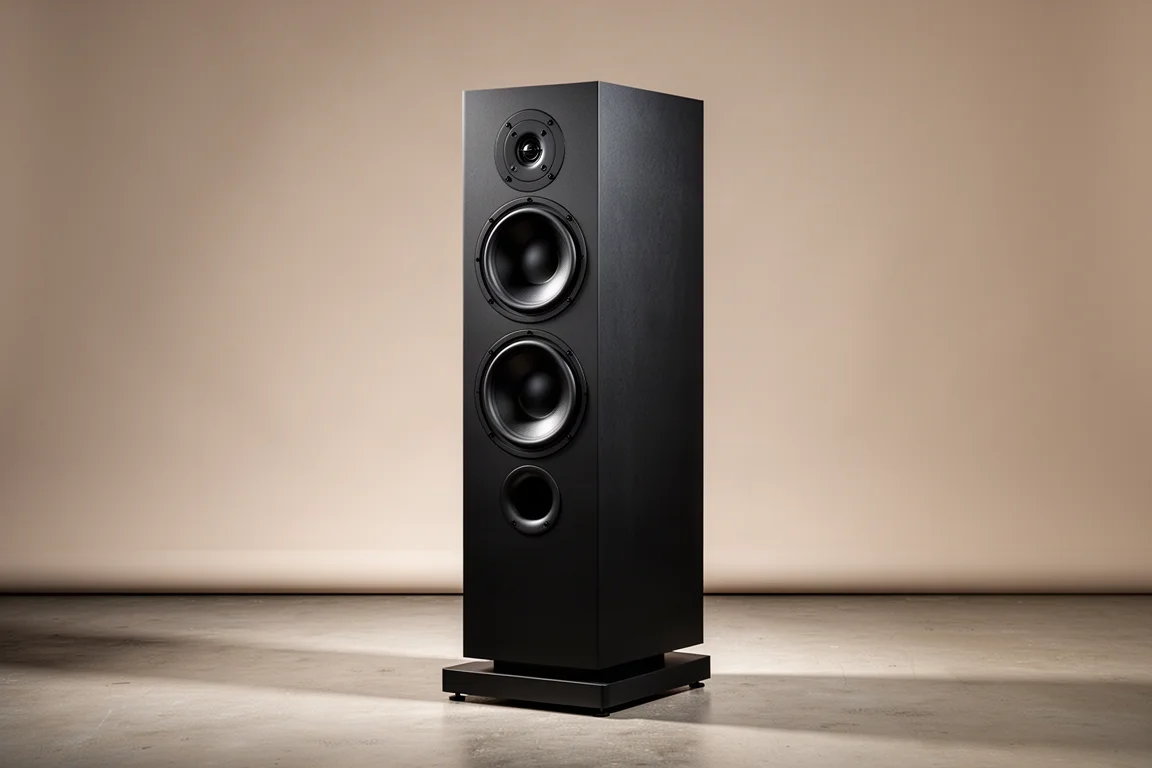
KEF’s Q Series has long sat just below the R Series in the lineup, and the newest generation pushes that relationship closer than ever. At the top of the range is the Q11 Meta, a floorstanding tower that replaces the Q950 and adopts a genuinely new driver layout. The cabinet and drivers are a little smaller than before, yet the reported frequency response stays essentially the same, and the speaker now borrows the three-way architecture and MAT absorption technology that define KEF’s more expensive models. The short version: this is a large tower with the kind of bass presence and dynamic ease that usually costs considerably more.
Design and Driver Configuration
The most significant change is the move from the older 2.5-way design to a proper three-way configuration. Five drivers handle the work: a 0.75 inch vented aluminum dome tweeter with Metamaterial Absorption Technology (MAT) behind it, a 4 inch aluminum cone midrange driver, and three 6.5 inch hybrid aluminum woofers. A rear port and a heavier cabinet round out the package, and the whole assembly is a touch more compact than the Q950 it replaces, which is good news for rooms where floor space is tight.
The reported response is 44 Hz to 20 kHz, with a typical in-room response reaching down to roughly 26 Hz. The combination of five drivers, a rear port, and a stiffer cabinet is what lets the Q11 Meta hold that rated range while staying reasonably easy to live with.
Power requirements deserve attention. Sensitivity is rated at 89 dB with a nominal 4 ohm impedance that can dip to about 3.2 ohm. That is not an exotic load, but it does reward a receiver or amplifier with real current delivery. In practice the speaker has worked well with a high-output home theater receiver and with stereo integrated amplifiers, so the requirement is capability rather than specialist gear.
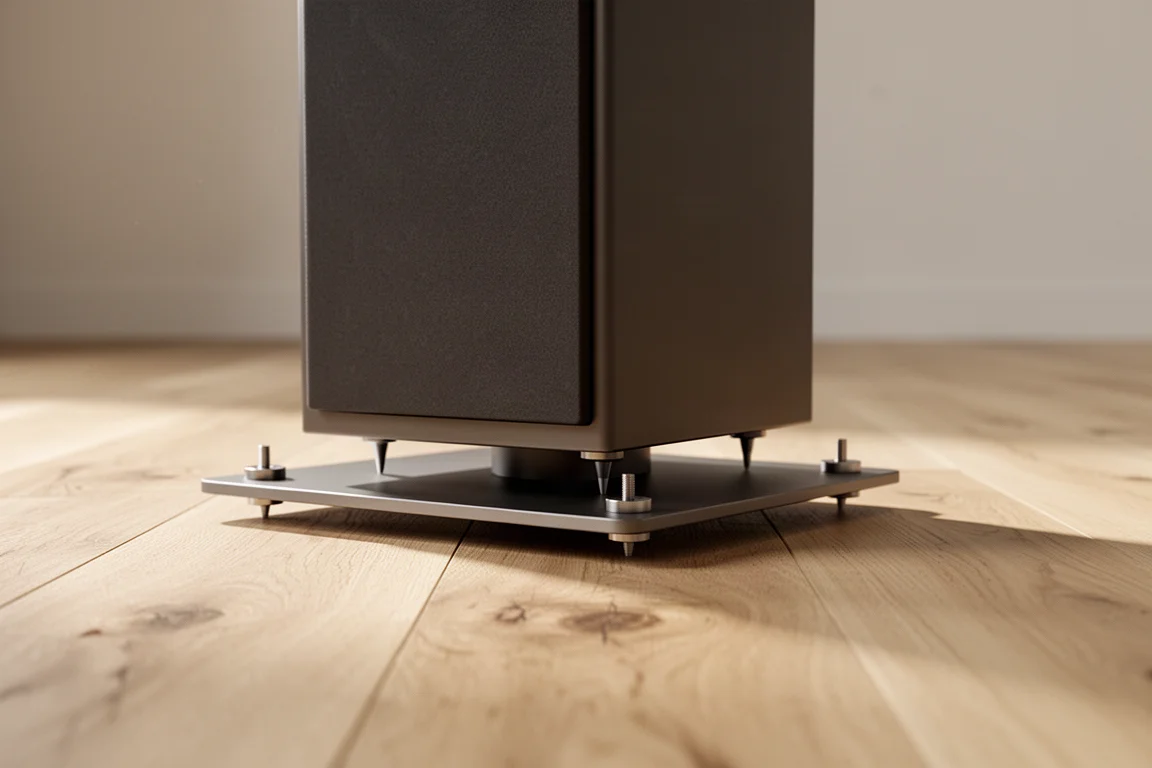
One detail worth noting is the feet. The R Series uses metal feet, while the Q Series uses plastic feet styled to mimic the same look. Once assembled and installed they provide very good stabilization, but they are also the clearest example of where KEF could have carried more of the R Series hardware down the line.
Bass and Lower Midrange
In the low end the Q11 Meta is generous. Compared with the more expensive R11 Meta, overall extension is broadly similar, but the Q11 Meta carries a little more energy and presence through the bass and lower midrange. Kick drums, double bass lines, and even some vocal ranges have more body through the Q11 Meta, which gives it a broader and weightier tone overall.
The trade-off is focus. The R11 Meta keeps tighter control through the same frequencies, with a greater sense of texture, air, and decay around individual notes. Listeners who chase pinpoint definition in the lower midrange will hear that difference. Listeners who want weight and impact from a tower without adding a subwoofer will find the Q11 Meta the more immediately satisfying of the two.
For anyone who wants the deepest notes at high output, or who has to work around a room-induced bass dip, a subwoofer remains the practical answer. The Q11 Meta reaches low enough that many rooms will not need one, but it does not pretend to replace one.
Midrange and Treble
This is where the gap between KEF’s price tiers narrows most. Through the midrange and treble the Q11 Meta runs close to both the R11 Meta and the smaller R3 Meta. The R Series still sounds more composed and focused, a difference that comes down to cabinet design and materials, and voices through the R Series take on slightly better dimension, scale, and placement within the stage. The Q11 Meta renders them a little broader, and the difference is real rather than imagined, but it is a matter of character rather than one speaker being plainly better than the other.
The treble tells a similar story. The Q11 Meta rolls off slightly more than the R11 Meta and R3 Meta, but only slightly. Even with test tones and pink noise at higher frequencies, the timbres are difficult to tell apart, and real-world content makes the distinction harder still. In a heavily treated room with very resolving electronics a subtle refinement gap may show up. In most rooms it likely will not.
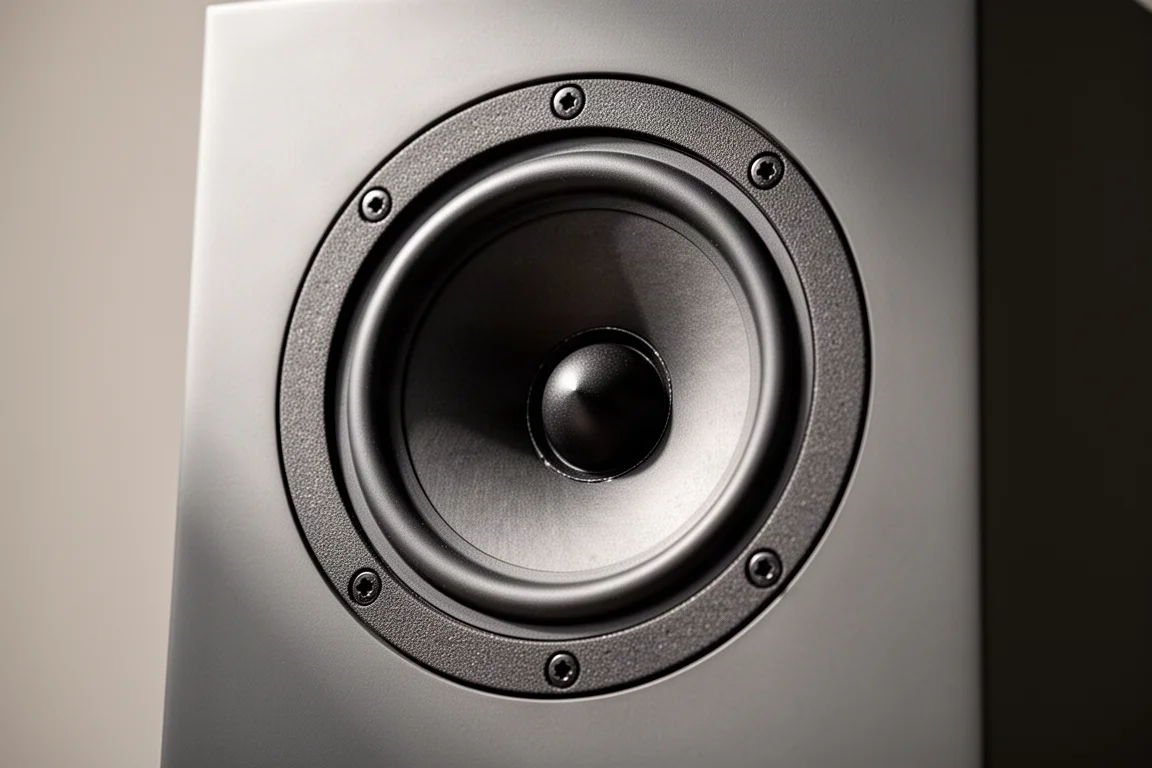
Soundstage and dynamics follow the same pattern. The Q11 Meta sounds larger and casts a bigger perceived stage, while the R Series keeps instruments and vocals more tightly focused inside it. Dynamically, the Q11 Meta is more raw, trading some finesse for impact. It fills a room easily and becomes more enjoyable as the volume rises.
Home Theater Performance
Home theater is where the Q11 Meta finds another gear. Used as left and right mains alongside the matching KEF Q6 Meta center channel, it delivers a wide, detailed front stage with strong placement of effects across the room, and enough dynamic punch to make big action scenes land even without a subwoofer in the mix. The Q6 Meta itself is excellent, with very good intelligibility both on and off axis, and it is a natural sonic match for the towers, particularly if you plan to run room correction such as Dirac.
Even without a center channel, the Q11 Meta’s own center focus is good enough that a phantom center is a workable option for movie duty. One more point in its favor: as levels climb toward commercial cinema volume, the speaker’s sound and response stay consistent rather than shifting character.
How the Q11 Meta Compares
From about 50 Hz up to 20 kHz the Q11 Meta tracks in broad alignment with the R11 Meta, though the R11 Meta remains the more linear speaker from top to bottom, with fewer peaks and dips along the way. The R11 Meta is still the better overall speaker for listeners who prioritize neutrality and control. The Q11 Meta is the more forgiving and more energetic of the two, which is why some listeners may actually prefer it, and it costs roughly half as much.
Against the smaller R3 Meta the Q11 Meta gives up a measure of that same focus while gaining a much larger physical presentation. Their measured responses look similar, yet they do not sound identical. Again, the difference is one of character rather than quality.
Two other towers are worth mentioning for context. The SVS Titans go deeper and hit harder in the low end than the Q11 Meta, with output that approaches subwoofer-like performance, and they remain the more full-range and contrasty of the two designs. The Polk R700, now several years old, is very evenly matched with the Q11 Meta overall: the Polk carries more weight through the deepest bass, while the Q11 Meta counters with more detail and snap down low. The Polk is also more likely to need a better amplifier or AVR to give its best, which adds to the total investment. The KEF’s high frequencies are less rolled off than the Polk’s, so anyone who finds the R700 too subdued may prefer the Q11 Meta, and the KEF comes to life more easily with modest amplification.
The practical takeaway is that the Q11 Meta does not embarrass itself next to speakers costing considerably more, and in a few areas it plays to its own strengths.
Placement and Power Requirements
Placement matters, and KEF’s guidance is specific: at least 9 inches between the back of the cabinet and the front wall, at least 20 inches from the side walls, and the two speakers placed 5 to 10 feet apart with the listening position at that same distance or just slightly further back.
In practice, a pair positioned about a foot off the wall, 10 feet apart, with the listening position 11 feet from the front baffles produced an impressive in-room response while making efficient use of the room. That is a helpful reminder that this tower does not demand a dedicated listening room to sound good, though giving it room to breathe at the back will pay off in the bass.
On amplification, the 89 dB sensitivity and 4 ohm nominal impedance, dipping to about 3.2 ohm, mean a capable receiver or integrated amplifier is the sensible starting point. Nothing exotic is required, but a modest amp is not the best match for a speaker of this size.
Things to Consider Before Buying
- The 4 ohm load, which can dip to about 3.2 ohm, calls for a receiver or amplifier with real current delivery for the best results.
- The R Series remains the more neutral and controlled option, with tighter focus and slightly less treble roll-off.
- The Q Series uses plastic feet rather than the metal feet found on the R Series.
- Bass presence is generous but still room-dependent. A subwoofer is the answer for the lowest notes at high output, or for placement-related dips.
- The extra energy in the bass and lower midrange is characterful. Listeners who want maximum neutrality may lean toward the R Series instead.
Buying Advice
At roughly half the cost of the R Series towers, the Q11 Meta delivers a large share of that performance with a more forgiving, more energetic presentation. It is an easy recommendation for a combined music and home theater system, particularly when paired with the Q6 Meta center channel.
If your priority is absolute neutrality, tighter focus, and the last word in lower-midrange control, the R Series still earns its premium. If you want a tower that fills a room, handles movies and music equally well, and does not demand expensive electronics to come alive, the Q11 Meta is the more sensible place to put your budget.
Conclusion
The Q11 Meta is the clearest example yet of trickle-down design in KEF’s lineup: a three-way driver array, MAT absorption, and a more compact cabinet that together land remarkably close to the R Series. It is not the last word in control, and it will not replace a dedicated subwoofer for the deepest output, but it is a genuinely enjoyable, room-filling tower at roughly half the price of the model above it.
Product link
View more details for KEF Q11 Meta
This product is mentioned in the review. Check the specifications, options, and compatibility before buying.
View more details for KEF Q11 MetaFurther reading
Related Reviews
Home Audio
Aperion Novus Tower and Center Review: Punchy Home Theater Sound With Real Refinement
A close look at the Aperion Novus tower and center speakers, from their layered paint finish and punchy bass to the 4-ohm load and what the price actually buys.
Home Audio
Arendal 1610 Tower Review: Flagship Dynamics in a Room-Friendly Tower
A compact floorstanding tower with three 8-inch aluminium woofers, a 5-inch carbon midrange, and the kind of bass heft usually reserved for much larger speakers.
Home Audio
Arendal 1723 S THX Review: A Reference Speaker Built Like a Tank
A practical look at the Arendal 1723 S THX, a sealed, THX-certified speaker with exceptional build quality, a very flat top end, and a midrange that responds beautifully to EQ.