Bookshelf Speakers
KEF Q1 Meta Review: A Neutral Coaxial Bookshelf Speaker Worth Considering
A compact coaxial bookshelf speaker with calmer tonality than its predecessor, flexible near-wall placement, and one forward region that responds well to EQ.
Introduction
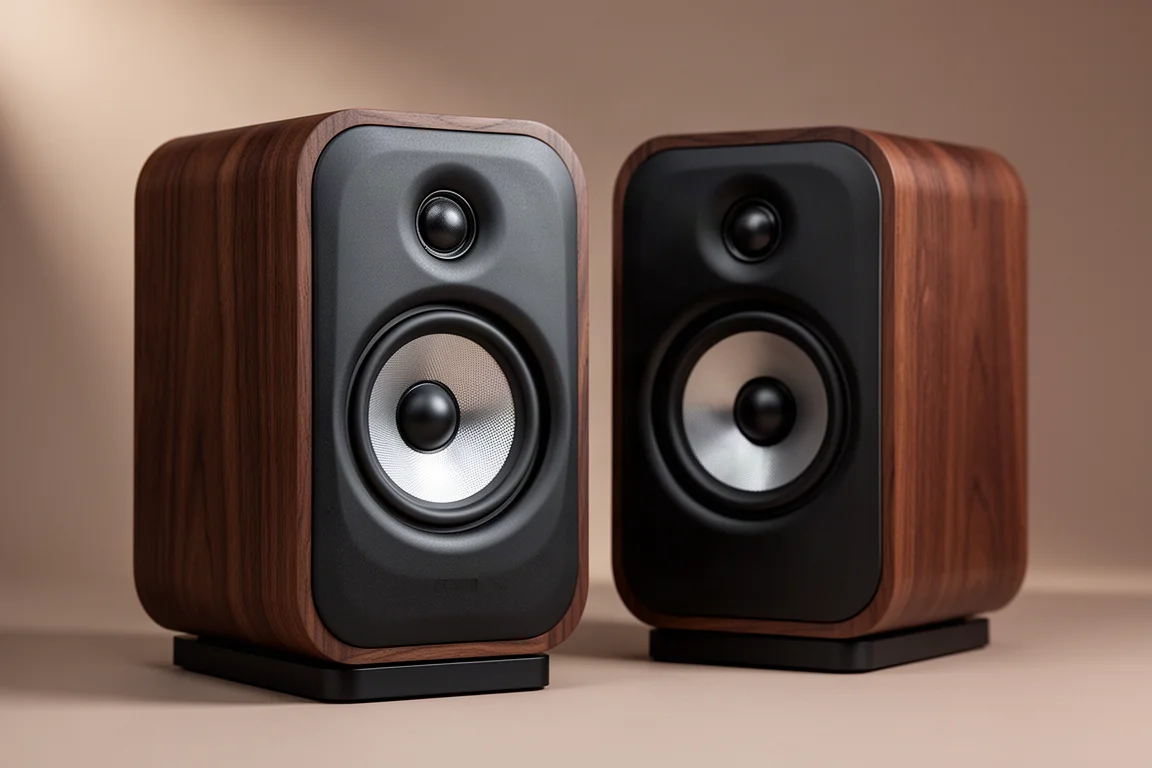
The KEF Q1 Meta is a compact two-way coaxial bookshelf speaker that retails for about $699 per pair, with periodic sale pricing that has brought it down to roughly $399 per pair. It combines a 1-inch vented aluminum dome tweeter with a 5.25-inch aluminum cone midrange and bass driver, arranged coaxially so the tweeter sits at the center of the larger driver rather than above it. The cabinet is ported, the grille is detachable, and the finish options include dark walnut, black, and white. The walnut version in particular looks convincing in person.
KEF rates sensitivity at 86 dB and recommends amplifier power between 10 and 150 watts. The Q1 Meta is smaller than most other two-way bookshelf speakers, which makes it easier to fit into real rooms, and its tonality is a clear step forward from the earlier Q150. The forward character around 1 kHz is the one trait that keeps it from being a fully neutral design, and it is straightforward to address with EQ.
Who the KEF Q1 Meta Is For
This is a speaker for listeners who want a compact two-channel system in a small or mid-size room and who value placement flexibility. Because the cabinet uses an extended bass shelf design, the Q1 Meta can sit closer to a wall than most bookshelf speakers without the low end becoming bloated, which is useful in apartments, offices, and rooms where furniture dictates the layout.
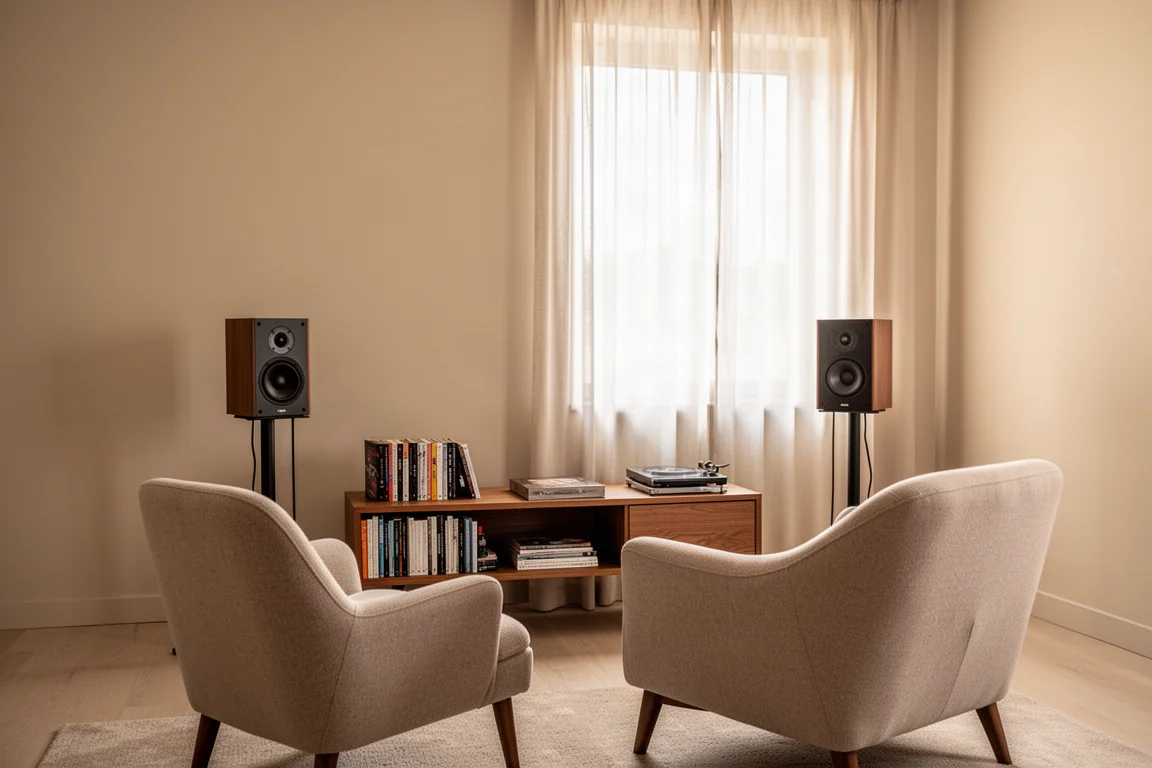
It also suits listeners who do not sit perfectly still. The coaxial driver arrangement gives the speaker a wider vertical listening window than a conventional two-way design, so you can sit slightly above or below the tweeter axis without losing the soundstage or the tonal balance. Anyone upgrading from the Q150 who found its treble too bright is squarely in this speaker’s target audience, while buyers chasing maximum output in a large home theater should look at larger options.
Main Strengths of the KEF Q1 Meta
Tonality is the headline improvement. Compared with the Q150, which leaned bright in the treble, the Q1 Meta is noticeably more neutral and easier to listen to over long sessions. The 1 kHz region still steps forward a little, but the overall balance is calmer and more even across the upper midrange and highs.
Bass extension is solid for the cabinet size. Measurements put F3 at 52 Hz and F10 at 44 Hz, which translates to roughly 50 Hz of usable in-room extension before output falls away steeply. Below that point the speaker drops off quickly, so a subwoofer is the natural partner for anyone who wants deeper low end.
The coaxial design pays off in dispersion. Because the tweeter sits in line with the midrange, the speaker holds its vertical response over a wider range than a typical two-way, and the radiation pattern is roughly plus or minus 50 to 60 degrees, wide enough to fill a room without lighting up every surface. Sensitivity lands around 85 to 86 dB with a recommended 10 to 150 watts of amplifier power, and the compact cabinet and clean finishes make it an easy speaker to live with visually.
How the Q1 Meta Compares to the Q150
The Q150 sold at roughly the same price when it launched and remains available on the used market, so the comparison matters for anyone shopping either model. The biggest difference is in the treble. The Q150 is simply too bright, while the Q1 Meta takes a more neutral approach that is far easier to listen to for hours at a time.
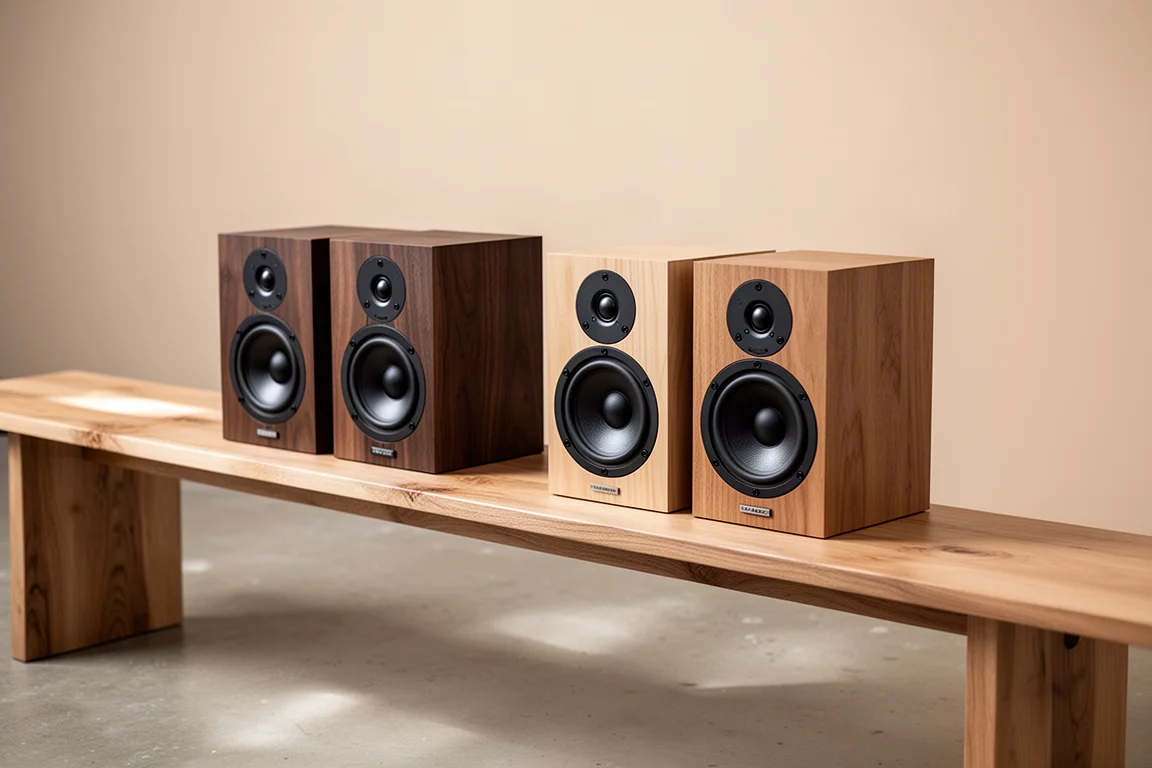
Through the upper midrange the Q1 Meta has slightly more bite than the Q150, so it can sound a touch more forward when the two are compared directly. Heard on their own rather than side by side, that difference is subtle. The treble difference is not, and it is the main reason the Q1 Meta is the better of the two.
Setup and Placement Notes
Point the speakers directly at the listening position, or toe them out by no more than about 10 degrees. Beyond that, the top end falls off quickly and the sound becomes dull and lifeless. Because the cabinet is designed with an extended bass shelf, close-to-wall placement works well. Moving the speaker nearer to the wall adds low-frequency output rather than muddying it, though the exact amount will depend on the room.
Listening height is worth experimenting with. Data taken 20 degrees above and 20 degrees below the tweeter axis shows the forward region staying much the same while the on-axis dip around 2 kHz flattens out, which leaves the low-mid bump as the dominant characteristic. Sitting slightly above or below the tweeter line is a free way to fine-tune the balance.
Things to Consider Before Buying
The most audible deviation is a rise in the region around 900 Hz to 1 kHz that gives the speaker a forward, stepping-out-of-the-stage quality of about 2 dB. It is reinforced by a dip of roughly 3 dB centered near 2 kHz, which makes the peak stand out more than it otherwise would. A parametric EQ filter at about 908 Hz with a cut of around 2.5 dB and a Q of roughly 3.5 smooths the response considerably and produces a more neutral result overall.
Burst decay shows a high-Q ringing in the enclosure, most likely from the port design, which can read as bass that lingers slightly longer than it should. There is also a rise of about 1.5 dB between roughly 150 and 300 Hz relative to the 80 Hz region and the 400 to 600 Hz midrange, which is what gives the speaker its warm male vocals and punchy upper mid bass character.
Output capability deserves honest expectations. Multi-tone distortion approaches the 3 percent mark around 96 dB at 1 meter, which is where the sound starts to take on grain. At more conventional levels around 88 dB the speaker stays clean. It is not a candidate for running full range in a large home theater, and pairing it with a subwoofer reduces midrange distortion noticeably. Short-term compression at high levels costs some midrange output and more in the low bass. Impedance shows a resonance around 600 to 700 Hz and a minimum EPDR near 2.1 ohm, so amplifier matching is worth attention.
How It Compares With Other Bookshelf Speakers
At current retail, the Q1 Meta at $699 per pair sits alongside the Klipsch RP-600M II at the same price and above the Emotiva Airmotiv B2 at $549 per pair. All three are regularly discounted, so timing matters.
The Klipsch carries roughly 3 dB more high-frequency output than its midrange and lower bass, and its emphasis sits in the 2 to 4 kHz range rather than the sibilance region, which makes it sound edgy and slightly grainy in the lower treble. The Emotiva measures well on axis but still shows brighter high frequency than the KEF, and it performs best when turned about 30 degrees off axis. The Q1 Meta counters with a more forward midrange and a neutral top end. It also radiates more broadly than the Klipsch, while the Klipsch and the Emotiva both have narrower vertical windows than the KEF, which matters if you move around while listening.
Buying Advice
At $699 per pair, the Q1 Meta lands where you would expect for its class, and it is a straightforward recommendation for anyone who wants a compact, neutral-leaning bookshelf speaker. When sale pricing brings it down to around $399 per pair, the value argument becomes considerably stronger.
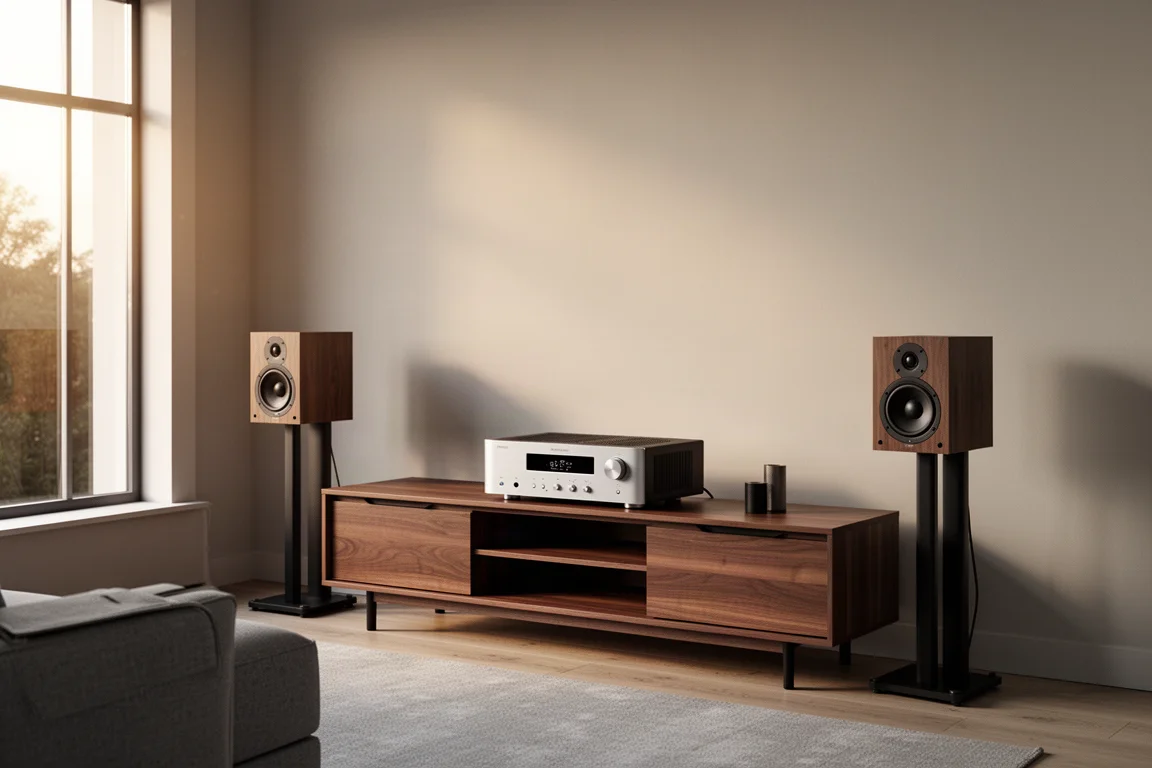
If your priority is an upgrade from the Q150, this is a clear step forward, mainly because of the calmer treble. If you need high output across the full range in a large room, plan on adding a subwoofer or choosing a larger speaker instead.
Budget a little time for setup as well. Keep the toe-in under about 10 degrees, experiment with listening height, and try close-to-wall placement before deciding the speaker needs more low end. Buyers who are comfortable applying a small parametric EQ cut around 908 Hz will get the most neutral result.
Conclusion
The KEF Q1 Meta is a good speaker in its price class. It is compact, well finished, and flexible about placement, and its coaxial driver delivers a wider vertical window than most two-way designs at this price. The forward region around 1 kHz is the main compromise, and it is easy enough to tame with EQ. As an upgrade over the Q150 it is worthwhile, and it competes directly with the other bookshelf speakers in its category, earning a place among the strongest options in this price range.
Product link
View more details for KEF Q1 Meta
This product is mentioned in the review. Check the specifications, options, and compatibility before buying.
View more details for KEF Q1 MetaFurther reading
Related Reviews
Bookshelf Speakers
Acoustic Energy A100 Mark II Review: A Compact Standmount With an Expansive Soundstage
The Acoustic Energy A100 Mark II brings clarity, natural tonality and a wide soundstage to an entry-level standmount, with a few setup details worth knowing first.
Bookshelf Speakers
Acoustic Energy AE-100 Mark II Review: Compact Bookshelf Speakers With Standout Imaging
A compact British two-way bookshelf speaker with deep, layered imaging, fast bass, and a slight treble lift to weigh against a crowded $500 field.
Bookshelf Speakers
Acoustic Energy AE100 MK2 Review: Measured Performance and Four Alternatives
A close look at the Acoustic Energy AE100 MK2 bookshelf speaker, what its measured performance reveals, and four alternatives with different trade-offs.