Hi-Fi Speakers
KEF Q Concerto Meta Review: A Three-Way Standmount Worth the Money
A passive three-way standmount with a metamaterial tweeter absorber, generous bass for its size, and a price that undercuts the KEF R3 Meta.
Introduction
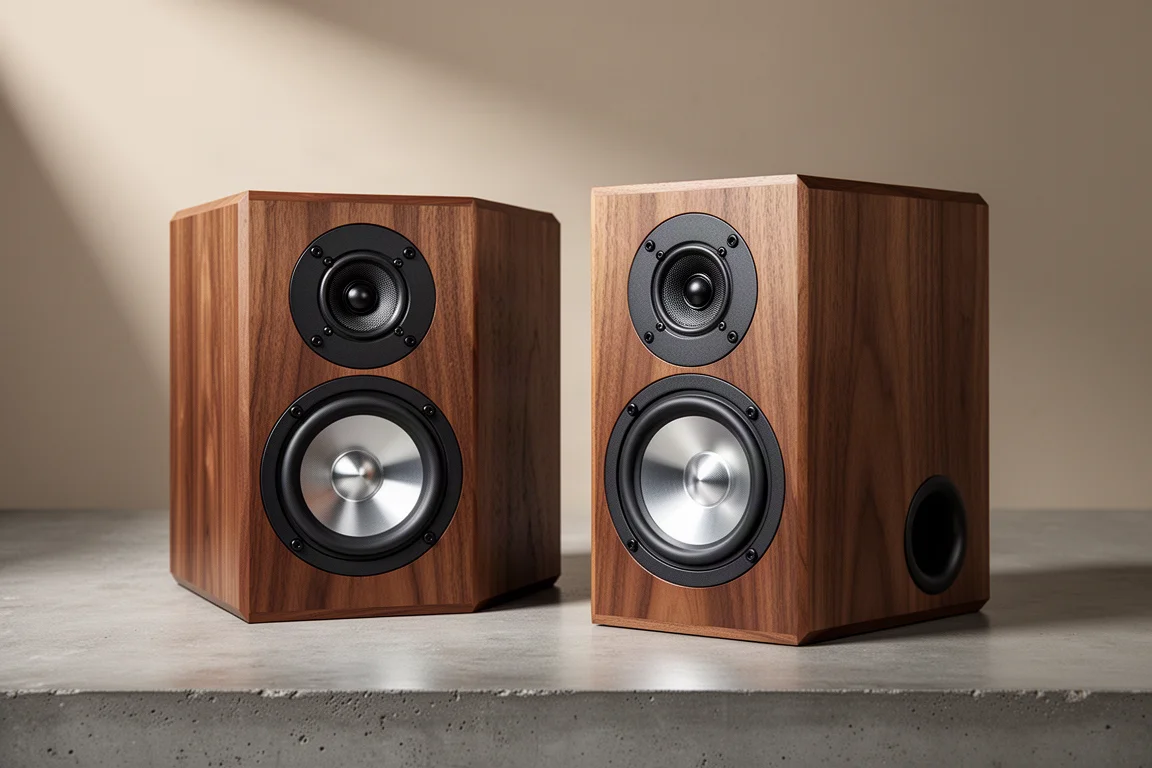
The KEF Q Concerto Meta is a passive three-way standmount, and within KEF’s revamped Q Series it is the only three-way standmount in the line-up. Two parts of the name explain the design. Meta refers to the metamaterial disc mounted behind the tweeter, which absorbs most of the back wave so that delayed sound does not reflect forward again. Concerto links the speaker to KEF’s three-way standmounts of the 1960s and 1970s.
At roughly half the price of the KEF R3 Meta, the Q Concerto Meta raises an obvious question: how much of the more expensive speaker’s character survives the step down? That question shaped most of the listening behind this article, which relied on level-matched side-by-side comparisons, each run over roughly a two-week period.
Who the KEF Q Concerto Meta Is For
This speaker suits listeners who want a standmount with a modern, energetic presentation rather than a warm, vintage one. Treble extension is obvious, instrumental layers separate cleanly, and bass weight is generous enough that a subwoofer feels optional rather than necessary.
It also suits anyone running a capable integrated amplifier. KEF rates the speaker at 85 dB sensitivity with a 4 ohm nominal impedance, and the load dips to just above 3 ohms, so it asks a reasonable amount of current from the amplifier. A Musical Fidelity A1 integrated proved the favourite pairing, with a Marantz Stereo 70S and a NAD C3050 also on hand.
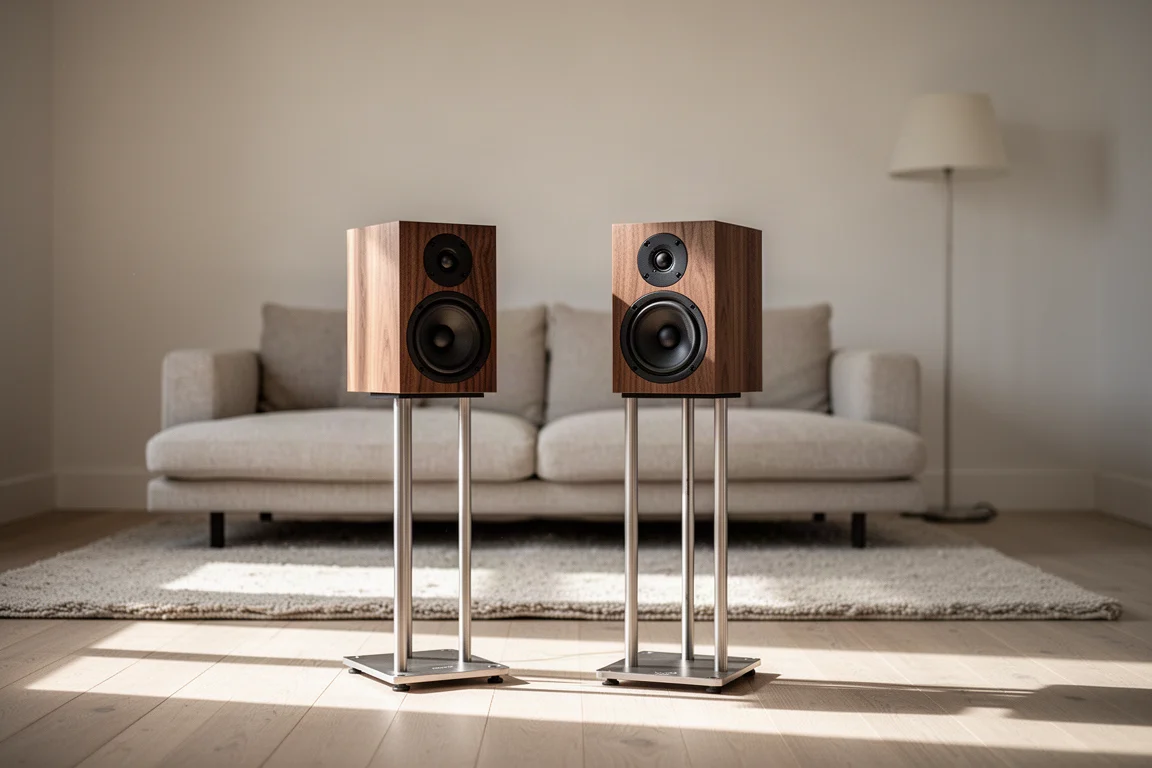
Room behaviour matters here too, and it is worth stating plainly that the room shapes the result more than the electronics do. In a smaller, less heavily treated space the Q Concerto Meta sounded comfortable and balanced, while a larger, acoustically treated room favoured a bigger, warmer standmount. Buyers with modest rooms and a mid-priced amplifier are close to the sweet spot.
Main Strengths
The Q Concerto Meta’s case rests on a three-way driver array, a carefully worked crossover, and a sound that stays composed well beyond its price bracket.
A Three-Way Driver Array With Metamaterial Absorption
The array starts with a 0.75 inch aluminium dome tweeter, aligned concentrically with a 4 inch aluminium midrange driver. That unit is a dedicated midrange rather than a midbass driver, and the molding surrounding it, which KEF calls Shadow Flare, guides the tweeter’s output and keeps the tweeter from having a direct line of sight to the cabinet edges, reducing cabinet edge diffraction.
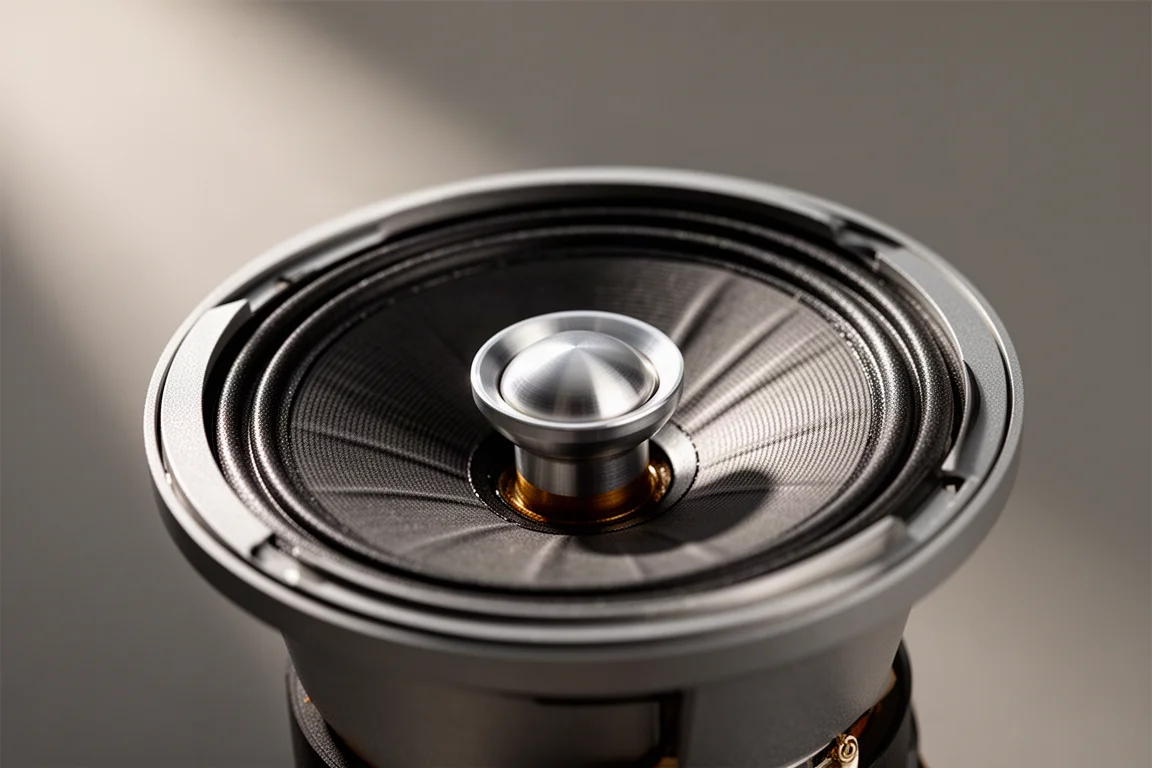
Below that sits the dedicated bass driver, a 6.5 inch unit with an aluminium-skinned paper cone. The crossover network received particular attention, and the result is an off-axis response that more closely matches the on-axis response, an outcome KEF attributes in large part to a new measurement facility at its headquarters in Kent. Sensitivity is rated at 85 dB, with a 4 ohm nominal impedance that dips to just above 3 ohms.
Dynamics, Imaging, and Bass Presence
Against a two-way standmount with an AMT tweeter, such as the GoldenEar BRX, the Q Concerto Meta shows more low-end punch and takes the lead on imaging. The AMT tweeter draws more attention to itself in the treble, which makes the BRX more incisive with detail but also more forward. The Q Concerto Meta also proves the more dynamic of the two, while a two-way design of that kind benefits more obviously from a subwoofer.
How It Compares With Other Standmount Speakers
Dynamics are where the Zu Audio DWX, a reference at its price point, still leads. The Q Concerto Meta cannot quite match it at lower listening levels, although the gap is not night and day, and the KEF stays perfectly enjoyable for late-night listening and for television at low volume.
The Wharfedale Linton takes a different route altogether. The Linton sounds more physically present, with thicker low mids and a voicing that reads as vintage, while the Q Concerto Meta comes across as the more modern speaker: more obvious clarity, more treble extension, and greater definition in the bass as a result. On percussion-heavy material the Q Concerto Meta separates instrumental layers more cleanly and delivers more soundstage depth. The Linton remains the easier speaker to sink into, while the KEF brings more energy and immediacy.
The closest comparison is with the KEF R3 Meta, a speaker of similar cabinet dimensions whose drivers are slightly larger. Both offer similar transparency, similar separation between layers, and similar poise on acoustic guitar work. The R3 Meta pulls ahead with a fuller bass sound and, only when the volume is pushed, a more effective link between composure and scale. Even so, the Q Concerto Meta tracks very low bass notes with an arresting presence, and the difference between the two is not night and day. Returning to the Q Concerto Meta after time with the R3 Meta, very little feels missing.
Things to Consider Before Buying
The R3 Meta is the better speaker overall, and buyers who want the last word in bass weight and high-volume composure should know that going in. The Q Concerto Meta is the slightly thinner sounding of the two, and it gives up some of the R3’s scale when pushed hard.
Finish and features are the other trade-offs. The cabinet uses a vinyl wrap rather than the R3 Meta’s gloss finish, and there is no bi-wire capability. Dedicated stands are available separately, and on one stand the protective film over the KEF logo lifted the letter clean off during removal, a small reminder to take care when unwrapping.
Load handling deserves attention as well. With a nominal 4 ohm impedance dipping to just above 3 ohms and 85 dB sensitivity, the speaker rewards an amplifier with genuine current delivery rather than the smallest budget option.
Buying Advice
Value is the strongest argument for the Q Concerto Meta. It sells for almost half the price of the R3 Meta, and the audible gap between them is narrower than that price difference suggests. The R3 Meta remains the better speaker, but its value proposition has been noticeably weakened by the arrival of its cheaper sibling.
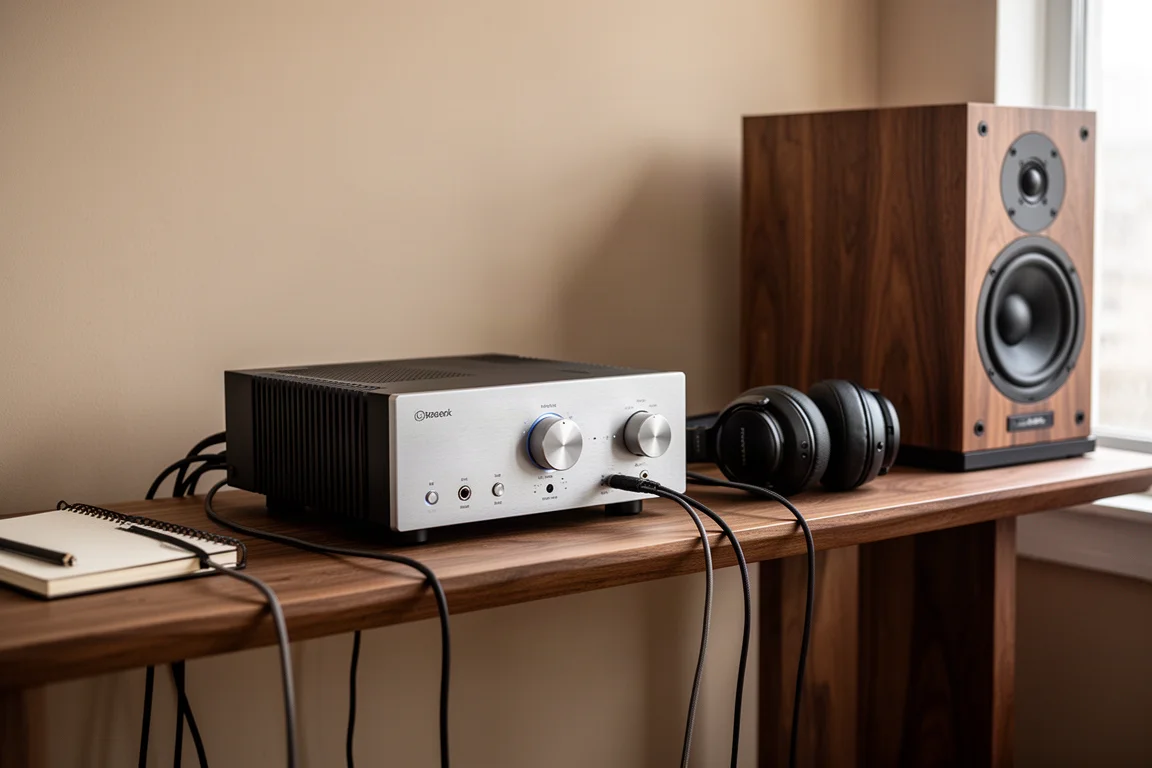
For anyone chasing maximum performance per unit of spend in a standmount, the Q Concerto Meta is where the money should go. Listeners who want the fullest bass and the greatest composure at high volume, or who simply want the better speaker of the two regardless of price, can still justify the R3 Meta. A capable amplifier and a reasonably treated room will get the most from either.
Conclusion
The KEF Q Concerto Meta earns its place with a three-way array, a metamaterial tweeter absorber, and a modern, energetic sound that stays involving at low volumes and holds its own against more expensive standmounts. It is not the last word in bass weight or high-volume composure, and its finish and feature set are modest next to the R3 Meta. Judged on what it delivers for the money, it is one of the more compelling standmounts in its class.
Product link
View more details for KEF Q Concerto Meta
This product is mentioned in the review. Check the specifications, options, and compatibility before buying.
View more details for KEF Q Concerto MetaFurther reading
Related Reviews
Hi-Fi Speakers
1723 THX Tower vs 1528 Bookshelf: Which Speaker Fits Your Room?
Two speakers at roughly the same price, built very differently. How the 1723 THX tower and the 1528 bookshelf compare on construction, bass, power needs, and sound.
Hi-Fi Speakers
Acoustic Energy AE 300 Review: Deep Bass From a Compact Standmount
A two-way standmount with real wood veneer, surprising low-end weight, and a warm, easygoing character. Here is what to know before buying.
Hi-Fi Speakers
Acoustic Energy AE1 40th Anniversary Review: A Modern Take on a British Classic
A compact standmount that revives a 1980s favorite with all-new parts, a warm mid-centric balance, and a price of £1,499 per pair.