Wireless Speakers
KEF LSX Lux Review: A Lovegrove-Designed Wireless System Built for Real Rooms
The KEF LSX Lux brings Ross Lovegrove's sculptural cabinet language into a complete wireless stereo system, with a 6.5-inch Uni-Q driver, MAT absorption and VECO feedback. Here is how it performs and who it suits.
Introduction
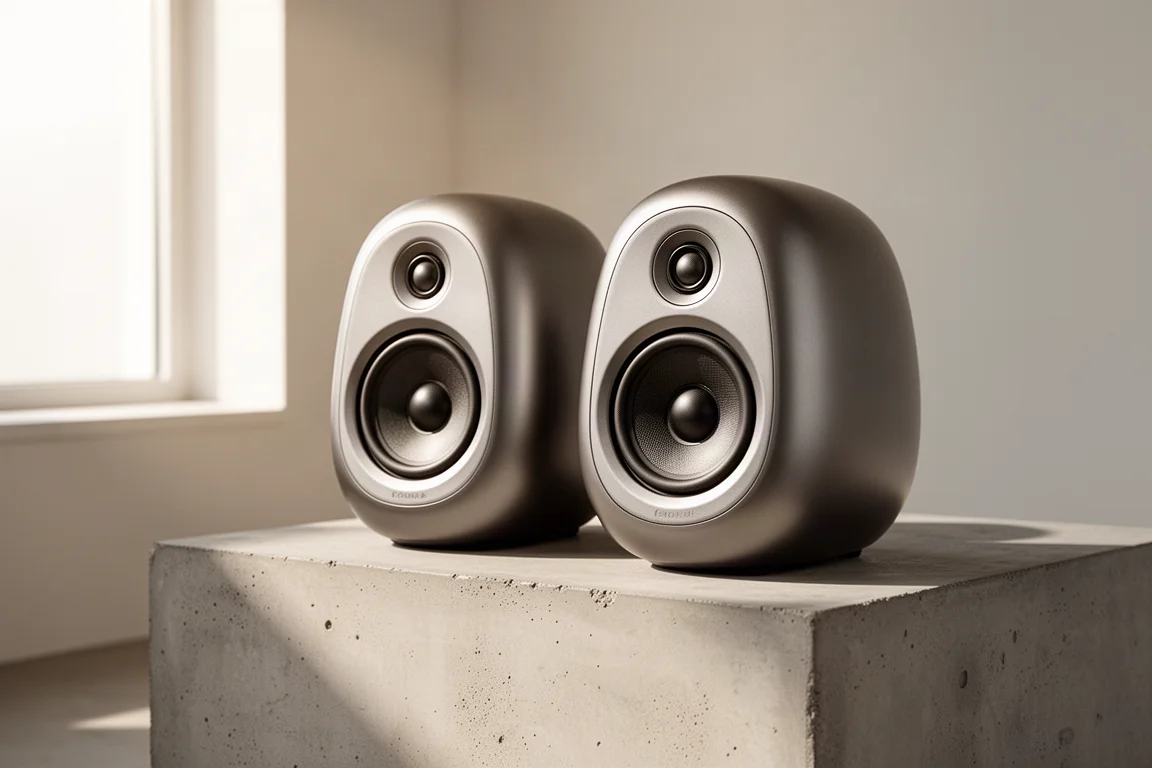
The KEF LSX Lux is the first time Ross Lovegrove’s full-size loudspeaker design work for KEF has been applied to a complete wireless stereo system. His only previous full-size design for the brand was the Muon, a $225,000 aluminium sculpture limited to 100 pairs; everything since has been portable speakers, earbuds and headphones. The LSX Lux changes that, slotting between the LS50 Wireless II and the LS60 Wireless at $3,999 per pair at launch.
It arrives in three finishes: eclipse black, dusk titanium and mineral white.
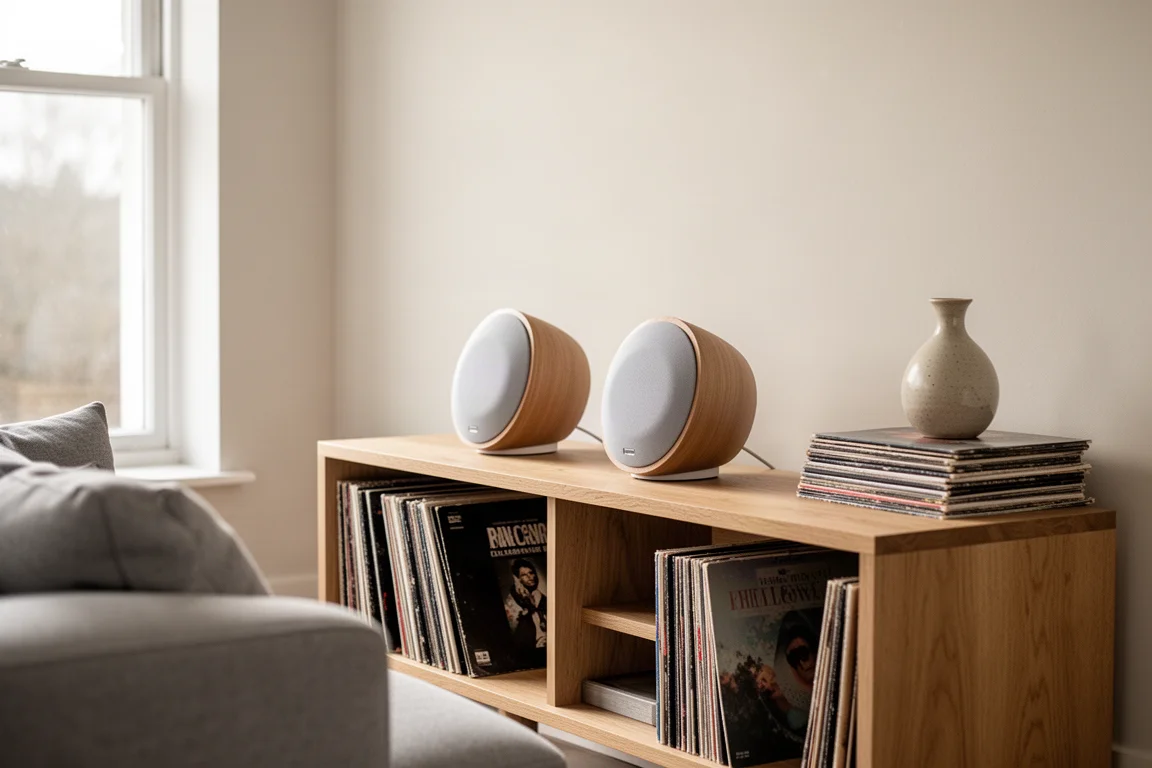
That positioning is the interesting part. This is not simply a larger LS50 Wireless II dropped into a more expensive cabinet. The driver, the amplification, the enclosure and the processing have all been reworked, and the result is a system designed to replace a traditional hi-fi setup rather than sit alongside one.
Who the KEF LSX Lux Is For
The LSX Lux is aimed at listeners who want one system for music and television in a shared living space, media room or open-plan room, and who value the look of the hardware as much as the measurements. It suits anyone who wants more presence and authority than a compact desktop-style active speaker can deliver, but who does not want the footprint of a floorstanding pair.
It is a less obvious fit for listeners chasing the deepest bass without adding a subwoofer, for anyone working with a genuinely small room where the LS50 Wireless II remains the stronger value, or for vinyl listeners who expect to plug a turntable straight in. The analog input here is not a phono stage, so a turntable needs its own built-in phono preamp or an external one.
Design and Cabinet Construction
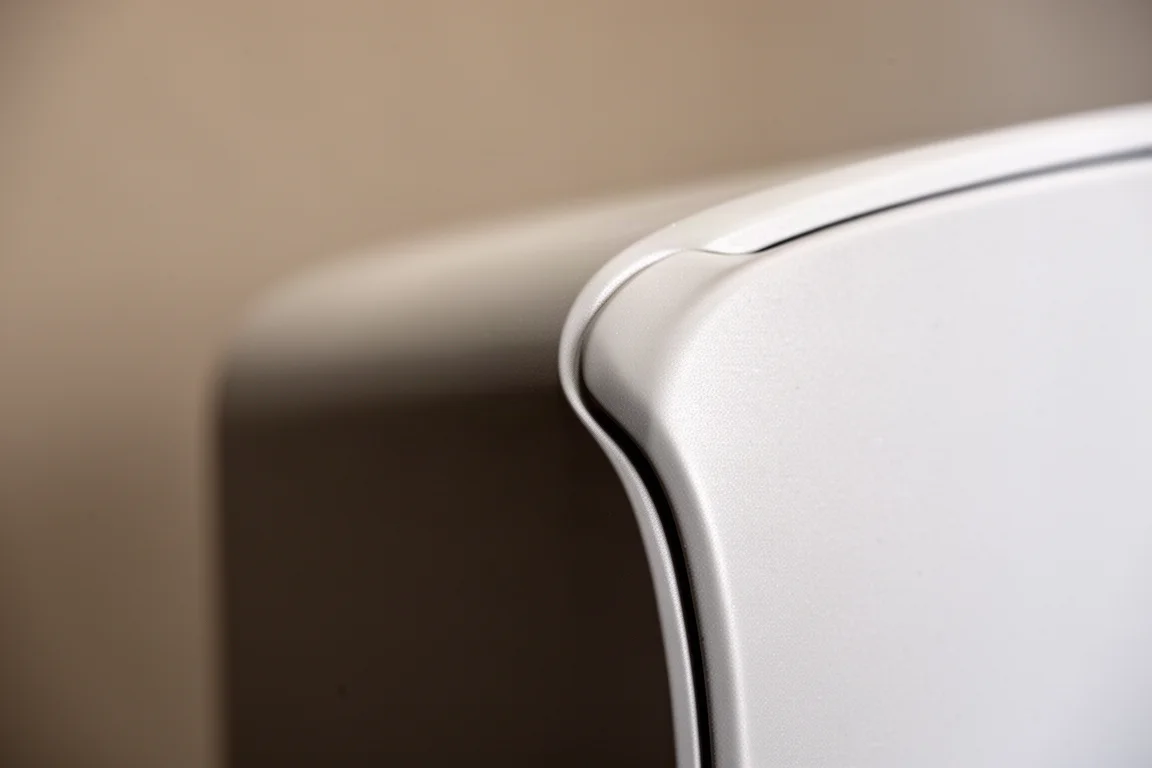
The cabinet is smooth and rounded with almost no hard edges, which is not purely an aesthetic decision. Sharp cabinet edges can create diffraction, where sound leaving the driver interacts with the edges of the enclosure, and the rounded shape helps disperse that energy more cleanly into the room. KEF also uses an especially durable cabinet material that holds this complex shape while staying rigid and controlled, with enough internal volume to properly house the larger Uni-Q driver without adding its own vibration or resonance.
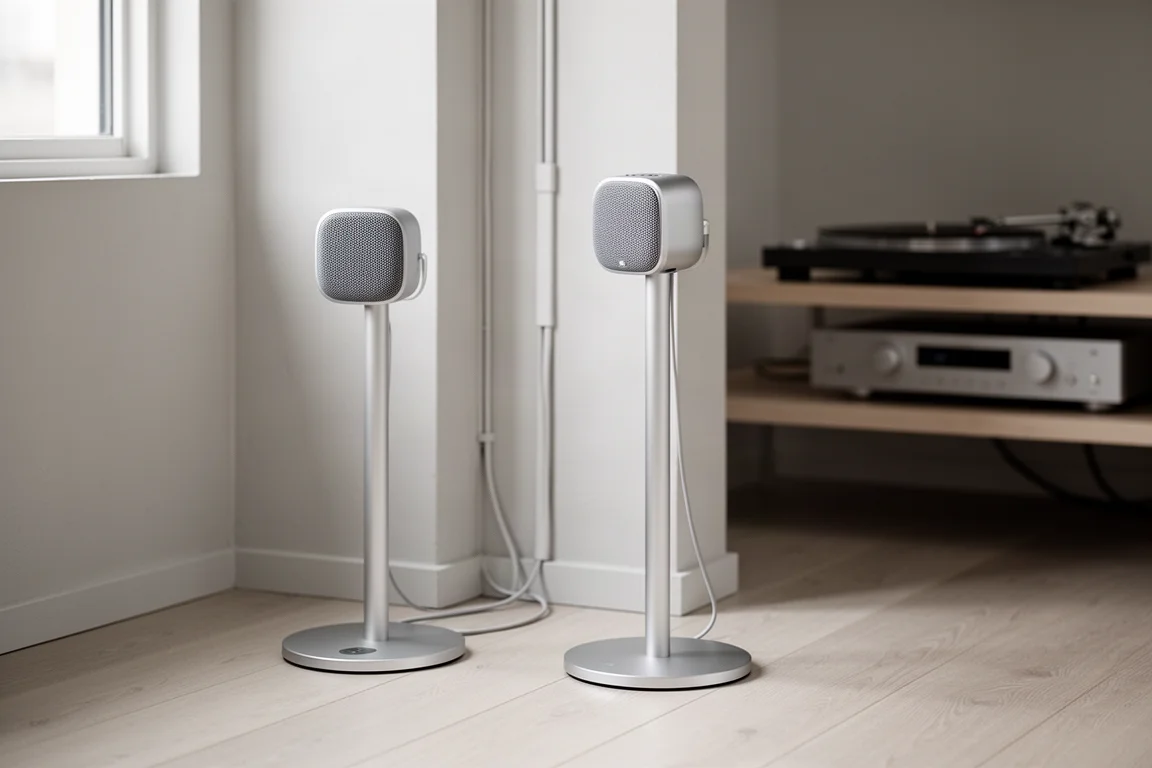
The matching LSX Lux stands are a separate purchase at $800 per pair at launch, and they come only in slate grey regardless of which speaker finish you choose, so they will not be colour-matched to every pair. They do use substantial aluminium construction, a pillar that can be filled with inert material for extra stability, and built-in cable management. Mounting the speakers on them also places the Uni-Q driver at a much better listening height, which matters for imaging and tonal balance. The stands are optional, and the speakers work perfectly well on a sturdy console or cabinet, though placement still matters a great deal.
Driver Technology: Uni-Q, MAT and VECO
At the centre of the LSX Lux is a 6.5-inch 12th generation Uni-Q driver array. KEF has been refining Uni-Q since the 1980s, and the goal has stayed the same: place the tweeter in the acoustic centre of the larger cone so every frequency range originates from the same point in space rather than arriving from separate spots on the cabinet. That produces more consistent dispersion across a wider listening area, which matters for a system likely to be used in shared rooms where people sit in several different seats. The 6.5-inch mid and bass driver is also larger than the one in the LS50 Wireless II, and that is a big part of why the LSX Lux can produce more scale, stronger bass and more output without immediately needing a separate subwoofer.
Behind the tweeter sits metamaterial absorption technology, or MAT, a maze-like structure that absorbs unwanted sound energy coming off the back of the tweeter before it can reflect through the diaphragm and colour what you hear. MAT absorbs 99 percent of that energy. The technology has appeared throughout KEF’s higher-end lineup, including the Blade and the Reference, though the LSX Lux is not running an identical driver pulled from either of those speakers. The connection is the engineering philosophy: the same point-source approach and MAT technology, adapted for this driver, this cabinet and this amplification.
VECO, or velocity controlled technology, adds a sensor and feedback system that monitors the driver’s motion in real time and corrects for distortion and compression when it drifts away from the signal. It first appeared in KEF’s LSX soundbar, and the LSX Lux brings the same feedback concept to a much larger driver. Alongside it, the Music Integrity Engine is a collection of digital signal processing algorithms tuned specifically for this speaker, letting the driver, amplifiers, cabinet and processing work as one system. Current drive amplification then gives KEF more direct control over the Uni-Q driver’s motion instead of sending it voltage and relying on the mechanics to keep up.
Amplification and Output
Each speaker runs 280 watts of Class D amplification on the low end and 100 watts of Class AB on the high end, for a total of 380 watts per speaker and a maximum output rating of 110 decibels. That headroom signals what this system is: not a small desktop speaker limited to background music.
KEF rates the frequency range at 35 Hz to 47 kHz for the wider measurement, while the tighter specification where response is truly flat is closer to 42 Hz to 28 kHz plus or minus 3 dB. Either way, that is genuine extension for a cabinet just over 13 inches tall, though a specification alone will not tell you how much usable output holds up in a real room.
Listening Impressions and Sound Quality
Röyksopp’s “If You Want Me” is a revealing first listen. Synth layers spread well beyond the cabinets and filled the space between the speakers, while the vocal stayed planted in the centre with plenty of texture and nothing smeared together. The centre image held up even when moving off the ideal listening position to the left, right or slightly behind. That is the difference between a soundstage that is merely wide and one that is genuinely organised, and keeping individual voices and instruments clearly defined within a wide space is the harder job.
Daft Punk’s “Give Life Back to Music” tests composure through its growling bassline. Through the LSX Lux it had real weight and impact while staying tight and controlled as the volume came up, without bloat and without losing its shape. More impressive than the quantity of bass was how the presentation held together: the low end stayed controlled, vocals stayed clean, and the soundstage did not collapse toward the cabinets as output increased. That is the larger Uni-Q driver, VECO, the Music Integrity Engine and the current drive amplification all showing up in the room.
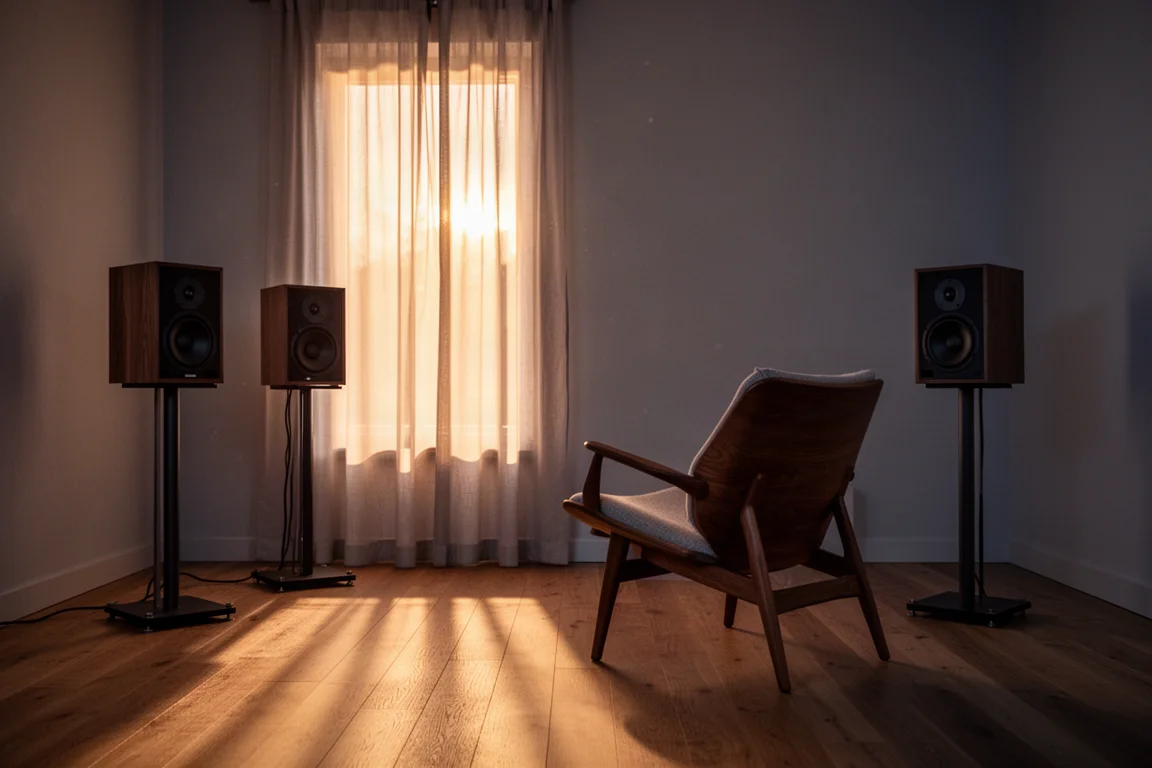
Set against the LS50 Wireless II, the LSX Lux sounds bigger and noticeably more authoritative, with more weight down low and more ease as the volume rises. The LS60 Wireless still holds an edge in overall scale and low-end foundation, since it is a larger floorstanding system with dedicated bass drivers, but the LSX Lux gets surprisingly close to that same effortlessness for something far more compact. What the compact enclosure cannot do is replace a properly integrated subwoofer if you want true deep bass extension for films, electronic music or large-scale orchestral recordings.
Connectivity, Streaming and Room EQ
The LSX Lux runs on KEF’s W2 wireless platform and can serve as a music system, a television system, or both. Source and interspeaker connections are wireless by default, and a standard interspeaker cable ships in the box if you would rather wire the two speakers together directly. The wireless interspeaker link caps at 24-bit 96 kHz, while a wired connection raises that to 24-bit 192 kHz. HDMI eARC handles television audio and lets your TV remote control the volume, and there are optical, coaxial and 3.5 mm analog inputs as well.
AirPlay 2 and Google Cast cover multi-room use, alongside Bluetooth 5.3 and native connect apps for Spotify, Tidal and Qobuz for full fidelity straight from those services, with Roon Ready support on the way. Streaming support covers Spotify, Tidal, Qobuz, Amazon Music, Deezer and internet radio, and the system handles high-resolution playback up to 384 kHz at 24-bit.
For deeper bass, KEF has put a dedicated subwoofer output on both the primary and the secondary speaker rather than only the primary. That gives more flexibility when positioning a subwoofer and makes a dual-subwoofer setup considerably easier to wire. The system is also compatible with KEF’s KW1 wireless subwoofer adapter if you would rather skip the cable entirely.
Everything is managed through the KEF Connect app: setup, input selection, streaming and Room EQ. In normal mode you tell the system how far the speakers sit from the wall and whether the room is lively or more damped, and it adjusts accordingly. Expert mode goes further and lets you dial in bass and treble compensation manually, and subwoofer-specific presets are built in if you add one. A physical remote also comes in the box for anyone who prefers not to use the app.
Things to Consider Before Buying
A compact enclosure has physical limits, and the LSX Lux is no exception. It delivers solid bass on its own and many listeners will be happy running the pair without anything else, but it will not replace a properly integrated subwoofer for genuinely deep extension. The matching stands are a meaningful extra cost at $800 per pair, and their single slate grey finish will not match every speaker colour. The analog input is not a phono stage, so a turntable requires its own phono preamp. And if you want the highest interspeaker resolution, you will need the supplied cable, since the wireless link tops out at 24-bit 96 kHz.
Buying Advice
At $3,999 per pair, the LSX Lux sits deliberately between the LS50 Wireless II and the LS60 Wireless, and it earns that place rather than simply occupying it. The larger Uni-Q array, VECO, the current drive amplification and the sculpted enclosure give it a distinct identity, with more presence and authority than KEF’s smaller wireless system in a room where aesthetics and performance both matter.
Buy it if you want a two-box wireless system that handles music and television, looks at home in a modern living space, and leaves the door open to adding a subwoofer later. If your room is small, the LS50 Wireless II is likely the better value. If maximum scale and low-end foundation are the priority and you have the floor space, the LS60 Wireless remains the floorstanding answer.
Conclusion
The LSX Lux is more than a new price point in KEF’s wireless range. It brings a sculptural cabinet language into a system with real engineering behind it, and it delivers the organised soundstage, controlled bass and effortless scaling that justify its position between the LS50 Wireless II and the LS60 Wireless. The trade-offs are clear and specific: deep bass still wants a subwoofer, the stands cost extra, and vinyl needs its own phono stage. For a listener who wants one refined system for a shared living space, those are reasonable terms.
Product link
View more details for KEF LSX Lux
This product is mentioned in the review. Check the specifications, options, and compatibility before buying.
View more details for KEF LSX LuxFurther reading
Related Reviews
Wireless Speakers
Bang & Olufsen Beolab 8 Review: A Compact Three-Way Speaker Built for Flexibility
A close look at the Beolab 8, a compact three-way powered speaker with customizable finishes, two listening modes, and a bass limiter worth understanding before you buy.
Wireless Speakers
Denon Home 200, 400, and 600: Which New Denon Home Speaker Fits Your Room?
A practical look at the new Denon Home lineup, covering shared features, driver differences, Dolby Atmos delivery, and which of the three models suits which room.
Wireless Speakers
Devialet Phantom II Review: Big Bass From a Very Small Wireless Speaker
A compact wireless speaker with genuinely remarkable bass output, sharp imaging, and a few trade-offs worth understanding before you buy.