Wireless Speakers
KEF LSX II Review: A Compact Active Speaker System With Big-System Clarity
A close look at the KEF LSX II, covering streaming and connectivity, the Uni-Q driver array, desktop placement, bass limits, and where a subwoofer changes the picture.
Introduction
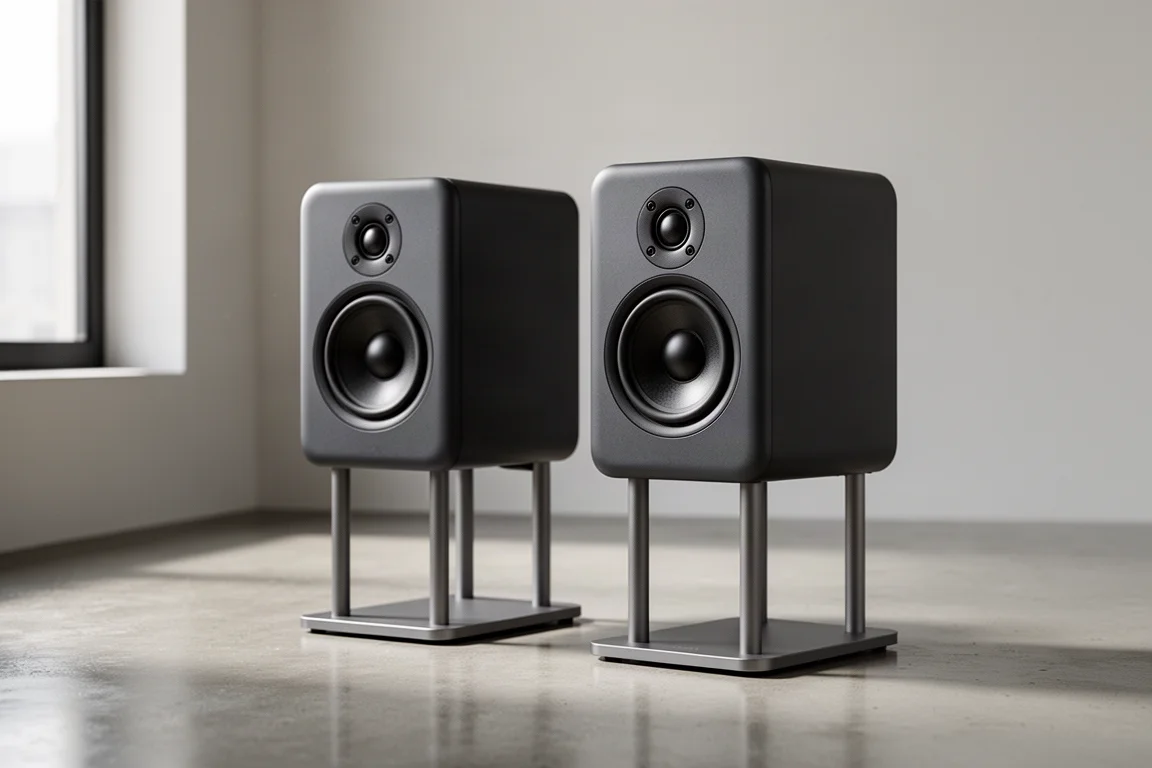
The KEF LSX II is the second generation of a very small active loudspeaker, and it arrives with a clear brief: deliver a genuine two channel stereo system from a pair of cabinets that will sit happily on a desk or a low shelf. The driver array carries over from the original. It pairs an 11.5 cm aluminium magnesium alloy mid bass driver with a 1.9 cm tweeter in a coaxial arrangement, and the purpose of that layout is driver cohesion, particularly around the point where the tweeter crosses over to the mid bass unit.
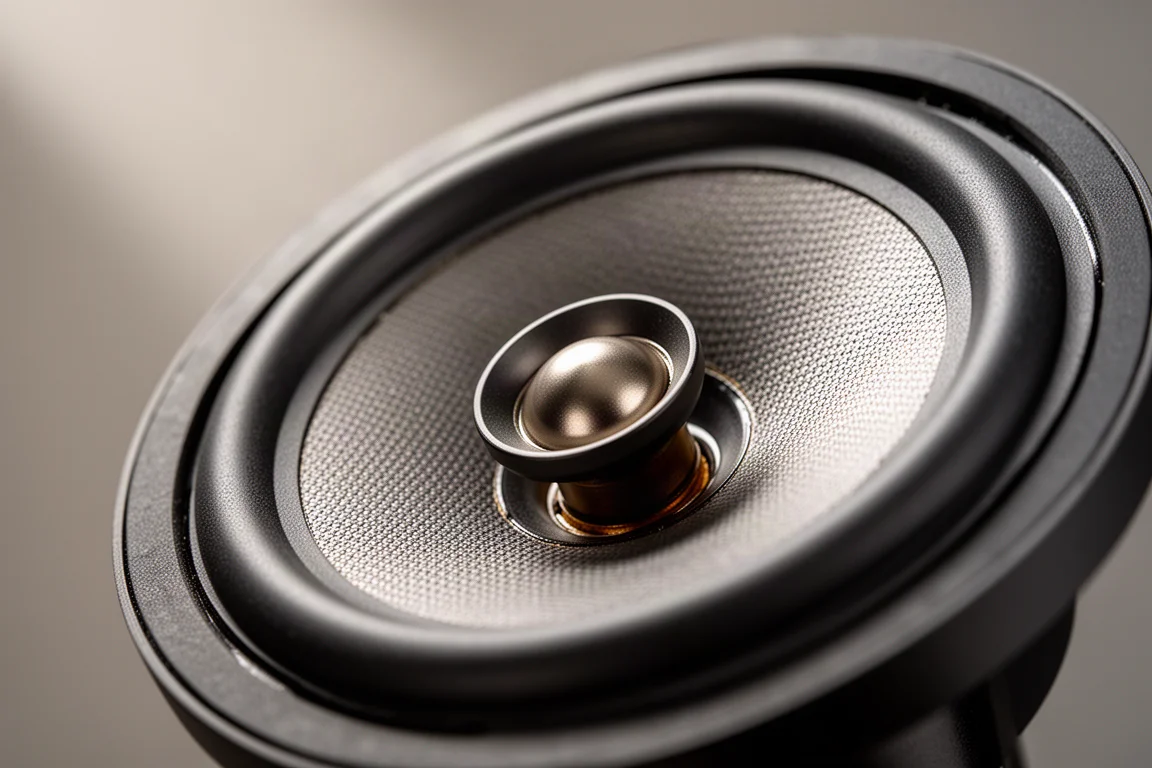
Amplification is built in rather than bolted on. Each cabinet carries a 70 watt class D amplifier for the mid bass driver and a 30 watt class D amplifier for the tweeter. The two speakers communicate over a proprietary wireless link at 24 bit / 48 kHz, or you can connect them with an Ethernet cable for up to 24 bit / 192 kHz and a slightly better result. The crossover was also rebuilt in DSP from scratch for this generation.
The bigger changes sit underneath the surface. The LSX II is built around the W2 streaming platform, and it adds an HDMI eARC socket and a USB-C input. Those two additions do more than any driver tweak to define who this speaker is for.
Who This Product Is For
Room size is the first thing to settle, because it matters more here than with most speakers. The LSX II is a small room loudspeaker. Think of a two metre by three metre bedroom, a study, a spare room, or a compact apartment where a full separates system would take over the space. In a larger treated room of around six metres by five metres, it struggled to drive the space at anything beyond fairly low listening levels.
The second strong use case is a desk. The USB-C input connects straight to a PC or a Mac, and the app EQ includes a dedicated desktop setting that trims the low end when the speakers sit close to a wall and close to the listener.
Third, it works as a compact alternative to a soundbar on a low board. Two physically separated cabinets give a stereo image that no single bar can reproduce, and the clarity is excellent for dialogue driven television and film. The one caveat is low end: the rated response reaches down to 54 Hz at -3 dB, so action heavy material will want a subwoofer.
If your priority is filling a large room or hearing deep bass without adding anything else, this is not the system to start with.
Main Strengths
The case for the LSX II is not output for the money. It is clarity, stereo image, and the fact that the amplification, streaming and inputs are already inside the box.
Sound Quality and the Uni-Q Driver Array
Compared directly with the first generation LSX, the change is modest but real: a slight lift in overall clarity and a little more bass punch. The more striking quality is how it handles voices. Vocals come across crisp, clean and highly lucid, and a touch of crunch in the upper mids does a great deal for intelligibility. On television drama you can hear the character of the recording space, including outdoor ambience and background noise.
Soundstage depth is another genuine strength, most likely helped by the coaxial driver arrangement. With music, the LSX II is at its best on simpler material. Solo piano and voice led recordings sound pure and uncluttered, and the physical separation of the two cabinets delivers a stereo image that most soundbars simply cannot match.
Where it can be tripped up is dense, complicated material. The bass can congest when a mix gets busy, and that congestion grows as you push the volume. A subwoofer removes most of the problem by taking low frequency work away from the main drivers, and with one connected the system delivers a step change rather than a subtle improvement.
Streaming, Connectivity, and App Control
The W2 platform is unusually generous for a speaker this size: Roon Ready, Spotify Connect, Tidal Connect, Apple AirPlay 2 and Google Chromecast built in, with further services such as Qobuz available through the KEF Connect app. The app itself is well organised and pleasant to use.
Around the back you get HDMI eARC for a television, USB-C for a computer, and a subwoofer output on the primary speaker that can be adjusted from the app. The EQ also covers placement, with settings for near a rear wall, near a side wall, or both. In a small room where positioning options are limited, that flexibility does real work.
Design and Desktop Placement
The cabinets are visually discreet and clearly the product of a designer’s eye, with the industrial design credited to Michael Young. They read as a considered object rather than a box with a driver in it.
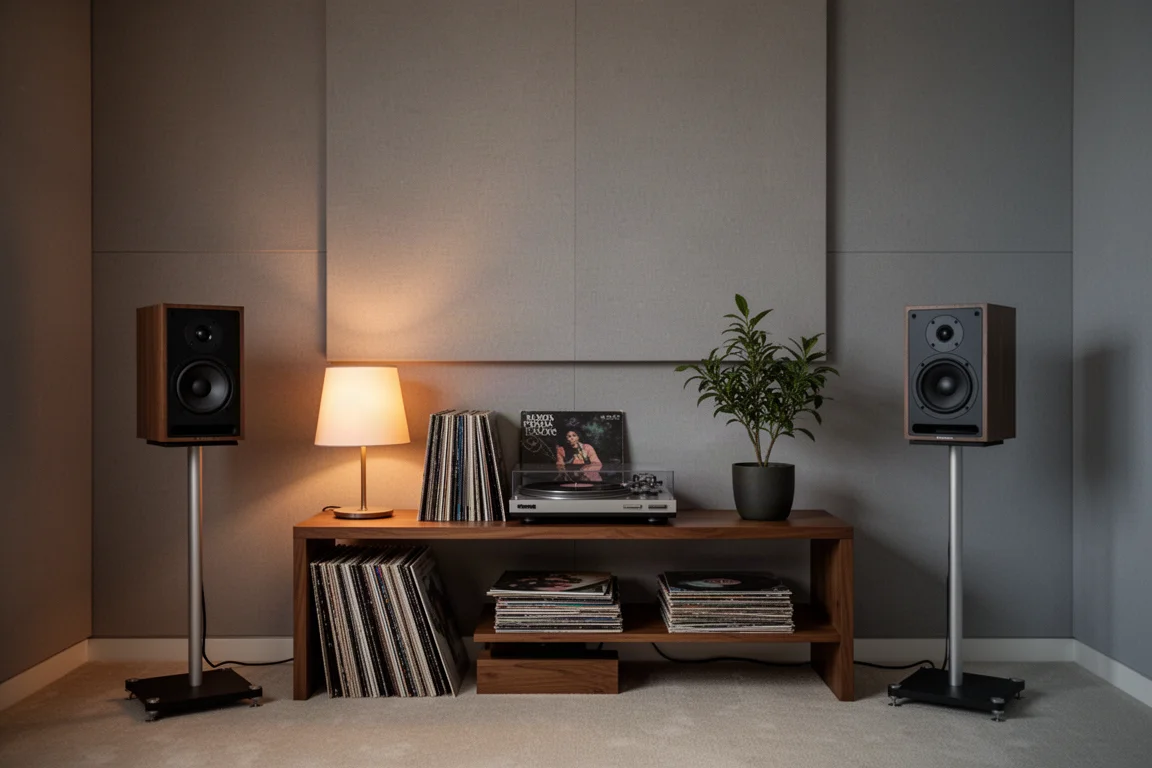
The matching S1 stands matter more than they appear to. Moving the speakers from a low board up onto the stands improved the sound noticeably, and the stands also let you route cables in from below, which solves the usual tangle of wiring behind an active pair.
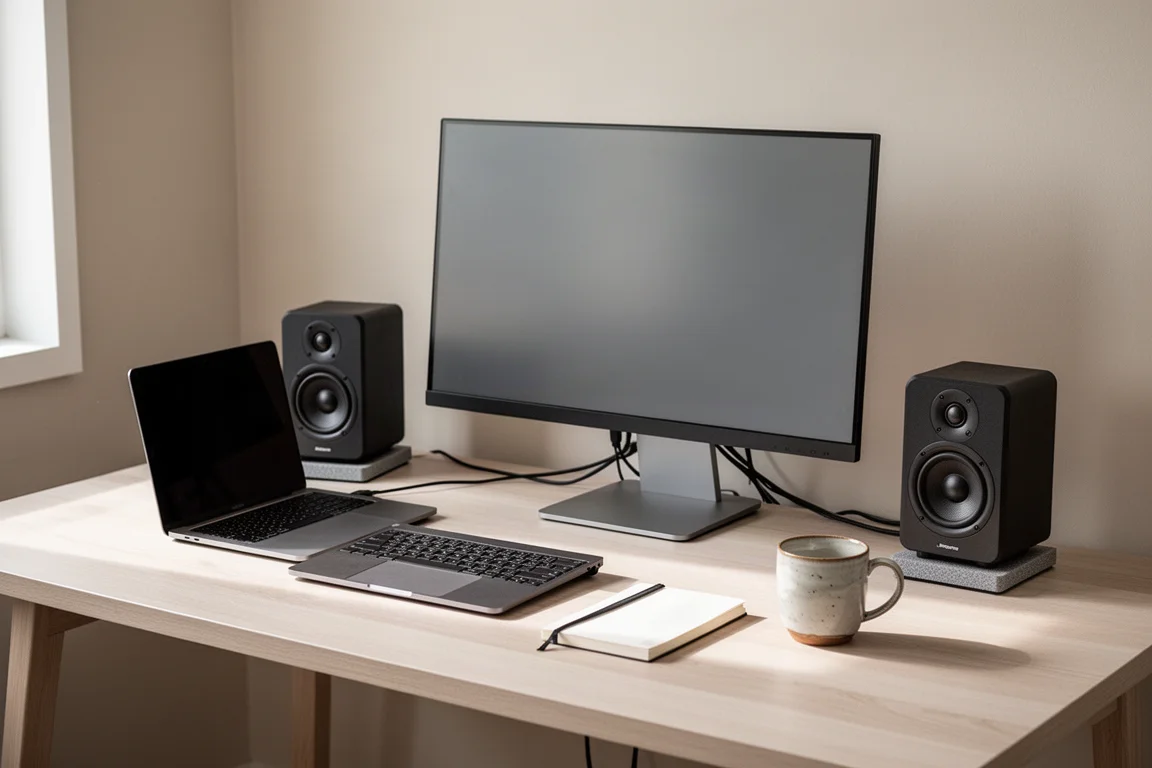
On a desk, the LSX II is one of the few small speakers that genuinely works. The desktop EQ preset dials back the bass that a desk surface would otherwise exaggerate, and the USB-C input means no separate amplifier, DAC or interface is required. Setup is quick: unbox, plug in, and you are running within a few minutes, with the stands taking about as long to assemble.
Things to Consider Before Buying
Cost is the main consideration. The LSX II sells for around 1,500 euros a pair in Germany, the S1 stands add around 300, and the KC62 subwoofer adds around 1,700. That is roughly 3,500 for the complete system that delivers the strongest result, which is a serious outlay for a compact setup.
Weighing the LSX II against its rivals changes the calculation. The SVS Prime Wireless Pro costs almost half as much and sounds weightier, with a fuller low end that drives a large room more convincingly, although the LSX II is cleaner and fresher, draws a deeper soundstage, and looks far better. Passive options such as the KEF LS50 Meta sell for slightly less than the LSX II on its own, and the KEF Q150 system sounds larger, more open and more dynamically expressive while playing louder before congestion appears, but both need an amplifier and neither is a realistic desktop speaker.
Two physical limits are worth accepting before you buy. The first is bass depth: 54 Hz at -3 dB will not reach as low as a typical standmount pair, a subwoofer, or many soundbars, though in a small room at moderate levels this rarely intrudes. The second is headroom: with dense material at higher volumes, congestion sets in earlier than it does with a larger passive speaker.
Buying Advice
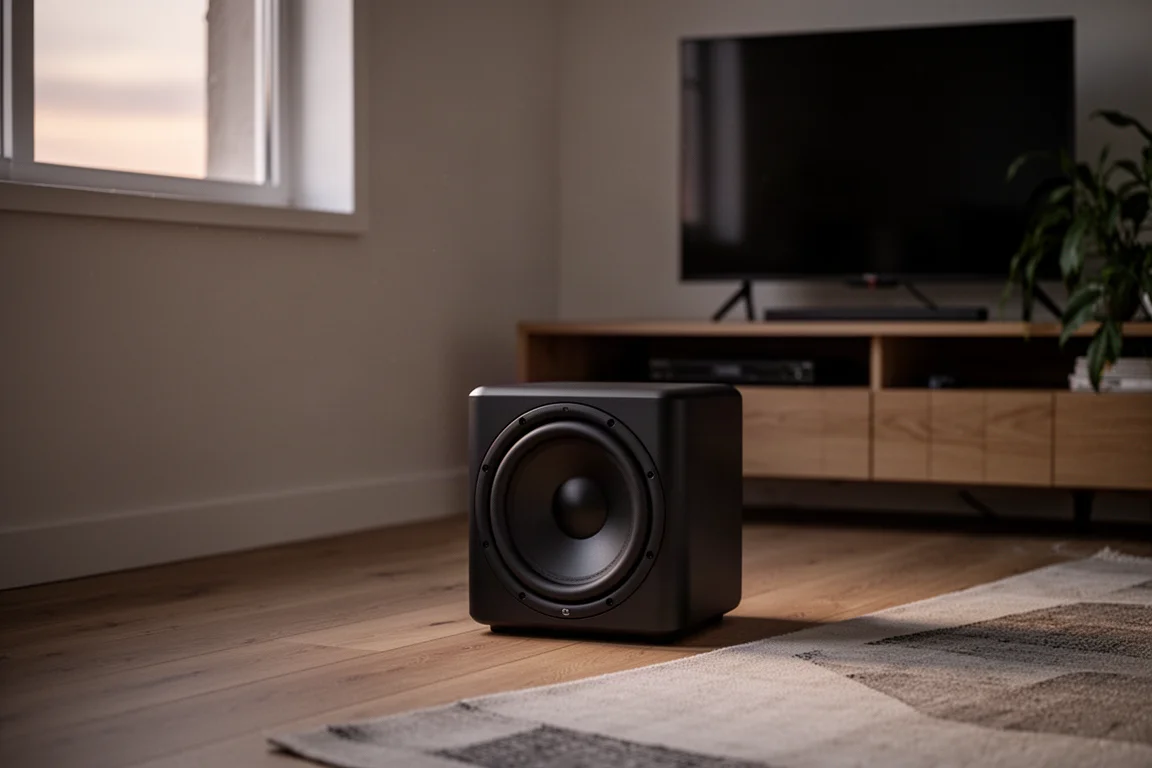
If your listening is mostly television and film, the LSX II paired with the KC62 subwoofer is a strong, coherent answer. You get superb vocal intelligibility, real stereo separation, a visually unobtrusive package, and enough low end for action material.
If you are mostly a music listener, the LSX II remains an excellent choice in a small room or on a desk, and it is particularly good with simpler, well recorded material. In a larger room, though, the alternatives deserve an audition: the SVS Prime Wireless Pro carries more weight for less money, and a passive pair such as the LS50 Meta, driven by a modest integrated amplifier, will handle a bigger space more easily and let you add a subwoofer later.
Two practical decisions make the system easier to live with. Budget for the S1 stands if the speakers will sit on furniture rather than a dedicated stand, and treat the subwoofer as essential only if action films matter to you.
Conclusion
The KEF LSX II gets the fundamentals right. Vocal clarity is excellent, the stereo image is properly separated and deep, streaming support is broad, and HDMI eARC plus USB-C make it easy to slot into a television setup or a desk. Its limits are physical rather than conceptual: bass extension stops at 54 Hz, dense mixes can congest at higher volumes, and the total cost climbs quickly once stands and a subwoofer are added. For a small room, a desk, or a dialogue driven television system, it is a well resolved and genuinely attractive package.
Product link
View more details for KEF LSX II
This product is mentioned in the review. Check the specifications, options, and compatibility before buying.
View more details for KEF LSX IIFurther reading
Related Reviews
Wireless Speakers
Bang & Olufsen Beolab 8 Review: A Compact Three-Way Speaker Built for Flexibility
A close look at the Beolab 8, a compact three-way powered speaker with customizable finishes, two listening modes, and a bass limiter worth understanding before you buy.
Wireless Speakers
Denon Home 200, 400, and 600: Which New Denon Home Speaker Fits Your Room?
A practical look at the new Denon Home lineup, covering shared features, driver differences, Dolby Atmos delivery, and which of the three models suits which room.
Wireless Speakers
Devialet Phantom II Review: Big Bass From a Very Small Wireless Speaker
A compact wireless speaker with genuinely remarkable bass output, sharp imaging, and a few trade-offs worth understanding before you buy.