Wireless Speakers
KEF LS60 Wireless Review: A Slim Floorstanding Streaming Speaker
A practical look at the KEF LS60 Wireless, a digitally active floorstanding streaming speaker with a three-way driver layout, built-in amplification and a slim cabinet.
Introduction
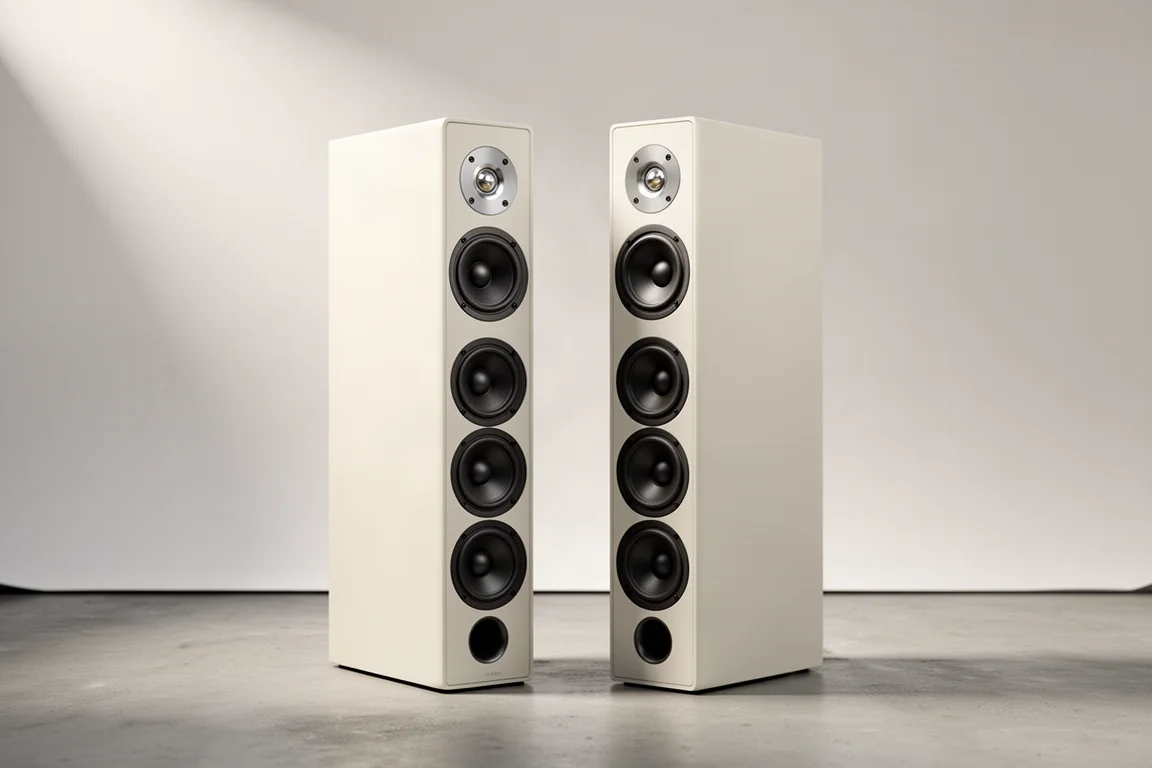
The KEF LS60 Wireless is a floorstanding loudspeaker that arrives with almost everything already inside it: streaming, digital processing, digital-to-analogue conversion and amplification. It is a slim, tall cabinet standing on its own plinth, designed to be the entire electronics chain for a stereo system rather than one component within it. In Europe it sells for around six and a half thousand euros, which places it firmly in premium territory.
That price buys a genuinely unusual engineering story. The LS60 Wireless is a digitally active design, a three-way speaker, and the first place KEF developed a bass driver configuration that later appeared in a subwoofer. It also borrows driver technology from the company’s Reference and Blade models.
What it is not is a floorstanding version of the LS50 Wireless II. The two share a streaming platform, but the driver layout, the cabinet, the crossover approach and the low-frequency capability all differ.
Who this product is for
This is a speaker for listeners who want a complete system rather than a chain of boxes. Because the streaming platform, the DACs and the amplifiers are all built in, there is no separate streamer, no separate preamplifier and no power amplifier to choose or match.
It also suits people with a mix of sources. The primary speaker accepts a turntable through a pair of RCA inputs, with a phono stage still required, plus a television over HDMI, an optical Toslink connection and a coaxial digital input for a CD player. All of those can be connected at once, so a single system can cover vinyl, television and disc playback alongside streaming.
Finally, the slender cabinet is aimed at listeners who want a large-sounding speaker that takes up less floor space and is less visually intrusive in a living room.
Main strengths
Under the skin, the LS60 Wireless is a digitally active loudspeaker. Every incoming signal, whether it arrives over the network, from a turntable or from a CD player, is processed in the digital domain. That allows the crossover to be designed digitally, which in turn makes it possible to correct phase errors and apply other corrections before the signal reaches the drivers.
Each speaker contains three separate digital-to-analogue converters feeding three separate amplifiers. Bass is handled by 500 watts of Class D amplification, the mid-range driver by 100 watts of Class D, and the tweeter and electronics by 100 watts of Class A/B. The DACs, amplifiers and processing live in their own sealed enclosure in the bottom third of the cabinet, separated from the acoustic volume above. Air is drawn in through inlets at the base where the cabinet meets the plinth and exits at the rear above the connection plate, which keeps the electronics cool without opening the acoustic cabinet.
Streaming and connectivity
The LS60 Wireless uses the same streaming platform as the LS50 Wireless II, known as W2. Over the network it supports Bluetooth, Chromecast, Apple AirPlay 2, Spotify Connect and Tidal Connect. Inside the KEF Connect app there is access to Qobuz, Deezer, Amazon Music and QQ Music, along with basic room compensation settings. QQ Music is not available in Europe or the United States. Roon Ready certification was still in progress at the time of writing.
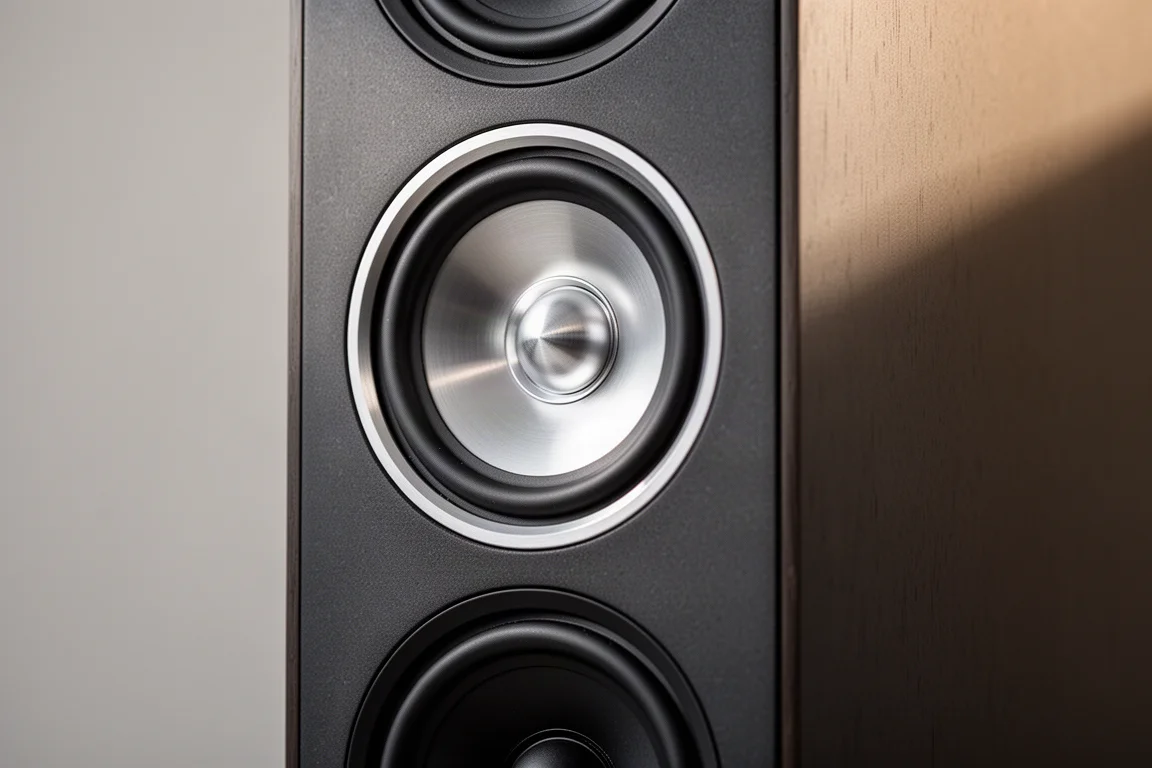
The hardwired side is generous for a speaker of this type: twin RCA inputs for a turntable and phono stage, HDMI, optical Toslink and coaxial digital. In practice that means a vinyl rig, a television and a CD player can all stay permanently connected without swapping cables.
Uni-Q driver and single apparent source
The tweeter and mid-range driver are combined into a single coaxial unit. A one-inch aluminium tweeter sits at the acoustic centre of a four-inch aluminium mid-range driver, and KEF describes this as its smallest Uni-Q configuration to date. This is the twelfth generation of the Uni-Q design. Behind the tweeter sits the metamaterial absorption technology introduced on the LS50 Meta and LS50 Wireless II, which absorbs a large proportion of the driver’s back wave. The tweeter also uses a gap damper taken from the Reference series, and the upper section of the mid-range driver is decoupled from the lower section rather than from the cabinet itself.
The bass drivers are not at the bottom of the cabinet. They sit halfway up the sides, level with the Uni-Q driver, so that the sound appears to come from a single apparent source on the front baffle. That arrangement is borrowed from KEF’s high-end Blade loudspeakers.
Uni-Core bass drivers
Each speaker carries two pairs of side-firing bass drivers in a configuration KEF calls Uni-Core. The drivers are force-cancelling and fire sideways, their voice coils are sleeved, and each driver uses a P-Flex surround to reduce distortion. Smart Distortion Control uses DSP to correct for heat-related distortion inside the cabinet. Uni-Core was first developed for the LS60 Wireless before being carried over to the KC62 subwoofer.
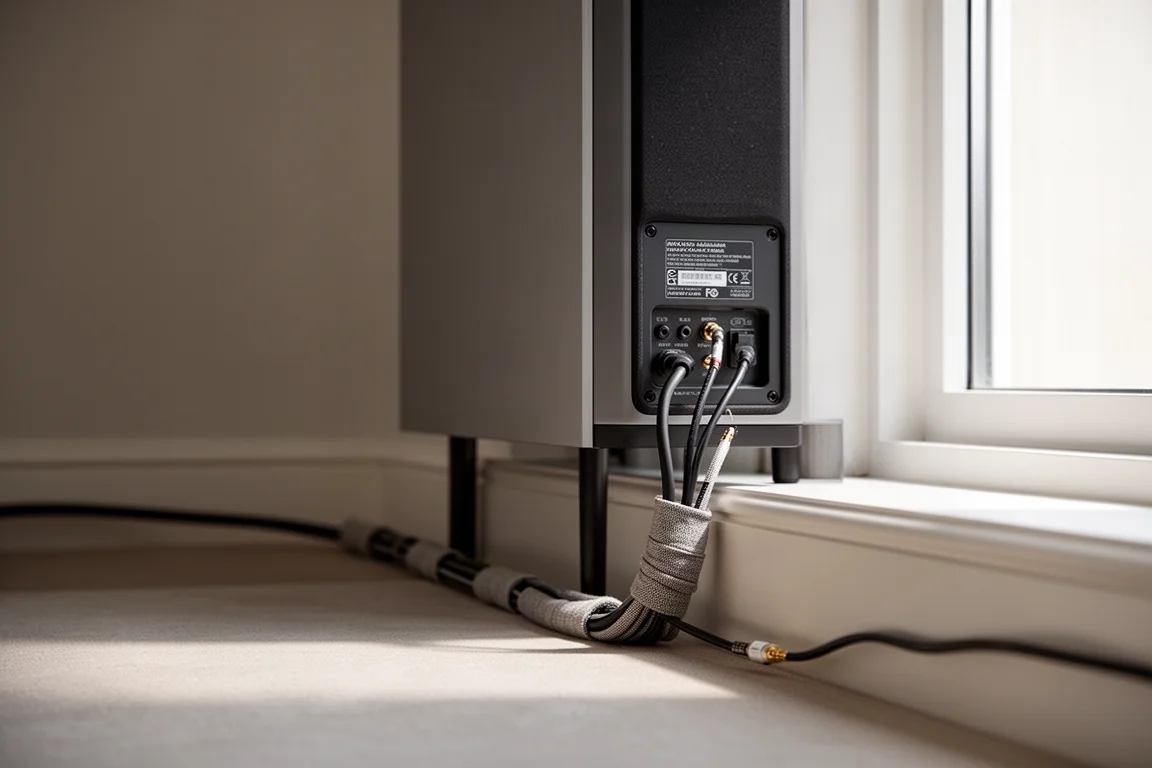
The payoff is low-frequency extension. The LS60 Wireless is rated down to roughly 30 Hz, with the possibility of a little lower, against 40 Hz for the LS50 Wireless II. Because this is a three-way design, the mid-range driver is never asked to reproduce low bass, which keeps it working in the range where it is most comfortable.
Where it sits next to the LS50 Wireless II
The two speakers share a streaming platform, and the remote control supplied with the LS60 Wireless appears to be the same handset that comes with the LS50 Wireless II. Beyond that the designs diverge sharply. The LS50 Wireless II is a two-way speaker with a rated low-frequency limit of 40 Hz. The LS60 Wireless is a three-way, fully active floorstander with side-firing bass drivers, a taller cabinet and roughly an extra 10 Hz of low-frequency reach.
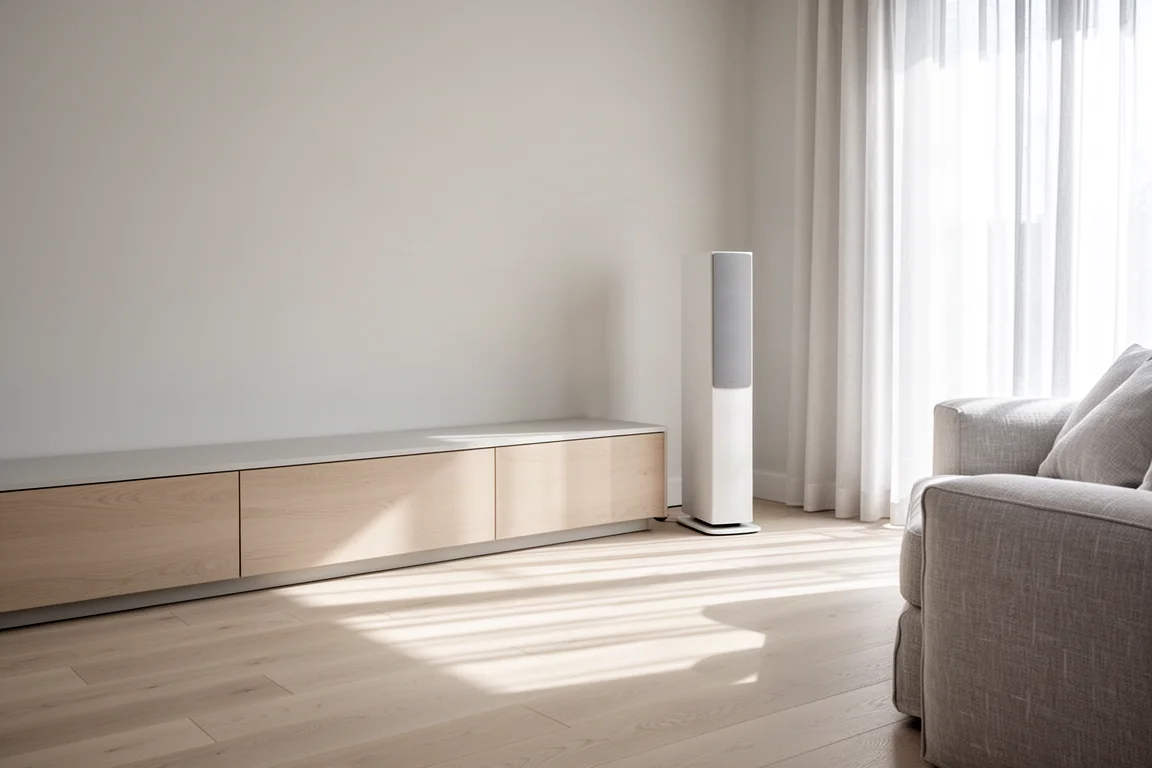
The cabinet is also much slimmer than a conventional floorstander, a decision driven by a desire for a speaker that is less visually intrusive and easier to place in a room. If you want the KEF streaming platform in the smallest possible footprint, the LS50 Wireless II remains the more compact option. If you want the same platform with deeper bass and a three-way driver layout, the LS60 Wireless is the one that delivers it.
Things to consider before buying
The remote control is the most obvious compromise. It is a small handset that feels basic for a loudspeaker at this price, and its build and usability sit behind something as ordinary as a modern streaming box remote.
Roon Ready certification was still pending at the time of writing, so listeners who rely on Roon should confirm the current status before buying. Qobuz, Deezer and Amazon Music are available through the KEF Connect app, but QQ Music is not offered in Europe or the United States.
It is also worth being clear about the architecture. Every input, including analogue sources such as a turntable, is converted to digital and processed before it reaches the drivers. That is central to how the speaker achieves its crossover and phase correction, but listeners who specifically want an all-analogue signal path should factor it in.
Finally, at around six and a half thousand euros, this is a considered purchase. The price covers the streaming platform, the DACs, the amplification and the drivers in one package, which is worth weighing against the cost of building an equivalent system from separate components.
Buying advice
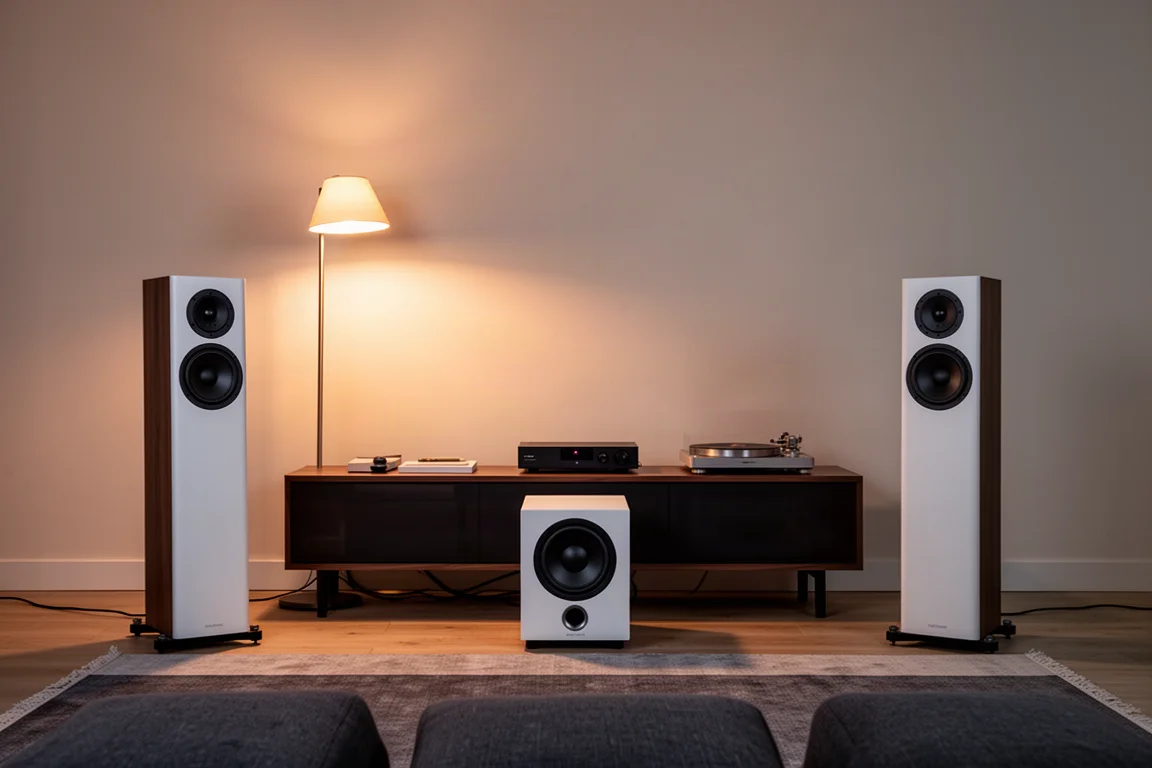
The LS60 Wireless makes most sense for listeners who want one complete, slim, floorstanding system rather than a rack of separate boxes. If your sources are a turntable, a television and a CD player, all four wired inputs can stay connected permanently, and streaming covers the rest. Titanium grey is one of the finishes available.
Think about the room before the specification. The side-firing bass drivers and the single-apparent-source layout mean the speaker behaves differently from a conventional front-ported floorstander, and the slim cabinet is easier to place than most floorstanders of comparable output. Give yourself time to run the room compensation settings in the KEF Connect app, which are basic but useful.
If you already own an LS50 Wireless II and are happy with its bass, there is no urgent reason to move. If you have been waiting for the KEF streaming platform with deeper low-frequency reach and a three-way driver layout, the LS60 Wireless is the model that provides it. Confirm Roon Ready status and app availability in your region before committing.
Conclusion
The KEF LS60 Wireless is a thoughtfully engineered floorstanding streaming speaker. A digitally active three-way design, three DACs and three amplifiers per cabinet, Uni-Core side-firing bass drivers, a twelfth-generation Uni-Q array and a cabinet slim enough to live comfortably in a normal room add up to a genuinely complete system. The trade-offs are the modest remote control and a premium price. For listeners who want a single, elegant package that handles vinyl, television, disc and streaming, it is a compelling proposition.
Product link
View more details for KEF LS60 Wireless
This product is mentioned in the review. Check the specifications, options, and compatibility before buying.
View more details for KEF LS60 WirelessFurther reading
Related Reviews
Wireless Speakers
Bang & Olufsen Beolab 8 Review: A Compact Three-Way Speaker Built for Flexibility
A close look at the Beolab 8, a compact three-way powered speaker with customizable finishes, two listening modes, and a bass limiter worth understanding before you buy.

Wireless Speakers
Denon Home 200, 400, and 600: Which New Denon Home Speaker Fits Your Room?
A practical look at the new Denon Home lineup, covering shared features, driver differences, Dolby Atmos delivery, and which of the three models suits which room.

Wireless Speakers
Devialet Phantom II Review: Big Bass From a Very Small Wireless Speaker
A compact wireless speaker with genuinely remarkable bass output, sharp imaging, and a few trade-offs worth understanding before you buy.