Hi-Fi Loudspeakers
KEF LS60 Wireless and KC62: What Adding a Subwoofer Changes
A practical look at how the KEF LS60 Wireless performs on its own, with one KC62 subwoofer, and with two, based on in-room measurements and listening.
Introduction
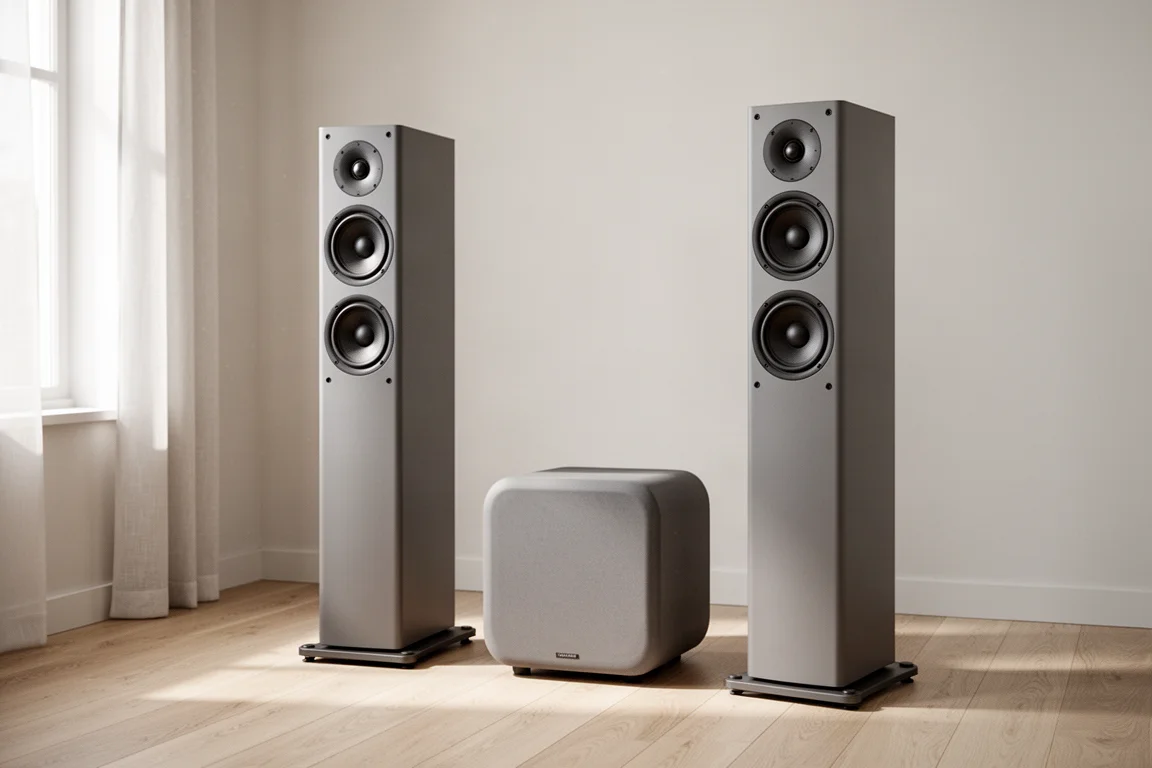
The KEF LS60 Wireless is an active three-way floorstanding loudspeaker, and KEF rates it as 3 dB down at 31 Hz. That figure suggests a system that already reaches the bottom of most recordings. In-room measurements tell a different story: the LS60 begins to roll off around 40 Hz and sits more than 10 dB down at 31 Hz in a treated room. Anything below that line simply is not there.
The KEF KC62 is the compact subwoofer KEF designed to sit underneath that range, and the KEF Connect app makes the pairing largely automatic. The question worth answering is what actually changes when you add one, and what changes again when you add a second.
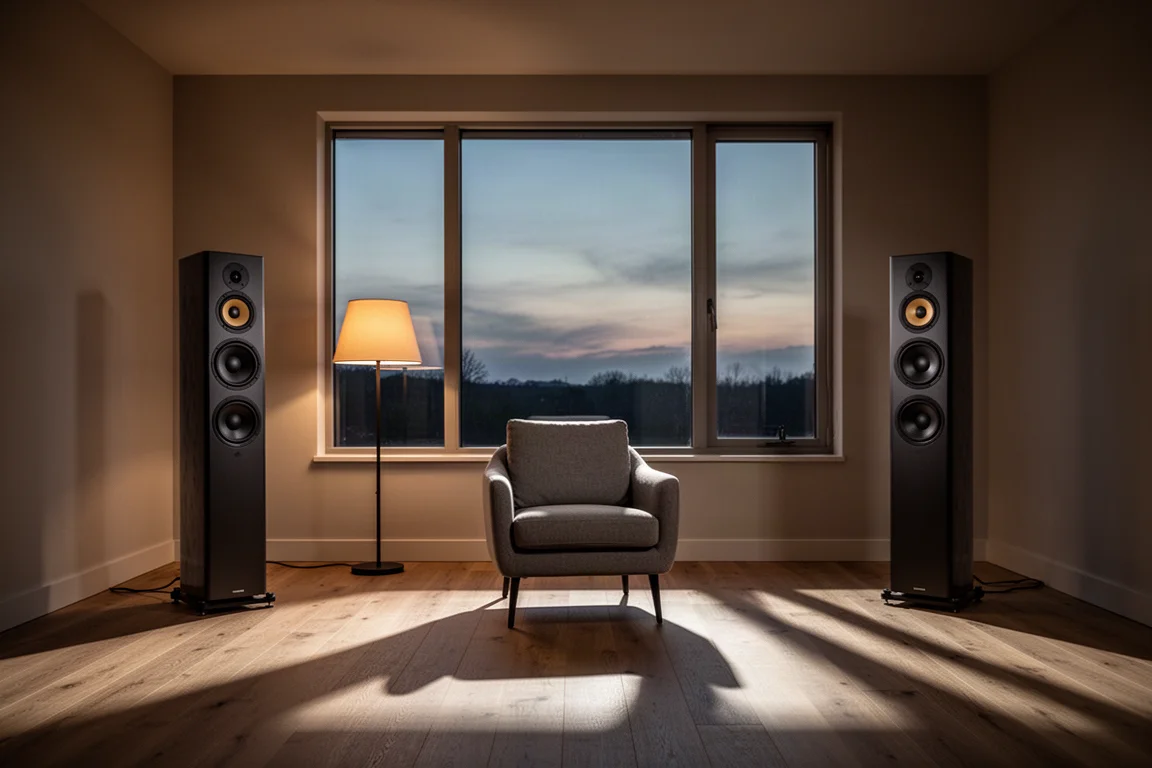
The short answer is that a subwoofer does not make bass louder or more obvious. It makes the system go lower. That is a smaller claim than it sounds, because a great deal of electronic music, dub and drum and bass carries its weight below 40 Hz, in the region the LS60 cannot reach on its own.
KEF LS60 Wireless: The Foundation of the System
The LS60 Wireless is a three-way active design with two pairs of 5.25-inch bass drivers, arranged as twin bass arrays and driven by Class D amplification. Everything above the bass is handled separately, which is why crossover work with a subwoofer behaves differently here than it would with a two-way standmount.
KEF’s rated figure of 3 dB down at 31 Hz is optimistic in a real room. Measured at the listening position, the roll-off starts closer to 40 Hz and the response is more than 10 dB down at 31 Hz. The app’s Extra Bass mode does not solve this. It slows the roll-off only marginally, and it introduces audible compression earlier on the volume dial than the standard mode does. It is a small nudge, not a substitute for a dedicated low-frequency driver.
Because the LS60 is a three-way, there is no need to high-pass its mid-range driver when a subwoofer joins the system. The high-pass filter applied to the bass drivers is optional and can be disabled. KEF’s position is that leaving it engaged keeps more headroom in the LS60 for handling larger transients.
KEF KC62: A Compact Subwoofer That Extends the Bottom End
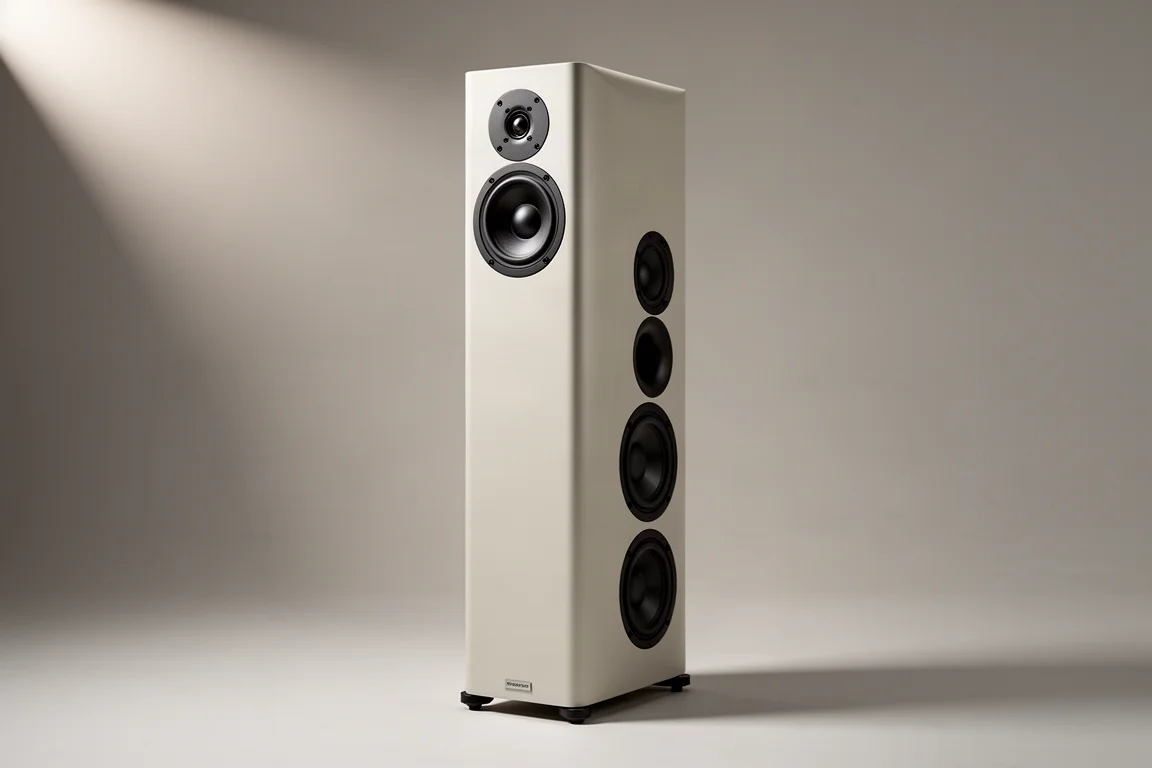
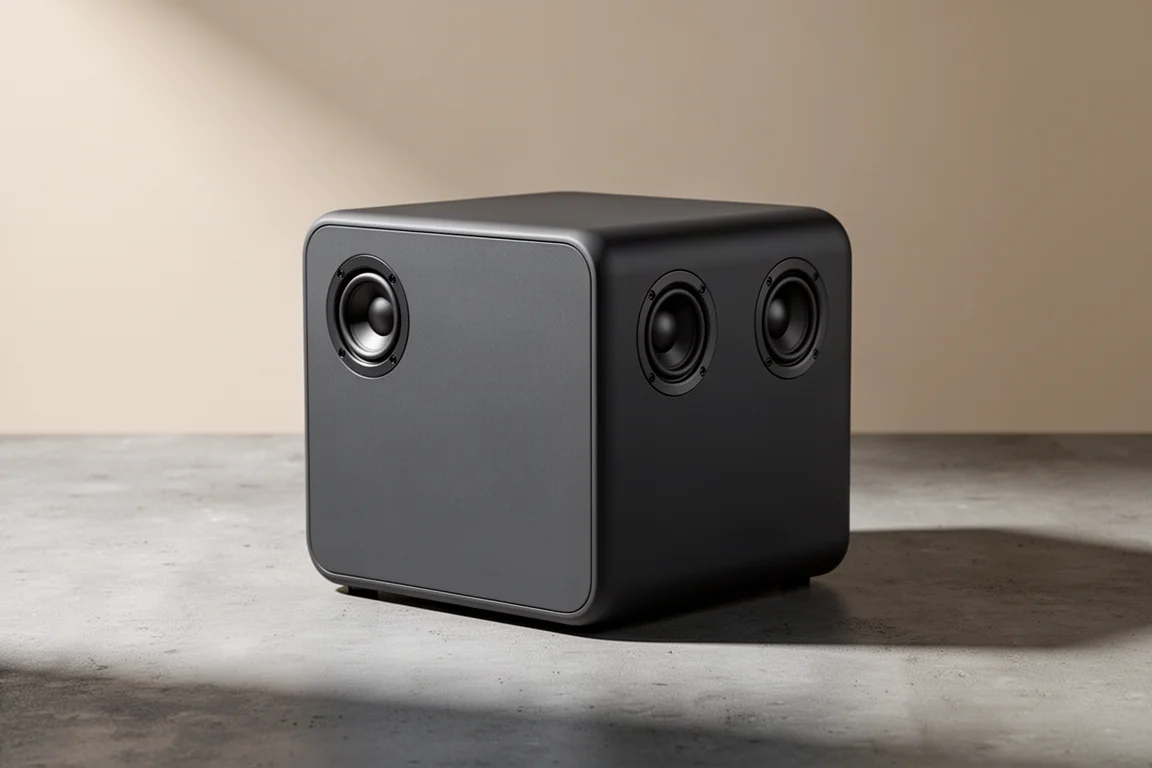
The KC62 is a compact subwoofer built around side-firing, force-cancelling drivers measuring 6.5 inches, powered by a Class D amplifier. KEF rates it as 3 dB down at 11 Hz. The absolute output at that frequency is a fair thing to question, but the point of the design is not a single number. It is that the subwoofer extends the reach of the LS60 system well below where the floorstanders stop.
With one KC62 in place, the system measures down to 20 Hz without issue. Integration is handled through the KEF Connect app, which contains crossover settings calculated by KEF’s engineers for pairing KEF subwoofers with the LS60. The app applies gain compensation, the low-pass filter for the subwoofer, and the high-pass filter on the LS60 itself. The only manual step is turning the gain rotary on the subwoofer’s back panel to its midpoint; the DSP takes care of the rest. Defaults can be adjusted to taste afterwards, and the subwoofer can be switched on and off with a single click in the app.
That on and off toggle matters more than it might appear, because it makes comparison straightforward. The audible result of adding a subwoofer is not a thicker or boomier low end. It is the arrival of sub-bass information that was previously absent, the kind of content carried by tracks such as Boards of Canada’s An Eagle in Your Mind or Pitch Black’s Dub Smoke. On that evidence, a subwoofer changes what you hear more dramatically than a move to a higher-resolution source format does.
One Subwoofer vs Two: What Changes in the Room
A second KC62 connects to the back of the secondary LS60 speaker. Adding it produced a little more bass extension and a slightly smoother response at the listening position, which is consistent with what room acoustics specialists say about multiple subwoofers. They are one of the most effective ways to even out a system’s bass response, because every loudspeaker plays inside a room, and the room has the final say.
Measurements taken at the listening position capture a single point in space. Walk around the room and the picture changes, with some areas carrying strong bass and others noticeably weak. With two subwoofers running, the audible difference between those strong and weak spots is reduced compared with a single subwoofer. On drum and bass material, the presentation also sounds more enveloping. Another way to frame it: the LS60 is already a three-way design, so adding a subwoofer to each channel turns the system into a pair of four-ways with genuine sub-bass reach.
App-Based Integration and Setup
Most of the work happens inside the KEF Connect app: crossover points, gain compensation, low-pass filtering, the high-pass filter on the LS60, and the subwoofer on and off control. For owners who would rather not tune by ear, the factory-derived settings provide a sensible starting point, and any changes from there are a matter of preference rather than correction.
Two limitations are worth knowing about. First, the app does not currently offer manual time alignment. Being able to delay the speakers by up to around 10 milliseconds would allow the main speakers and subwoofers to be aligned without physically moving the subwoofer cabinets. Second, placement remains a manual exercise, and it is a substantial topic in its own right. Cabinet position is often constrained in practice by the power cables attached to the rear.
Trade-Offs and Things to Consider Before Buying
The most important caution concerns equalisation. Generating the flattest possible measured response with EQ at the listening position can produce a system that measures well and sounds poor. Correction is worth applying gently, if at all.
There are also a few things a future LS60 generation could improve. A shorter cabinet with a slightly wider front baffle would suit more rooms, and the touch controls found on top of the LS50 Wireless II’s primary speaker would be a welcome addition to the LS60, where they are missed. Neither point affects how the current system performs, but both are reasonable expectations for a next version.
Finally, budget space and cabling alongside cost. Two subwoofers mean two cabinets, two power connections and two positions to negotiate in the room.
Buying Advice: Who This System Suits
If your music carries meaningful energy below 40 Hz and you already own or are considering the LS60 Wireless, a KC62 is the more consequential upgrade. The floorstanders are rated to 31 Hz but roll off closer to 40 Hz in a real room, and no app mode closes that gap. A single subwoofer is the sensible starting point, and because the app makes switching it in and out a one-click operation, it is easy to confirm the difference in your own room before committing to a second.
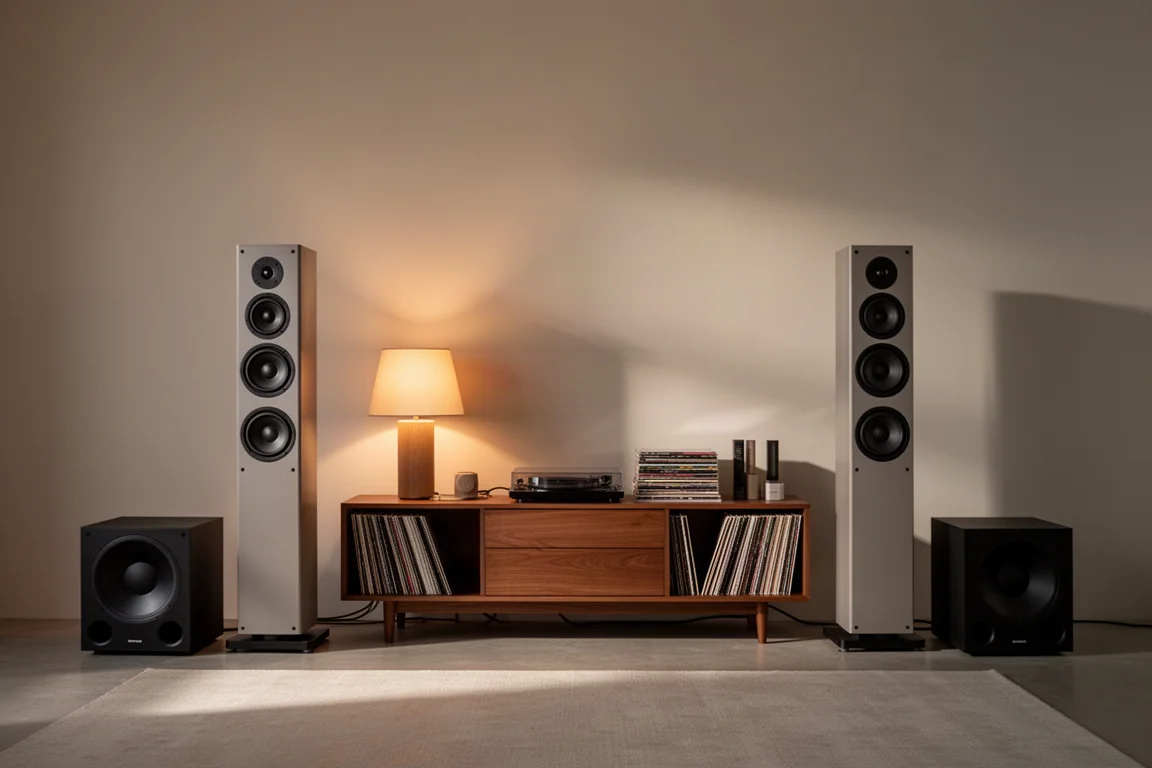
A pair of KC62 subwoofers makes more sense for listeners who want the most even bass distribution across a room and are willing to accommodate two cabinets and the associated cables. If your listening is mostly acoustic, vocal-led or guitar-driven material with little content in the lowest octaves, the LS60 Wireless on its own remains a complete system, and the extra hardware will do less for you.
Conclusion
The KEF LS60 Wireless is a capable three-way active floorstander, but its measured low-frequency limit falls short of its rated one. The KC62 closes that gap, and the KEF Connect app makes the integration simple enough to try without specialist tools. One subwoofer delivers most of the benefit by restoring sub-bass content that the speakers cannot reproduce. A second adds a little more extension and noticeably more even bass around the room. Both are worthwhile when the music calls for them, and neither is necessary when it does not.
Further reading
Related Reviews
Hi-Fi Loudspeakers
JBL 4349 Review: A High-Sensitivity Standmount With Serious Dynamic Punch
A close look at the JBL 4349, a large two-way standmount with a horn-loaded compression tweeter, 91 dB sensitivity and deep bass extension, plus the amplifier and placement demands that come with it.
Hi-Fi Loudspeakers
Lee Song Origin S10 Review: A High-Efficiency Floorstander That Rewards Careful Setup
A single-driver floorstanding loudspeaker with 100 dB sensitivity, rich bass, and midrange purity that makes careful placement worth the effort.
Hi-Fi Loudspeakers
Magnet Transpulse Review: A Big, Fun Floorstander That Undercuts the Competition
The Magnet Transpulse is a true three-way floorstander with a 15-inch woofer, a dedicated midrange, and horn-loaded tweeters. It delivers scale and texture for under $1,000 a pair, provided you have the room.