Hi-Fi Loudspeakers
JBL 4349 Review: A High-Sensitivity Standmount With Serious Dynamic Punch
A close look at the JBL 4349, a large two-way standmount with a horn-loaded compression tweeter, 91 dB sensitivity and deep bass extension, plus the amplifier and placement demands that come with it.
Introduction
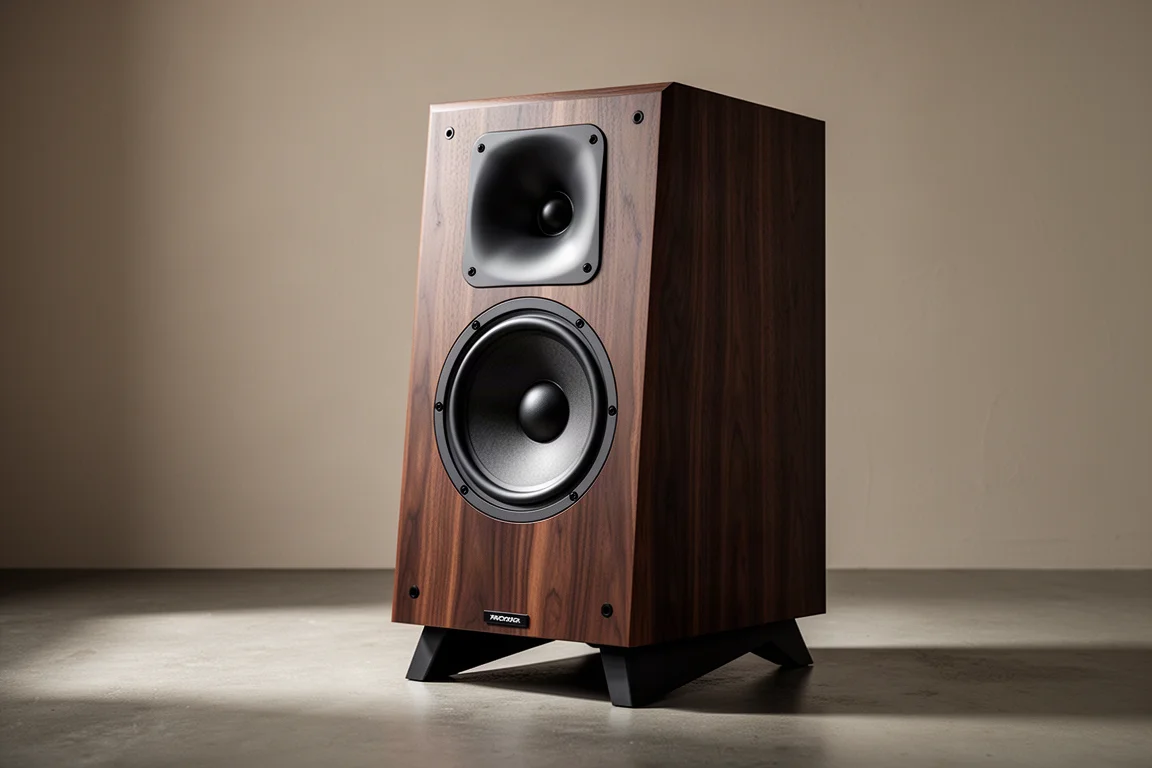
The JBL 4349 is a passive standmount loudspeaker with the physical presence of a small floorstander. Each cabinet measures 45 cm wide, 74 cm tall and 32 cm deep, and each one weighs close to 40 kg. JBL calls it a standmount, and that is how it is normally sold, but the proportions and the low-frequency extension put it in a different category from the slim two-way boxes most people picture when they hear the word.
The styling nods to JBL’s heritage models, but the engineering is current. Behind a removable grille that uses push-in fittings rather than magnets, there is a 30 cm pulp mid-bass driver, a pair of front-firing reflex ports and a horn-loaded compression tweeter. Nominal impedance is 8 ohms and sensitivity is rated at 91 dB, which means the 4349 needs very little amplifier power to reach high volume levels. It is also one of the more demanding speakers around when it comes to matching electronics and finding the right spot in a room.
Who the JBL 4349 Is For
The 4349 rewards listeners who care about dynamics and about how a system sounds at low volume. With 91 dB of sensitivity, one watt of music power produces 91 dB at a metre, which works out at roughly 81 dB at a typical seat. Modest amplifiers can therefore drive it, and the speaker tends to sound full and lively well before the volume dial gets near the top of its travel. Recordings that feel flat elsewhere often come across as more engaging here.
It also suits rooms where the speakers cannot sit far from the front wall. Both reflex ports fire forward, and the rear panel carries nothing but binding posts and veneer. A design that vents or radiates at the back needs more breathing room, and the 4349 does not.
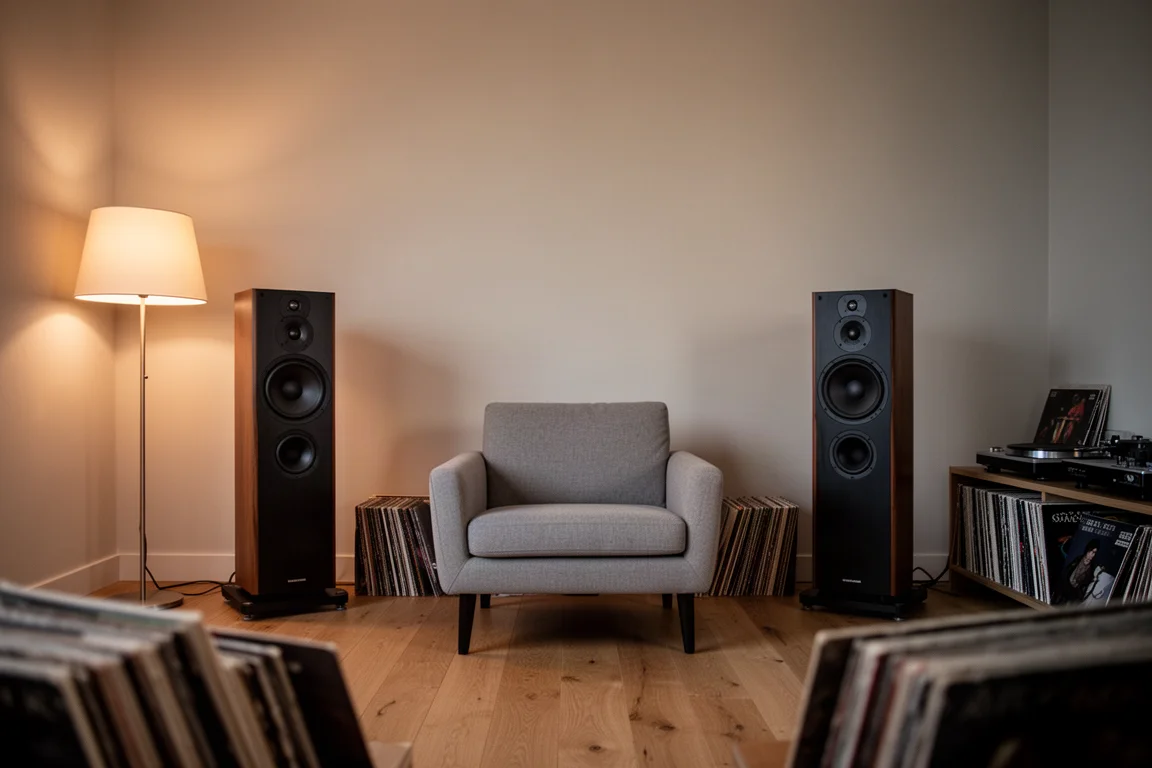
Where the 4349 is less accommodating is in the setup itself. It is unusually sensitive to amplifier choice and to small changes in position, and it will not paper over a system that has not been thought through. Buyers who want a speaker that simply works wherever it lands should look elsewhere.
Design and Cabinet Construction
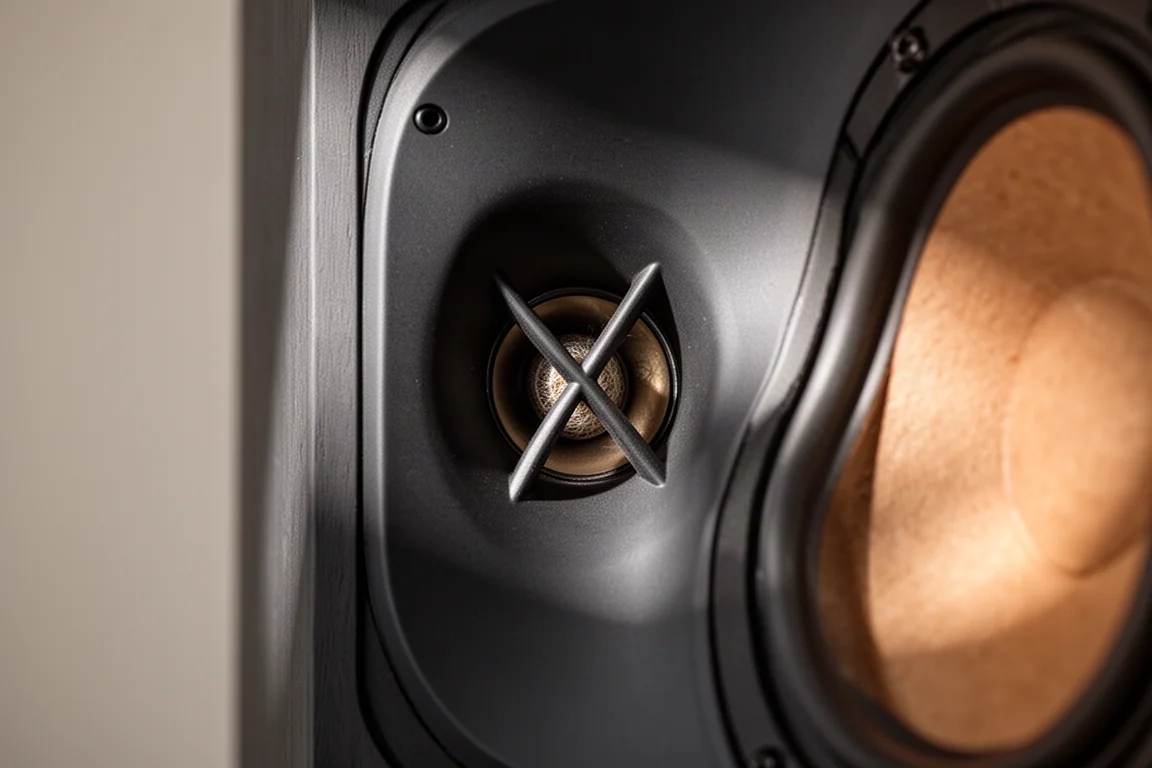
The 4349 is a two-way design with a crossover point at 1.5 kHz, which is lower than average. The reason is the tweeter. It is a dual diaphragm compression driver with two 4 cm diaphragms, and it is horn loaded. The horn is moulded from a fiberglass compound in a cross-shaped profile that funnels into the tweeter throat, projecting the output into the room, reducing distortion and limiting breakup modes in the tweeter’s range.
Below it sits a 30 cm mid-bass driver made from pure pulp, a wood and paper mix. Working with the two front-firing reflex ports, it gives the 4349 a claimed low-frequency rating of 32 Hz at -6 dB. That is deep enough that a separate subwoofer is not necessary.
The cabinet walls are one inch thick MDF, which accounts for much of the weight. Each speaker also has rotary tweeter level controls, so the top end can be trimmed up or down. The JS120 stand, the same model supplied with the L100 Classic, tilts the cabinet back slightly so the sound is thrown upward into the room.
Main Strengths: Dynamics and Midrange
Dynamics are the headline. The 4349 handles the difference between quiet and loud passages with a scale that few speakers manage, and that quality holds up even on heavily compressed recordings that normally sound squashed and lifeless. It is an exciting speaker in the best sense, and the effect is strongest at lower listening levels, where many designs lose their energy.
The midrange is the other strength. Vocals, particularly female vocals, come through with a clarity that survives as the arrangement gets busier. Bass is tight, clean and well textured, and the low end stays composed when the rest of the mix is dense.
There is also a practical benefit to the design. Reaching down to a claimed 32 Hz means the 4349 can stand on its own in a two-channel system, without the extra box, cable and setup work that a subwoofer brings.
Positioning and Amplifier Matching
Placement matters more here than with most speakers. Small movements backwards, forwards and sideways change the balance, and the near-40 kg weight makes those movements awkward, particularly once the speakers are up on their stands. Pushing the 4349 closer to the front wall adds bass, as it would with any speaker, and because the ports fire forward there is more freedom to do that than with a rear-vented design. Toe-in is best kept modest. Angling the tweeters to fire across the listener’s shoulders rather than directly at the ears produced the more natural result.
Amplifier choice is the bigger variable. Class D and digital amplifiers made the tweeter sound hard and glary. Class A/B designs were a different story. The Naim Uniti Atom delivered a smooth top end with a lively, dynamic presentation, and the Hegel H190 improved on that further, with a slight edge in the upper frequencies disappearing entirely. Using the tweeter level controls to tame a Class D amplifier simply made everything sound dull, so changing the amplifier is the more effective route. Valve amplifiers are an interesting option on paper, but they run hot, which is worth factoring in if the listening room gets warm in summer.
Things to Consider Before Buying
The 4349 does not specialise in soundstaging. The phantom centre that appears between a well-set-up pair is not as crisply defined as it is with some competing designs, so listeners who prioritise pinpoint imaging may prefer a different speaker. Everything else about the presentation is strong enough that this reads as a trade rather than a flaw.
Compared with the Klipsch Forte IV, which costs a little less, the 4349 gives up a measure of low-end punch and some tolerance for upstream electronics, but it returns tighter and better-textured bass, more top-to-bottom transparency and a more balanced, less coloured overall sound.
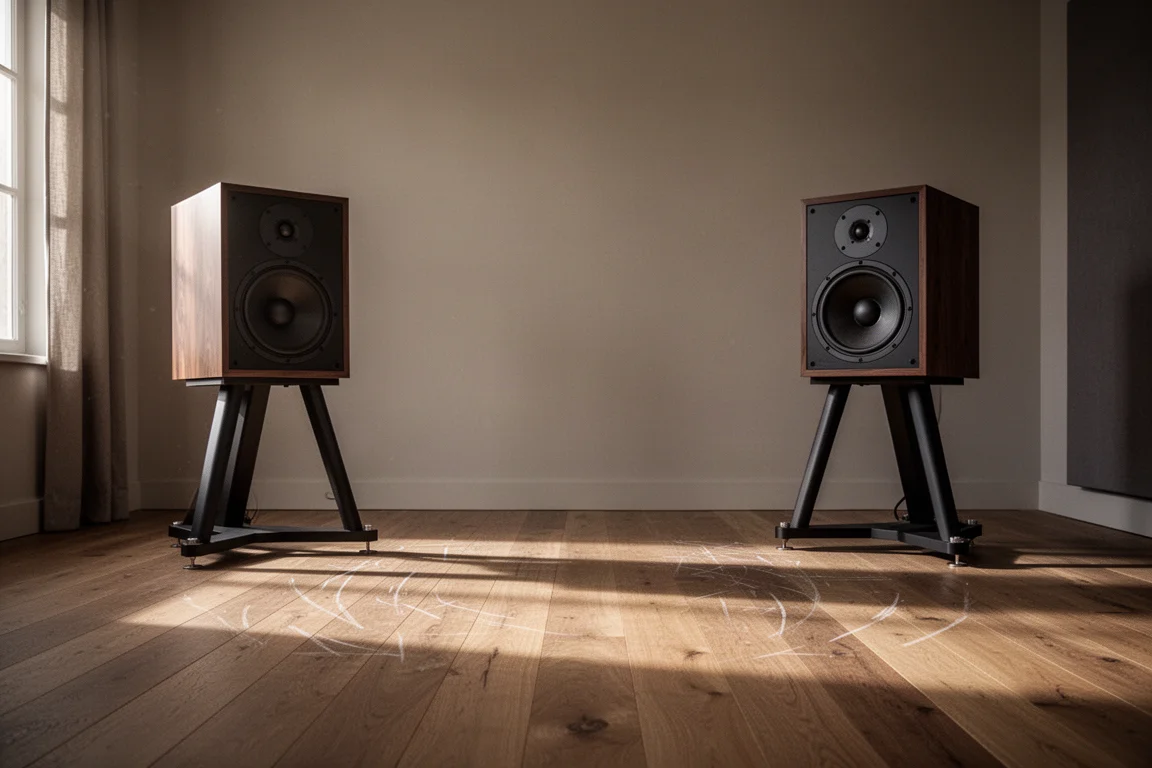
Weight and setup demands are worth planning for. Two speakers at close to 40 kg each need a solid floor and a willing helper, and the position that sounds best may not be the one that looks best. On stands, the cabinet tilts back and throws sound upward; placed differently, it throws sound more directly forward, and the two setups do not sound the same.
Buying Advice
Audition the 4349 with more than one amplifier if you can, and lean towards a Class A/B design. That single decision has more influence on the result than any tweeter adjustment. If a dealer demonstration is limited to one amplifier, ask whether a second option is available before concluding that the top end is too forward.
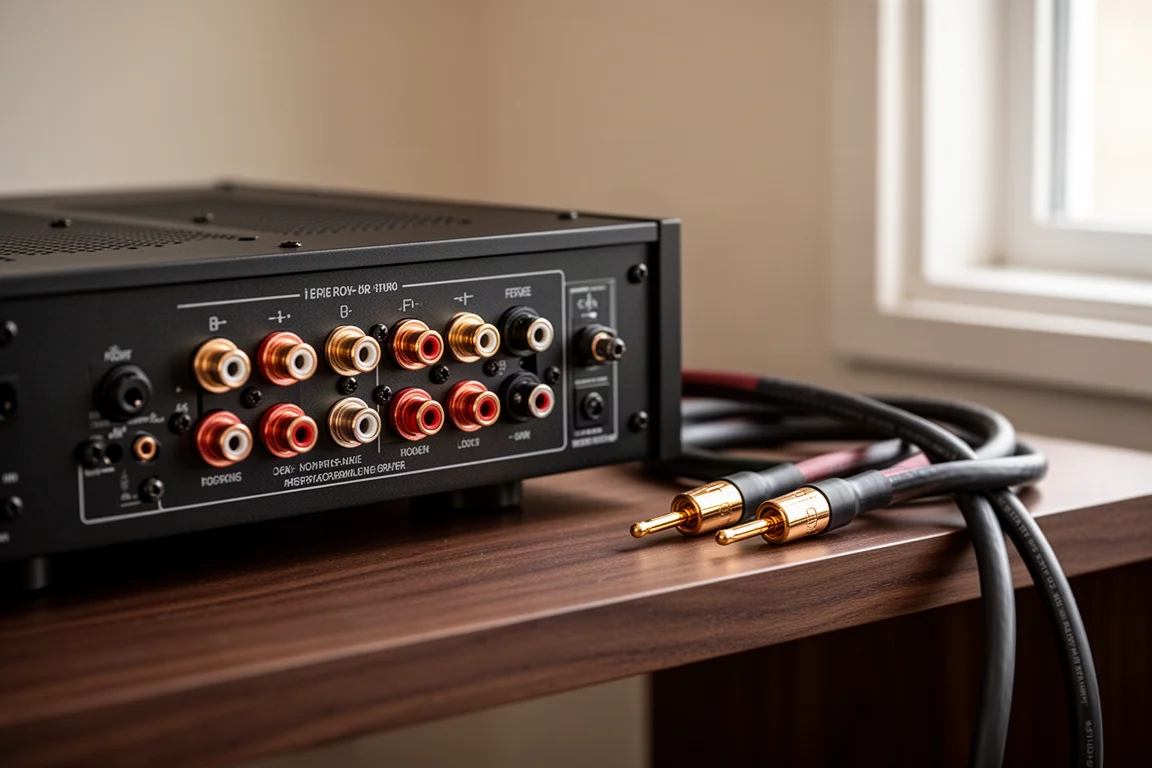
Give yourself room to experiment with position. The differences between one spot and another are larger than usual, and the process takes patience. A pair of matching JS120 stands is the natural partner, and the slight backward tilt they introduce is worth hearing before you settle on a final setup.
On price, the 4349 sits slightly above the Klipsch Forte IV. It is a strong option at its own level rather than a giant-killer, and the case for it rests on dynamics, midrange clarity and bass quality rather than on outmuscling more expensive designs.
Conclusion
The JBL 4349 is a large, heavy, high-sensitivity standmount that delivers exceptional dynamics, a clear midrange and genuinely deep bass for its size. It is also unusually particular about the amplifier feeding it and the position it occupies. Buyers who are willing to work through those two variables will find a speaker that makes almost any recording sound more alive. Buyers who want a fuss-free solution will find it frustrating. For the right system, in the right room, it is an outstanding choice.
Product link
View more details for JBL 4349
This product is mentioned in the review. Check the specifications, options, and compatibility before buying.
View more details for JBL 4349Further reading
Related Reviews
Hi-Fi Loudspeakers
KEF LS60 Wireless and KC62: What Adding a Subwoofer Changes
A practical look at how the KEF LS60 Wireless performs on its own, with one KC62 subwoofer, and with two, based on in-room measurements and listening.
Hi-Fi Loudspeakers
Lee Song Origin S10 Review: A High-Efficiency Floorstander That Rewards Careful Setup
A single-driver floorstanding loudspeaker with 100 dB sensitivity, rich bass, and midrange purity that makes careful placement worth the effort.
Hi-Fi Loudspeakers
Magnet Transpulse Review: A Big, Fun Floorstander That Undercuts the Competition
The Magnet Transpulse is a true three-way floorstander with a 15-inch woofer, a dedicated midrange, and horn-loaded tweeters. It delivers scale and texture for under $1,000 a pair, provided you have the room.