Hi-Fi Speakers
KEF LS60 Review: A Slim Wireless Floorstanding Speaker With Serious Hi-Fi Ambition
The KEF LS60 fits Uni-Q drivers, force cancelling bass, 1,400 watts of amplification and full streaming into a 5.1-inch-wide tower. Here is what to weigh before buying.
Introduction
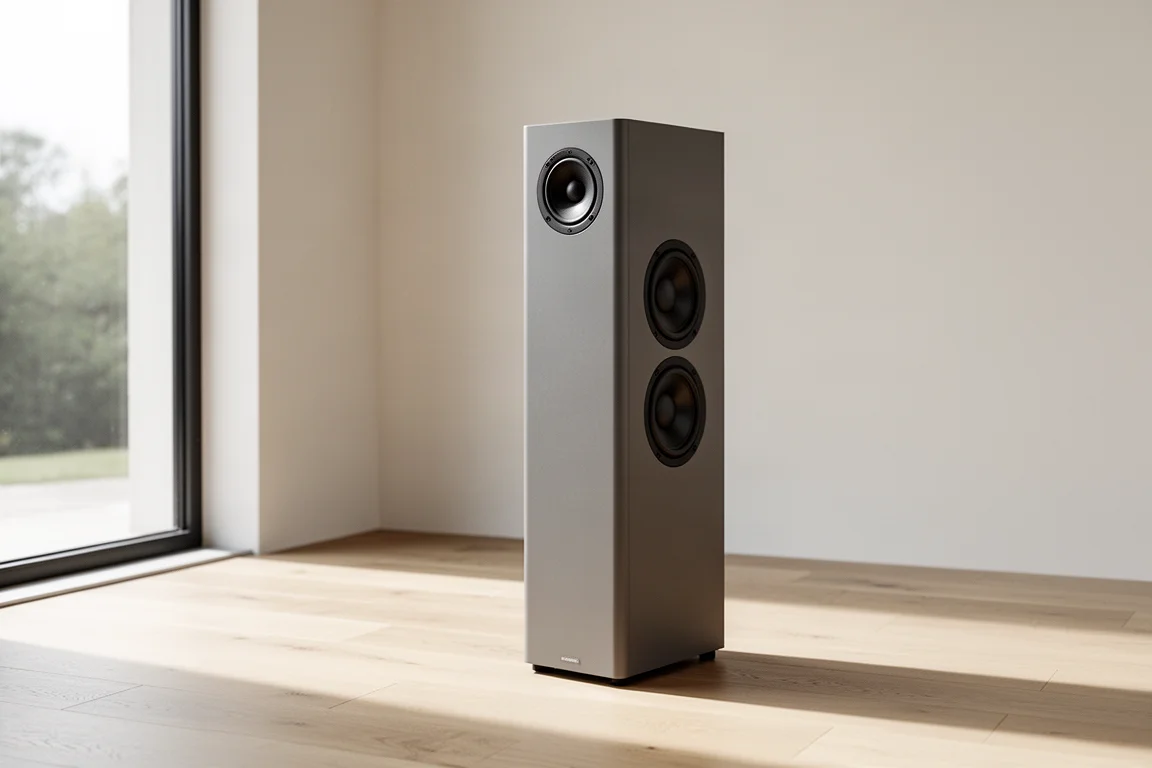
The KEF LS60 is a floorstanding wireless speaker built around a straightforward idea: high fidelity sound without a rack of separates. There is no receiver, no separate amplifier, and no run of speaker cable stretching across the room. Each tower carries its own amplification and its own streaming hardware, and the whole cabinet is just 5.1 inches wide.
The design invites a second look. Two bass drivers are mounted back to back on the side of the cabinet, the tower appears to float above a wider plinth, and the proportions look far too slim for the low frequency output the speaker is claimed to deliver. The engineering inside is the answer to that first impression.
KEF is marking 60 years of acoustic innovation with the LS60. The company was founded in 1961 by Raymond Cooke, an electrical engineer who set out to build products that reproduced recordings as naturally as the original performance. That appetite for new materials and new driver concepts runs right through the LS60, from its Uni-Q driver array to the metamaterial maze hidden behind the tweeter.
Who This Product Is For
The LS60 sits in KEF’s wireless speaker family alongside the LSX and LS50 bookshelf models, but it is the only floorstanding design in that group. It does not replace an earlier model. Its brief is to bring high fidelity sound to more homes, and the feature set reflects that goal.
This speaker suits listeners who want a complete system rather than a project. If you stream from a phone, a tablet, or a network library and you would rather not choose an amplifier, match it to a pair of passive speakers, and manage the cabling, the LS60 removes nearly all of that work. It also suits rooms where floor space is tight and a conventional tower would dominate the layout.
It is just as relevant for a hybrid setup. The analog, digital, and HDMI inputs mean a turntable, a CD player, and a television can all feed the same pair of speakers, and each speaker has its own subwoofer output if you later want more low end.
Main Strengths
Most of what makes the LS60 work comes from technology developed for KEF’s high-end models and then scaled down. The same driver thinking found in far more expensive designs shows up here in a cabinet that fits into an ordinary living room.
Single Point Source Sound With Uni-Q
The heart of the LS60 is KEF’s Uni-Q driver array, now in its 12th generation. In a conventional loudspeaker, low, mid, and high frequencies radiate from different locations on the cabinet, and those separate sources can interfere with each other and blur the sound. Uni-Q places the tweeter at the center of the mid-range cone so all frequencies leave from a single point, with no interference between them.
The array pairs a 0.75 inch aluminum dome tweeter with a 4 inch aluminum cone mid-range driver. The practical benefit is a wider listening area. Rather than a narrow sweet spot, the sound stays even across the room, so listeners sitting off to one side still hear a coherent, three-dimensional presentation with the quieter detail intact.
Force Cancelling Bass and Metamaterial Absorption Technology
Low frequency output from a 5.1 inch wide cabinet is the hard part, and KEF addresses it with two 5.25 inch Uni-Core force cancelling drivers on each side of the speaker, using the same driver concept found in the KC62 subwoofer. The drivers are fixed back to back in a force cancelling arrangement, which cancels the vibration that would otherwise shake the cabinet.
KEF’s patent pending Uni-Core design also uses a pleated Plex driver surround, a shape inspired by Japanese paper folding, that resists acoustic pressure inside the cabinet without limiting sensitivity the way a traditional surround would. A motion feedback system called Smart Distortion Control measures current in the voice coil and corrects nonlinear distortion, which the specifications credit with reducing total harmonic distortion by up to 75 percent. The claimed 3dB down point is 31 Hz.
Behind the tweeter sits Metamaterial Absorption Technology, a maze-like structure developed with the Acoustic Metamaterials Group. It absorbs 99 percent of the unwanted sound radiating from the rear of the driver, removing the distortion that would normally travel with it. Together with the pleated surround and the distortion control system, these are the pieces that let a very slim tower produce detailed, deep, and balanced bass.
Streaming, Inputs, and Room EQ
Setup runs through the KEF Connect app, which configures the speakers over Wi-Fi. From there you can stream through AirPlay 2, Google Chromecast, or Bluetooth, and the app includes Amazon Music, Qobuz, Deezer, radio, and podcasts built in for Wi-Fi streaming, which is the highest fidelity route. Spotify Connect, Tidal Connect, and QPlay are supported directly. PCM files up to 24-bit/384 kHz are handled, along with MQA decoding and DSD.
The connection panel sits at the bottom of the rear of the main speaker. HDMI eARC lets you run a single cable to a television and control the sound with the TV remote, which is an easy way to add a serious stereo system to a screen. There is also an optical input, a coaxial input, an RCA input for a turntable or CD player, a subwoofer output, and two Ethernet ports, one for your network and one optional link between the two speakers. Using that Ethernet link between the pair delivers higher resolution than the wireless connection.
Amplification totals 1,400 watts, split across dedicated high, mid, and low frequency amplifiers in each speaker using a mix of bespoke Class AB and Class D designs. Because the amplifiers sit low in the cabinet, most of each speaker’s 69 lb weight stays near the floor. A Music Integrity Engine handles the digital signal processing that drives all of this technology, including low frequency phase correction for precise timing.
Room EQ is where the system becomes genuinely flexible. Normal mode asks about room size, how damped the room is, speaker distance from the wall, listening distance, and whether a subwoofer is connected, then matches the sound to the environment. Expert mode opens up individual control over treble rolloff, bass boost, subwoofer crossover, subwoofer gain, polarity, and delay. Multiple profiles can be saved, which is useful for late night listening when you do not want to disturb anyone nearby.
How the LS60 Sounds in a Real Room
The first thing that stands out is imaging. The very narrow cabinet combined with the Uni-Q array places every instrument with pinpoint accuracy inside a wide, deep sound stage. On tracks where a good system should make the music feel as though it is coming from outside the speakers, the LS60 does exactly that. Because Uni-Q also delivers time alignment, harmonics and vocal textures come through without the smearing that can blur the edges of a performance.
Rhythmic material is handled with the same confidence. Powered speakers generally get timing right, and the LS60 goes further, with a phase presentation that pulls you into the music rather than simply keeping time. Off-axis listening holds up well too. Even sitting well to one side of the room, the presentation stays three-dimensional and the small details that draw you into a recording remain audible.
Bass is fast, detailed, and accurate, full of texture and never boomy or disconnected from the rest of the sound. In a large room, the lowest extremes are the one area where the speaker does not grip quite as hard as it does everywhere else, which is precisely the situation where a subwoofer earns its place. Above that, the mid-range and treble stay so cohesive that the speaker encourages you to work through your favourite albums rather than analyse them.
Things to Consider Before Buying
Room size matters more than usual here. In a large space, the deep bass extension is the one part of the performance that may leave you wanting, and adding a subwoofer is the natural next step. Each speaker has its own subwoofer output, so a single sub or even a pair is possible, and subwoofer placement and calibration have a real effect on the final result.
The price looks high at first glance, and that is a fair reaction. What the LS60 replaces is worth factoring in: a pair of passive floorstanders, a capable integrated amplifier or streaming amplifier, and the cables to connect them. Once the system is considered as a whole, the value case becomes easier to follow.
There are a few practical points. Each speaker weighs 69 lb, so placement is worth planning before they arrive. If you want the higher resolution link between the two speakers, you will need to run an Ethernet cable between them rather than relying on the wireless connection. Finishes are matte and available in mineral white, titanium gray, and royal blue, and the matte surface resists fingerprints and light scratches well. The towers stand on an 8.3 inch plinth with a gap beneath the cabinet, and that gap is functional: it draws air through the bottom and out above the connection panel to cool the amplifiers inside.
Buying Advice
Match the speaker to the room before you match it to a specification sheet. In a medium room, the LS60 on its own delivers the kind of cohesive, natural presentation that makes long listening sessions easy. In a larger room, budget for a subwoofer from the start and take the time to position and calibrate it properly, because the bass character of the LS60 is a genuine strength and a well-integrated sub extends it rather than overpowers it.
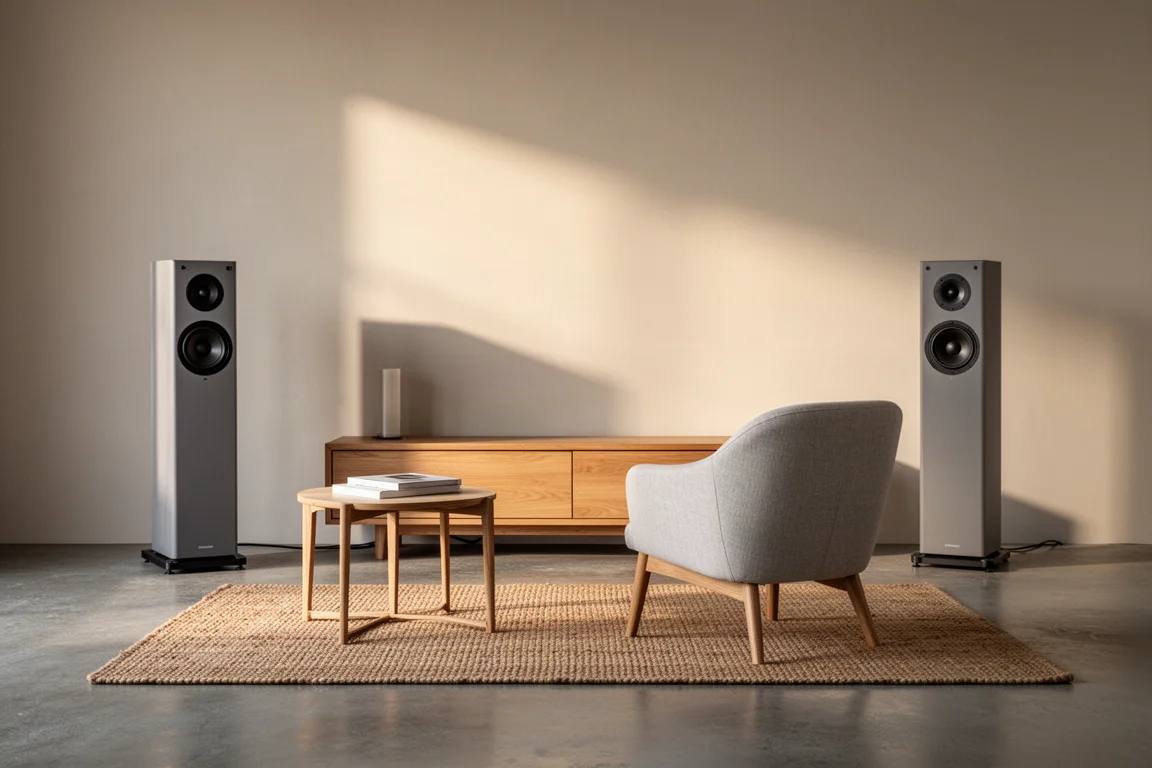
Take advantage of the room EQ. Normal mode is quick and asks only a handful of questions about your space, and it is enough for most setups. Expert mode rewards anyone who wants to fine-tune treble rolloff, bass boost, and subwoofer integration, and saving separate profiles makes it simple to switch between everyday listening and a quieter late night setting.
Finally, think about how you will actually use it. If a television is part of the plan, the HDMI eARC connection turns the pair into a serious two-channel system for films and series with a single cable. If vinyl is the priority, the RCA input takes a turntable directly. The appeal of the LS60 is that you can start with streaming from a phone and add sources later without changing the speakers.
Conclusion
The KEF LS60 sets out to deliver a speaker for the modern music lover, and it succeeds on its own terms. A single phone is enough to start streaming, while the analog, digital, and HDMI inputs leave room to grow into a turntable, a disc player, or a television. The slim cabinet reads as a design piece in a modern living space and blends quietly into a more traditional room.
Close your eyes and the technology stops mattering. The sound is natural, never fatiguing, and spread widely enough that everyone in the room hears it properly rather than one lucky listener in the sweet spot. Bass is fast and textured, imaging is precise, and the low extremes are the only place where a large room may ask for a subwoofer. If that trade-off fits your space, the LS60 is a persuasive way to build a complete hi-fi system without the boxes, the cables, and the clutter.
Product link
View more details for KEF LS60
This product is mentioned in the review. Check the specifications, options, and compatibility before buying.
View more details for KEF LS60Further reading
Related Reviews
Hi-Fi Speakers
1723 THX Tower vs 1528 Bookshelf: Which Speaker Fits Your Room?
Two speakers at roughly the same price, built very differently. How the 1723 THX tower and the 1528 bookshelf compare on construction, bass, power needs, and sound.
Hi-Fi Speakers
Acoustic Energy AE 300 Review: Deep Bass From a Compact Standmount
A two-way standmount with real wood veneer, surprising low-end weight, and a warm, easygoing character. Here is what to know before buying.
Hi-Fi Speakers
Acoustic Energy AE1 40th Anniversary Review: A Modern Take on a British Classic
A compact standmount that revives a 1980s favorite with all-new parts, a warm mid-centric balance, and a price of £1,499 per pair.