Subwoofers
KEF KF92 Review: A Compact Force-Cancelling Subwoofer for Small and Medium Rooms
A dual 9-inch, force-cancelling subwoofer with a 1,000W Class D amplifier, deep low-volume extension and unusually flexible setup options, best suited to small and medium rooms.
Introduction
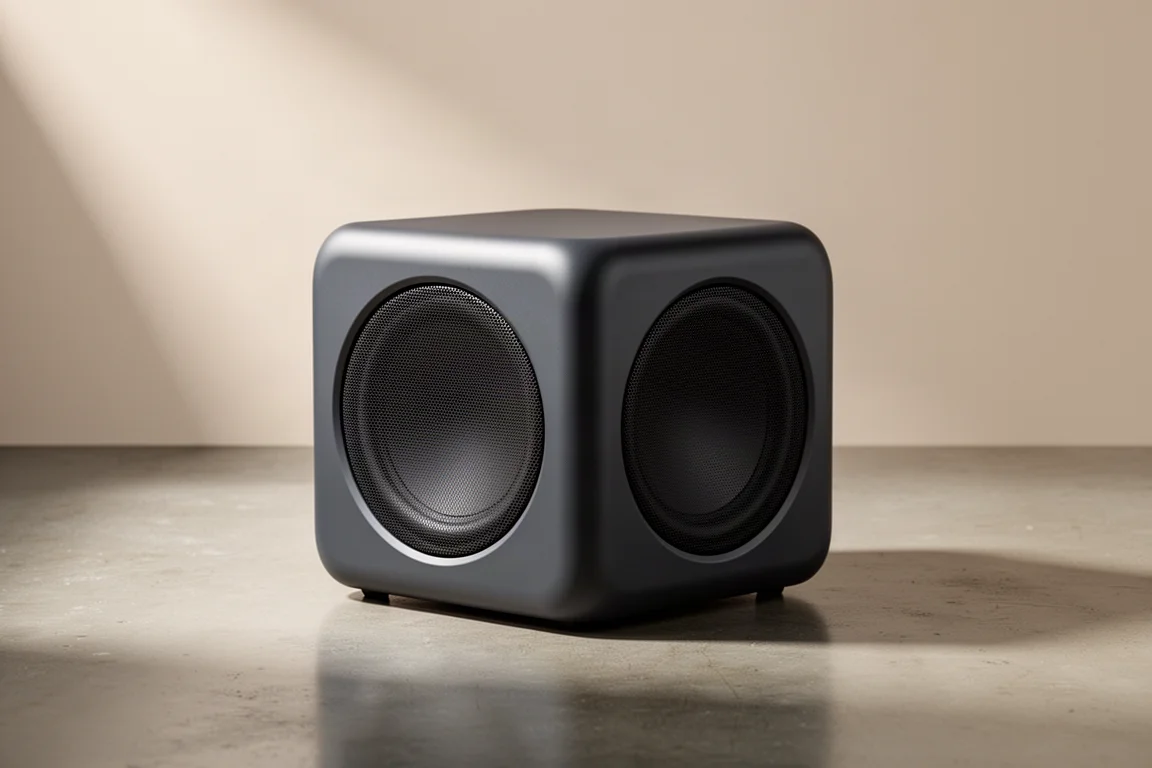
The KEF KF92 is a compact subwoofer built around two 9-inch drivers mounted back to back in a force-cancelling configuration. Each driver has its own motor, which sets it apart from the KC62 design where the two drivers share a single motor. A built-in Class D amplifier delivers 1,000 watts RMS in total, or 500 watts per driver, and KEF rates the frequency response at 11 Hz to 200 Hz, plus or minus 3 dB. Retail pricing sits at around $2,000.
The appeal is straightforward. This is a cabinet small enough to disappear into a room that cannot accommodate a large ported box, yet it is engineered to produce genuine low-frequency output rather than a token amount of bass.
What follows is a practical look at where the KF92 performs well, how room placement changes its behaviour, and which trade-offs are worth accepting before spending this kind of money on a subwoofer.
Who This Product Is For
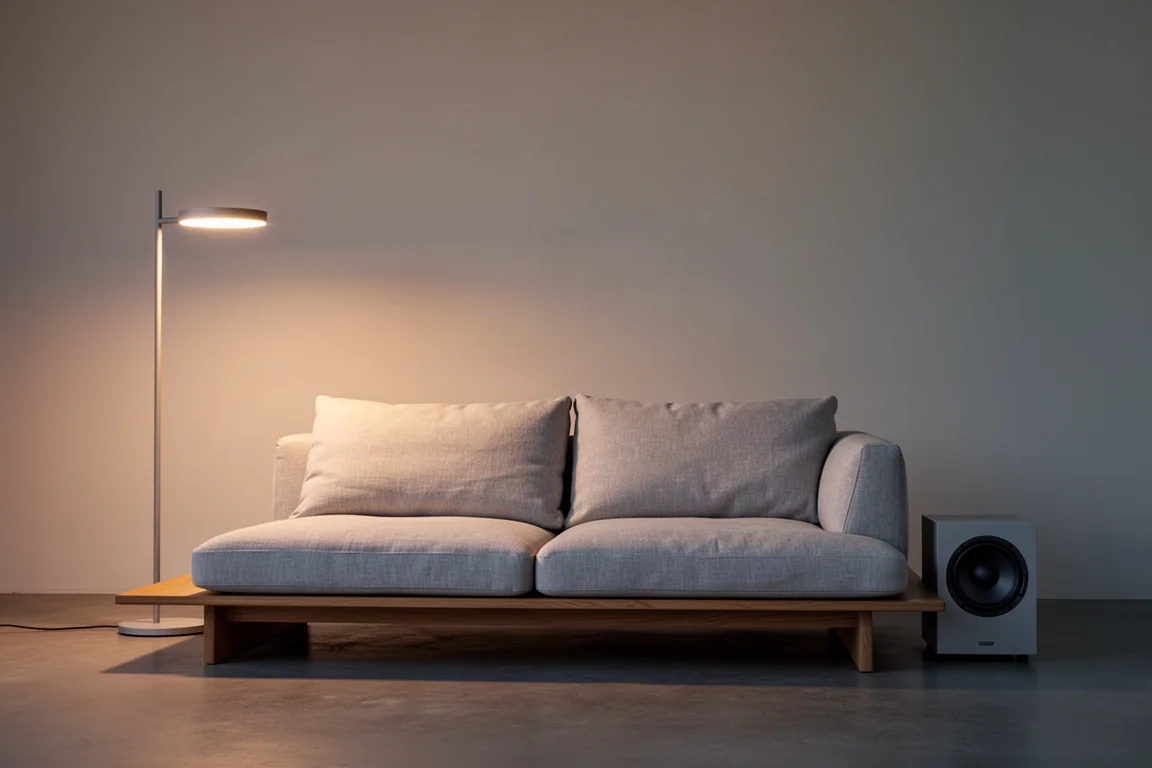
The KF92 makes the most sense in a small to medium room, roughly 1,000 to 2,000 cubic feet by the room-size bands commonly used for home theatre planning. Buyers who value a small footprint, flexible integration and tidy, well-controlled bass will get the most from it.
It is not aimed at listeners chasing maximum output at high playback levels. Larger cabinets with bigger drivers will always deliver more deep bass, because they trade size and weight for output. The KF92 exists for the rooms where that trade is simply not possible.
Main Strengths
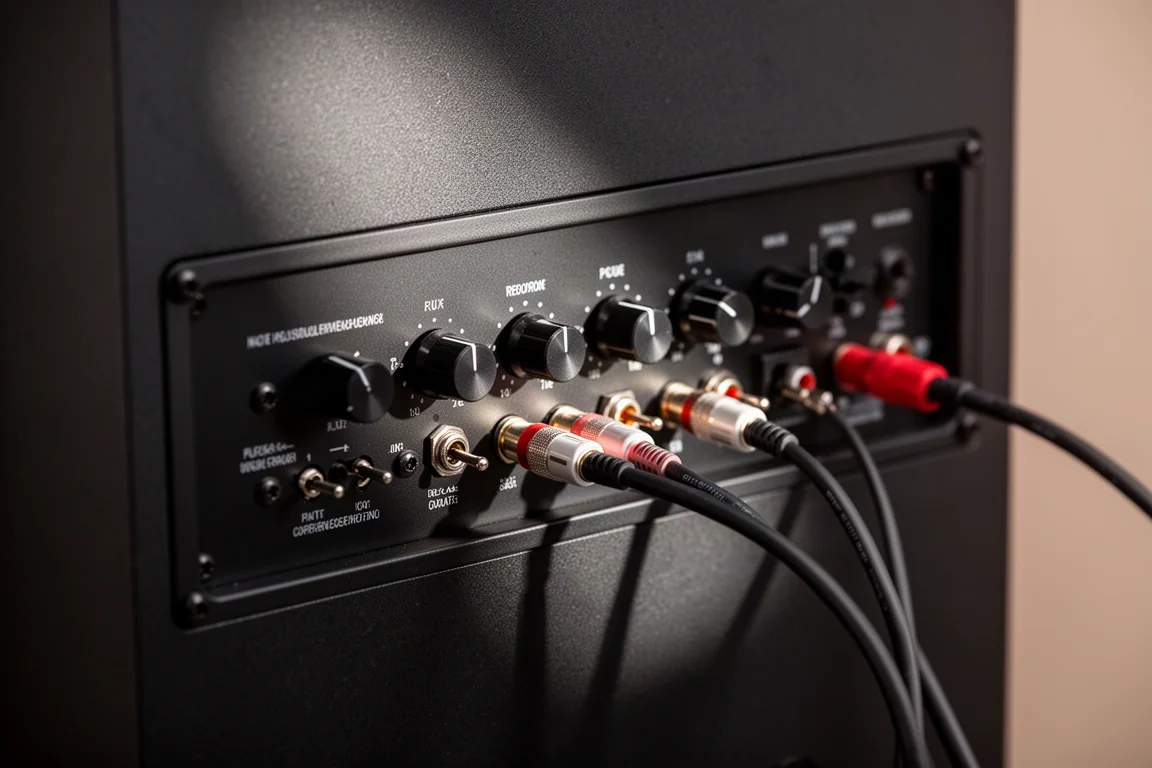
The dual-driver arrangement is the centrepiece. Two 9-inch drivers sit in a back-to-back, force-cancelling layout, each with a separate motor, which helps keep cabinet vibration in check while the amplifier feeds 500 watts to each driver. The rear panel is unusually well equipped for a subwoofer this size: an expansion port, a variable crossover adjustable from 40 Hz to 140 Hz, a gain control, a ground lift switch, high-level speaker inputs and RCA line inputs.
Low-volume behaviour is a particular strength. At an average level of roughly 65 dB, output stays strong down to about 20 Hz, with a gentle lift through the 20 to 30 Hz region and useful extension below it. CEA-2010A measurements land around 86 dB at 20 Hz and about 92 dB at 25 Hz, which is respectable for a cabinet this compact.
Distortion figures are also well controlled in the range that matters most for music. Total harmonic distortion sits at roughly 2 percent at 40 Hz and about 4 percent at 30 Hz, rising sharply only below 20 Hz. In practice, rattling doors and vibrating fixtures in a room tend to be far more audible than the subwoofer’s own distortion.
Room Placement and Real-World Output
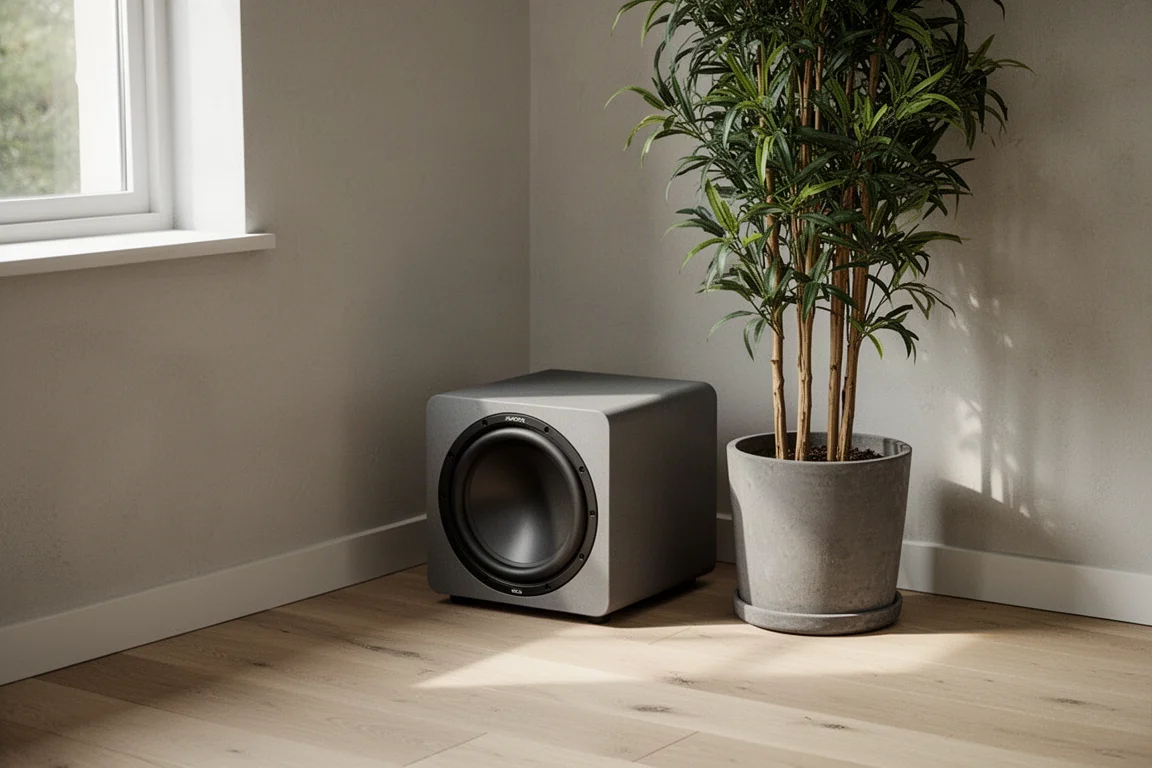
Placement changes this subwoofer’s character more than almost anything else. Corner loading produces noticeably more reinforcement than a position out in the middle of a room, and the difference is easy to hear. That is the main reason broad subjective descriptions of subwoofers are unreliable: the room is doing a large part of the work.
Measured behaviour tells a clear story. At moderate output around 85 dB, the frequency response is more balanced and more linear in overall shape, with the mid-bass lift of the low-volume curve evening out. Push above roughly 85 dB and the limiter engages: the response flattens further, and output below 40 Hz is deliberately held back so driver excursion stays within mechanical limits. Maximum average output above 40 Hz lands around 98 dB.
Group delay is another useful detail. The system shows roughly 5 ms of delay overall, with an additional 5 to 8 ms of shift between about 50 Hz and 70 Hz. Crossing over at 80 to 100 Hz is therefore smoother than a 60 Hz crossover, which makes it easier to align the subwoofer with the main speakers and preserve impact in the crossover region.
Setup Flexibility and Crossover Options
The rear panel gives the KF92 more integration options than most compact subwoofers. Alongside the expansion port and the 40 Hz to 140 Hz variable crossover, there is a gain control, a ground lift switch, high-level speaker inputs and RCA line inputs. The line outputs let a signal pass through to a stereo or main speaker amplifier, with the crossover applied to that outgoing signal. That is genuinely useful in a system where a crossover cannot be set anywhere else.
The mode switch selects between LFE operation and manual operation. Manual mode unlocks a set of EQ presets covering room, wall, corner and apartment placement, each intended to suit a different position in the room. Apartment mode substantially limits low-frequency output so that bass transfers less into neighbouring rooms, which is a sensible inclusion for shared buildings.
Phase control is kept simple at 0 or 180 degrees. There is no variable phase adjustment, so fine alignment depends more on placement and on any processing already in the system.
Things to Consider Before Buying
The fixed 0 or 180 degree phase setting is the clearest limitation. A variable control would give more freedom when matching the subwoofer to the main speakers, especially in awkward rooms, though careful placement can compensate for much of it.
Output capability is deliberately bounded. The limiter that protects driver excursion also means the low end tapers below 40 Hz as volume rises, so the KF92 behaves as a controlled, well-behaved subwoofer rather than a sub-bass monster. Listeners who routinely play loud and want maximum deep bass will find larger 12-inch designs deliver more low end, though those cabinets are substantially bigger and considerably harder to move around.
Price is the other consideration. At around $2,000, the KF92 competes with physically larger subwoofers that post higher output numbers. What those alternatives cannot match is the small footprint, which is the whole point of this design.
Buying Advice
If the goal is a compact subwoofer that integrates easily into a small to medium room, the KF92 is a strong candidate. Corner or wall placement will make the most of its output, and crossing over at 80 to 100 Hz rather than 60 Hz helps it blend cleanly with the main speakers.
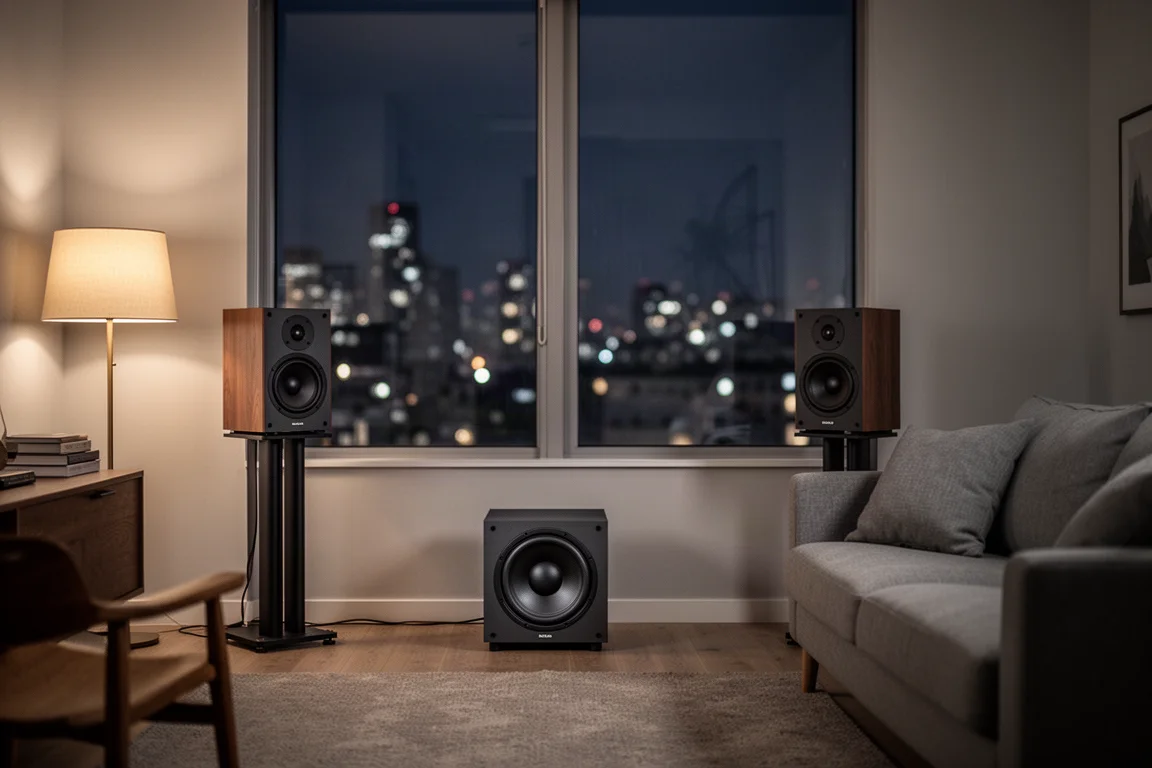
It is also worth knowing that some owners run more than one. The small cabinet makes a pair practical in rooms where two large subwoofers would never fit, and multiple units help even out room response rather than simply adding volume. For a system built around a modest room, flexible placement and controlled bass, that approach makes a lot of sense.
Conclusion
The KEF KF92 is a well-engineered compact subwoofer with a genuinely useful feature set: two force-cancelling 9-inch drivers with independent motors, 1,000 watts RMS of Class D amplification, deep low-volume extension and a rear panel that covers everything from high-level inputs to a daisy-chain line output.
Its limits are equally clear. Output below 40 Hz tapers as volume climbs, phase adjustment is fixed at 0 or 180 degrees, and the price is around $2,000. Buyers who understand those boundaries and need a small, capable subwoofer for a small to medium room will find the KF92 a sensible, well-rounded choice.
Product link
View more details for KEF KF92
This product is mentioned in the review. Check the specifications, options, and compatibility before buying.
View more details for KEF KF92Further reading
Related Reviews
Subwoofers
Arendal 1961 Subwoofer 1S Review: Beautiful Build, Modest Punch at $1,000
A sealed $1,000 subwoofer with a gorgeous cabinet, plus three lower-priced alternatives that deliver more impact for movie nights.
Subwoofers
Arendal Sound 1723 2V Subwoofer Review: Dual 13.8-Inch Drivers Under $3,000
A flagship ported subwoofer with dual opposing 13.8-inch drivers, a 1,200W RMS amplifier, app-based DSP, and a 10-year warranty.
Subwoofers
Ascendo 16 Sub Active Sealed Review: Sealed Bass Built on Real Engineering
A close look at the Ascendo 16 Sub Active Sealed, a 16-inch sealed home theater subwoofer with independently verified measurements, a purpose-built driver, and genuinely controlled output.