Home Audio Speakers
KEF Blade One Meta Review: Flagship Sound From a Single Apparent Source
A close look at the KEF Blade One Meta, from its 12th generation Uni-Q driver array and MAT absorption to real listening notes and what to weigh before buying.
Introduction
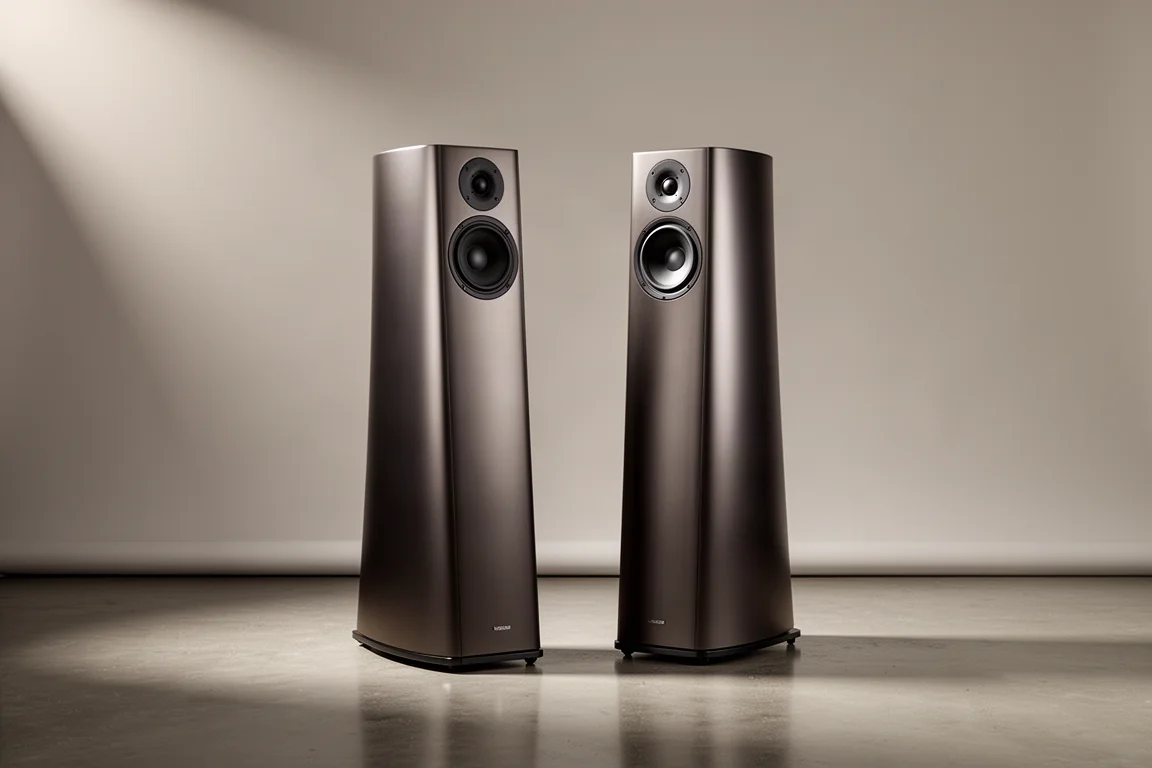
Few names in high-end audio carry the engineering reputation that KEF has built over decades, and the Blade One Meta is the clearest statement of where that work has landed. It is the flagship of the Blade line, a design that first reached listeners in 2011 and has been refined continuously since. The result is a speaker that looks unlike anything else in the category and behaves unlike it too, because almost everything about its driver layout is arranged around a single idea: sound should leave the cabinet from one point, not several.
At around $35,000, this is a purchase that sits firmly in flagship territory. What follows is a practical look at the technology inside the Blade One Meta, the way it is built, and what stood out during extended listening.
Who This Speaker Is For
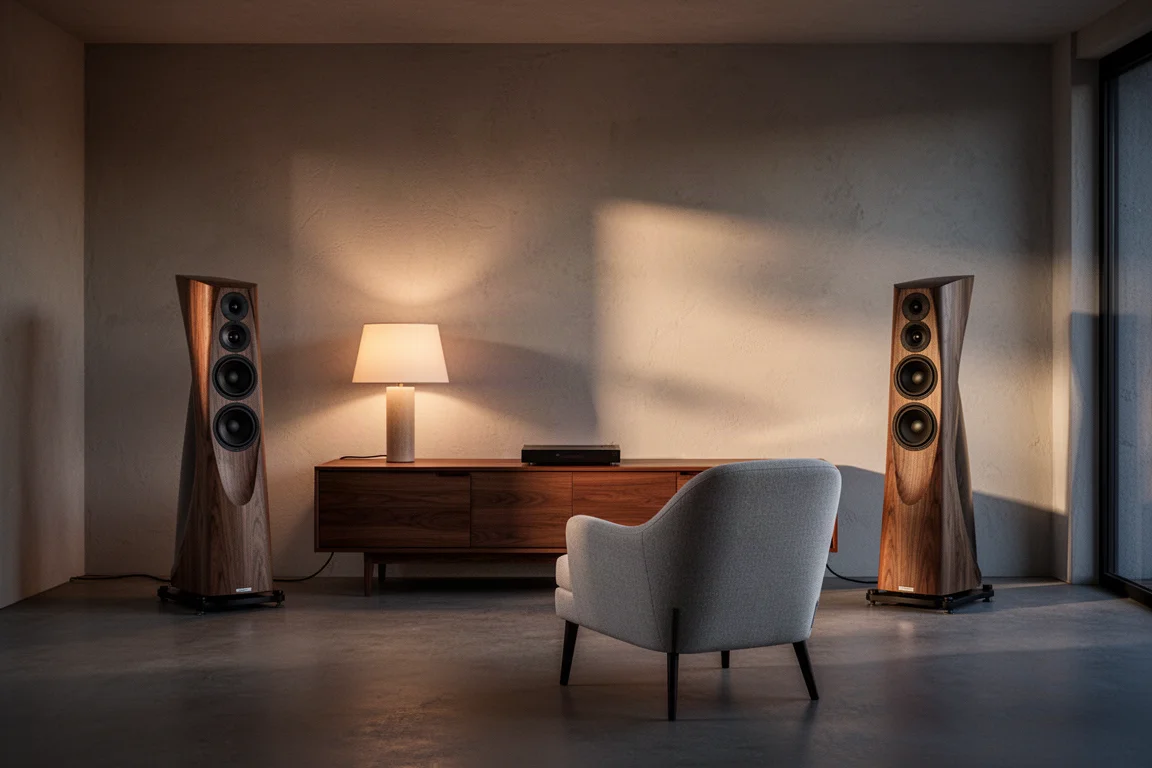
The Blade One Meta is aimed at listeners building a reference-grade two-channel system, the kind of setup where the speakers are the anchor and everything upstream is chosen to match. It suits people who care about imaging, tonal accuracy and the sense of a performance happening in front of them, and who have the room and the amplification to let a speaker of this scale breathe.
It is not a casual upgrade. Buyers at this level are usually comparing a small number of flagship designs, and the Blade One Meta earns its place on the strength of its driver technology and its distinctive cabinet engineering rather than on features or connectivity. If you want a loudspeaker that disappears visually into a room, this is not that speaker. If you want one that makes a statement and delivers a genuinely immersive stereo image, it is worth understanding properly.
Main Strengths
Design and Craftsmanship
The Blade is designed, engineered and handcrafted in Maidstone, Kent by KEF’s in-house product design team, working with Eric Chan of ECCO Design. Its visual identity draws on Constantin Brancusi’s sculpture Bird in Space, and the influence shows in the cabinet’s slim proportions, which taper gracefully from top to bottom and from front to rear. Standing 61 inches tall and weighing 126 pounds, it reads as a sculptural object as much as a loudspeaker.
Finishing options are unusually broad for a flagship: eight finishes in total, created by blending five cabinet finishes with six Uni-Q driver cone colours, across both high gloss and matte satin surfaces. The cabinet’s shape is not purely aesthetic. Its narrow, curved form is engineered to reduce resonance and unwanted vibration, which keeps the midrange clean and detailed when the music gets busy.
Uni-Q, Single Apparent Source, and MAT
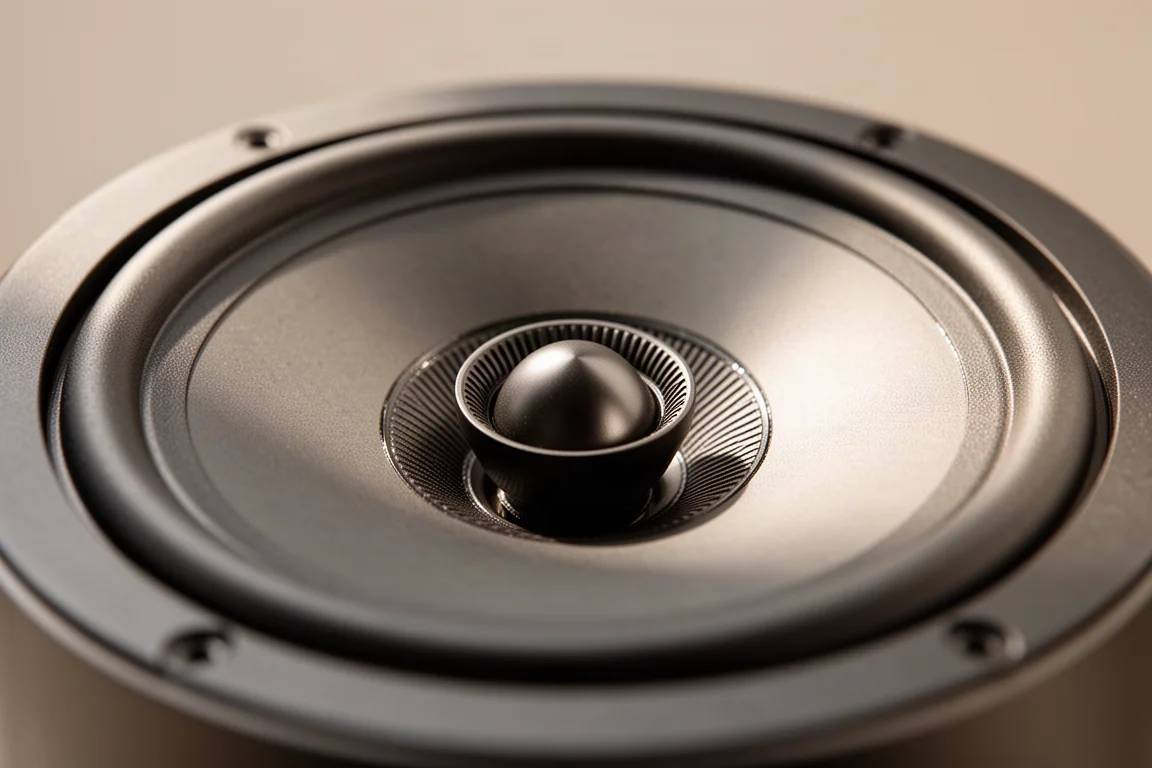
Conventional loudspeakers place separate drivers at separate points on the baffle, so the frequencies they produce radiate from different locations and interfere with one another as they interact. KEF’s Single Apparent Source approach is built to remove that interference, and the company achieves it with its signature Uni-Q driver array, in which all frequencies radiate from one point. The tweeter sits at the centre of the midrange cone, and the two work together as a single source.
The practical benefit is dispersion. Because the array behaves as one point source, the usual narrow sweet spot limitation is largely removed, and natural, detailed sound is distributed more evenly across the room. Listeners sitting off to the side get much closer to the same experience as the person in the centre seat.
The Blade One Meta uses KEF’s 12th generation Uni-Q design, which adds Metamaterial Absorption Technology, or MAT. MAT is a maze-like internal structure with tuned channels that absorb up to 99 percent of unwanted sound radiating from the rear of the driver, compared with roughly 60 percent for typical alternative approaches. The result is lower coloration and distortion. This generation also brings strengthened ribs behind the Tangerine waveguide, a redesigned tweeter gap damper Mark II, cone neck control and an improved midrange motor system. The research behind it has since filtered down to other KEF models, including the LS60, LSX II and the R Meta series.
Bass Engineering and the Force Cancelling Arrays
The low frequency design is where the Blade One Meta becomes genuinely unusual. Four nine-inch woofers are arranged as two force cancelling arrays, with drivers placed back to back so their kinetic forces cancel out. Each pair is positioned symmetrically around the two-way Uni-Q driver, and every set of woofers sits in its own separate chamber. That separation minimises interference between drivers and reduces the need for damping material, which can otherwise dull bass performance.
KEF pairs the back-to-back woofers with UniCore technology, combining both drivers into a single motor system. Overlapping, concentrically arranged voice coils allow greater driver excursion than other force cancelling designs, which translates into more output and depth from a compact cabinet. The midrange driver measures five inches, and the aluminium tweeter at its centre is one inch.
On paper, the speaker is rated at 88 dB sensitivity with a nominal impedance of 4 ohms, and a frequency range of 35 Hz to 35 kHz, plus or minus 3 dB. Those figures describe a full-range design that does not need to be propped up by a subwoofer in a typical two-channel setup.
Listening Notes: Clarity, Detail, and Soundstage
Extended listening sessions used a dedicated Parasound amplifier for each speaker, and the Blade One Meta’s character came through consistently across very different recordings. On Noah Gunderson’s “Cigarettes”, the breathy quality of the lead vocal was rendered with exceptional detail and clarity, which made the small nuances in the performance easy to appreciate. Subtle background harmonies floated behind the main vocal, which sat front and centre with a real sense of intimacy. The soundstage was wide with strong instrument separation, and it held up even when moving around the room. There was a sense of depth that made the stripped-back arrangement of acoustic guitar, harmonica, piano, vocals, violin and drums feel closer to a live performance, particularly as richer, fuller instruments entered later in the track.
Madison Ryann Ward’s “Mirror” showed the same attention to vocals, with detailed and accurate reproduction that still kept a well-defined low end from the bassline. The clarity and realism in the voice put the listener squarely in the middle of the performance, while the piano came across as rich and resonant, each keypress producing a well-defined and accurate note. Nothing in the arrangement felt lost in the mix.
Snarky Puppy’s “Lingus” is a harder test, with intricate rhythms, complex harmonies and a wide dynamic range. The Uni-Q driver array produced a seamless, coherent soundstage that made it easy to distinguish the layers and instruments in the track. The brass and woodwind sections, which often turn muddy on lesser systems, stayed clear, and the cabinet’s resonance-reducing design showed itself in the clarity and detail of the midrange frequencies.

Things to Consider Before Buying
The Blade One Meta is a substantial investment at roughly $35,000, and it deserves to be treated as the centrepiece of a system rather than an add-on. A speaker with 88 dB sensitivity and a 4 ohm impedance benefits from capable, high-current amplification, and the listening sessions here used a dedicated amplifier per speaker. Budget for electronics that match the speakers rather than the other way around.
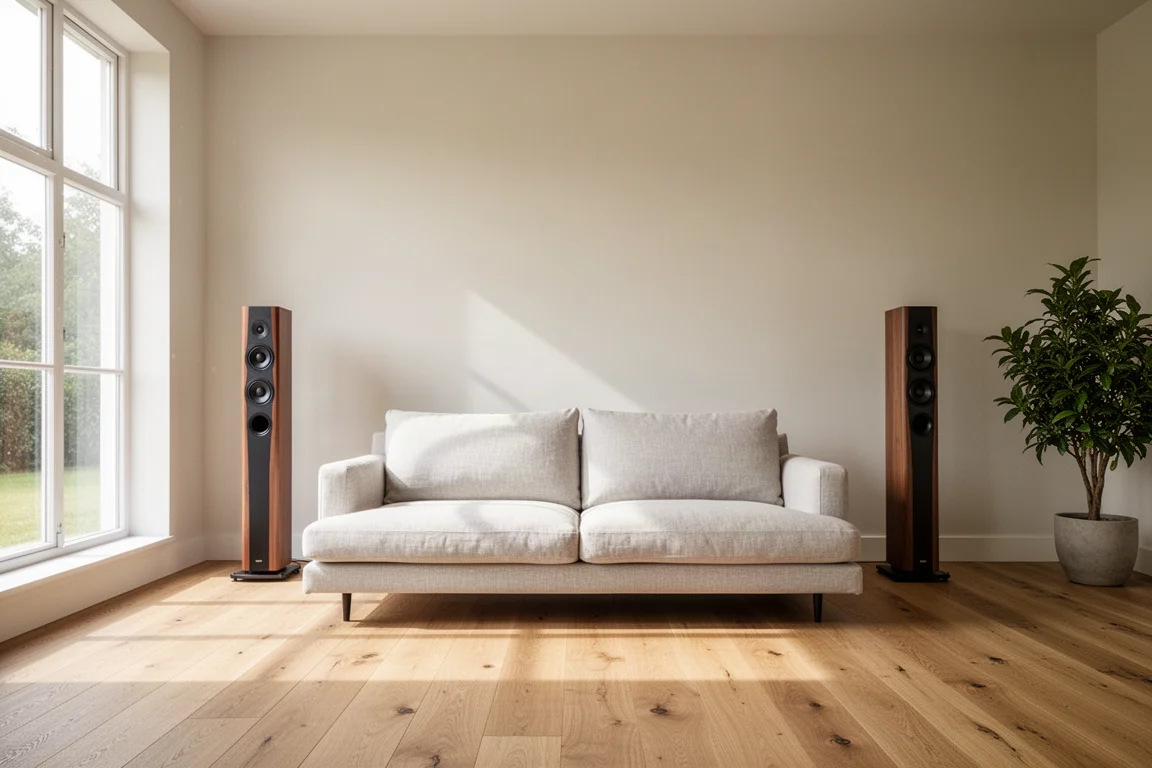
Room and placement also matter. At 61 inches tall and 126 pounds each, these are large, heavy objects with a sculptural footprint that will dominate most rooms. Their slim, curved cabinets are designed to reduce resonance, but they still need space around them to deliver the wide, even dispersion the driver array is capable of. Finally, the wide choice of cabinet finishes and cone colours is a real advantage, but it means the ordering process involves more decisions than usual. Take the time to get it right.
Buying Advice
If you are shopping at this level, the Blade One Meta makes the strongest case when three things line up: a room large enough to let the speakers work, amplification with genuine current delivery, and a preference for accuracy and imaging over a warm, forgiving presentation. Buyers who want the technology in a smaller, more room-friendly package can look at how KEF has carried this research into the LS60, LSX II and R Meta series, but those models are a different proposition and should not be expected to match a four-woofer flagship.
The clearest way to decide is to listen. Bring recordings you know intimately, including one with dense instrumentation and one built around a single voice, and pay attention to how the speaker handles the space between the instruments. That is where the Single Apparent Source design earns its keep. If you already own electronics of this calibre, the Blade One Meta is a logical end point for a two-channel system. If you are starting from scratch, factor in the amplification and the room before committing.
Conclusion
The KEF Blade One Meta combines advanced driver technology, an unconventional force cancelling bass design and a cabinet that is as much sculpture as enclosure. Its 12th generation Uni-Q array with MAT, its UniCore motor system and its symmetrical four-woofer layout all serve one goal: a coherent, room-filling stereo image that stays consistent wherever you sit. Across vocals, piano, and dense brass and woodwind arrangements, the speaker delivered accuracy, precision and clarity without losing the emotional weight of the performance. For listeners prepared to build a system around it, it is a flagship that justifies the attention it asks for.
Product link
View more details for KEF Blade One Meta
This product is mentioned in the review. Check the specifications, options, and compatibility before buying.
View more details for KEF Blade One MetaFurther reading
Related Reviews
Home Audio Speakers
Bose 901 Series VI Review: The Final Direct/Reflecting Flagship
A close look at the last Bose 901, from its open reflected sound and stand-mounted design to the dedicated equalizer and amplifier it needs to perform.
Home Audio Speakers
Focal Aria Evo X Speaker Lineup: A Practical Guide to All Six Models
A model by model look at the Focal Aria Evo X range, from the compact stand-mount No.1 to the flagship No.4, plus the center and surround speakers that complete a full system.
Home Audio Speakers
Infinity Primus 360 Review: What a 20-Year-Old Three-Way Tower Still Gets Right
A discontinued three-way floorstander from around 2005 that still measures within about plus or minus 2 dB on axis. Here is what it does well, where it falls short, and what to check before buying a used pair.