Desktop Speakers
Kanto Yuki Review: Compact Desktop Speakers Built for All-Day Listening
A close look at the Kanto Yuki, a compact powered desktop speaker with USB-C, Bluetooth 5.3, and a warm, fatigue-free tuning made for long workdays.
Introduction
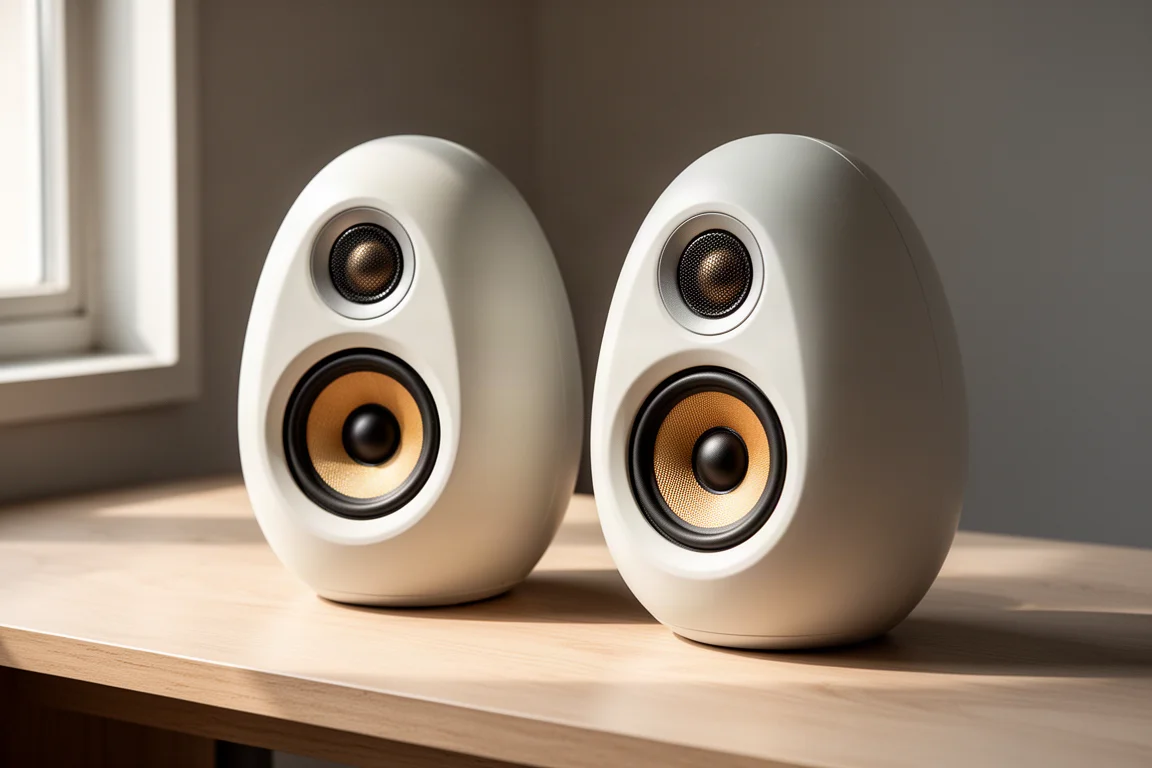
Desktop audio tends to force a compromise. Basic computer speakers are easy to place but rarely rewarding to listen to, while studio monitors deliver performance at the cost of a large chunk of desk space. The Kanto Yuki is aimed squarely at that gap. It is a compact powered speaker pair tuned to sound warm and fatigue-free at close range, in a cabinet that reads closer to handcrafted pottery than to desktop hardware.
The formula is straightforward: a 3-inch treated paper woofer and a 3/4-inch silk dome tweeter in each cabinet, driven by a bi-amplified Class D amplifier, with USB-C, analog RCA, and Bluetooth 5.3 on the back panel. It is also Kanto’s most affordable powered speaker, which makes it the entry point to the brand’s desktop lineup.
Design and Build Quality
Kanto skipped the usual desktop speaker playbook here. There are no sharp right angles, no imitation wood grain, and no glossy plastic that turns into a fingerprint magnet. Instead, the cabinet has an organic, almost egg-like curvature, built as a two-piece clamshell from rigid injection molded plastic that incorporates partially recycled materials. Up close, the surface carries a subtle texture that adds to the overall feel.
Five finishes are available: onyx black, chalk white, pumice, cornflower, and sage. Black and white stay understated, while the brighter options bring a speckled look that adds some color to a desk.

Size is the other headline. Each speaker stands 6.5 inches tall and measures less than 4.5 inches wide, and each weighs roughly 2 pounds, so a pair slips easily into the space on either side of a monitor. There is no front grille, which leaves the drivers fully exposed: a 3-inch paper cone woofer and a 3/4-inch silk dome tweeter.
On the primary speaker, a single multifunction knob sits in the front right corner. It controls volume, powers the system on and off, and cycles through inputs when pressed. Beside it is a 3.5 mm headphone jack, a small addition that makes a real difference during the workday: plugging in for a call takes a second, with no reaching behind a computer.
Who the Kanto Yuki Is For
The Yuki is aimed at people who spend hours at a desk and want good sound without giving up space. Remote workers, students, casual gamers, and anyone who listens to music in the background while working will get the most from it.
The tuning points in the same direction. Kanto voiced the Yuki to stay comfortable over long sessions rather than to analyze recordings, which is the right call for a speaker sitting two feet from your face all day. The material choices support that intent: treated paper is well regarded in high-end audio for natural, organic tonality, especially with vocals, and silk dome tweeters deliver a smooth, open top end that stays clear of harshness.
For critical mixing or music production, a flatter reference monitor is the better tool. The Yuki is designed for enjoyment, not for dissection.
Connectivity, Controls, and Setup
The rear panel covers the essentials for a modern desktop. USB-C is the input to use with a PC or Mac. It bypasses the computer’s internal sound card, which can be noisy, and sends a clean digital signal straight to the speaker’s internal DAC. A pair of analog RCA inputs is there for a compact turntable with a built-in phono preamp, and Bluetooth 5.3 handles quick streaming from a phone or a guest’s device.
One limitation is worth knowing: Bluetooth 5.3 here supports the standard SBC and AAC codecs, so there is no aptX HD or LDAC. In a desk setup where the computer sits two feet away and USB-C delivers uncompressed sound, that is unlikely to matter. It only becomes relevant if you plan to do most of your listening from a phone over wireless.
The more interesting feature is a small toggle on the back panel labeled L and R. Powered speakers normally force the primary speaker, the one with the power cord and the volume knob, onto the right side of the desk. That switch lets the primary speaker sit on whichever side suits your outlets and cable runs, and the internal processor corrects the stereo image the moment it is flipped.
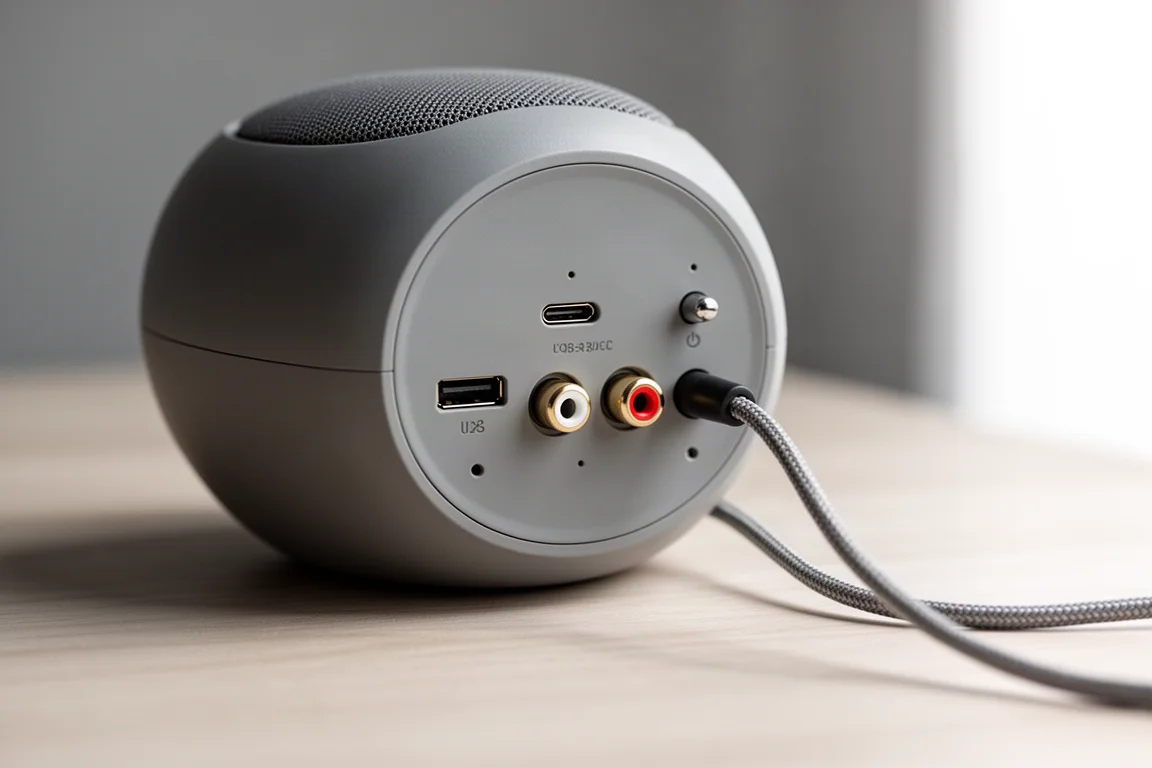
Setup takes minutes: connect the primary speaker to the secondary using the supplied four-pin cable, connect power, and pick an input. That four-pin cable is not a standard speaker wire, which matters for sound quality, as covered below.
Sound Quality and Performance
Inside the primary speaker is a bi-amplified Class D amplifier delivering 100 watts of peak power. Many powered desktop speakers use a single amplifier to drive both the woofer and the tweeter through a passive crossover. The Yuki takes a different route, actively splitting frequencies before they reach the amplifier so each driver gets its own dedicated stream of power. The result is excellent driver control, and to make sure the secondary speaker receives the same true bi-amped signal, Kanto replaced standard speaker wire with a robust four-pin connector cable.
In practice, the Yuki stays composed even at room-filling volumes, without distorting or shouting. With the speakers angled slightly inward, the center image is notably stable: lead vocals hang in the middle of the monitor rather than drifting. Detail retrieval is strong for the size, with enough resolution to pick out the woody texture of an upright bass and the brush strokes on a snare.
The overall character is comfortable, and that is the point. The Yuki is voiced to fight listening fatigue, and it succeeds: the top end stays smooth and open without turning brittle, and the midrange carries vocals naturally.
Bass is the honest caveat. The 3-inch woofers are surprisingly punchy and tight for their size, and they handle casual music listening and video playback well. But a 3-inch driver can only move so much air. Heavy electronic music and cinematic game soundtracks will eventually run into the physical limits of a cabinet this small.
Placement, Stands, and Subwoofer Integration
Placement matters more than most people expect. Setting any speaker directly on a hard, flat desk is an acoustic problem: a large portion of the sound bounces off the surface and reaches your ears a fraction of a second later, creating comb filtering that muddies the midrange and blurs stereo imaging.
Kanto’s SU2 stands are made specifically for the Yuki and address this directly. They bolt securely to the back of each cabinet, give the speakers a clean floating look, and include silicone pads on the bottom to stop bass energy from rattling a keyboard or anything else on the desk. Most importantly, they tilt the speakers slightly upward. High frequencies are directional, so aiming the silk domes at your ears widens and sharpens the soundstage noticeably. For anyone buying the Yuki, the stands are close to essential.
The second upgrade is a subwoofer, and the Yuki handles it more intelligently than most. Below the USB-C port is a dedicated subwoofer output. The moment a cable is plugged into that port, the speaker detects it and activates a 100 Hz high-pass filter. The Yuki stops trying to reproduce anything below 100 Hz and hands that work to the subwoofer.
The effect is bigger than simply adding bass. Freed from deep bass duties, the 3-inch woofers devote themselves entirely to the midrange. Vocals become richer and better defined, separation between instruments opens up, and transients such as the crack of a drumstick arrive faster and cleaner. Paired with Kanto’s SUB6, a compact 6-inch sealed subwoofer that fits under a desk without eating into legroom, the low end stays tight and fast rather than bloated or boomy. The bass notes feel as though they come from the speakers on the desk, not from the floor.
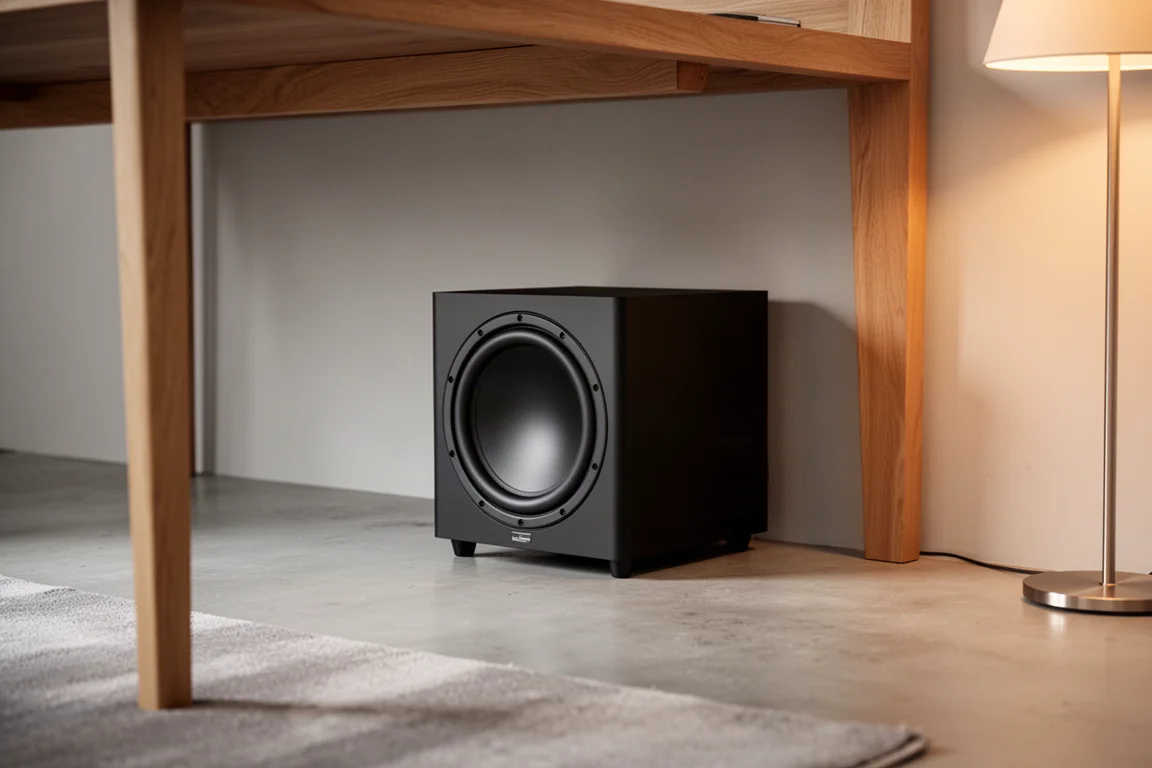
Together, the stands and the subwoofer turn a small pair of desktop speakers into a cohesive full-range system, and that combination is where the Yuki makes its strongest case.
Things to Consider Before Buying
Three things are worth weighing before you commit.
First, bass output. On their own, the Yuki speakers deliver tight, punchy low end for their size, but they are compact speakers with compact drivers. If deep bass matters to you, plan on adding a subwoofer, and note that the built-in high-pass filter makes that upgrade unusually seamless.
Second, wireless codec support. Bluetooth 5.3 with SBC and AAC is fine for casual streaming, but there is no high-resolution wireless codec here. USB-C is the better path for serious listening.
Third, positioning within Kanto’s own lineup. The Yuki is the company’s most affordable powered speaker, and it is also the most current. Compared with the long-running YU2, it adds USB-C, Bluetooth 5.3, and a bi-amplified design, while the YU2 relies on an older USB DAC, a standard 3.5 mm aux port, and a non-bi-amplified layout. Unless you specifically prefer the older model’s sharp, boxy cabinets, the Yuki is the better buy for most people. The ORA sits in a different category altogether: a reference-quality desktop monitor with a flatter, more clinical response aimed at critical listening, music production, and editing. Reference monitors are not forgiving, so a poorly mixed track will sound poor. The Yuki is tuned to be smooth, warm, and easy to live with, which suits everyday listening better.
Buying Advice
If your goal is a compact desktop system that sounds good for hours at a time, the Yuki is an easy recommendation. Start with the speakers and the SU2 stands together, because the stands solve a real acoustic problem and cost far less than the upgrade they prevent. If your budget allows, add the SUB6 as well. The high-pass filter engages automatically, and the improvement in midrange clarity is the kind of change that is immediately audible rather than subtle.

Buy for the tuning as much as the feature list. The Yuki is not trying to be a studio monitor, and it should not be judged as one. It is trying to be the speaker you are happy to have running from your first coffee of the morning until you log off at night, and that is exactly what it delivers.
Conclusion
The Kanto Yuki solves a genuine problem: it brings warm, fatigue-free sound and a full set of modern connections to a cabinet small enough to disappear beside a monitor. USB-C, Bluetooth 5.3, RCA inputs, a front headphone jack, and the left/right swap switch all point to a speaker designed around real desk life, and the bi-amplified Class D design keeps it composed when pushed.
Its limits are honest and predictable. Bass is tight but finite, wireless codecs are basic, and the speakers benefit enormously from the SU2 stands and a subwoofer. None of that undermines the core proposition. For remote workers, casual gamers, and music lovers who want engaging sound that never wears them down, the Yuki is a strong choice at its price point.
Product link
View more details for Kanto Yuki
This product is mentioned in the review. Check the specifications, options, and compatibility before buying.
View more details for Kanto YukiFurther reading
Related Reviews
Desktop Speakers
Audio Smile Little British Monitor Review: A Compact Desktop Speaker With Measured Neutrality
A small European powered desktop speaker with a waveguide tweeter, an aluminum cone woofer, and an unusually flat measured response for its size.
Desktop Speakers
Audioengine A2+ Review: A Small Desktop Speaker That Knows Its Place
The Audioengine A2+ is a compact powered desktop speaker pair with Bluetooth, a tidy footprint, and a sound profile tuned for life on a desk rather than a listening room.
Desktop Speakers
Five Desktop Speakers Compared: Edifier, Kanto, Adam Audio, and Kali
Five compact desktop speakers from roughly $170 to $349 per pair, compared on accuracy, listening window stability, output capability, and desk footprint.