Bookshelf Speakers
Kanto YU Passive 5.25 Review: A $200 Bookshelf Speaker Worth Hearing
A close look at the Kanto YU Passive 5.25, a compact passive bookshelf speaker that delivers clear, detailed sound for around $200.
Introduction
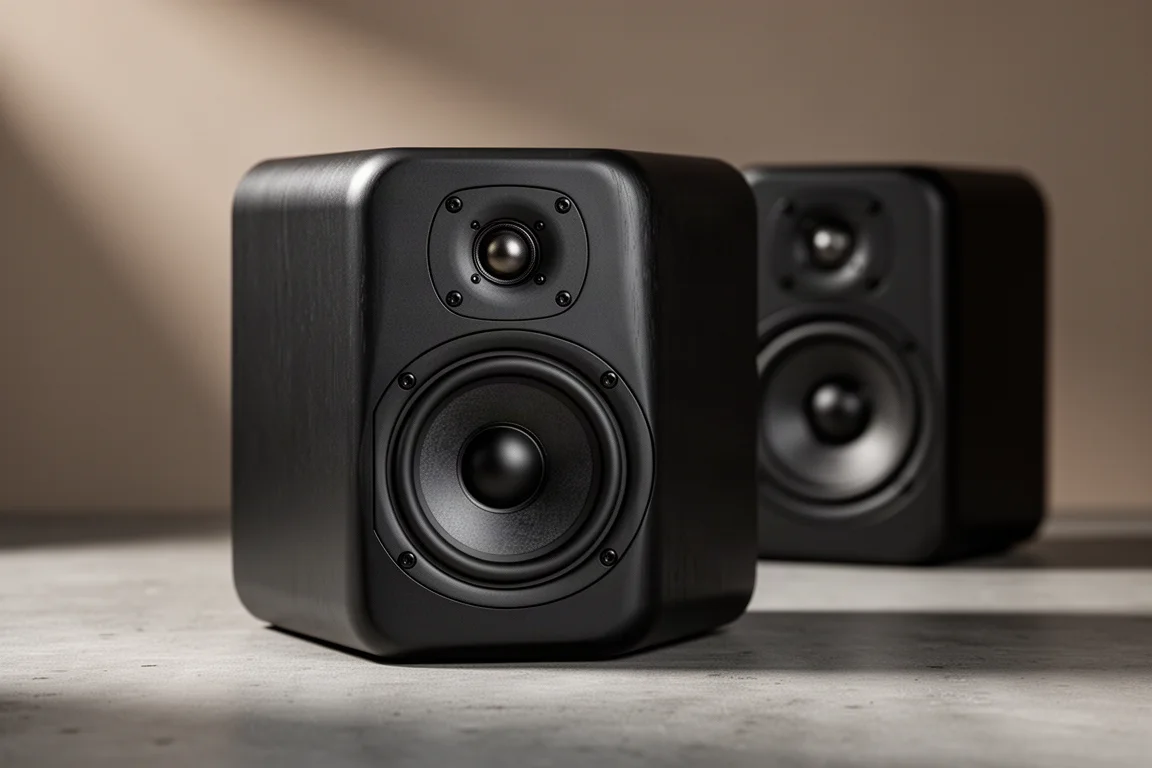
Can a speaker that costs about $200 genuinely be all you need? That is the question the Kanto YU Passive raises, and it deserves a straight answer rather than a hedge. The YU Passive is sold in two sizes, and this look focuses on the larger model, which pairs a one-inch silk dome tweeter with a five-and-a-quarter-inch mid bass driver. A rear-facing port helps the cabinet reach a reported frequency response of 50 Hz to 20 kHz.
Kanto rates the speaker at 89 dB sensitivity with a nominal impedance of 6 ohms, which makes it relatively easy to drive. That is a practical advantage, because it opens up affordable amplification instead of demanding an expensive amplifier before the speaker sounds its best. It is also a plainly passive design. There are no amplifiers, no streaming modules and no grilles on either size. What you get is a cabinet, two drivers and a pair of binding posts.
That simplicity is the entire pitch. The Kanto YU Passive does not try to be a lifestyle product or a statement piece. It aims to be an honest two-way bookshelf speaker that gets the fundamentals right, and for a lot of listeners that may be the whole story.
Who the Kanto YU Passive 5.25 Is For
This speaker suits listeners putting together a first proper two-channel system in a small or medium-sized room. It is a sensible starting point for anyone who wants to choose their own amplifier and grow the system over time rather than accept whatever is built into a powered speaker.
It also makes a strong case on a desk. In a desktop setup, a small integrated amplifier or chip amp and a separate DAC can make more sense than powered speakers, and the YU Passive is built for exactly that kind of mix-and-match approach. Anyone who enjoys experimenting with different components will get more from it than someone who wants a single-box solution.
It is a weaker fit for listeners who need genuine low-frequency weight, for large rooms, or for anyone who wants grilles to protect the drivers from children and pets. Those buyers should look at something else.
Main Strengths: Bass, Midrange, and Highs
This is not a bassy speaker. It will not rattle a house, and it will not deliver the slam of a subwoofer-assisted system. What it does offer, with a little care over placement, is bass that is detailed, articulate and quick. In small to medium-sized rooms the low end feels appropriate and stays free of boom.
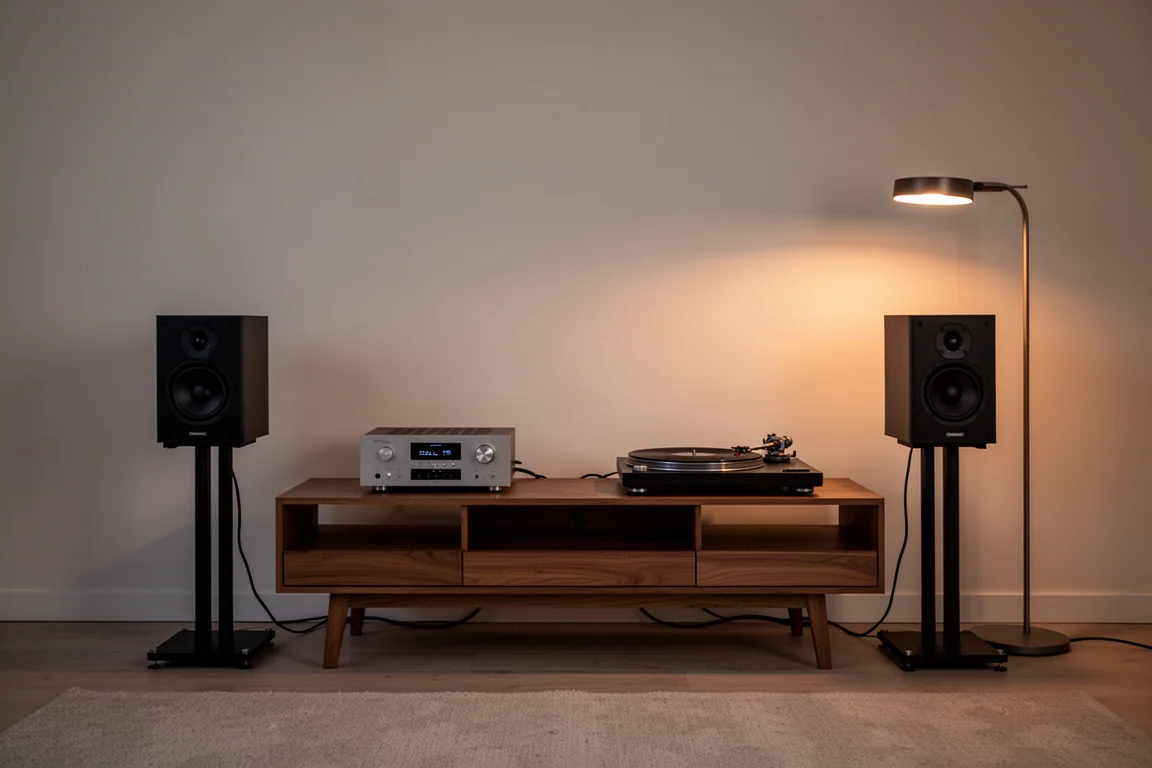
Placement shapes that low end more than usual. Moving the speaker closer to the front wall reinforces the bass response, and setting the rear of the cabinet roughly 12 inches from the wall firmed up the low notes noticeably, adding depth and body without costing the agility and focus that make the speaker enjoyable in the first place. Push it very close to the wall and the trade-off flips, because the low notes can lose some of that detail.
The midrange is clear, and it is the heart of the speaker. It is neutral with a mildly forward character, and a little emphasis in the upper midrange gives voices a sense of presence without tipping into aggressiveness. The result is an immediate, intelligible sound that works as well for films as for music. Dialogue comes through with a clarity that is unusual at this price, which is one of the more convincing arguments for the speaker in a stereo setup with no centre channel.
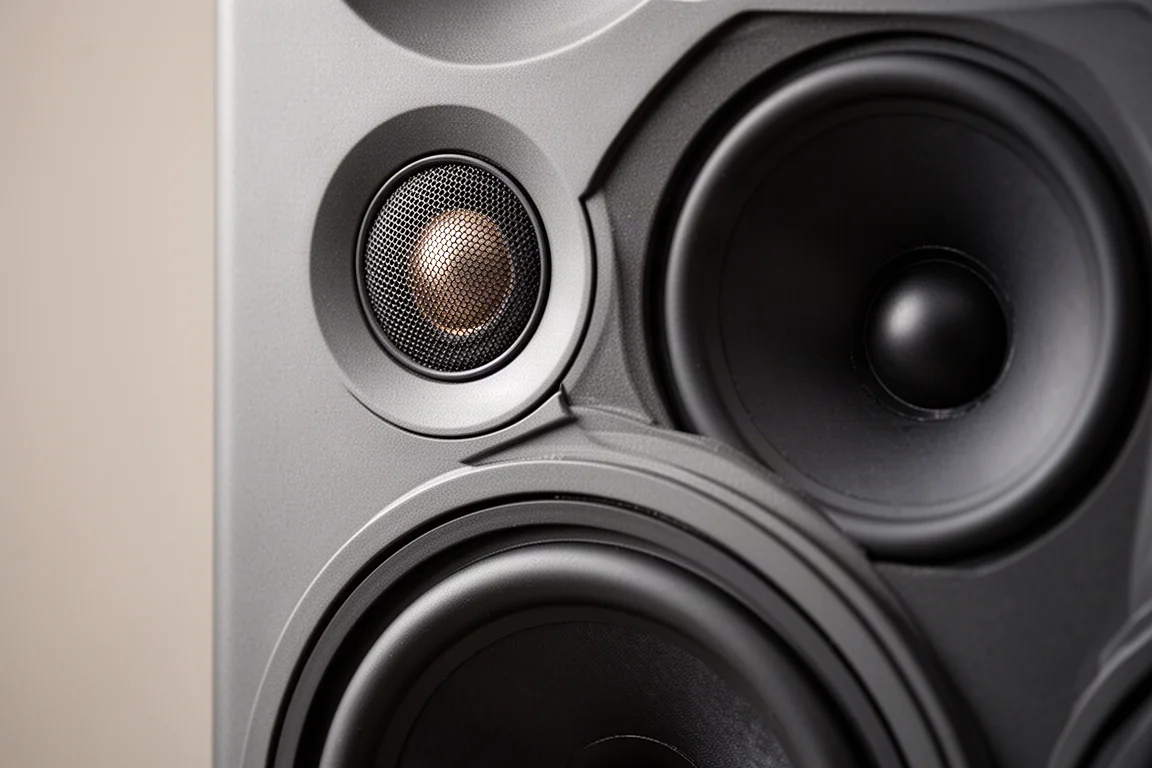
The silk dome tweeter is airy, extended and detailed at sensible listening levels, with a hint of softness at the extremes that keeps long sessions comfortable. Push the volume, though, and there is a limit. Above roughly 85 to 90 dB the tweeter can begin to beam and turn aggressive, and some listeners will find it tiring. Keeping levels below 90 dB gets the best from it.
Soundstage, Imaging, and Dynamics
Small two-way speakers often punch above their price when it comes to imaging, and the YU Passive is a strong example. It disappears easily as a sound source, images with real focus, and fills the centre of the stage convincingly. Give it a little space away from the walls and the definition and separation across the stage improve further, although some bass weight goes with it.
Dynamically, the speaker is more capable than its size suggests. Because it is so focused on detail, it has a satisfying snap when the music calls for it. The same caveat applies here as elsewhere: at very high volumes the tweeter starts to misbehave. At moderate levels it stays engaging.
Design, Placement, and Amplifier Pairings
Visually, the YU Passive is a black box with a matte finish. It is not trying to win a design award, and it will not earn anyone audiophile credibility. At this price the plainness reads as sensible rather than cheap, and the matte finish looks tidy in a normal room. Buyers who want a speaker to look special should look elsewhere. Buyers who want a speaker that quietly disappears into the room will not mind at all.
Placement has more influence here than on many speakers. Moving them closer to the front wall adds weight and body to the midrange as well as reinforcing the bass, which can suit anyone who finds a fast, lean presentation tiring. The cost is some of the low-note detail. Experiment with distance to the wall rather than treating any single position as correct.
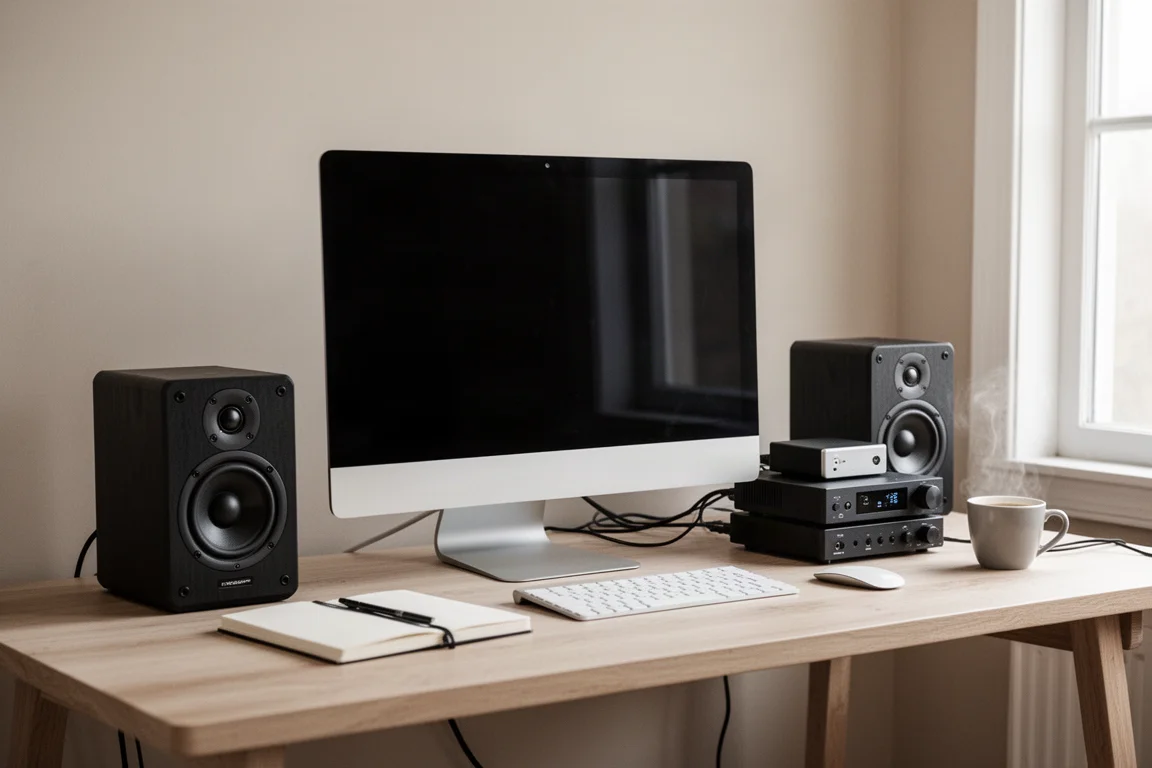
Amplifier pairings matter, though the speaker is forgiving. An Audio Lab M1 integrated amplifier was the standout match. A Cambridge Audio AXR100, a 100-watt class A/B stereo receiver with Bluetooth and a DAC, was the next best option and makes a sensible budget companion. A Bluesound Powernode also worked well and is the most fully featured of the group, with streaming built in and HDMI on board. It costs more, but you are getting more, and adding a separate streamer to a cheaper receiver narrows the gap.
The weakest pairing was a class D wireless sound base, which thinned the sound and left the speaker sounding less substantial than it should. That is more a comment on the amplifier than on the speaker. If you are building a very tight budget system and do not mind class D amplification, an integrated amplifier with built-in streaming is likely to be a better use of money than a Play-Fi based option. On a desk, with a small chip amp and a DAC, the YU Passive is genuinely excellent.
Where the Kanto YU Passive 5.25 Sits in the Market
The obvious comparison is a popular three-way budget bookshelf speaker. In some respects the two are similar, but the Kanto is the more refined of the pair, with better manners at the extremes, a nicer finish and sturdier construction. The three-way alternative has good midrange detail up through the tweeter, but it offers even less bass than the YU Passive and turns forward and shrill when pushed.
A second alternative near this price is worth a look and is the only other model in the same bracket that invites a serious recommendation. It is arguably the better looking speaker, it comes with grilles, and it sounds similar, perhaps a touch softer in immediacy and detail. Both speakers share the same philosophy: straightforward performance for very little money.
The other question is whether to buy the passive version or step up to the Kanto YU6, the company’s powered all-in-one speaker. Building a passive system that does everything the YU6 can do for less money is unlikely. But if you know you want to experiment with different amplifiers and sources over time, the passive model is the smarter purchase. If you want a set-and-forget system, the powered model makes more sense.
Buying Advice
A simple integrated amplifier or a modest stereo receiver is enough to get a satisfying system out of the YU Passive. Pair it with something like the M1 or the AXR100 and the result handles music and films without obvious compromise. If that combination leaves you completely satisfied, it is fine to stop there. Being content with a simple setup does not mean you are missing something or that you are less of an enthusiast.
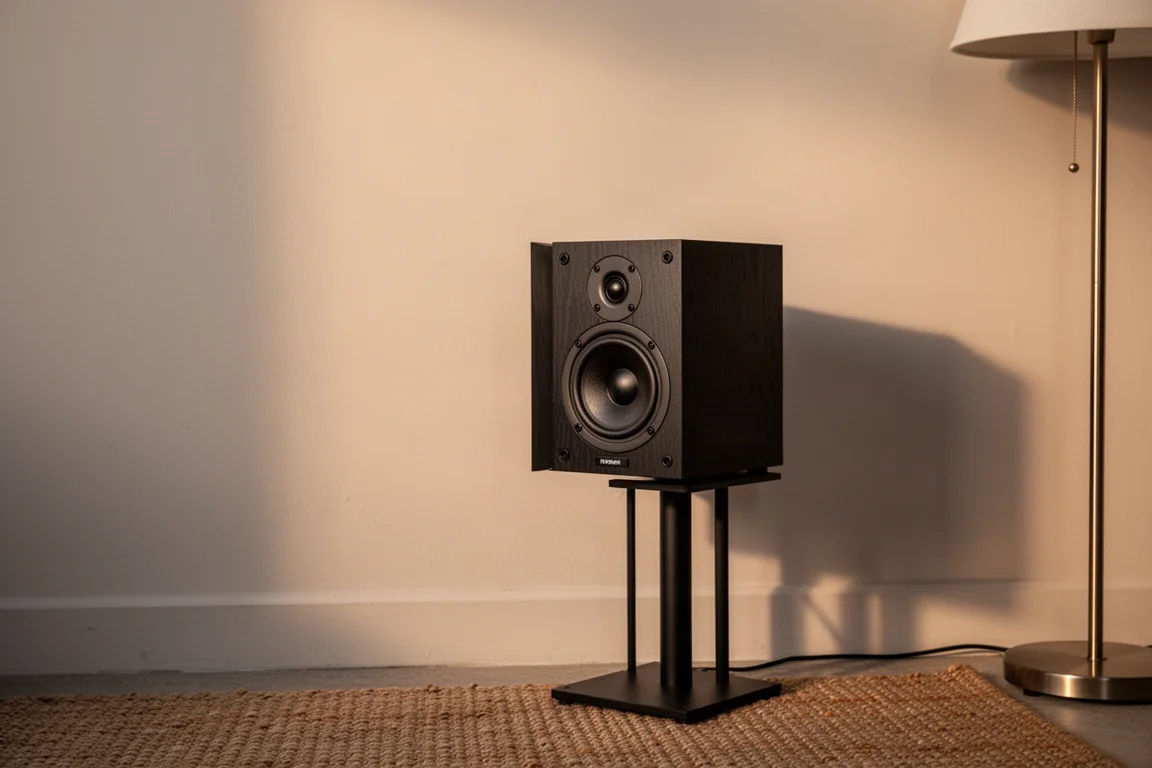
Spend your attention on placement before you spend more money on electronics. Distance from the front wall, a little breathing room to the sides, and sensible volume levels will do more for the sound than an expensive upgrade. If you want more low end later, a subwoofer can fill in what the small cabinet cannot produce, and the speaker integrates well with one.
Conclusion
The Kanto YU Passive 5.25 is honest. It has no features to list and no exotic materials to justify its existence. What it does is deliver clear, detailed, engaging sound in small to medium-sized rooms for about $200, without demanding much from the rest of the system. Its limits are real: bass output is modest, the tweeter has a ceiling, and there are no grilles. Within those limits it is very difficult to fault, and for a listener who wants a genuine entry into two-channel audio, it may be all the speaker they ever need.
Product link
View more details for Kanto YU Passive 5.25-inch
This product is mentioned in the review. Check the specifications, options, and compatibility before buying.
View more details for Kanto YU Passive 5.25-inchFurther reading
Related Reviews
Bookshelf Speakers
Acoustic Energy A100 Mark II Review: A Compact Standmount With an Expansive Soundstage
The Acoustic Energy A100 Mark II brings clarity, natural tonality and a wide soundstage to an entry-level standmount, with a few setup details worth knowing first.
Bookshelf Speakers
Acoustic Energy AE-100 Mark II Review: Compact Bookshelf Speakers With Standout Imaging
A compact British two-way bookshelf speaker with deep, layered imaging, fast bass, and a slight treble lift to weigh against a crowded $500 field.
Bookshelf Speakers
Acoustic Energy AE100 MK2 Review: Measured Performance and Four Alternatives
A close look at the Acoustic Energy AE100 MK2 bookshelf speaker, what its measured performance reveals, and four alternatives with different trade-offs.