Powered Speakers
Kanto TUK G2 vs TUK Grand: Which Powered Speaker Should You Buy?
Two new Kanto powered speakers share the same AMT tweeter and connectivity, but the Grand adds a bigger cabinet, a 6-inch woofer, and deeper bass. Here is how to choose between them.
Introduction
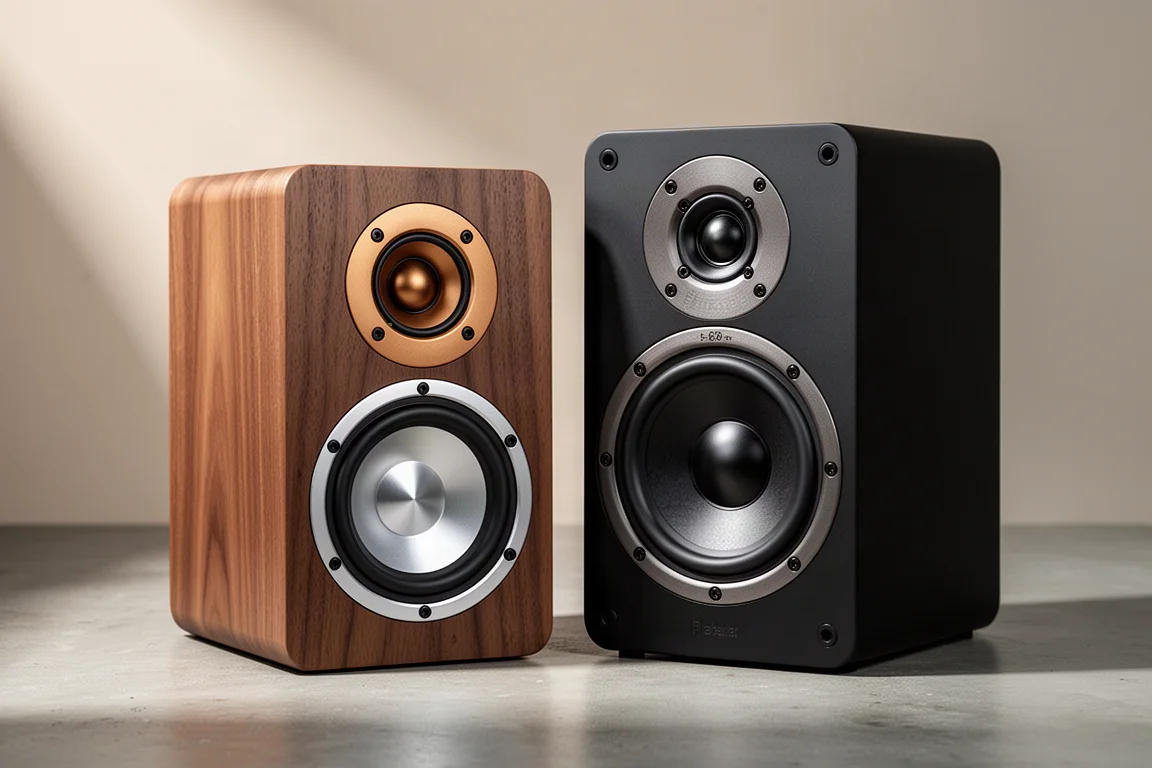
Kanto’s original TUK arrived in 2019 and found a comfortable spot between desktop speakers and entry-level hi-fi separates: an AMT tweeter, a 5.25-inch aluminium woofer, plenty of power, and enough inputs to build a small two-channel system around. For the new generation, Kanto has reworked the formula and split it into two models. The Kanto TUK G2 launches at $899, and the Kanto TUK Grand sits just above it at $999.
That $100 gap is what makes the pair worth comparing. The two speakers share a great deal of DNA, but the Grand adds a larger cabinet, a bigger woofer, more amplifier power, and noticeably deeper bass extension. The question is whether the Grand is the automatic pick when it costs only slightly more, and the honest answer depends on how you plan to use them.
What Changed From the Original TUK
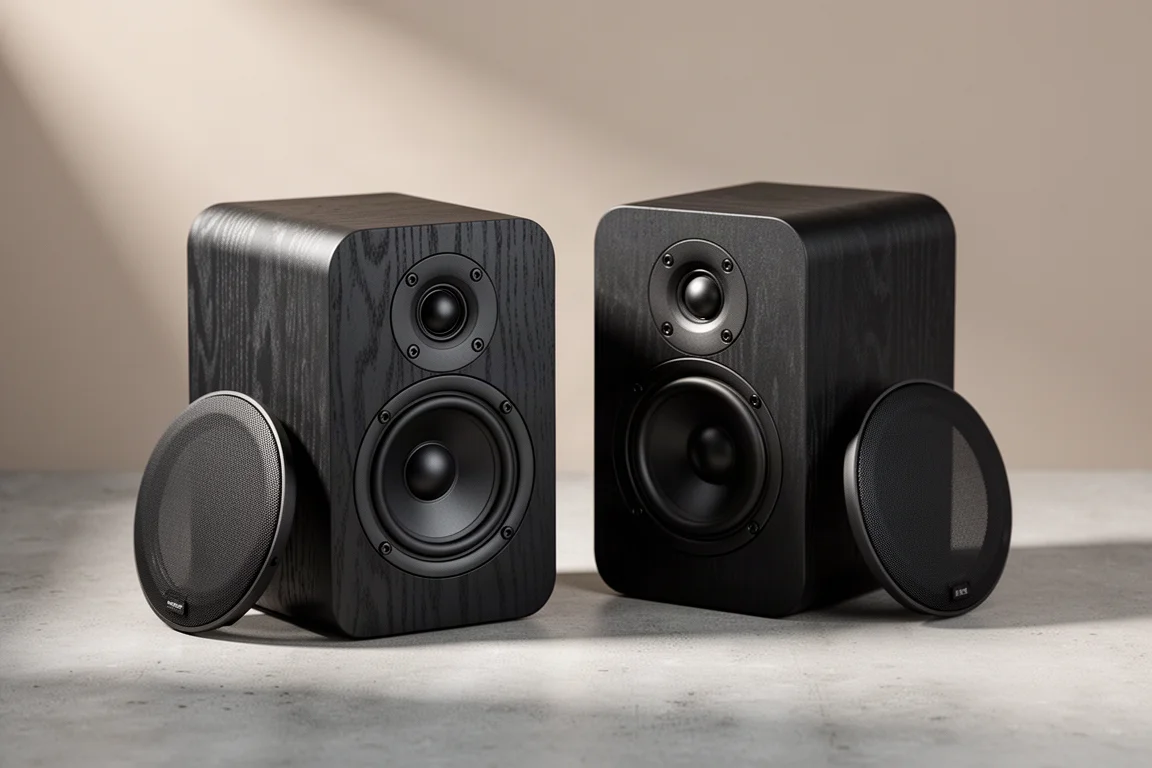
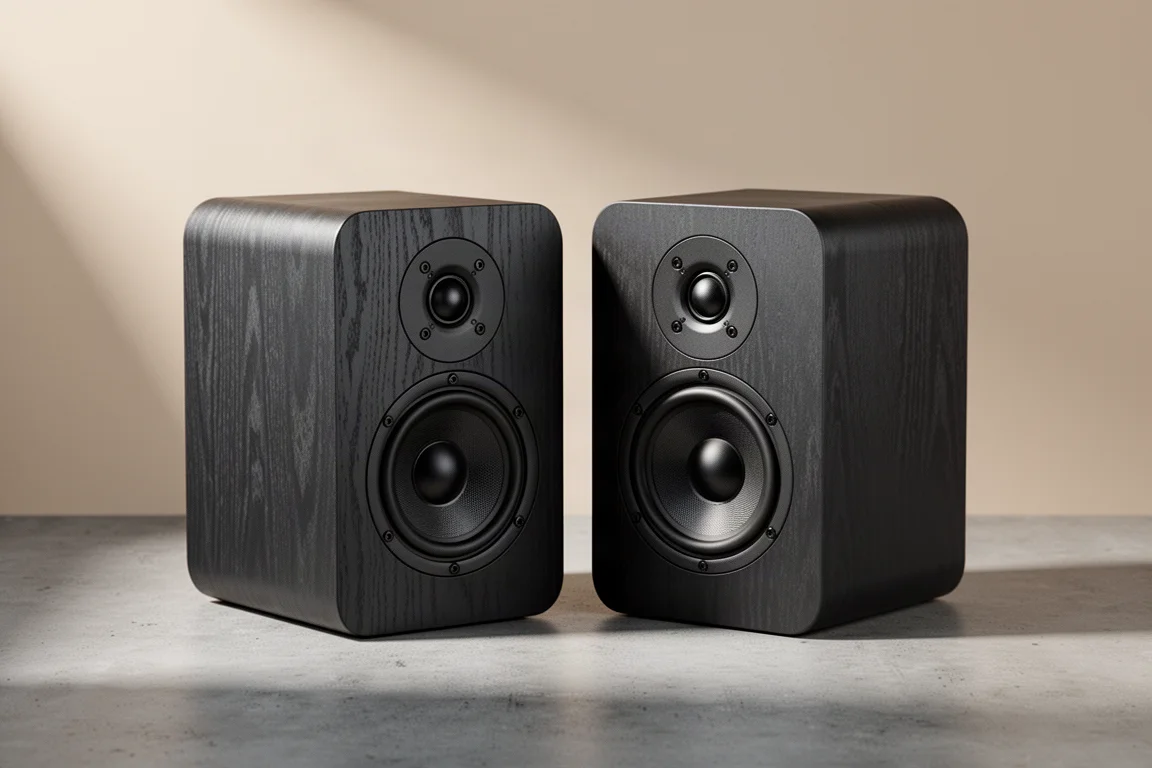
The most visible change is the cabinet. Kanto has moved away from the soft, rounded shapes used on many of its powered speakers and given both new models much squarer proportions. Edges are sharper, the cabinets look more substantial, and the overall design reads more like a traditional hi-fi bookshelf speaker than a desktop monitor.
The front panel has been cleaned up as well. The row of indicator LEDs from the original is gone, replaced by a single recessed LED that changes colour depending on the active input: teal for RCA 1, green for RCA 2, pink for optical, yellow for USB, and blue for Bluetooth. It can be dimmed or switched off from the remote, which is a welcome change in a dark room.
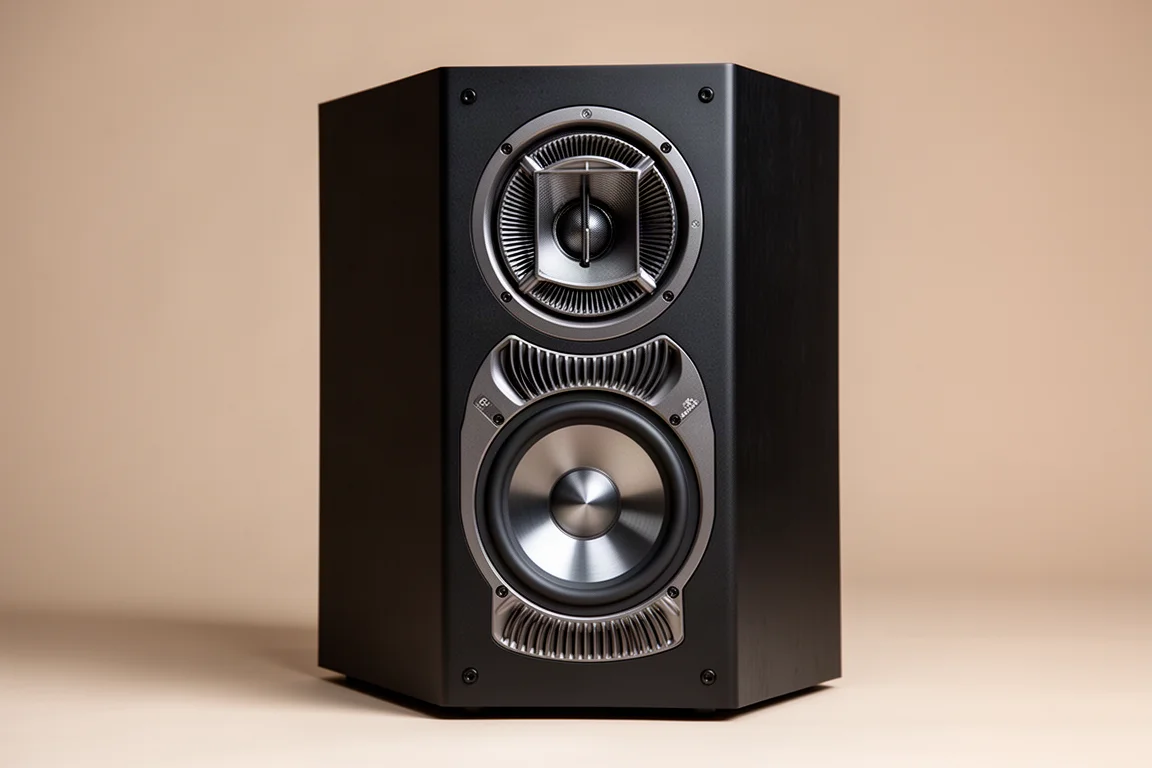
Around the drivers, the rectangular tweeter waveguide has been replaced by a circular one that mirrors the woofer below it, and the woofer now sits inside a fluted surround that gives the baffle a more finished look. Both models keep the 28 x 35 mm air motion transformer tweeter, but the redesigned waveguide is intended to control how high frequencies spread into the room, so tonal balance and stereo image hold up better when you are not sitting in the exact centre. Kanto has also revised the DSP and crossover tuning on both speakers.
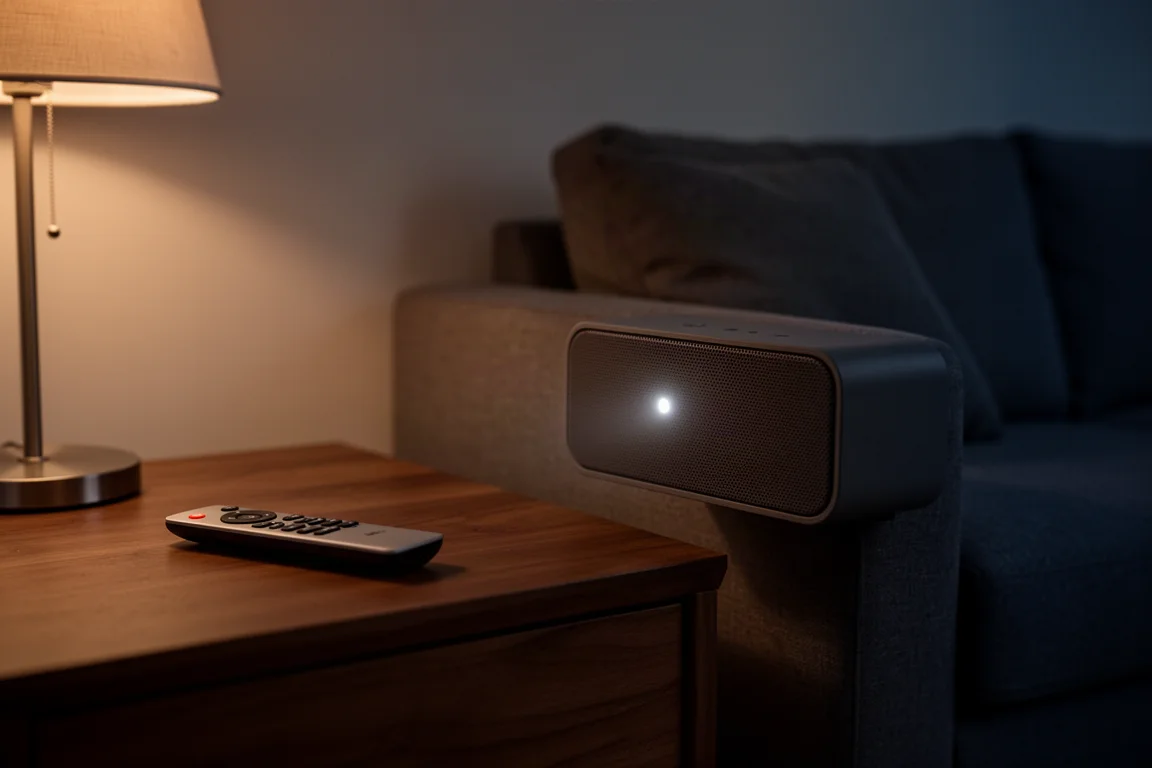
Under the surface, connectivity has moved on as well. USB-C and Bluetooth 5.4 replace the older inputs, while the built-in phono stage and the front headphone jack from the original have been removed.
Kanto TUK G2: Refined, Not Reinvented
The G2 is best understood as a refinement rather than a reinvention. It keeps the same 5.25-inch aluminium air core woofer, the same 130 watts RMS and 260 watts peak for the pair, and the same 50 Hz rated bass extension as the original. On paper, it does not play louder or reach deeper.
What has changed is how everything works together. The tweeter blends more naturally with the woofer, vocals sit cleanly between the two cabinets, and the tonal balance stays more consistent as you move away from the sweet spot. The speed and detail that defined the original are still there in cymbals, strings, and the leading edge of vocals, but the presentation feels more cohesive and more mature.
Five finishes are available: matte black with gunmetal, matte white with aluminium, gloss butter with gunmetal, matte burl with gunmetal, and matte walnut with rose gold.
Kanto TUK Grand: Bigger Cabinet, Deeper Bass
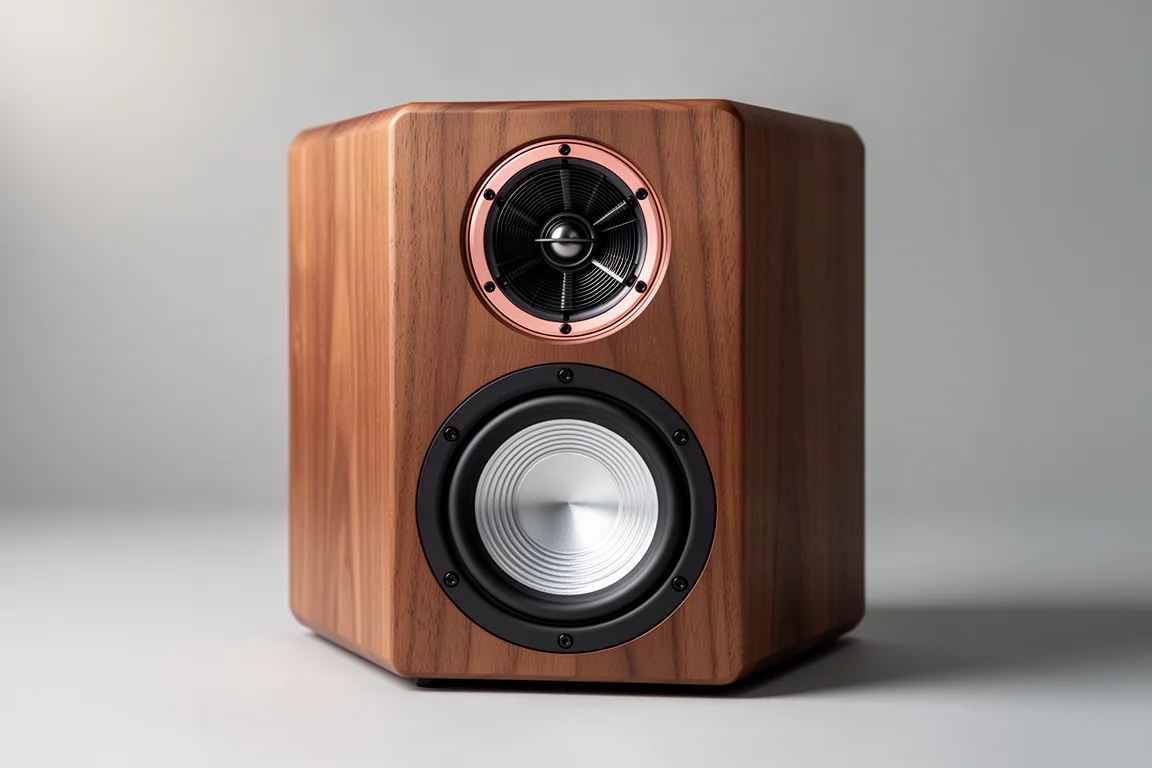
The Grand is where Kanto stops refining and starts expanding. The cabinet is noticeably larger, the woofer grows from 5.25 inches to 6 inches, total amplifier power rises from 130 watts RMS to 160 watts RMS, and rated bass extension drops from 50 Hz to almost 40 Hz. That last figure is the significant one. The final stretch of low frequencies is the hardest for a compact speaker to reproduce, and the larger cabinet and woofer give the Grand the physical capability to attempt it.
In practice, the difference is about scale as much as bass. Kick drums carry more weight, bass guitar has more body, and the lower registers of instruments such as piano sound more convincing. Vocals arrive from a larger image, the space between instruments opens up, and the speaker stays composed when you turn it up. The word that fits best is effortless: the Grand rarely sounds like it is working hard, even on demanding recordings.
Three finishes are offered: matte black with gunmetal, matte white with aluminium, and matte walnut with rose gold.
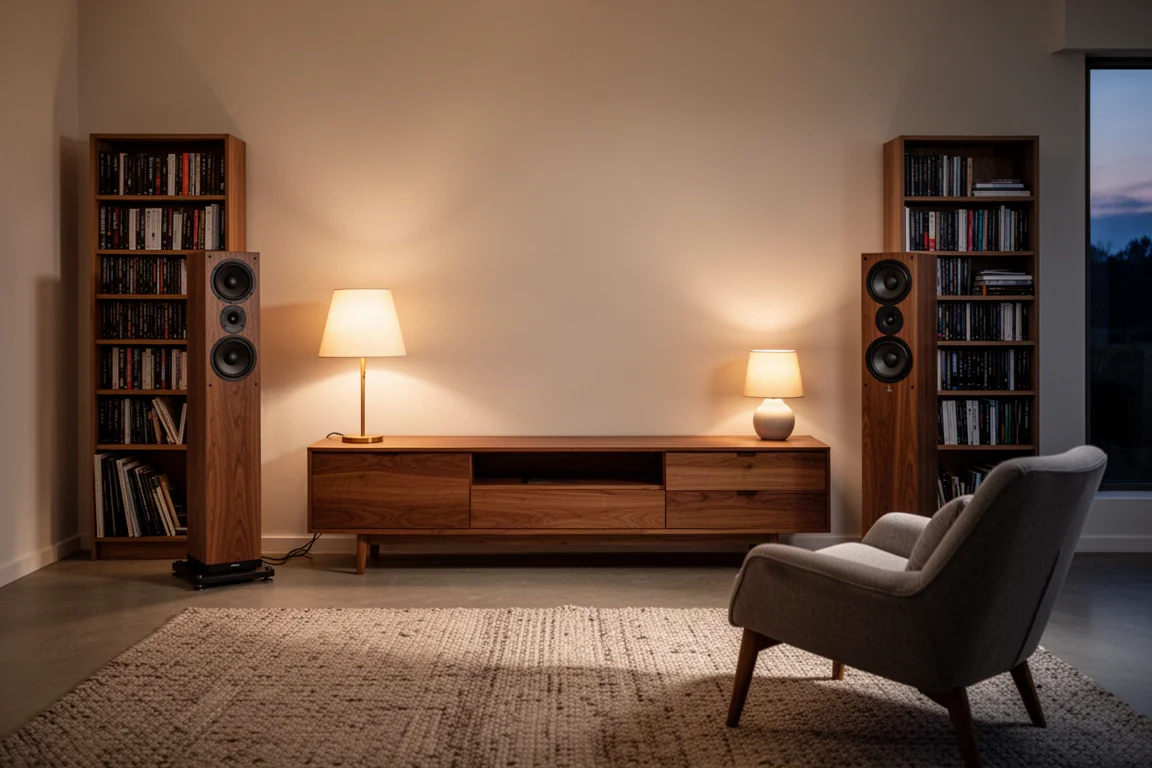
The G2 can still sound surprisingly large for its size, but there are moments when you are aware that you are listening to a bookshelf speaker. The Grand gets closer to making you forget about the cabinets altogether.
Connectivity, Inputs, and Setup Notes
Neither model is a network speaker. There is no Wi-Fi, no streaming platform built in, and no companion app, so control happens through the supplied remote. Wireless input comes via Bluetooth 5.4 with aptX Adaptive, AAC, and SBC support.
Wired connections cover a USB-C input and an optical input, both accepting up to 24-bit/96 kHz, plus two sets of line-level RCA inputs and a subwoofer output. Two line-level inputs rather than one line and one phono means you can connect a wider range of sources, but it also means there is no built-in phono stage. If you use a turntable, it needs its own phono stage or an outboard preamp between the deck and the speakers. Many current turntables include a switchable phono stage, so this is less of a limitation than it first appears.
There is no HDMI ARC, so the pair cannot be controlled by a TV remote. The optical input can still be used with a television, but if HDMI ARC is a requirement, these are not the right speakers for that job. The front headphone jack from the original has also been removed.
One practical detail worth knowing: the amplifier and power connection live inside a single cabinet, so only one speaker plugs into the wall and a speaker cable runs between the two. If the powered cabinet ends up on the wrong side of your setup, the remote can swap the left and right channels so the layout still works. The same remote handles volume, input switching, treble and bass adjustment, balance, and Bluetooth playback.
Finishes, Stands, and Placement
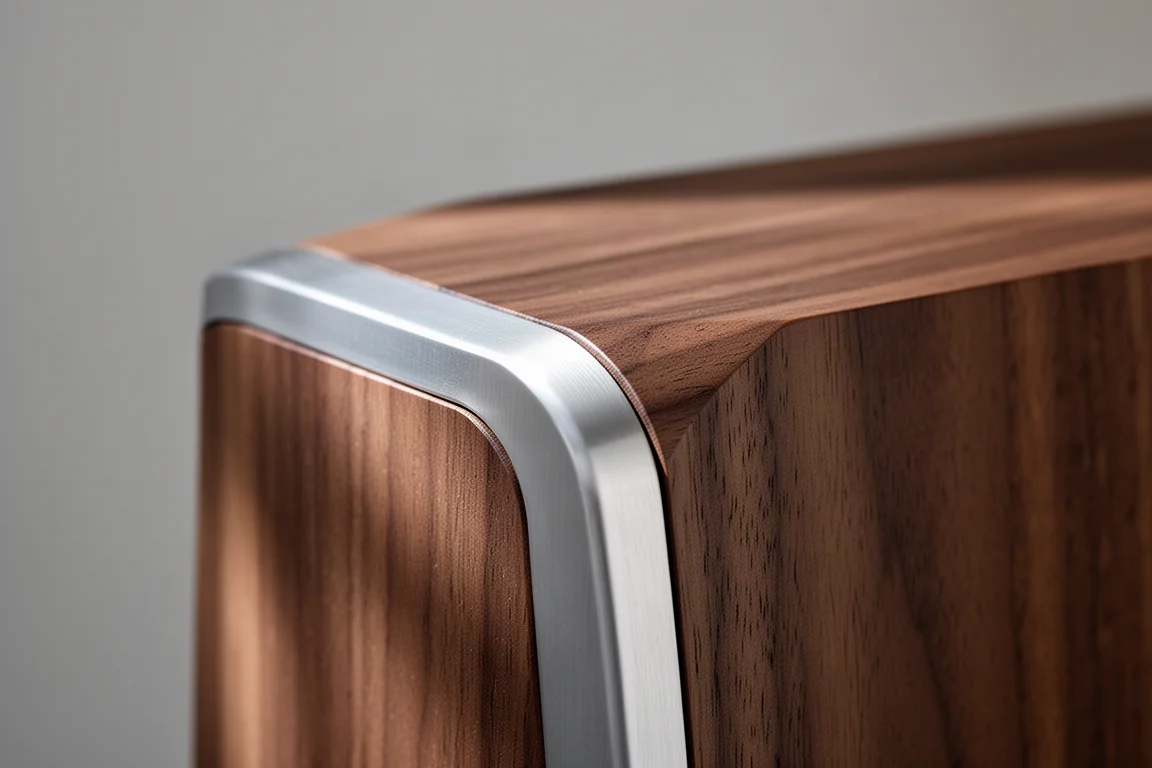
Both speakers are available in finishes that pair a cabinet colour with a contrasting driver and trim treatment, and the fit and finish is strong for the price. The wood grain options in particular look and feel like they belong on a considerably more expensive speaker.
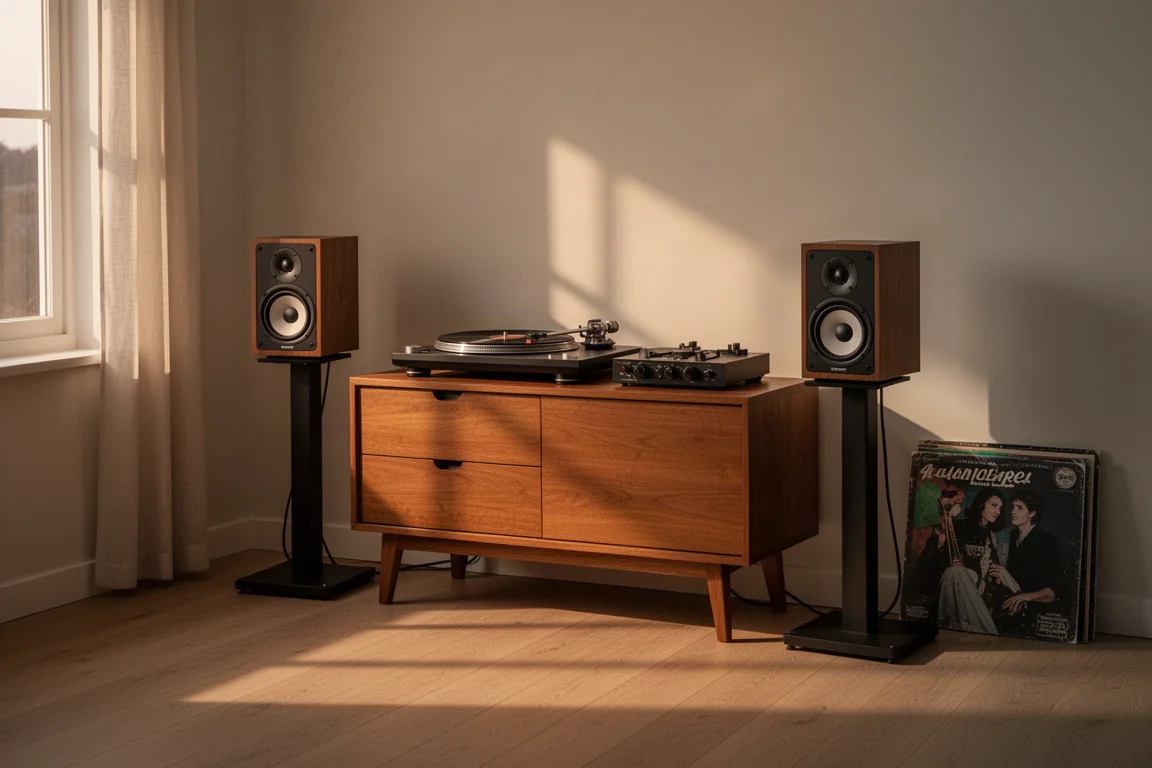
Kanto also sells the matching SX and SU2 stands, sized specifically for these cabinets. That matters more than it might seem. On a desk or a low media console, both speakers fire well below ear height, which costs you clarity and a stable centre image. Raising them to proper listening height with a dedicated stand is one of the simplest improvements you can make to either model.
Placement also affects how much of the Grand’s extra low-frequency output you actually hear. A larger cabinet in a small room, pushed into a corner, will not automatically sound better than the smaller G2.
Subwoofer Output and Room Size
Both models include a dedicated subwoofer output with a selectable 80 Hz crossover that can be engaged from the remote. When it is active, the subwoofer takes over the lowest frequencies and the speaker stops reproducing everything below 80 Hz. That reduces distortion and frees up usable headroom.
This is the single most important factor in choosing between the two. If you already plan to add a good subwoofer, or you are building a desktop or smaller-room system, the G2 is likely the smarter buy. Once the crossover is engaged at 80 Hz, the Grand’s biggest advantage, its extension down to almost 40 Hz, becomes far less relevant. If you intend to run the speakers on their own in a medium or large room, the Grand makes a much stronger case for itself.
Which One Should You Buy?
If you already own the original TUK, the G2 is not an automatic upgrade. Its size, amplifier power, and bass extension are close to what you already have. The reasons to move would be the updated styling, USB-C, newer Bluetooth, revised DSP and crossover tuning, and the more controlled dispersion. If you want your speakers to sound bigger and more powerful, the Grand is the more meaningful step up, with deeper bass, a larger woofer, and more headroom.
For new buyers, the $100 difference should not decide it on its own. With a subwoofer in a small or medium room, the G2 covers everything you need and leaves budget for the sub. Without a subwoofer in a medium to large room, the Grand’s extra scale and low-frequency capability are worth the small premium.
Both speakers deliver the fast, detailed character that made the TUK line appealing in the first place. The choice comes down to how much low-frequency weight and physical scale you need the speakers to provide on their own.
Conclusion
The Kanto TUK G2 and TUK Grand are two answers to the same brief. The G2 takes the original formula and refines it, with better driver integration, a cleaner cabinet, and modern inputs at $899. The Grand keeps that same character and adds genuine scale, deeper bass, and more power for $999. If a subwoofer is part of your plan, choose the G2. If the speakers have to carry the low end by themselves, choose the Grand.
Further reading
Related Reviews
Powered Speakers
AbramTek X50 Review: Powered Speakers With Real Bass and a Full Feature Set
The AbramTek X50 pairs a phono preamp, HDMI ARC, optical, and Bluetooth with genuinely capable sound. Here is what it does well and what to check before buying.
Powered Speakers
Amazon Basics Powered Speaker Review: Useful Features, Compromised Sound
A practical look at the Amazon Basics Powered Speaker: a handy remote and an optical input, held back by shouty upper mids, minimal bass, and erratic pricing.
Powered Speakers
Aperion Audio Alaire Review: Compact Powered Speakers With Serious Bass
A compact two-way powered speaker with genuine low-end punch, excellent imaging, and a control scheme that depends entirely on its remote.