Powered Speakers
Kanto REN Review: A Neutral Powered Speaker Built for Flexible Setups
The Kanto REN is a $700 pair of powered bookshelf speakers with HDMI ARC, measured neutrality, and a few practical trade-offs worth knowing before you buy.
Introduction
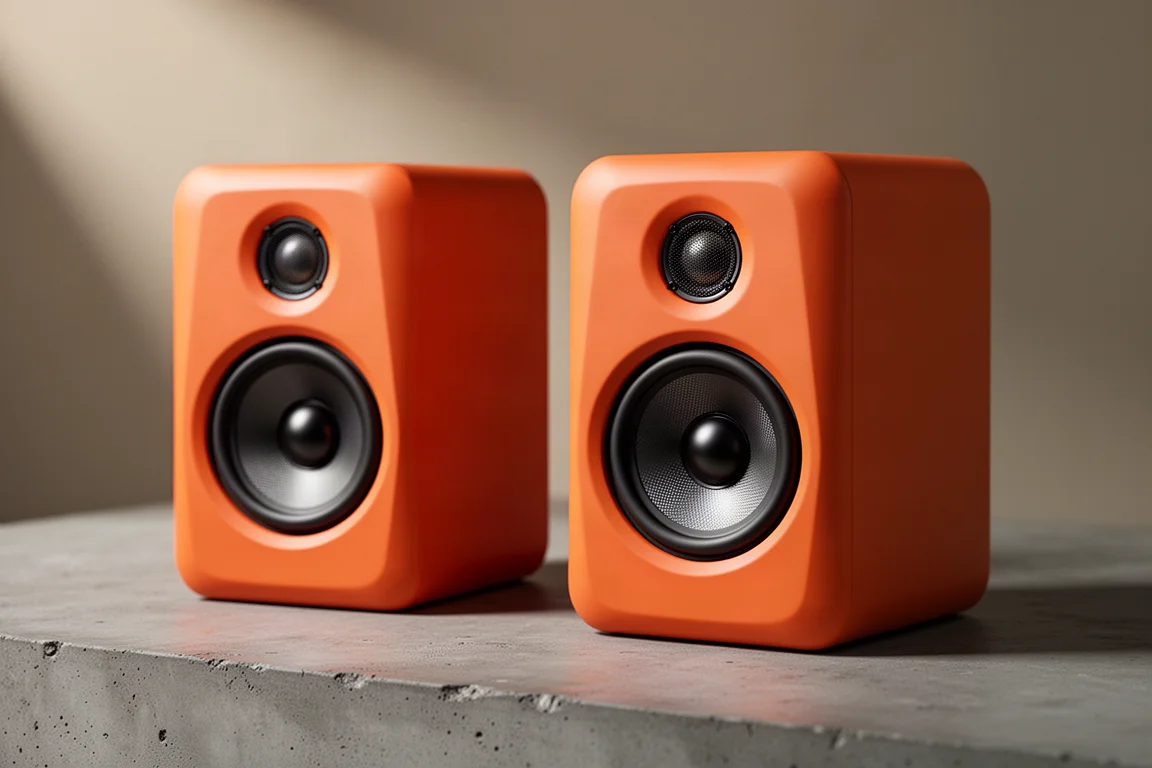
Powered bookshelf speakers have become a genuine alternative to a soundbar or to a small amplifier and passive speaker combination, and the Kanto REN sits squarely in the middle of that conversation. It is a two-way active design sold as a pair for around $700, aimed at listeners who want a compact system that can serve a desk, a television, or a small room without a rack of separates.
The REN earns attention for two reasons: measured performance that holds up well against its class, and a connection panel that covers almost everything a modern listener needs. It is not flawless, and a couple of practical details are worth understanding before you commit. This review walks through what the speaker does well, where it asks for a small compromise, and who should consider it.
Who the Kanto REN Is For
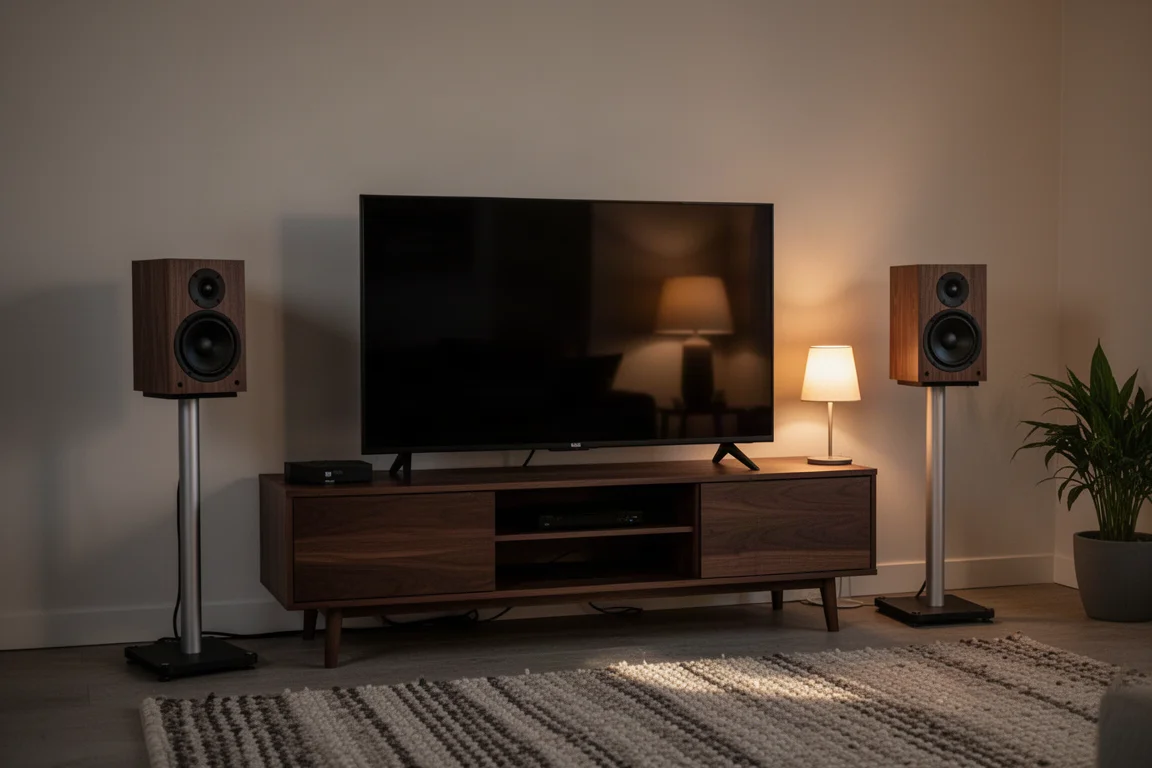
The REN is a natural fit for a desktop or nearfield setup. Because the design controls its dispersion well across a wide listening area, it does not demand that you sit locked into a single narrow spot, which matters when you move between a keyboard, a chair, and the other side of the room. Its compact cabinet and minimal styling also make it easy to live with on a desk or a shelf.
It is equally relevant as a television solution. The HDMI ARC input lets the speaker take audio straight from a TV, so TV apps and connected devices can run through the speakers instead of a soundbar. Once connected over ARC, volume control can come from the TV remote, which keeps the everyday experience simple for anyone in the household.
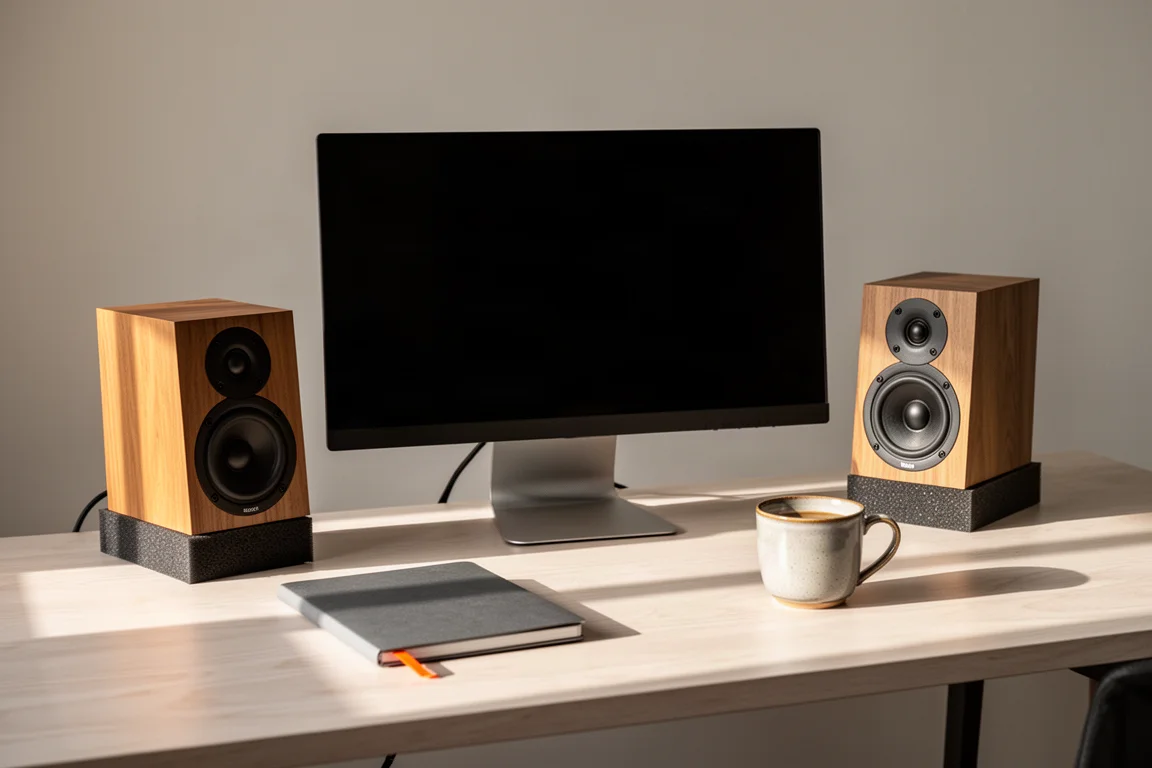
That combination of nearfield competence and living room convenience is the core of the REN’s appeal. It is a speaker that suits someone who wants one pair to handle both a workstation and casual TV listening, rather than building two separate systems.
Design, Finish, and Desk Presence
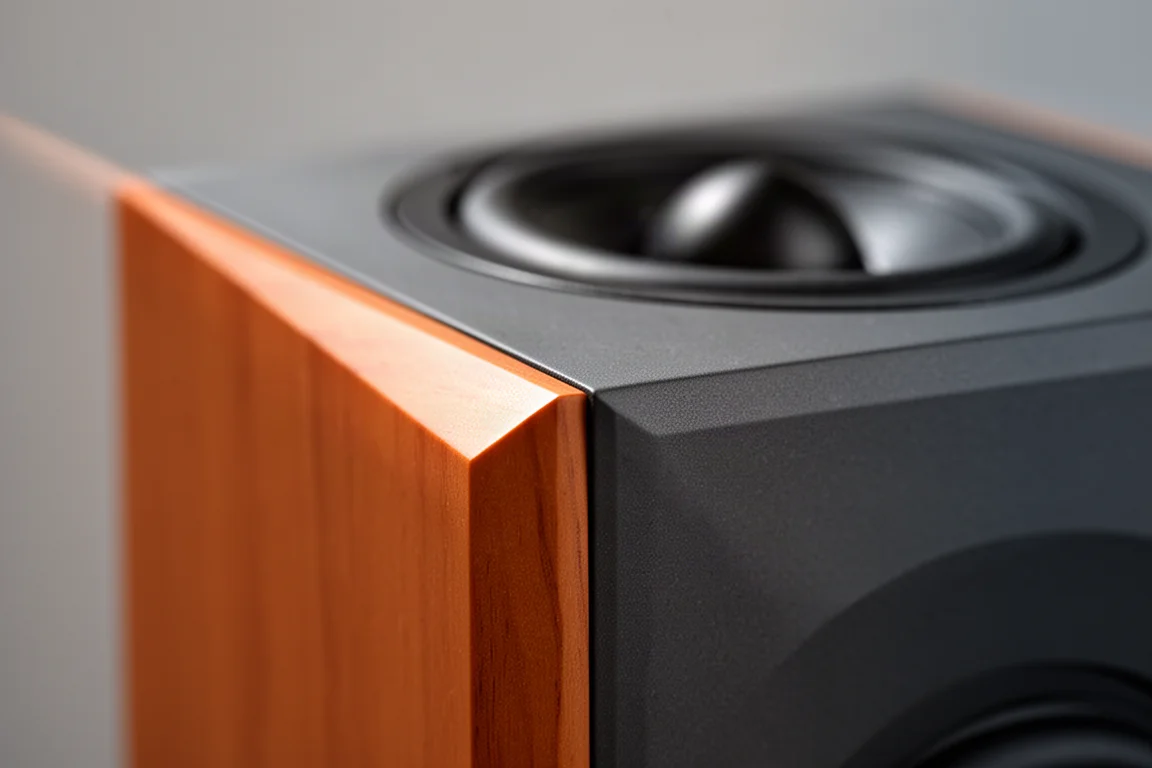
The REN is a sleek, understated two-way design with a cabinet that reads as furniture rather than equipment. The finish is a real painted surface rather than a vinyl wrap, and it shows in both appearance and feel. It is available in several colors, including blue, white, and black, which makes it easier to match an existing room than most speakers in this category.
Kanto also builds speaker stands that screw into the bottom of the cabinet. That threaded attachment makes the speaker noticeably more stable on a stand, and the same stands work with a range of other speakers as well.
The magnetic grille is optional in practice. With the grille removed, the response is at its cleanest, and the speaker looks better that way too. Leaving the grille on introduces a few small, sharp dips in the measured response, but the overall character of the sound stays largely the same. If pets or children are a concern, keeping the grille on is a reasonable trade.
Main Strengths
Neutral, Well-Controlled Sound
The REN is a two-way design built around a 1-inch silk dome tweeter with a small waveguide, paired with a 5.25-inch aluminum concave cone woofer that uses an inverted surround. A single 100-watt amplifier powers both cabinets, which works out to roughly 50 watts per speaker, and the crossover is passive.
Measured in an anechoic-style environment, the listening window stays within a tight tolerance of roughly 2 to 3 dB across the range, which is what a relatively neutral loudspeaker looks like. There is a slight reduction in directivity near the crossover point, but it occurs far enough off axis that it has little practical consequence.
The rated response starts at 50 Hz, and usable bass extends down to roughly 60 Hz without strain. For a compact bookshelf cabinet, that is a sensible place to land. A good part of this composure comes from the onboard DSP, which gives the designers a lot of freedom to flatten the response on top of what the passive crossover already handles.
A Wide Sweet Spot and Solid Imaging
Dispersion is controlled and relatively wide, holding together down to low frequencies rather than narrowing sharply as you move off axis. On and off axis responses track each other without erratic peaks or dips, and the result is a broad area where the speaker sounds consistent.
That consistency is what produces the strong imaging and soundstage the REN is capable of. Because the speaker behaves predictably across a wide arc, a centered vocal or instrument stays anchored even when you are not sitting perfectly on axis.
Vertically, the design is reasonably forgiving. The tweeter axis is where the response is most consistent, so keeping your ears roughly level with the tweeter is the right starting point. Listening from more than about 10 degrees below the tweeter can run into a crossover suckout that takes a noticeable bite out of the midrange, while listening from above the tweeter is more tolerant. This matters more at close range, where small changes in posture translate into larger changes in angle.
Tone Controls That Change the Balance
Treble and bass adjustments live on the remote control rather than on the cabinet. Treble can be raised or lowered by roughly 5 dB starting from about 2 kHz, and bass can be adjusted by a similar amount below roughly 500 Hz, in small increments. That is enough range to add crispness to the top end or to dial in a warmer, more relaxed presentation.
The bass control is especially useful in real rooms. If the speakers sit close to a wall, in a corner, or in a small space where room gain boosts low frequencies, trimming the bass at the speaker is a cleaner fix than fighting it later. If you simply prefer more low-end weight, the same control can add it.
Connectivity and Setup
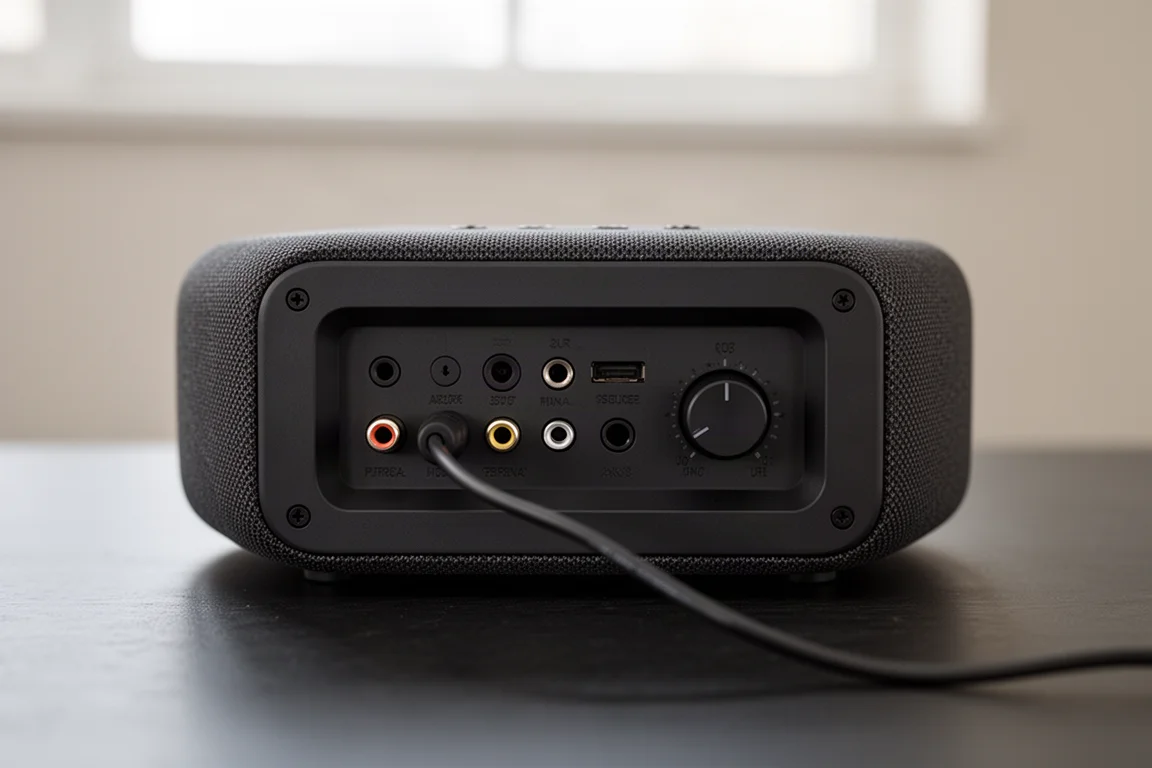
The REN carries an unusually complete set of inputs for this class: HDMI ARC, USB, optical, RCA, and 3.5 mm, plus Bluetooth for wireless playback from a phone or tablet. HDMI is the headline feature here, since many powered speakers at this price omit it entirely. It lets the speaker integrate with a television, a processor, or a streaming device over a single cable, and it opens up ARC-based volume control from a TV remote.
Setup is close to plug and play. Connect the power, connect your sources, pair Bluetooth if you want it, and you are running. There is no calibration routine or complex configuration to work through, which is a real advantage for anyone who wants the system to work on the first evening.
If your source lacks HDMI ARC, an inexpensive adapter can convert ARC to optical, or you can simply use the optical connection from the television.
Things to Consider Before Buying
The most consistent criticism of the REN concerns its rear bass port. At higher playback levels the port chuffs audibly, and because the port sits on the back of the cabinet, some speakers mask that noise more effectively than this one does. It only appears when you push the speaker hard, but it appears more readily than with some competitors in the same class.
The subwoofer output addresses most of this. When a subwoofer is connected, the REN automatically applies an 80 Hz high-pass filter to the speakers, which reduces port turbulence and lets the main drivers concentrate on the range they handle best. For anyone planning to add a sub, the issue largely resolves itself.
Vertical placement deserves a little attention too. Because the design is most consistent on the tweeter axis, a small amount of care in how the speakers are aimed and how high they sit pays off. Angling them slightly inward and keeping the tweeter near ear level will get the most out of the design in a desktop setup.
Adding a Subwoofer
The REN’s bass is respectable for its size, but it is not full range. If you want genuine low-frequency extension and more dynamic headroom, pairing the speakers with a subwoofer is the most effective upgrade available, and spending roughly $300 to $400 on a competent sub will change the system substantially.
The subwoofer output makes this straightforward: connect the sub, and the speakers hand off everything below 80 Hz automatically. The audible benefits are deeper bass, cleaner midrange at high levels, and a meaningful reduction in the port noise described above.
Buying Advice
At around $700 per pair, the REN sits in a competitive part of the market, and the value question comes down to what you need from a speaker. If you want neutral measured performance, a wide sweet spot, a painted cabinet that looks the part, and a connection panel that includes HDMI ARC, the REN delivers all of that in one package.
There are alternatives worth weighing. Some powered speakers in this class cost less and still offer HDMI ARC, though they may not match the REN’s measured composure or its finish quality. Others offer a different tweeter technology or a larger cabinet with more dynamic range, but often with fewer inputs. If HDMI ARC is the feature you care about most, compare carefully, because it remains the clearest dividing line between speakers in this segment.
The most useful way to decide is to start from your sources. If a television, a computer, and occasional Bluetooth playback are your priorities, the REN covers all three without extra hardware. Budget for a subwoofer if full-range sound matters to you, and treat the tone controls as a tool for matching the speakers to your room rather than a novelty.
Conclusion
The Kanto REN is a well-engineered powered speaker that does exactly what it sets out to do. It measures neutral, keeps its dispersion controlled across a wide listening area, images convincingly, and offers a level of connectivity that many rivals in this price range cannot match. The real painted finish and the range of available colors make it easy to place in a home rather than a studio.
Its compromises are modest and mostly manageable. The rear port makes itself known at high volumes, and the speaker rewards a little care with vertical placement. Both issues ease considerably once a subwoofer is in the system. For anyone building a compact setup around a desk or a television who wants accurate, flexible, easy-to-live-with sound, the REN is a confident recommendation.
Product link
View more details for Kanto REN
This product is mentioned in the review. Check the specifications, options, and compatibility before buying.
View more details for Kanto RENFurther reading
Related Reviews
Powered Speakers
AbramTek X50 Review: Powered Speakers With Real Bass and a Full Feature Set
The AbramTek X50 pairs a phono preamp, HDMI ARC, optical, and Bluetooth with genuinely capable sound. Here is what it does well and what to check before buying.
Powered Speakers
Amazon Basics Powered Speaker Review: Useful Features, Compromised Sound
A practical look at the Amazon Basics Powered Speaker: a handy remote and an optical input, held back by shouty upper mids, minimal bass, and erratic pricing.
Powered Speakers
Aperion Audio Alaire Review: Compact Powered Speakers With Serious Bass
A compact two-way powered speaker with genuine low-end punch, excellent imaging, and a control scheme that depends entirely on its remote.