Turntables
Kanto OB3 G2 Review: A $249 Turntable With Real Setup Control
A second-generation belt-drive turntable with a switchable phono stage, Bluetooth 5.3, adjustable tracking, and a speed sensor that keeps pitch steady.
Introduction
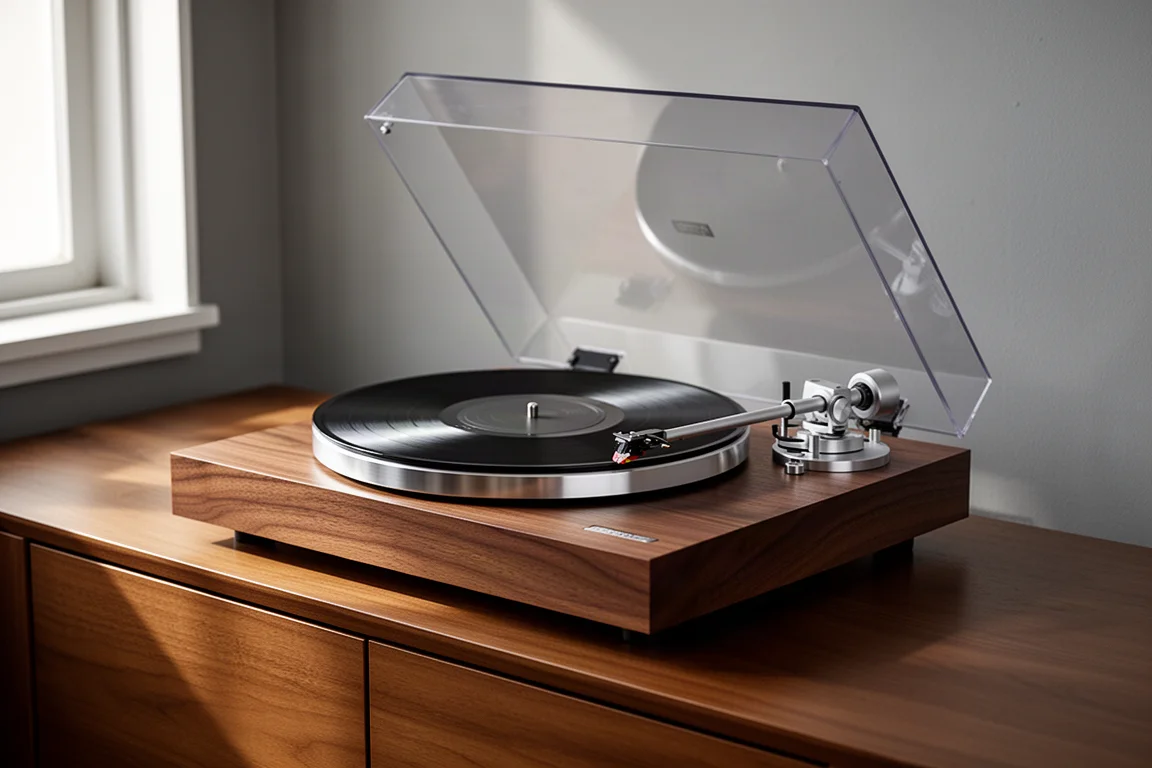
The Kanto OB3 G2 is the second generation of Kanto’s belt-drive turntable, and it launches at $249. It is a manual deck built around an engineered wood plinth, a weighted aluminium platter, and a J-shaped aluminium tonearm with a cue lever. Kanto spent more than a decade building powered speakers before turning to turntables, and the first OB-3 arrived in November 2025 as the company’s first source component. Less than a year later, the G2 arrives with updated engineering rather than a simple colour refresh.
The appeal here is flexibility with real control. An Audio-Technica AT3600L cartridge comes pre-installed and pre-aligned, so there is very little setup before the first record spins. The deck is belt driven, adds Bluetooth 5.3, and includes a built-in switchable phono preamp, which means it can run wired into an amplifier or speaker with a phono input, or skip cables entirely and stream to a Bluetooth speaker.
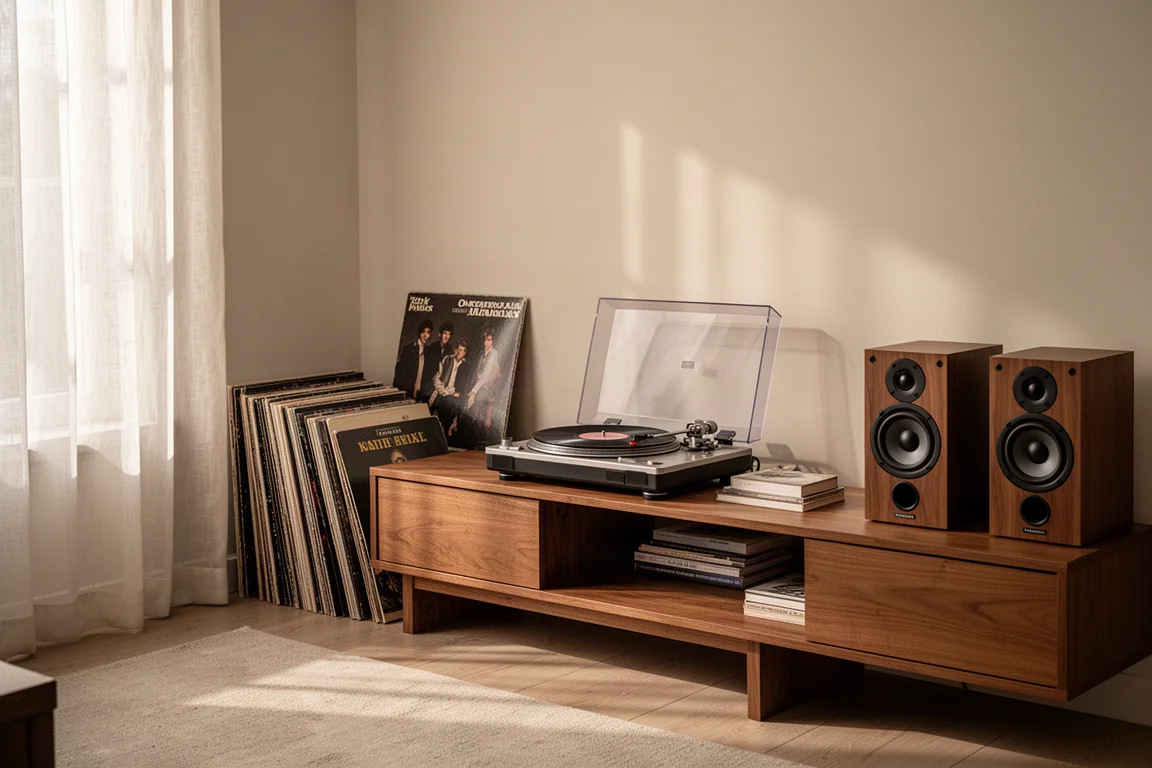
Everything needed to get started is in the box: a dust cover, a felt mat, a 45 adapter, an RCA cable, and a ground wire. A complete accessory set combined with a genuinely adjustable tonearm is unusual at this price.
Who this product is for
The OB3 G2 suits listeners assembling a first vinyl system who do not want to choose between wired and wireless. Because the phono stage is built in and switchable, the same deck works with a powered speaker, an integrated amplifier, or a Bluetooth speaker in another room.
It also suits anyone who expects to change the cartridge later. The adjustable counterweight and dedicated anti-skate control mean tracking force can be set properly rather than locked in at the factory, which keeps the upgrade path open instead of forcing a new turntable the moment you want a better stylus.
Main strengths
The clearest change from the first OB-3 is the tonearm setup. The original launched at $199 with a fixed, non-adjustable counterweight and a fixed anti-skate setting. The G2 adds both an adjustable counterweight and a dedicated anti-skate control, so tracking force can be dialled in. Set it too light and the stylus can skip and skate toward the inside of the groove; set it too heavy and it wears down the stylus and the record. Kanto specifies 3.5 g plus or minus 0.5 g for the AT3600L, and the adjustment turns that figure into something you can verify or change.
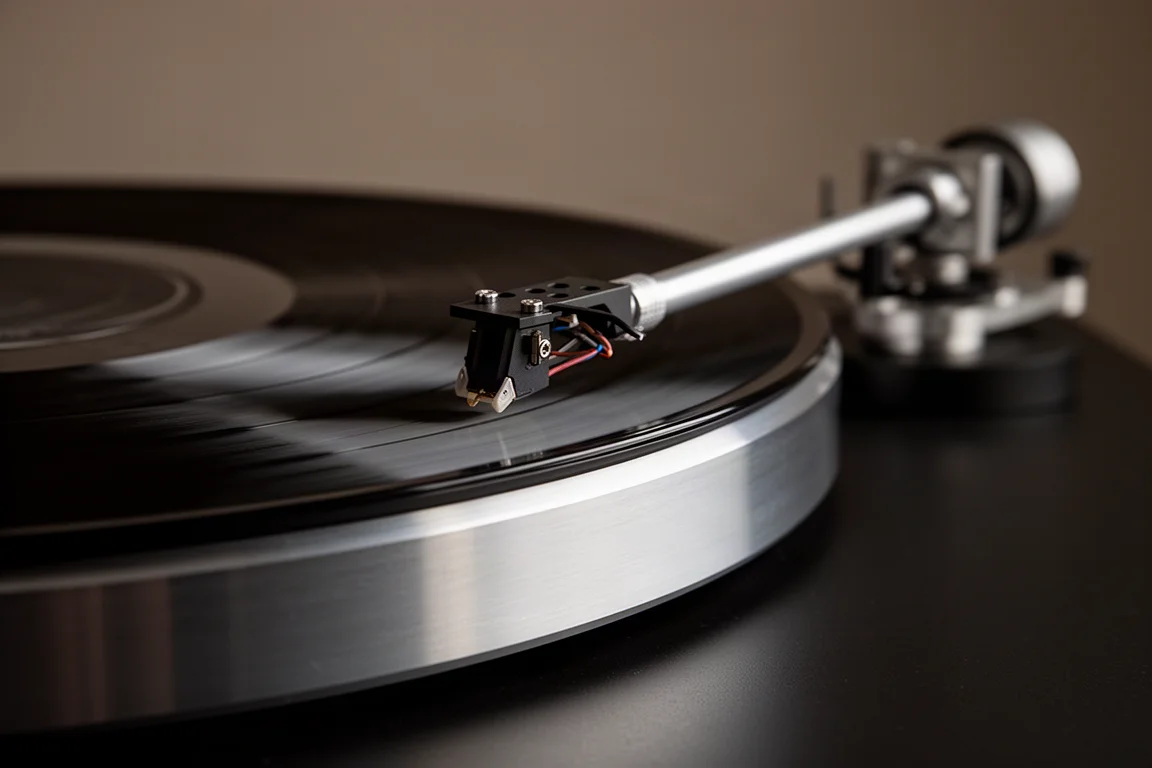
The second major upgrade is the motor. The original ran an open motor system with no feedback and a rated speed variation of plus or minus 1 percent, meaning the motor simply spun at whatever speed it landed on. The G2 adds a speed sensor that continuously monitors the motor and corrects it in real time, so the platter holds one steady speed across a full side instead of drifting. Steady speed matters because even a small wobble shows up as audible flutter on sustained notes, such as a held piano chord or a long vocal line, making the music sound slightly off in a way that is hard to name but easy to hear.
Kanto also added mass to the chassis. The original weighed 8.6 lb, and the G2 comes in at 12.1 lb, with springs in the feet. Extra mass and compliant feet absorb more of the vibration that speakers push through whatever surface the turntable sits on, so less of that energy travels up through the plinth and platter and into the stylus, where it would otherwise be mixed into the music as rumble or muddiness.
Build quality supports the same idea. The engineered wood plinth is far denser than the plastic housings used on the cheapest all-in-one record players, the weighted aluminium platter adds rotational mass that helps hold speed, and the J-shaped tonearm uses a proper offset angle to keep tracking error low across the record. The tonearm bearing also has surprisingly little play for the price. A loose bearing lets the arm shift as the stylus pulls against the groove, which adds noise and blurs the stereo image, and it is one of the easiest places to cut costs because bearing quality cannot be judged from a photo or read off a spec sheet.
Finally, the deck includes auto stop. It remains fully manual, so you cue the tonearm over the record and lower it with the cue lever, but the platter stops on its own at the end of a side instead of leaving the stylus parked in the run-out groove.
Setup and everyday use
Getting started is straightforward. The cartridge arrives pre-installed and pre-aligned, the felt mat goes on the platter, and the 45 adapter, RCA cable, and ground wire are all included. From there, the choice is between a wired connection to a phono input or a Bluetooth 5.3 link to a wireless speaker.
Everyday use is manual by design. You place the record, move the tonearm over the lead-in groove, and lower it with the cue lever. Auto stop handles the end of the side. The pitch control carried over from the original shifts playback speed up or down by 10 percent from the centre, a feature more common on DJ turntables than home hi-fi decks. It is a fun way to hear a record at a different tempo, but with the new speed sensor there is no need to touch it for normal listening.
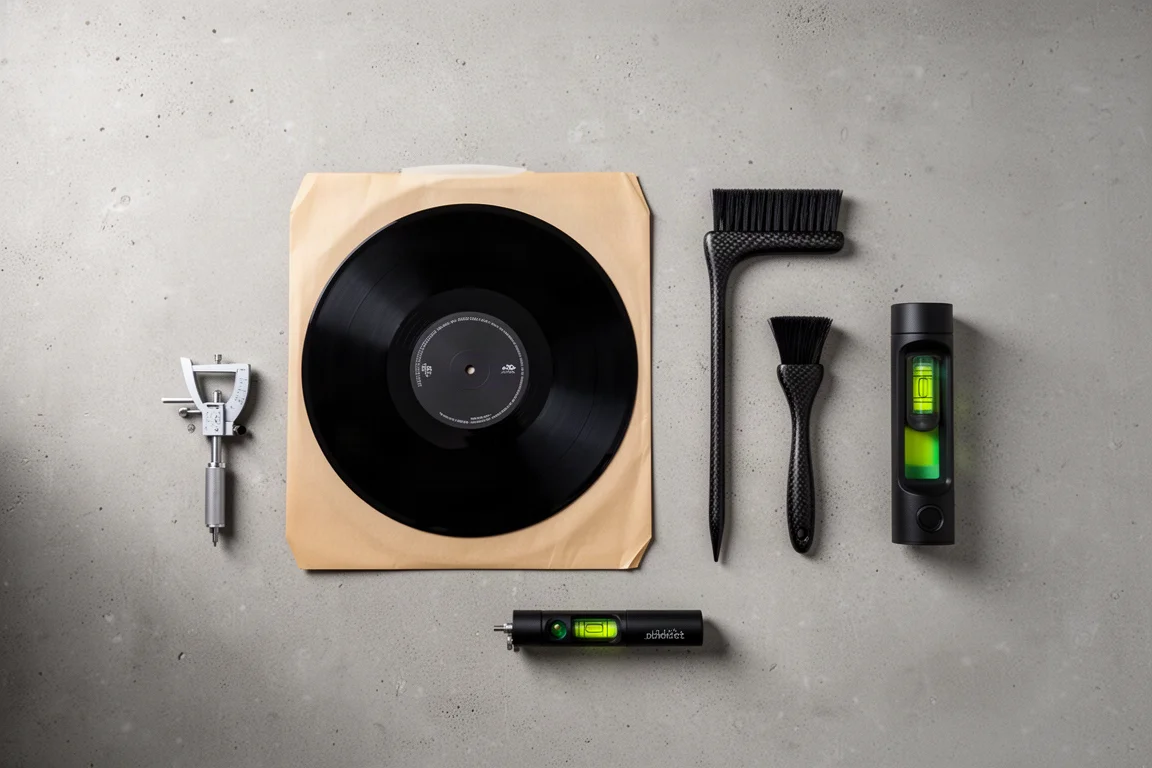
If you plan to swap the cartridge or upgrade the stylus, the tracking force figure of 3.5 g plus or minus 0.5 g is the number to check, and an inexpensive gauge makes that easy to confirm.
Things to consider before buying
This is a manual turntable, not an all-in-one system. It needs a partner: an amplifier or powered speaker with a phono input, or a Bluetooth speaker. If you already own a Bluetooth speaker, the wireless path keeps the cost of entry low, while a wired connection to a proper phono input remains the more conventional route.
The G2 also costs $50 more than the original OB-3’s $199 launch price. That premium buys the speed sensor, the heavier chassis, and adjustable tracking and anti-skate. It still undercuts most of its direct competition, but it is a real difference to weigh if the first generation is still available somewhere.
A few smaller points are worth knowing. The stock mat is felt, so anyone chasing tighter bass or lower static has upgrade options available. Stylus cleaning gel needs careful handling because the cantilever is delicate. And because the tonearm is adjustable, it rewards a little patience: taking a moment to set tracking force properly is what keeps the stylus and the records in good condition.
None of these are drawbacks so much as expectations. The OB3 G2 is designed for someone who wants to set a system up correctly and then leave it alone, not for someone who wants a deck that plays itself.
Pairing and accessories
Kanto’s own speaker range offers several natural partners. The Yu4 is an active bookshelf speaker with Bluetooth and its own built-in phono preamp, though the turntable’s phono stage is the recommended starting point, and the two can be compared by ear. The Ora 4 suits smaller desktop setups. The second-generation Tuk adds more power and an AMT tweeter, while the Tuk Grand steps up to a 6-inch woofer that reaches down to 40 Hz for a clear jump in low end. For a system that also handles television sound, the Ren includes HDMI ARC input and can be controlled with a TV remote. It has no phono input, which is not a problem because the OB3 G2 supplies its own.
Kanto also offers upgrade mats. The TTAM is an anti-static acrylic mat intended to tighten bass and cut resonance, while the TTCRM uses a cork and rubber blend for a quieter, lower-static surface with more grip on the record. Both fit any standard 12-inch platter, not just this turntable.
For setup and maintenance, the TTA kit bundles a stylus force gauge, a cartridge alignment protractor, and a bubble level, which is genuinely useful if you plan to change the cartridge. The TTG kit pairs a silicone record roller with stylus cleaning gel, and the TTSB is a two-in-one record brush with a stylus brush built into the handle.
Buying advice
If you are starting a vinyl setup from scratch and want the freedom to go wired or wireless without spending a great deal up front, the OB3 G2 is an easy recommendation. It costs less than most of its direct competition, gives you real control over tracking force and anti-skate instead of locking the setup in at the factory, and fits neatly into Kanto’s speaker ecosystem if you want to build out from here.
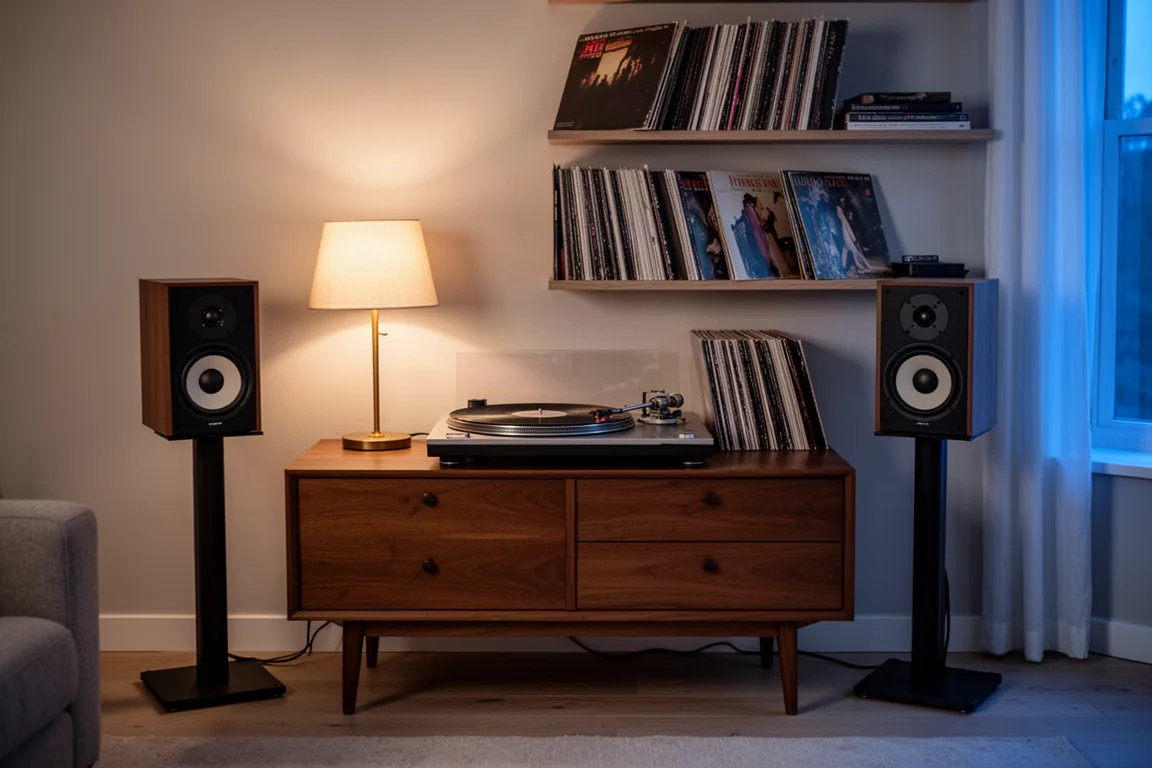
The upgrade path is part of the value. A better stylus can be fitted later, and the adjustable counterweight and anti-skate mean the deck can be dialled back in properly afterwards, so the turntable does not need to be replaced to move up a step in sound quality.
Colour is the last decision. The G2 comes in five matte finishes: black, white, walnut, green, and a new ice blue. Walnut is the one that blends into a living room setup, while ice blue stands out on a shelf next to darker gear.
Conclusion
The Kanto OB3 G2 takes a well-received first attempt and addresses what limited it. A speed sensor replaces an open motor, a heavier chassis and sprung feet soak up more room vibration, and adjustable tracking force and anti-skate turn a fixed factory setup into something you can maintain and upgrade. At $249, with a pre-installed cartridge, a switchable phono stage, Bluetooth 5.3, and auto stop, it covers the practical needs of a first vinyl system while leaving room to grow.
Product link
View more details for Kanto OB3 G2
This product is mentioned in the review. Check the specifications, options, and compatibility before buying.
View more details for Kanto OB3 G2Further reading
Related Reviews
Turntables
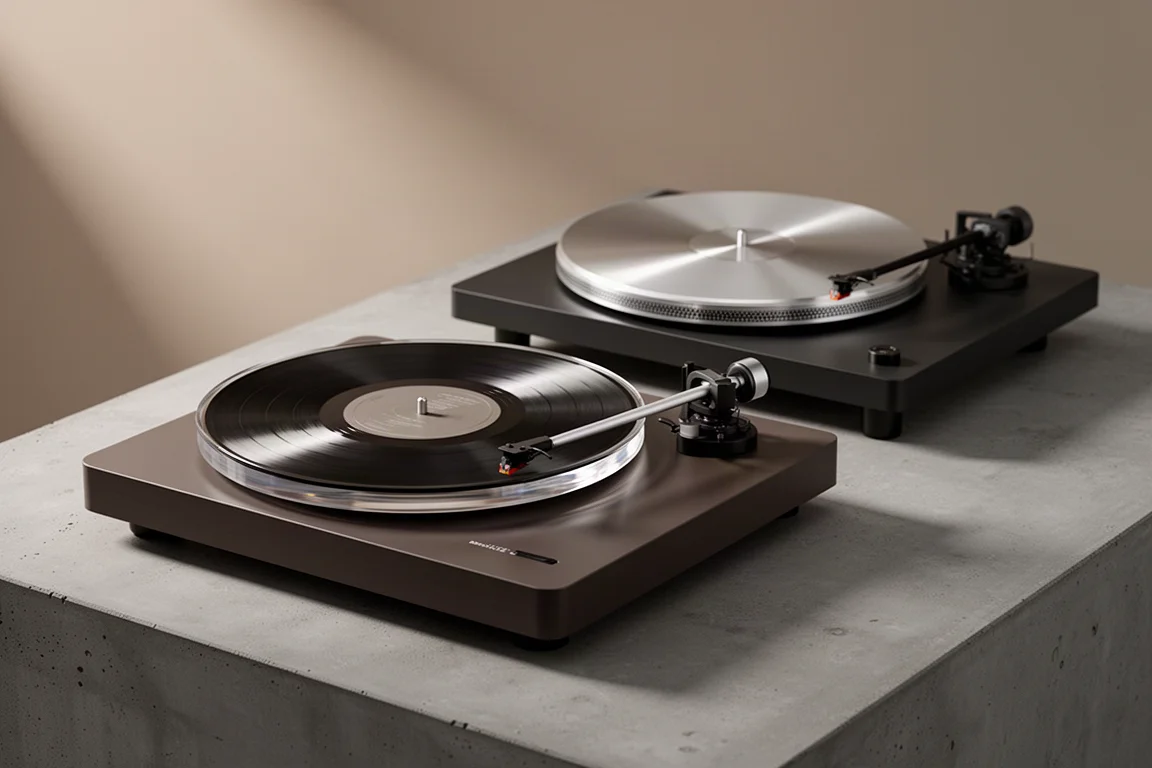
Best Turntables 2026: Seven Standout Picks From Entry Level to Premium
A practical roundup of seven turntables worth considering, from a US-made budget deck to small-batch premium models with a clear upgrade path.
Turntables
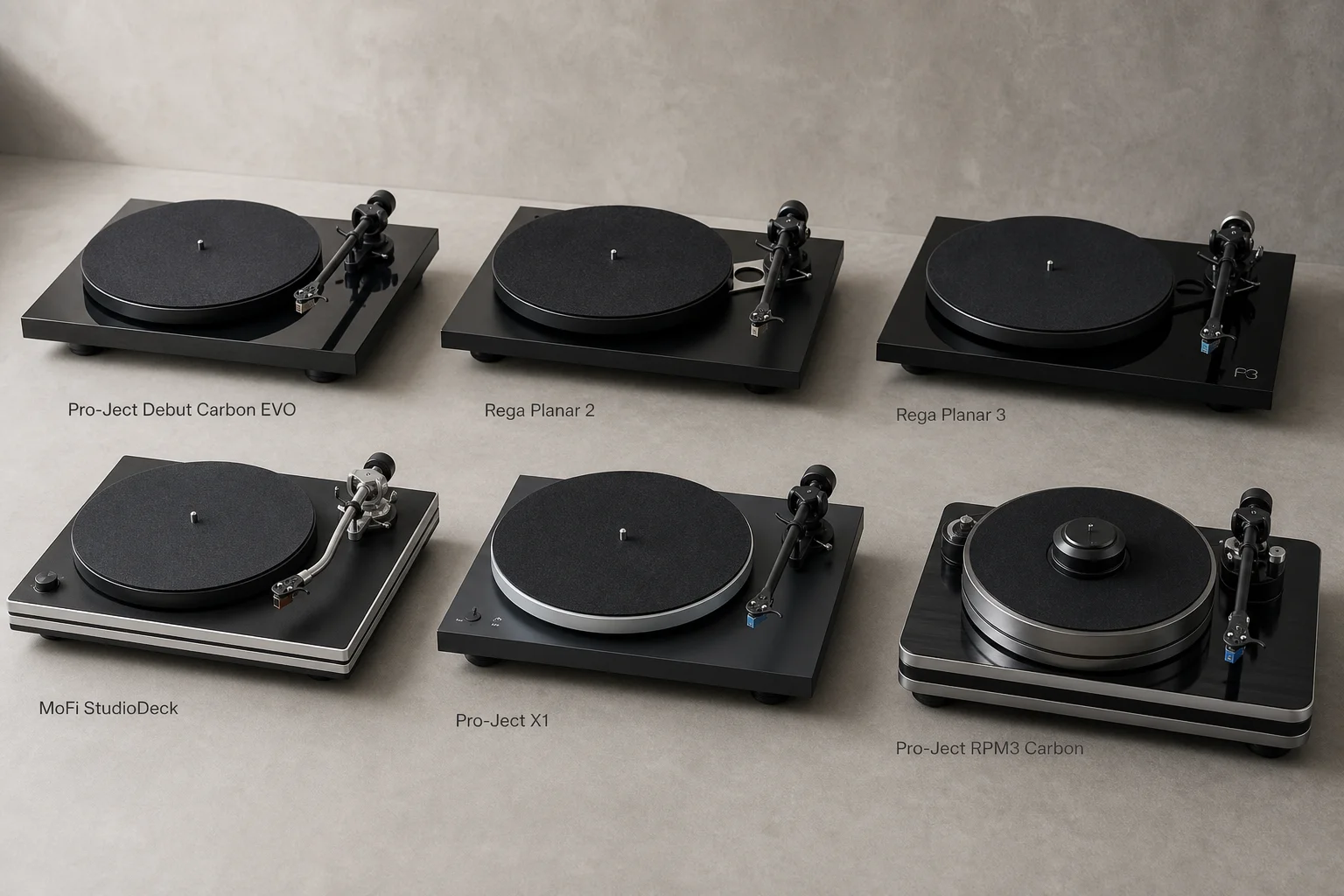
Best Turntables Under $1,000: Five Fully Manual Picks Worth Considering
Five fully manual turntables under $1,000, compared on build quality, cartridges, upgrade potential, and the character of sound each one brings to a system.
Turntables
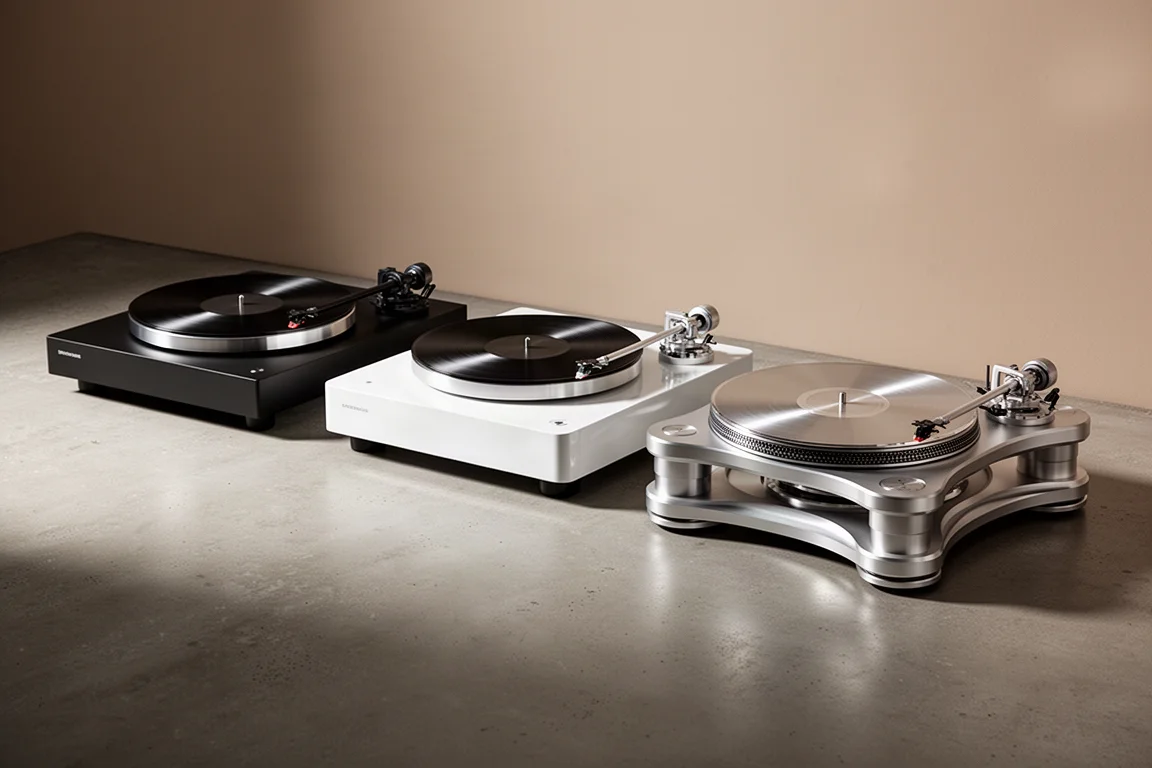
Best Turntables Under $2,000: Six Vinyl Decks Worth Building a System Around
Six turntables under $2,000, from a value-focused belt-drive deck to a fully balanced design, with the strengths and trade-offs that matter before you buy.