Home Theater
Kaleidescape Terra Prime with Strato C Movie Package Review: A Reference-Grade Movie Server
A close look at the Kaleidescape Terra Prime with Strato C Movie Package, from its 8TB solid state server to lossless audio, metadata automation, and the trade-offs behind the premium entry price.
Introduction
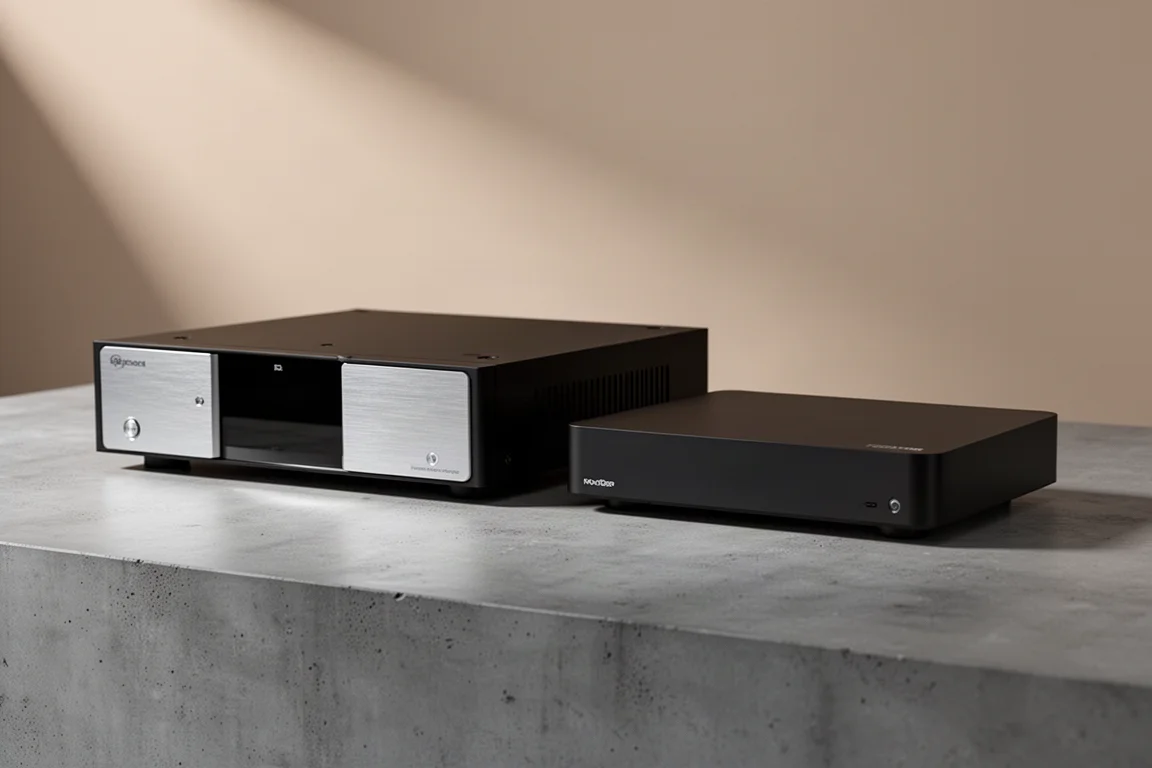
The Kaleidescape Terra Prime with Strato C Movie Package is a two-part system for people who want their film library on a server rather than on shelves. The Terra Prime handles storage, and in this configuration it ships with an 8TB solid state drive. The Strato C is the movie player that feeds a display or projector.
The package is priced a little under $9,000, which places it well outside impulse territory. What that money buys is a curated library of roughly 14,000 titles, downloads measured in minutes rather than hours, full-bandwidth lossless audio, and metadata detailed enough to drive lighting, shading, seating and screen masking through a home automation system.
This review covers the storage and speed differences between the solid state and hard drive versions, the audio and video performance you can expect in a capable room, the automation features, and the practical trade-offs worth understanding before you commit.
Who This Product Is For
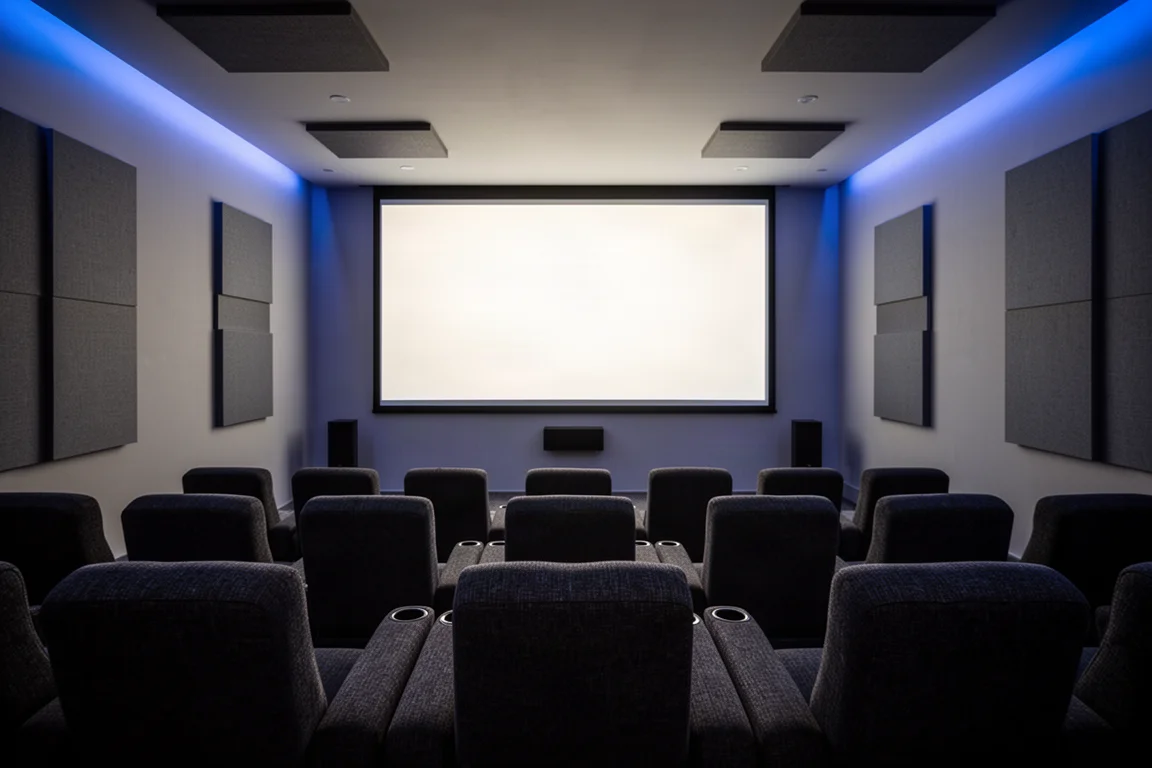
This package makes the most sense for owners of dedicated, projection-based home theaters where the rest of the chain is already capable of reference-level performance. If a room is built around a large acoustically transparent screen, multiple subwoofers and a processor that handles immersive formats properly, the source is the last place you want a bottleneck.
It also suits collectors who own a lot of discs but no longer want to store, handle or shelve them. Physical media is getting harder to buy in stores, and a server keeps everything available from one interface.
Configuration flexibility matters here. A single zone can be served by one Strato C player, while larger homes, yachts and multi-room installations can run a player per zone or distribute a single source through an HDMI matrix.
If you mostly stream casually and your display is a television in a shared living room, the advantages will be much harder to perceive, and a simpler setup will likely serve you better.
Main Strengths
Storage and Speed: Solid State Versus Hard Drive
Kaleidescape offers both solid state and spinning hard drive versions of its servers, and the difference goes beyond capacity. A solid state drive has no moving parts, so it is quiet in a way a platter drive cannot be. It also delivers much higher read bandwidth, and that headroom shows up in two places.
First, simultaneous playback. A solid state server can support up to 25 zones playing at once, while a spinning hard drive is limited to five. Second, download speed. On a solid state drive with a fast ethernet connection, a full 4K movie can land on the server in about four minutes, while the same download on a hard drive takes roughly double that or more.
Capacity is worth planning for. The 8TB solid state drive in this configuration holds roughly 125 4K movies, and more if some titles are not 4K. If that fills up, movies can be moved to the cloud and recalled later instead of adding more hardware. Buyers who want more room up front can step up to a 31TB solid state drive, which holds around 500 4K films, or to a 96TB hard drive for maximum storage.
The hardware itself is enterprise grade rather than off-the-shelf, which is a large part of why the entry price is what it is. The Terra Prime is also effectively silent in use, so it will not add noise to a quiet room even if it lives in the rack rather than a separate closet.
Lossless Audio That Streaming Cannot Match
The clearest argument for a system like this is audio bandwidth. Kaleidescape delivers Dolby Atmos and DTS:X at full lossless bandwidth. Most streaming services rely on Dolby Digital Plus, which compresses the signal, and the height channels are often where that compression is most audible. The result is that listeners blame the immersive format when the real issue is the delivery.
In a capable room, the difference is not subtle. Comparing a streamed version of a modern action film with the same title on this system, the presentation becomes noticeably more dynamic. Bass has weight and definition, dialogue stays clear even at high playback levels, and overhead effects register properly instead of fading into the mix.
The same applies to music. Concert material delivered in true high definition plays with effortless dynamics, which makes the format a natural fit for spatial audio releases. This is also why the entry fee is not comparable to boutique cable claims. The improvement is measurable in the signal, not suggested by marketing language.
Whether the files are identical to a disc is a fair question, and the answer is not always clear. What is clear is that the delivery is consistent and free of the compromises that streaming introduces.
Metadata and Automation Integration
The feature that is hardest to replicate on a home-built server is the metadata. Kaleidescape annotates each film with details such as screen size, end credits and intermission cues, and those annotations let the player talk to a home automation system. Lights can dim, shades can close and seating can move into position when the titles roll.
Aspect ratio handling works the same way. The system detects the ratio of each film and can adjust screen masking automatically, which matters in rooms with variable aspect ratio screens and titles that switch ratios mid-film. For anyone who runs demos or wants each movie presented as intended, that level of automation is a genuine differentiator.
A Curated Library and Convenient Downloads
The library covers roughly 14,000 titles, browsed through a graphical interface built around cover art and simple navigation between films. Beyond playback, the system surfaces extras and scene selections in a way that feels closer to a disc than to a streaming app.
Downloads are managed from a phone app. You browse titles, see recommendations for related films, select what you want and send it to the server. In practice a purchase can be on the server within four or five minutes, ready to play.
Availability is another advantage. Titles can appear on the service earlier than they arrive on disc, in some cases while they are still in theaters. Once purchased, a film stays in the library and can be rewatched as often as you like, which changes the math for households that would otherwise pay for a cinema trip each time.
The one notable gap is music. The movie catalog is deep, but the selection of concerts and music titles is thinner, and listeners who want a large spatial audio library will likely want more.
For households that buy a handful of new releases a month, that convenience compounds quickly, and a purchase stays available on the server indefinitely.
Things to Consider Before Buying
The entry price is the first consideration, and it is not small. This configuration sits a little under $9,000, and it comes with the smallest storage option and a single zone. Expanding storage or adding zones increases the cost further, whether through a larger drive or additional players.
Video support is another point to check. The system handles full 4K HDR10, and there is no Dolby Vision support at this time. For most buyers this is not a practical problem, since dedicated theaters are usually built around front projection, and Dolby Vision support among projectors is rare.
There are smaller quirks too. Downloading a title requires entering credentials each time, which is a minor but recurring step. Multi-zone setups need planning, either with a player in each zone or with a matrix switcher feeding displays around the house.
Finally, consider the do-it-yourself alternative honestly. Building a server is more accessible than it used to be, but it involves network troubleshooting, ripping discs and ongoing maintenance, and the metadata and automation features described above are not something you can assemble on your own. The comparison is not only about hardware cost, it is about time, reliability and the finished experience.
Buying Advice
If your theater is already built around reference playback and you want the source to match, this package is a straightforward way to get there. Start with the configuration that fits your room. A single zone and the 8TB solid state drive will cover a large library of 4K films, with cloud storage as an overflow option rather than an immediate second purchase.
Choose the solid state version if quiet operation, fast downloads and the ability to serve many zones at once matter to you. Choose the hard drive version only if maximum storage per dollar is the priority and the server will live far from the listening seats.
If you own a substantial disc collection, there is no need to replace it. Keep the discs you love and use the server for new purchases and convenience. And if the price is the sticking point, be honest about what you are comparing it to: not just a hard drive, but the automation, metadata, lossless delivery and support that come with it.
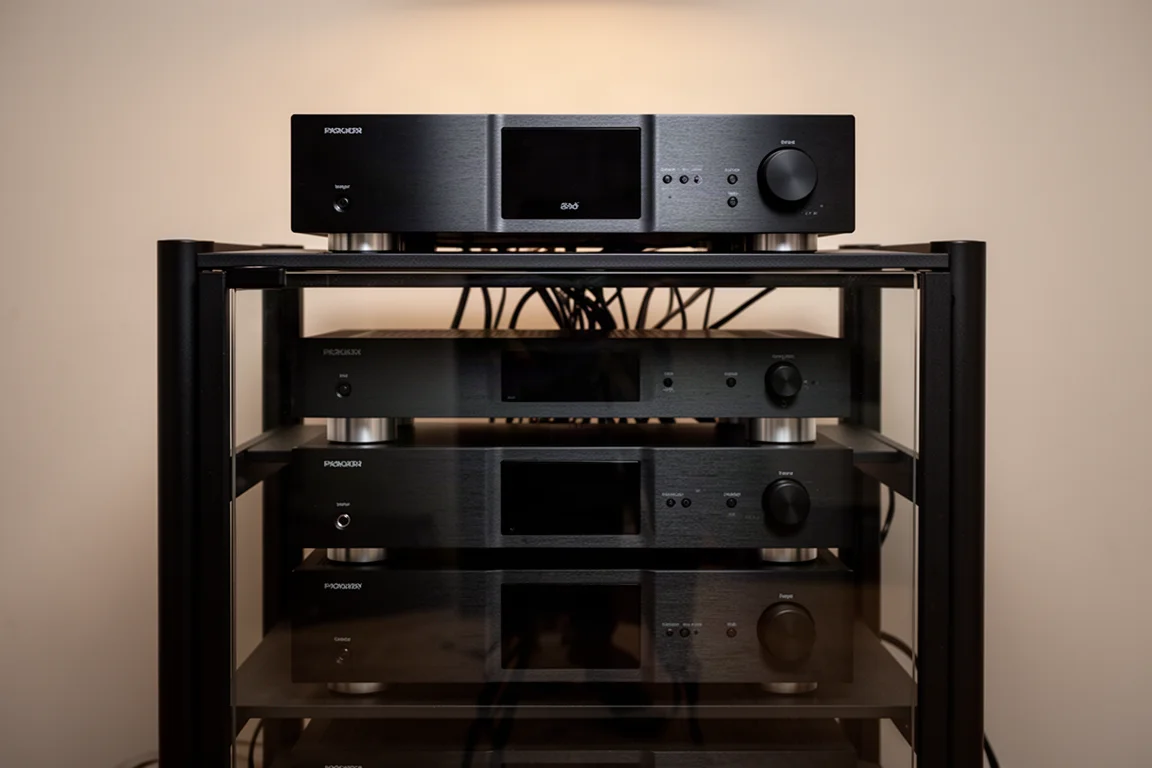
Whatever configuration you choose, the goal is the same: a source that keeps pace with the rest of the room.
Conclusion
The Kaleidescape Terra Prime with Strato C Movie Package is a premium product with a premium entry fee, and it earns that positioning in specific ways: silent solid state storage, downloads measured in minutes, lossless Dolby Atmos and DTS:X delivery, and metadata that lets a theater behave like a theater. The trade-offs are equally clear, from the price and the 8TB starting capacity to the absence of Dolby Vision and a thinner music catalog. For a reference room that can reveal the difference, it is a compelling upgrade. For a casual setup, the cost is harder to justify.
Product link
View more details for Kaleidescape Terra Prime with Strato C Movie Package
This product is mentioned in the review. Check the specifications, options, and compatibility before buying.
View more details for Kaleidescape Terra Prime with Strato C Movie PackageFurther reading
Related Reviews
Home Theater
Anthem AVM 90 Review: A 15.4-Channel Flagship Preamp Processor
A close look at Anthem's flagship preamp processor, covering its dual ESS DAC architecture, 15.4-channel layout, ARC Genesis calibration and four independent subwoofer outputs.
Home Theater
Apple TV 4K With AirPods: A Best-Value Home Theater Setup
An Apple TV 4K paired with AirPods over Bluetooth makes a compact home theater setup for movies, spatial music and late-night viewing, and it can be assembled for as little as $300.
Home Theater
Arcam AVR15, AVR25, AVR35, and AVP45 Compared: Which AV Amplifier Fits Your System?
Four new Arcam home theater components share nine-channel amplification and Dirac Live, but differ in power, processing ceiling, and channel flexibility.