Home Theater
Kaleidescape Strato Lineup Compared: Which Movie Player Fits Your Home Theater?
A practical walk through the Kaleidescape Strato M, E, C and V players plus Terra servers, covering the storage, output and compatibility differences that matter before buying.
Introduction
Kaleidescape built its reputation on a single architectural choice: downloading a bit-perfect copy of a movie instead of streaming a compressed version of it. That decision shapes everything else in the lineup, from how much storage each player needs to why the range splits into movie players and separate servers.
The newest model, the Strato E, takes the formula of the entry-level Strato M and adds full 4K output. This guide covers the Strato M, Strato E, Strato C and Strato V players along with the Terra servers, and explains which combination suits which room.
Why Kaleidescape Is Different From Streaming
The clearest way to understand the difference is in bitrate. A typical 4K movie delivered by a streaming service is encoded at around 8 Mbps on average. A Kaleidescape 4K movie averages around 65 Mbps, more than eight times the video data reaching the projector or television. Audio shows an even wider gap: streaming audio commonly runs near 0.5 Mbps, while Kaleidescape supplies a bit-perfect copy in DTS:X or Dolby Atmos at roughly 6 Mbps, over ten times the data.
Because the title is downloaded rather than streamed, playback is not tied to the quality of the internet connection. There is no buffering or stuttering, and once a movie is on the system it can be played back without internet access at all. What you see and hear matches the master file the producer signed off on.
The difference becomes easier to notice on higher-performance projectors and large televisions, where extra picture detail and a more spacious Atmos mix are simply more visible. Against physical media, a pristine 4K Blu-ray disc on a high-end player can come close, but a Kaleidescape system starts a movie instantly and skips the previews and warning screens that come with a disc.
How the Strato Players and Terra Servers Fit Together
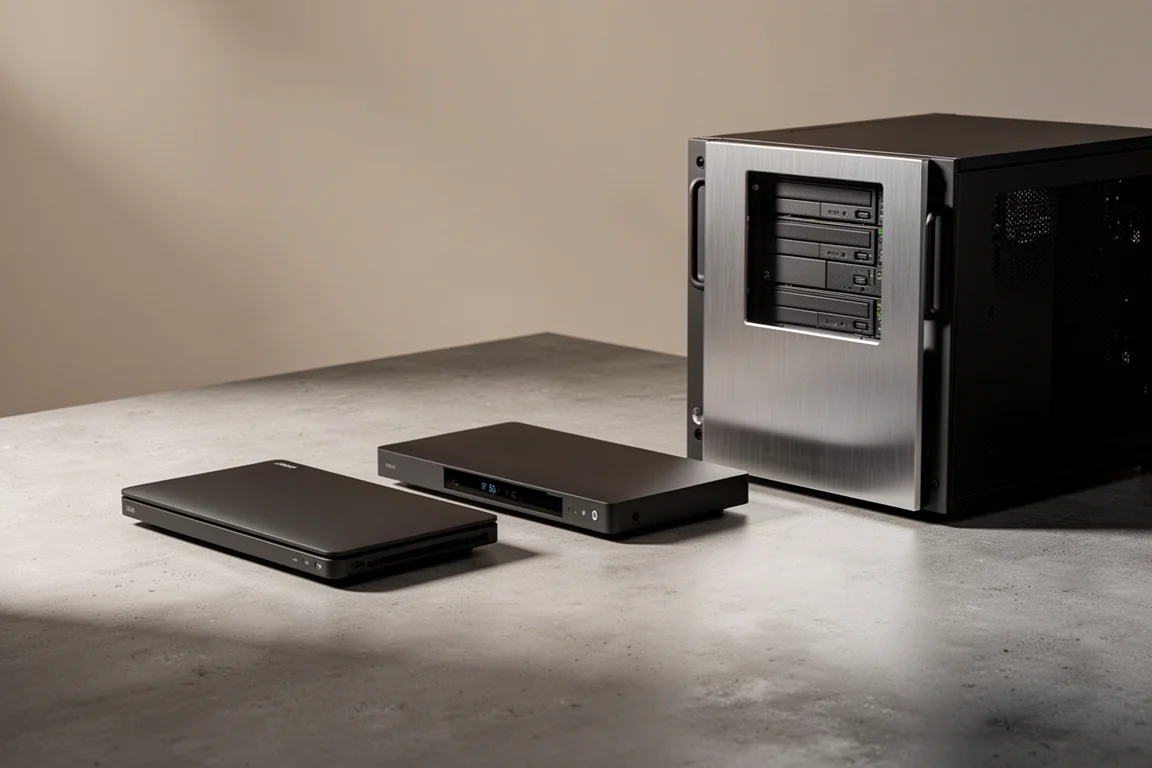
The lineup divides into two roles. Strato models are movie players, and some of them also include internal storage for a handful of titles. Terra models are servers that hold a much larger library and share it with players around the home.
There is a second distinction worth knowing before choosing. The Strato C and Strato V are Co-Star compatible, which means they can access content on a legacy Kaleidescape server. The Strato M and Strato E are not.
Kaleidescape Strato M: The Entry Point
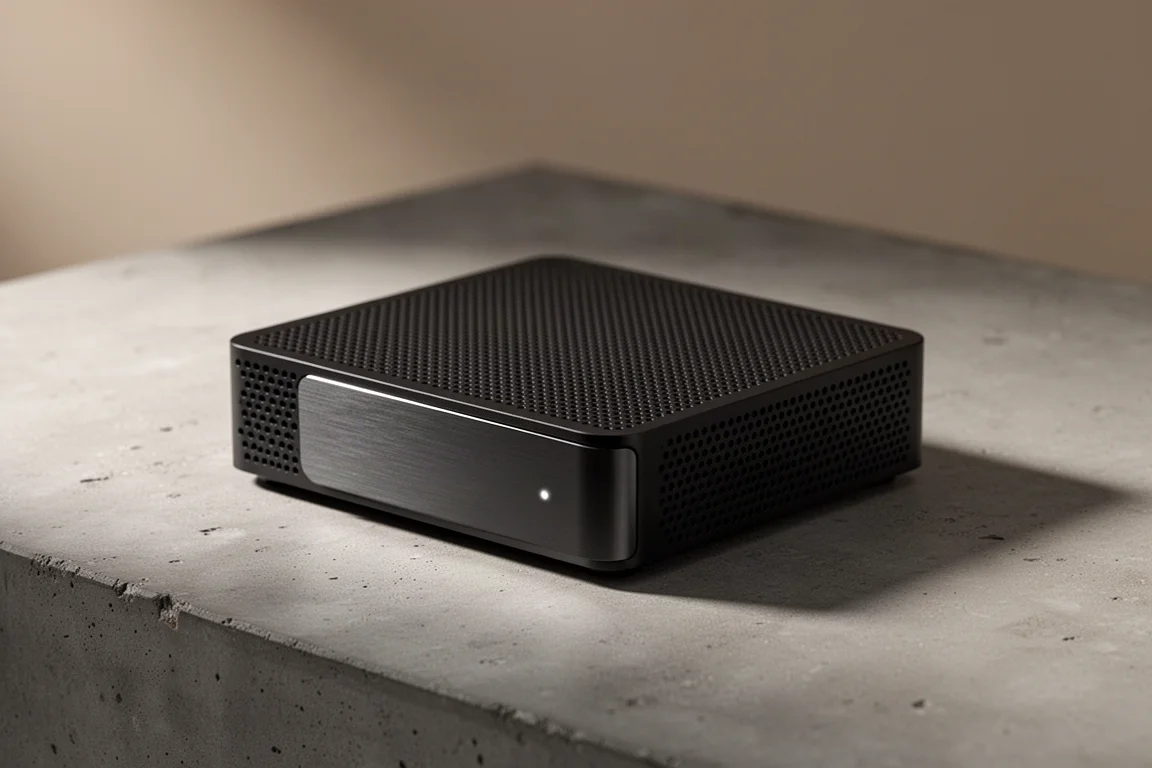
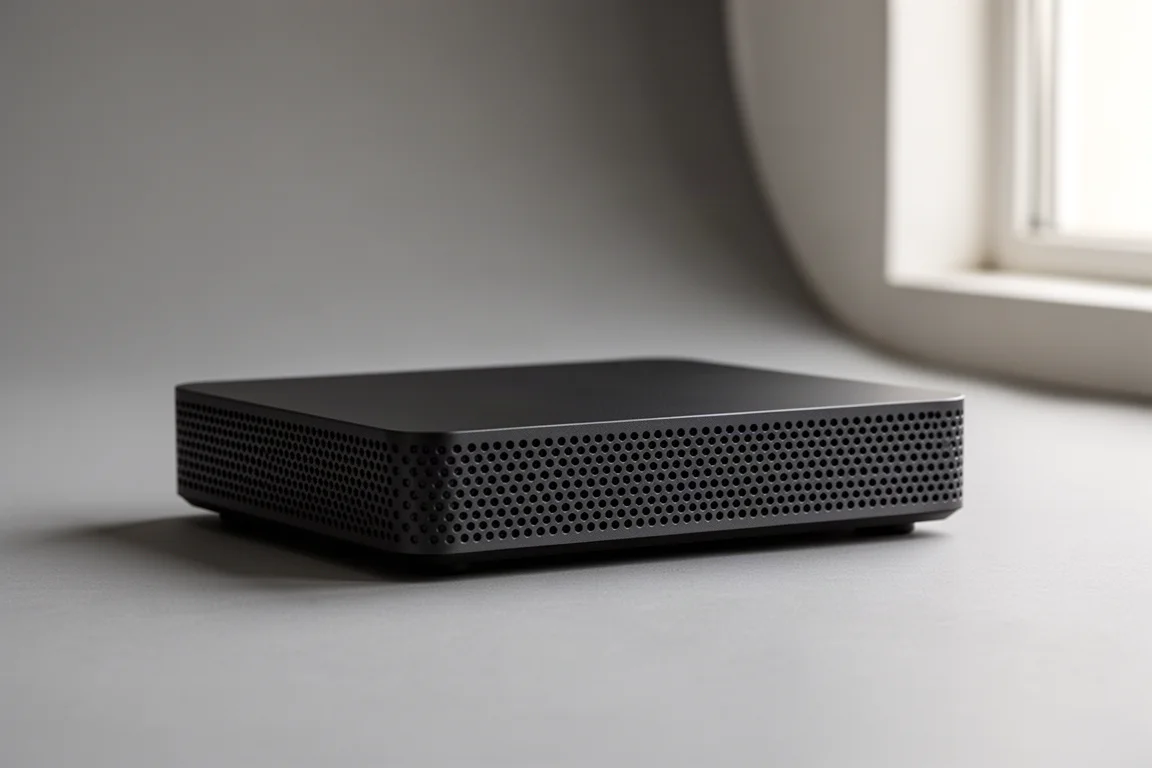
At $1,995 as of May 2025, the Strato M is the most affordable way into the system. It is an all-in-one unit with 480 GB of internal storage, enough for roughly five or six movies at a time, and it automatically deletes titles after you have watched them so new downloads can take their place. A gigabit Ethernet connection brings most movies down in minutes.
Dolby Vision is supported, along with lossless audio in Dolby Vision and DTS:X. The chassis is a compact perforated steel design measuring 6.4 inches wide and deep and just 1.1 inches tall. It can run as a standalone player, and adding a Terra server later unlocks the full poster wall interface and a library of hundreds of titles.
The one significant compromise is output. The Strato M can play 4K files but outputs everything at 2K 4:2:2. That output still looks better than a streamed 4K movie and lands roughly on par with a standard Blu-ray disc, with better color and a substantial audio improvement. On a very large screen, however, the resolution gap becomes more apparent. That makes the M a natural fit for secondary setups such as a bedroom or office with a smaller display, or for niche installations like a boat, RV or private aircraft, where the 2K and 4K difference is much harder to see.
Kaleidescape Strato E: The 4K Sweet Spot
The Strato E arrives at $2,995 as of May 2025, about $1,000 above the Strato M. It carries the same features, the same technology and the same chassis, with one meaningful upgrade: full 4K video output. For a media room or home theater built around a large screen, that single change is the one that matters most, and it is why the E is the logical starting point for a first Kaleidescape system in a main viewing room.
Storage remains in the same territory as the M, around five or six movies at a time, and in practice that is rarely a problem. Titles bought from the Kaleidescape store stay in your cloud library even after they are deleted from the unit, so they can be downloaded again whenever you want to watch them. On gigabit internet, most movies take roughly ten minutes to arrive, and downloads can be started from the companion app on a phone or computer when you are away from the system.
Kaleidescape Strato C: The Player-Only Option
The Strato C is priced at $2,995 as of May 2025 and shares much of the same feature set, with one omission: it does not support Dolby Vision, which is a smaller consideration in a projector-based room. It is the only model in the lineup without internal storage, so a Terra server is required to hold the library.
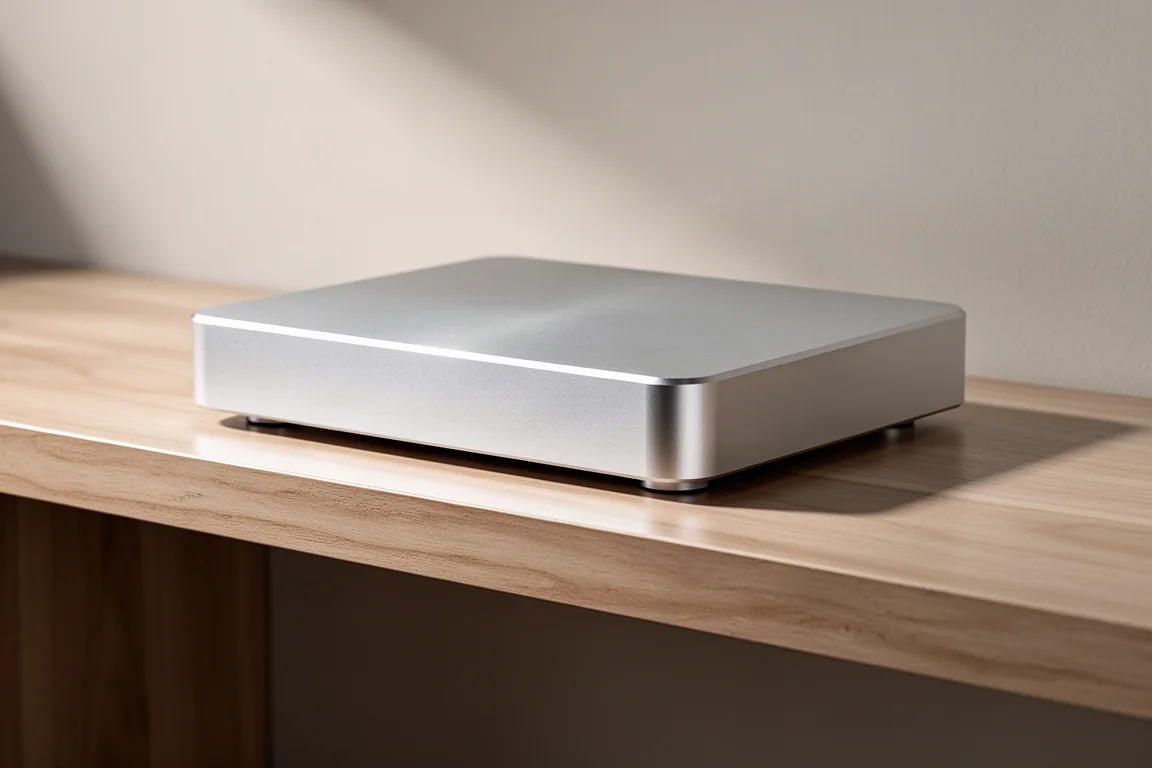
The hardware is a larger CNC aluminum chassis at 8 inches by 1.5 inches by 10 inches. It adds an HDMI 1.4 connection for secondary audio output and, as noted earlier, it is Co-Star compatible for owners of a legacy Kaleidescape server. For a traditional projector theater with a big library that should always be downloaded and ready, a Strato C paired with a Terra server is a strong configuration, and it allows additional players in other rooms to reach the same server later.
Kaleidescape Strato V: More Storage, Same Performance
The Strato V sits at $3,995 as of May 2025 and mirrors the Strato E features and technology while raising internal storage to 980 GB, enough for around ten downloaded movies. It pairs with Terra servers and is Co-Star compatible, and it uses the same chassis as the Strato C, finished in black rather than silver.
This is the model for someone who wants more than a handful of titles living on the player itself and the highest level of performance from a single unit, with the option of adding a server later. If the extra storage is not essential, the same money could instead go toward a Terra server paired with a Strato E.
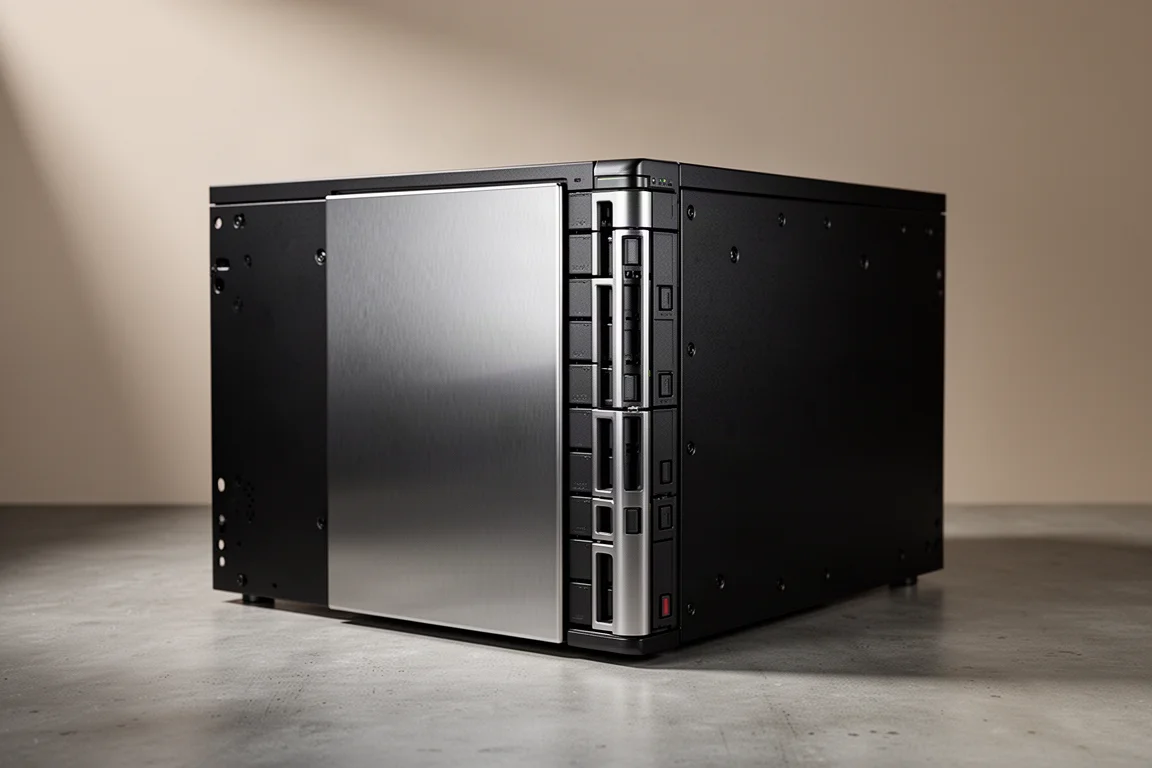
Kaleidescape Terra Server: Where the Library Lives
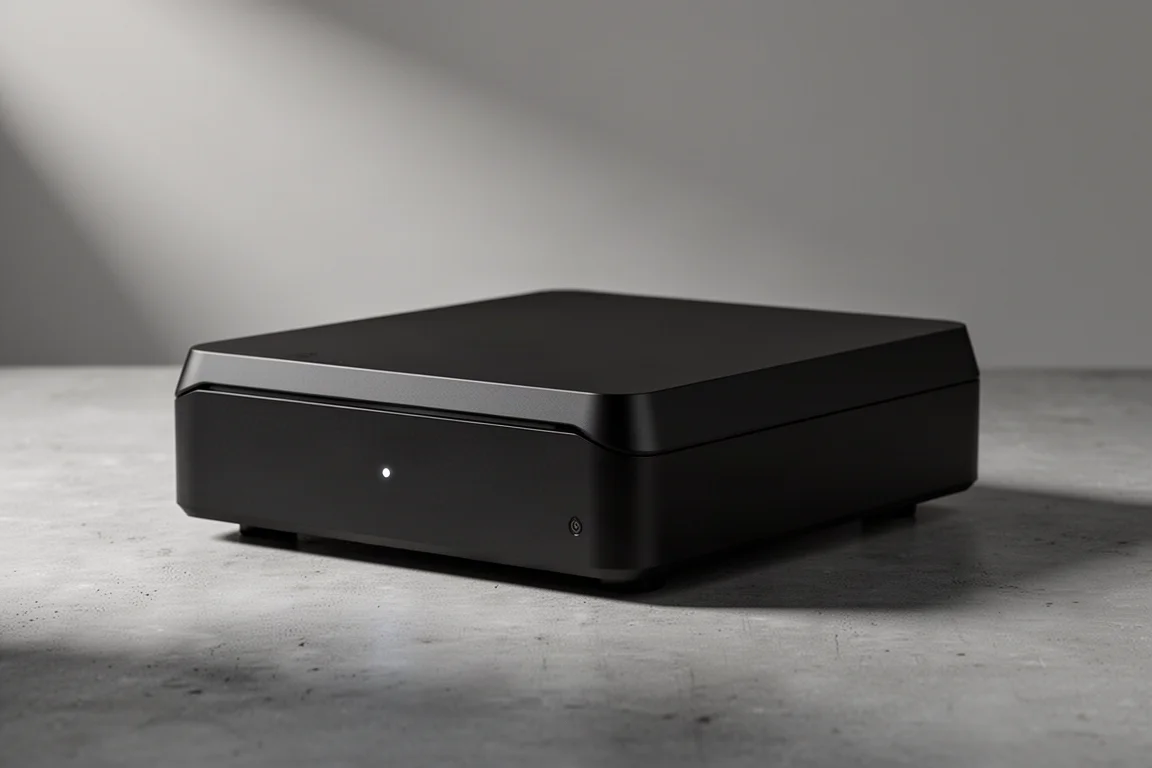
Terra servers are the storage half of a Kaleidescape system, and any Strato player in the lineup can access them. More than one server can be used in the same system if capacity runs out.
Hard drive models come in 8, 22, 48, 72 and 96 TB capacities, holding roughly 130, 350, 800, 1,200 and 1,600 4K movies respectively. Solid-state models come in 8, 31 and 123 TB, holding roughly 125, 500 and 2,000 4K movies. The solid-state versions download faster and cost more. All Terra units use enterprise-grade hardware built for continuous duty.
Adding a Terra also unlocks the full poster wall interface, which turns a large library into a visual, easy-to-browse collection, and it lets several Strato players around the home share the same downloaded titles.
Disc-to-Digital Upgrades and Multi-System Flexibility
Owners with existing Blu-ray and DVD collections can convert them through the Kaleidescape disc-to-digital program. Connecting an inexpensive Blu-ray reader to the system verifies disc ownership in roughly 20 seconds per disc, after which each title can be upgraded to a 4K version with current surround formats. Upgrade pricing typically falls between $5 and $25, with most titles landing in the $5 to $10 range, though some studios charge higher premiums.
Content can also follow you between homes. Up to five systems in different locations can hold the same content, so a second system can be registered under the same account without repurchasing anything. For titles you do not own, the Kaleidescape movie store offers rentals at around $8 that arrive as a full download with 30 days to watch, or a permanent purchase for roughly the price of a 4K Blu-ray copy.
The scripting feature is a smaller extra that tends to get used more than expected. Any segment from one second up to an entire movie can be saved as a scene, and scenes can be arranged into playlists. Many movies already include tagged scenes on the main page, which makes it easy to assemble a reel of demonstration clips before a feature starts.
Buying Advice: Which Kaleidescape Model Fits Your Room
The display should drive the decision. A secondary room with a smaller screen is where the Strato M makes the most sense, since its 2K output is difficult to distinguish there and the price of entry is the lowest in the range. A main media room or home theater with a large screen is where full 4K output earns its keep, and that points to the Strato E as the default choice for a first system.
For a projector-based theater with a substantial library, a Strato C plus a Terra server keeps everything downloaded and available, and it leaves room to add players in other rooms later. The Strato V suits buyers who want roughly ten titles stored on the player itself along with full 4K output, while anyone planning a large collection across several rooms should put budget toward a Terra server first.
If only one purchase is possible right now, the Strato E covers the widest range of main-room setups, and a Terra server can be added whenever the library outgrows the internal storage on the player.
Conclusion
Kaleidescape systems represent a real investment, and the lineup rewards matching the hardware to the room rather than buying the most expensive option by default. The Strato M keeps costs down for smaller displays, the Strato E adds the 4K output that large screens benefit from, the Strato C and Terra combination serves projector theaters with big libraries, and the Strato V splits the difference with more onboard storage. Buyers who start with the room, the screen size and the size of the collection they plan to build will end up with the right system for their theater.
Further reading
Related Reviews
Home Theater
Anthem AVM 90 Review: A 15.4-Channel Flagship Preamp Processor
A close look at Anthem's flagship preamp processor, covering its dual ESS DAC architecture, 15.4-channel layout, ARC Genesis calibration and four independent subwoofer outputs.
Home Theater
Apple TV 4K With AirPods: A Best-Value Home Theater Setup
An Apple TV 4K paired with AirPods over Bluetooth makes a compact home theater setup for movies, spatial music and late-night viewing, and it can be assembled for as little as $300.
Home Theater
Arcam AVR15, AVR25, AVR35, and AVP45 Compared: Which AV Amplifier Fits Your System?
Four new Arcam home theater components share nine-channel amplification and Dirac Live, but differ in power, processing ceiling, and channel flexibility.