Winter Traction Aids
Kahtoola Winter Traction Guide: Microspike Ghost, Microspike, and Exospike Compared
A practical look at three Kahtoola winter traction aids, how they differ in weight, base construction, and terrain, and which one suits your winter.
Introduction
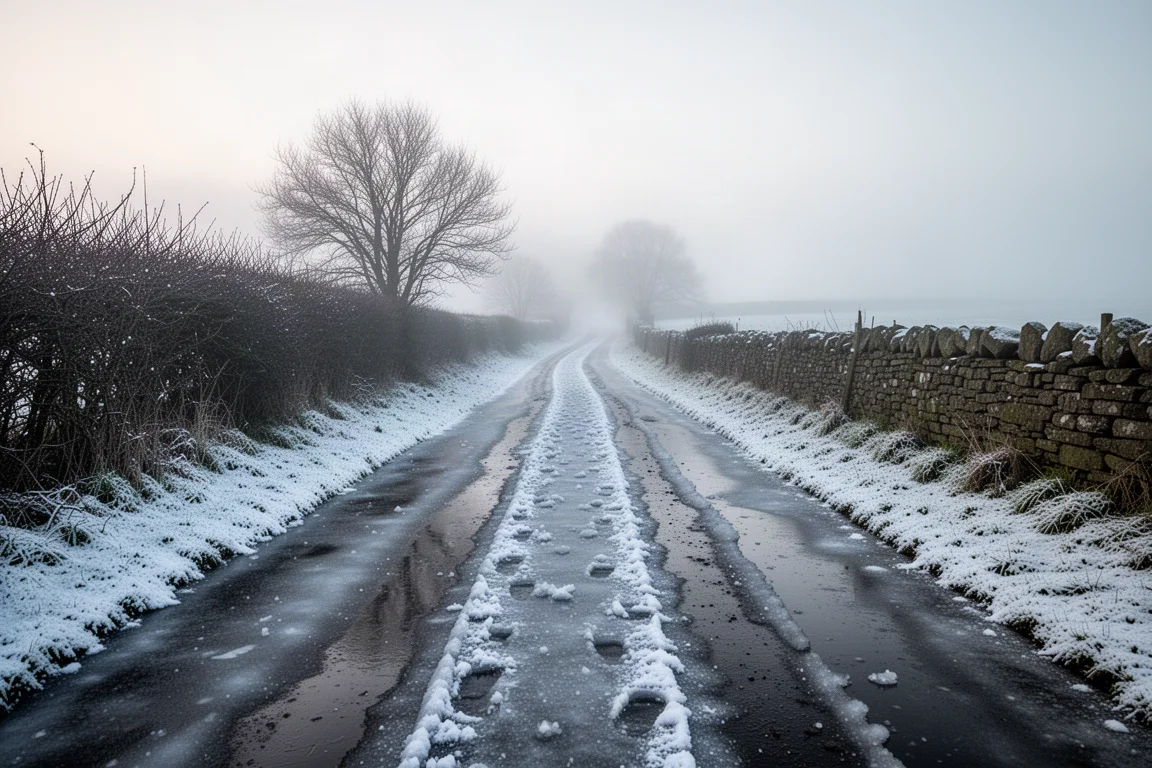
A morning of black ice is enough to make even a confident walker or runner rethink the route. Pavements turn slick, footpaths harden into something closer to a skating rink, and the simplest way to keep moving is a compact pair of traction aids that fit over the footwear you already own.
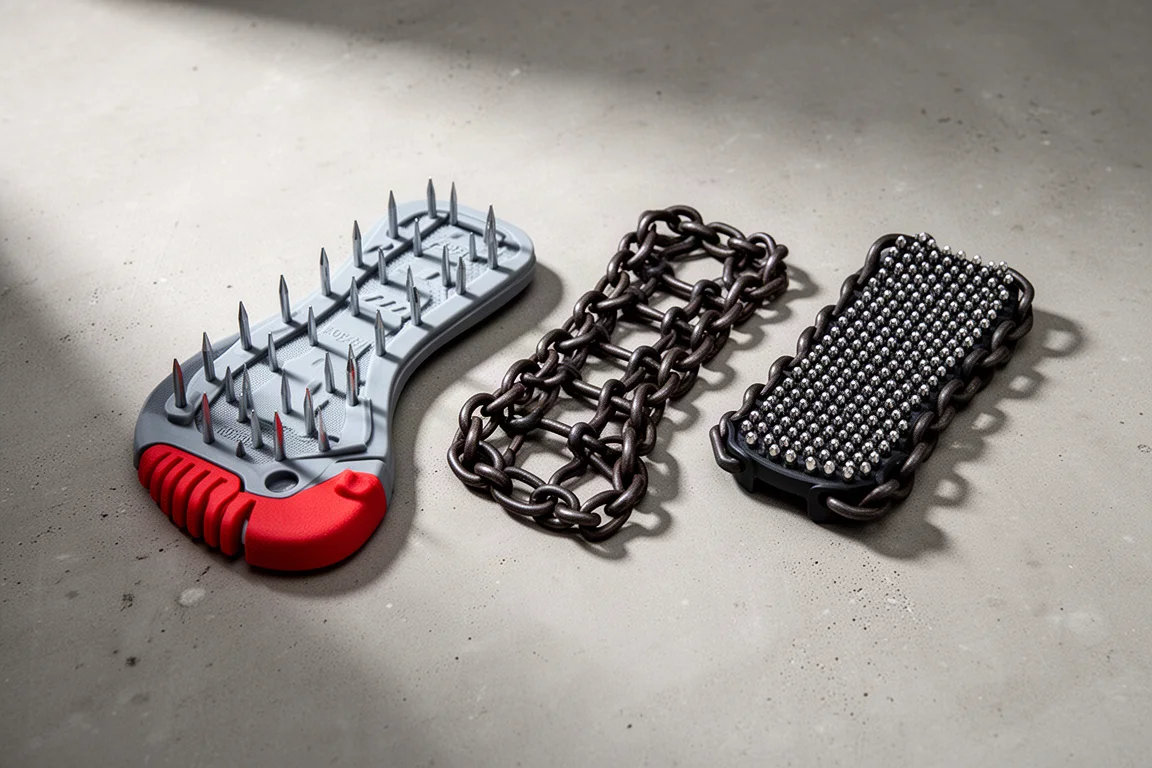
Kahtoola has built its winter range around exactly that idea, and the line-up now covers three quite different approaches: the Microspike Ghost, the long-running Microspike, and the Exospike. They look similar at a glance, but they are aimed at different conditions and different users. This guide walks through what separates them, so you can choose the pair that matches where and how you actually move in winter.
What to Look For in Winter Traction Aids
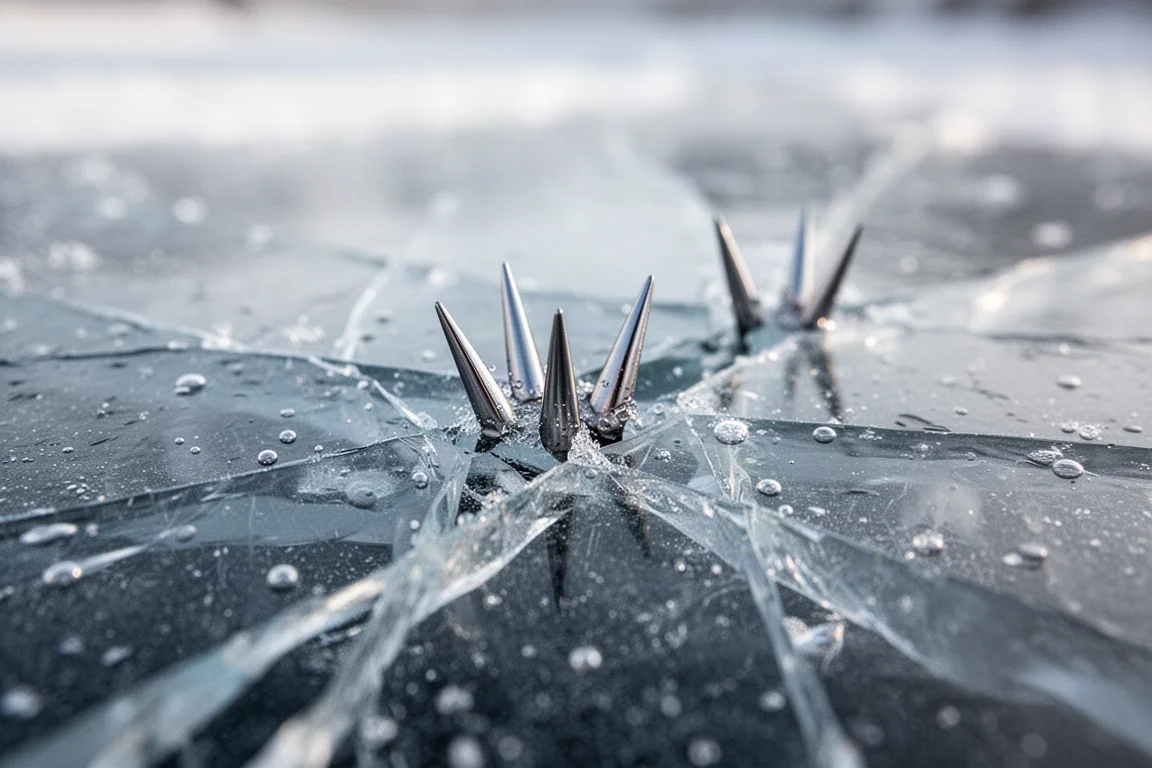
The first thing to check is the spike set. The Microspike Ghost and the Microspike both use 12 stainless steel spikes measuring 9 mm, which is enough bite for packed snow, frozen mud and hard ice without turning the device into a mountaineering tool.
Weight and packed size come next, particularly if the pair will spend most of its time in a rucksack or a jacket pocket rather than on your feet. Base construction matters too. Chains flex and rattle underfoot, while a moulded plate keeps the spikes steadier and quieter. Then look at the harness: it needs enough stretch to pull over a shoe or boot, and enough grip to stay put once it is on.
Durability and sizing round out the list. A long warranty on the base is a reasonable signal that the manufacturer expects the plate to survive regular winter use, and getting the size right keeps the spikes under the ball and heel of the foot instead of off to one side.
Kahtoola Microspike Ghost: Lightweight All-Round Traction
The Microspike Ghost is the newest take on the format, and weight is the headline. A medium pair weighs 193 grams, roughly 43 percent less than the chain-based Microspike. That difference is felt both in a pack and underfoot, especially on a light running shoe where a chunky add-on quickly cancels out the point of buying a nimble shoe in the first place.
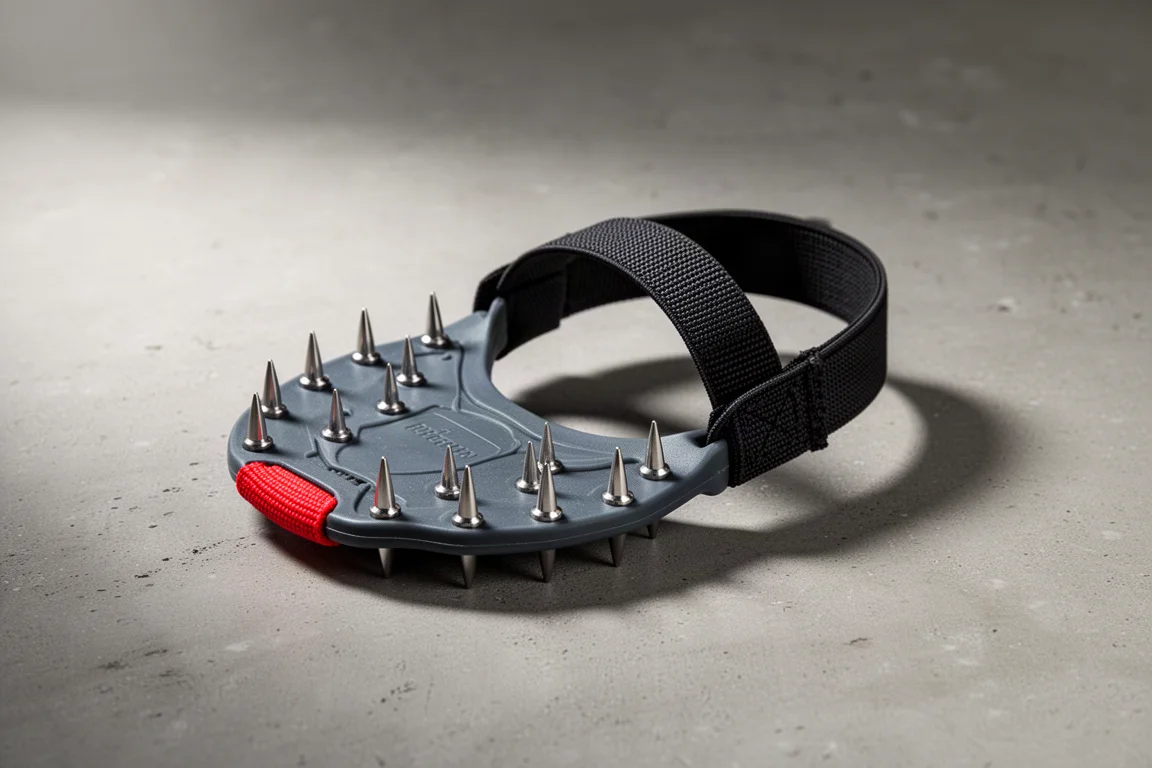
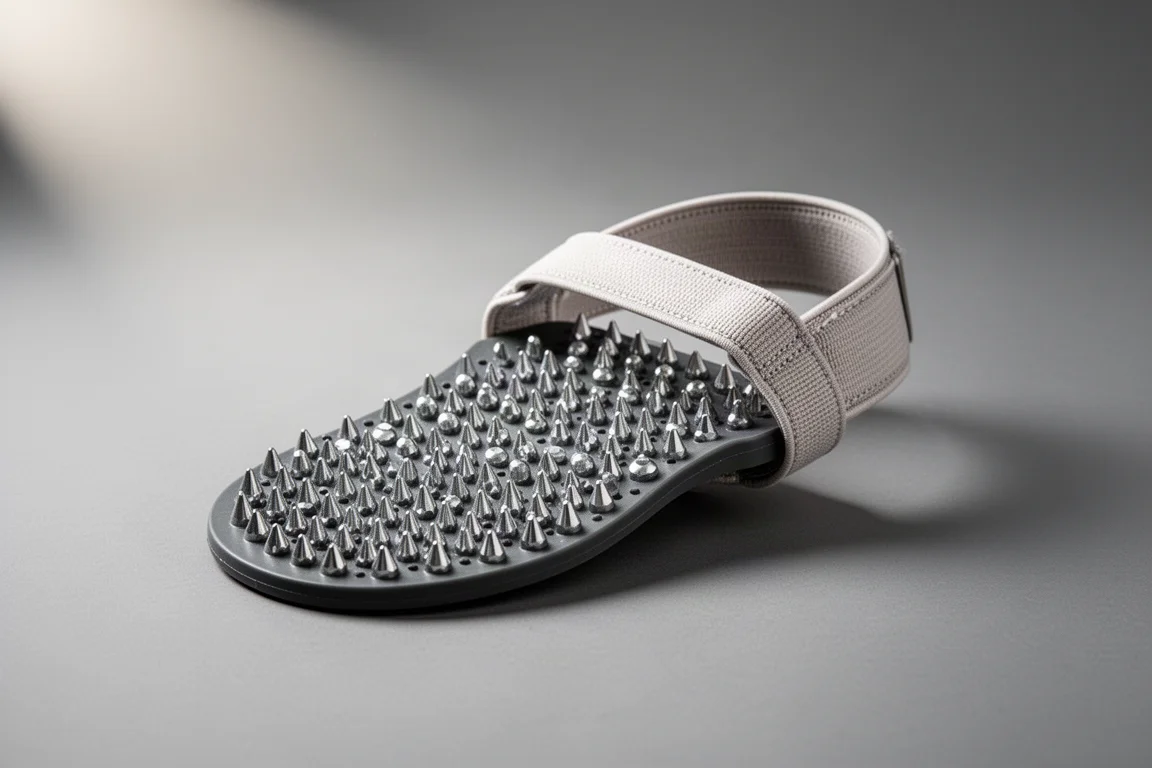
The base is a reinforced TPU plate rather than a chain matrix. TPU, or thermoplastic polyurethane, has very little stretch, so it holds its shape and keeps the 12 stainless steel 9 mm spikes consistently positioned, while still flexing enough to roll with a trainer. The harness that pulls over the footwear is TPR, thermoplastic rubber, chosen for the stretch needed to drag it on and clamp it down. Even with a stiff back and limited flexibility, it can be fitted while seated, which makes the difference between using them and leaving them in the bag.
A four year warranty covers the base. The front of the device is finished in red so the toe goes in the correct end first, removing the guesswork in poor light or driving weather. In use on mixed ground, rock followed by frozen mud followed by ice, the Ghost holds its bite without the noise and instability that chains can introduce at speed.
Kahtoola Microspike: The Chain-Based Alternative
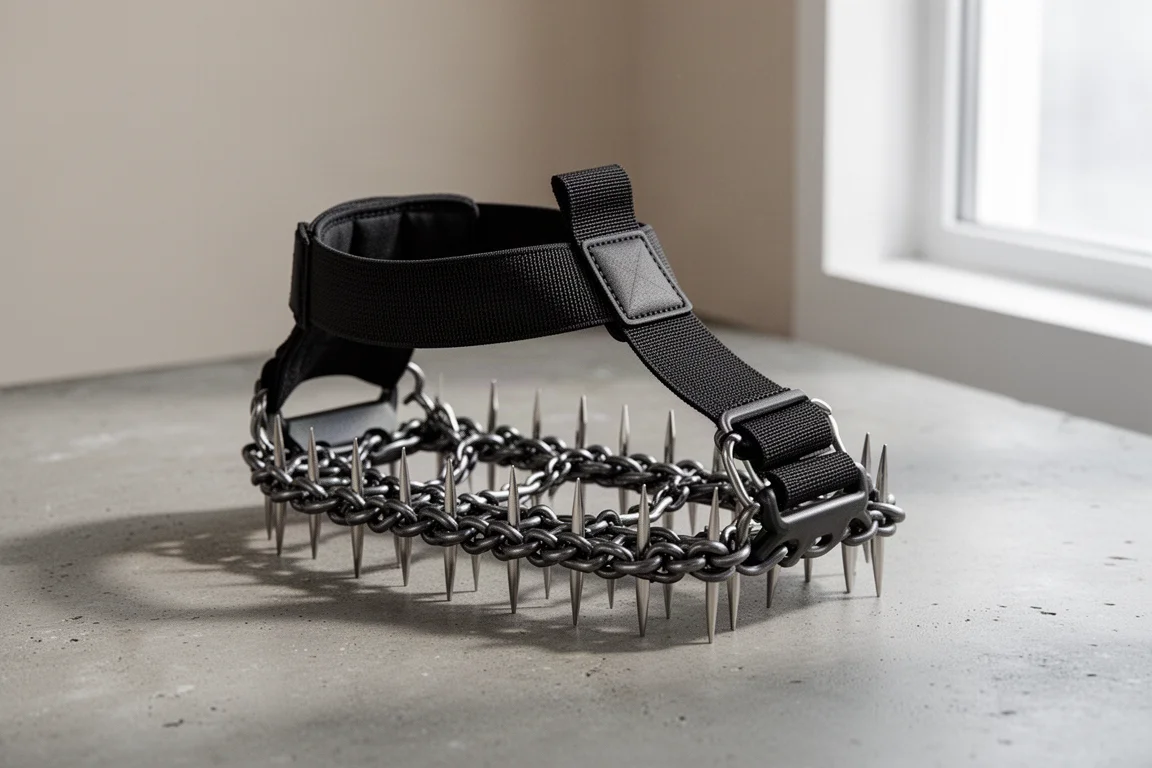
The Microspike is the model most winter users already know, and it is still the one that tends to disappear from shelves the moment black ice arrives. It uses a chain matrix underfoot instead of a moulded plate, and it fits trainers, walking boots and mountaineering boots alike.
The trade-offs are straightforward. It is heavier than the Ghost and bulkier to carry, which is why runners in particular have tended to leave it at home, and the chains are noisier underfoot. Against that, it costs less, and some users simply prefer the feel of chains on snow and ice.
One practical detail is worth knowing before you order. On earlier versions the colour ran all the way around the device, so it was not always obvious which end was the front when conditions were wild. Checking the orientation before you pull them on saves a minute of fumbling at the trailhead.
Kahtoola Exospike: Studs for Continuous Ice
The Exospike takes a different route entirely, replacing full spikes with a dense field of very small studs. On continuous, reliable ice it is an excellent match, and it has a strong following in places where icy ground lasts all season rather than appearing in patches.
That specialisation is also its limit. Where winter conditions alternate between ice, snow and bare ground, as they often do, the small studs do not bite as convincingly as full spikes, and the device becomes less useful than either Microspike. It is best understood as a specialist tool for a specific surface rather than a general winter companion.
Matching Traction to Terrain and Footwear
All three designs are built to go over footwear rather than replace it. The Microspike family in particular will sit on trainers, walking shoes, walking boots, mountaineering boots and even wellington boots, and some owners simply leave a pair on their wellies for the whole winter.
The one thing none of them is, is a climbing crampon. There is no front point, so there is nothing to kick into a snow slope, and the platform is not rigid enough for steep technical ground. What they do is make ordinary walking and running on snow and ice far more secure, which covers a surprising amount of a winter day out.
That distinction is more useful than it first sounds. On a winter climbing day, the walk in and out is often the iciest part of the route, and full crampons are miserable to walk in. A light pair carried in the pack can be swapped on for the descent and the trudge back to the car, which is quicker and far less nerve-racking than picking your way down in rigid spikes.
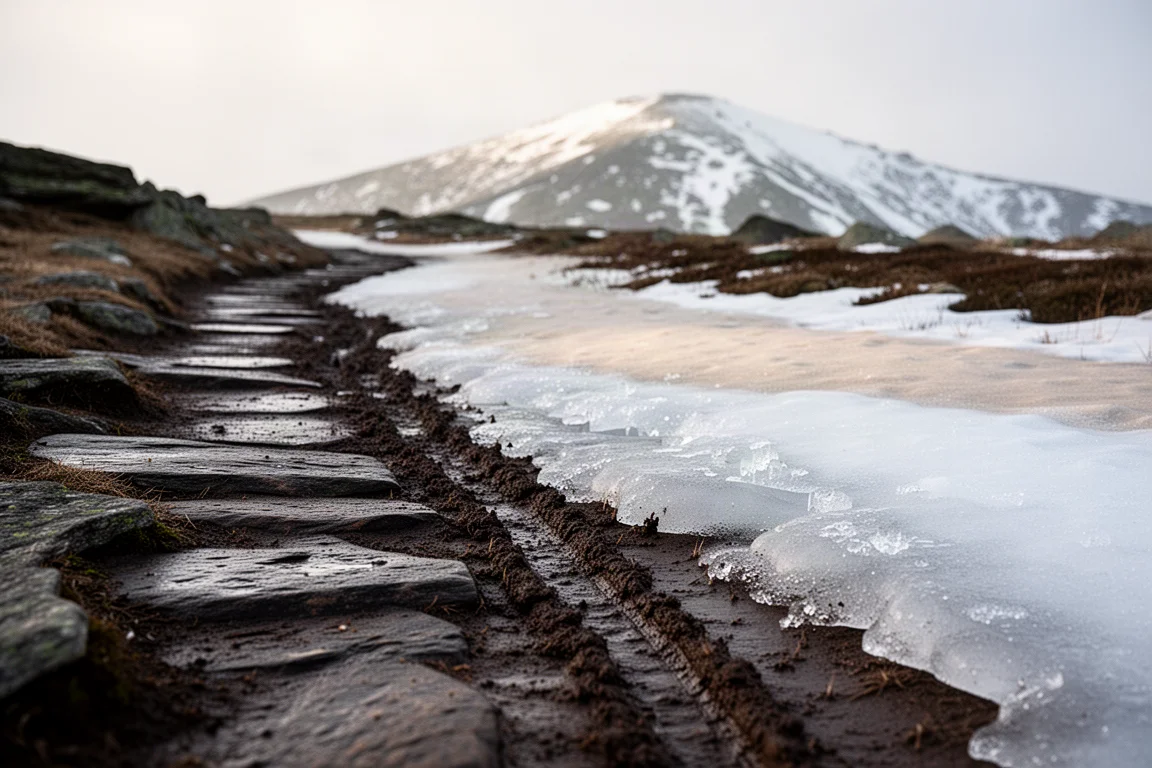
Mixed ground is where the lighter Ghost stands out most. Rock, frozen mud and ice in quick succession can all be handled without stopping to change footwear or adjust anything, and the durability of the base means you do not spend the walk worrying about damaging the spikes.
Sizing and Fit Notes
These devices are sold in sizes, so check the chart or try a pair before ordering. As a reference point, a UK 11 or EU 46 foot sits in an XL.
Fitting is quick once the size is right. The stretch harness pulls over the shoe and clamps in place in seconds, which matters when you are standing at the edge of an icy patch deciding whether the effort is worth it. Because they pack down small, a pair can live in a back pocket or at the bottom of a rucksack without being noticed until you need it.
Buying Advice: Which Kahtoola Traction Aid Is Right for You
If you want a single pair that covers walking, running and mixed winter ground, the Microspike Ghost is the most versatile of the three. Its weight makes it easy to carry as insurance, and the TPU base keeps it stable and quiet across rock, frozen mud and ice.
If weight matters less than budget, or you simply prefer the feel of chains, the Microspike remains a sound choice. It fits the widest range of footwear and costs less, and for slower walking on established paths the extra grams are rarely a problem.
The Exospike is the narrowest option. It makes sense if you run or walk on sustained ice for most of the season, and much less sense where ice arrives in patches between snow and bare trail.
Whichever you choose, size it properly and treat it as walking and running equipment rather than climbing equipment. Bought for the right job, any of the three turns a nervous, slippy walk into an ordinary one.
Conclusion
The three Kahtoola options are not competing versions of the same product so much as three answers to three different winters. The Ghost covers the widest range of conditions and is the easiest to justify as a single purchase, the Microspike stays relevant on price and familiarity, and the Exospike earns its place only where the ice is dependable. Match the pair to the ground you actually walk on, and winter stops being a reason to stay indoors.
Further reading
Related Reviews

Backpacking Gear
Building a 10 lb Base Weight: An Ultralight Backpacking Gear List
A practical walkthrough of the ultralight pieces behind a 10 lb base weight, from a 765 g pack and a roomy one-person tent to a full camp chair and a dependable water filter.

Road Bikes
10 New Road Bikes Worth Watching: Aero, Titanium, Steel and Endurance Standouts
A practical roundup of 10 new road bikes, from aero flagships chasing single-watt gains to titanium, steel and endurance platforms built for real roads.
Bikepacking Gear
11 Bikepacking Essentials for Long-Distance Cycling
Eleven bikepacking essentials for long-distance cycling, from a steel gravel frame and a two-person tent to helmet lights, packable gloves, and a frame bag that puts weight in the right place.