Home Theater Audio
JTR Kaos 265, 465, and Kaos 12 Review: A 7.1 System Built for Real Rooms
A closer look at a 7.1 JTR Kaos installation: the compact 265, the larger 465, and the sealed Kaos 12 subwoofer, plus what the system asks of your amplifier and your room.
Introduction
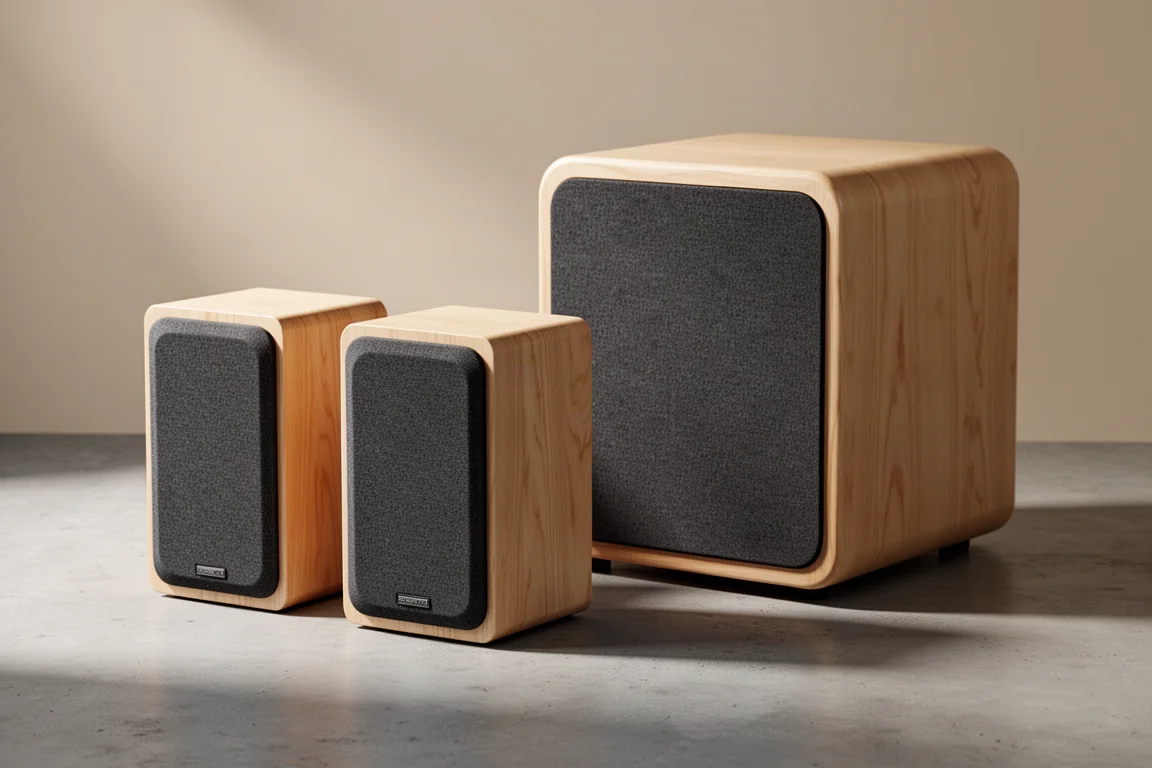
JTR designs its Kaos line for listeners who want serious dynamic capability without converting a spare room into a dedicated theater. The system examined here is a 7.1 arrangement installed in an ordinary family room: Kaos 265 speakers across the front stage, a larger Kaos 465 in the same family of designs, and a single sealed Kaos 12 subwoofer placed behind the seating.
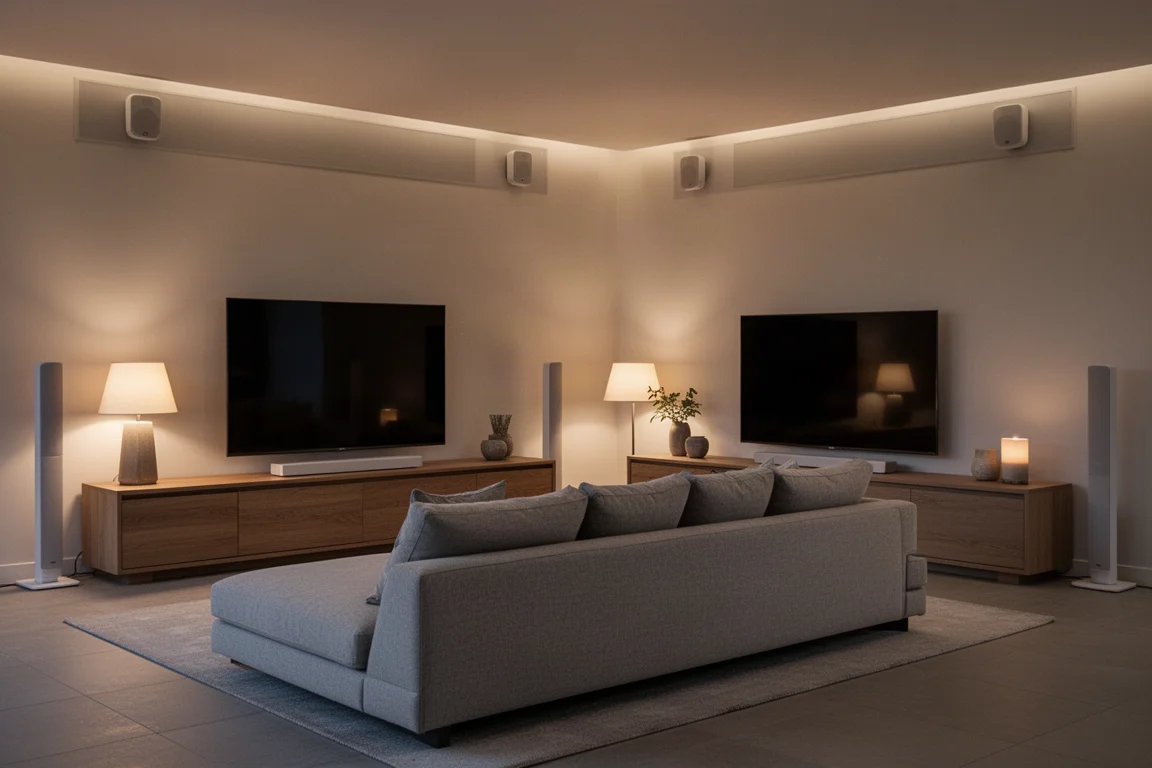
What makes the installation interesting is how little of it you notice. There are no visible cable runs, no subwoofer parked in a corner, and nothing in the room that reads as audio equipment until the system is switched on. After that, the room itself becomes the focal point.
Below is a breakdown of each product in the system, what it is designed to do, and how the pieces behave together in a space that also has to work as a living room.
How the JTR Kaos 7.1 System Was Set Up
The installation is built around concealment. Cable runs start behind the television console, pass into the wall, travel up into the crown molding, and then drop back down at each speaker position through small openings. The cable itself is standard 12-gauge speaker wire. Nothing is exposed, and nothing is routed across the floor or along a baseboard.
The front stage uses Kaos 265 speakers for the left, center, and right channels. One of them fit inside the television console once a drawer was removed, which kept the center channel out of the walking path entirely. Wall-mounted positions used the threaded keyhole inserts built into the cabinet, while another position relied on an angular bracket for the correct aiming angle.
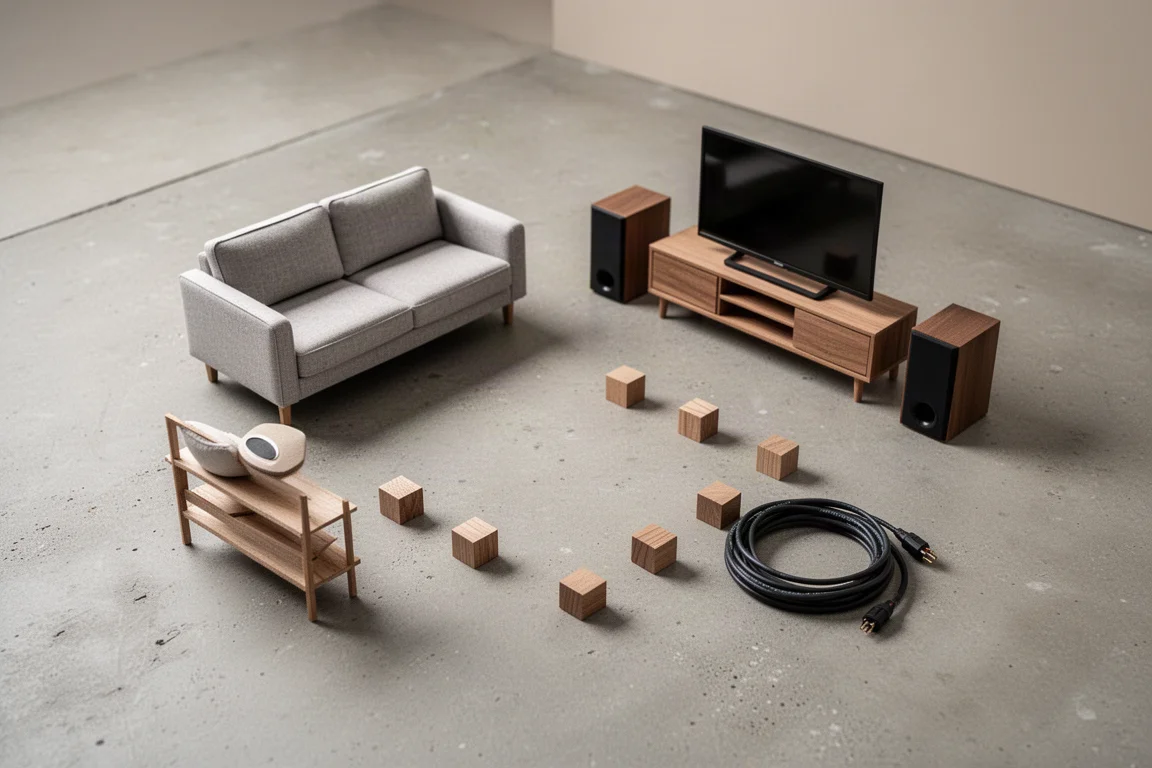
Subwoofer placement is the other decision that shapes the sound. Instead of sitting to the left or the right of the seating, the Kaos 12 sits directly behind the couch in a near-field position. That gives the low end a physical, tactile quality at moderate listening levels and avoids the imbalance of a single subwoofer anchored to one side of the room.
JTR 265: The Compact Speaker That Disappears Into the Room
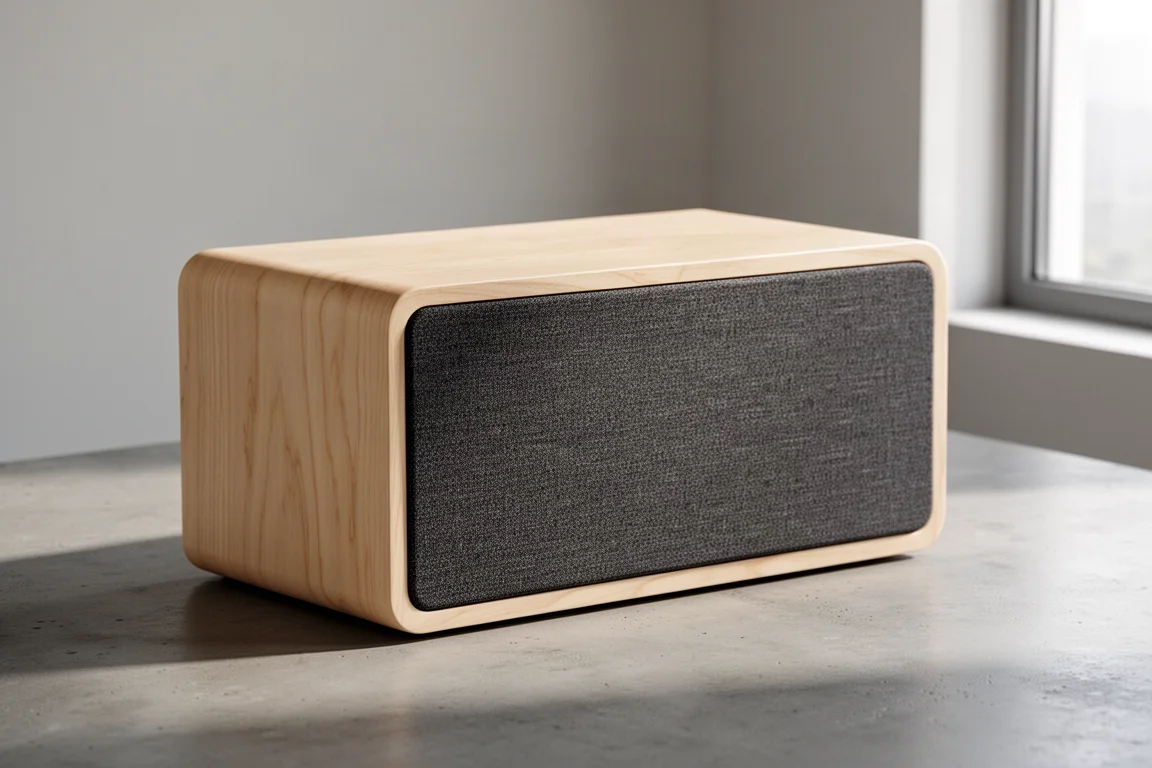
The 265 is a scaled version of the larger Kaos 465, sharing the same overall approach in a smaller cabinet. It uses one active driver and one passive driver, paired with a ring radiator tweeter loaded by an annular waveguide.
Depth is roughly 4.25 to 4.5 inches, which is what makes the 265 straightforward to wall mount. JTR also provides several mounting paths: threaded keyhole inserts allow a flush wall installation, and a bracket can be used where an angled position works better.
In this room the 265s handled the left, center, and right channels, and their strongest quality is integration. They do not draw attention to themselves, and the front stage holds together as a continuous whole rather than three separate boxes. For a room where the speakers need to blend into the furniture, that matters as much as raw output.
JTR 465: The Larger Speaker in the Line
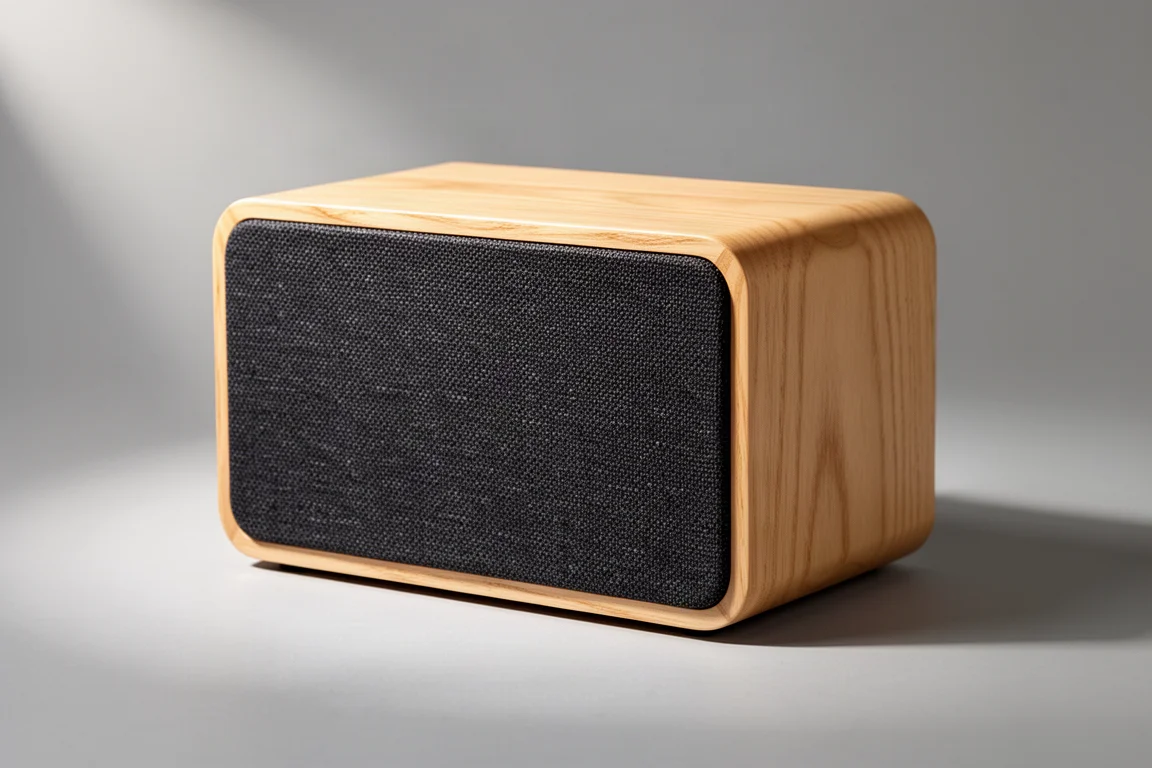
The 465 is the larger design that the 265 scales down from, and it follows the same formula: a compact, wall-friendly cabinet with the same tweeter and waveguide approach rather than a bulky floor-standing tower.
Efficiency is where the line earns its keep. The Kaos speakers are rated at 97 dB sensitivity with peaks reaching 123 dB, so they do not demand exotic amplification. This 7.1 system ran on a standard Denon AVR-3700H delivering roughly 80 to 90 watts per channel with all channels driven, and it still reached levels that were uncomfortable for listeners in the room. Pushing the full 123 dB peaks would call for more amplifier power, but everyday listening does not require it.
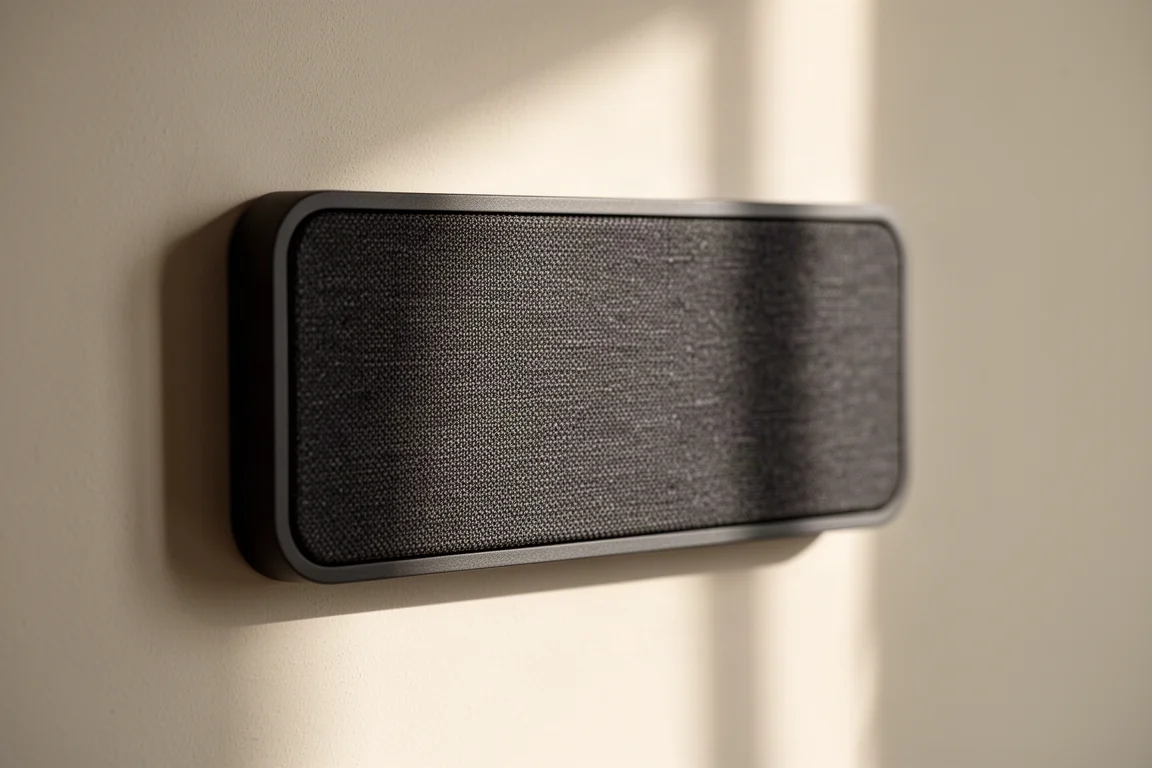
For a buyer choosing between the two models, the distinction is mostly about cabinet size and how much output headroom the room demands. The 465 is the larger option; the 265 exists for installations where a lower-profile speaker is the higher priority. Both are passive designs, so either way you supply the amplification.
JTR Kaos 12: A Sealed Subwoofer With Real Tactile Output
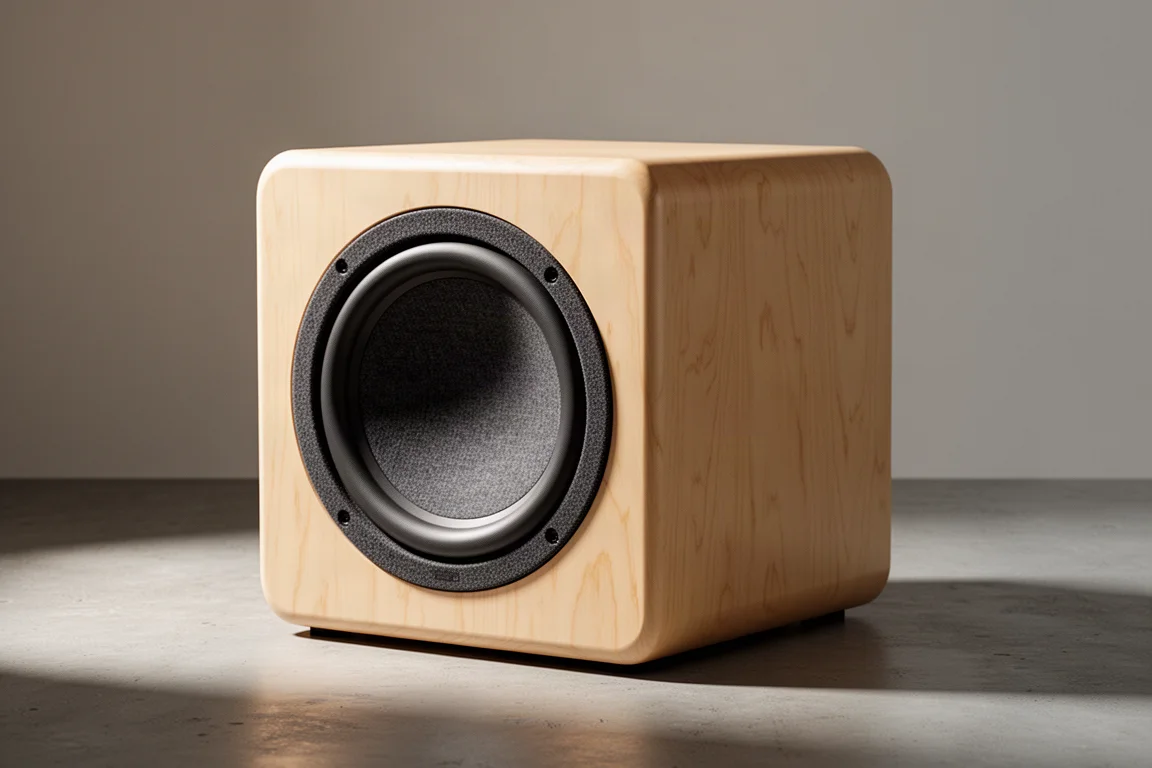
The Kaos 12 takes the driver technology from JTR’s larger subwoofers and scales it into a 12-inch sealed cabinet. The driver offers 36 mm of excursion and is driven by a 2 kW amplifier.
The sealed alignment is the reason the Kaos 12 stays controlled. Even with the bass level raised well above neutral, the low end remained linear rather than bloated, so the extra energy was something you wanted to keep rather than dial back. Positioned near field behind the seating, it produced the kind of chest-and-couch-level physicality usually associated with much larger subwoofers. Material with heavy low-frequency content, including electronic tracks and film scores, made that clear quickly.
A single Kaos 12 filled this room, which is unusual for a space of its size. A second system using two of them demonstrated the benefits of running a pair: more output, more even bass distribution across seating positions, and integration smooth enough that the system no longer sounded like small speakers supported by a subwoofer.
Power, Placement, and Everyday Use
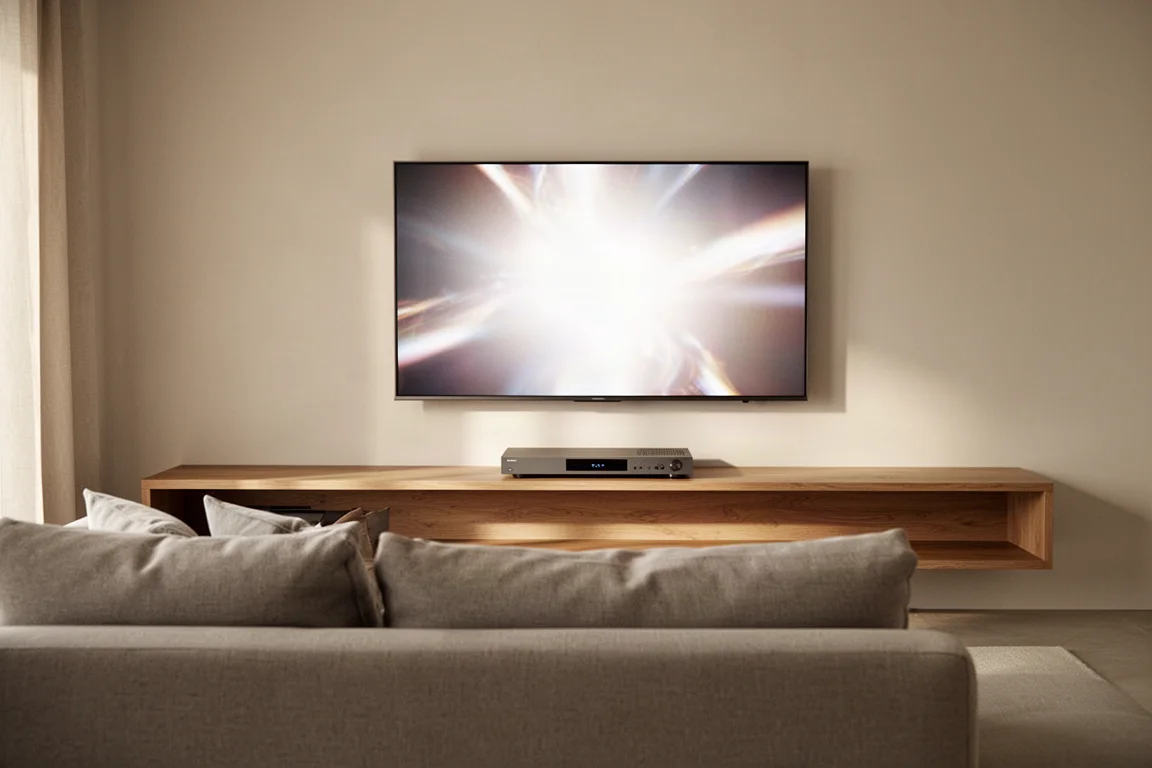
One of the most practical takeaways is how modest the supporting electronics can be. The 7.1 room ran on a mid-level Denon AVR-3700H, while the smaller two-subwoofer setup used a Denon AVR-3800. Content came from streaming apps through an Apple TV rather than physical discs, which kept the cost of the rest of the chain low.
The system’s daily role is ordinary: television, streaming services, and surround gaming. That is where the high sensitivity and the near-field subwoofer pay off, because the experience is convincing at volume levels that do not require a separate amplifier rack.
Placement decisions matter as much as power. A near-field subwoofer behind the seating works extremely well when a central position is available. Where it is not, a pair of subwoofers placed left and right will usually integrate more evenly than a single sub pushed to one side.
Build, Finish, and Living-Room Fit
The Kaos cabinets are finished in birch color options that read far better in person than they do in photographs, with radiused edges and magnetic grilles that keep the front baffles clean. The result is furniture-adjacent rather than industrial, which is the point of the line.
That design intent shows up in how the system was used. With the wiring hidden in the crown molding and the subwoofer behind the couch, the room stayed a room. Nothing about it suggested a dedicated theater, and that is exactly why the installation works in a shared space.
Buying Advice: Matching the System to Your Room
Start with the room rather than the spec sheet. If the front stage has to stay low profile, or if the speakers need to sit close to a wall, the 265 is the natural starting point. If you have more space and want the larger cabinet in the line, the 465 is the step up.
Subwoofer count is the next decision. A single Kaos 12 in a central near-field position can carry a room of this size, but two subs add output and smooth out bass response across multiple seats. If your only option is a corner or an off-center position, plan for two.
Amplification is less of a hurdle than the output figures suggest. High sensitivity means a mainstream receiver can drive the speakers to satisfying levels, and the sealed subwoofer handles its own power. Cable routing is worth planning early: 12-gauge wire and a path through walls or molding will do more for the finished result than any single component upgrade.
JTR sells the Kaos line direct to consumers, and the Kaos 12 sits at approximately $3,600 to $3,700.
If you are weighing a full system against a pair of large floor-standing speakers, the deciding factor is usually the room. An arrangement like this one wins when the space has to stay livable and the seating is close enough for a near-field subwoofer to do its work.
Conclusion
The JTR Kaos approach is coherent across all three products. The 265 keeps the front stage compact and easy to mount, the 465 provides the larger cabinet in the line, and the Kaos 12 delivers deep, controlled bass from a sealed box that can hide behind a couch. Together they reached levels that filled a family room without overwhelming it, and they did it on a mainstream receiver rather than a rack of separates. For anyone who wants high-output home theater that still looks like a living room, this system makes a strong case.
Further reading
Related Reviews
Home Theater Audio
Best Center Channels for Home Theater: Six Designs and What Off-Axis Data Reveals
A practical guide to center channel design, covering six speaker options, why off-axis response matters, and how to choose for your seating layout.
Home Theater Audio
Dolby Surround vs Auro-Matic vs DTS:X: Comparing Three Upmixers for Two-Channel Music
A practical comparison of the Dolby Surround Upmixer, Auro-Matic and the DTS:X upmixer, covering how each one treats two-channel music, the settings that change the result, and the trade-offs to weigh before you commit.
Home Theater Audio
Dolby Surround vs DTS Neural:X vs Auro-Matic: Comparing 5.1 Music Upmixing
A practical comparison of Dolby Surround Upmixer, DTS Neural:X and Auro-3D Auro-Matic on a lossless 5.1 music mix, with the strengths and trade-offs of each.