Home Theater Audio
Dolby Surround vs DTS Neural:X vs Auro-Matic: Comparing 5.1 Music Upmixing
A practical comparison of Dolby Surround Upmixer, DTS Neural:X and Auro-3D Auro-Matic on a lossless 5.1 music mix, with the strengths and trade-offs of each.
Introduction
Upmixing is the part of home theater processing that rarely gets the attention it deserves. A receiver or processor takes a finished mix, whether two-channel or 5.1, and spreads it across the speakers you actually own, including the height channels overhead. For anyone running an immersive layout, the choice of upmixer changes how a recording sits in the room.
This comparison focuses specifically on 5.1 music rather than film soundtracks, using a lossless DTS-HD Master Audio 5.1 Blu-ray mix from Steven Wilson, an artist known for carefully built surround presentations. The same material was played back through three upmixers on a reference 9.4.4 system: Dolby Surround Upmixer, DTS Neural:X and Auro-3D Auro-Matic.
Because the source was lossless rather than compressed, differences between the three processing modes were easier to isolate. The first pass listened only to the four height speakers and the subwoofer, which strips away the bed channels and makes it obvious how much content each upmixer sends overhead. A second pass ran the full speaker array.
How the Comparison Was Set Up
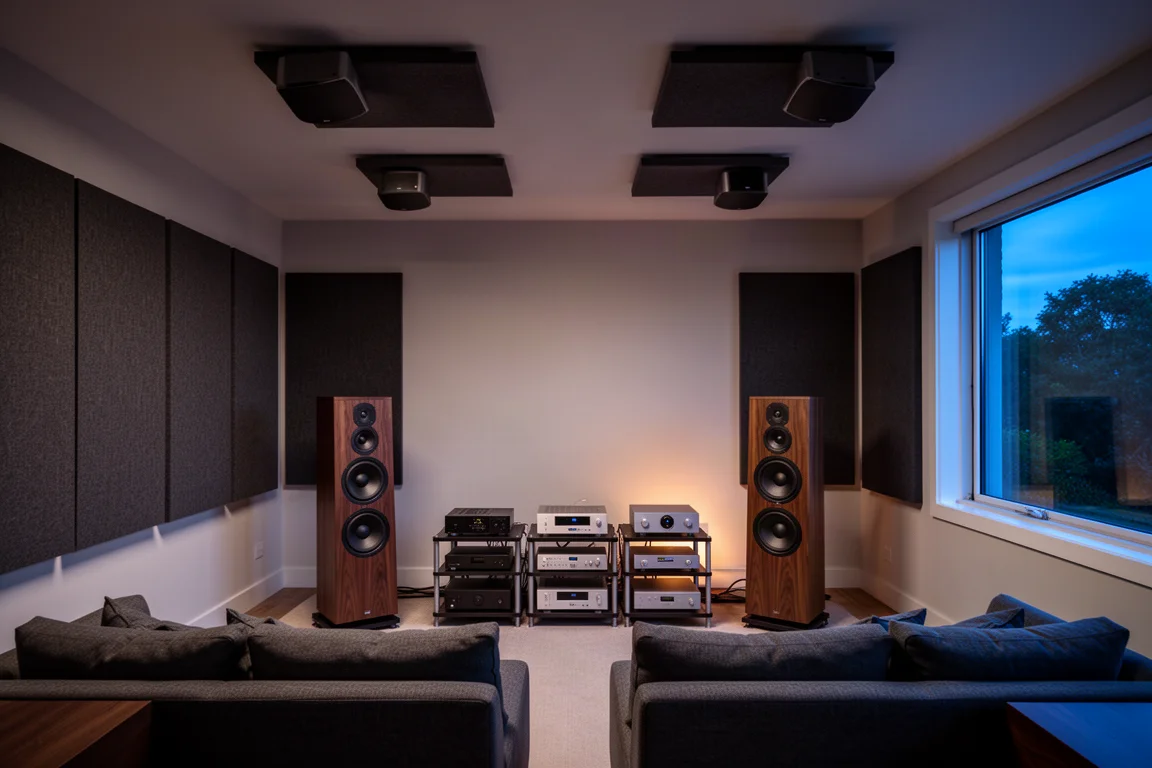
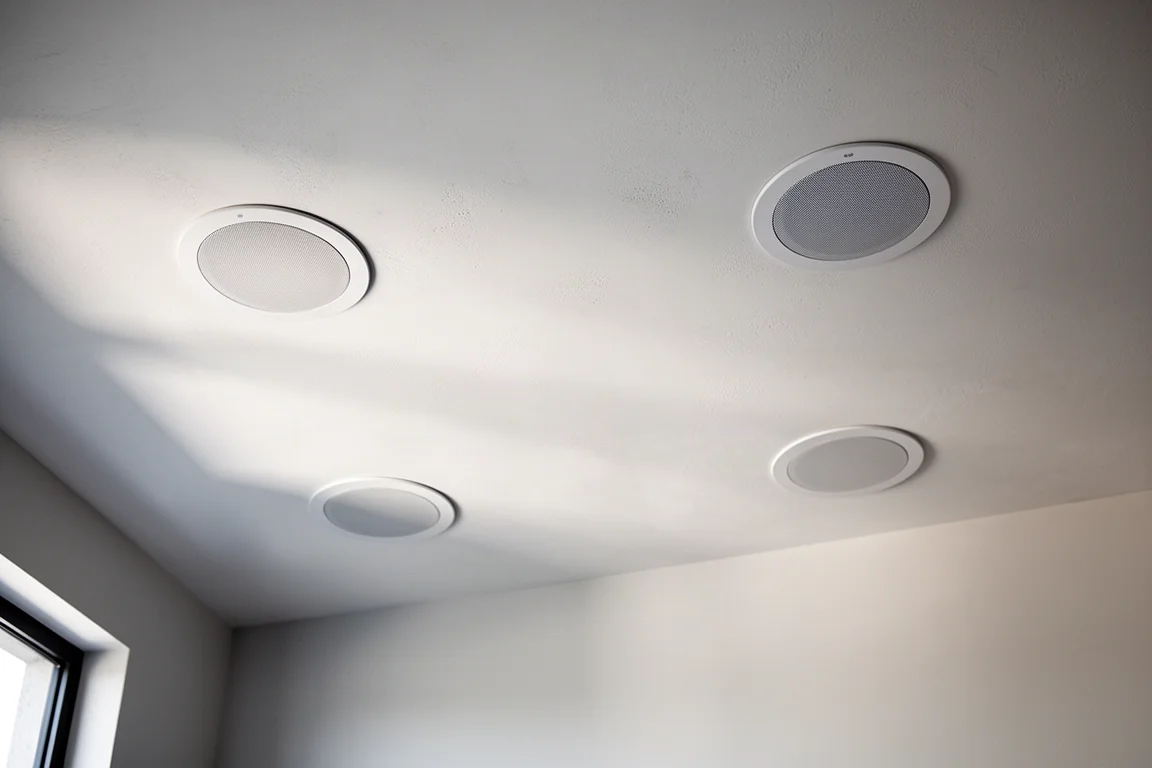
The room is a dedicated 25 by 20 foot home theater with a 9.4.4 layout: nine bed channels, four subwoofers and four height speakers, driven by a 24-channel immersive audio processor. The wide channels sit in the ceiling, angled toward the listening position and positioned wider apart than the main front speakers, which gives them enough separation to read as a distinct layer rather than a duplicate of the mains.
Speaker separation matters more than raw speaker count. When height channels sit only a short distance above the front speakers, it becomes difficult to tell which speaker is active, and the immersive effect collapses. In this room each layer is clearly identifiable, which makes it possible to judge what an upmixer is actually doing with the height channels. Reflective, upward-firing modules that bounce sound off the ceiling remain a compromise compared with dedicated overhead speakers, which is why a real height layer was used here.
Two of the three upmixers also expose user controls. Auro-Matic allows the strength of the effect to be adjusted, along with a choice of room size preset, and Dolby offers a center spread setting for two-channel listening. For the 5.1 comparison, Auro-Matic’s strength was raised slightly above its default, since the default setting sent less content to the tops than expected.
Dolby Surround Upmixer: Ambient and Spacious
With 5.1 music, the Dolby Surround Upmixer behaved more like an ambience generator than a content spreader. Almost no vocal content appeared in the height speakers, which kept the front stage and the center image exactly where the mix placed them. What did arrive overhead was atmospheric: low-level detail and ambient effects lifted into the upper layer, giving the presentation a sense of width rather than height.
The result was a spacious sound that read as a larger venue rather than a taller one. Of the three, this was the least intrusive treatment of the original mix, and the mode that kept attention on the front channels. Listeners who dislike hearing voices above their heads will find that behavior appealing.
Dolby also includes a center spread control for two-channel upmixing, which preserves the stereo image across the front left and right speakers instead of collapsing material into the center channel. That option is not offered by DTS Neural:X. The trade-off is that the Dolby Surround Upmixer does not support wide channels at all.
DTS Neural:X: Maximum Output and Forward Presence
DTS Neural:X is the most assertive of the three. Feeding a 5.1 lossless track through it produced heavy vocal content in the height speakers, to the point that the tops carried something close to the full performance rather than a supporting layer. Output from every speaker increased noticeably, and the mix felt bigger in every direction.
When the wide channels were switched on, which only Neural:X allows among these three formats, the effect grew larger again. Listeners who want the maximum amount of sound coming from every speaker at all times will find this the most generous mode of the group.
The trade-off is tonal balance. With 5.1 music the presentation became forward, and the additional height information competed with the front stage rather than supporting it. On a first listen that extra energy can feel impressive, but across a full album it can also feel like too much.
For two-channel listening the picture is less favorable, since Neural:X has no center spread control and tends to route material toward the center channel, which narrows the front stereo image. On 5.1 material, however, no artifacting was audible, and the processing held together even with every speaker active.
Auro-3D Auro-Matic: Adjustable and Discrete
Auro-Matic sat between the other two in terms of how much content it sent to the height speakers, closer to Neural:X than to Dolby but noticeably reduced. Its character was different: the presentation felt discrete and well defined, with a clear left-right stereo effect between the height speakers that gave the upper layer a sense of placement.
Tonally it was the softest of the three. High frequencies were tapered compared with Neural:X, and the overall result sounded less detailed, even muffled on some passages. That softening was not unpleasant, though. Several passages were easier to listen to through Auro-Matic than through the more aggressive modes, and the upmix never became distracting.
What sets Auro-Matic apart is adjustability. The strength of the effect can be dialed up or down, and a room size preset can be selected, which makes it possible to tune the amount of height content to the recording and the room rather than accepting a fixed behavior. For listeners who like to shape the result, that flexibility is the strongest argument for the format.
Wide Channels and Upmixer Support
Wide channels are the clearest dividing line between these formats. Only DTS Neural:X can drive them during upmixing; the Dolby Surround Upmixer and Auro-3D Auro-Matic do not support wide channels at all. Native immersive content can also use the wide layer, but for upmixed material the option belongs to Neural:X alone.
For listeners with a wide layer installed, that single fact may decide the question. Engaging the wides added output and a broader sense of scale, particularly on dense recordings where the front stage is already busy and the extra spread helps separate instruments.
If your layout stops at a conventional bed plus height channels, this consideration disappears entirely, and the decision comes down to tonal character and how much height content you want instead.
Which Upmixer Suits Which Room and Listener
All three upmixers performed well with 5.1 material, and none introduced audible artifacting. That is worth noting, because two-channel upmixing has been observed to produce artifacts with Dolby and Neural:X, while Auro-Matic did not. Lossless 5.1 sources appear to give all three formats an easier job.
Choosing between them comes down to what you want the height layer to do. Listeners who want atmosphere and nothing more will prefer Dolby. Listeners who want the greatest possible output from every speaker, and who have wide channels to feed, will prefer Neural:X. Listeners who want to shape the effect themselves, with a gentler tonal character, will prefer Auro-Matic.
It is also worth remembering that more speakers playing at once makes differences harder to hear, not easier. Isolating the height layer first, then running the full array, is a more reliable way to judge these modes than switching between them with everything already active.
Buying Advice
Upmixers are not sold separately; they arrive as part of the receiver or processor you buy, so the practical question is which formats your hardware supports and how freely it lets you combine them. Cross-mixing and upmixing across formats were once restricted, and the ability to run a third-party upmixer on a Dolby-encoded signal exists today because listeners made their case. It is worth confirming before you purchase.
Three checks are worth making. First, confirm that the processor supports the upmixer you want on the signal types you actually play, including lossless 5.1. Second, confirm wide channel support if you have a wide layer installed, since only one of these three formats can use it. Third, look for adjustable parameters, because the ability to tune strength and room size makes a bigger difference over a long listening session than any single default preset.
Finally, listen with material you know well. A familiar 5.1 album makes it obvious whether an upmixer is adding real information to the height layer or simply adding level, and whether the front stage survives the process intact.
Conclusion
The short version: all three upmixers are competent, and none of them is a bad choice. The Dolby Surround Upmixer is the most restrained and the most spacious, DTS Neural:X is the most energetic and the only one that can use wide channels, and Auro-3D Auro-Matic is the most tunable, with a softer tonal signature.
For 5.1 music specifically, the Dolby and Auro-Matic treatments were the easiest to live with across a full album, while Neural:X made a stronger first impression that wore thinner over time. That is a preference rather than a verdict, and your speaker layout will shape it as much as anything else.
If your system supports all three, you already own the best tool for the job. The interesting part is learning which one suits which recording.
Further reading
Related Reviews
Home Theater Audio
Best Center Channels for Home Theater: Six Designs and What Off-Axis Data Reveals
A practical guide to center channel design, covering six speaker options, why off-axis response matters, and how to choose for your seating layout.
Home Theater Audio
Dolby Surround vs Auro-Matic vs DTS:X: Comparing Three Upmixers for Two-Channel Music
A practical comparison of the Dolby Surround Upmixer, Auro-Matic and the DTS:X upmixer, covering how each one treats two-channel music, the settings that change the result, and the trade-offs to weigh before you commit.
Home Theater Audio
JTR Kaos 265, 465, and Kaos 12 Review: A 7.1 System Built for Real Rooms
A closer look at a 7.1 JTR Kaos installation: the compact 265, the larger 465, and the sealed Kaos 12 subwoofer, plus what the system asks of your amplifier and your room.