Home Theater Audio
Best Center Channels for Home Theater: Six Designs and What Off-Axis Data Reveals
A practical guide to center channel design, covering six speaker options, why off-axis response matters, and how to choose for your seating layout.
Introduction
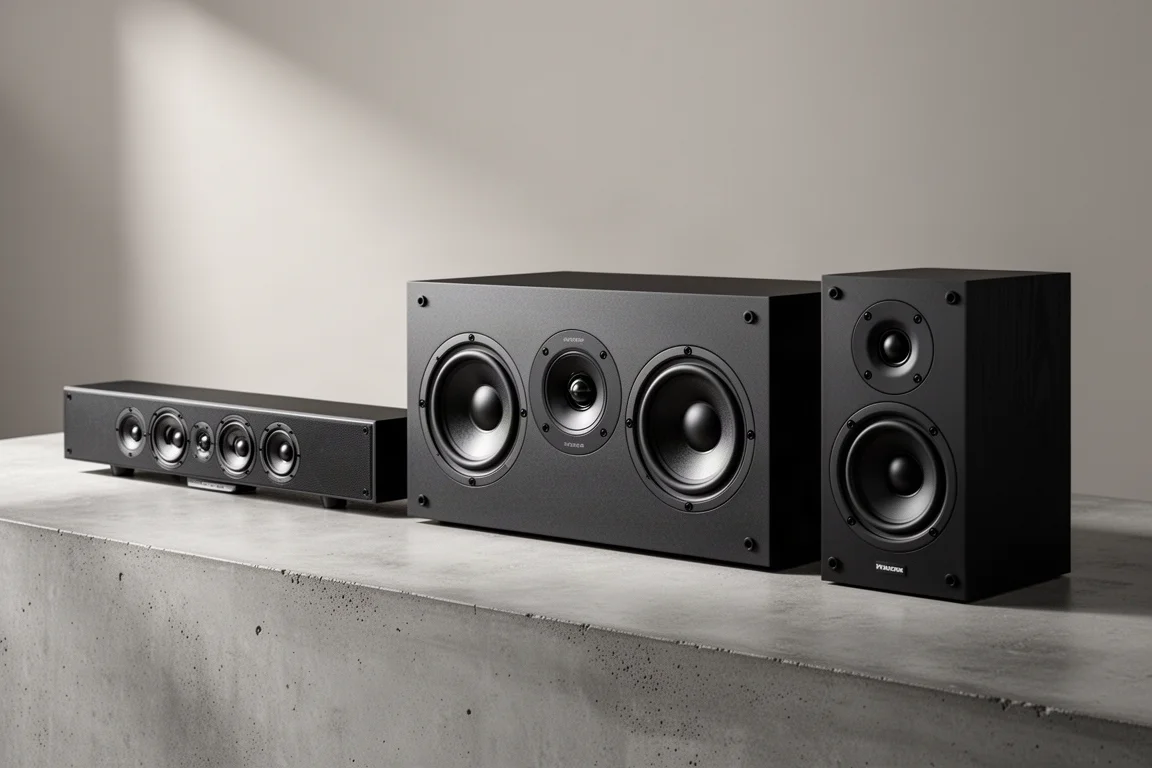
Most center channels exist to do one job: anchor dialogue at the screen. In practice, many of them do that job well for exactly one seat. The listener directly in front of the speaker hears clean, balanced dialogue, while everyone a few feet to the left or right hears something noticeably thinner, and sometimes with a hole right through the mid-range where speech lives.
This guide looks at six speaker options and what their horizontal radiation data shows across the seating window that matters most in a typical room, roughly 0 to 30 degrees off axis. It is not a ranking of overall sound quality. It is a design analysis, so you can look at a cabinet, understand how its drivers are arranged, and have a reasonable idea of who will hear what.
Why Center Channels Matter in a Home Theater
A center channel anchors dialogue near the screen instead of relying on a phantom center. Phantom center works acceptably for one listener in the sweet spot, but as soon as you move to the side, dialogue level drops off significantly.
For that job, a center channel needs linear, well balanced output from the lower mid-range up through the treble, without hot spots, peaks, or dips. It also needs that same balance radiating toward the walls as toward the listener, because what arrives at your ears is a combination of direct and reflected sound. When the reflected sound differs substantially from the direct sound, timbre and tonality suffer.
Broad horizontal dispersion is the second requirement. Treble naturally falls off as you move off axis, and that is expected. What is not acceptable is a pattern of deep dips and sharp peaks as you move sideways. The wider and more even the pattern, the further off center people can sit and still hear consistent dialogue.
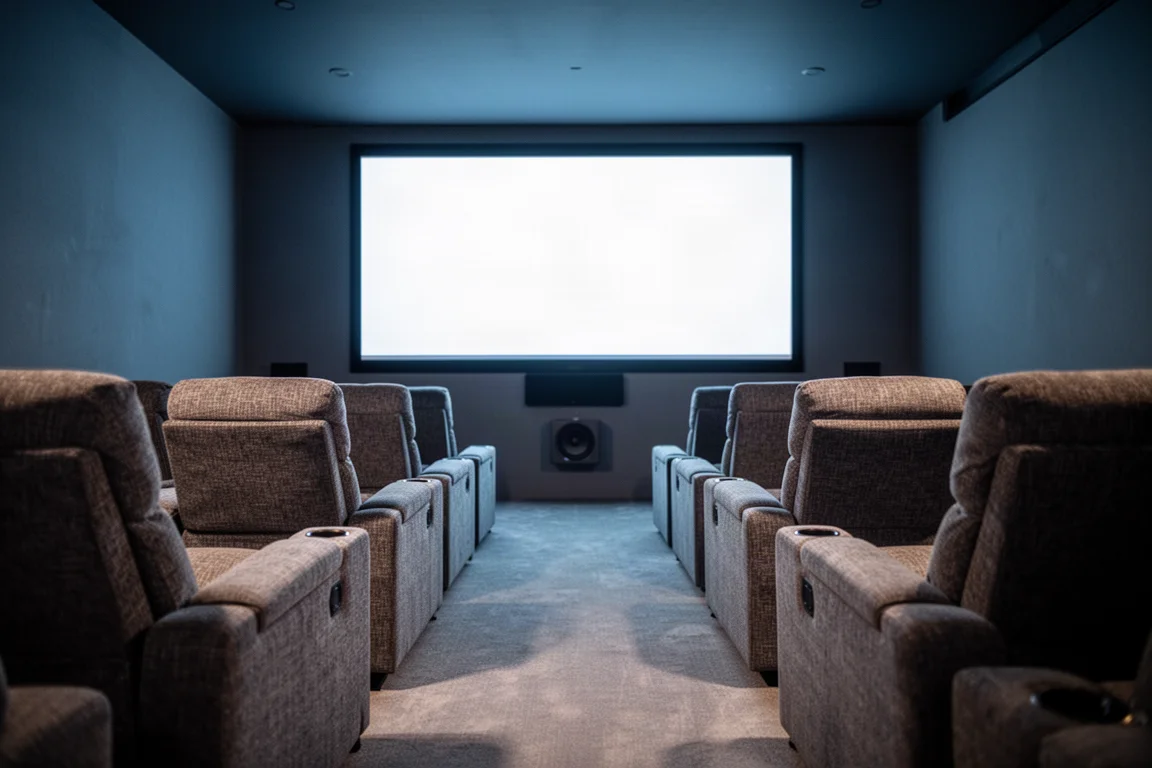
Seating distance shapes how much this matters. Most listeners sit somewhere between roughly six and twelve feet from the center channel. At the closer end, a seat three feet to the side can sit around 30 degrees off axis. Further back, that same three feet may only amount to about 15 degrees. The angle, not the physical distance, is what changes what you hear.
How These Speaker Designs Were Evaluated
The core metric here is horizontal radiation: how evenly a speaker distributes energy as you move sideways from the listening axis. The plots used in this guide show the speaker as the sound source with 0 degrees straight ahead and side seats marked at plus and minus 30 degrees. Dark red and orange indicate the highest output; yellow, green, and blue indicate progressively lower output. A speaker with a broad band of warm color across that window will sound consistent from seat to seat. A speaker that turns green by 20 degrees will not.
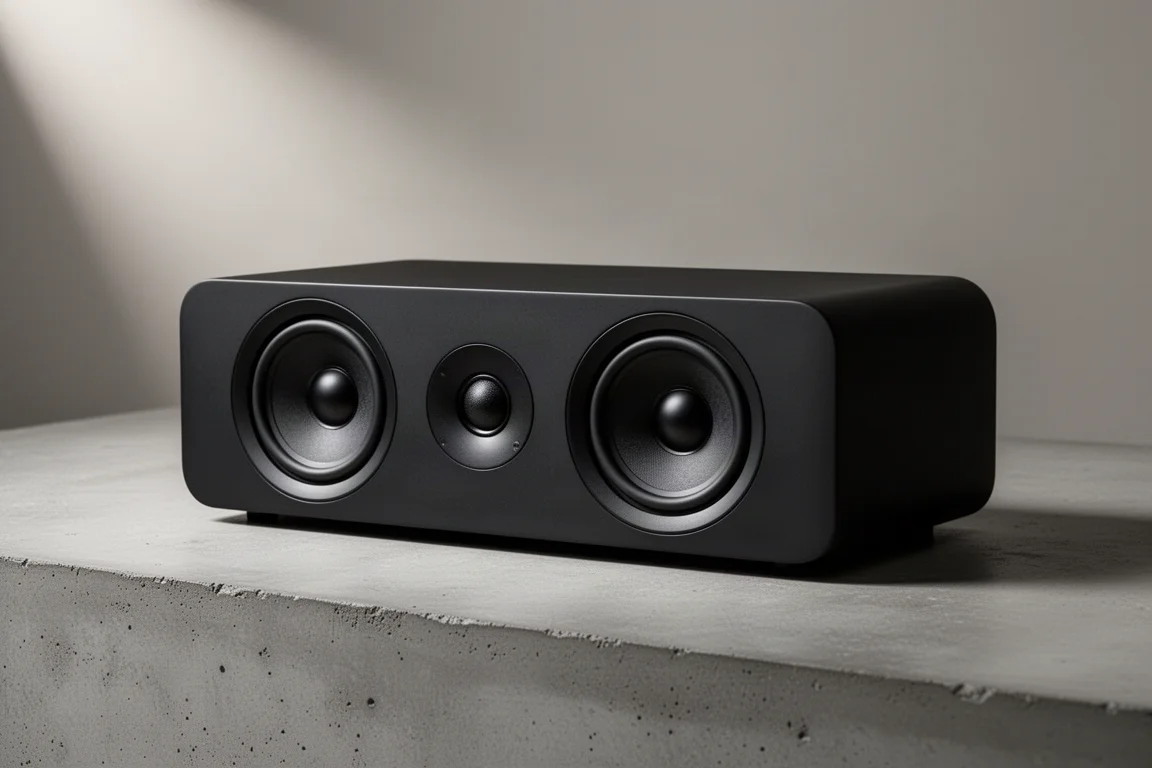
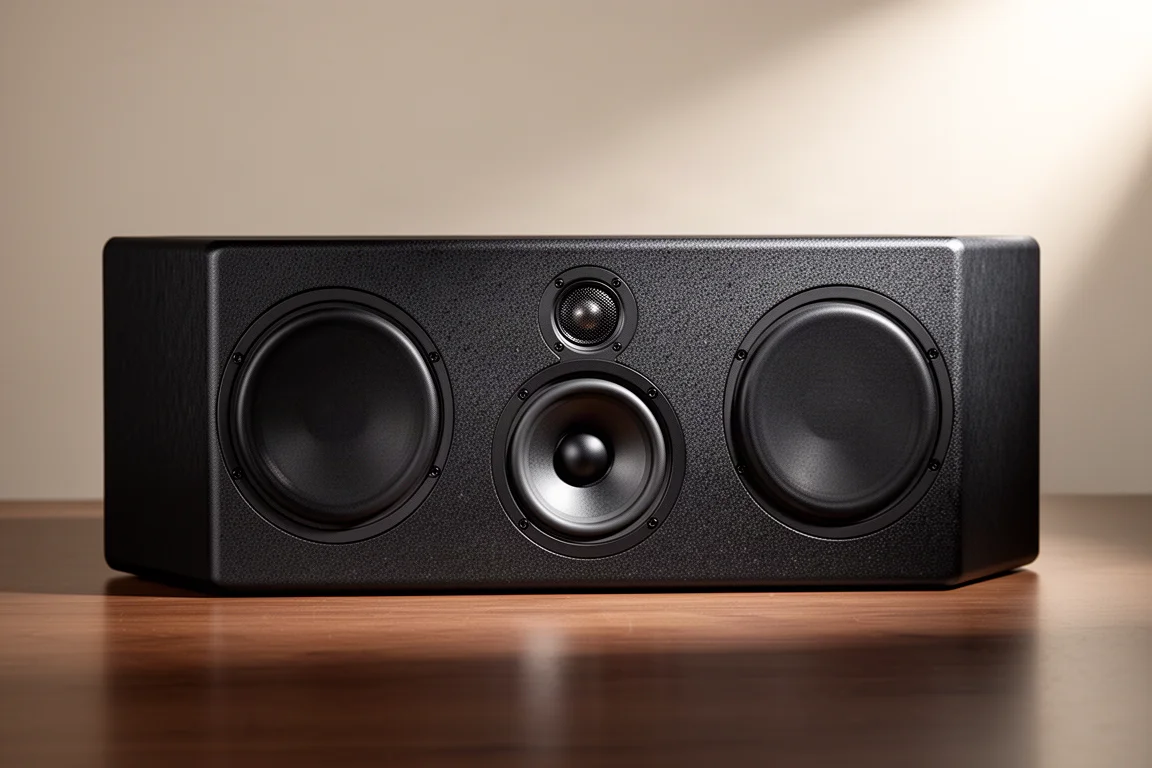
Driver layout explains most of what the plots show. The most common center channel is a horizontal MTM, a mid, tweeter, mid arrangement laid on its side. Other designs use a two and a half way layout with an extra pair of outer woofers overlapping part of the band, a coaxial driver with a woofer on each side, or a three way arrangement with separate woofers, mid-range drivers, and a tweeter.
The recurring problem is spacing. When two mid-range or mid-bass drivers sit far apart and are crossed over high, they stop summing as a single source and begin to interfere. A tweeter placed between them does not fix it, because the tweeter is crossed above the frequency where the two woofers start to misbehave. The result is comb filtering and lobing: deep nulls at specific angles and frequencies. Move 20 degrees off axis and you can land in a null at exactly the range that carries dialogue.
Anechoic measurements of this kind predict in-room behavior above roughly 500 Hz within a decibel or two at typical seated positions. That is why the data is worth reading, even though no two rooms behave identically.
Micca MB42X-C: Compact and Affordable
The MB42X-C is a horizontal MTM design in a small cabinet. On axis, and out to roughly 10 degrees, its sound pressure holds up well. Past that, the picture changes quickly. At about 20 degrees off axis there is a pronounced hole around 3.2 kHz, and by 30 degrees output has fallen from roughly 87 dB in the strongest region to around 75 to 78 dB. That is a 9 to 12 dB difference between the seat in front of the speaker and the seats to the sides.
The drop is concentrated in the upper mid-range and treble, from about 1.3 kHz to 5 kHz. Lower down, the difference is smaller but still present, closer to 6 dB. Direct listening comparisons between the on-axis seat and a seat 25 degrees off axis showed about a 5 dB difference in the lower treble above 1 kHz.
If one seat matters most in a small room and the budget is tight, this is a workable starting point. If a couch full of people shares the room, the side seats will hear a noticeably different presentation.
Polk XT35: Slim Design, Narrow Coverage
The XT35 is a low-profile center channel that uses several small mid-range drivers arrayed in a row. Its appeal is practical: it fits under a television where a taller cabinet simply will not.
That slim format comes with a familiar penalty. The overlapping drivers produce a null rather than a gradual, even falloff, so as you move off axis the level drops distinctly. The measurement shows a clear reduction in output at the side seats compared with the seat directly in front of the speaker.
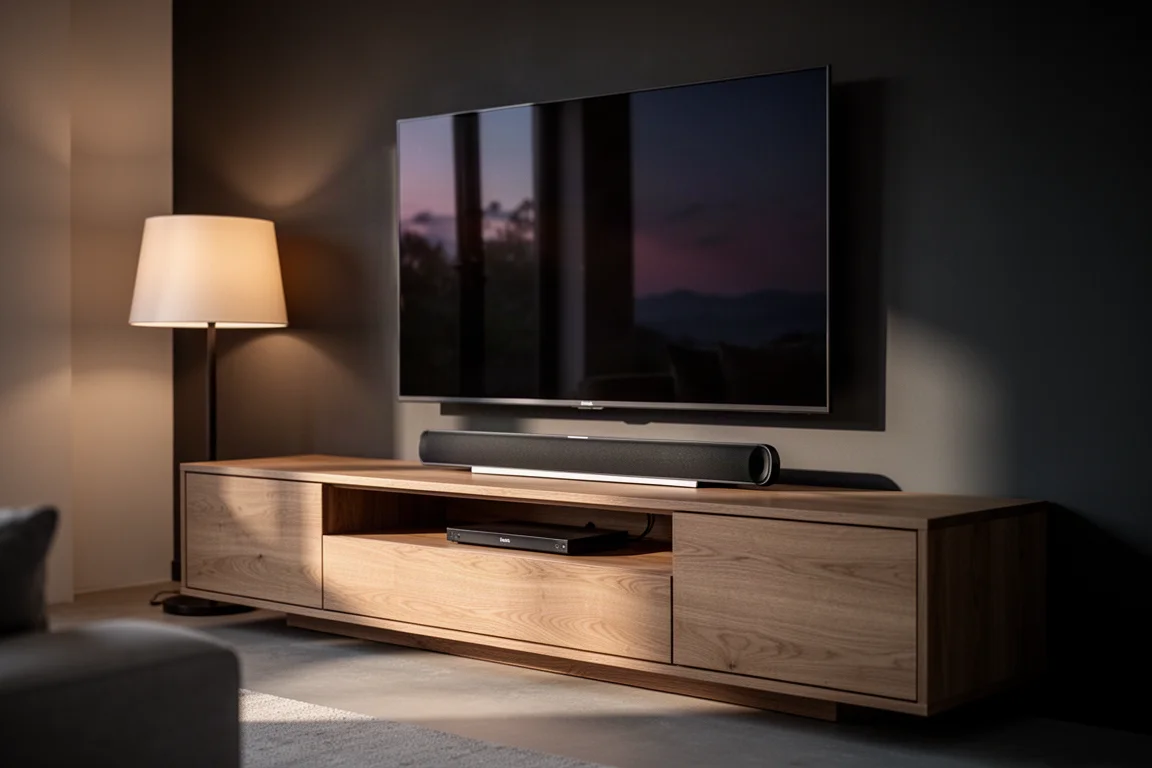
For listeners who have no choice but a shallow cabinet, this is a design that can be made to work. It is worth knowing, though, that the compromise is real and that it lands in the frequency range where dialogue clarity lives. Anyone sitting well off the center line will depend more on context and lip movement to follow quieter lines of dialogue.
KEF Q650c: Coaxial Consistency
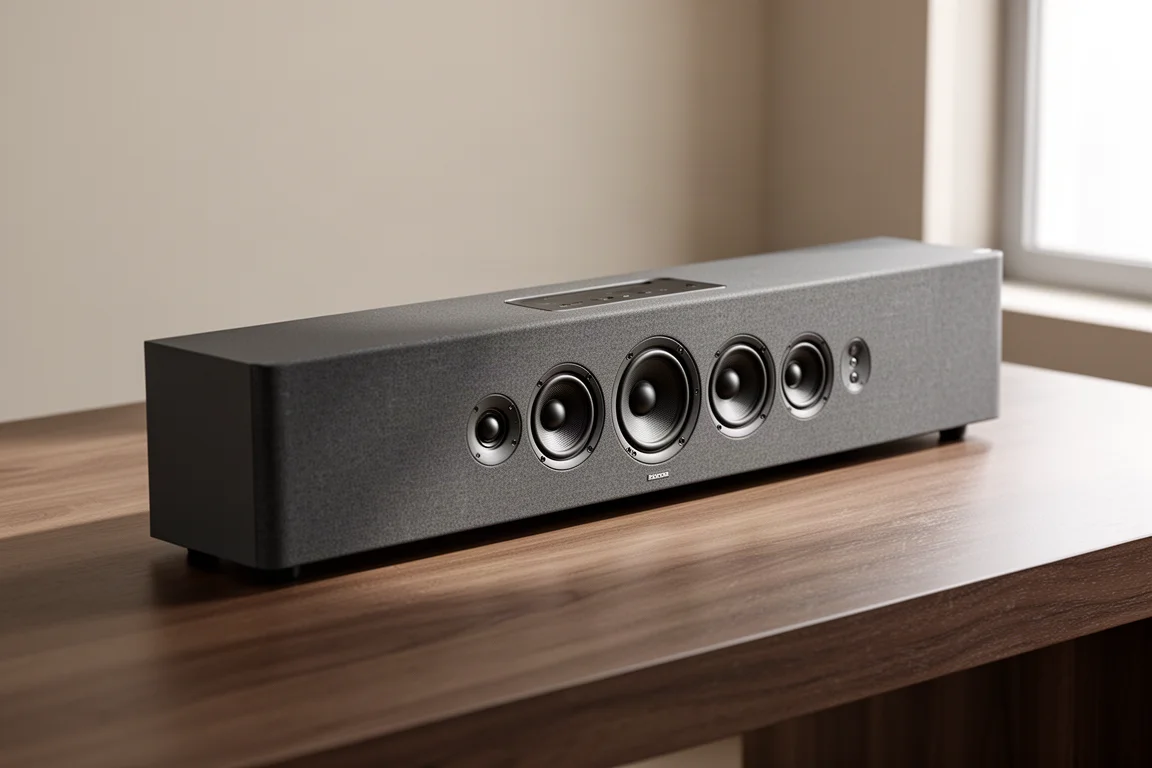
The Q650c is a two and a half way design built around a coaxial driver, with the mid-range and tweeter sharing a single acoustic center and a woofer on each side. That layout pays off in the radiation data. The strong output region extends out to 30 degrees and, at some frequencies, as far as 60 degrees.
The practical result is that the difference between the primary seat and a seat 25 degrees off axis is minor. Direct listening comparisons between the two positions revealed only small variations rather than the pronounced dips produced by the MTM arrangements.
Cabinet size is the trade-off. This is a taller, deeper center channel than the slim options covered above, so it needs more room below the screen. In a room where multiple seats are spread wide of center, that space is often worth finding.
Emotiva C2+: Three-Way Does Not Guarantee Even Coverage
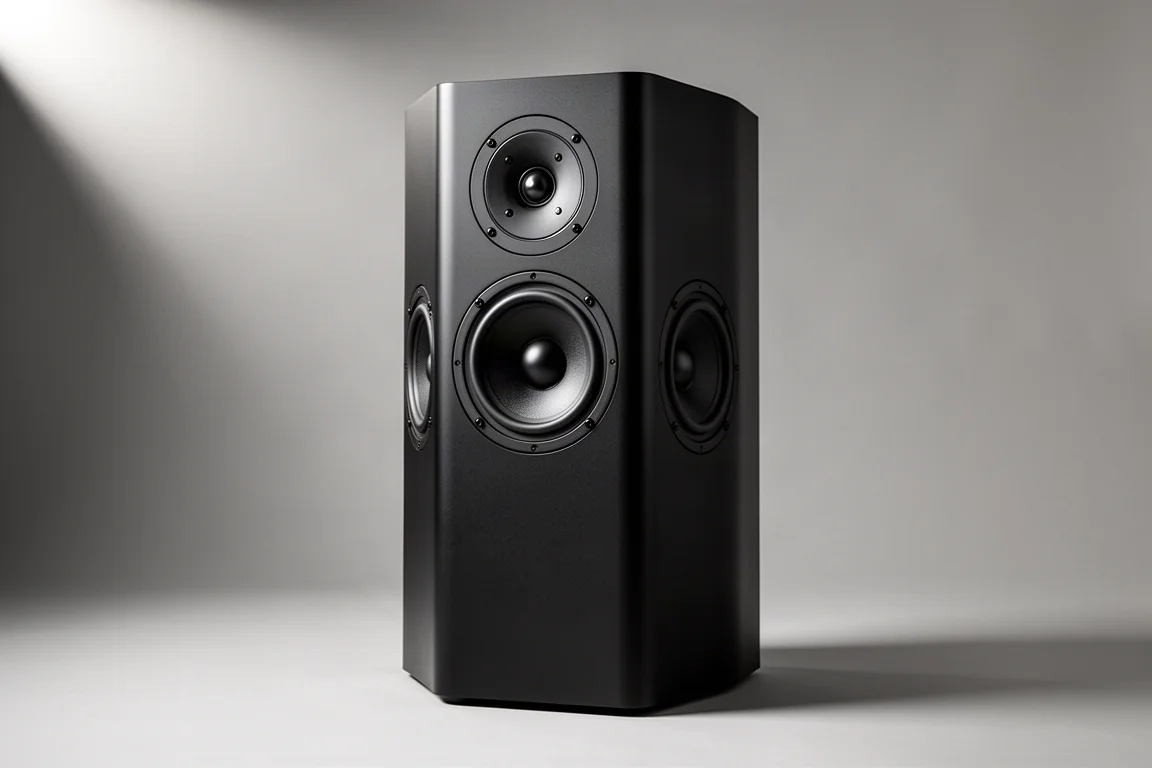
A three way design with dedicated woofers, mid-range drivers, and a tweeter sounds like the safer layout, but the C2+ shows why the label alone is not enough. Its two mid-range drivers overlap and are crossed high enough that they interfere as you move off axis, producing a dip of roughly 6 to 12 dB depending on the frequency being examined. They should have been crossed lower.
The radiation pattern is also fairly narrow, with little energy sent behind the speaker. It is not as narrow as the MTM designs covered above, but it is a long way from the widest performers here. Listening between the two seat positions confirmed a level difference through the mid-range rather than a gradual treble rolloff.
SVS Prime Center: The Widest Horizontal Radiation
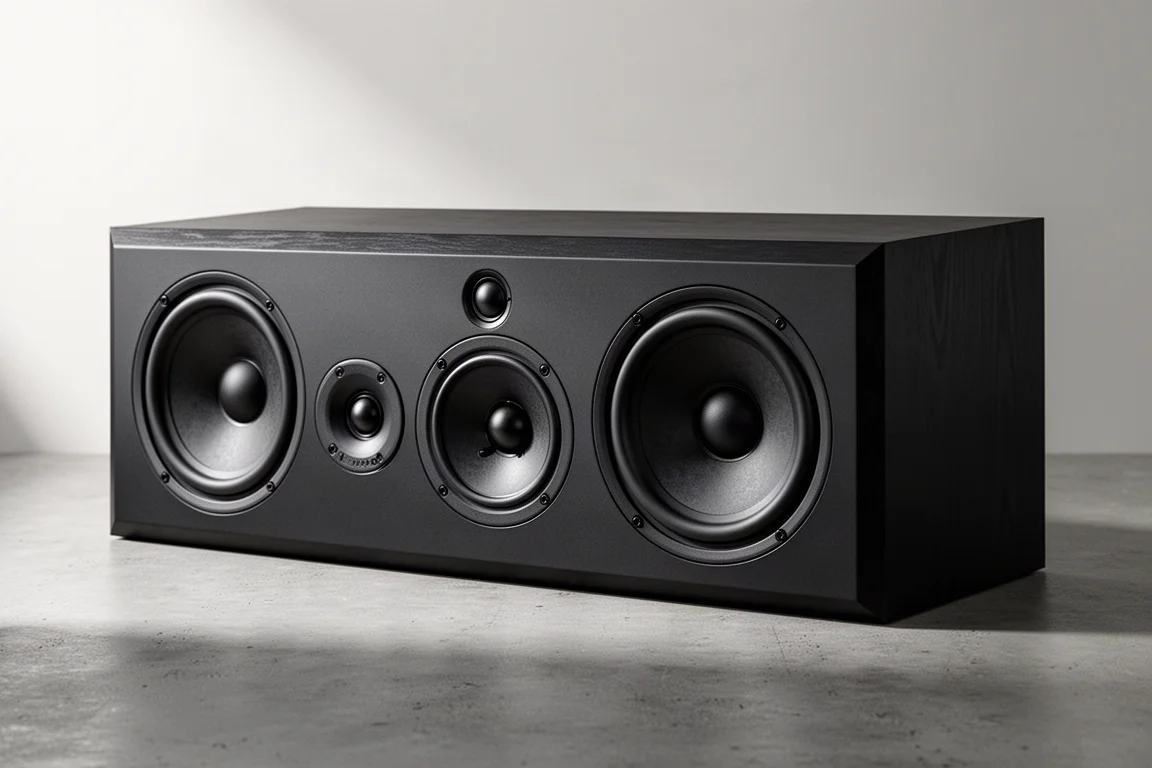
Among the center channels measured for this guide, the Prime Center has the widest horizontal radiation. Strong output holds out to roughly 60 degrees at nearly every frequency, so a listener well off to the side hears approximately the same level as the listener directly in front of the speaker. Its three way layout, with a tweeter, a mid-range below it, and woofers to the sides, keeps the individual drivers from fighting each other the way wide-spaced MTM arrangements do.
Direct comparisons between the on-axis seat and a seat 25 degrees off axis showed a difference in the lower and middle mid-range, while the treble region stayed close to the same. Frequency response linearity is a separate question from radiation width, and this is not the most linear speaker in the group, but for seat-to-seat consistency it is the strongest result here.
Arendal 1961 Bookshelf: A Bookshelf as a Center
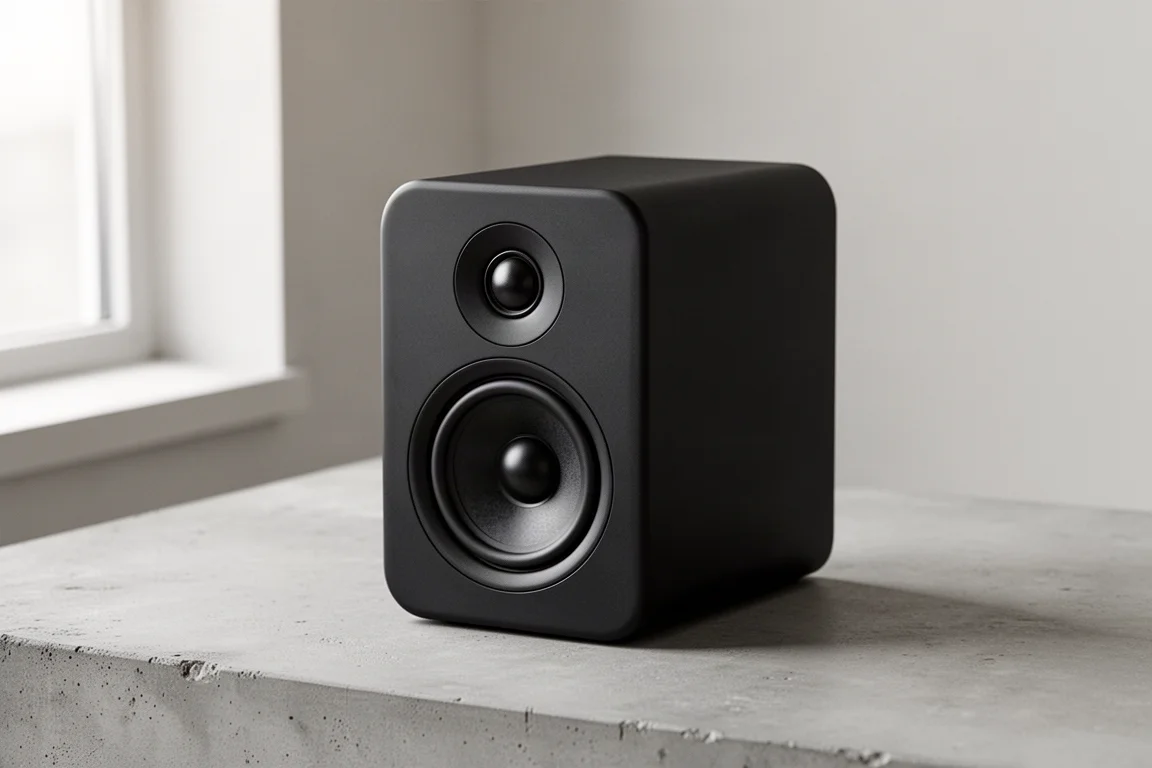
A compact bookshelf speaker used as a center channel is a legitimate alternative, and the 1961 Bookshelf shows why. Its response is even across a wide window: out to roughly 40 degrees the sound stays close to the same, and beyond that the variation is around 3 dB. Direct comparisons between the on-axis seat and a seat 25 degrees off axis showed only about 1 to 1.5 dB of difference.
Its radiation is not as wide as the widest center channel measured here, but it is consistent, and it is small enough to sit below a television. The same approach scales up to a home theater with an acoustically transparent screen, where identical speakers can be used across the front three positions for genuine timbre matching.
How to Choose the Right Center Channel
Start by being honest about your seating. If only one seat matters and it sits on the center line, a narrow-radiation design can still serve you, though dialogue will thin out for anyone sitting beside you. If the room has multiple seats spread across a couch, the 0 to 30 degree window is where the decision is made, and the radiation data is the fastest way to see which speakers hold up there.
Next, look at the physical design before the marketing copy. How far apart are the drivers, and where do the crossovers sit? A wide-spaced pair of mid-range drivers crossed high is a warning sign, especially in slim, multi-driver cabinets. More drivers does not mean better sound; it means more opportunity for the drivers to interfere with one another.
Then decide what you are willing to trade. Multiple woofers and mid-range drivers raise sensitivity and maximum output, which matters in a large room or at high listening levels, but the same design often costs you consistency across seats. The closer you sit to the screen, the further off axis your side seats are and the larger that penalty becomes. Sit further back and the angles shrink, which makes more designs acceptable.
Finally, consider the alternatives. A bookshelf or tower speaker used as a center channel, particularly behind an acoustically transparent screen, gives you an identical front three and a more even response from seat to seat. A slim cabinet may be the only thing that fits your furniture, and that is a valid reason to accept a narrower pattern, as long as you know that is the compromise you are making.
Conclusion
Center channel design stops being a mystery once you know what to look for. Driver spacing and crossover points determine how a speaker behaves off axis, and the radiation data shows the result plainly. Designs with a broad, even pattern keep dialogue consistent from seat to seat. Designs with closely spaced drivers that interfere with each other produce dips that land right where speech intelligibility lives.
If you sit alone, directly in front of the screen, a narrower design can still serve you well. If you share the room, prioritize the speakers that hold their level across the seats that actually get used. It is also worth remembering that dialogue levels in modern film mixes are not always generous, so a center channel that thins out off axis makes an existing problem worse for everyone who is not in the middle seat.
One more caution applies to matching. A center channel that looks like its bookshelf or tower sibling does not necessarily sound like one once you move off axis, and without data there is no confident way to know in advance. Judge the cabinet, the driver spacing, and the measurements, and you will make a more informed purchase for your own room.
Further reading
Related Reviews
Home Theater Audio
Dolby Surround vs Auro-Matic vs DTS:X: Comparing Three Upmixers for Two-Channel Music
A practical comparison of the Dolby Surround Upmixer, Auro-Matic and the DTS:X upmixer, covering how each one treats two-channel music, the settings that change the result, and the trade-offs to weigh before you commit.
Home Theater Audio
Dolby Surround vs DTS Neural:X vs Auro-Matic: Comparing 5.1 Music Upmixing
A practical comparison of Dolby Surround Upmixer, DTS Neural:X and Auro-3D Auro-Matic on a lossless 5.1 music mix, with the strengths and trade-offs of each.
Home Theater Audio
JTR Kaos 265, 465, and Kaos 12 Review: A 7.1 System Built for Real Rooms
A closer look at a 7.1 JTR Kaos installation: the compact 265, the larger 465, and the sealed Kaos 12 subwoofer, plus what the system asks of your amplifier and your room.