Home Theater Speakers
JTR Kaos 265, Kaos 465, and Kalo Subwoofer: Living Room Home Theater Sound
JTR's Kaos 265 and Kaos 465 on-wall speakers pair with the Kalo subwoofer to bring high-output home theater sound into a living room. Here is what to know before buying.
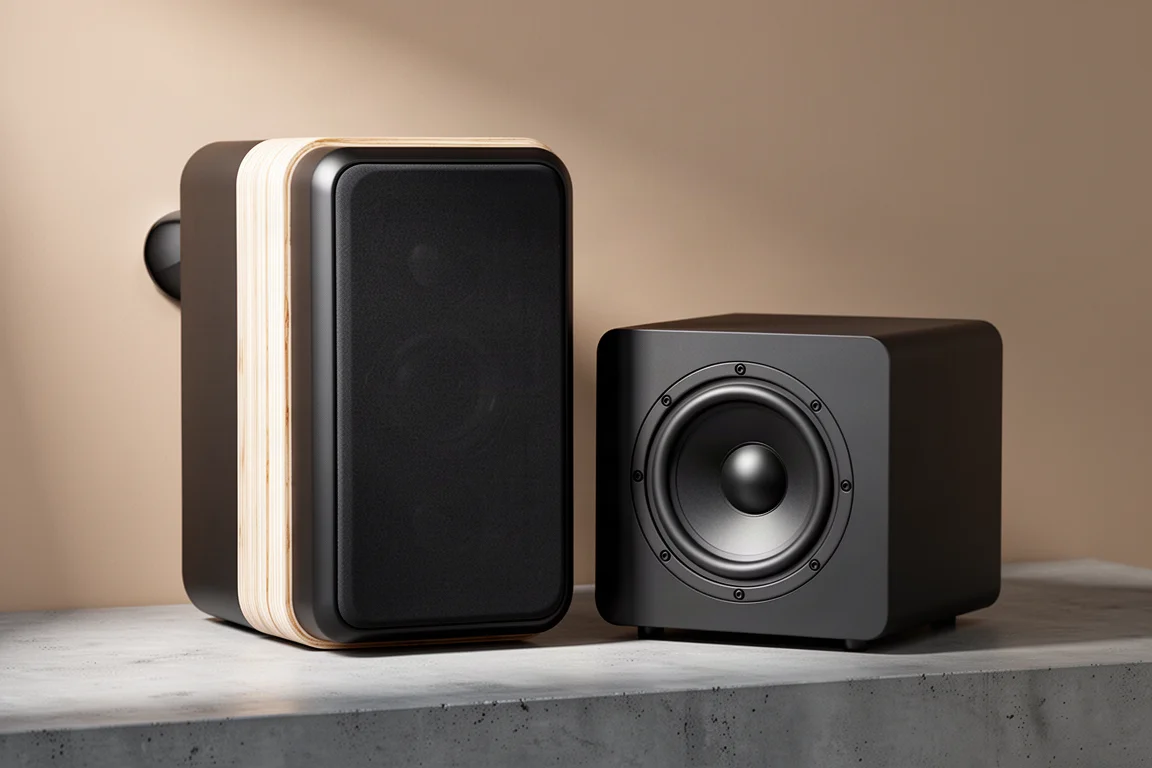
Introduction
JTR built its name on high-output home theater speakers: large cabinets, horn-loaded drivers, and the kind of dynamics usually associated with commercial cinema sound. Those designs are made for dedicated rooms, where they sit behind a projection screen in a matte black finish that does not reflect light.
The Kaos series takes that technology in a different direction. The goal is to put a genuine home theater experience in a living room, mounted on either side of a flat-screen television or set on stands. The cabinets are ultra shallow, the finish is matte black and non-reflective, and the drivers follow the same commercial-grade approach as the larger models.
This guide covers the two Kaos models, the 265 and the 465, along with the Kalo subwoofer that supplies the low end. Together they form a compact system that can be driven by a standard AV receiver.
What the JTR Kaos Series Brings to a Living Room
The cabinets are built from stacked Baltic birch plywood. Because the enclosure is so shallow, six pieces of 18 mm Baltic birch are pressed together, with the internal structure CNC machined so the finished cabinet reads as one solid, very inert piece. Radiused edges and a carefully finished surface give the speaker a furniture-friendly look. The cabinets are made in Chicago rather than overseas.
Mounting is unusually flexible. Each speaker carries a VESA 100 x 100 mm precision orbital mount, the same standard used for monitors and televisions, so existing arms, floor stands, and wall mounts can be used directly. Keyhole brackets are also included for simpler installations. The orbital mount extends about four inches from the wall and articulates fully, which makes it easy to aim the speaker at the listening position.
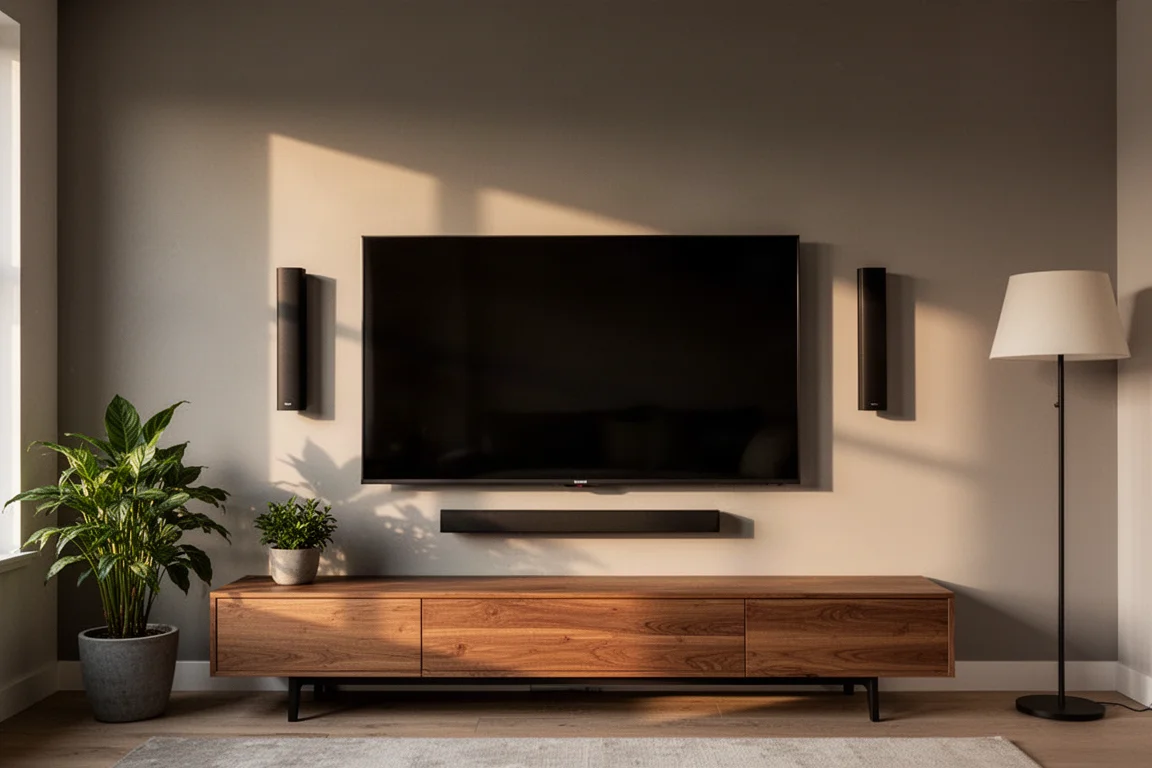
The design covers more roles than a typical on-wall speaker. The Kaos models work as left, center, and right channels, as a horizontal center channel beneath a screen, or as on-wall surrounds. For center-channel duty, the horn is rotated: four screws come out, the waveguide turns 90 degrees, and the screws go back in. The waveguide itself is a 90 x 60 design, and in the 265 the horn and mid section of the cabinet are interchangeable, so the horn can be laid to the left or right of a television to widen the soundstage when there is no space beside the screen.
JTR Kaos 265: A Compact Two-Way for Wall or Stand
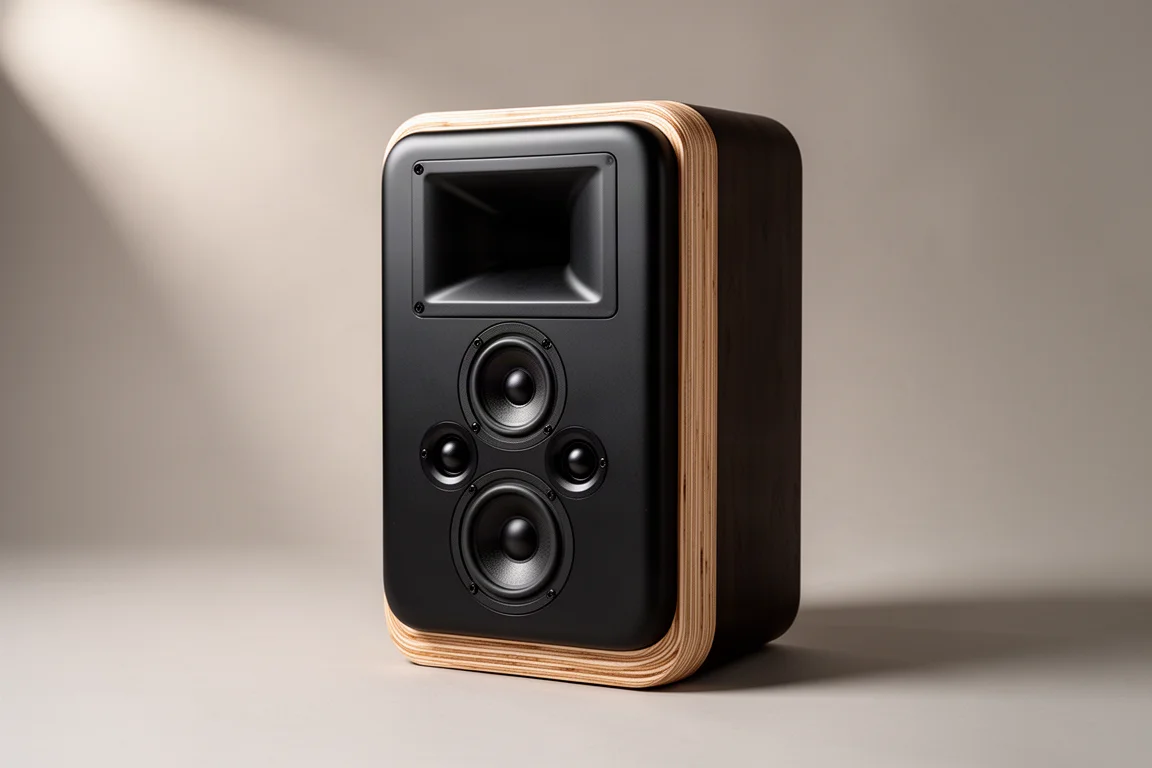
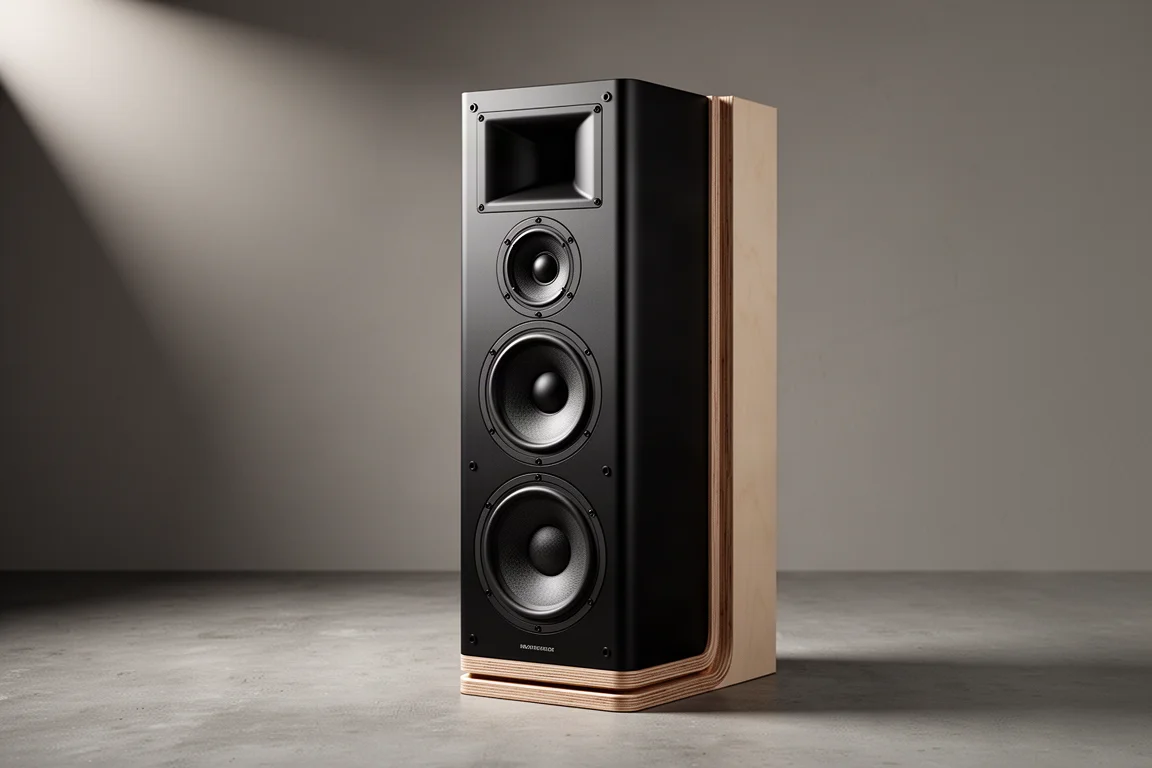
The Kaos 265 is a two-way speaker built around an annular ring-radiator compression driver in a rotatable 90 x 60 waveguide, plus two 6.5-inch mid and bass drivers. The compression driver uses a ring radiator instead of a conventional dome and compression chamber, a choice aimed at reducing coloration and intermodulation distortion. All of the drivers are neodymium, which keeps efficiency high in a small cabinet.
Sensitivity is quoted at 94 dB, and the speaker is capable of reaching 123 dB. That efficiency means a receiver can drive it to reference-level output without a rack of separate amplifiers.
Crossover frequency depends on placement. Mounted on a wall, the 265 reaches down to about 80 Hz. On a stand, that figure is closer to 100 Hz. In both cases the design assumes a subwoofer handles the lowest octaves.
JTR Kaos 465: The Same Platform With Passive Radiators
The Kaos 465 uses the same two-way platform as the 265 and adds two passive radiators, for a total of a horn, two mid drivers, and two passive radiators. The extra radiating area gives the larger model more low-frequency output while keeping the cabinet shallow enough to hang on a wall.
The passive radiators also address a specific problem. A conventional port on a two-way speaker can place port resonance in the same range as the mid driver, which colors the sound. A passive radiator delivers the behavior of a bass reflex enclosure without that resonance.
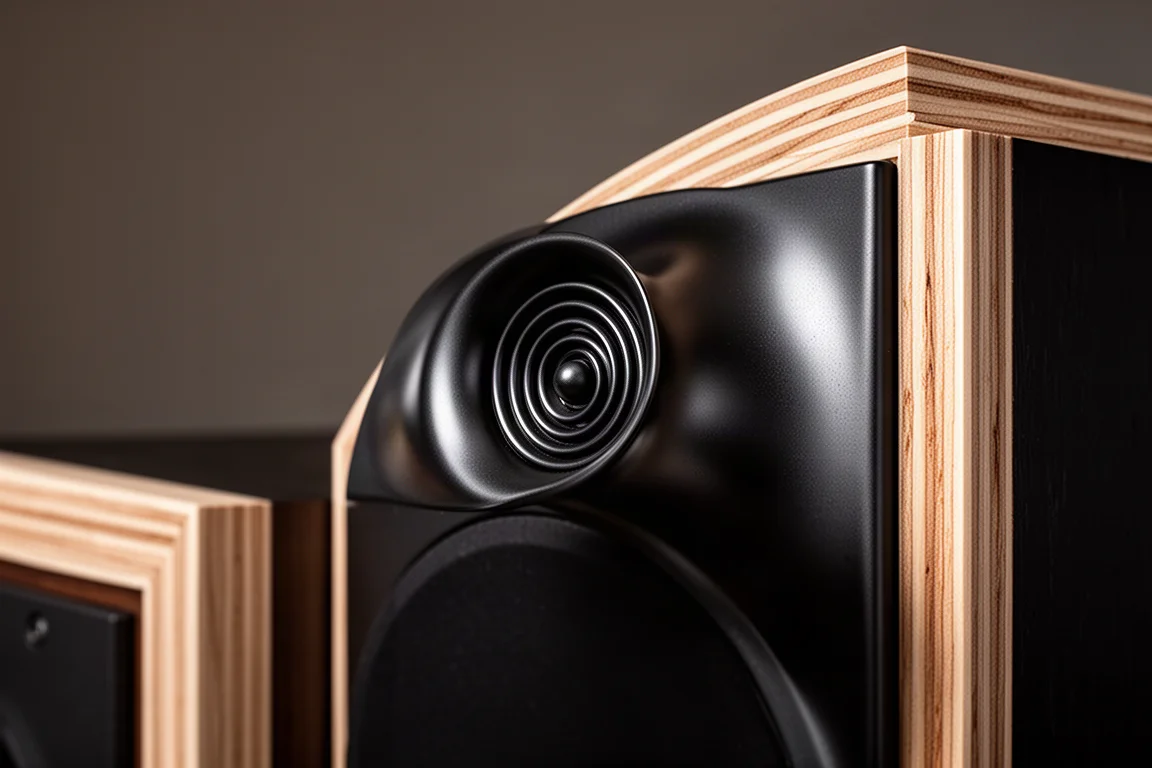
Everything else carries over: the rotatable horn, the commercial-grade drivers, and the goal of combining concert-speaker dynamics with the sound quality expected from a home audio speaker. The 465 can serve as a main channel, a horizontal center, or an on-wall surround, and it mounts with the same VESA hardware and keyhole brackets as the 265.
JTR Kalo Subwoofer: Small Cabinet, Deep Bass
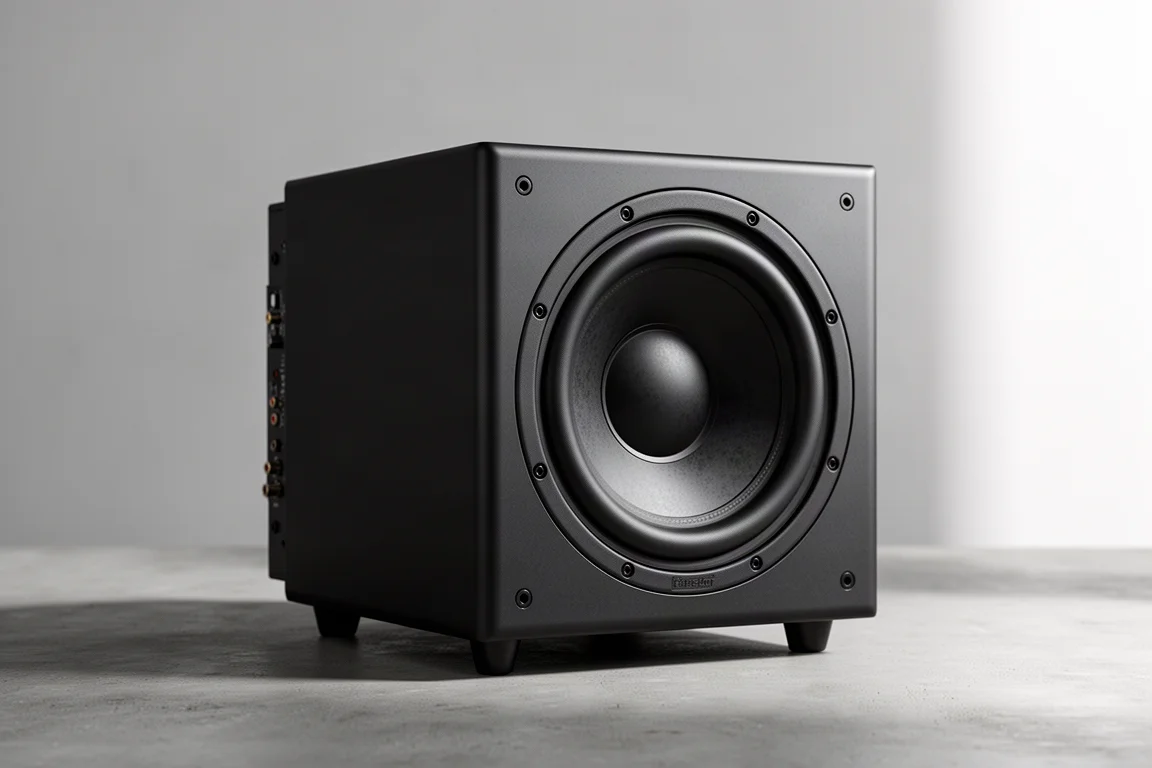
The Kalo is a sealed 12-inch subwoofer with a built-in 2,000-watt amplifier. The driver is the reason such a compact cabinet works: the motor has less than one millihenry of inductance and uses multiple shorting rings to keep response linear, which is what gives the subwoofer its hi-fi character alongside its home theater output. Claimed response runs from 20 Hz all the way up to 800 Hz.
Excursion is generous for the driver size, with 36 mm of linear travel in each direction and four inches peak to peak. The cabinet measures 18.75 inches wide, 19.5 inches tall including the feet, and 13.5 inches deep with the grille on, which is small for the output on offer.
How the System Comes Together in a Room
Placing one subwoofer behind each main speaker balances bass output and spreads it more evenly across the room than a single subwoofer in a corner. Two Kalo units working with a pair of Kaos speakers behave like a full-range system rather than an obvious two-channel plus subwoofer arrangement: the bass stays integrated with the mains instead of drawing attention to itself.
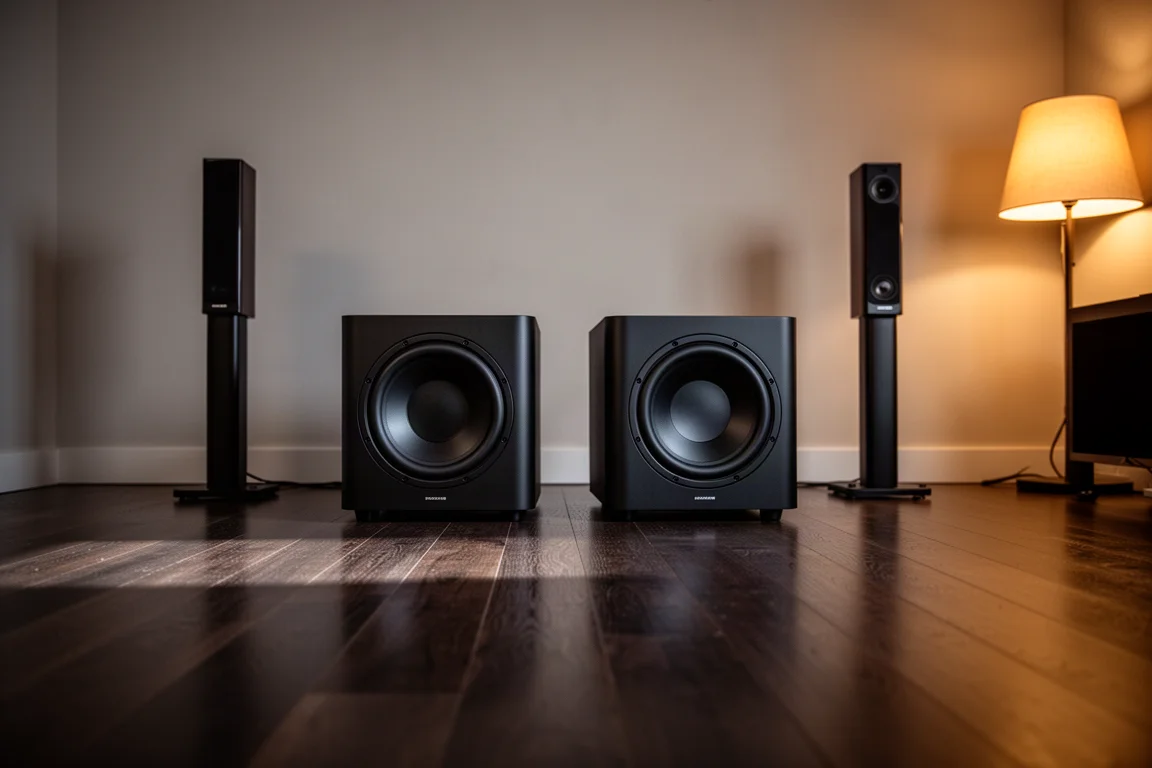
Amplification is flexible. Each loudspeaker can be fed roughly 1,000 watts, while the subwoofers supply their own power from the built-in amplifiers. The high sensitivity of the Kaos speakers means far less power is needed in normal use, but the headroom is there for demanding material and high playback levels.
A complete system with two Kaos speakers and two Kalo subwoofers comes in around $14,000 before electronics, which places it in the upper tier of home theater audio.
Choosing Between the Kaos 265 and the Kaos 465
Both models share the same waveguide, the same 6.5-inch drivers, and the same mounting hardware, so the choice comes down to output and cabinet size. The 265 is the more compact option, and it makes sense where wall space beside a screen is tight and the subwoofers are doing the heavy lifting below 80 or 100 Hz.
The 465 adds the passive radiators, which gives it more low-frequency output from the mains themselves. It suits larger rooms and listeners who want the main channels to carry more weight before the subwoofers take over. Both are designed to cross over to a subwoofer rather than run full range on their own.
What to Consider Before Buying
Plan the subwoofer side of the system first. Neither Kaos model is intended to run without bass support, so the total cost includes one or more subwoofers along with the speakers.

Check the mounting path before ordering. The VESA 100 x 100 mount opens up a wide range of arms and stands, but the wall itself still needs to support the speaker, and the horn orientation has to be set for vertical or horizontal use. If the speaker will sit under a screen as a center channel, the waveguide needs to be rotated before installation.
Finally, budget for the whole system rather than the speakers alone. A two-speaker, two-subwoofer configuration lands around $14,000 before electronics, and the receiver or processor needs enough channels and bass management to cross the Kaos speakers over at the right frequency.
Conclusion
The Kaos 265 and Kaos 465 bring JTR’s driver technology and high-output approach into a cabinet that can live on a living room wall, and the Kalo subwoofer gives that system the deep, well-integrated bass the design depends on. For anyone who wants cinema-level dynamics without a dedicated theater room, this combination is built for exactly that job.
Further reading
Related Reviews
Home Theater Speakers
Arendal 1723 THX S Monitor vs 1723 THX Monitor: Which Two-Way Monitor Fits Your Room?
A practical comparison of the Arendal 1723 THX S Monitor and the larger 1723 THX Monitor, covering driver size, sensitivity, bass extension, and room fit.
Home Theater Speakers
Emotiva A1 Review: A Small Speaker With Serious Surround Flexibility
A sealed two-way speaker built for Dolby Atmos, surround, and compact desktop duty at $179. Here is what it does well and what to check before buying.
Home Theater Speakers
Emotiva C2+ Review: High Output Center Channel With a Narrow Sweet Spot
The Emotiva C2+ delivers serious output, deep bass for its size and high sensitivity, but its widely spaced midrange drivers create a horizontal sweet spot that rewards centered seating.