Subwoofers
JTR Captivator 12 Review: A Sealed 12-Inch Subwoofer Built for Deep, Clean Output
A close look at the JTR Captivator 12, covering measured output, low-frequency behaviour, EQ options, and the practical trade-offs to weigh before buying.
Introduction
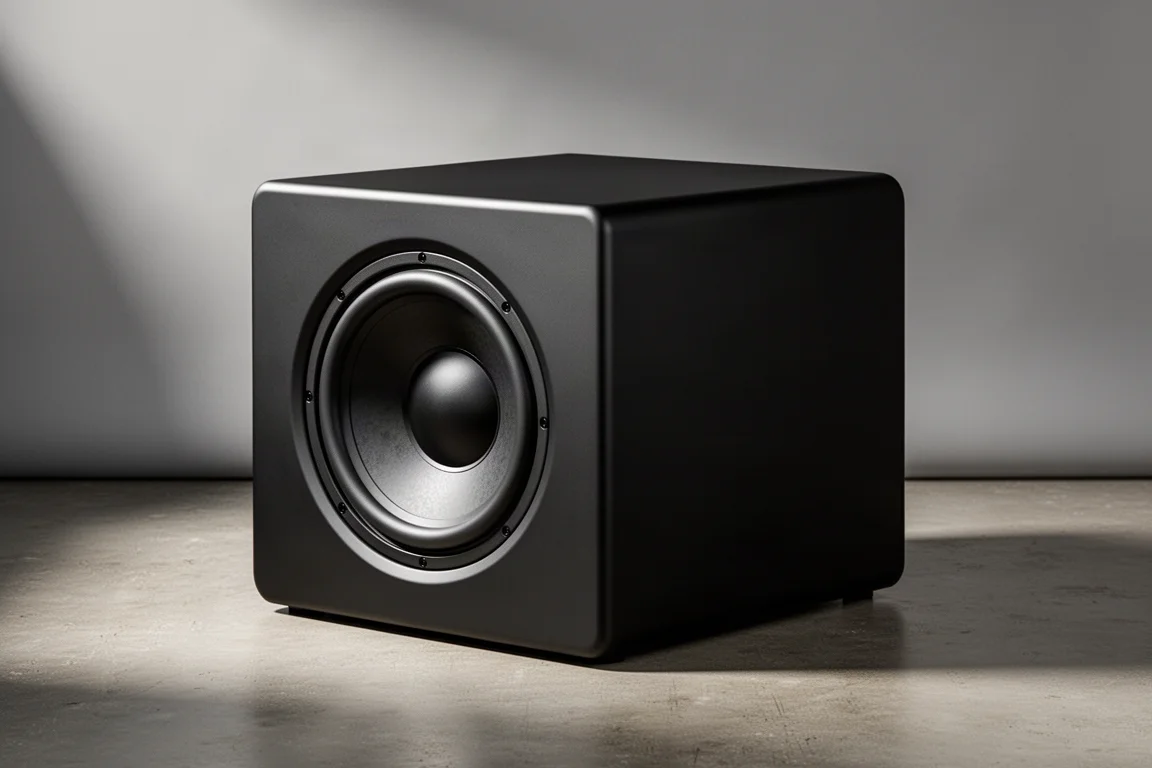
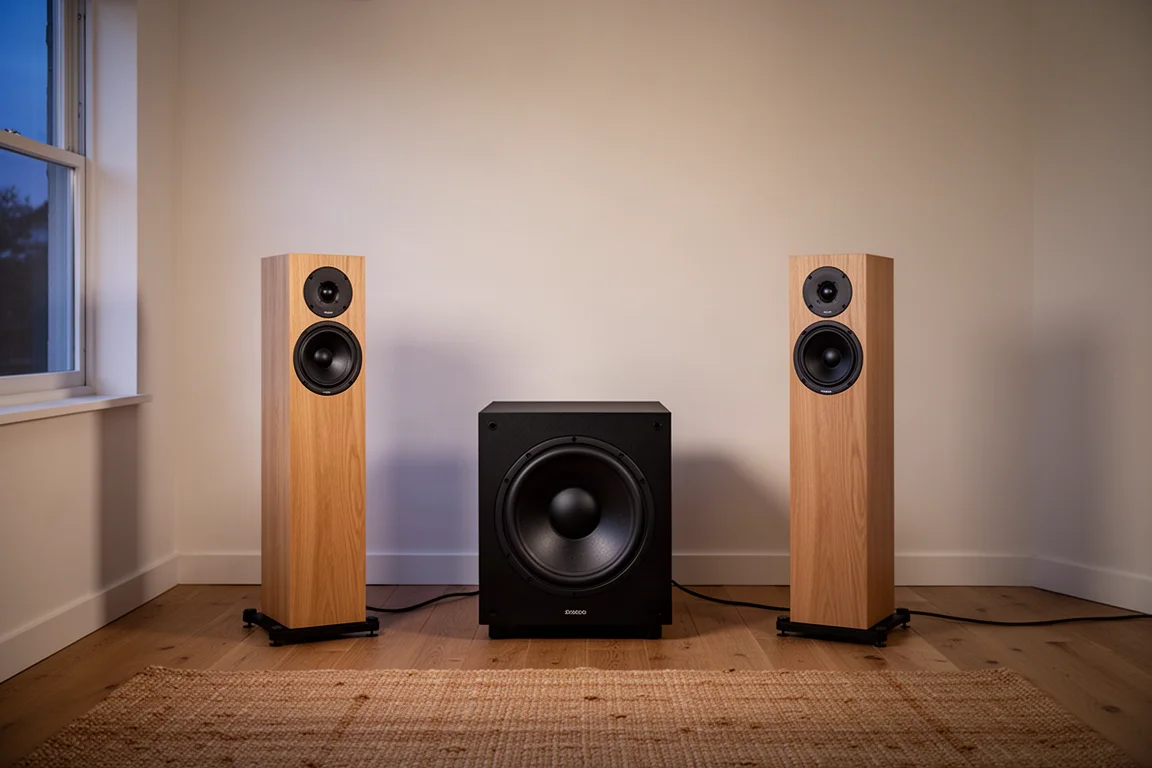
The JTR Captivator 12 is a sealed subwoofer built around a single 12-inch driver, a 2,000-watt RMS Class D amplifier, and onboard DSP. It is a substantial cabinet: approximately 18.75 inches tall, 18.75 inches wide, and 12.75 inches deep, with an approximate weight of 100 pounds.
Those numbers frame what the product is trying to do. Rather than chasing the smallest possible footprint, it prioritises clean output and low-frequency capability, and it gives you a small set of controls for shaping the result in a real room. Whether that trade-off makes sense depends on how much deep bass you want and how much space and setup effort you are willing to commit.
What the JTR Captivator 12 Offers
Manufacturer specifications list a frequency response of 22 Hz to 800 Hz within plus or minus 3 dB, measured outdoors, with a note that in-room response may extend below 10 Hz. The amplifier is rated at 2,000 watts RMS and uses a Class D design with DSP, which is what makes the onboard equalisation options possible.
The cabinet measures roughly 18.75 inches in height and width and 12.75 inches in depth, and weighs approximately 100 pounds. Three EQ modes are available: a standard mode, a cut mode, and a boost mode, so the response can be nudged in either direction before any room correction is applied.
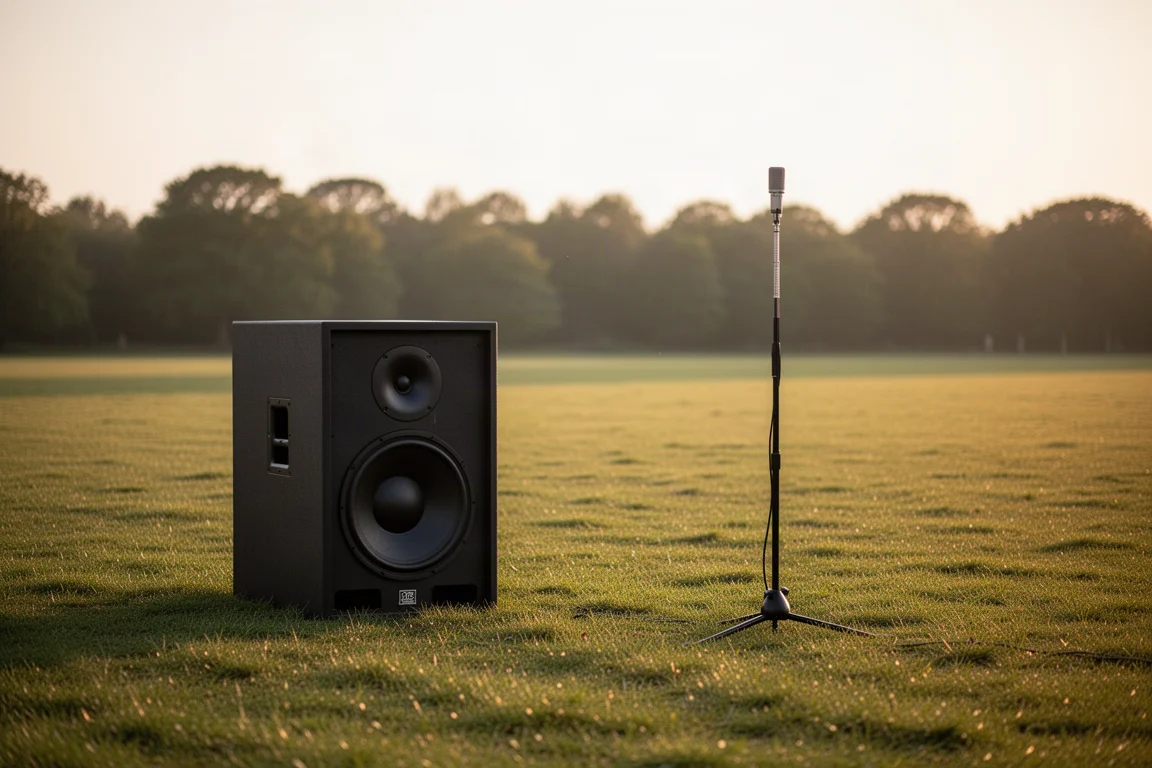
Specifications of this kind are best read as a baseline rather than a promise. An outdoor measurement removes the room from the equation, which makes the figures directly comparable with other subwoofers, but a real room still adds its own gain along with peaks and dips once the cabinet is in place.
Who This Subwoofer Is For
This subwoofer is aimed at listeners who care most about output below roughly 45 Hz and who are prepared to give up floor space and convenience to get it. A 100-pound cabinet with an 18.75-inch footprint is not a discreet addition to a small room, and the setup process rewards anyone willing to measure and equalise rather than simply drop it into a corner.
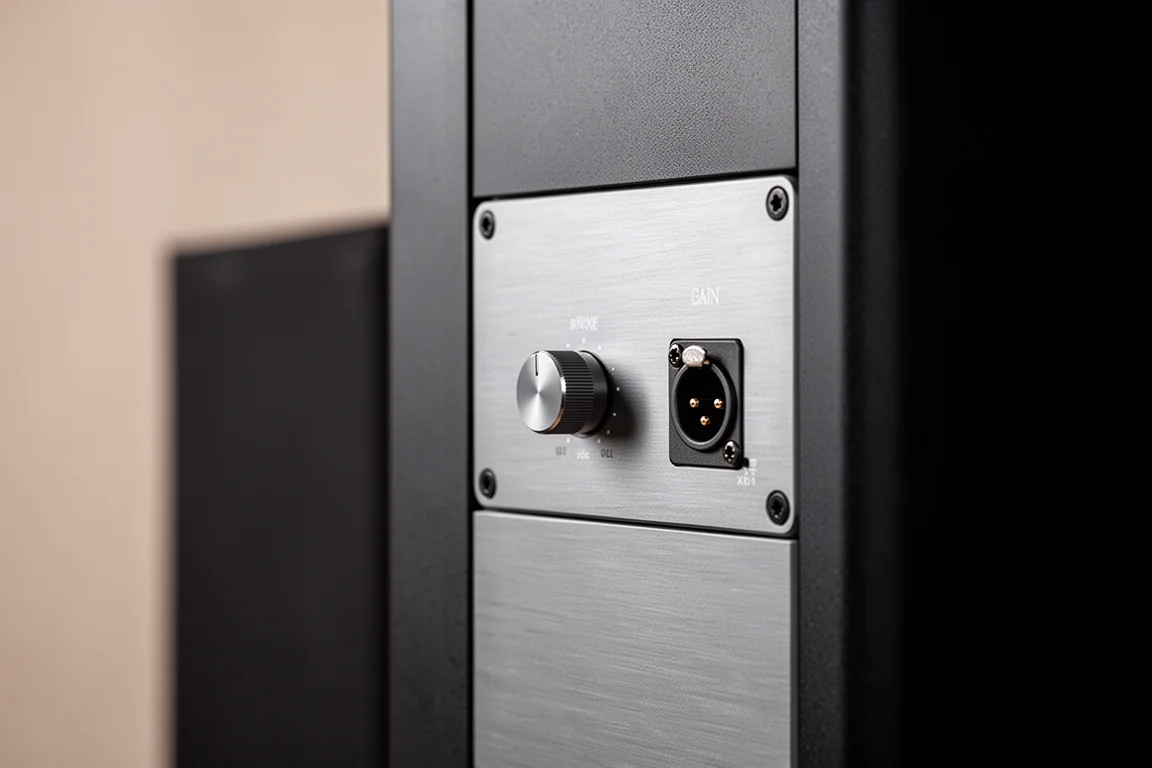
It also suits systems with a capable preamp or AVR. An amplifier able to deliver 1 V RMS output is enough to drive the subwoofer to its maximum output level, so no unusual gain staging upstream is required to extract everything the design can give.
Output and Low-Frequency Performance
Maximum output was measured outdoors to establish an anechoic baseline. Sweeping from 10 Hz to 500 Hz produced roughly 110 dB at about one metre at the top of the subwoofer’s range. At full drive the results land near 110 dB at 40 Hz, around 99 dB at 20 Hz, and approximately 103 to 104 dB at 100 Hz. The response begins to roll off at roughly 32 Hz, which is the expected behaviour of a sealed alignment of this size.
A voltage gain sweep shows the limiter at work. Moving from 0.05 V RMS input to 0.5 V RMS input raised output at 40 Hz from 93.7 dB to 109.2 dB. The voltage step alone would suggest about 20 dB of gain, yet the measured increase was closer to 15.5 dB, with maximum SPL settling near 110 dB. A limiter is standard practice on production subwoofers, since it protects the driver from being pushed past its mechanical and thermal limits.
Normalising the curves shows how the shape of the response shifts as level rises. Comparing the 94 dB condition with the 110 dB condition reveals roughly 2 to 4 dB of deviation across the range, which means the subwoofer is not perfectly linear at the top of its output envelope. That is a normal outcome for a limiter-protected design, and it is worth knowing if the subwoofer will be run near its ceiling.
The CEA-2010A results place the JTR Captivator 12 at the front of a field of single-driver, 12-inch sealed subwoofers. Below about 45 Hz it delivered the highest low-distortion output in that comparison, and at around 25 Hz it measured roughly 2 to 3 dB higher than the closest alternative. Above 45 Hz, the JL Audio E112 is the nearest competition and offers higher SPL capability in that band.
Room Integration and EQ Options
In a room, the response changes in two directions at once. Room gain lifts output at some frequencies while room modes create deep notches at others. That is why anechoic data is a baseline rather than a final answer, and it is also why the onboard EQ modes are worth using before reaching for anything more elaborate.
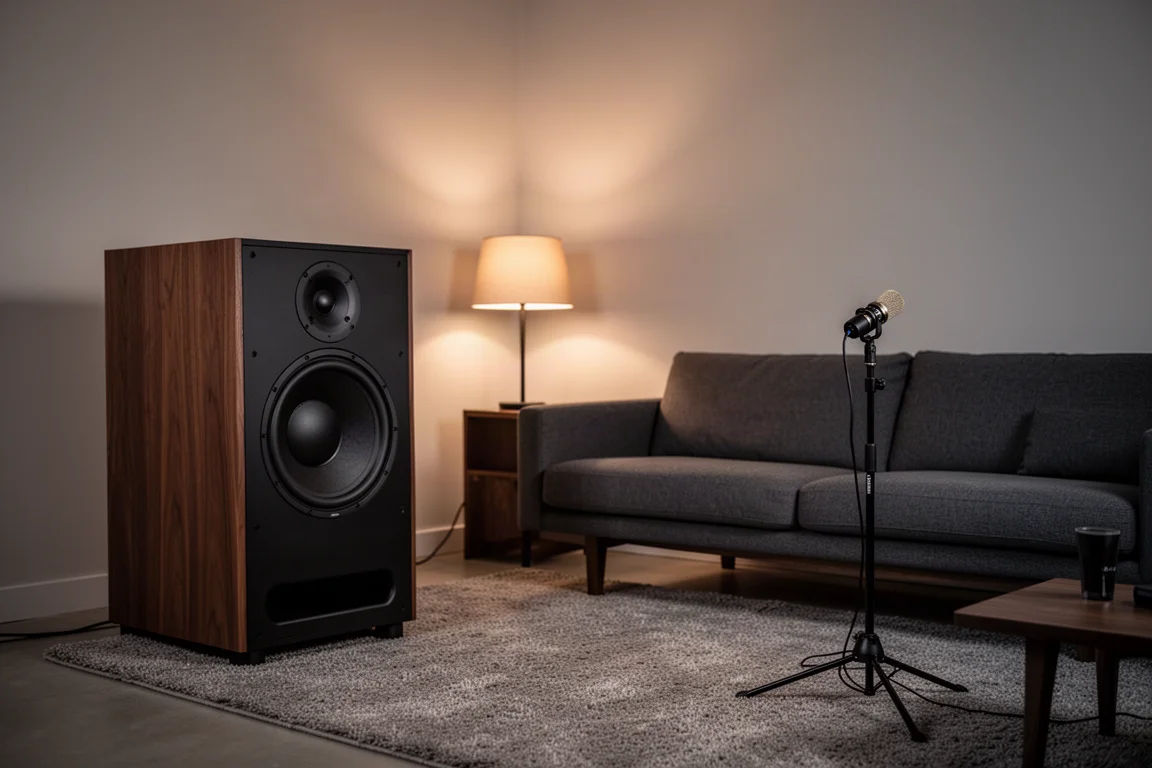
Setup for a subwoofer like this one benefits from measurement. Modal peaks can be pulled down with parametric EQ, while dips are generally best left alone, since boosting a null mostly spends amplifier power without changing what is heard. Room mode issues can be identified with a phone microphone for practical purposes, though a dedicated measurement microphone is the better tool for anything below roughly 30 Hz.
Integration with the main speakers is the part that takes real time. Crossing the subwoofer over at about 50 Hz while letting the mains run down to around 60 Hz worked well, and aligning phase between the subwoofer and the mains required iteration. A measurement microphone paired with room analysis software makes that phase work far more tractable.
Things to Consider Before Buying
The first consideration is physical. At approximately 100 pounds and 18.75 inches in each of its main dimensions, this is a cabinet that needs planning before it needs placement.
The second is the sealed alignment. Response rolls off at around 32 Hz, and a 12-inch ported subwoofer can reach lower and play louder, at the cost of a considerably larger box. If the priority is the deepest possible extension in a compact footprint, a ported design may be the more practical route.
Third, there is the limiter. Output tops out near 110 dB at 40 Hz, and the response shape shifts by a few decibels as that ceiling is approached. This is a deliberate protection measure rather than a defect, but it does mean the subwoofer has a defined performance envelope.
Finally, plan for setup time. Placing and connecting the cabinet is straightforward, but aligning it properly with the mains and smoothing room modes is where the effort lives, and a measurement microphone is the tool that makes that work manageable.
How It Compares and Where It Fits
Against a field of single-driver 12-inch sealed subwoofers, the JTR Captivator 12 leads on low-distortion output below about 45 Hz. That is the region where a sealed design of this type does its best work, and it is the strongest argument for choosing it.
Above 45 Hz the picture is closer, with the JL Audio E112 delivering higher SPL capability in that band. The practical question is where a system needs the most help. For maximum clean output in the deepest part of the bass range, the JTR holds the advantage. If priorities sit higher in the bass range, the comparison narrows considerably.
Buying Advice
For a listener whose system is built around deep, clean bass and who has the floor space for a large sealed cabinet, the JTR Captivator 12 is a coherent choice. It does not demand unusual upstream gear, since an AVR capable of 1 V RMS output will drive it to its limit, and the onboard EQ modes provide a first line of adjustment.
Before buying, confirm two things. First, that the cabinet will fit where it is intended to go, including clearance for a 100-pound box measuring 18.75 inches in each main dimension. Second, that you are prepared to measure and equalise, or to have someone do it for you. The measured performance is strong, but the in-room result depends heavily on how carefully the subwoofer is integrated.
Conclusion
The JTR Captivator 12 is a sealed 12-inch subwoofer with a 2,000-watt RMS Class D amplifier and DSP, and its measurements support the design intent. It delivers the highest low-distortion output below roughly 45 Hz among the comparable single-driver sealed subwoofers it was measured against, with a limiter that caps output at about 110 dB at 40 Hz and a response that rolls off near 32 Hz.
If deep bass output in a sealed cabinet is the goal and the size and weight are acceptable, this is a subwoofer that earns its place in the conversation. If you need the deepest extension or a smaller box, a ported design may suit you better.
Product link
View more details for JTR Captivator 12
This product is mentioned in the review. Check the specifications, options, and compatibility before buying.
View more details for JTR Captivator 12Further reading
Related Reviews
Subwoofers
Arendal 1961 Subwoofer 1S Review: Beautiful Build, Modest Punch at $1,000
A sealed $1,000 subwoofer with a gorgeous cabinet, plus three lower-priced alternatives that deliver more impact for movie nights.
Subwoofers
Arendal Sound 1723 2V Subwoofer Review: Dual 13.8-Inch Drivers Under $3,000
A flagship ported subwoofer with dual opposing 13.8-inch drivers, a 1,200W RMS amplifier, app-based DSP, and a 10-year warranty.
Subwoofers
Ascendo 16 Sub Active Sealed Review: Sealed Bass Built on Real Engineering
A close look at the Ascendo 16 Sub Active Sealed, a 16-inch sealed home theater subwoofer with independently verified measurements, a purpose-built driver, and genuinely controlled output.