Home Theater
JTR 9.11.6 System Review: Nine Bed Layers, Eleven Subwoofers, Six Heights
A reference-level JTR home theater build with eleven subwoofers, Dirac ART calibration, ceiling-mounted height speakers, and D-BOX motion seating.
Introduction
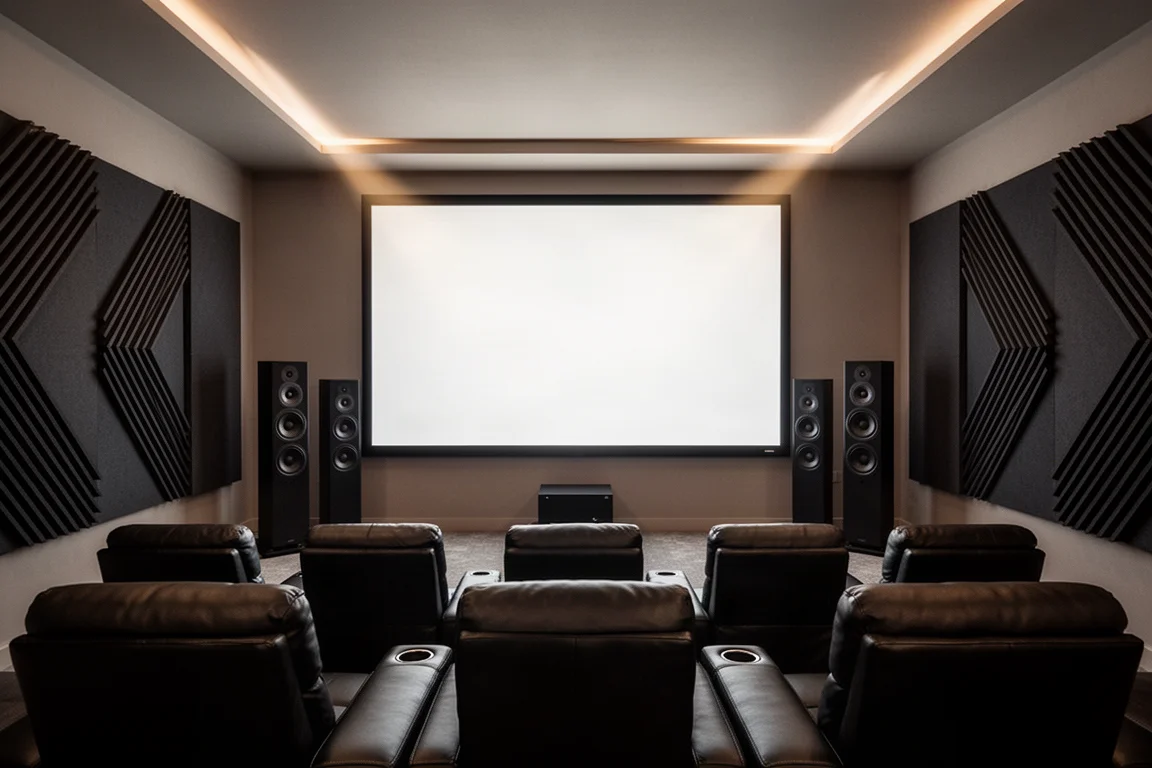
There is a particular kind of home theater that stops being about equipment and starts being about scale. The JTR 9.11.6 system is one of those builds. It pairs nine bed-layer channels with eleven subwoofers and six overhead height channels, all arranged behind a 163-inch acoustically transparent screen in a room that is far smaller than the sound it produces.
The result behaves less like a set of speakers and more like a venue. Material that leans on dynamics, low-frequency weight, and precise object placement lands with a physicality that is rare in a domestic space. Just as importantly, the same system handles two-channel music with enough refinement to stand on its own.
This review covers what the JTR 9.11.6 configuration does well, where its demands sit, and who should consider a build like this.
Who This System Is For
This is a system for listeners who want reference-level output without giving up dynamic range. The speaker complement is built around high-output designs that play extremely loud while staying controlled, with quoted maximum output well above 120 to 130 dB. That headroom matters for anyone who wants cinematic peaks to arrive cleanly rather than compressed.
It also suits listeners who care about bass quality rather than bass quantity alone. Eleven subwoofers could easily produce a bloated result, but in this configuration the low end stays tight, linear, and punchy, with a clean handoff into the midrange and highs. Nearfield subwoofers add tactile energy without smearing the presentation.
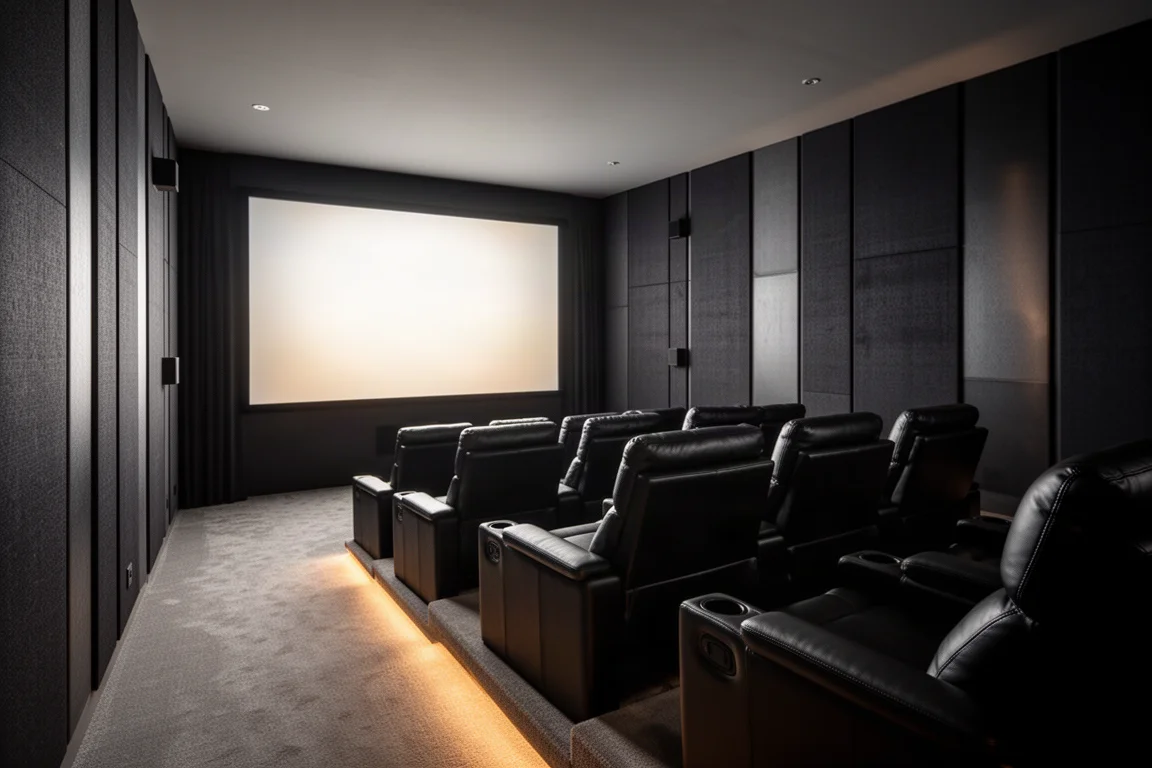
Finally, it is for people who want one room to do two jobs. A dedicated two-channel session with only the front soundstage active delivered real depth of image, with detail and spatial cues arriving from well beyond the speakers themselves.
Main Strengths
Scale and Dynamics
The defining quality here is how much larger the room sounds than it is. With nine bed channels plus front wide channels in play, pans and flyovers gain a dimension that a conventional layout cannot reproduce. Wide channels in particular add lateral spread that makes action sequences feel continuous rather than steered.
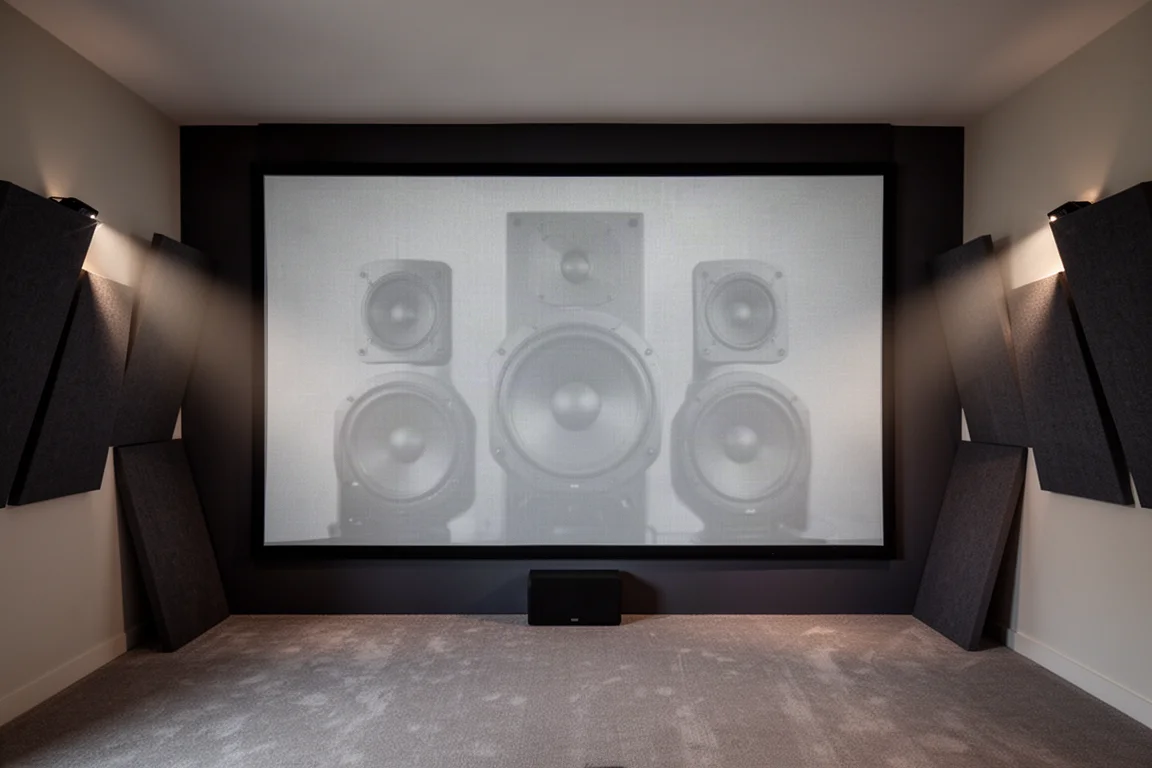
Dynamic range is the other half of that story. The JTR speakers carry enough output capability that reference-level playback never sounds strained. Peaks arrive with force, yet the presentation stays composed and dialogue remains intelligible through the center channel.
Bass Integration and Calibration
The bass strategy is unusual and effective. Each channel runs full range and is supported by a specific subwoofer or pair of subwoofers, with the room divided into quadrants so that the front left, center, front right, and each surround position receive dedicated low-frequency support. The center channel, for example, draws on the front left and front right subwoofers, while the right surround is supported by the front right and rear right subwoofers.
Dirac ART running on a Storm processor handles the calibration layer, keeping the eleven subwoofers coherent as a single system. The audible result is low frequency that is impactful but never overdone. Transitions from bass to mids to highs stay linear, with no obvious dips through the crossover region.
Immersive Height Layer
Six height channels cover a single row of seating, which means overhead objects can be panned around the room rather than simply placed above it. The height speakers are JTR Noesis 110HT slanted models mounted to a purpose-built platform on the ceiling, with wiring routed beneath the platform and the assembly finished in black velvet so it visually disappears into the ceiling.
Acoustic treatment follows an alternating absorption and diffusion scheme, with angled panels that are acoustically transparent. They let sound pass through while blocking projector light from reaching the rear of the room, and they keep the layout visually symmetrical.
Motion and Tactile Feedback
D-BOX motion seating adds a third dimension to the experience. Seats move up and down and front to back in sync with on-screen action, so a tank sequence or a low-passing aircraft registers in the body as well as the ears. Combined with the nearfield subwoofers, the tactile layer is substantial.
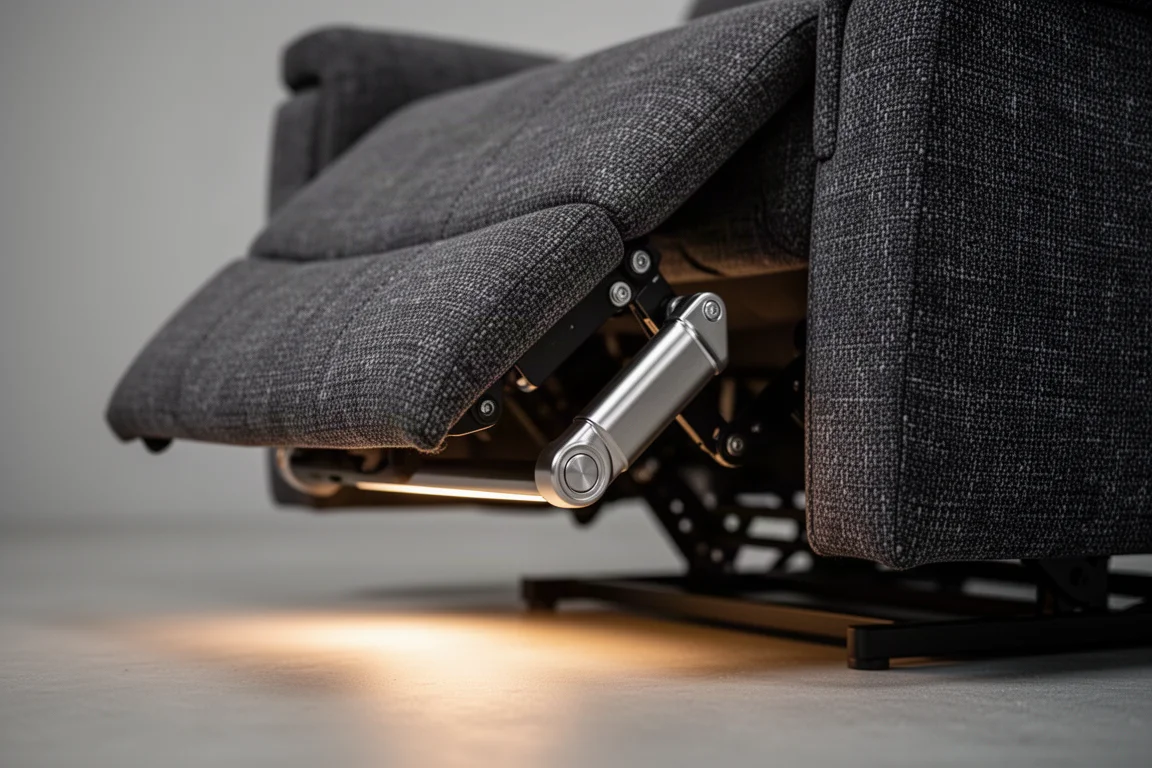
The integration is careful enough that it can be difficult to separate what is coming from the motion system and what is coming from the subwoofers. That is the goal: motion and sound reinforcing each other instead of competing for attention.
Two-Channel Performance
A home theater that cannot play music is an incomplete system, and this one holds up. With only the front soundstage active, two-channel playback produced a deep, layered image with spatial cues appearing to the sides and behind the listening position. That is unusual for speakers mounted behind a screen.
Much of it comes from the space behind the screen, which exceeds seven and a half feet. Keeping the main speakers far out into the room reduces boundary interference within their operating band and helps the crossover land where the speakers are not fighting the room.
Things to Consider Before Buying
This is a build, not a box. The performance depends on a room that can accommodate deep speaker placement, extensive acoustic treatment, and a subwoofer array of unusual size. A room that cannot give the main speakers that much breathing room will not deliver the same result.
Calibration is equally demanding. Running every channel full range with per-channel subwoofer support requires a capable processor and careful setup. The benefit is real, but this is not a plug-and-play configuration.
Structural considerations apply as well. Ceiling-mounted height speakers need a mounting platform and clean cable routing, and a motion seating system adds mechanical hardware to the room. Anyone planning something similar should plan the installation as carefully as the electronics.
Buying Advice
Start with the room. Deep space behind the screen, a treated front wall, and a seating position that supports a wide, enveloping sound field will do more for this kind of system than any single component swap. If the room cannot support that, a smaller configuration will likely deliver a more balanced result.
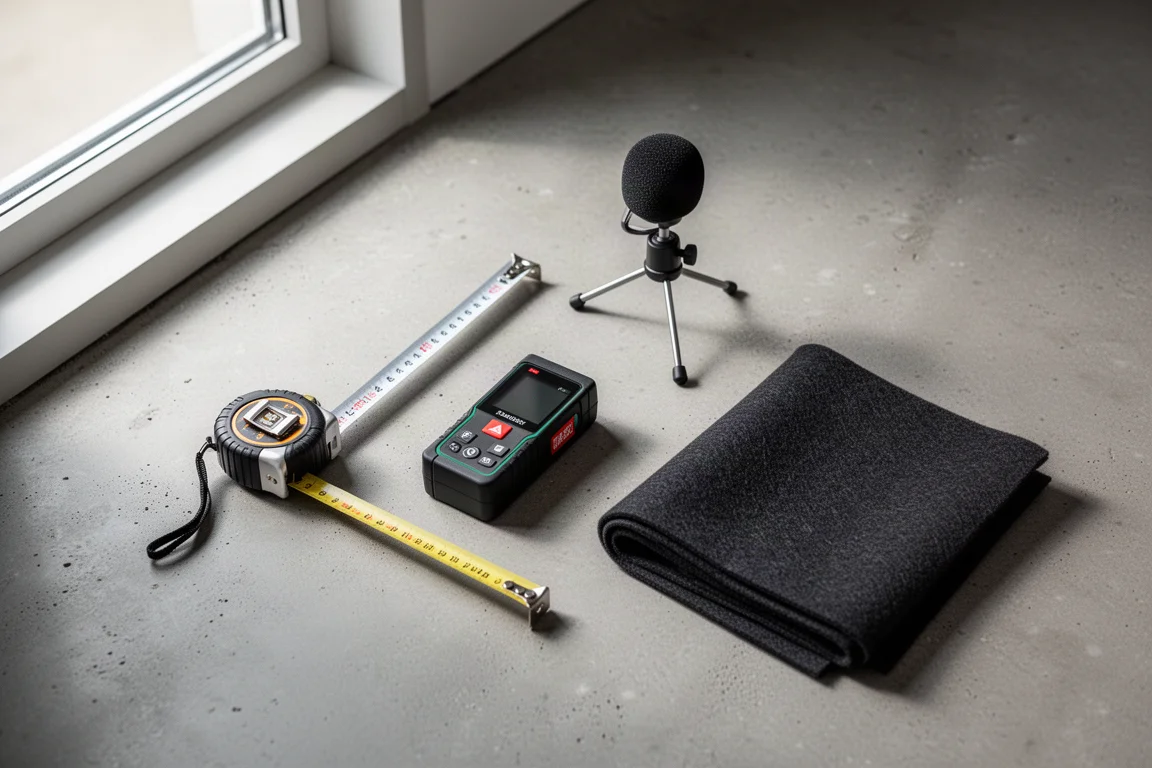
Next, decide how much bass complexity you actually want. A multi-subwoofer array with per-channel support can produce exceptionally linear low frequency, but it requires the processing and the calibration knowledge to match. Dirac ART on a capable processor is central to how this system behaves.
Finally, treat motion and tactile enhancement as an optional layer rather than a requirement. D-BOX seating and nearfield subwoofers deepen the physical sensation considerably, but the core system already delivers reference-level dynamics and immersion on its own. JTR sells internet direct, so buyers should expect to work directly with the manufacturer on configuration.
Conclusion
The JTR 9.11.6 system shows what happens when high-output speakers, a large subwoofer array, careful acoustic treatment, and modern room correction are treated as one design rather than separate purchases. The room sounds far larger than its physical dimensions, bass stays tight and linear, and the overhead layer creates a genuine immersive bubble.
For listeners chasing reference-level cinema and serious two-channel music in the same space, this is a compelling blueprint. It rewards planning, measurement, and patience, and it delivers an experience that is difficult to match with a conventional layout.
Product link
View more details for JTR 9.11.6 System
This product is mentioned in the review. Check the specifications, options, and compatibility before buying.
View more details for JTR 9.11.6 SystemFurther reading
Related Reviews
Home Theater
Anthem AVM 90 Review: A 15.4-Channel Flagship Preamp Processor
A close look at Anthem's flagship preamp processor, covering its dual ESS DAC architecture, 15.4-channel layout, ARC Genesis calibration and four independent subwoofer outputs.

Home Theater
Apple TV 4K With AirPods: A Best-Value Home Theater Setup
An Apple TV 4K paired with AirPods over Bluetooth makes a compact home theater setup for movies, spatial music and late-night viewing, and it can be assembled for as little as $300.
Home Theater
Arcam AVR15, AVR25, AVR35, and AVP45 Compared: Which AV Amplifier Fits Your System?
Four new Arcam home theater components share nine-channel amplification and Dirac Live, but differ in power, processing ceiling, and channel flexibility.