Portable Power
Joyzies 300W Portable Power Station Review: A Budget Battery in a Box
A lunchbox-style 300W lithium power station with USB-C PD, AC output and contactless charging, at a price that makes sense only for light-duty use.
Introduction
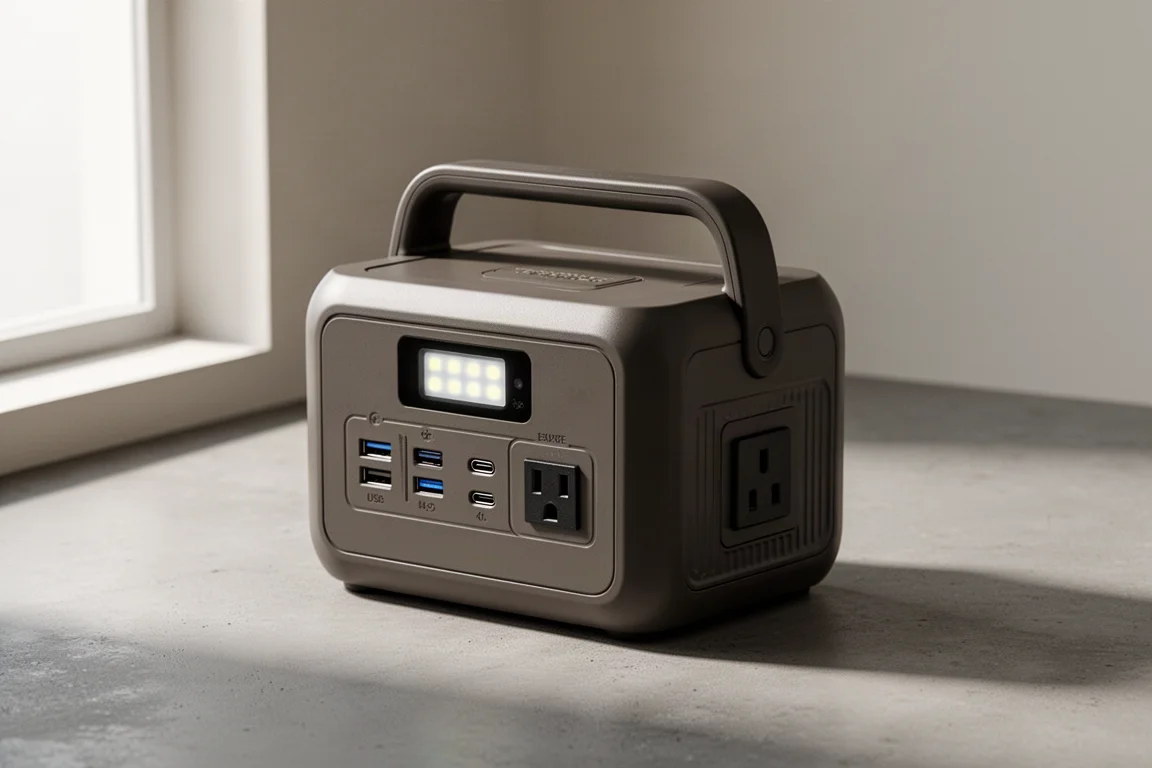
Small portable power stations have become the go-to answer for anyone who travels, camps off-grid or simply runs out of charging ports on a long road trip. The Joyzies 300W portable power station sits at the very budget end of that market: a lithium-ion battery in a box, shaped like a lunchbox, normally listed around $250 and often discounted to roughly $150 with an Amazon coupon. That price raises an obvious question: what exactly are you getting, and is it enough?
Who This Product Is For
This is not a unit for running heavy appliances. It is best understood as a shared charging box for the back seat on a road trip, a light-duty power source for kids’ electronics, or a spare battery for topping up laptops and phones when outlets are scarce. If your needs stop at small electronics, it fits. If you expect it to run anything with a heating element or a large motor, it does not.
What the Joyzies 300W Actually Is
At its core, this is a pack of lithium-ion cells in a plastic housing with a lunchbox-style carry handle. It is a roughly 300-watt system, and like all units in this class it is sometimes marketed as a solar generator, though it is fundamentally a battery with output ports.
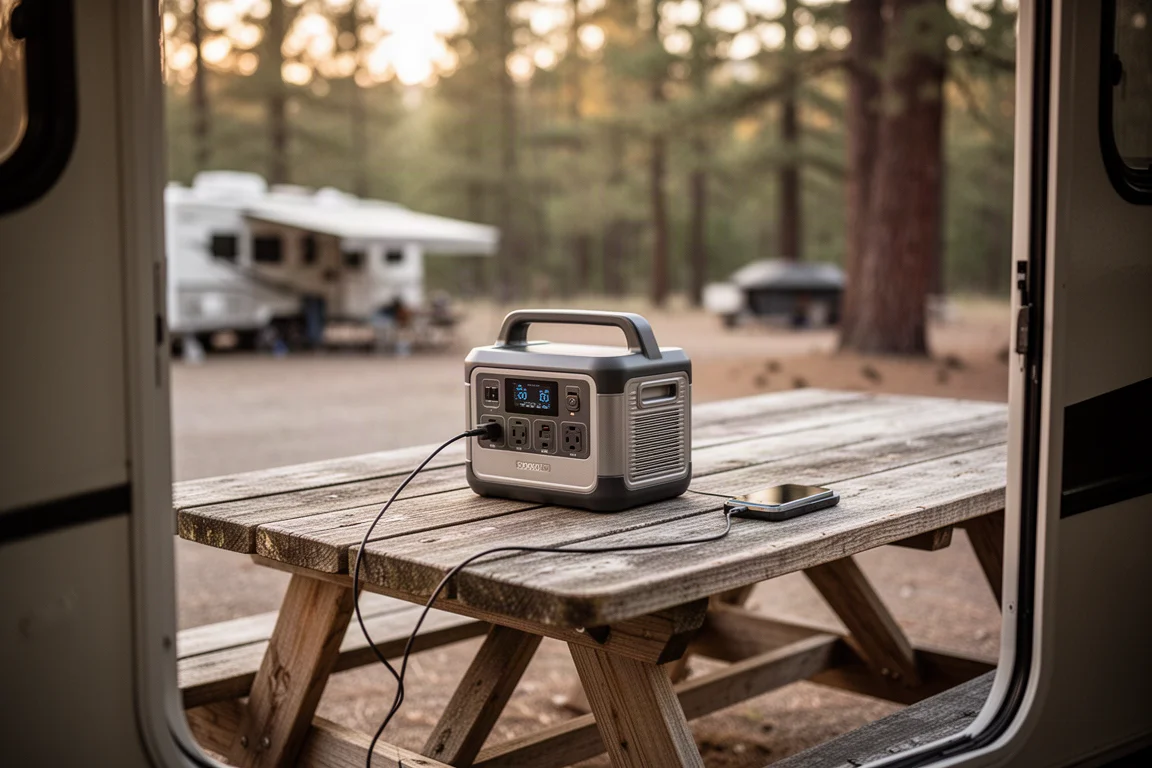
One durability note deserves attention up front. On the first unit, the entire top section, including the handle, sheared away from the plastic threads where the through-bolt attaches. A replacement unit arrived intact, and the broken one was repaired with a few dabs of super glue, but it is a real weak point to be aware of, especially if the box gets dropped or tossed in and out of a vehicle.
Ports and Everyday Charging
The port selection is where this box earns its keep. You get a 12V DC output, USB-A ports running at 5V, a 5-9V USB port, and a 60W USB-C PD output that is genuinely useful for charging a laptop. In testing, it put a charge into a laptop without issue, which is the kind of task this class of power station handles well.
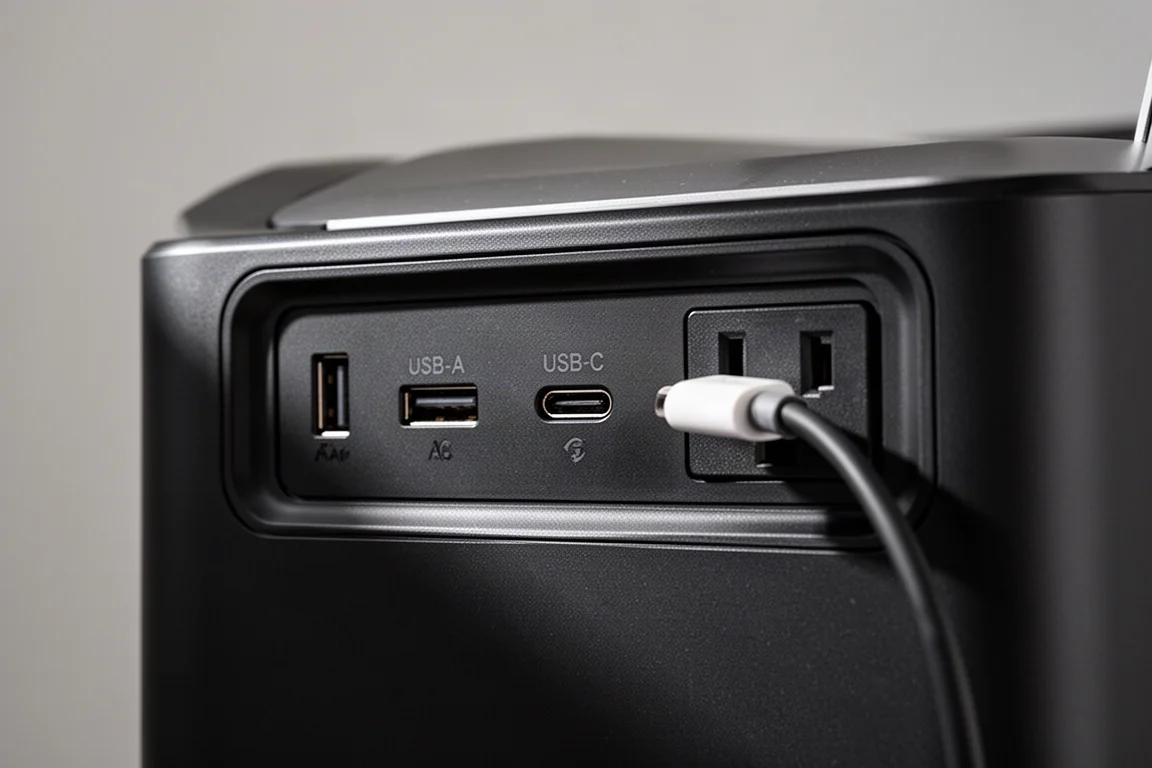
The AC output is the port most buyers will look at first. It works for low-draw devices, but expectations matter here. A 1,500W space heater, for example, immediately overwhelmed it, which is normal and reasonable for a 300W unit. Charging small electronics is the realistic use case.
Built-In Lights and Contactless Charging
There are two separate LED lights built into the housing. One functions more as an area light, while the other behaves like a small spotlight. Both are switched on and off by pressing and holding the respective buttons, and they are handy for campsite or vehicle use after dark.
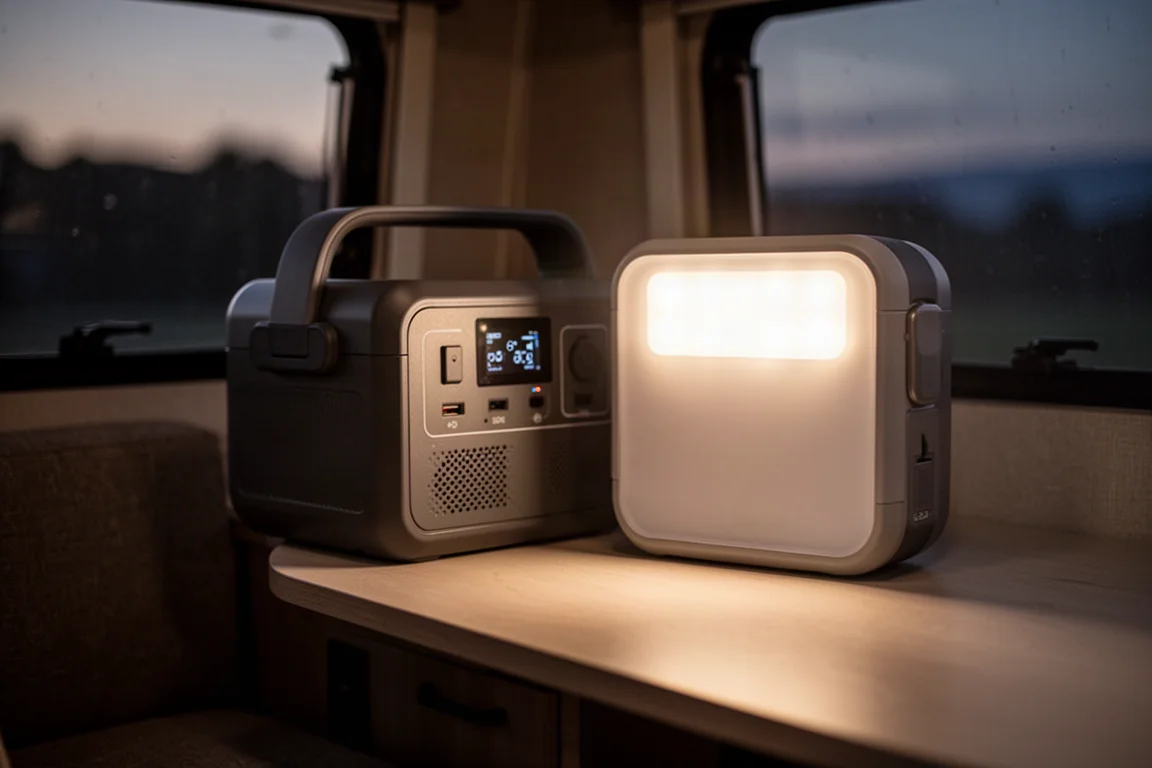
The top of the unit also carries a contactless charging pad for phones and similar devices. It could not be verified in practice with the phones on hand, since they do not support wireless charging, but the feature is there for phones that do. A small barrel-style charging cable is included for recharging the unit itself, though the very thin barrel connector raises mild concerns about long-term durability and finding replacements.
Things to Consider Before Buying
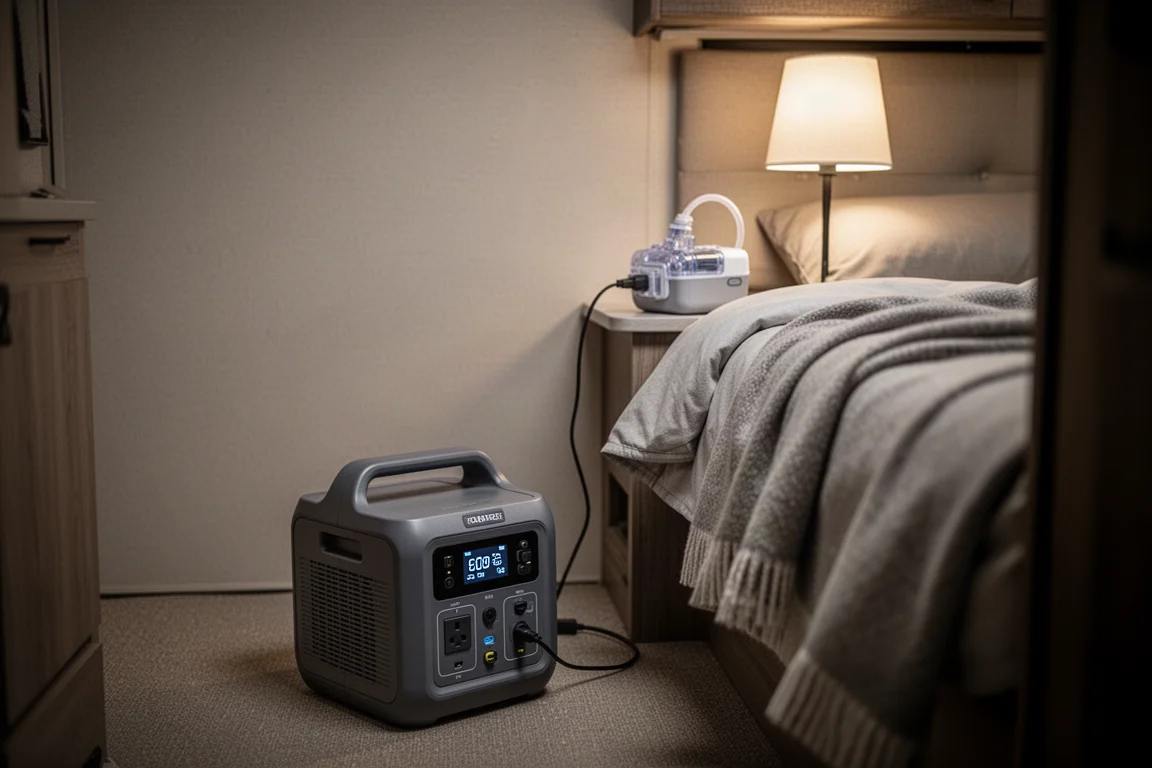
The clearest real-world data point involves a CPAP machine. On the first night of use, the unit managed about two hours before running out. For a budget 300W power supply, that result is not surprising, but it matters greatly: this is not the box to rely on for a full night of medical-device power while boondocking.
Other considerations: the plastic top-and-handle assembly has a known failure mode, there is no onboard storage for the cables and adapters these units always accumulate, and the included barrel charger is an odd, thin design. None of these are dealbreakers at a discounted price, but they explain why enthusiasm is tempered.
Buying Advice
If you can find this at around $150 after a coupon, it has a place as a cheap, fun battery box, perhaps for kids on a road trip or as a spare charging hub in a crowded vehicle. At the full $250 list price, the value case gets much weaker, especially given the durability issue seen with the first unit and the modest runtime on real loads like a CPAP. Buyers wanting more serious capacity or reliability should look at higher-capacity options, including larger 2,200W-class systems and gas inverter generators that cover genuinely demanding loads.
Conclusion
The Joyzies 300W is a likeable form factor with a genuinely useful port lineup, including 60W USB-C PD, built-in lights and a wireless charging pad. Its limits are equally clear: short runtime on real loads, a fragile-feeling top handle, and no place to stow its own cables. As a bargain-bin charging box, it makes sense. As a primary off-grid power solution, it does not.
Product link
View more details for Joyzies 300W Portable Power Station
This product is mentioned in the review. Check the specifications, options, and compatibility before buying.
View more details for Joyzies 300W Portable Power StationFurther reading
Related Reviews
Portable Power
Best Portable Power for Camping and Remote Work: Six Power Banks and Solar Panels Compared
A practical comparison of six portable power options, from a 500W solar generator for car camping to a one pound solar power bank built for backpacking.
Portable Power
Best Portable Power Stations 2026: Nine Models Compared for Real-World Use
We compared nine portable power stations across output, capacity, charging speed, noise, and UPS performance to find the best value and the best overall pick.
Portable Power
Best Portable Power Stations and Power Banks for Blackouts and Travel
Five portable power solutions compared: two EcoFlow power stations, a flight-friendly Zendure power bank, a see-through Shargeek, and the feature-packed Omni 20c+.