Subwoofers
JL Audio Fathom F112 V2 Review: A Compact 12-Inch Subwoofer Built for Home Theater
A sealed 12-inch powered subwoofer with a gloss black cabinet, deep control set and DARO room correction, evaluated for home theater punch and music support.
Introduction
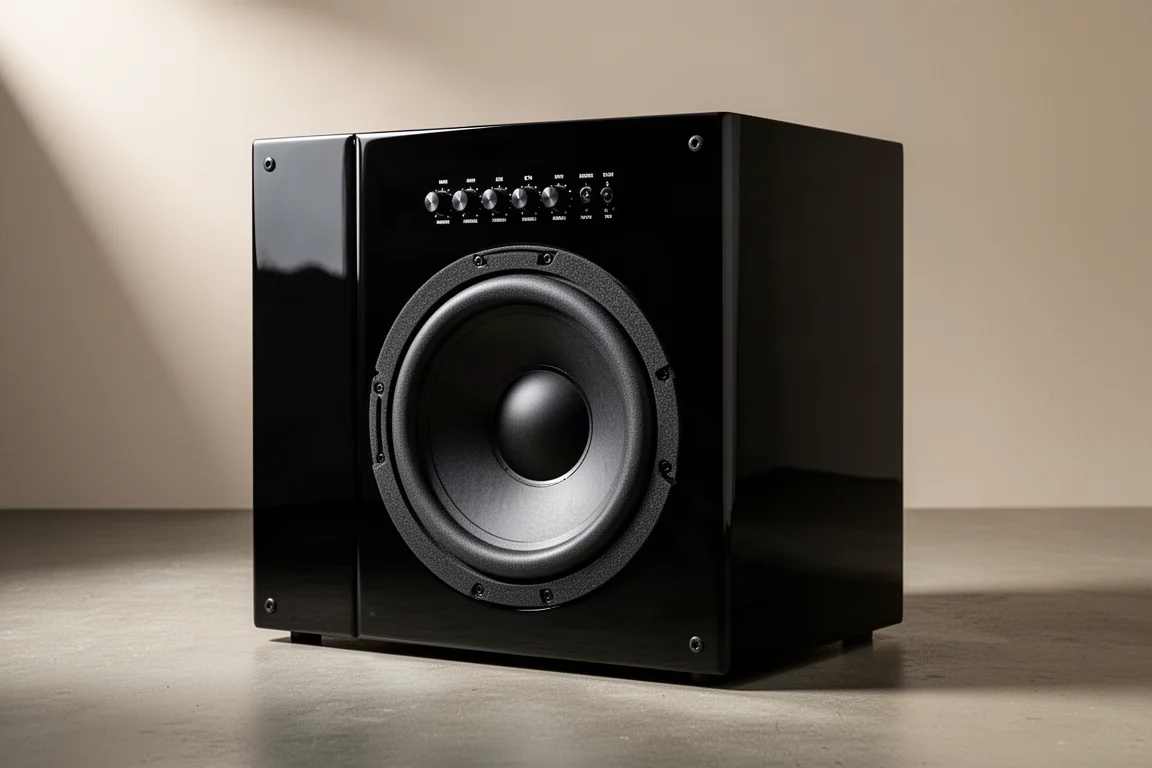
The JL Audio Fathom F112 V2 is a sealed, powered subwoofer built around a single 12-inch driver. The cabinet measures 15 inches wide, 18.5 inches tall and 17.75 inches deep, and it weighs 117 pounds. That mix of a compact footprint and genuine mass tells you a lot about the design intent: it is small enough to sit beside a screen or in a corner, and heavy enough that you will want a second pair of hands when you position it.
The finish is an automotive gloss black, and the driver is framed by a thick foam surround. The enclosure is sealed rather than ported, and the rated frequency response is 21 Hz to 119 Hz. Nothing about the physical package suggests a novelty product. It reads as a serious component that is meant to disappear into a room and then make itself felt.
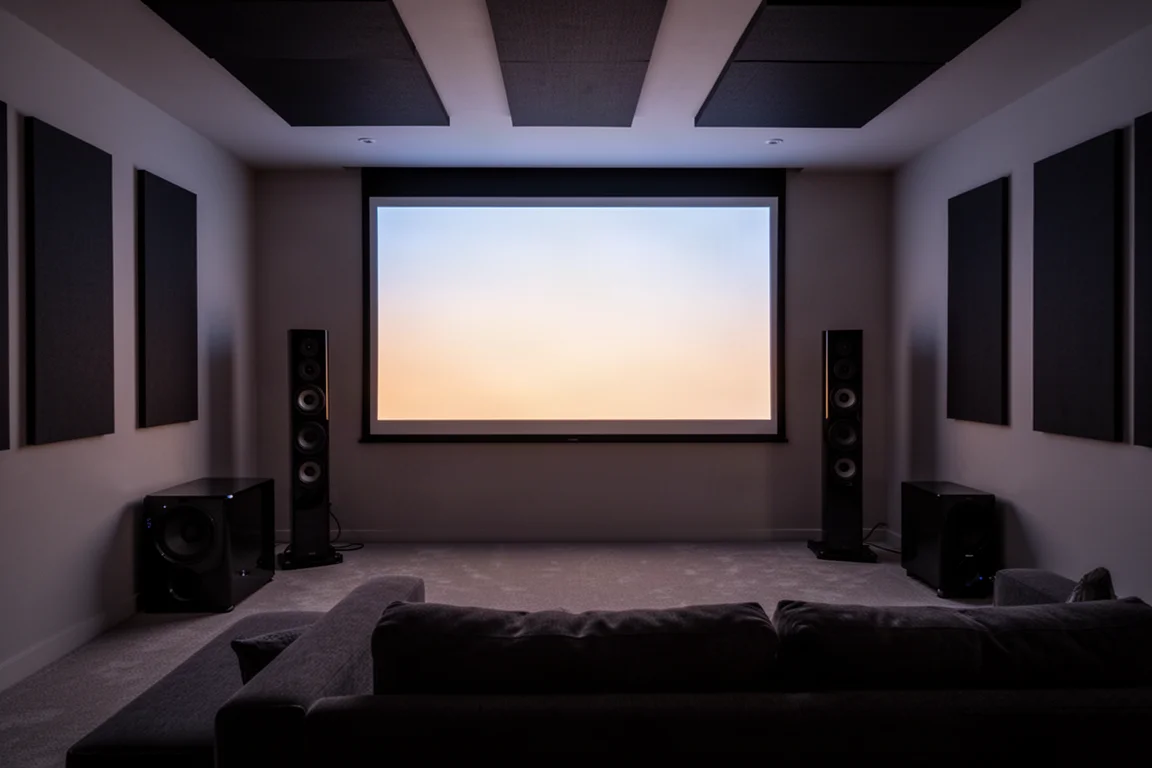
Because the F112 V2 can be set to run as a master or a slave, two units can be linked through the balanced output and driven from a single source. Placing one subwoofer at the front of the room and one behind the listening position is a common arrangement, and the control set is clearly built with that kind of two-unit system in mind.
Who this product is for
This subwoofer makes its strongest case in a home theater system. It has the attack and the tactile push that make gunfire, engines and explosions land with weight, and it pressurizes a room rather than merely adding a low hum. Listeners who want that physical sense of impact from film soundtracks will find a lot to like here.
It is also a credible music partner. Paired with electrostatic floorstanding speakers that have very little low-frequency output of their own, it blends in without drawing attention to itself and adds the foundation those speakers lack. If your main speakers are already strong in the lower registers, the benefit will be smaller.
The F112 V2 is not aimed at listeners who want the deepest possible infrasonic output. It is aimed at listeners who value a compact sealed cabinet, a broad control set and build quality, and who are willing to accept the limits that come with a 12-inch driver in a modest box.
Main strengths
The front panel is unusually complete for a subwoofer. It provides power controls, a calibration microphone input, and dedicated demo, defeat and calibrate buttons. There is a switch for reference or variable level, a master level dial in the center, and an LED brightness setting with off, dim and fully on options.
Filtering is equally flexible. The low-pass filter can be set to 12 dB or 24 dB slopes, or switched off entirely, with a variable low-pass range of 30 to 130 Hz. JL Audio also includes its ELF trim, which offers extreme low frequency adjustment from -12 dB to a +3 dB boost at 28 Hz. Variable phase control and a polarity switch round out the tuning options.
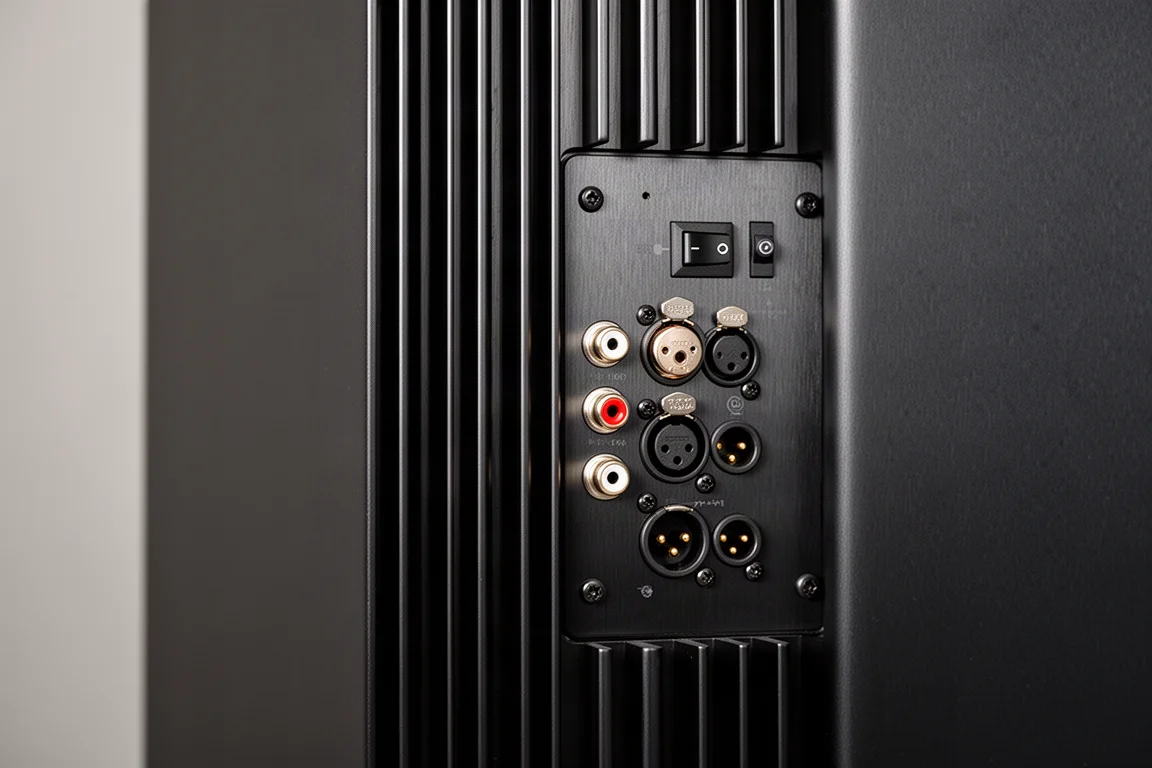
The rear panel carries substantial heat sinks, a master or slave switch for linking two subwoofers, a balanced output for the second unit, and both unbalanced RCA and balanced XLR inputs. Few subwoofers at any price offer this much connectivity and control in one chassis.
In use, the character is defined by a sharp attack and a heavy-handed tactile response. Bass arrives quickly without sounding bloated or slow, and the mid-weight pressure it produces sits between the lighter, snappier music-focused subwoofers and the very heavy, deep-digging large-format designs. The result is a subwoofer that sounds noticeably bigger than its cabinet suggests, with enough boom to pressurize a theater room in the region around 20 Hz.
Setup and DARO room correction
JL Audio’s automatic calibration system is called DARO, short for digital automatic room optimization. The subwoofer ships with a high-quality microphone and a long cable that plugs into the front panel. You place the microphone at the main listening seat, press the calibrate button on the subwoofer, and let the process run. Calibrating a pair of subwoofers takes only a few minutes.
The value here is that DARO handles the hardest part of subwoofer setup for you. In a measured response taken at the main listening position, the optimizer removed a large peak around 45 Hz and left a noticeably smoother curve, and it did so without any additional room correction from an external processor.
It is not a perfect system, but it lands close to the target more often than not. For anyone who would rather not learn manual equalization and measurement, DARO alone makes the F112 V2 far easier to live with than its price and control count might imply.
Room size and output expectations
Room measurements are specific to the room they are taken in, so treat any published curve as a starting point rather than a promise. In one space, each subwoofer measured on its own showed a pronounced dip around 60 Hz, while the two units combined produced a much smoother response with usable extension down to the rated 21 Hz.
The pattern above 20 Hz is consistently strong. The subwoofer stays clean and composed across that range, and even demanding material with heavy low-frequency content does not make it sound strained. Below that point, output falls away, and the built-in protection steps in to prevent the driver from being pushed past its limits. On a soundtrack with genuine infrasonic information, the deepest drops simply stop rather than distort, which is the protection circuit doing exactly what it should.
That behavior shapes the room-matching question. In a smaller space such as a living room, a single F112 V2 is a natural fit. In a large dedicated theater played at reference level, a pair will deliver impact but may not produce the sheer output some listeners expect, and a larger model in the same line or a four-subwoofer arrangement would be needed to fill the space more completely.
Things to consider before buying
The most obvious consideration is price. A single F112 V2 sells for around $5,500, which places it firmly in the upper tier alongside subwoofers such as the Perlisten D12 and the Paradigm XR13. You are paying for build quality, control flexibility and a long track record rather than for the lowest cost per decibel.
There are also performance trade-offs to weigh honestly. The F112 V2 does not dig as deep as the biggest Perlisten or Rythmik models, and it is not as snappy as some smaller music-focused subwoofers. It sits deliberately in the middle: more forceful and deeper than light music subs, less weighty than large-format designs.
Finally, consider the platform’s age and the physical reality of the product. This version of the Fathom design has been on the market for almost a decade, with the original version going back considerably further, so the engineering is proven rather than new. At 117 pounds per cabinet, installation is a two-person job, and DARO, while very good, is not flawless.
Buying advice
The F112 V2 rewards buyers who know what they want. If your priority is a compact sealed subwoofer with a gloss black cabinet that matches premium speakers, a deep control set, and calibration that handles room correction automatically, it delivers on all of those points and pairs especially well with speakers that need low-frequency support.
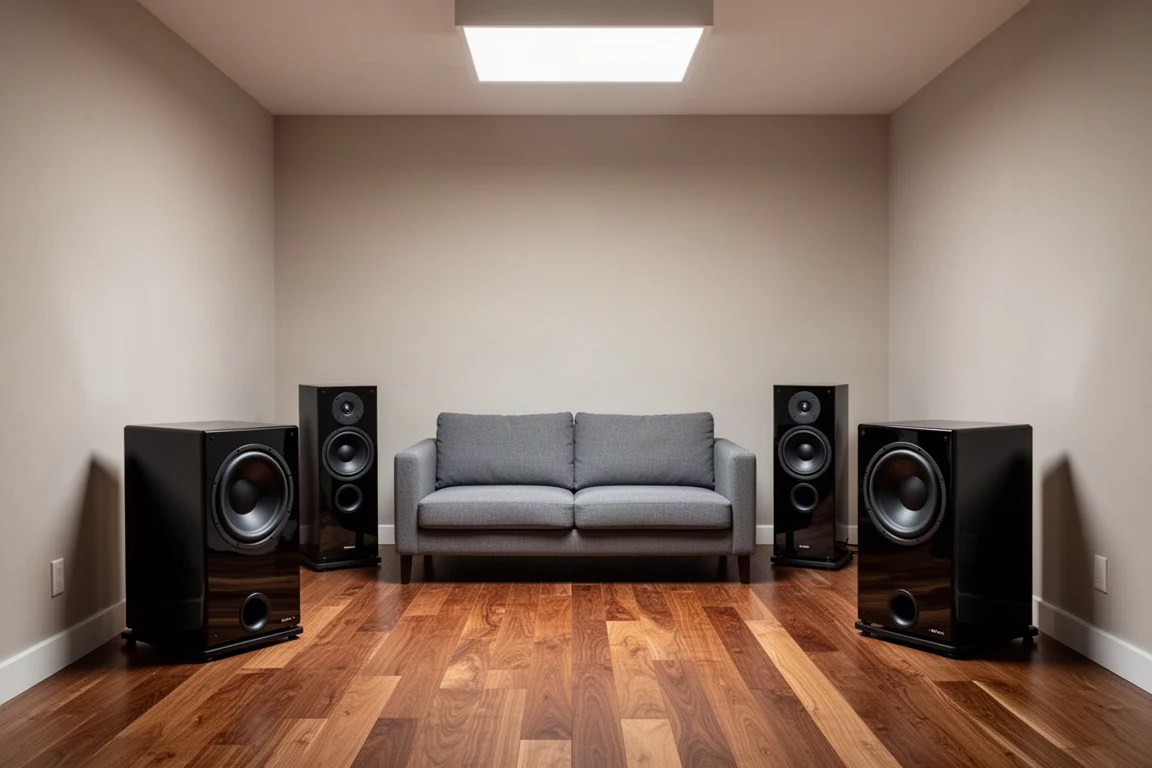
If instead your goal is maximum output in a very large room, or the lowest possible extension on infrasonic-heavy soundtracks, look carefully at what a 12-inch sealed cabinet can realistically achieve before committing. A single unit suits a smaller room well, while a master-slave pair is the more satisfying choice for a dedicated theater. Buy for the room you actually have, and the F112 V2 is a confident, long-lived addition to a serious system.
Conclusion
The JL Audio Fathom F112 V2 is a compact, heavy, beautifully finished sealed subwoofer with a control panel that leaves very little to be desired. It excels at home theater impact, holds its own with music when the main speakers need support, and its DARO calibration makes setup approachable. It is expensive, it does not reach the deepest infrasonic depths, and a large reference-level room will want more output. For the right room and the right system, though, it remains a top-tier performer.
Product link
View more details for JL Audio Fathom F112 V2
This product is mentioned in the review. Check the specifications, options, and compatibility before buying.
View more details for JL Audio Fathom F112 V2Further reading
Related Reviews
Subwoofers
Arendal 1961 Subwoofer 1S Review: Beautiful Build, Modest Punch at $1,000
A sealed $1,000 subwoofer with a gorgeous cabinet, plus three lower-priced alternatives that deliver more impact for movie nights.
Subwoofers
Arendal Sound 1723 2V Subwoofer Review: Dual 13.8-Inch Drivers Under $3,000
A flagship ported subwoofer with dual opposing 13.8-inch drivers, a 1,200W RMS amplifier, app-based DSP, and a 10-year warranty.
Subwoofers
Ascendo 16 Sub Active Sealed Review: Sealed Bass Built on Real Engineering
A close look at the Ascendo 16 Sub Active Sealed, a 16-inch sealed home theater subwoofer with independently verified measurements, a purpose-built driver, and genuinely controlled output.