Backpacking Stoves
Jetboil Flash vs Fire Maple Petrel Pot: Boil Speed, Fuel Use, and Wind Performance
A side-by-side comparison of the Jetboil Flash and a modular Fire Maple Petrel Pot with a Green Peak stove, covering igniter reliability, boil times, fuel consumption, noise, and how each system behaves in wind.
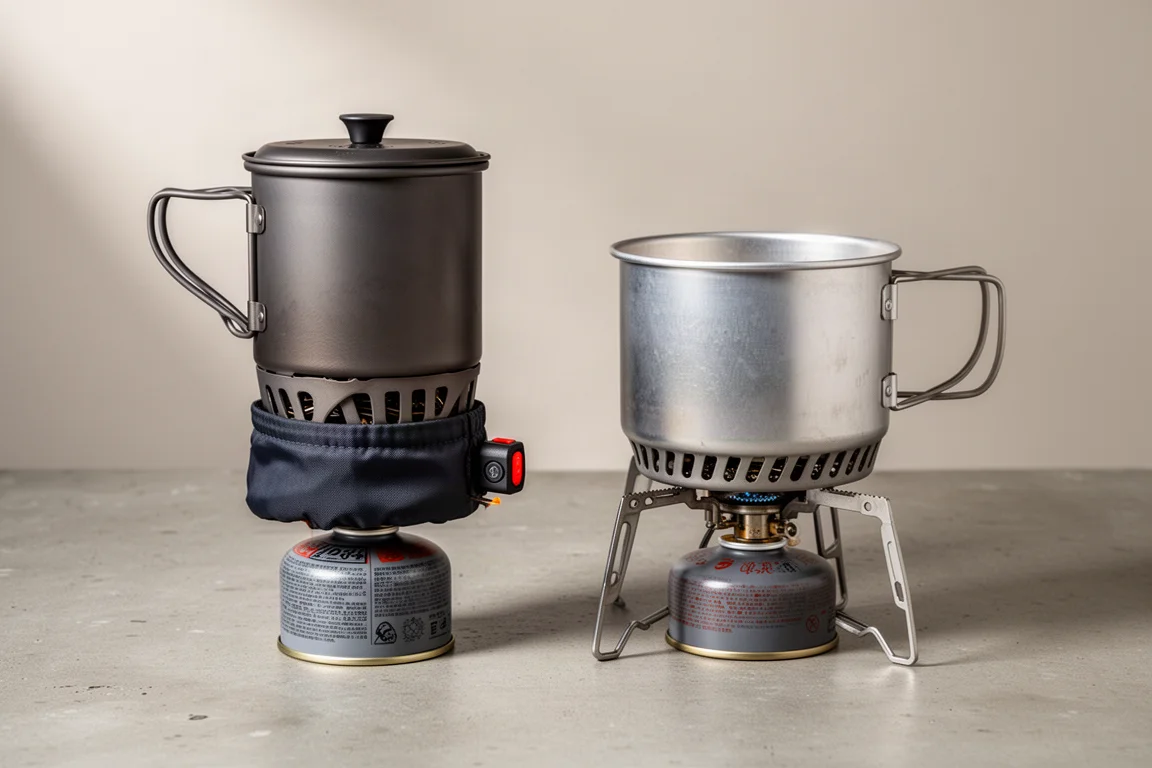
Introduction
All-in-one canister stove systems carry a strong reputation for being rugged, reliable, and efficient, and they are usually the first thing an outdoor shop will recommend. The open question is whether that reputation survives being measured against a modular alternative that costs a third as much and weighs noticeably less.
This comparison puts the Jetboil Flash against a Fire Maple Petrel Pot paired with a Green Peak stove. The focus is deliberately narrow: igniter reliability, boil time, fuel consumption, noise, and how each system holds up when wind enters the picture. Every result comes from repeatable tests with fixed water volume, a fixed flame setting, and a scale used to weigh fuel before and after each boil.
How We Tested These Stove Systems
Each boil test used 500 ml of ice-cold water, a full flame setting, and the lid left off so the runs stayed consistent. Water was treated as boiling at 95 °C, the boiling point measured for that room temperature and elevation. The complete stove and canister assembly was weighed before and after every boil to calculate how much fuel went into heating the water. Both canisters started with 71 g of fuel, roughly 65 percent of full capacity, a range where fuel level has minimal effect on stove performance.
Both systems use unregulated burners, meaning there is no pressure regulator between the canister and the flame. Both pots also use a heat exchanger: a ring of fins on the base that draws heat from the flame into the pot and into the water. The fin designs on the two pots are broadly similar, which makes the differences in fuel use and wind behaviour more interesting rather than less.
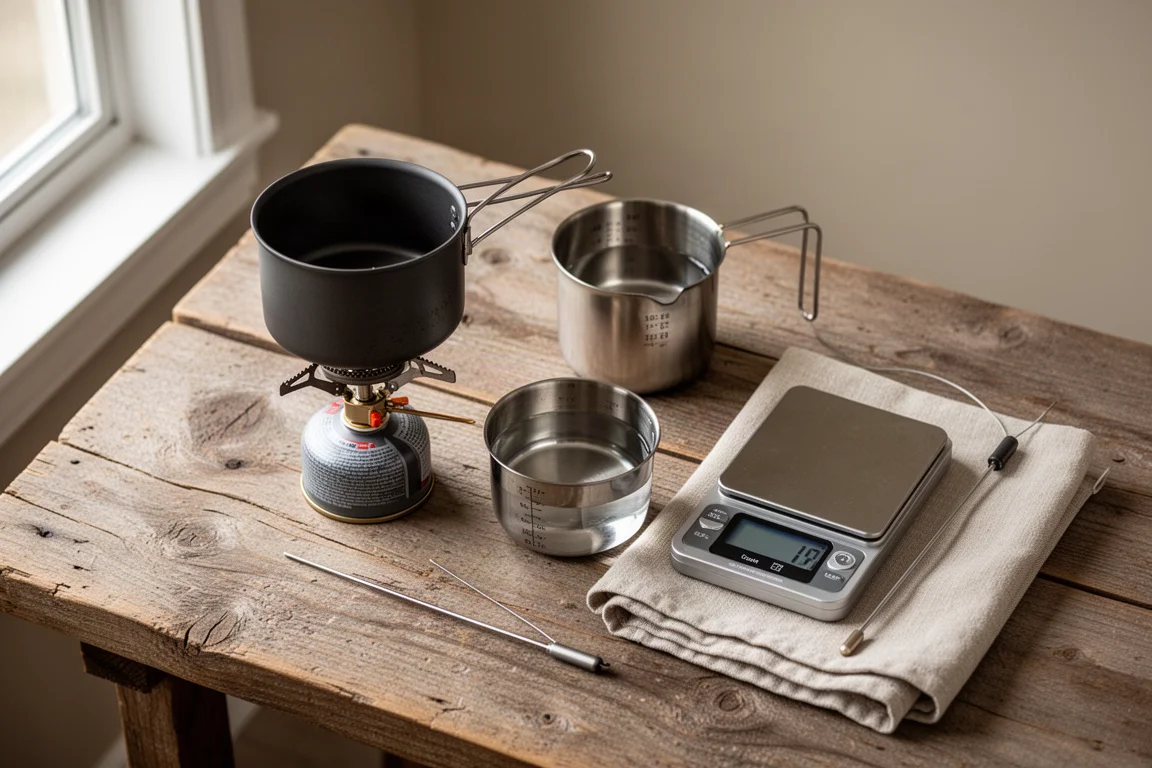
Igniter testing followed a simple routine: a quarter turn of the fuel valve, a single press of the piezo button, and a note of whether the burner lit. Each stove was pressed 100 times in still air, then again in front of a fan producing moving air, and finally with the pot mounted on top to see whether the pot itself sheltered the igniter.
Jetboil Flash: Speed and Fuel Economy in Still Air
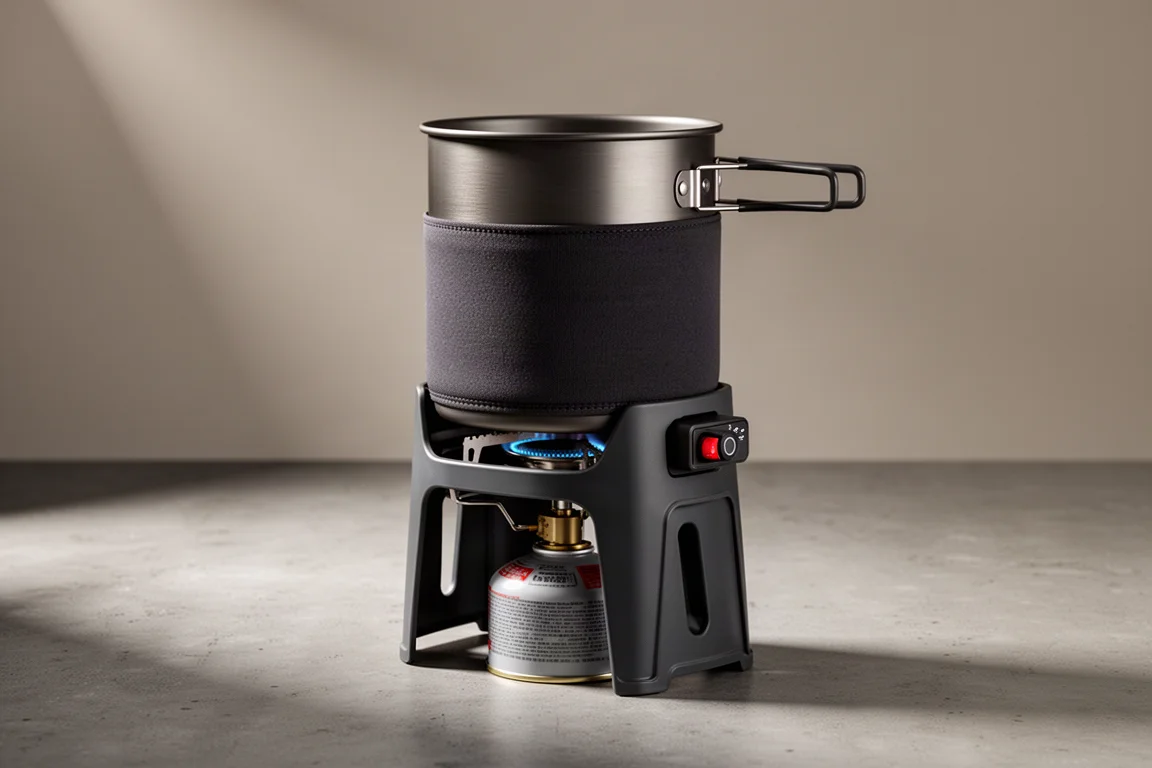
The Jetboil Flash is an all-in-one system: the pot and the burner are designed to be used together, and the pot is not really intended to sit on a different stove. It costs $130, weighs 371 g, and its burner is rated at 9,000 BTU. The advertised figure is 500 ml of water boiled in 100 seconds.
In testing with ice-cold water, the Flash reached 95 °C in 1 minute 54 seconds. That is a little slower than the advertised claim, which is most likely measured with water closer to room temperature. Fuel use was the standout result: every single boil consumed 6 g of fuel, making it the more efficient of the two systems in calm conditions. Noise measured 79 dB at roughly a foot away and 68 dB at three to four feet, which makes it the quieter of the two systems, though neither is genuinely quiet around camp.
Fire Maple Petrel Pot: Wind Performance and Fuel Use
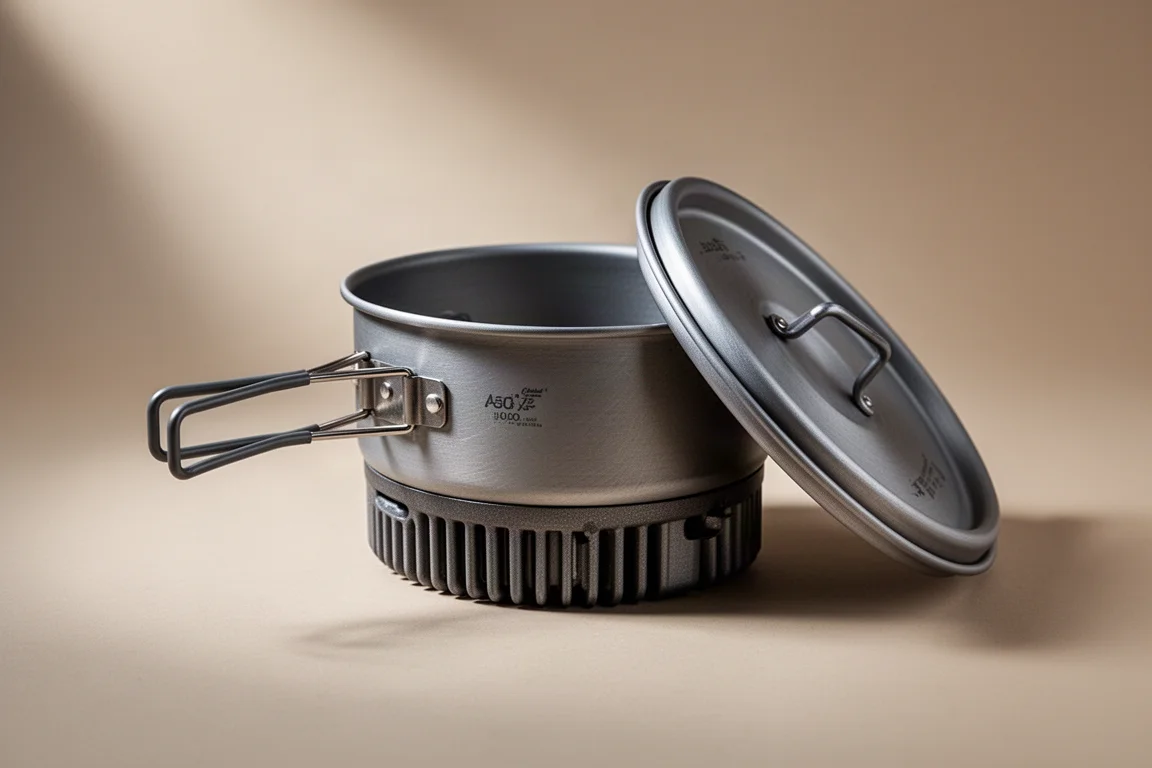
The Fire Maple Petrel Pot and Green Peak stove combination costs $47 and weighs 247 g for the complete system, and its burner is rated at 9,500 BTU, slightly more output than the Flash. The pot is the more flexible half of the pairing, since it can be used with almost any three-armed stove.
Boil times were slower in still air: 2 minutes 29 seconds on the first run, averaging around 20 seconds behind the Jetboil Flash. Fuel use settled at 8 g per boil across most runs, with one outlier at 10 g. Even at 8 g, that is efficient for a stove system and better than most standard pot and stove combinations.
Wind changed the picture completely. At 10 km/h the system boiled in 3 minutes 30 seconds using 11 g of fuel, only a gram more than its calm-air run. At 15 km/h it took 4 minutes 50 seconds and 12 g of fuel. The flame stayed lit through both tests without sputtering.
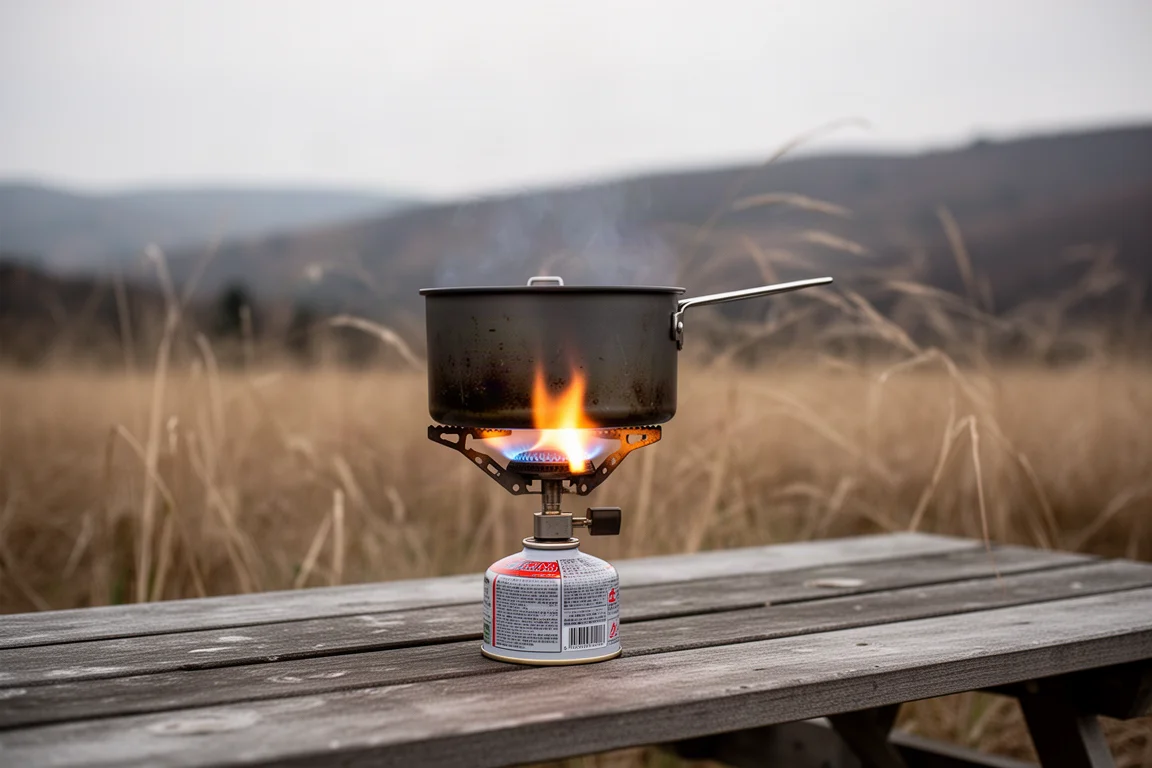
The most likely explanation is geometry. The lip of the burner sits almost level with where the fins on the pot begin, so there is very little gap for moving air to slip between the stove and the pot and disturb the flame.
Green Peak Stove: The Modular Burner
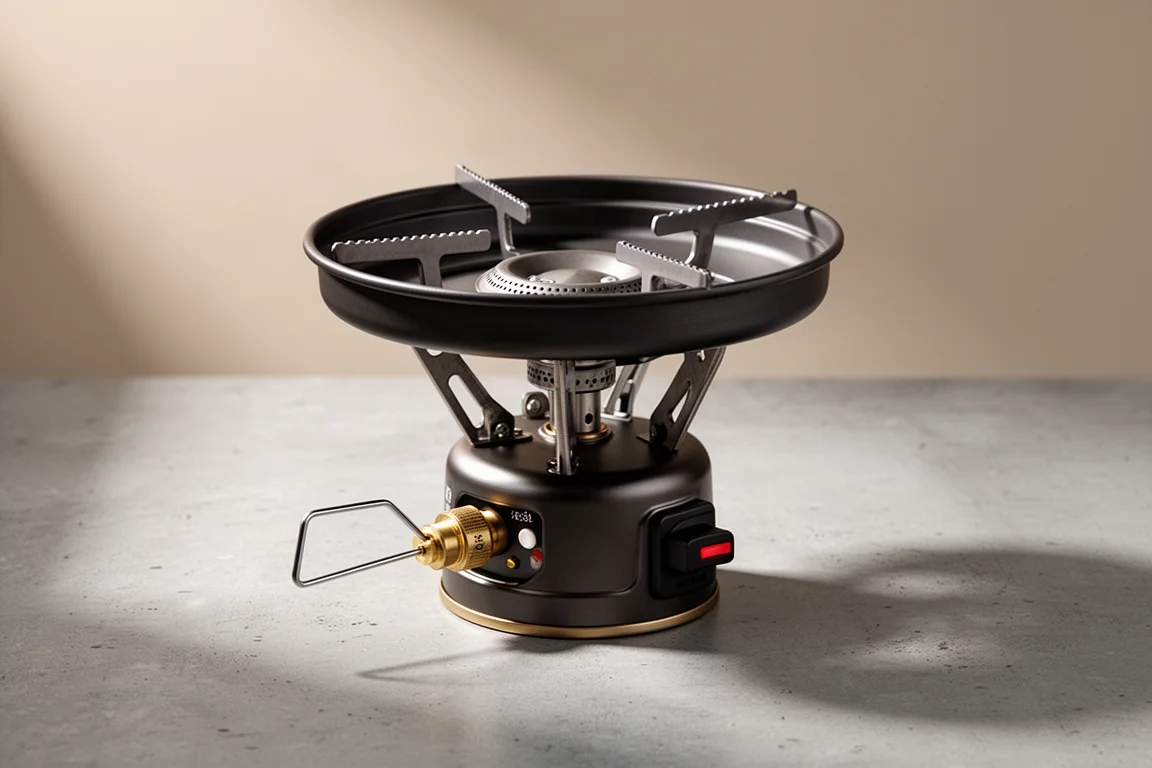
The Green Peak stove is the burner side of that system, and it is where the modular appeal comes from. It works with almost any pot, so it can replace a bulky integrated cooker, act as a spare burner for a group, or pair with cookware already in a pack. The burner head is wide and carries a raised lip around its edge, a design detail that helps shield the flame from side wind.
Weighed as a complete package, the pot and stove together come in at 247 g, which is lighter than the 371 g all-in-one option, and the whole system costs a fraction of the price.
Piezo Igniter Reliability: Still Air Versus Wind
Press-button igniters are convenient and widely known to be temperamental. The appeal is obvious: no digging through a pack or a tent for a lighter before the first coffee of the morning.
In still air, both stoves performed well. The Jetboil Flash failed twice in 100 presses, and the Fire Maple system failed three times. That is a strong result for both. In front of a fan, reliability collapsed: the Fire Maple system failed about half the time and the Jetboil Flash failed about 60 percent of the time, across 50 presses each. Mounting the pot on top to shelter the igniter made no difference at all, with the same failure rates over another 50 attempts.
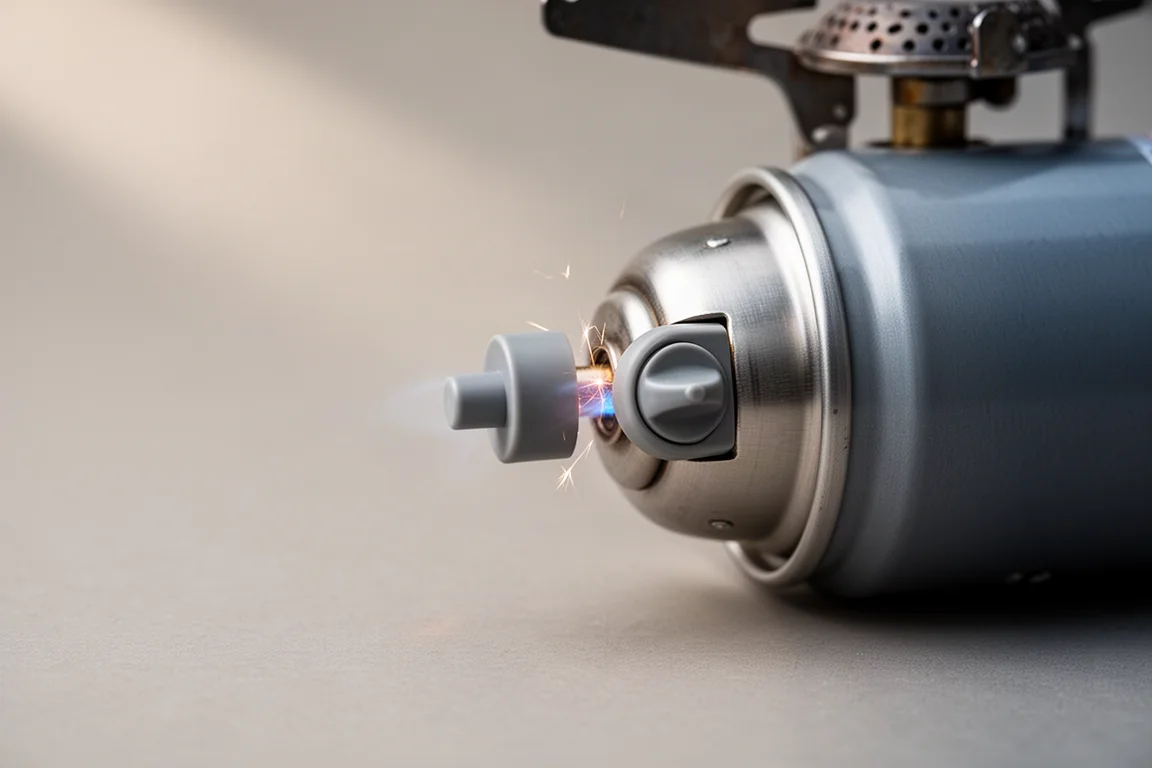
For the Jetboil Flash, wind caused a bigger problem than the igniter itself. At 10 km/h the flame was blown out before a boil could be completed, and the burner sputtered repeatedly during the attempts. A lighter is the practical fallback whenever a piezo button refuses to cooperate, and in moving air that fallback stops being optional.
Noise and Everyday Camp Use
Noise was measured out of curiosity alongside the boil tests, and the results were close. The Jetboil Flash came in at 79 dB at about a foot away and 68 dB at three to four feet. The Fire Maple system was slightly louder at 82 dB and 70 dB at the same distances. A quiet stove is easy to underestimate until it is sitting a metre from a sleeping mat, and neither of these systems qualifies as quiet.
Both burners are unregulated, and both pots use finned heat exchangers, so the efficiency gap in calm conditions comes down to how well each combination moves heat into the water rather than to any radical difference in hardware. The canister starting level of 71 g, around 65 percent of capacity, kept both systems on equal footing throughout.
Which System Fits Your Backpacking?
If most cooking happens in calm, sheltered spots and boil speed plus fuel economy are the priorities, the Jetboil Flash delivers on both: the fastest boils in this comparison and a consistent 6 g of fuel per 500 ml. The trade-off is that it is heavier, costs nearly three times as much, and its flame does not survive even light wind.
If trips regularly involve exposed campsites, ridgelines, or shoulder-season breezes, the Fire Maple Petrel Pot and Green Peak stove system keeps the flame alive at 10 km/h and 15 km/h, at a third of the price and roughly a third less weight. The compromise is around 20 seconds of extra boil time and about 2 g more fuel per boil in calm air, which is a small price for a stove that keeps working when conditions turn.
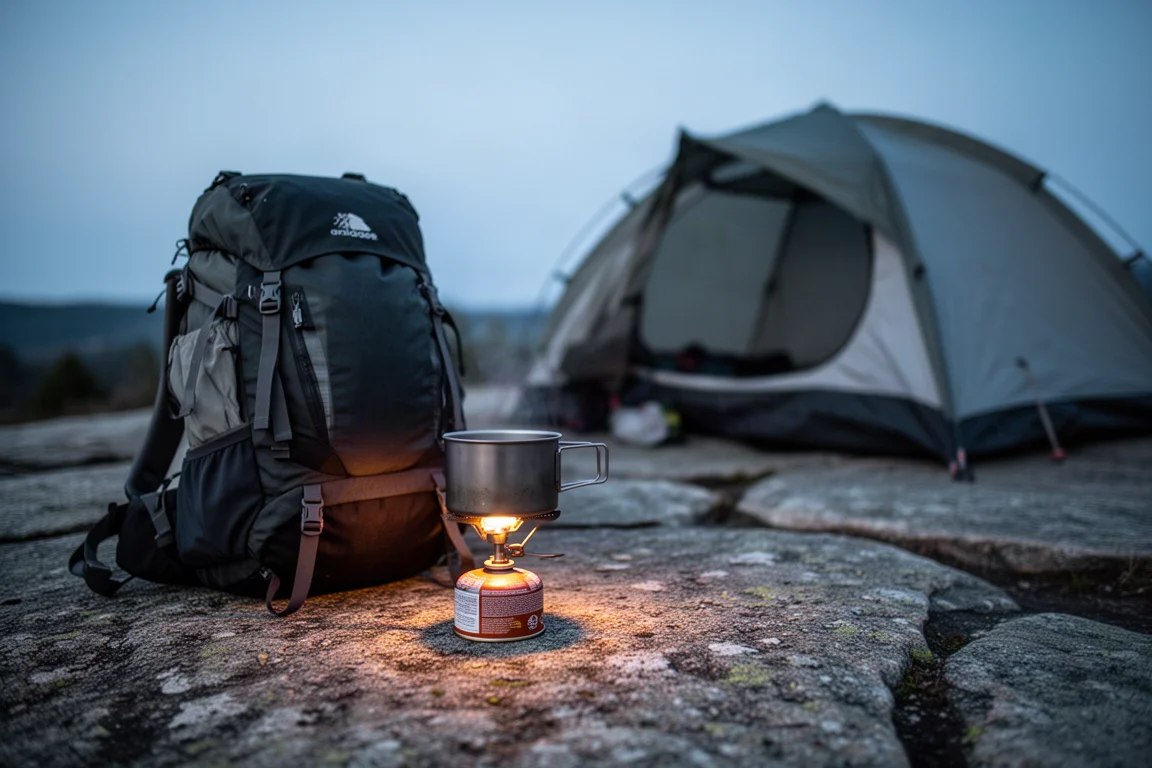
The gap between the burner lip and the pot fins looks like the root cause of the wind difference, and closing that gap would be a straightforward design change rather than a fundamental redesign. Until then, a stove that fails in a light breeze is a genuine dealbreaker for anyone who camps above the treeline or in open terrain, and it is the single strongest argument in favour of the modular system here.
For buyers who rarely leave sheltered valleys and value every second of a morning boil, the all-in-one route still makes sense. For everyone else, the cheaper, lighter, wind-tolerant system is the more confident purchase.
Conclusion
The tests answer the original question clearly enough. The Jetboil Flash is fast and frugal in still air, and its igniter is marginally more reliable indoors, but it weighs more, costs far more, and loses its flame in wind that the Fire Maple Petrel Pot and Green Peak stove system handles without drama. The modular system gives up a little speed and a couple of grams of fuel per boil and gains wind resistance, lower weight, and a much lower price. Which one belongs in a pack depends almost entirely on where that pack gets used.
Further reading
Related Reviews
Backpacking Stoves
Best Backpacking Stove and Pot Combinations: Budget to Premium
A practical look at fourteen backpacking stoves and cook pots, from inexpensive starter pairings to windproof all-in-one systems that cost close to $200.
Backpacking Stoves
Best Backpacking Stove Systems: Five Canister Stoves Compared
Five canister stove and pot systems compared on wind resistance, boil speed, packed size, and cooking control, from a bare titanium burner to a fully integrated cook system.
Backpacking Stoves
Best Backpacking Stoves 2026: Six Stove Types Compared and Ranked
A practical comparison of canister, white gas, wood burning, solid fuel, and alcohol backpacking stoves, ranked on speed, weight, fuel availability, and cost.