Hi-Fi Audio
JDS Labs Daisy Review: A Dual-Chip DAC With a See-Through Case
A practical look at the JDS Labs Daisy, a desktop DAC with two AKM 4499 chips, eight swappable op-amps, six digital inputs, and a case you can see straight through.
Introduction
The JDS Labs Daisy is a digital-to-analog converter, the component that turns digital files into an analog signal an amplifier can use. If most of your listening comes from a streamer, a CD transport, a server, or a computer, the converter in the chain shapes a great deal of what you eventually hear.
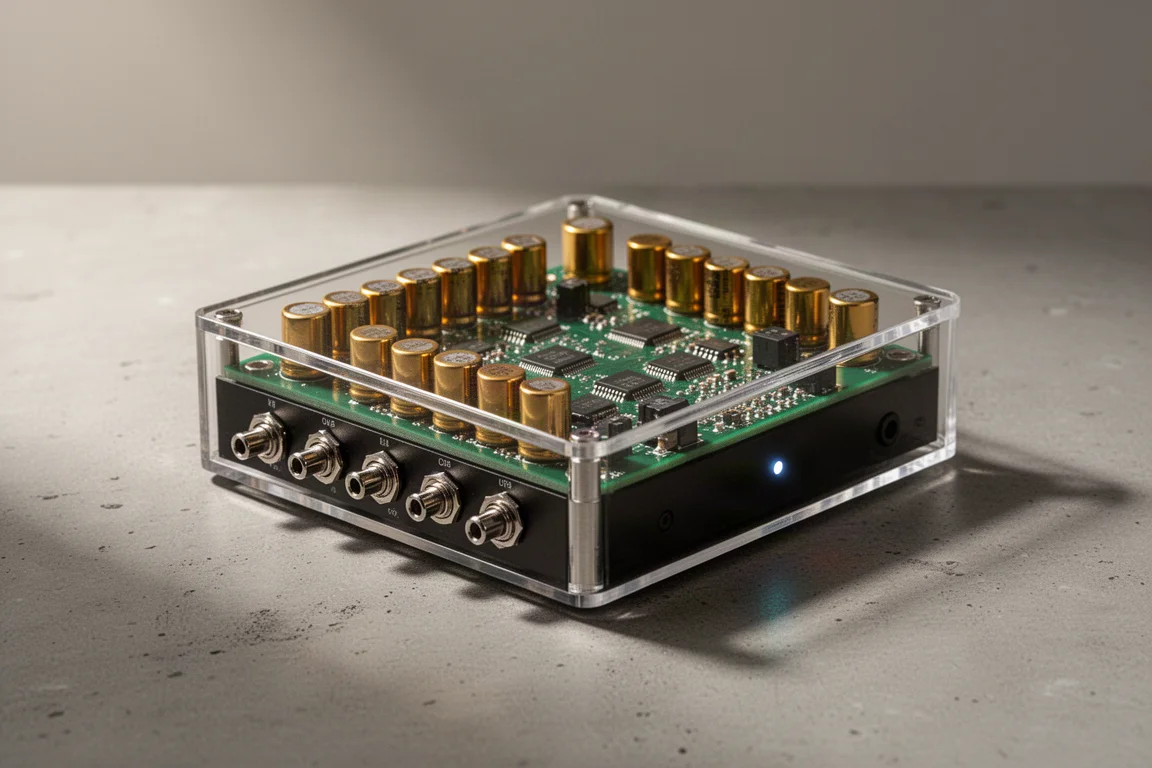
JDS Labs is a family-run company based in Florida, and the Daisy is built there. The company has a habit of not chasing conventional component design, and the Daisy shows it: the case can be fully transparent, putting the circuit board, capacitors, and switches on display.
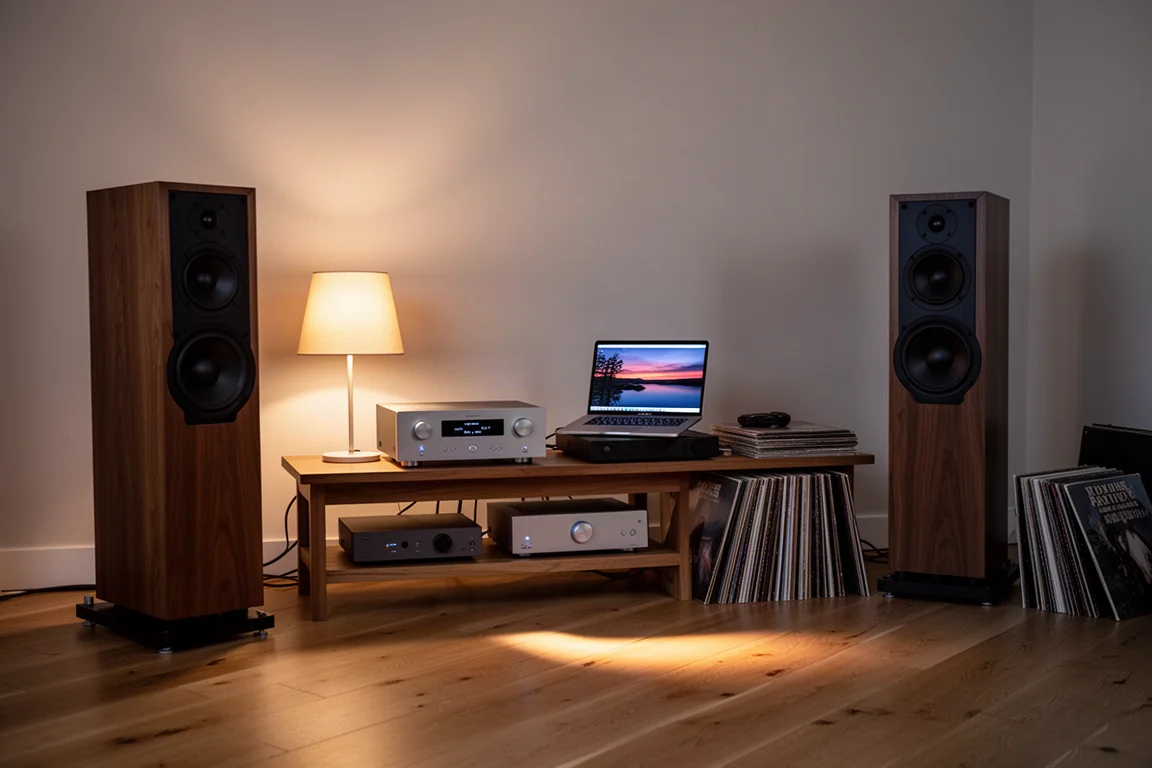
The Daisy sits at around $1,300 and behaves, in practical terms, like two of the company’s stereo converters sharing a single chassis. It is aimed at listeners who want a serious digital front end with room to experiment.
Who This DAC Is For
The Daisy makes the most sense for listeners who juggle more than one digital source and more than one amplifier. Balanced and single-ended outputs stay active at the same time, so a headphone amplifier and a speaker amplifier can both remain connected without swapping cables.
It also suits anyone who likes to tune a system rather than leave it fixed. The op-amps inside can be swapped, which changes the sound signature in much the same way that changing tubes changes the character of a tube amplifier. For listeners who enjoy that kind of experimentation, the Daisy offers a lot of ground to explore.
Main Strengths
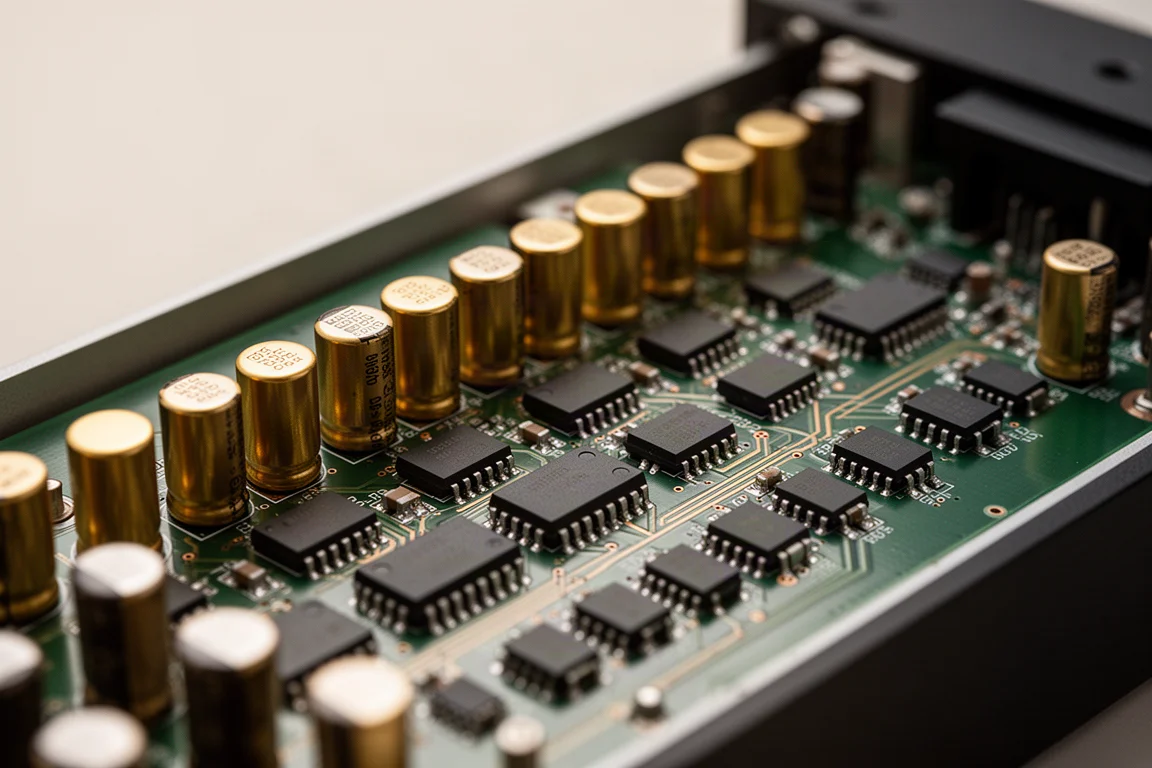
Two AKM 4499 converter chips sit inside, one for each channel. The design actually uses a pair of converter chips per channel, splitting digital processing and other stages across them, with the stated goal of keeping noise as low as possible.
Eight op-amps are fitted. They are mono chips, unlike the stereo op-amps used in the company’s stereo converter, and no single op-amp is tied to a specific output. Anyone who wants a different sound signature has to change all eight. The stock parts are Texas Instruments op-amps, and they perform well as delivered.
In listening, the Daisy’s character shows up as precise instrument separation, a clear sense of where each instrument sits in the space, and bass with genuine presence and snap. The presentation leans toward the feel of a very good analog record rather than anything dry or clinical. It works across a wide range of material, which is part of what makes it easy to keep listening.
Design, Inputs, and Outputs
The front panel uses industrial-style switches. Power sits on the left, with input selection to the right: two optical Toslink inputs, two coaxial digital inputs, one USB input, and one AES input. An LED confirms which input is active.
The rear panel carries the physical connections, including digital optical and coaxial outputs and both balanced and single-ended analog outputs. Because all outputs run at the same time, the Daisy can feed two amplifiers at once, which is genuinely useful in a desk setup or a two-room system.
Case options include wood, a see-through acrylic version, and an aluminium option. Wood case pricing was not finalised at launch, and the acrylic and aluminium versions are expected to come in below $1,300.
Power comes from a 12V DC wall wart, and the unit can also run from an external 12V DC linear power supply if you already own one.
How It Compares to Other DACs
The JDS Labs J2 is the company’s stereo converter and comes in at around $250 to $300 depending on how it is configured. Buyers can choose from a variety of DAC chips, and the op-amps can be swapped. The Daisy can be thought of as two J2s under one roof.
The Denafrips Ares 12th takes a different route entirely. It is an R2R design with no converter chip, relying on resistors instead, and it is a heavy unit with a linear power supply built in. Next to the Daisy it sounds a little smoother, but it does not have the same edge or focus.
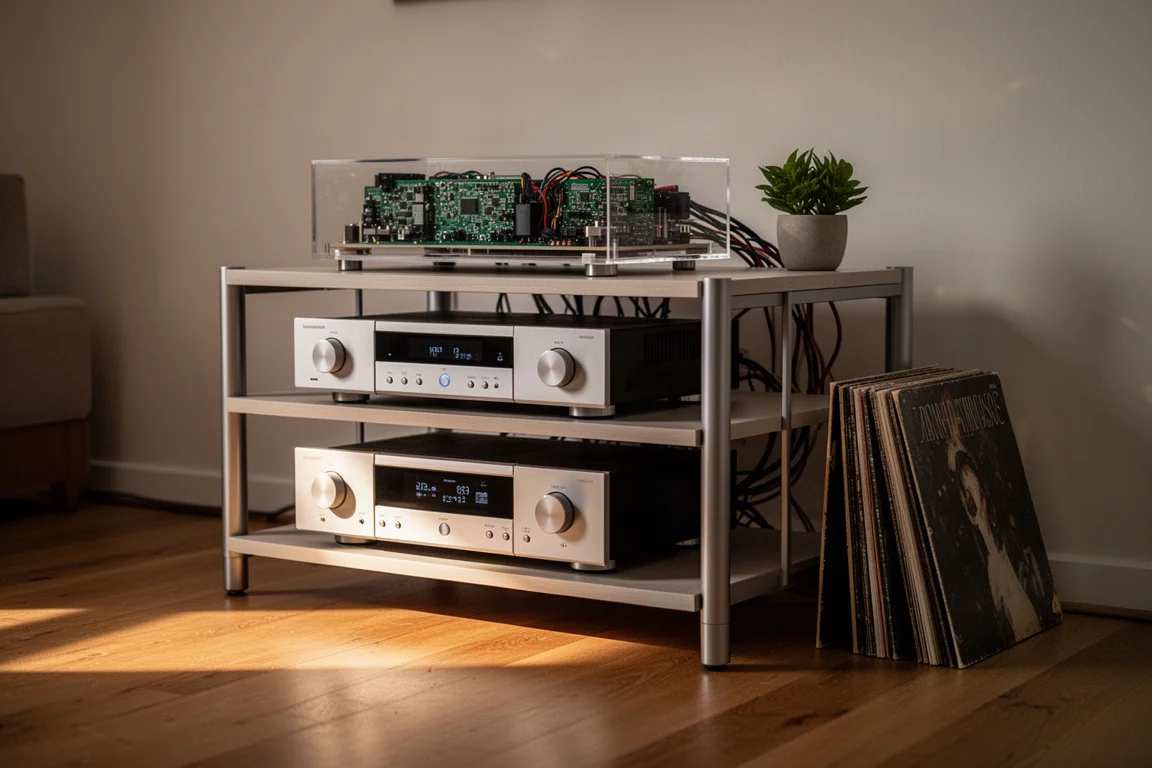
Both approaches are legitimate, and the choice comes down to the character you want rather than a clear winner. The Daisy favours precision and drive, while the Ares 12th favours smoothness. If you value the sense of a musical microscope that stays fun to listen to, the Daisy is the more direct of the two.
Things to Consider Before Buying
The Daisy runs from a 12V DC wall wart. If you want a linear supply, you will need an outboard unit, which adds a box and a cable to your setup.
Op-amp changes are all or nothing. Because no single op-amp is tied to a specific output, a swap means replacing all eight chips at once.
Case and pricing details were still moving at launch. Wood case pricing had not been finalised, and the acrylic and aluminium versions were expected to land below $1,300.
Worth knowing: the transparent case puts the internals on show, so the Daisy becomes a conversation piece as much as a component. It tends to invite questions about how the parts inside actually work.
Finally, whether the step up over a cheaper converter is audible will depend on the rest of your system. A resolving amplifier and speakers will reveal more of the difference.
Buying Advice
If you already run a JDS Labs stereo converter, the Daisy takes what that unit does well and amplifies it, and the additional inputs and simultaneous outputs make it easier to live with day to day.
If your system is more modest, the J2 at around $250 to $300 may cover most of what you need, and the Daisy’s advantages will be easier to hear once the rest of the chain can keep up.
For buyers who do choose the Daisy, the case is the main decision left. The acrylic version shows the internals, while wood and aluminium options are also planned, with the non-wood finishes expected to cost less than $1,300.
Either way, the Daisy rewards a careful setup: a clean digital source, a capable amplifier, and speakers that can show what the converter is doing. Build the system around it properly and the results are easy to appreciate.
Conclusion
The JDS Labs Daisy is a dual-chip converter with a wide input selection, eight swappable op-amps, and a case that refuses to hide anything. It is priced around $1,300, it is made in Florida by a family-run company, and it is designed for listeners who want to shape the sound of their digital front end.
For anyone with several digital sources and more than one amplifier, the Daisy solves real problems while sounding refined, dynamic, and analog in character. It is a strong option for a system that is ready to show what it can do.
Product link
View more details for JDS Labs Daisy
This product is mentioned in the review. Check the specifications, options, and compatibility before buying.
View more details for JDS Labs DaisyFurther reading
Related Reviews
Hi-Fi Audio
Accuphase C-57 vs Allnic H-7000V: Two High-End Phono Stages Compared
A fully balanced solid-state phono stage with a pitch-black noise floor meets a tube design built for well-loved records. Here is how to choose between them.
Hi-Fi Audio
Active vs Passive Hi-Fi: Five Components for a Modern System
Five components that define modern active and passive hi-fi systems, with the strengths, trade-offs and setup details worth weighing before you buy.
Hi-Fi Audio
Advance Paris A10 Apex Review: A Hybrid Integrated Amplifier That Covers a Lot of Ground
A French hybrid integrated amplifier with a class A tube preamp stage, analogue power meters, and an internal DAC and phono stage good enough to make extra boxes unnecessary.