Bookshelf Speakers
JBL Studio 530 vs Klipsch RP-600M Mark II: Two Horn-Loaded Bookshelf Speakers Compared
A close look at the JBL Studio 530 and how it stacks up against the Klipsch RP-600M Mark II, covering strengths, trade-offs, setup notes, and buying guidance.
Introduction
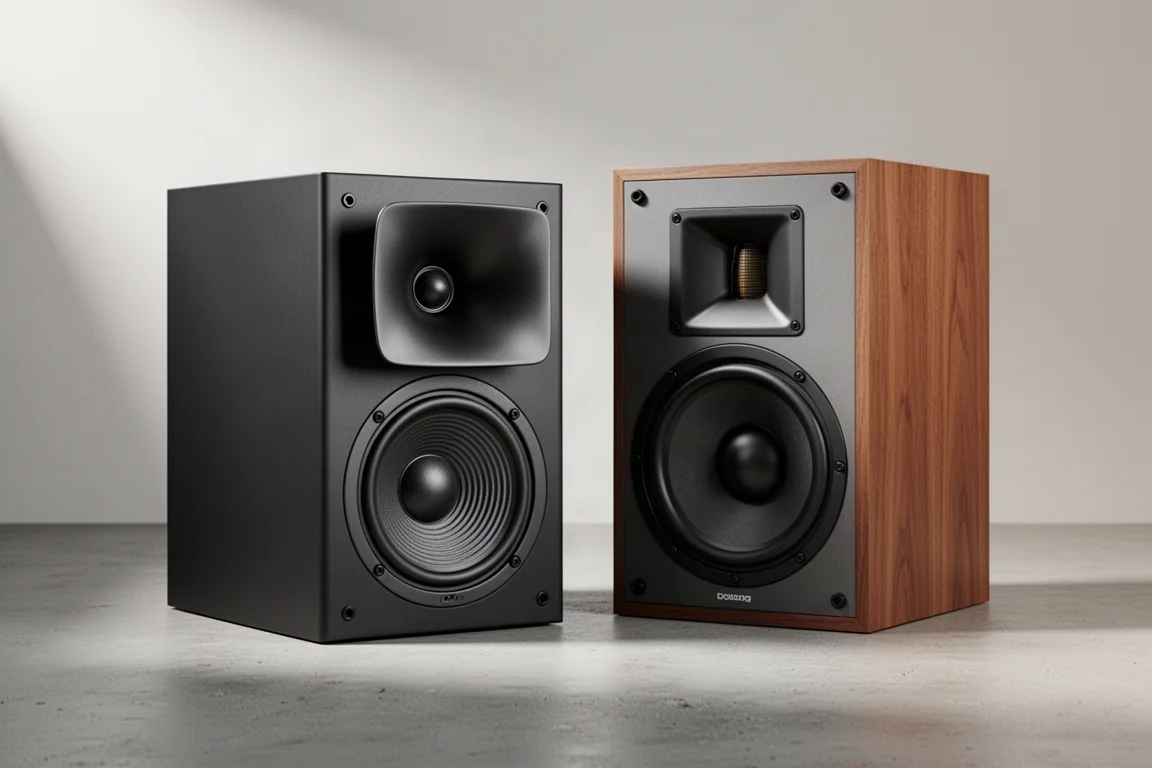
Some speakers take a while to find their audience. The JBL Studio 530 is a two-way stand-mount that pairs a one-inch compression driver tweeter with a large horn and a 5.25-inch poly-glass woofer, and it has built a steady following among listeners who value an easy, unforced presentation. The list price is $600 a pair, and new pairs are regularly discounted to under $400 a pair, which is where the value argument becomes hard to ignore.
The obvious comparison is the Klipsch RP-600M Mark II, a similarly sized horn-loaded stand-mount that sells for $749 a pair and is not currently discounted. Both speakers take a horn-first approach to the tweeter, and both are aimed at listeners who want a compact speaker that can carry a two-channel system. The differences between them come down to transparency, bass weight, and price.
What the JBL Studio 530 Gets Right
The headline feature is the horn. The Studio 530 uses a one-inch compression driver for its tweeter, which is unusual at this price point, mounted behind a horn large enough to shape the sound well down into the midrange. That geometry lets the crossover sit at 1.5 kHz, lower than the 2 kHz or higher that is typical in a two-way design, because the horn allows the tweeter to work down to lower frequencies without strain.
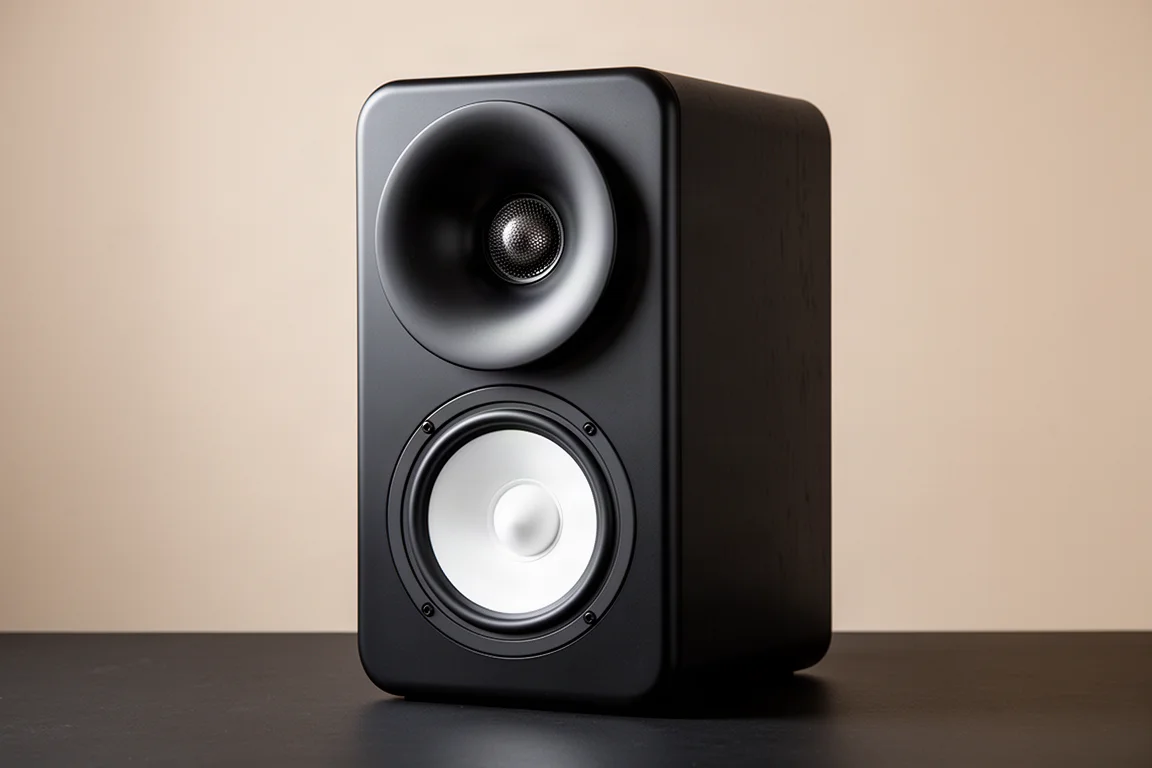
Below it sits a 5.25-inch poly-glass woofer with a ribbed cone and a cast basket. Impedance is 6 ohms, so the speaker is easy to drive. Sensitivity is rated at 86 dB, which is low on paper, yet it does not sound like a low-sensitivity design; the impression is of a speaker that plays with ease. The rear panel carries a small port and bi-wire posts, so single-wire and bi-wire connections are both possible. The cabinet is finished in black.
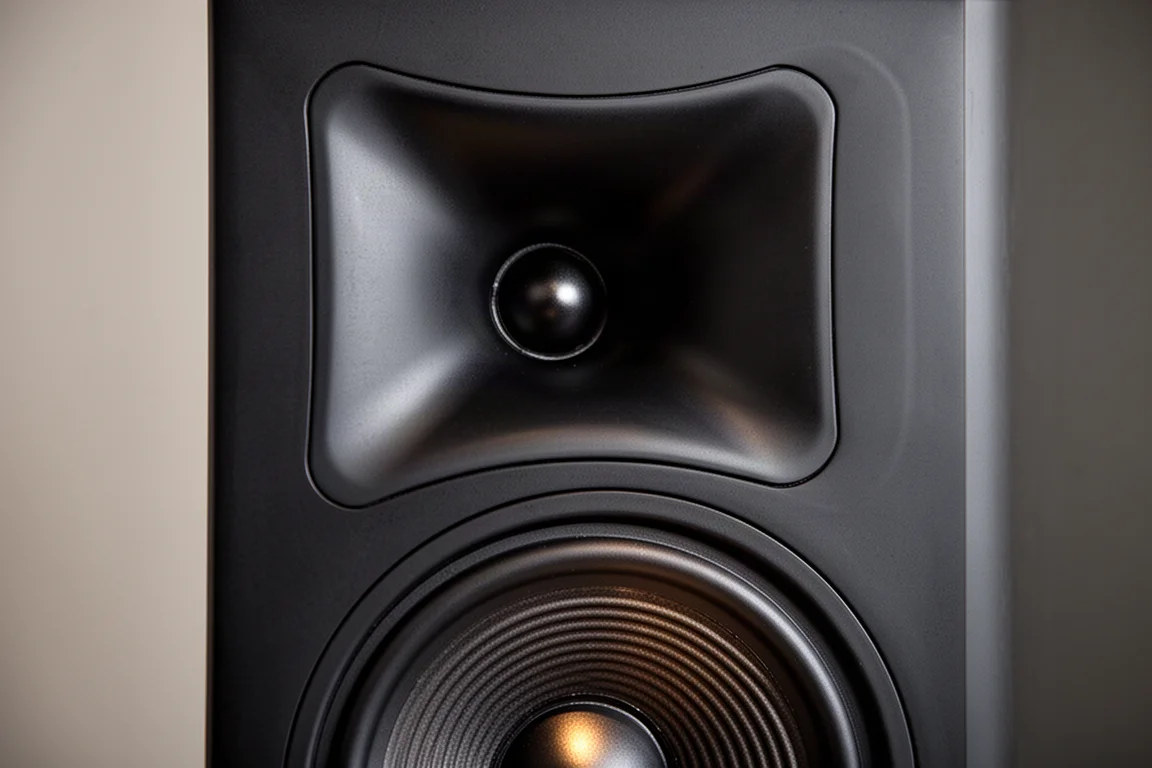
What that specification list does not convey is how little the horn calls attention to itself. There is no horn coloration to speak of, and the design stays low in distortion and low in coloration. Visually, the large horn is the speaker’s signature, and it is the one element likely to divide opinion; everything else about the cabinet is restrained.
How the JBL Studio 530 Sounds in Practice
In a small to mid-sized room, the Studio 530 delivers a satisfying amount of bass for a speaker with a 5.25-inch woofer. Most listeners would not feel the need to add a subwoofer unless the system doubles as a home theater setup. Deep bass passages energize the room rather than merely hinting at low frequencies, and that is a meaningful result from a cabinet this size.
The treble is refined rather than spectacular. There is no grain, no glare, and no bite, and the tweeter goes about its work without drawing attention to itself. It is not the most detailed or highest-resolution tweeter around, but it never becomes fatiguing. The midrange is where the speaker is strongest: vocals come through with body and presence, and piano recordings sound correct, with a roundness and sweetness in the tone rather than the stridency or hardness that lesser speakers introduce.
Transient response is quick, and detail and treble clarity hold up across demanding tracks. The soundstage is fairly focused and open, spacious rather than hyper-crisp or pinpoint. Played loud, the speaker stays composed and simply lets the music through, which is the quality that stands out most over long listening sessions.
Klipsch RP-600M Mark II: The Step-Up Alternative
The Klipsch RP-600M Mark II is the current version of a similarly sized horn-loaded stand-mount, priced at $749 a pair and not discounted. On a direct comparison, it is the more transparent of the two speakers, and its blend between the woofer and the horn-loaded tweeter is smoother. Bass is bigger and meatier, though not by a wide margin.
That makes it the better speaker overall, but the size of the gap matters. Given that the Klipsch costs several hundred dollars more per pair, the difference in quality is not as large as the price difference would suggest. Listeners chasing maximum transparency, clarity, and a smooth response will find the Klipsch worth the extra outlay. Listeners working to a tighter budget may find the difference hard to justify.
The two speakers are close enough in size and approach that the choice is really about priorities rather than about one design being outclassed. The Klipsch asks for more money and gives back a little more resolution and weight; the JBL gives up a small amount of both and keeps a significant amount of cash in the buyer’s pocket.
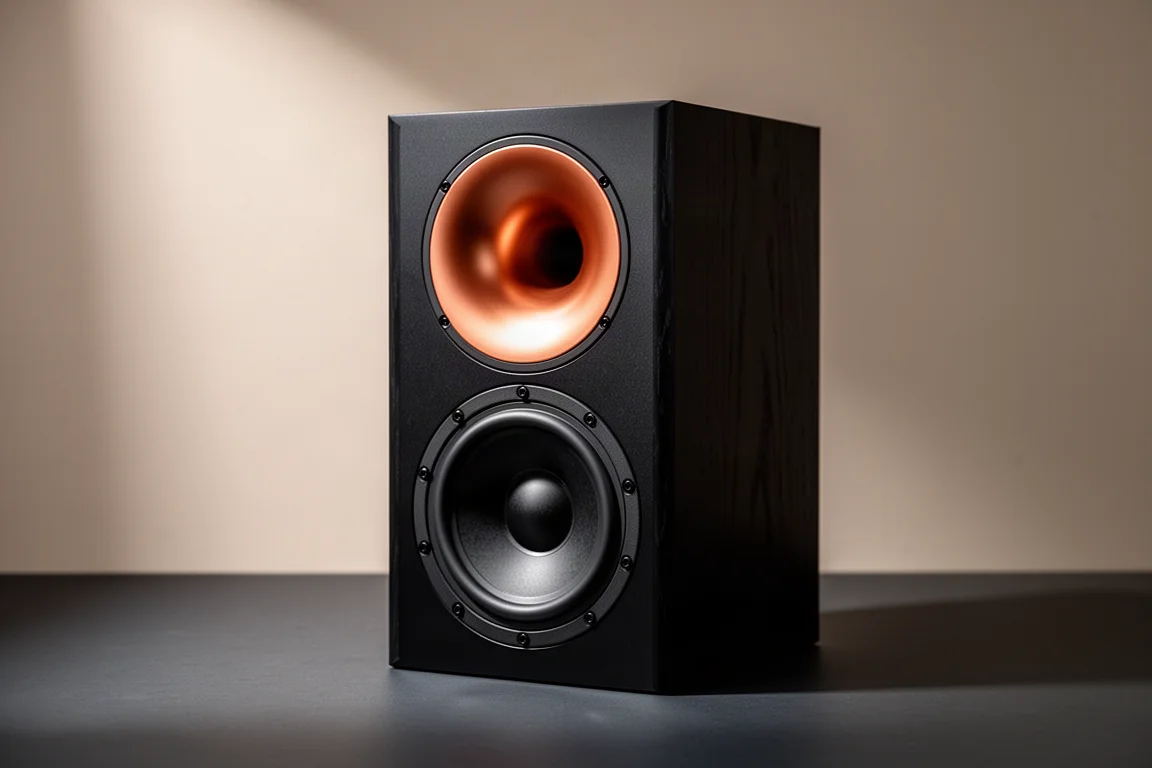
Comparing the JBL Studio 530 and the Klipsch RP-600M Mark II
Both are two-way stand-mounts built around horn-loaded tweeters, and both are intended for rooms where a compact speaker has to carry a full-range two-channel system. The JBL is the more affordable of the pair by a wide margin at its typical selling price, and at its $600 list price it remains a strong proposition. The Klipsch is the more transparent design, with a smoother handoff between drivers and a little more low-frequency weight.
Where the JBL gives ground, it is mostly in that last degree of clarity and bass authority. What it does not give ground on is balance: it does not really do anything wrong, which is an unusual result at this price. The practical question is not which speaker is better in the abstract, but whether the additional transparency of the Klipsch is worth the price premium in a given system and room.
Setup and Amplification Notes
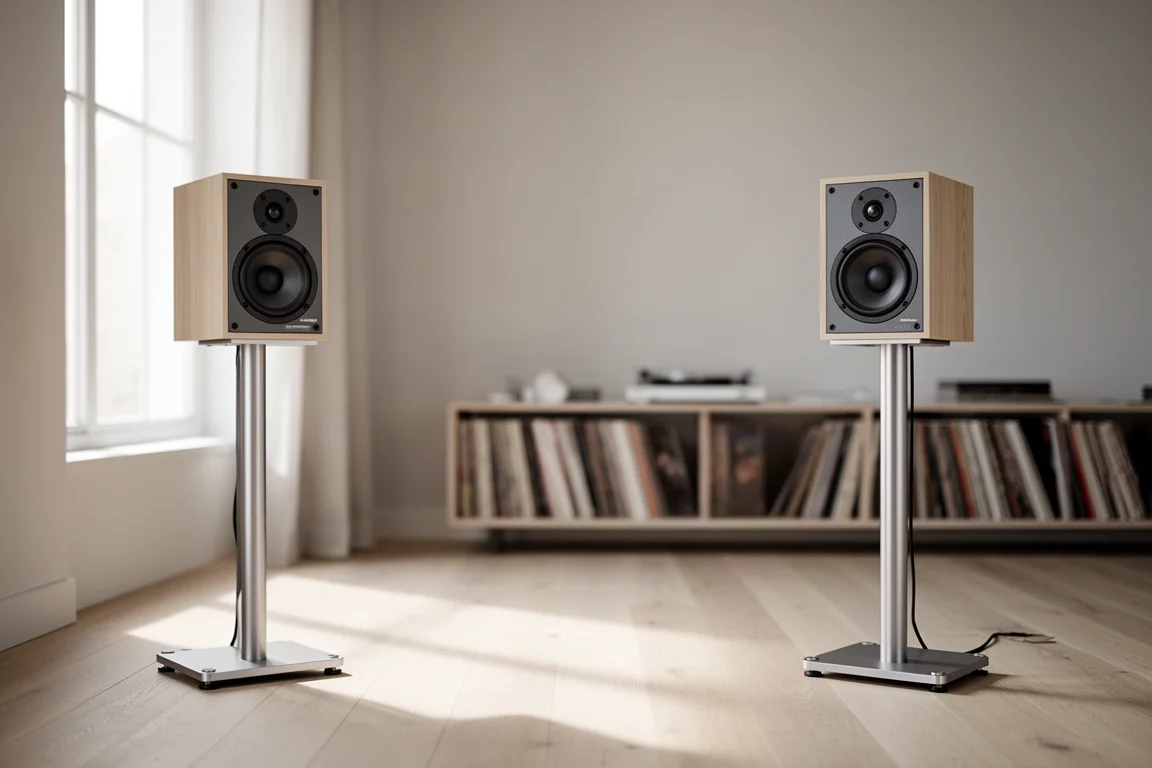
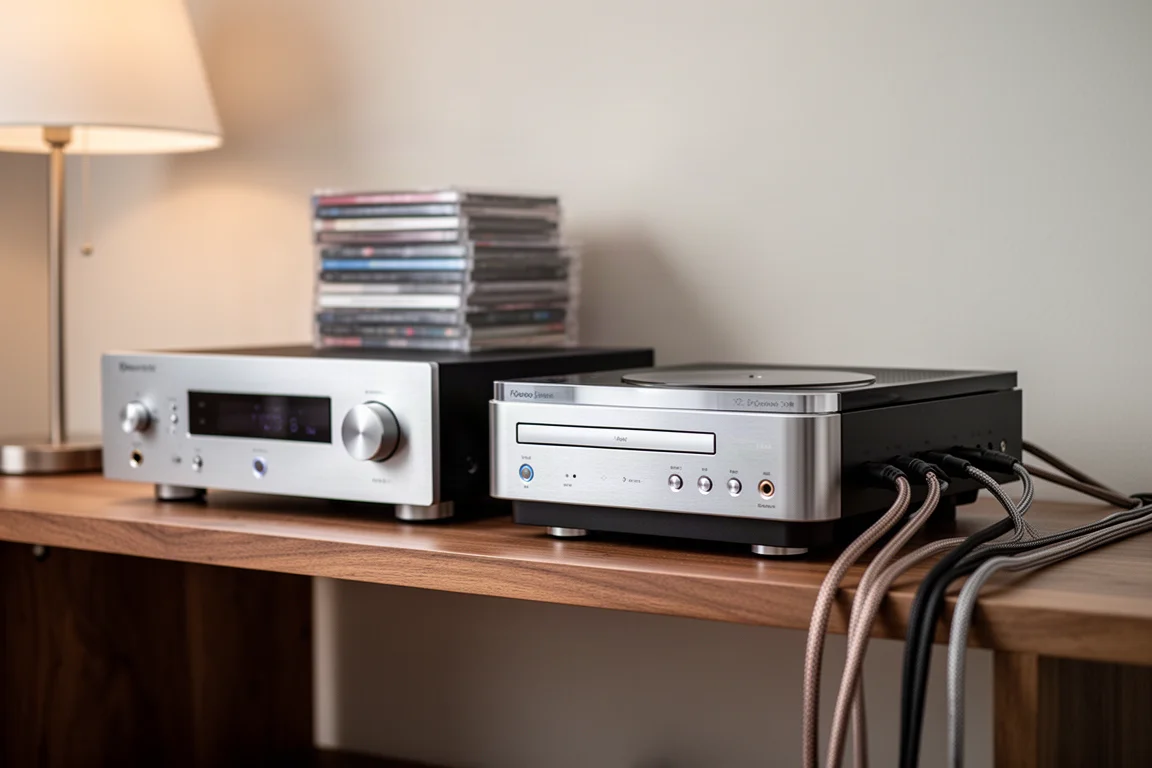
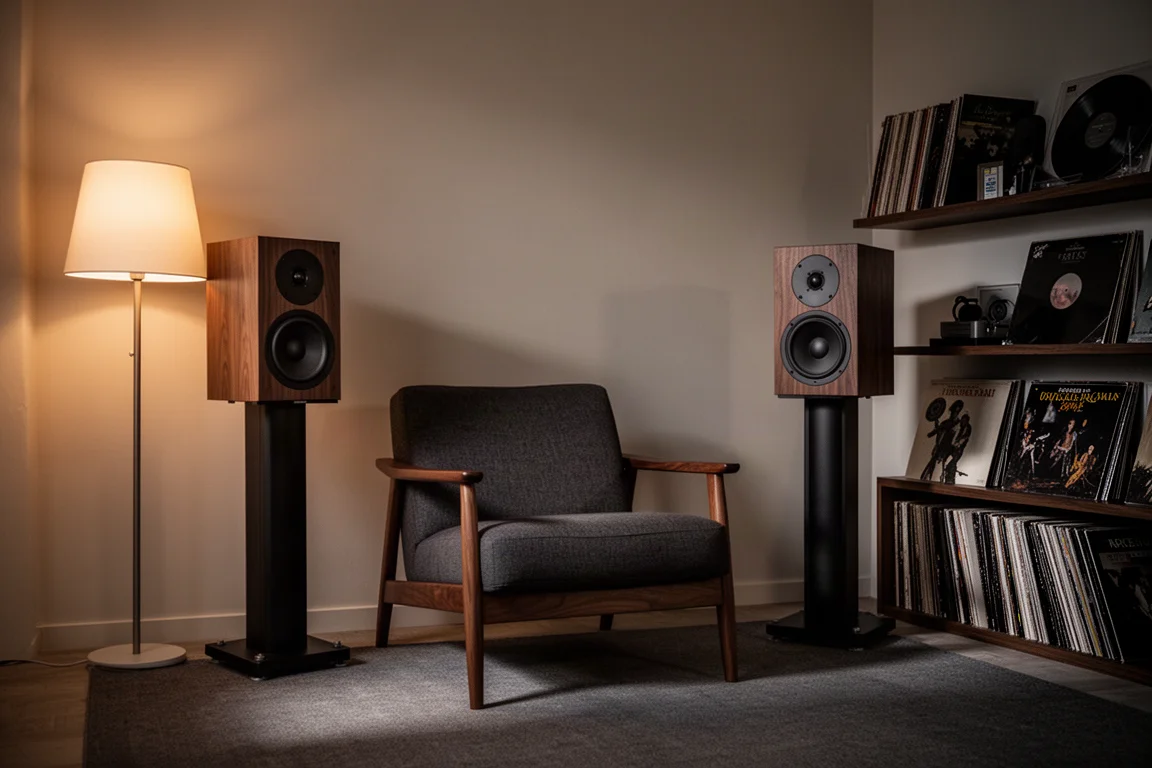
The Studio 530 was used on 24-inch steel stands with a slight amount of toe-in, and it responded well to that arrangement. A $500 integrated amplifier rated at 40 watts per channel into 8 ohms and 70 watts per channel into 4 ohms proved a natural partner, and much of the listening was done through it.
Stepping up to a separate amplifier with two different preamplifiers produced a substantial change in sound quality, which says a lot about how revealing these speakers are of what feeds them. With better electronics, the presentation became smoother, more natural, more refined, and a little more transparent, and the soundstage opened up. Piano tonality in particular came across as correct and sweet rather than hard. Anyone buying the Studio 530 should budget for amplification that is at least as serious as the speaker itself.
What to Consider Before Buying
The horn is the main aesthetic question. It is a bold front baffle, and some listeners will prefer a more conventional look; the rest of the cabinet is plain and finished in black only. The rated 86 dB sensitivity looks modest on paper, but it does not reflect how the speaker actually behaves, so it should not be treated as a reason to avoid the design.
Bass extension has limits. The 5.25-inch woofer is generous for the cabinet size in a small or mid-sized room, but a large room or a home theater role will likely call for a subwoofer. And if maximum transparency is the goal, the Klipsch RP-600M Mark II is the stronger performer, at a higher price.
Buying Advice
For listeners starting out in two-channel audio, or anyone who pays close attention to the music rather than to the equipment, the JBL Studio 530 is an easy recommendation. At under $400 a pair it is a bargain, and even at the $600 list price it holds up as a genuinely good speaker. Its combination of low coloration, a refined tweeter, a strong midrange, and usable bass is rare at this price.
If the budget allows and transparency is the priority, the Klipsch RP-600M Mark II is the better speaker of the two at $749 a pair, with a smoother driver blend and more bass weight. Pair either speaker with competent amplification, give it stands and a little toe-in, and both will reward the investment.
Conclusion
The JBL Studio 530 makes a strong case for itself on value: a horn-loaded compression tweeter, a cast-basket poly-glass woofer, and a 1.5 kHz crossover in a compact cabinet that regularly sells for under $400 a pair. It does not really do anything wrong, and it responds to better electronics with real improvement. The Klipsch RP-600M Mark II remains the more transparent speaker and the better one overall, but the gap is not proportional to the price difference. Buyers on a tight budget can choose the JBL with confidence; buyers chasing the last measure of clarity can step up to the Klipsch.
Further reading
Related Reviews
Bookshelf Speakers
Acoustic Energy A100 Mark II Review: A Compact Standmount With an Expansive Soundstage
The Acoustic Energy A100 Mark II brings clarity, natural tonality and a wide soundstage to an entry-level standmount, with a few setup details worth knowing first.
Bookshelf Speakers
Acoustic Energy AE-100 Mark II Review: Compact Bookshelf Speakers With Standout Imaging
A compact British two-way bookshelf speaker with deep, layered imaging, fast bass, and a slight treble lift to weigh against a crowded $500 field.
Bookshelf Speakers
Acoustic Energy AE100 MK2 Review: Measured Performance and Four Alternatives
A close look at the Acoustic Energy AE100 MK2 bookshelf speaker, what its measured performance reveals, and four alternatives with different trade-offs.