Home Audio
JBL Stage A190 Review: Big, Punchy Tower Sound on an Entry-Level Budget
A two-and-a-half-way tower with dual 8-inch woofers, 91 dB sensitivity, and a forward top end that responds well to a small treble cut.
Introduction
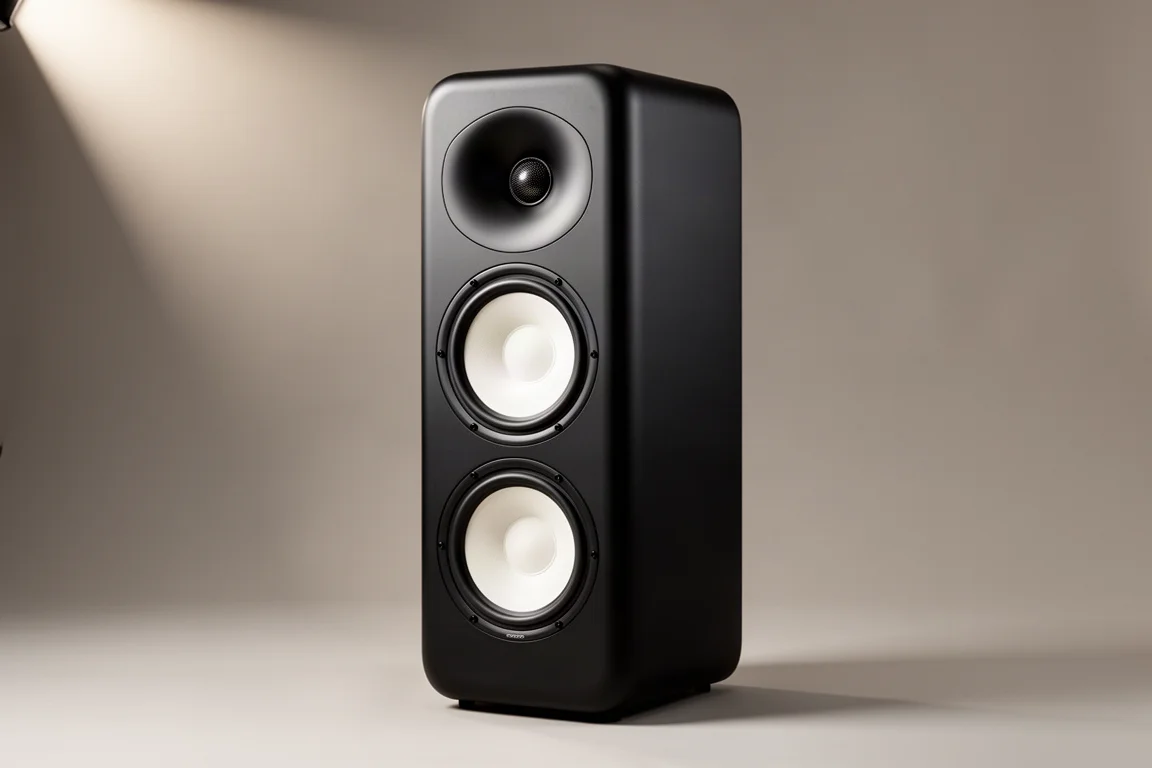
The JBL Stage A190 is the largest tower in JBL’s Stage series, and its spec sheet looks ambitious for the money. It is a two-and-a-half-way design built around a one-inch aluminum dome tweeter set inside JBL’s High Definition Imaging waveguide, backed by two eight-inch polycellulose woofers. Dual rear ports help it reach a reported frequency response of 36 Hz to 40 kHz, while 91 dB sensitivity and a nominal six-ohm impedance mean it will run happily from almost any amplifier or receiver on the market.
For an entry-level floorstander, that is the right set of priorities: easy amplification, plenty of output, and bass that reaches lower than the cabinet size suggests. The trade-offs show up in refinement rather than capability, and they are predictable once you know where they are.
Who This Speaker Is For
The A190 makes the most sense for listeners building a first home theater or a first serious two-channel system without spending a lot. It plays loud, it plays deep, and it does not demand an expensive amplifier to do either. It reached down to 30 Hz in the room, which is enough low-end output that some buyers will not feel an immediate need for a subwoofer.
It also suits anyone who values scale and impact over surgical accuracy. If your priority is hearing exactly what is on the recording with the lowest possible coloration, this is not the speaker chasing that goal. If your priority is a big, confident, cinematic presentation at a modest price, it is squarely on target.
Anyone shopping at this level should also expect to spend a little time on setup. The A190 rewards a small amount of tuning, and it does not have to be babied to sound enjoyable.
Design, Build, and Setup Notes
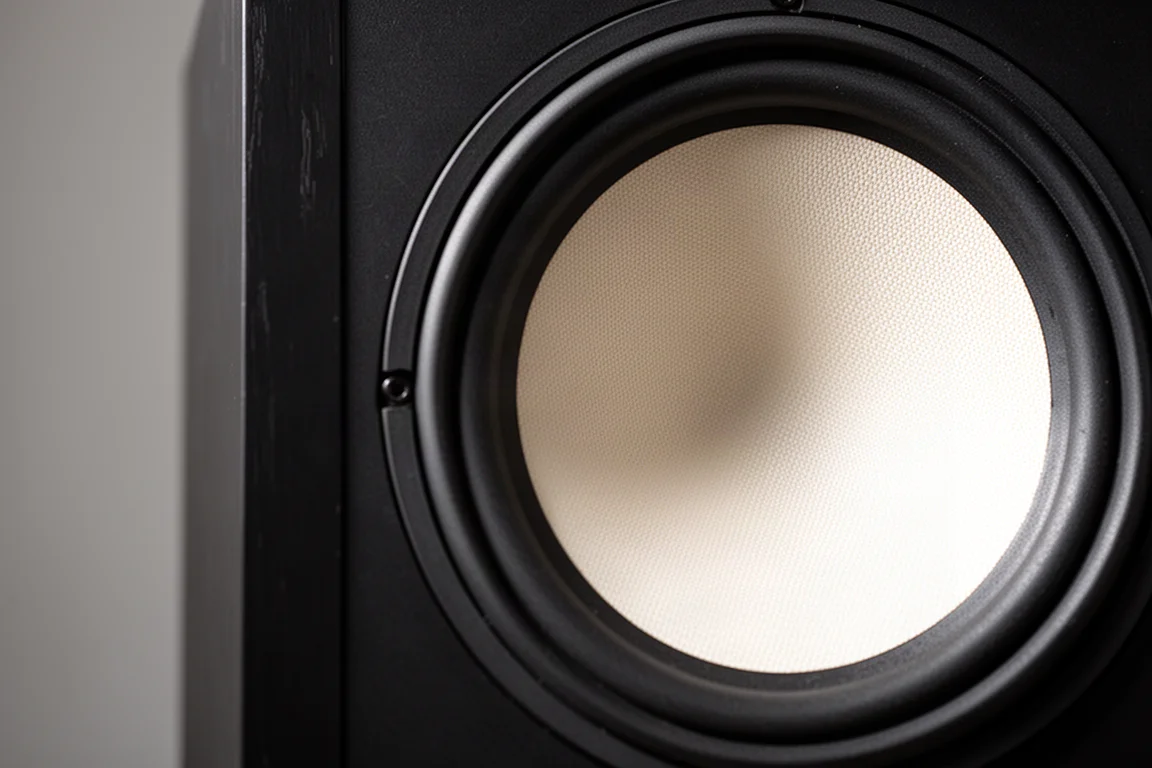
Visually, the Stage A190 keeps things plain: a matte black cabinet with rounded corners and contrasting white drivers, a combination that gives it a tuxedo-like look without any gloss or flash. It is clearly built with cost in mind, but the simple finish holds up well and the embossed logo on top is a tidy detail.
The included plastic outrigger feet are the weakest part of the package. They do stabilize the tall cabinet, which matters in a house with children, but they feel cheap and the threaded inserts they screw into are not perfectly straight. Aftermarket isolation feet are an option and can look better, though they did not change the sound in any meaningful way. Treat them as a cosmetic upgrade rather than a sonic one.
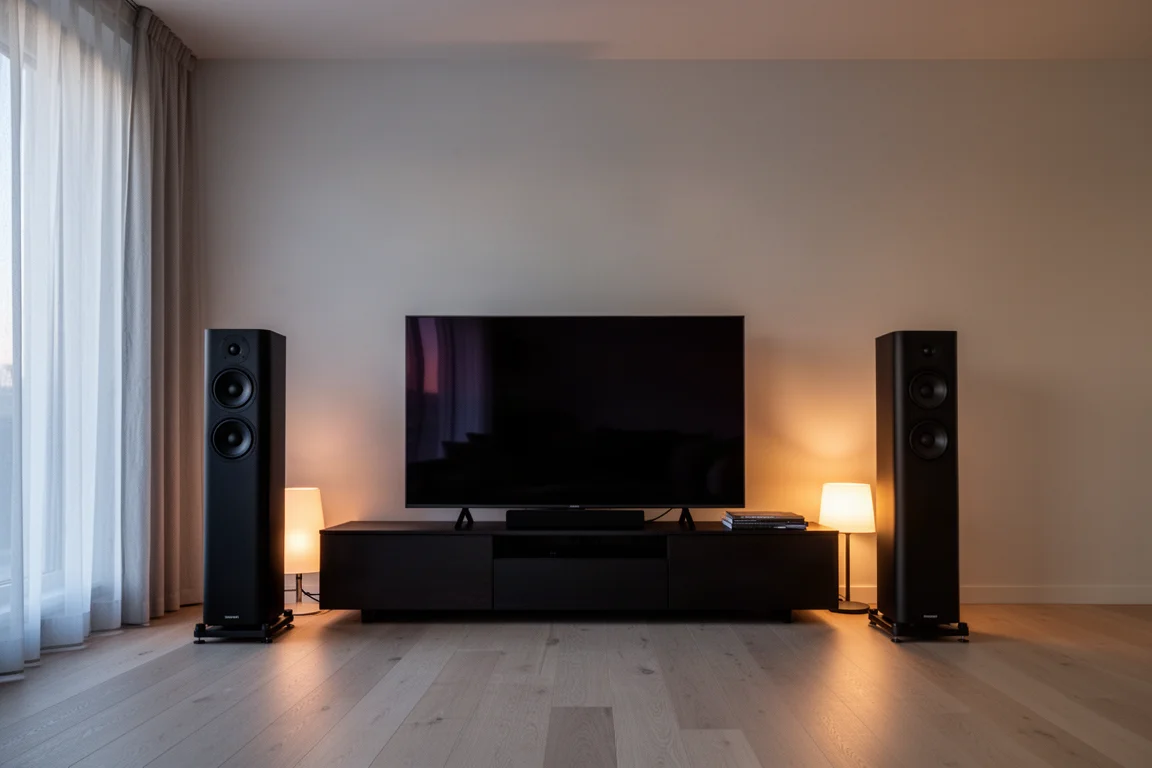
Placement is refreshingly forgiving. Dispersion is wide enough that close spacing or wide spacing, straight ahead or slightly toed in, all produced broadly similar results. If the treble seems forward, facing the speakers straight ahead is the simplest fix. The one real caution concerns the wall behind them: the dual rear ports move a lot of air, and it is easy to push the bass into boomy, sloppy territory if the cabinet sits too close to the front wall.
Main Strengths: Punch, Scale, and Easy Amplification
Efficiency is the A190’s quiet advantage. At 91 dB and six ohms, it reached concert-like levels driven by everything from receivers to separates. It paired particularly well with an Audiolab 6000A Play and a Marantz 8015, and it also sounded solid with an Onkyo 7100 and a Rotel 1582 Mk II. The practical takeaway is that good performance here does not require an expensive amplifier.
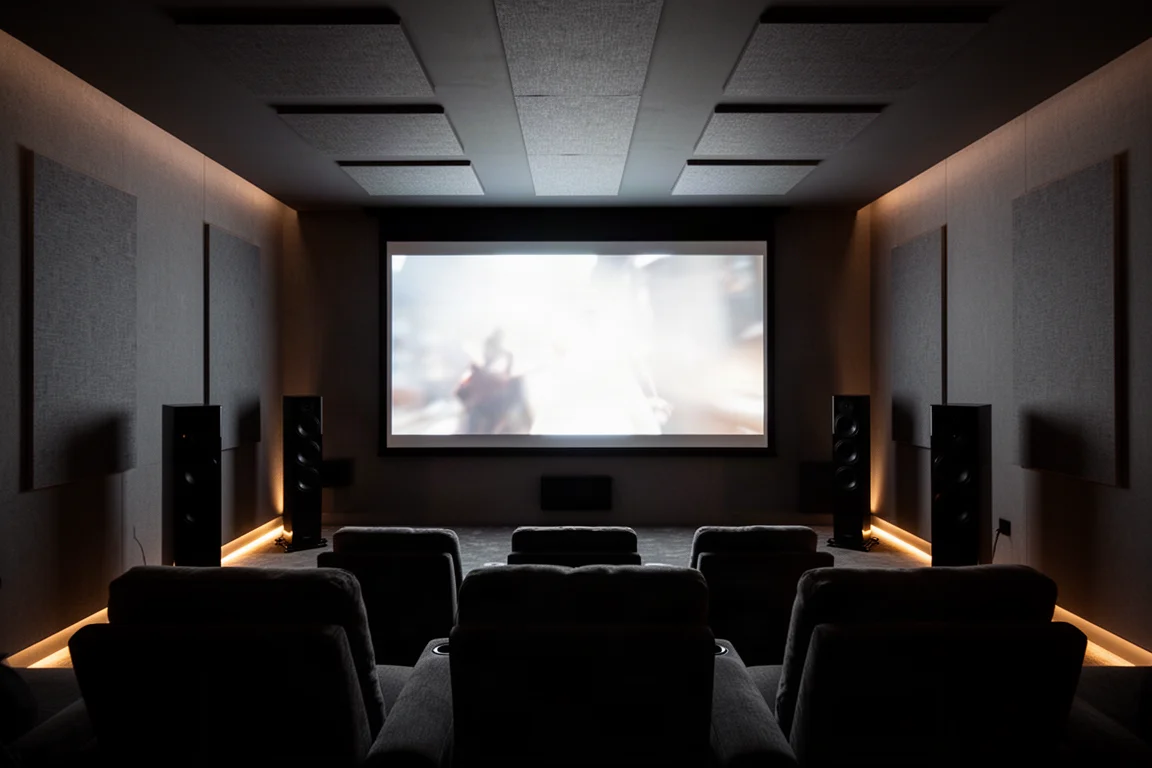
Dynamically, the speaker is genuinely explosive. It can recreate the sensation of a large commercial cinema at a fraction of the cost, and it does so without sounding strained. The soundstage is the other headline: the A190 throws a wide wall of sound that pays little attention to the boundaries of the room, and the speakers themselves largely disappear inside it.
That combination of efficiency, dynamics, and stage width is what makes the A190 fun. It is not the last word in subtlety, but it is never boring either.
Treble, Midrange, and Cabinet Behavior
The first thing that stands out is a bright, forward top end, which is not what most listeners expect from a JBL. Rather than boosting treble, the speaker simply refuses to roll off as early as several budget rivals: its high-frequency presence stays fairly constant up to around five kilohertz, where many competing designs begin to taper off closer to two kilohertz. That difference is audible as extra brightness.
It is also easy to correct. A treble cut of roughly one to three decibels on an amplifier or receiver produces a far more balanced presentation, and the included grilles will soften the top end as well, though not as much. Once adjusted, the high frequencies are genuinely good, with solid detail and air. Heavily compressed recordings can still turn a little shrill in places, but most material holds up.
The midrange is tonally neutral. The drivers and crossover do not impose an obvious character on voices or instruments, and nothing sounds lean, cool, laid back, or warm. What does intrude is cabinet resonance. Depending on where a vocal or instrument sits in the midrange, the sound can take on a hollow, chesty quality, and the cabinet adds a touch of extra reverb. It becomes more noticeable at higher volumes, and it costs the speaker some detail and clarity in the mids.
Bass, Dynamics, and Home Theater Performance
Down low the A190 is punchy and generous. It will charge a room with bass, and it reached 30 Hz in the room. Resolution is not its strongest suit, but the fun factor is high, and movies benefit enormously. Action-heavy soundtracks are where the speaker feels most at home.
For tighter, richer, more detailed low frequencies, a subwoofer is still the better answer, crossed over somewhere between 60 and 80 Hz. Below 60 Hz the A190 starts to lose control and sound loose. Buyers who want deep bass without adding a sub will still get plenty of output, just not the last word in grip.
Dynamically, the story stays the same: fast, explosive, and capable of a real sense of scale. For home theater use, that combination is difficult to beat at this price.
Things to Consider Before Buying
The forward treble is the biggest point to plan around. If your amplifier or receiver has tone controls, expect to use them; if it does not, the grilles help but do not fully solve it. Buyers who dislike any brightness should listen carefully first or look elsewhere.
Placement matters more than usual because of those rear ports. Give the speakers room to breathe and be prepared to pull them away from the front wall if the bass sounds thick.
Cabinet resonance is a real limitation for critical listening, and the plastic outrigger feet are a genuine weak point in an otherwise tidy package. The A190 is also not the most resolute speaker in the bass, which is worth knowing if you listen to a lot of acoustic or orchestral material where texture matters.
How It Compares and Buying Advice
At roughly $600 a pair, the A190 deserves to be cross-shopped rather than bought on brand alone. The Yamaha S809 is currently cheaper, better constructed, and the more appealing speaker of the two, thanks to a less boomy low end and a more agreeable overall character. The Fluance XL8F sits at a similar price and comes across as more refined both sonically and visually, even though both speakers share hollow cabinets and audible resonance in the bass and lower midrange. The Heco Aurora 700 is the more capable speaker of the group, with a more nuanced presentation, more textural bass, and a better-braced cabinet, but it costs more. Against the Klipsch RP-8000F and the Polk Audio R700, the JBL does not come out ahead. Some listeners also prefer the Stage A190 over the vintage-styled JBL L100, though that is a matter of taste rather than a clear technical win.
Where the A190 does stand out is value. It plays loud, plays deep, and is easy to drive, and it does all of that for entry-level money.
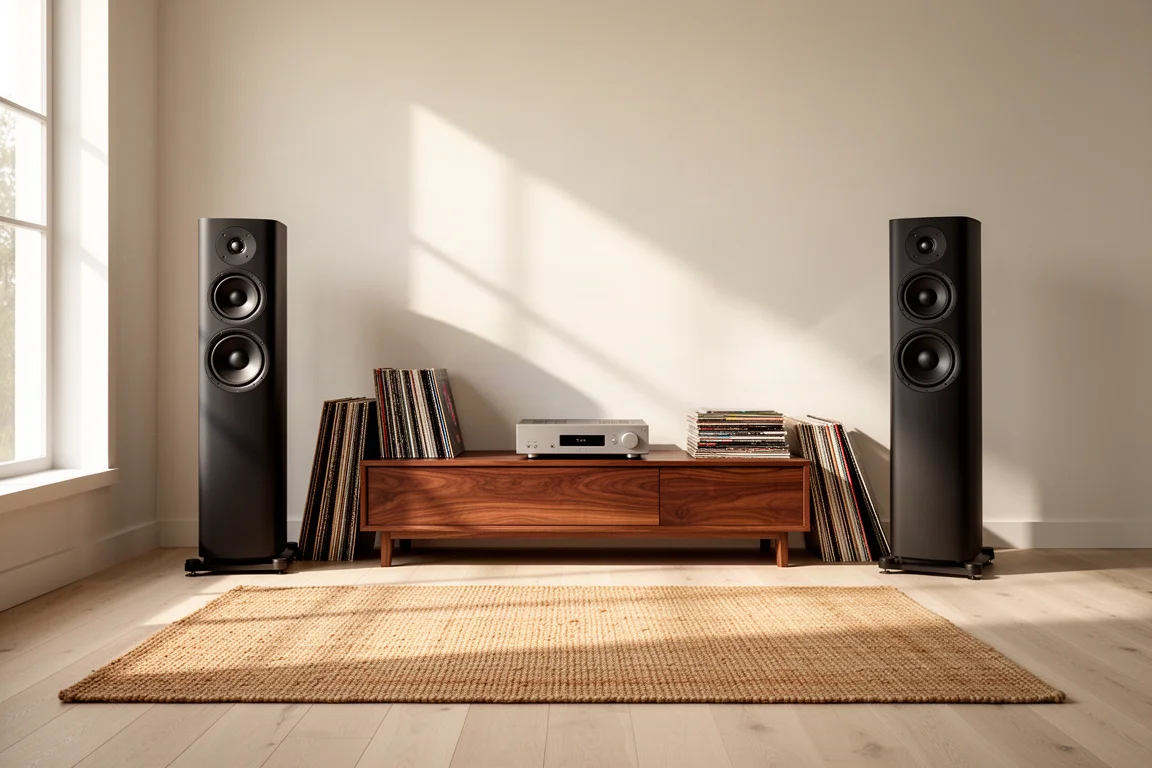
If you want a big, bold, punchy sound that will grab you and possibly your neighbors, and you are putting together a first home theater without going broke, the Stage A190 is a legitimate consideration. If you are hoping it will embarrass speakers costing twice as much, it will not. It is a value speaker that delivers a competent, enjoyable performance for what it costs, and that is a reasonable thing to be.
Conclusion
The JBL Stage A190 is not the giant killer its spec sheet hints at, and it is not trying to be. It is an affordable tower that prioritizes output, bass depth, and easy amplification, and it gets those things right. Tame the treble slightly, give it some space from the front wall, and it delivers a big, energetic, home-theater-friendly sound that is easy to live with. For a first serious system on a budget, that is a fair trade.
Product link
View more details for JBL Stage A190
This product is mentioned in the review. Check the specifications, options, and compatibility before buying.
View more details for JBL Stage A190Further reading
Related Reviews
Home Audio
Aperion Novus Tower and Center Review: Punchy Home Theater Sound With Real Refinement
A close look at the Aperion Novus tower and center speakers, from their layered paint finish and punchy bass to the 4-ohm load and what the price actually buys.
Home Audio
Arendal 1610 Tower Review: Flagship Dynamics in a Room-Friendly Tower
A compact floorstanding tower with three 8-inch aluminium woofers, a 5-inch carbon midrange, and the kind of bass heft usually reserved for much larger speakers.
Home Audio
Arendal 1723 S THX Review: A Reference Speaker Built Like a Tank
A practical look at the Arendal 1723 S THX, a sealed, THX-certified speaker with exceptional build quality, a very flat top end, and a midrange that responds beautifully to EQ.