Bookshelf Speakers
JBL Stage 250B Review: A Bookshelf Speaker That Grows With Your System
The JBL Stage 250B adds a fuller low end, more dynamic punch, and a sharper design to JBL's affordable Stage line. Here is what to know before buying.
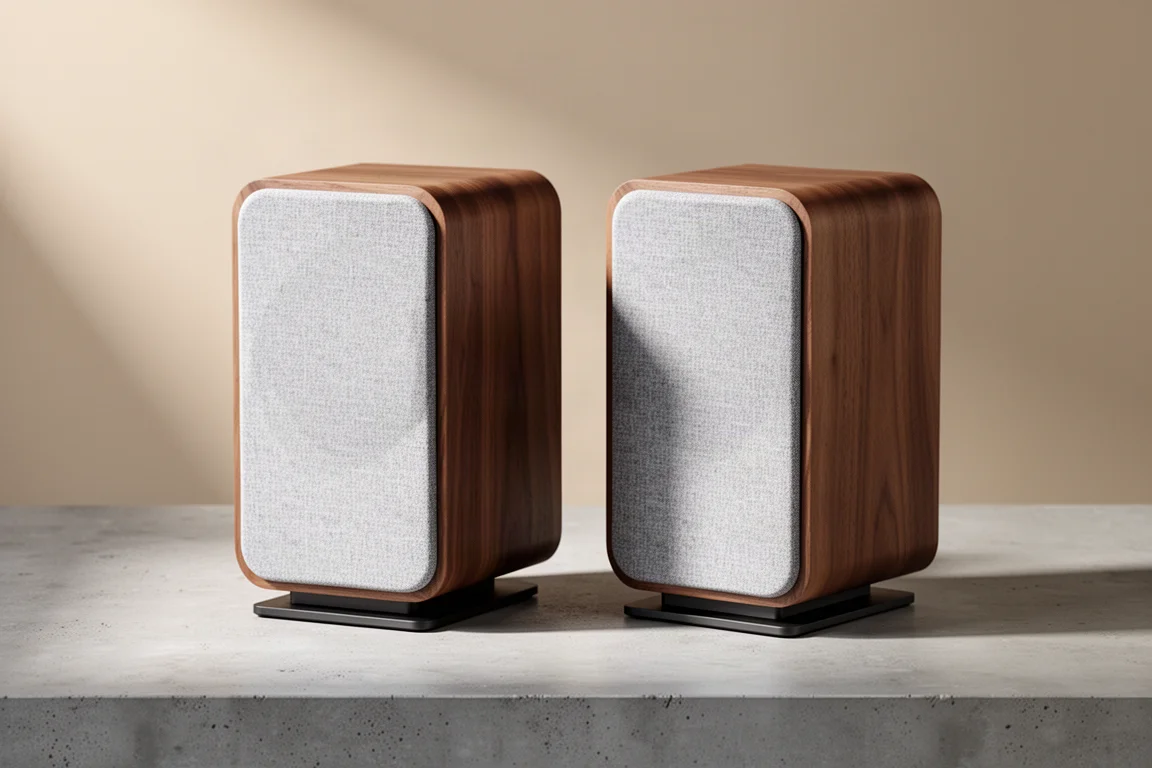
Introduction
JBL has refreshed its Stage series of home audio speakers, and the Stage 250B is the compact bookshelf model that takes the place of the Stage A130, a speaker long treated as a benchmark for affordable stereo sound. The retail price lands at $399, which is a meaningful jump from the roughly $200 sale prices the outgoing model often reached, although the previous generation carried a $350 MSRP, so the gap is narrower than the headline numbers suggest.
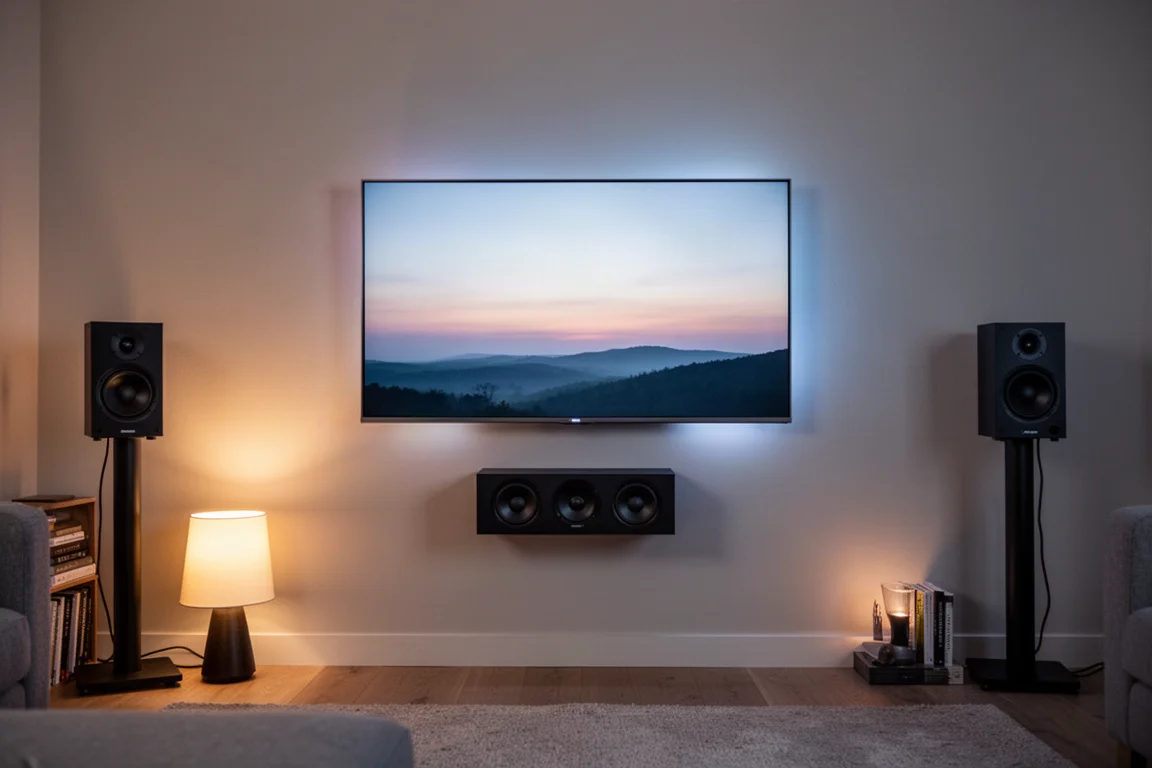
What makes the Stage 250B interesting is not only the sound. JBL clearly built this generation to look the part as well, with a cleaner design that suits a younger buyer who wants something attractive, easy to live with, and fairly priced. The speaker is also being sold on the main floor of major retail stores rather than tucked away in a specialist section, which says a lot about how broadly JBL intends to reach with this line.
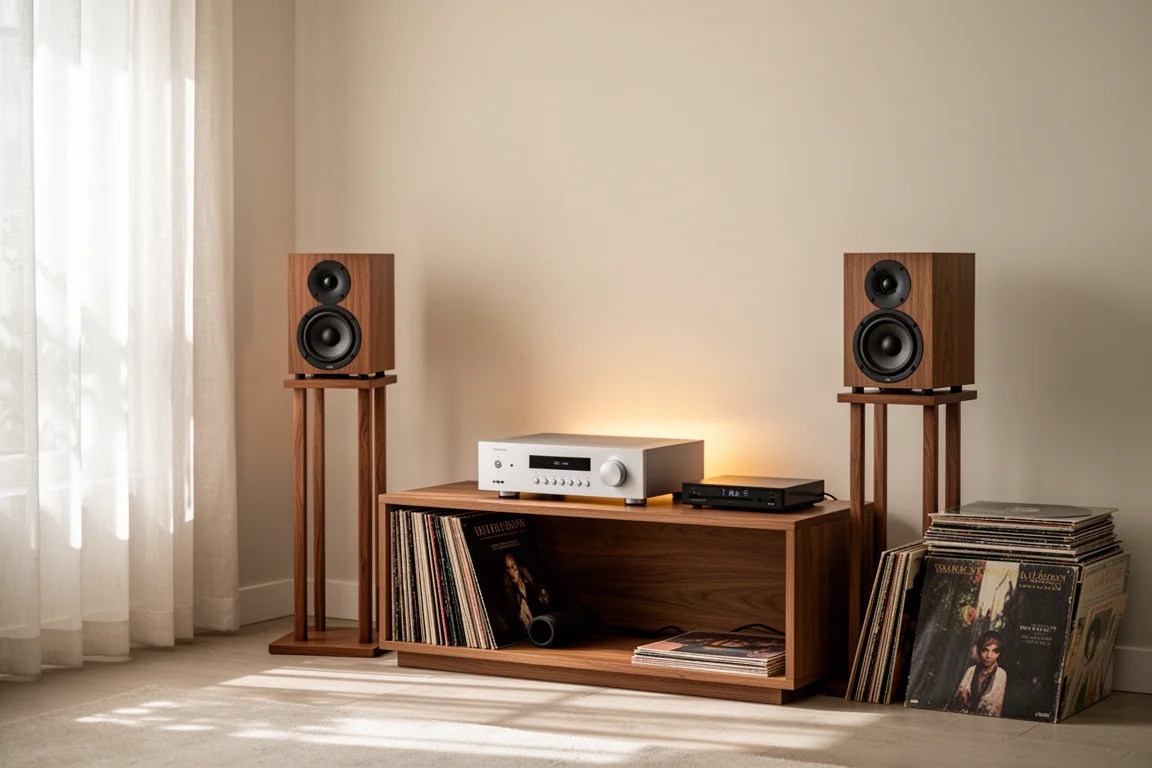
The Stage 250B sits in a competitive pocket of the market, and it arrives with a full family of matching models: tower speakers, smaller bookshelves, and a center channel, along with a matching JBL receiver. That makes it a natural starting point for a two-channel system that can later grow into surround sound.
Who This Product Is For
This is a speaker for listeners assembling a first serious stereo or home theater setup and who want a component that looks good in a living room rather than a dedicated listening room. The design language, the finishes, and the simple setup all point toward that audience.
It also suits buyers who already own a decent amplifier and want a compact speaker that responds to the extra power. The 6 ohm nominal impedance and 86 dB sensitivity mean the Stage 250B is not the easiest load to drive, and it opens up noticeably as the electronics behind it improve.
If you are shopping for a single pair to anchor a small system and you care about both appearance and musicality, this model belongs on the shortlist. If you need maximum output from a modest amplifier, or you prefer a warmer tonal balance, it is worth comparing alternatives before deciding.
Design and Build
The cabinet is finished in a convincing walnut-look veneer, with the baffle protruding slightly at the top and a small black platform underneath that gives the speaker a stable, modern stance. A heather gray grille attaches magnetically, and there is a small orange accent on the rear that adds a bit of character. Two colorways are available, including a white version that makes the contemporary lines even more obvious.
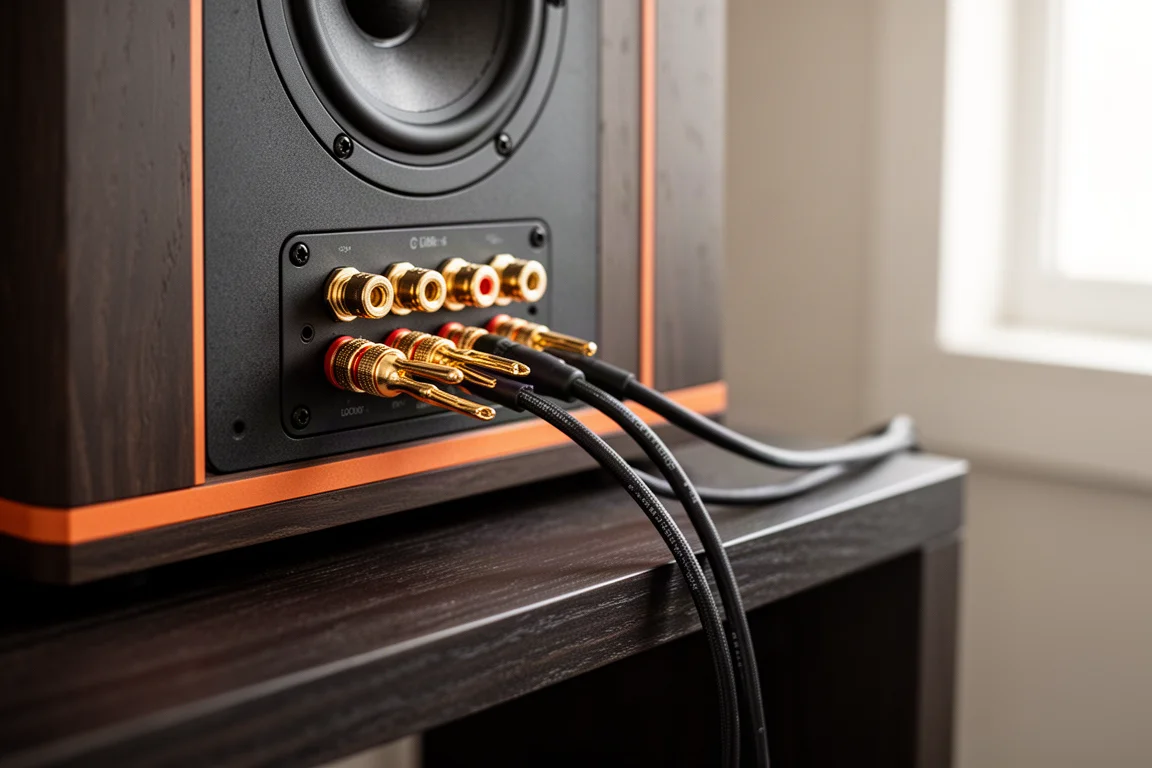
Up top, the tweeter sits in an interesting waveguide with a series of ridges rather than a smooth surface, a design detail that appears to have trickled down from JBL’s more expensive speakers. The woofer gets its own waveguide below. Around the back you will find a flange with a cardboard port and a standard binding post enclosure.
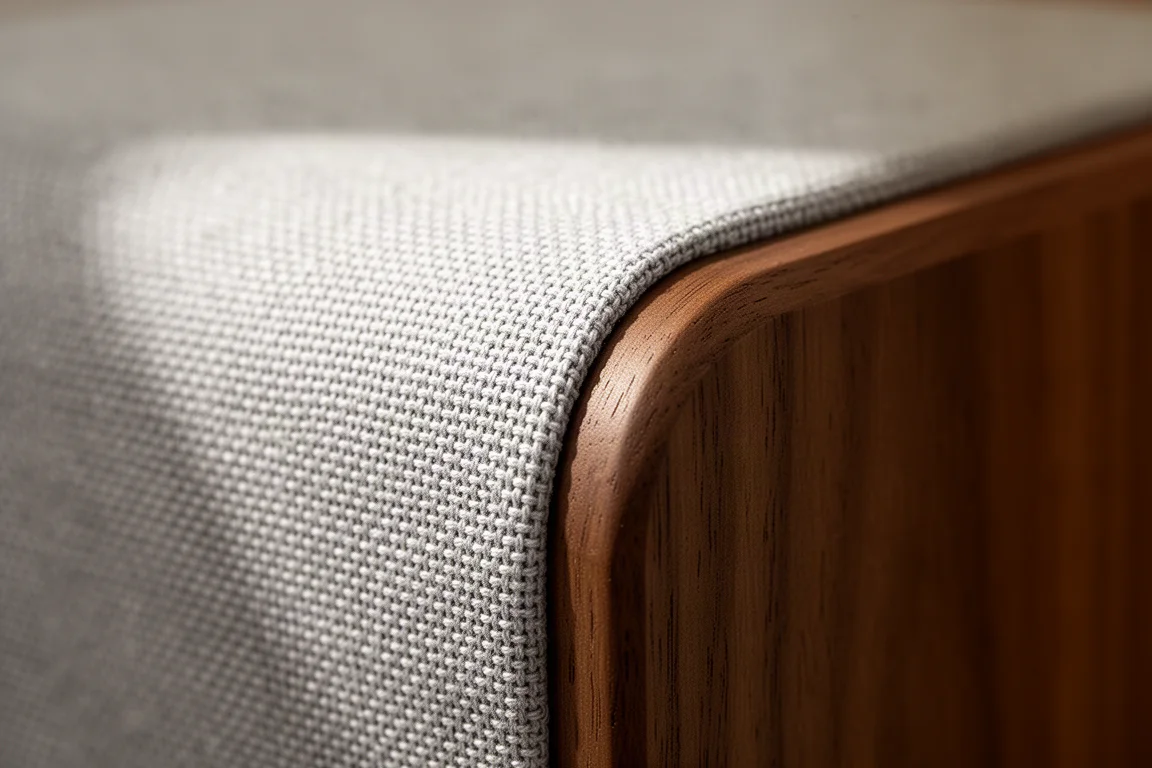
Build quality is solid for the money. The cabinet is neither especially heavy nor especially inert, but it feels considerably better put together than some comparably priced competitors, including speakers from Yamaha’s S series. At roughly 12.4 lb each and around 12.5 in tall, 7.9 in wide, and 9.5 in deep, the Stage 250B is easy to place on a stand, a shelf, or a desk.
Sound Quality
The driver complement is a 5.25 in poly cellulose ribbed cone woofer paired with a 1 in anodized aluminum tweeter, and the rated frequency response spans 50 Hz to 25,000 Hz at plus or minus 6 dB. That 50 Hz figure matters, because the low end is where this speaker makes its biggest case for itself.
Bass output is fuller and punchier than the specification suggests. Where the previous generation lacked weight in the lower mid-range and around the 80 to 100 Hz region, the Stage 250B fills out that area and gives baritone voices and bass instruments more body. You can run these on their own without immediately reaching for a subwoofer.
Mid-range clarity carries over from the outgoing model, and the soundstage and imaging remain a genuine strength, helped by the dispersion of the tweeter waveguide. Male and female vocals come through with even clarity, which makes dialogue on television and film consistently intelligible. The overall balance is neutral with a bit more personality than the previous generation, and the presentation is noticeably more dynamic.
Aluminum dome tweeters have a signature, and this one is no exception. Metallic percussion and cymbal hits sound snappy and forward, which is entertaining even when it is not strictly realistic. The Stage 250B handles that character more calmly and evenly than the model it replaces, though the trait is still part of the sound rather than something the speaker hides.
Amplification and Setup
Sensitivity and impedance are the two numbers that shape how you should pair this speaker. At 86 dB and 6 ohms nominal, the Stage 250B rewards a capable amplifier with real current delivery. Feed it more power and it opens up further, with greater bass weight and better control.
The speaker has been run with a range of electronics, from compact monoblock amplifiers to an integrated amplifier and the matching JBL receiver, and it behaves consistently across them. It is not fussy about placement, though a sturdy stand and a little distance from the rear wall will help the low end stay tidy in smaller rooms.
Because the cabinet is not heavily braced, isolation matters. A solid stand or a set of decoupling pads will keep vibration under control and let the mid-range and treble come through cleanly.
Things to Consider Before Buying
The Stage 250B is a straightforward recommendation, but a few traits are worth weighing before you commit.
The first is amplifier quality. This is not a speaker that flatters a weak or underpowered amp. If your budget is split, leaving enough for decent electronics will pay off more here than with an easier-to-drive design.
The second is tonal preference. The mid-range is a touch less cool than the outgoing Stage A130, and it is considerably cooler than warmer sounding alternatives in a similar price bracket. Listeners who prefer a rich, relaxed balance may find a warmer speaker more comfortable over long sessions.
The third is the tweeter character. That forward quality on cymbals and percussion is engaging, but it is a matter of taste rather than a flaw. Finally, the retail price is higher than the previous generation’s typical street price, so waiting for a promotion is a reasonable strategy given how often this series has been discounted.
How It Fits in a System
The Stage 250B does not exist in isolation. JBL has built a complete line around it, with tower speakers for the front channels, a dedicated center channel for dialogue, and smaller bookshelf models that can serve as surrounds. A matching JBL receiver completes the package with a simple, modern interface and a distinctive look.
That makes the upgrade path unusually clear. Start with a pair of Stage 250B speakers and a stereo amplifier, then add a center channel and surrounds later if you move into film and television. The bookshelf model also works well as a rear or side speaker in a larger setup, where its dispersion and mid-range clarity are useful assets.
Because the full line shares a design language and finish options, a mixed system still looks coherent in a living space rather than reading as an assembly of mismatched parts.
Buying Advice
If you are building an affordable system and you want a compact speaker that looks sharp, plays with real punch, and improves as your electronics improve, the JBL Stage 250B is a confident pick. It improves on the previous generation in the areas that mattered most, particularly low-end fullness and dynamic range, while keeping the soundstage and imaging that made the earlier model so well liked.
The strongest case for buying comes when you pair it with an amplifier that can deliver current. Budget accordingly and this speaker will reward you with more bass and more composure than its size implies. If your amplifier is modest, or if you know you prefer a warmer presentation, audition a couple of alternatives first.
Pricing is the one variable worth patience. At $399 retail it is a fair ask for what you get, and the model has a track record of discounts across the series, so timing your purchase around a sale can improve the value considerably. Either way, this is a speaker that makes a strong case for itself in a crowded and competitive segment.
Conclusion
The JBL Stage 250B is a well-judged refresh. It keeps the mid-range clarity, soundstage, and imaging that made the Stage series so appealing, adds the low-end weight and dynamic energy the previous generation lacked, and wraps it all in a design that looks at home in a modern living room. Feed it a capable amplifier and it delivers more than its price and size suggest.
Product link
View more details for JBL Stage 250B
This product is mentioned in the review. Check the specifications, options, and compatibility before buying.
View more details for JBL Stage 250BFurther reading
Related Reviews
Bookshelf Speakers
Acoustic Energy A100 Mark II Review: A Compact Standmount With an Expansive Soundstage
The Acoustic Energy A100 Mark II brings clarity, natural tonality and a wide soundstage to an entry-level standmount, with a few setup details worth knowing first.
Bookshelf Speakers
Acoustic Energy AE-100 Mark II Review: Compact Bookshelf Speakers With Standout Imaging
A compact British two-way bookshelf speaker with deep, layered imaging, fast bass, and a slight treble lift to weigh against a crowded $500 field.
Bookshelf Speakers
Acoustic Energy AE100 MK2 Review: Measured Performance and Four Alternatives
A close look at the Acoustic Energy AE100 MK2 bookshelf speaker, what its measured performance reveals, and four alternatives with different trade-offs.