Wireless Speakers
JBL Cove Lineup Guide: M1, P1, and X1 Compared
A practical guide to the JBL Cove lineup, covering the shared whole-home platform and what separates the compact M1, the portable P1, and the flagship X1.
Introduction
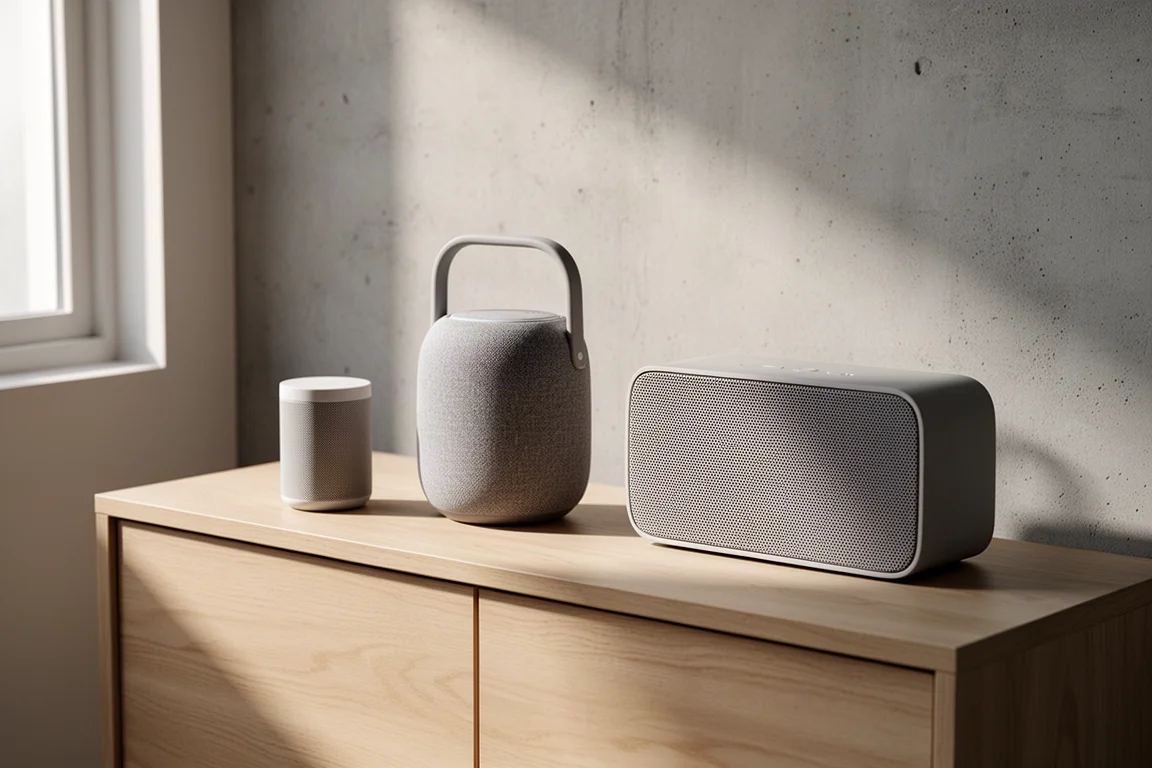
JBL’s Cove lineup brings three wireless speakers onto a single whole-home audio platform, and each one is built for a different job rather than a different size tier. The Cove M1 is the compact model for bedrooms, offices, and smaller spaces. The Cove P1 adds a battery, a charging dock, and weather resistance so it can move between indoors and out. The Cove X1 is the largest and most powerful of the three, designed to stay in one place and fill a much larger room.
Treating them as three pieces of one system makes more sense than thinking of them as small, medium, and large versions of the same speaker. Any of them can work on its own, two of the same model can be stereo paired, and select models can serve as wireless surrounds with compatible JBL sound bars. Spread them through a home and everything is controlled from one app.
What All Three JBL Cove Speakers Share
Setup runs through the JBL One app, and it is about as simple as it gets. You select the speaker, confirm it by pressing the Moment button on top, connect it to your network, and you are essentially finished. Room tuning runs automatically, and a full setup takes well under a couple of minutes per speaker.
From there, the app offers a customizable equalizer alongside presets such as Chill, Energetic, Vocal, and the JBL Signature Sound. A create-a-system section handles pairing two of the same model, showing where to place them before connecting. The app also manages room grouping, stereo pairs, home theater setups, sound adjustments, and room calibration.
Streaming support is broad. AirPlay works from iPhone, Google Cast from Android, and the speakers also work directly with Spotify Connect, Tidal Connect, and Qobuz Connect, so you can keep using the apps you already know. The whole lineup is Roon ready. All three include Bluetooth 5.3 and Auracast 2 support.
Controls are effectively identical across the range: volume, Bluetooth pairing, and a multi-function play button sit on top. The Moment button is the more interesting one. With nothing playing, it jumps straight into a preset, an ambient sound, a personalized playlist, a radio station, or recent listening through Spotify Tap, all configured in the app. With music already playing elsewhere in the house, a long press on another Cove speaker brings that audio into the room you are standing in.
Under the hood, all three use JBL’s Constant Sound Field technology to keep tonal balance consistent as you move around a room, and automatic room tuning relies on a microphone on the back of the speaker.
JBL Cove M1: The Compact Room Speaker
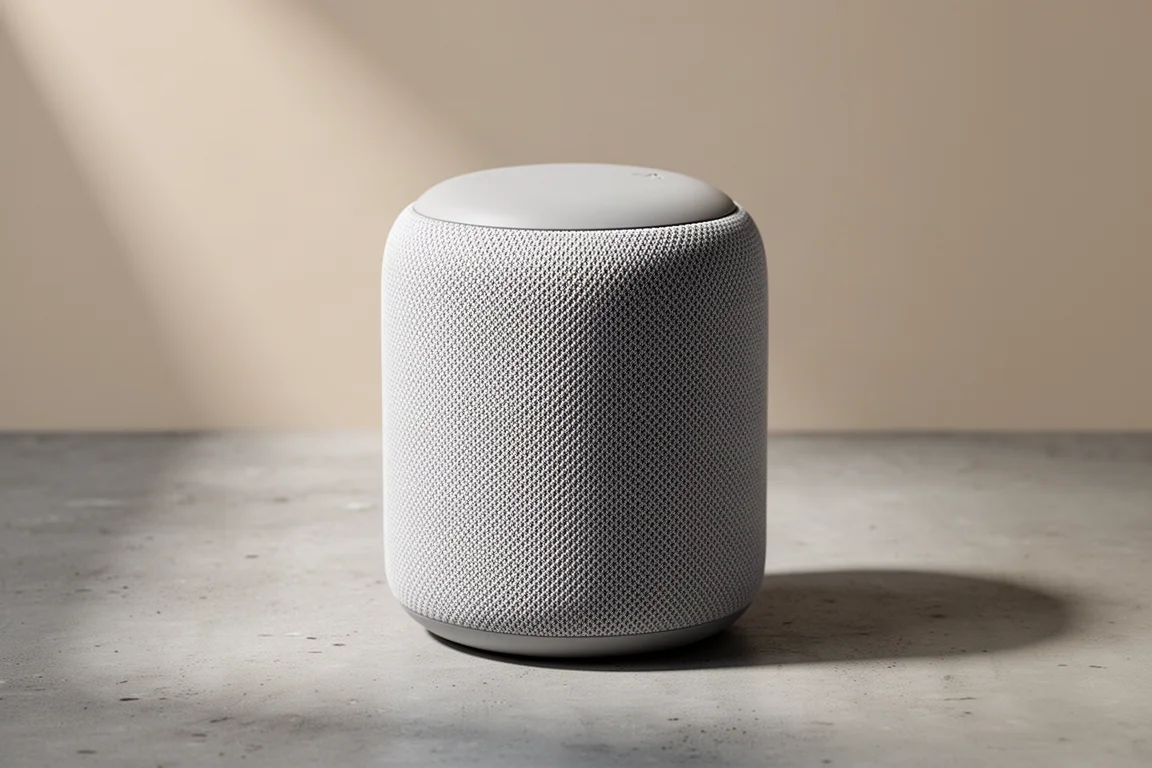
The Cove M1 is the smallest and simplest speaker in the family. It stands about 7 inches tall, uses a compact cylindrical design that suits a bookshelf, kitchen counter, desk, or nightstand, and comes in black or white. There is no battery inside, so it stays plugged into the wall.
Inside is a 3.0 channel arrangement with three 20 mm tweeters and a 4-inch woofer, rated at 110 watts of total power, with frequency response down to 55 Hz. It is also the one Cove model that does not support Dolby Atmos music, which is worth knowing before you commit. A USB connection on the back lets you play music from a drive.
The M1 is the easiest speaker in the lineup to place. It fits a smaller bedroom, a smaller office, or any compact room, and two of them can be stereo paired for noticeably better imaging in the middle. There is a second use case that may be more interesting still: a pair can serve as wireless surrounds with most current JBL sound bars, and that combination meaningfully improves the surround experience. Setting it up in the app is just as straightforward.
JBL Cove P1: The Portable Cove Speaker
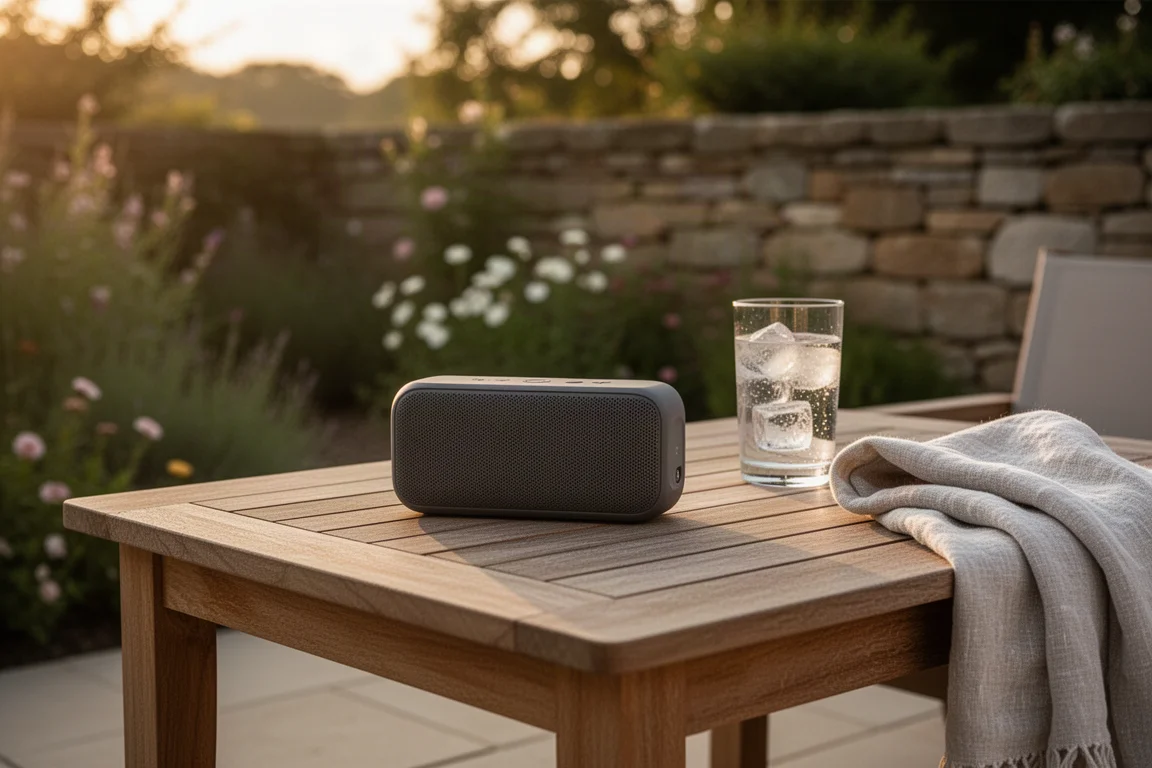
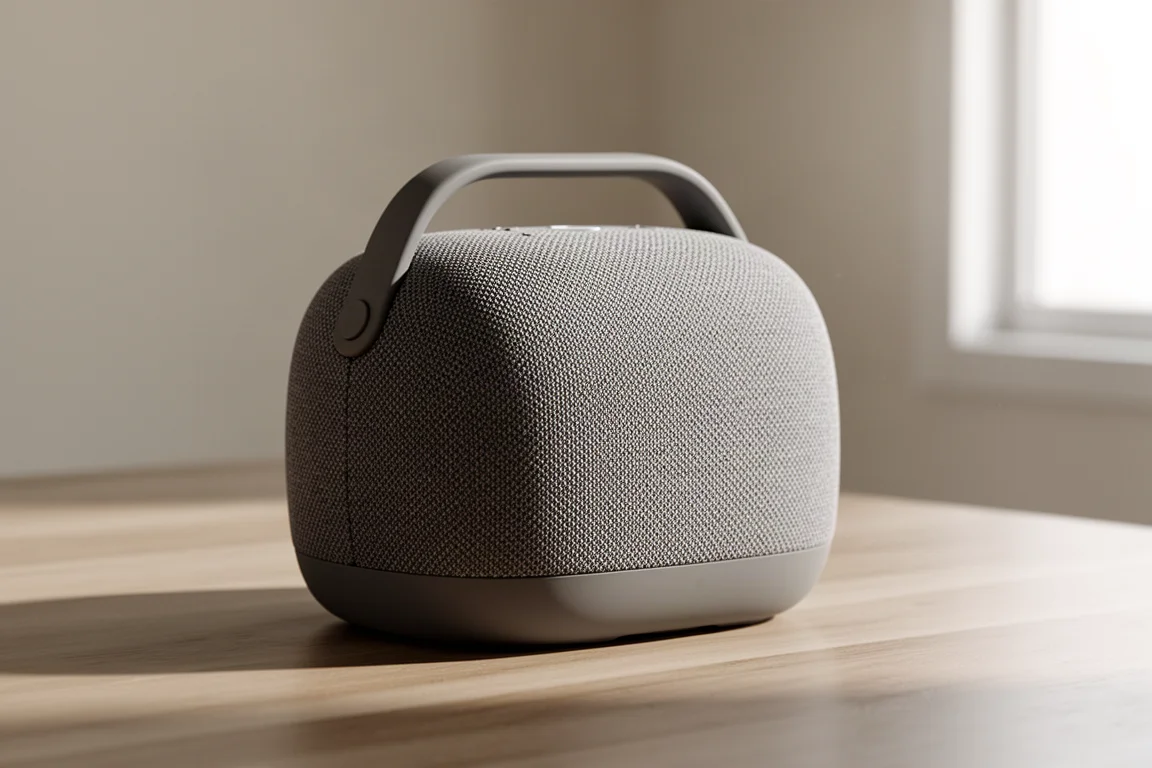
The Cove P1 is not simply a more powerful M1. It is the portable member of the family, weighing a little over 7 lbs with a built-in handle, a charging dock, and an IP56 rating for dust and water resistance. A 4,800 mAh battery is rated for up to 14 hours of playback, though real-world use tends to land closer to about 10 hours depending on how loudly you listen.
This is the speaker that acts as the roaming piece of a Cove system. It lives indoors on its dock, and when you want audio somewhere else you pick it up and carry it to a patio, pool area, backyard, or garage. That means you do not need a speaker in every room. In range of Wi-Fi it stays part of the whole-home system; out of range, Bluetooth takes over.
Audio hardware steps up as well. Five drivers handle playback: one 20 mm tweeter, three 30 mm tweeters, and a 4-inch woofer, with total power at 120 watts and frequency response down to 50 Hz. Unlike the M1, the P1 supports Dolby Atmos music through an upfiring driver in the top.
Two P1s can be stereo paired, and they can also serve as surrounds with most current JBL sound bars. The home theater advantage here is that the upfiring driver can produce Atmos effects from behind you, bouncing sound off the ceiling and back down to create a fuller bubble of surround sound.
JBL Cove X1: The Big Room Flagship
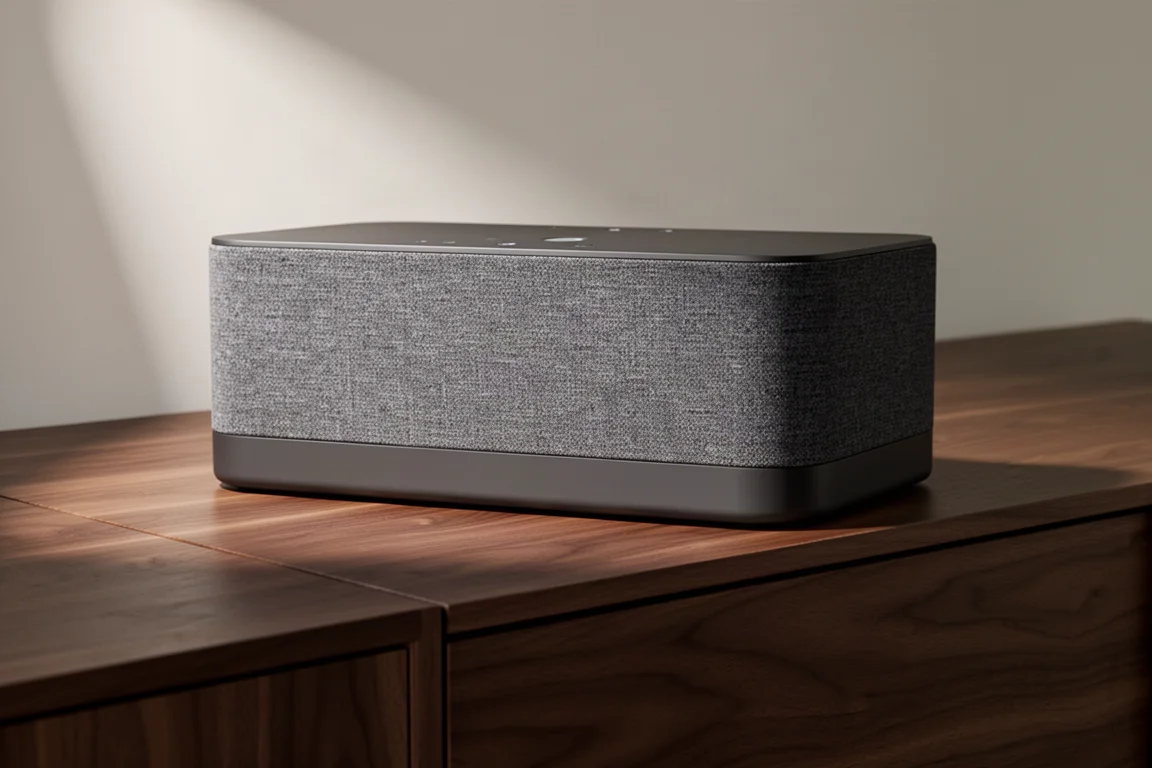
The Cove X1 is the largest and most powerful speaker in the lineup, built for anyone who wants more output and bass from a single unit. At almost 11 lbs it is noticeably wider and lower than the M1 and P1, and there is no handle or battery because portability is not the point. It is meant for a living room, a den, a larger kitchen, or any space where one speaker has to do more of the heavy lifting.
Six drivers sit inside, including four 30 mm tweeters and two larger woofers. JBL rates the X1 at 200 watts total, making it the most powerful Cove speaker by a wide margin, and frequency response reaches down to 45 Hz. It also supports Dolby Atmos music with an upfiring driver on top.
A single X1 works well on its own, and two can be paired for left and right stereo separation with considerably more bass and output, producing a capable two-channel setup. One limitation to note: the X1 cannot currently be used as surrounds with a JBL sound bar. That is a shame, since a pair of X1s behind a large sound bar and subwoofer would make for a serious home theater arrangement, and the option may arrive in the future.
How the JBL Cove Lineup Compares
JBL is not entering an empty market. Sonos is the name most buyers will compare against first, alongside Bluesound and its BluOS ecosystem and Denon’s refreshed home lineup.
At the smaller end, the Cove M1 at about $280 sits roughly $30 above the Sonos Era 100 at about $250. Both target the same smaller-room, bookshelf, and countertop use, so the choice tends to come down to ecosystem rather than features or price alone.
The P1 is harder to place directly because few competitors offer one speaker doing everything it does. At $480 it is essentially the same price as the Sonos Era 300, and both support Dolby Atmos, but the Era 300 has to stay plugged in while the P1 brings a battery, a handle, a charging dock, and an IP56 rating. If portability is the priority, the closer comparison is the Sonos Move 2 at $500, which offers up to 24 hours of battery life against the P1’s 14, though the Move 2 does not have an upfiring driver for Dolby Atmos music. In practice the P1 sits somewhere between the two.
The X1 at $540 runs around $60 more than a Sonos Era, and it is the Cove model for buyers who do not care about portability and simply want JBL’s biggest standalone speaker with the most output and deepest bass in the lineup.
Sonos still has the advantage of a large, established ecosystem. Bluesound appeals more to traditional hi-fi listeners, and Denon ties into a broader HEOS ecosystem. JBL’s angle is a lineup where the three speakers have clearly different jobs while working well together, plus the connection to JBL sound bars: Cove speakers handle music throughout the house, and the M1 or P1 can then act as wireless surrounds inside the same ecosystem.
There is room to grow. Sonos and Bluesound both let you bring traditional passive speakers and existing audio systems into their multi-room platforms through products such as the Sonos Amp, the Sonos Port, or the Bluesound Powernode and Node. JBL has no equivalent in the Cove lineup today. A compact streaming amplifier or standalone streamer would make it possible to fold a two-channel setup or architectural speakers into the same ecosystem.
Buying Advice: Which Cove Speaker Fits Your Home
All three speakers sound confident and considerably bigger than their size suggests, with the X1 delivering the most scale and low-end presence. That should not come as a surprise given JBL’s long history building speakers, from home models to studio monitors, movie theater systems, and professional sound reinforcement.
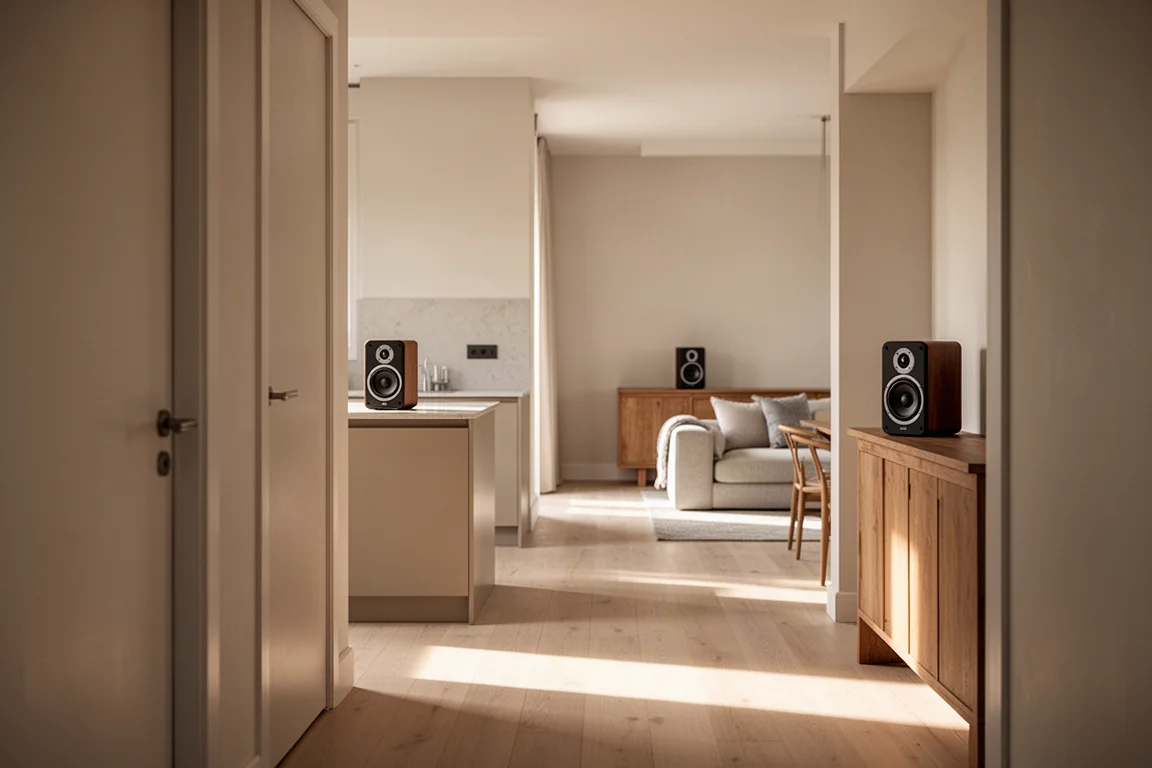
Choose the M1 if you want a compact, always-plugged-in speaker for a bedroom, office, or small room, and especially if you might later pair two of them as surrounds for a JBL sound bar. Choose the P1 if you want one speaker that covers the most ground: indoors on its dock, outdoors on battery, with Dolby Atmos music support and enough flexibility to serve as a surround speaker. Choose the X1 if output and bass matter more than portability and you want the strongest single speaker in the family for a larger room.
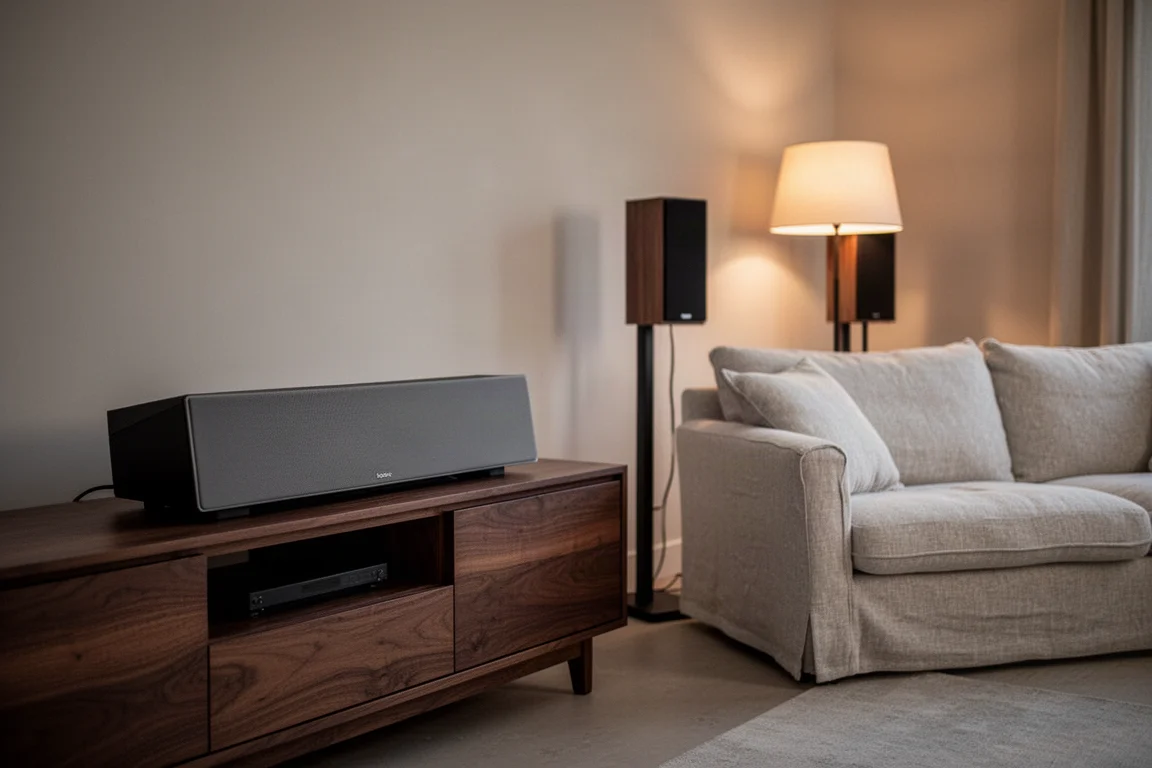
Pairing two of the same model is worth considering in every case, since stereo separation adds real width and imaging, and the app walks you through placement. If whole-home audio is the goal, the shared platform means you can start with one speaker and add more later without changing apps or ecosystems.
Conclusion
The Cove lineup makes the most sense as a system rather than three separate purchases. The M1 covers smaller rooms and doubles as a sound bar surround, the P1 moves between indoors and outdoors without losing its place in the network, and the X1 anchors a larger room with the most power and the deepest bass in the range. Setup is quick, the app is straightforward, and all three share the same platform, so building out from a single speaker to a whole home is a realistic path.
Further reading
Related Reviews
Wireless Speakers
Bang & Olufsen Beolab 8 Review: A Compact Three-Way Speaker Built for Flexibility
A close look at the Beolab 8, a compact three-way powered speaker with customizable finishes, two listening modes, and a bass limiter worth understanding before you buy.
Wireless Speakers
Denon Home 200, 400, and 600: Which New Denon Home Speaker Fits Your Room?
A practical look at the new Denon Home lineup, covering shared features, driver differences, Dolby Atmos delivery, and which of the three models suits which room.
Wireless Speakers
Devialet Phantom II Review: Big Bass From a Very Small Wireless Speaker
A compact wireless speaker with genuinely remarkable bass output, sharp imaging, and a few trade-offs worth understanding before you buy.