Hi-Fi Audio
JBL Classic Series Electronics Review: SA550, TT350, MP350 and CD350
A practical look at the four JBL Classic series components, from the Class G SA550 integrated amplifier to the TT350 turntable, MP350 streamer and CD350 CD player.
Introduction
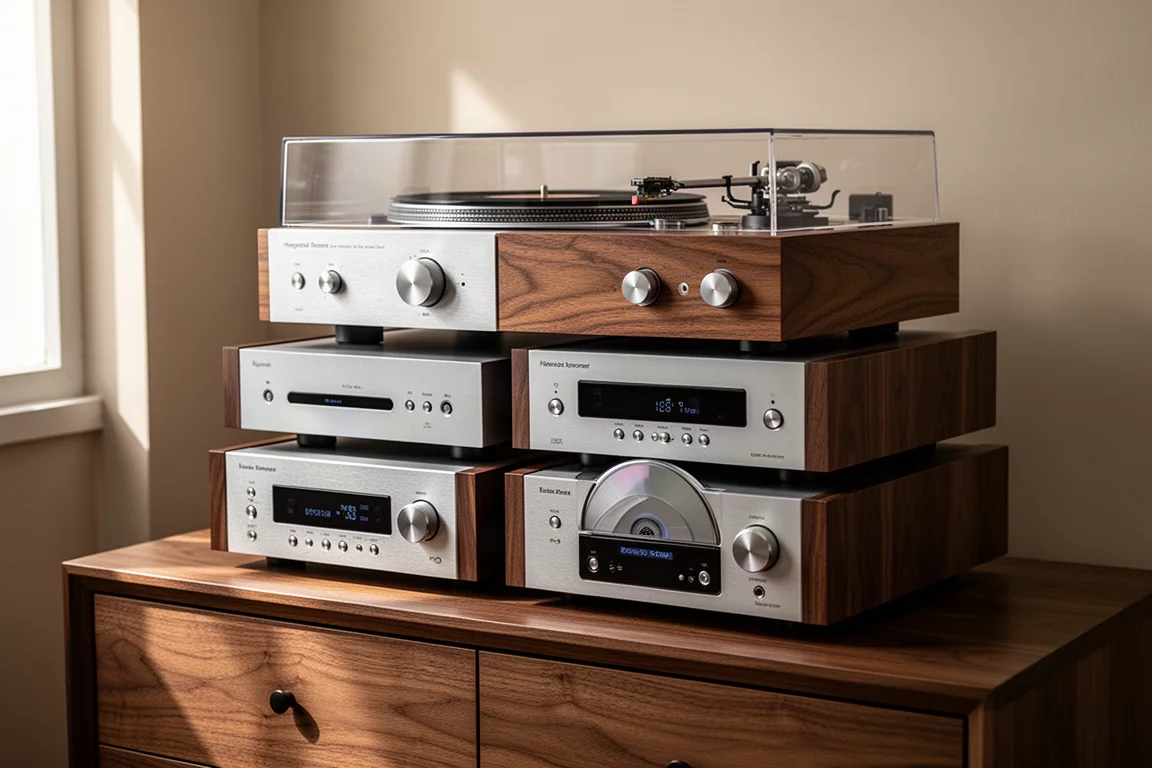
JBL has been building audio gear for decades, and the Classic series carries that history into modern components. The electronics line takes its visual cues from 1960s and 1970s hi-fi: wooden side panels, aluminium faceplates, and an illuminated JBL exclamation point logo that glows red when a unit is switched on and shifts to orange as it comes out of standby. The styling was drawn from the JBL SA600 integrated amplifier of the 1960s.
The line has four models: the SA550 integrated amplifier, the TT350 turntable, the MP350 streamer and the CD350 CD player. They stack into a matched system, but each piece stands on its own merits. This guide walks through what each one does well, where the limits are, and who each is for.
What Defines the JBL Classic Series
Every unit in the line shares the same design language: wood side panels, aluminium front plates, and matching vintage-style buttons. The streamer is the exception, with no front-panel buttons at all. The pieces feel substantial in hand; the amplifier’s knobs in particular have a solid, weighted action, and the buttons across the range have a similar feel. The design goal was to echo well-made gear from decades past while using current audio technology inside.
That combination is the reason the line is worth a look. Buyers who want the warmth of a vintage system without the maintenance of fifty-year-old components get a matched set of new electronics instead.
JBL SA550 Integrated Amplifier: The Centerpiece
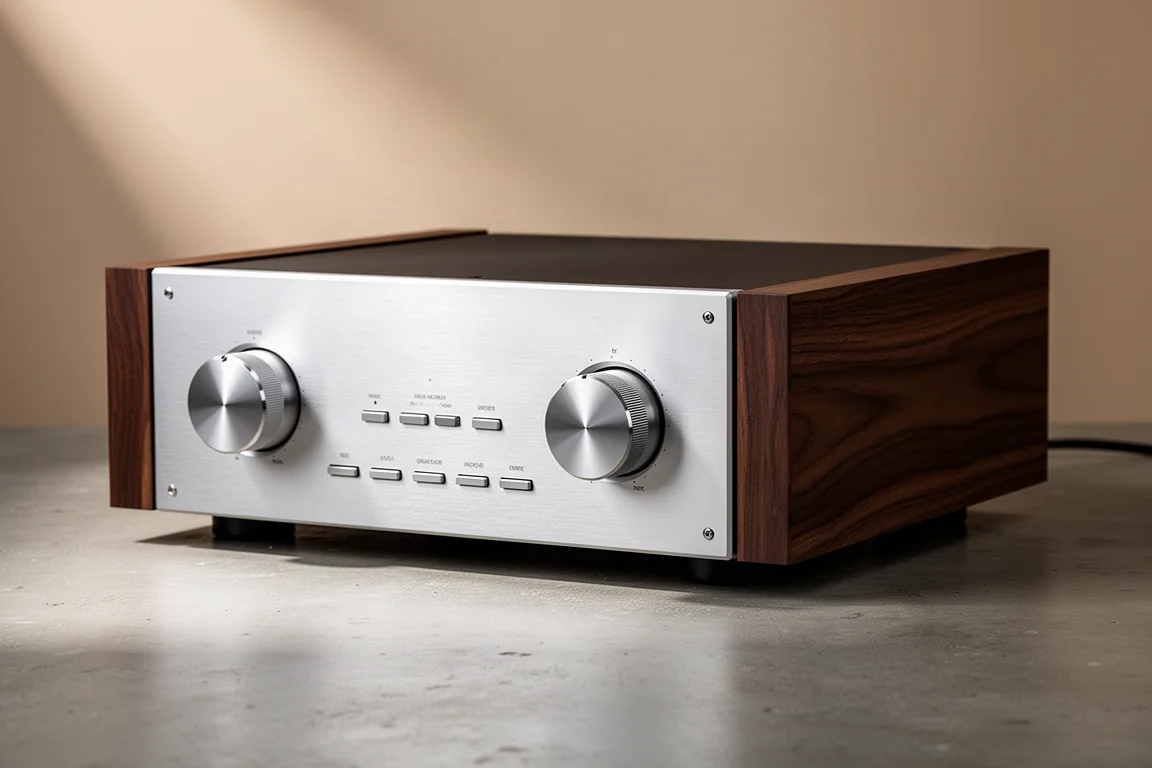
The SA550 is the heart of the system and, for many buyers, the most interesting piece. It uses the same ESS DAC chip found in the larger SA750, and the converter is only part of the story: the supporting electronics and power supply matter just as much, and the SA550 is built around them.
Its output stage uses Class G, a design that runs in pure Class A at low demand and switches to Class AB when more power is needed. In practice that means 10 watts per channel of Class A output for ordinary listening, rising to 90 watts per channel into 8 ohms and 150 watts into 4 ohms when dynamic peaks arrive. The appeal is efficiency without giving up the character of Class A at normal levels.
Connectivity is broad for a two-channel amplifier. There is a moving magnet phono input for a turntable, three rear aux-type inputs, two coaxial and one optical digital input, and a front mini-jack aux input alongside a headphone output. Any of the three rear aux inputs can be set to processor bypass, so an AV receiver can drive the front channels through the SA550 while volume control stays at the receiver. There is no HDMI ARC connection; a TV can be connected over optical instead, and the digital clock’s locking frequency can be adjusted to address optical output quirks from some televisions. Bluetooth uses high-res aptX Adaptive and remembers up to five sources. A set of preamp outputs is available for a separate power amplifier or, more commonly, a subwoofer.
JBL TT350 Turntable: Direct Drive With a Vintage Face
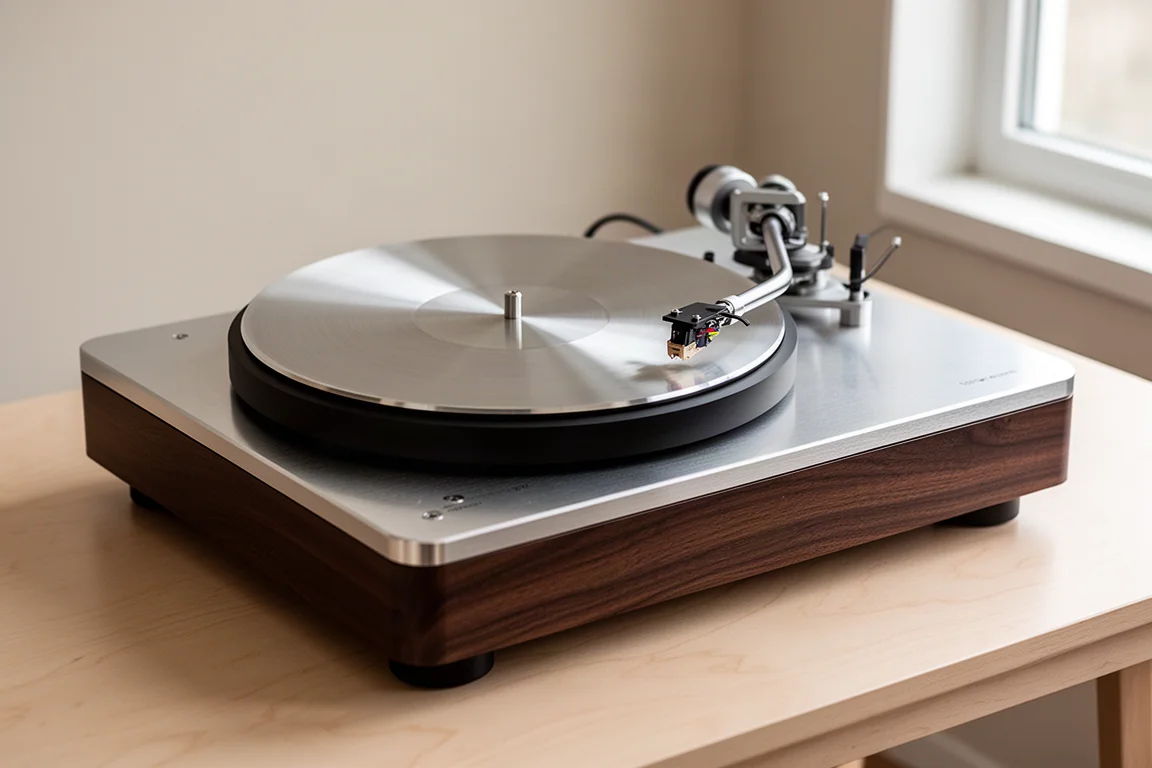
The TT350 pairs a brushed aluminium faceplate with a walnut plinth and the same button set as the rest of the line. It is a direct-drive design with a heavy platter that carries a thick perimeter-weighted ring, and the inside of the platter is well damped. Adjustable feet provide a degree of isolation from the surface it sits on.
The S-shaped tonearm has bearings that feel free of play, and the headshell connection is tight and solid. Tonearm height is adjustable, which matters if you later move to a different cartridge. A moving magnet cartridge from Audio-Technica is pre-mounted, drawn from a family of models that share the same cartridge body, so upgrading can be as simple as fitting a better stylus.
Two practical notes. No alignment gauge is included for the removable headshell, so a gauge is worth adding if you plan to change cartridges. And lowering the cue lever quickly can let the arm drift slightly backward before it settles, so the stylus may not land exactly where you aimed.
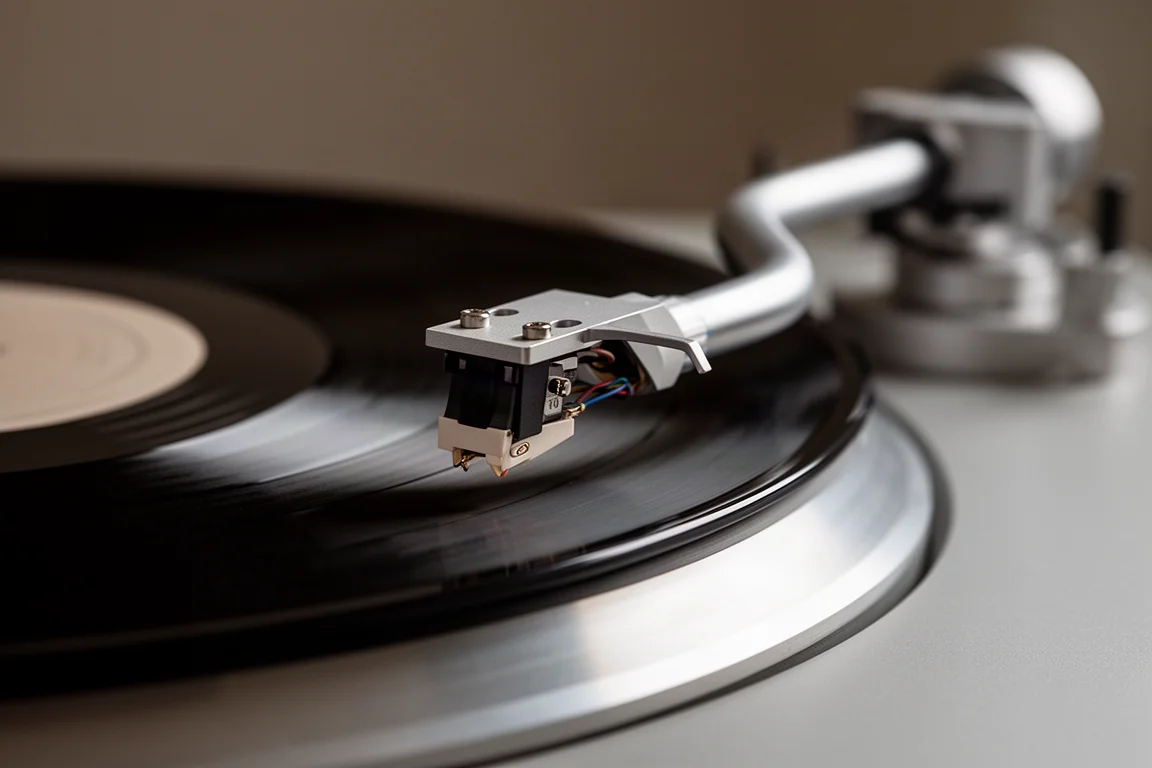
In listening, the cartridge tracked well through difficult passages, and no motor noise came through on a blank test record. For its price, the sound quality holds up.
JBL MP350 Streamer: The Matching Network Player
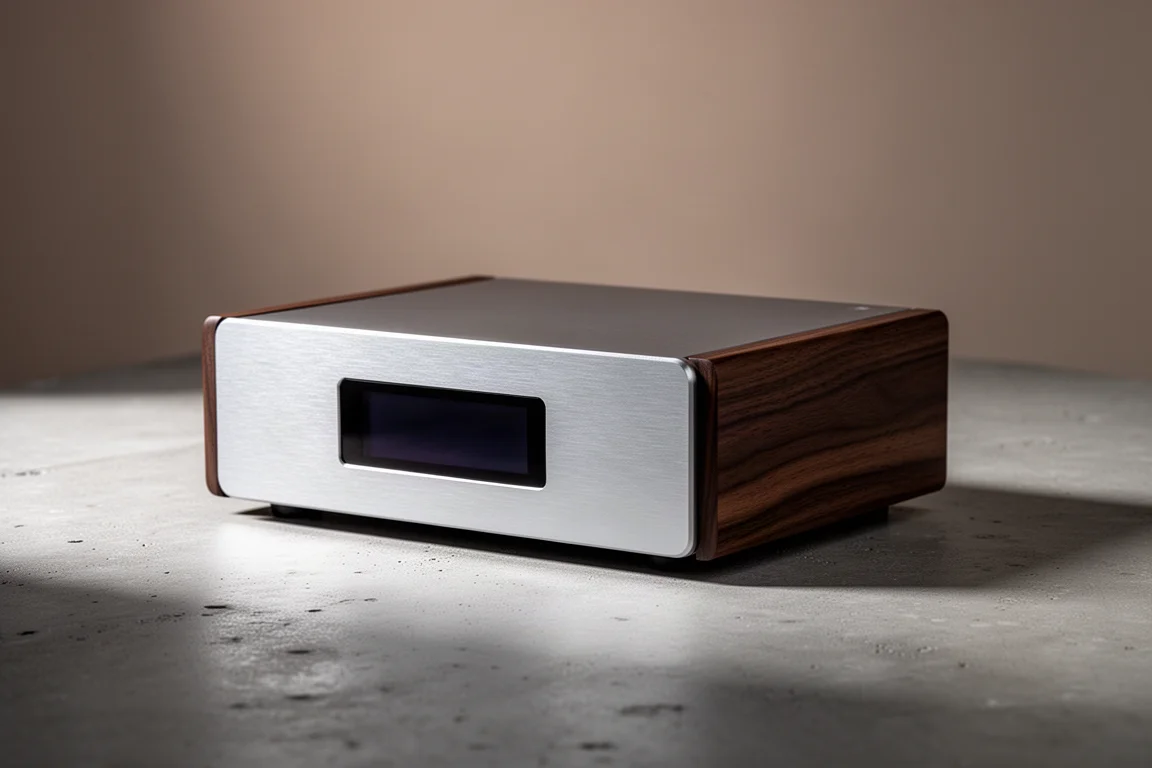
The MP350 shares the wood side panels and aluminium front of the rest of the line, with a small display window and no front buttons. It supports AirPlay 2 and Chromecast for quick setup, along with Spotify Connect and Tidal Connect with MQA. Roon is listed as supported, though Roon functionality was not yet enabled at launch and was expected to follow. The internal DAC handles up to 24-bit/192 kHz.
One setup detail is worth knowing in advance: the digital output is not active by default and needs to be switched on in the menu before the streamer will feed an outboard converter. Once connected, the recommended path is the coaxial digital output into the SA550, because the amplifier’s DAC is the better of the two. On a network, the MP350 appears quickly as an AirPlay device.
As a streamer it performs well and matches the amplifier cosmetically, which is likely to be the main reason buyers pair the two. If a future upgrade to a more expensive streamer is likely, there are options at every price and quality level.
JBL CD350 CD Player: A Strong Transport
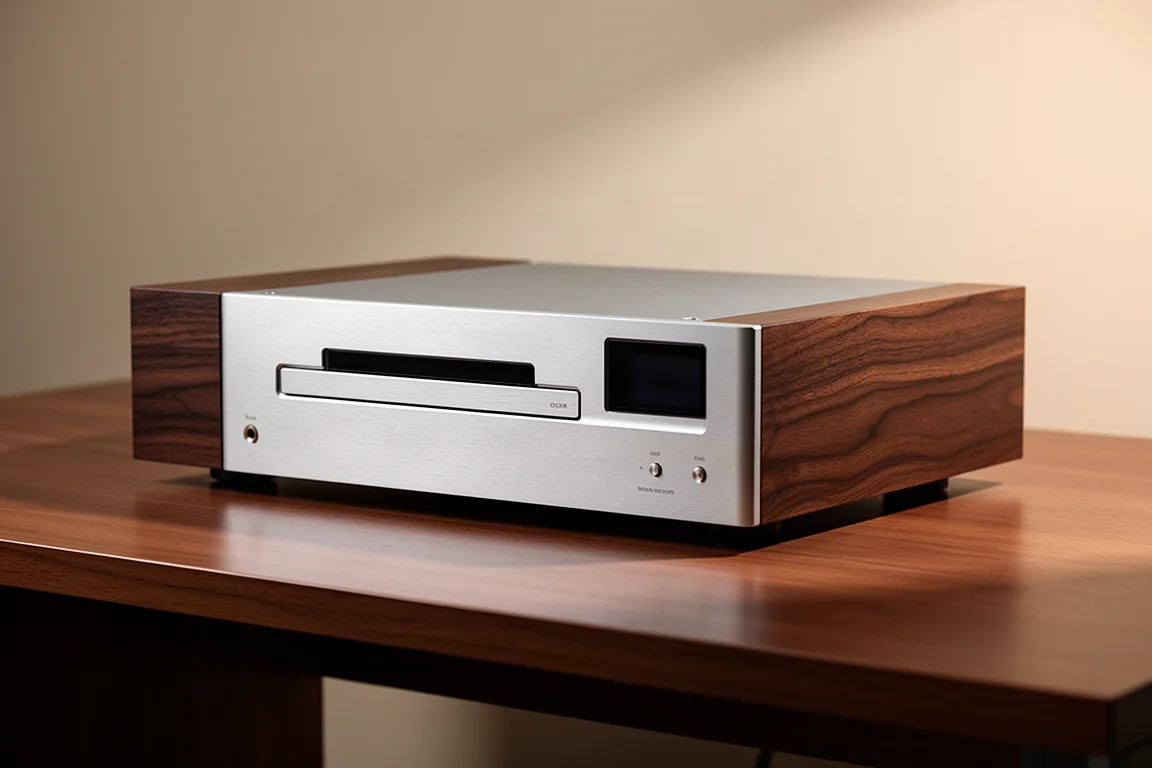
The CD350 looks like a conventional CD player, and plays red book CDs as expected. It also handles ripped WAV, FLAC and MP3 files from disc, and the same file types from a rear USB port. Sample rates of 32, 44.1, 48, 88 and 96 kHz are supported, so playback is not limited to standard CD resolution. The disc drawer has a solid, well-made action.
Digital outputs include both coaxial and optical, which lets the SA550 handle conversion. The internal DAC and digital circuitry are good, but the amplifier’s converter is better, so the digital connection is the one to use in a matched system.

As a transport the CD350 is a strong performer, keeping timing intact and making discs engaging to listen through.
How the Stack Performs Together
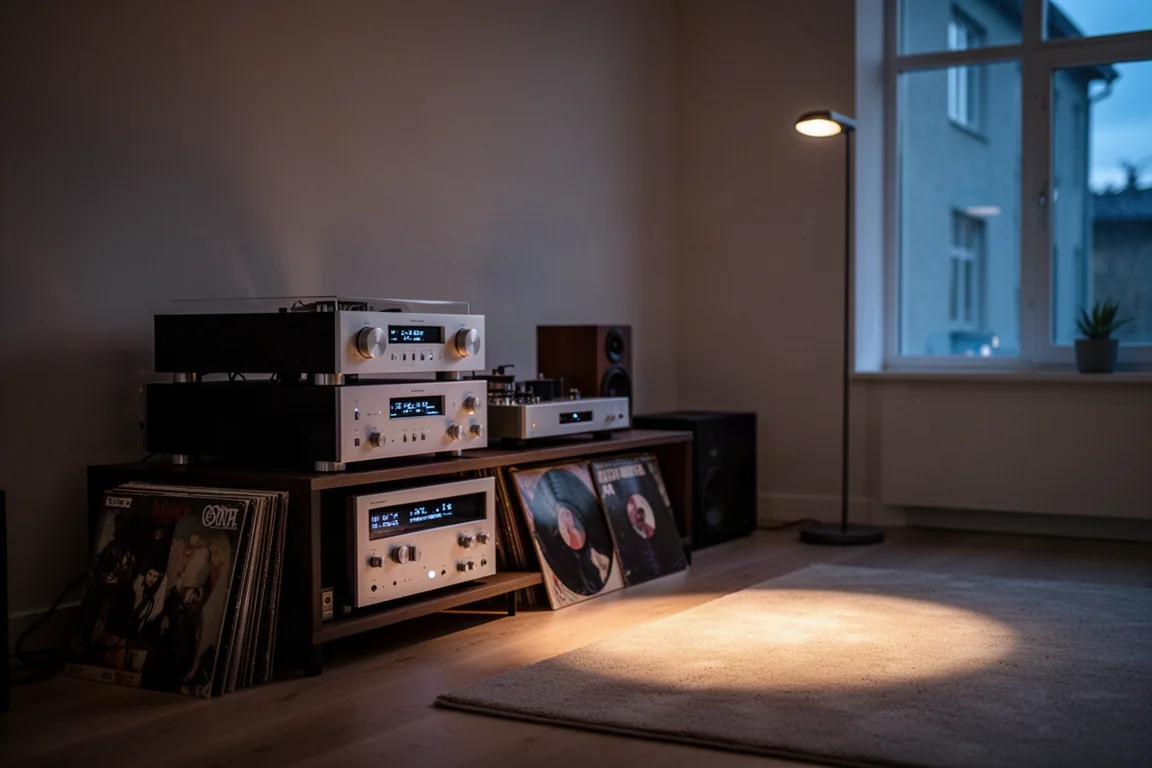
Driving a pair of JBL 4367 speakers, which are revealing enough to expose weaknesses quickly, the stack held up well. Imaging was precise and stable, and bass was tight and controlled even with larger speakers. The Class G output stage was the standout: smooth and musical at ordinary levels, and still effortless when pushed hard enough to move from Class A into Class AB.
One usability note applies when the pieces are connected digitally. The input list on the SA550 is long, and there is no way to remove inputs that are not in use, so selecting the right one takes a little scrolling. It is a minor annoyance rather than a real limitation.
Buying Advice: Which Pieces Make Sense
If you are choosing one piece, the SA550 is the natural starting point. It offers a great deal for its price: a capable DAC, a flexible Class G output stage, phono and digital inputs, and enough power for a wide range of speakers. The CD350 is the other standout, and works well as a transport into the amplifier’s converter.
The TT350 makes sense for buyers who want a direct-drive deck that matches the system visually and arrives ready to play, with a clear upgrade path through the cartridge family. The MP350 is a good streamer and the obvious cosmetic match, though its digital output should feed the SA550 rather than relying on its internal DAC.
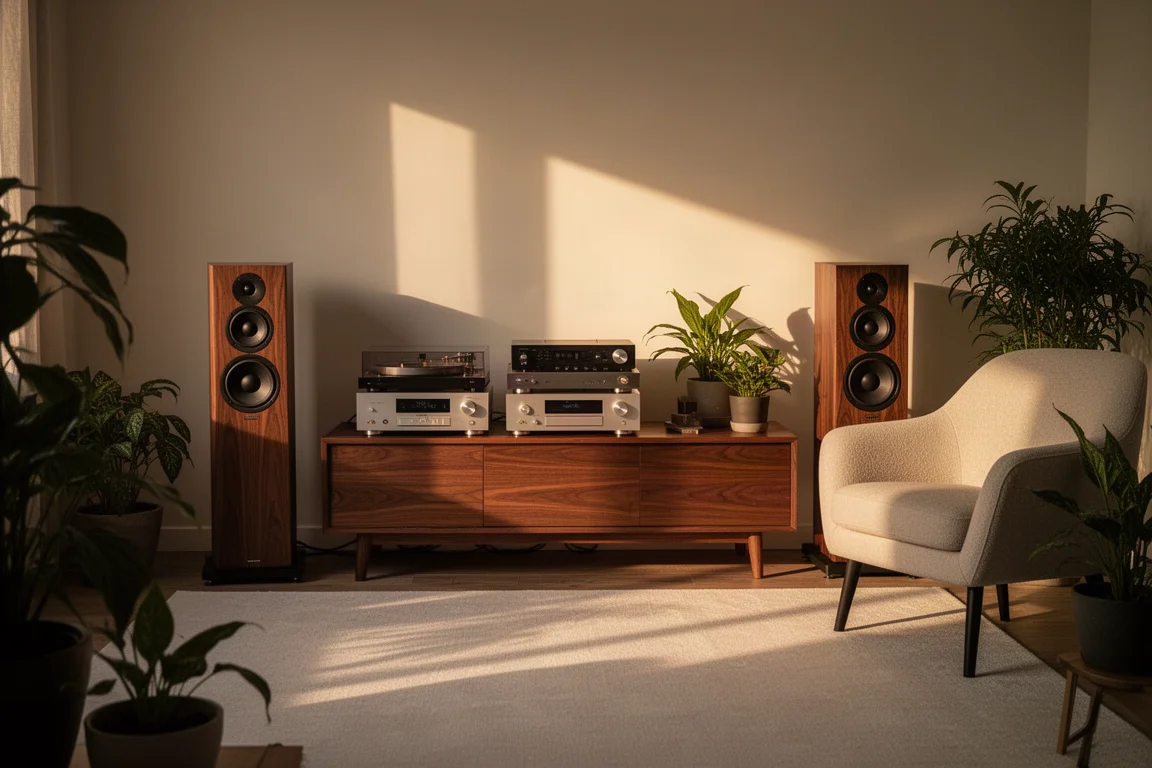
Taken as a set, the four pieces are moderately priced for what they offer in today’s market, and they share a coherent look that sits comfortably next to vintage speakers or a modern JBL Classic speaker.
Conclusion
The Classic series succeeds at what it set out to do: modern electronics in vintage clothing. The SA550 and CD350 stand out as the strongest performers for the money, while the TT350 and MP350 round out a matched system without obvious weak points. Buyers who want a two-channel setup with character, current connectivity and straightforward operation will find plenty to like here.
Further reading
Related Reviews
Hi-Fi Audio
Accuphase C-57 vs Allnic H-7000V: Two High-End Phono Stages Compared
A fully balanced solid-state phono stage with a pitch-black noise floor meets a tube design built for well-loved records. Here is how to choose between them.
Hi-Fi Audio
Active vs Passive Hi-Fi: Five Components for a Modern System
Five components that define modern active and passive hi-fi systems, with the strengths, trade-offs and setup details worth weighing before you buy.
Hi-Fi Audio
Advance Paris A10 Apex Review: A Hybrid Integrated Amplifier That Covers a Lot of Ground
A French hybrid integrated amplifier with a class A tube preamp stage, analogue power meters, and an internal DAC and phono stage good enough to make extra boxes unnecessary.