Subwoofers
JBL 550P Review: A Sealed 10-Inch Subwoofer That Knows Its Limits
A practical look at the JBL 550P: strong in-room output to about 30 Hz, consistent low-end dynamics, and the rooms where it makes the most sense.
Introduction
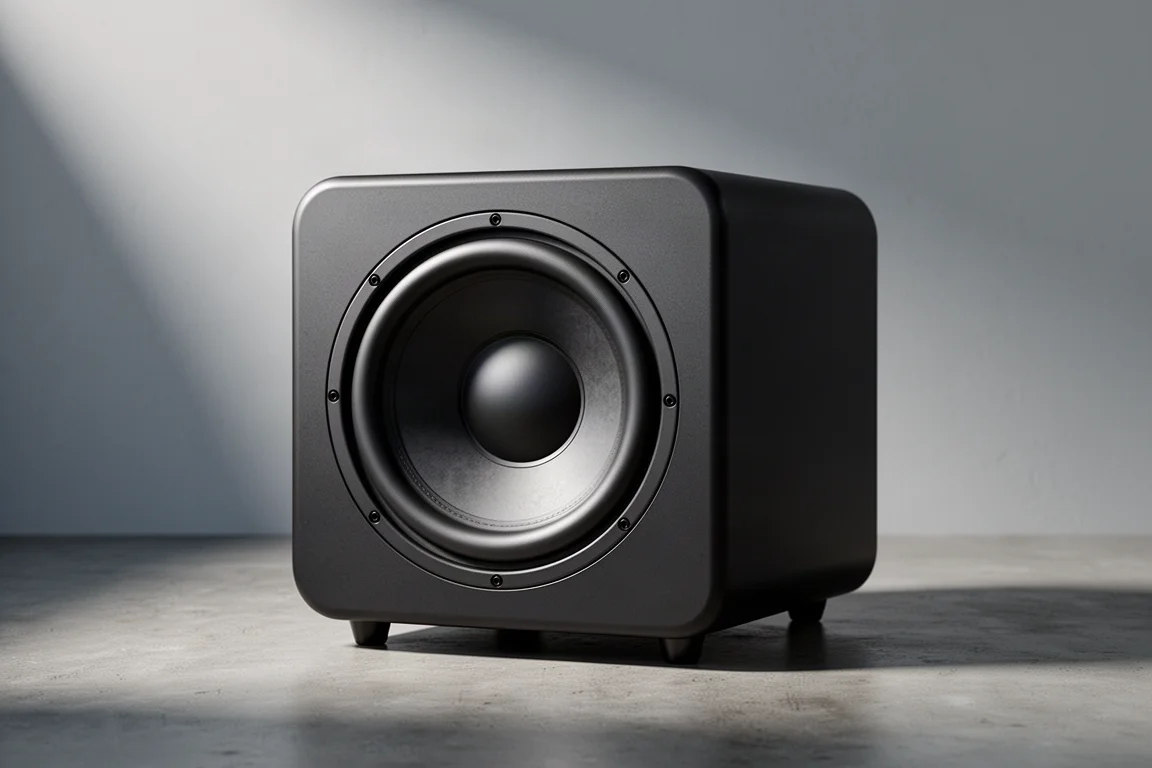
The JBL 550P is a sealed 10-inch subwoofer with a 300-watt amplifier, and it sits in a price bracket many buyers end up weighing carefully: clearly more capable than an entry-level budget sub, yet well short of the premium models that promise deep output below 20 Hz. The real question is not whether it is the most powerful subwoofer you can buy, but whether the performance it delivers in a normal room is enough for the way you actually listen.
This article covers measured in-room behaviour, dynamic range, distortion, and how the 550P compares with cheaper and more expensive 10-inch subwoofers.
Who the JBL 550P Is For
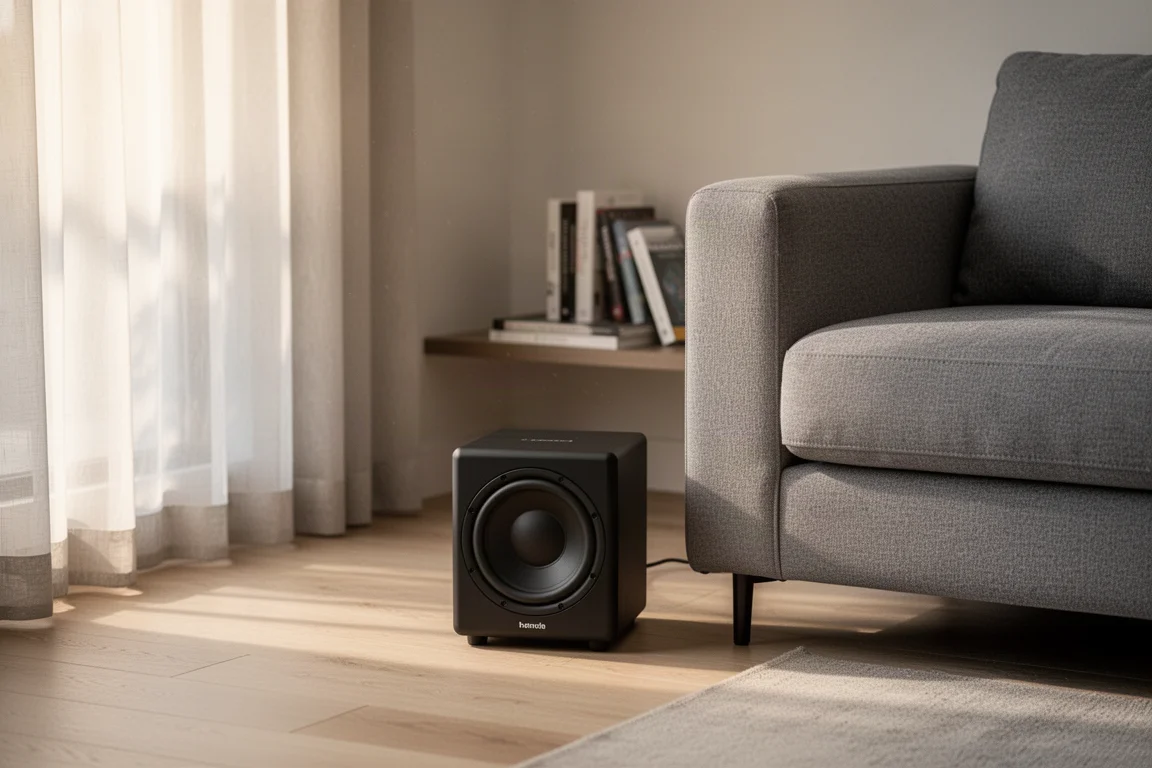
The 550P is aimed at listeners who want genuine low-frequency weight without chasing the bottom octave. In a typical room, boundary reinforcement helps it stay strong down to roughly 30 Hz, which covers the large majority of film content and a great deal of music.
If you live in an apartment, listen in a smaller room, or simply are not concerned with output below 30 Hz, this is a reasonable place to stop. A 24-inch subwoofer is not a requirement for enjoying deep bass.
Listeners who routinely want output in the low 20s and below will eventually want more driver excursion and more amplifier power than this design provides. That is less a shortcoming than a category boundary, and it is worth knowing before you buy.
Main Strengths: What the JBL 550P Gets Right
The most appealing trait of the 550P is how it behaves as volume rises. Many compact subwoofers use digital signal processing to boost low frequencies at low levels and then limit them as the volume climbs, which protects the driver but flattens dynamic range. The effect is counterintuitive: you turn the system up for more bass impact, and the deepest notes gain less than everything above them.
The 550P does not appear to work that way. Across listening sessions, the low notes stayed at a relatively consistent level relative to the upper mid-bass as volume increased, and at the highest output settings the low end gained a few decibels rather than being squeezed down. For anyone who turns the volume up specifically to feel more bass, that consistency is the point.
That behaviour also helps with calibration. A subwoofer with level-dependent limiting can measure differently at one playback level than at another, which complicates setting up a home theater system. This one is far less troublesome on that front.
The sealed cabinet contributes as well. Distortion stayed notably lower than on ported budget alternatives, and the subwoofer produced valid results in standardised output testing at frequencies where cheaper 10-inch models could not register a successful measurement.
Low-End Output and Dynamic Range
In-room, the 550P is strong to about 30 Hz. Relative to the 60 to 80 Hz region, output is roughly 10 dB down at 30 Hz and about 3 dB down at around 45 Hz, which describes a fairly gentle roll-off rather than a cliff.
Some tracks appeared to reach into the low 20s, but that was largely the room talking. A mode around 25 Hz lifted that frequency, and moving the subwoofer out of the corner and into the middle of the room reduced the effect. Treat the low 20s as a room-dependent bonus rather than a specification.
Above that region, the subwoofer handles both movies and music without fuss, which is unsurprising given how much low-frequency content the two formats share. Pipe organs, for instance, can reach down to 15 to 17 Hz, so music is not automatically the easier load.
Things to Consider Before Buying
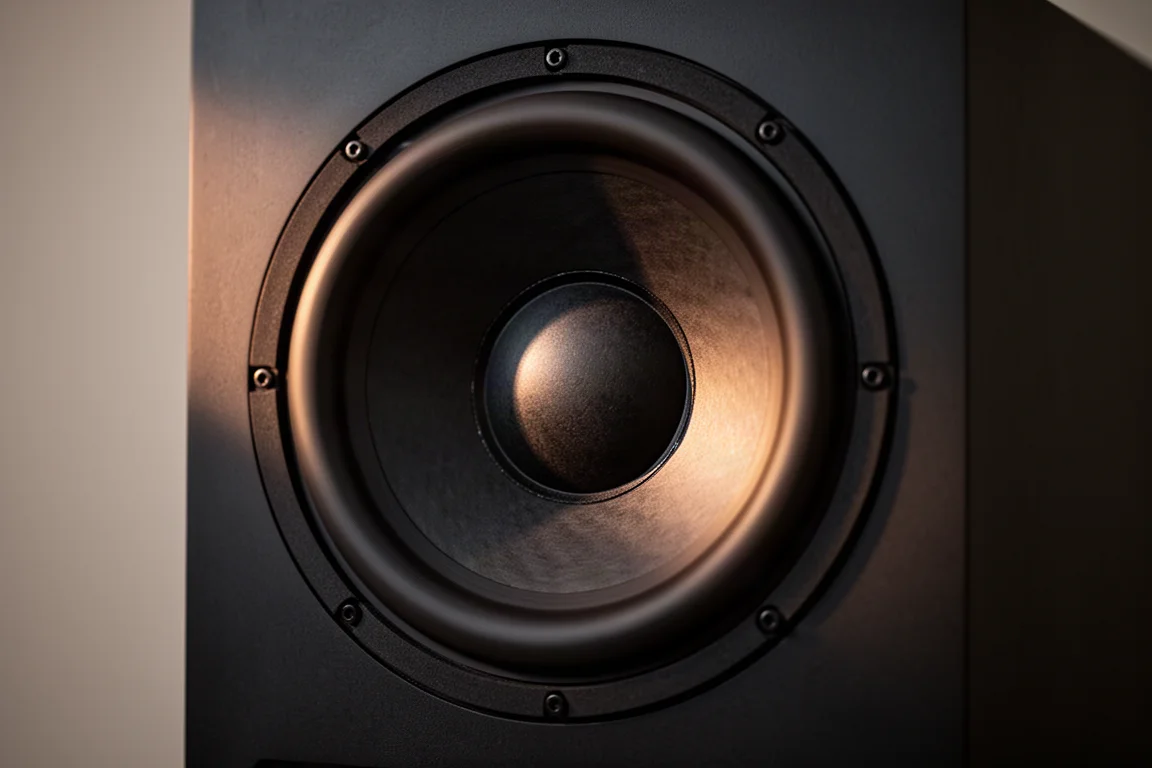
The 550P is a 10-inch sealed design with a 300-watt amplifier, and much of its weight comes from a substantial ferrite motor mounted on the back of the cabinet. That makes it heavier than its dimensions suggest, which is worth planning for if you move it often.
Its limits are predictable. Below 30 Hz, this is not the subwoofer to buy. If deep sub-30 Hz output matters to you, the honest advice is to spend more on a model with greater power and greater excursion.
Value also depends on price. At typical retail of roughly $350 to $400, the 550P is easy to recommend. If it climbs back toward $500 or $600, the calculus changes, because step-up models from brands such as Monoprice or SVS deliver considerably more for the money.
Room Placement and Calibration
Placement changes what this subwoofer does in a room, as it does with any sub. Corner loading reinforces the lowest frequencies, while moving the cabinet toward the middle of the room reduces that lift and can tame a room mode.
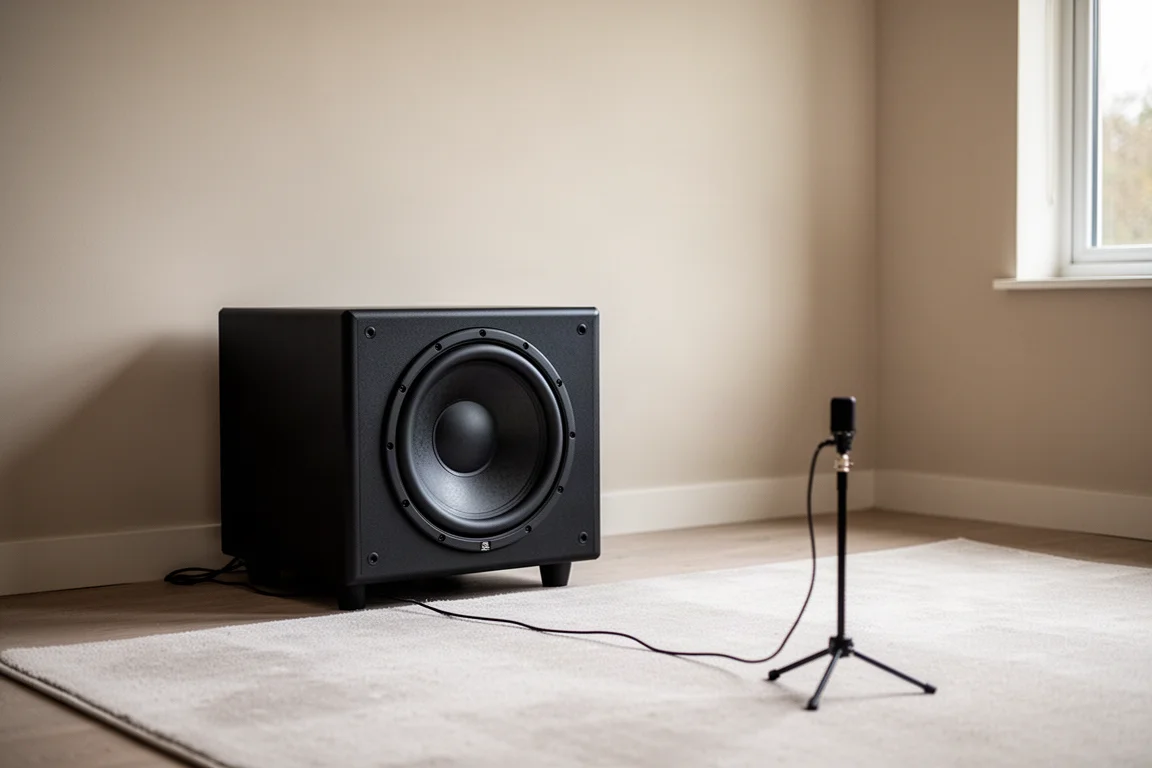
Because the 550P does not lean heavily on level-dependent limiting, its response stays more consistent across playback levels than many compact subwoofers manage. That makes calibration at your listening position more predictable, and it means a calibration set today should still hold when you listen louder tomorrow.
How It Compares With Other Subwoofers
Entry-level 10-inch subwoofers in the $150 to $200 range, including ported models such as the ELAC SUB 1010 and the Polk PSW10, are best understood as mid-bass machines. They deliver plenty of punch in the 60 to 80 Hz region, but distortion rises so sharply below roughly 31 Hz that they could not complete valid output measurements at 20 or 25 Hz.
Spending the extra $200 to $300 for the 550P buys roughly 10 to 15 dB more low-end output at 30 to 40 Hz compared with those budget designs, along with substantially lower distortion. Stepping up further to a sealed Monoprice Monolith 10 added about 4 dB at 30 Hz and about 7 dB at 20 Hz, at a price around $500 at the time.
The pattern is consistent: more money generally buys more performance, and the 550P sits where it should in that progression.
Buying Advice
If your priority is output from roughly 30 Hz upward, in a room that supports it, the JBL 550P is a solid mid-tier choice at its typical $350 to $400 price. It plays loud without squashing the deepest notes, keeps distortion in check for the class, and works for both film and music.
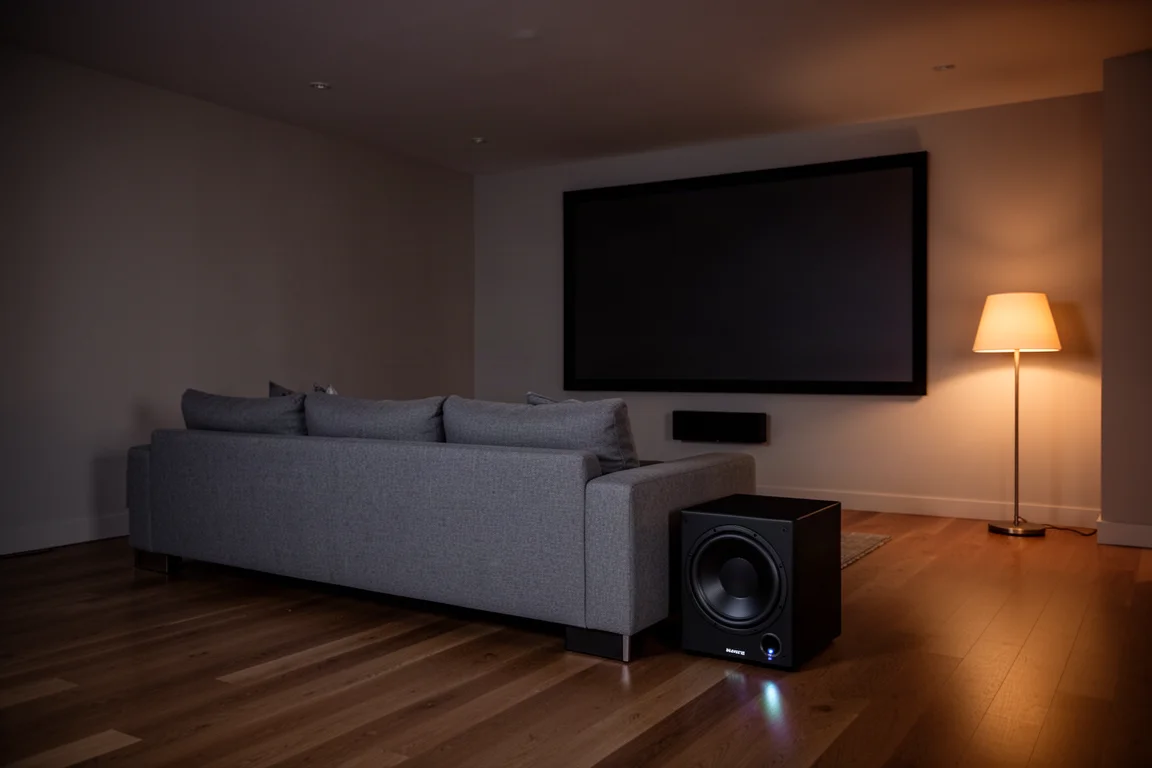
If you need genuine output below 20 Hz, this is the wrong purchase, and no amount of tuning will change that. Move up to a subwoofer with more power and more excursion instead.
If the 550P is discounted near $350, it is easy to recommend. If the price pushes past $500, put that money toward a step-up model from a brand known for low-frequency performance.
Conclusion
The JBL 550P is a well-judged sealed subwoofer for listeners who want a clear improvement over budget 10-inch designs without paying for output they will never use. It reaches about 30 Hz in a normal room, keeps its composure as volume rises, and stays cleaner than the entry-level alternatives. Decide honestly how low you need to go, and the buying decision becomes straightforward.
Product link
View more details for JBL 550P
This product is mentioned in the review. Check the specifications, options, and compatibility before buying.
View more details for JBL 550PFurther reading
Related Reviews
Subwoofers
Arendal 1961 Subwoofer 1S Review: Beautiful Build, Modest Punch at $1,000
A sealed $1,000 subwoofer with a gorgeous cabinet, plus three lower-priced alternatives that deliver more impact for movie nights.
Subwoofers
Arendal Sound 1723 2V Subwoofer Review: Dual 13.8-Inch Drivers Under $3,000
A flagship ported subwoofer with dual opposing 13.8-inch drivers, a 1,200W RMS amplifier, app-based DSP, and a 10-year warranty.
Subwoofers
Ascendo 16 Sub Active Sealed Review: Sealed Bass Built on Real Engineering
A close look at the Ascendo 16 Sub Active Sealed, a 16-inch sealed home theater subwoofer with independently verified measurements, a purpose-built driver, and genuinely controlled output.