Bookshelf Speakers
JBL 4309 Review: A Horn-Loaded Two-Way With Studio Heritage
The JBL 4309 pairs studio-monitor looks with a smooth horn-loaded tweeter, taut bass down to 40 Hz, and placement flexibility. Here is what to weigh before buying.
Introduction
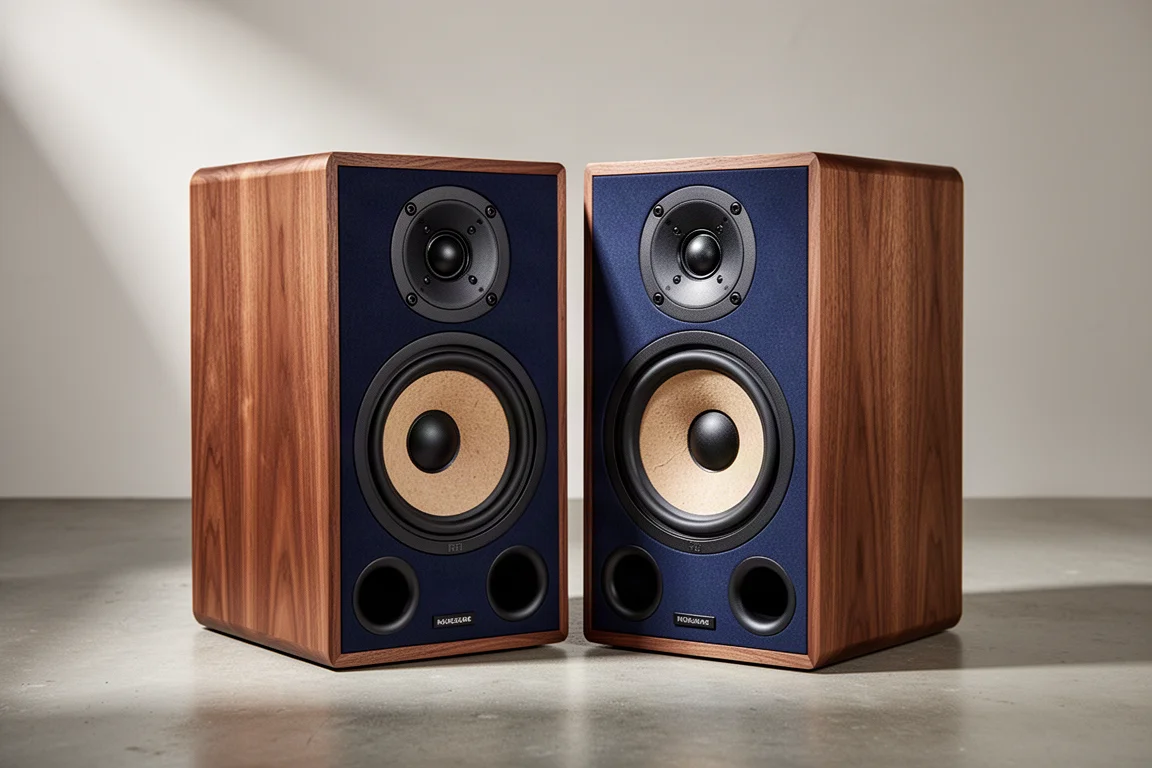
Look past the wood-veneer cabinet and the heritage badge and the JBL 4309 is a straightforward proposition: a two-way passive bookshelf speaker with a horn-loaded tweeter, a 6.5 inch woofer, and front-facing ports. JBL has made no attempt to hide the pro-audio DNA here. The design reads like a studio monitor that escaped the control room, and the 4309 serves as the entry point to the brand’s studio monitor line.
The specifications are modest on paper and more interesting in practice. JBL reports a frequency response of 42 Hz to 30 kHz, which is not quite full range but is impressive for a speaker of this size. Sensitivity is rated at 87 dB into a 4-ohm load, which sounds demanding until you actually drive it. This is not a speaker that needs exotic amplification to perform.
What follows is a practical look at what the 4309 does well, where it rewards a little care, and how it stands against a crowded field of two-way bookshelf speakers.
Who the JBL 4309 Is For
This is a speaker for listeners who want the presence and realism of a horn-loaded design without the forward, shouty character that horns are often accused of. If your reference point is the livelier end of the horn world, the 4309 will sound notably different, because its upper midrange and treble are smooth rather than thrown at you.
It also suits mixed-use systems. Front ports and a well-damped cabinet that controls resonances give it placement flexibility that rear-ported rivals cannot match, so it works in rooms where speakers end up closer to a wall than ideal. Stereo listeners who value vocal texture and imaging will find plenty to like, and so will film fans who want scale and intelligibility from a pair of standmounts.
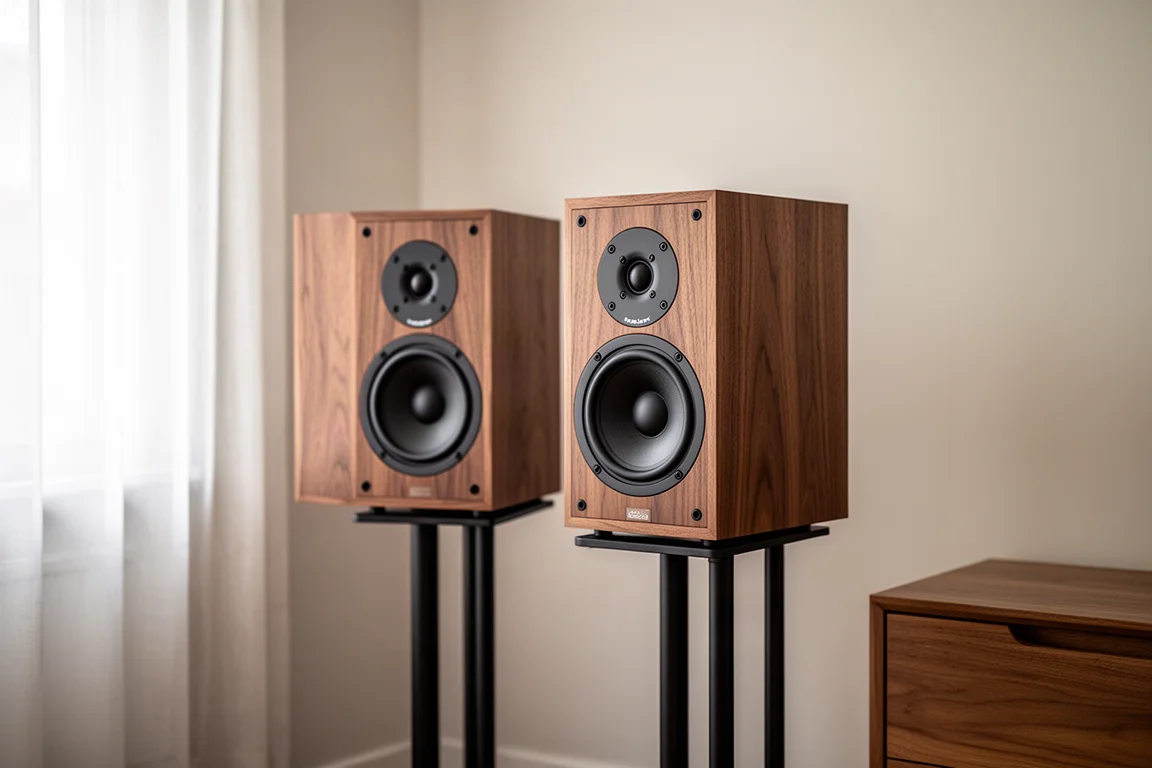
It is also aimed squarely at people who care how a speaker looks. The 4309 leans into its vintage styling without crossing into outright reproduction, which is not something every heritage-inspired design manages.
Main Strengths: Horn-Loaded Presence Without the Shout
The midrange is where this speaker earns its keep. Because the vocal range is shared between the woofer and the horn-loaded tweeter, there is a sense of presence that non-horn designs often lack. A sweep from 20 Hz to 20 kHz shows a fairly linear response with a small amount of added energy around 1 kHz, right in the heart of the vocal band. In practice that adds clarity through the mids, which pays dividends with singer-songwriters and with dialogue in films that bury their mixes.
That crossover sits near the middle of the vocal range, which makes the resulting coherence genuinely impressive. Upper midrange and treble performance is delicate, nimble, and largely colorless. Even with a horn waveguide in play, there is almost no discernible megaphone effect, so dialogue arrives with an in-room feel rather than a cupped, hollow one, and intelligibility improves as a result.
Bass is taut, with almost no bloat or boominess. The 4309 reaches down to 40 Hz and captures the texture of kick drums, bass guitars, and the lower octaves of a piano. Treble stays flat, and the overall character is one of not altering the signal: this speaker is not out to change the tone or vibe of your music or your films.
Dynamics are a strong point too. Nothing sounds sloppy or vague when the speaker is driven hard or hit with sudden dynamic swings, which matters if you listen above 90 dB. There is no bloat, resonance, or blur to pull you out of a performance.
Placement, Power, and Room Flexibility
The 4309 is easier to live with than its 4-ohm rating and 87 dB sensitivity might suggest. It performed without missing a beat on a 50 watt per channel integrated amplifier, and it scales happily into more ambitious setups, with a home theater receiver for film and a dedicated stereo integrated for music both proving rewarding pairings.
The cabinet is inert enough to keep resonances under control during playback, and because the ports fire forward, the speaker is flexible about where it sits. Pulling it a little out into the room is preferable, but it will work closer to a wall. That is a meaningful advantage in real rooms where furniture, not acoustics, decides the layout.
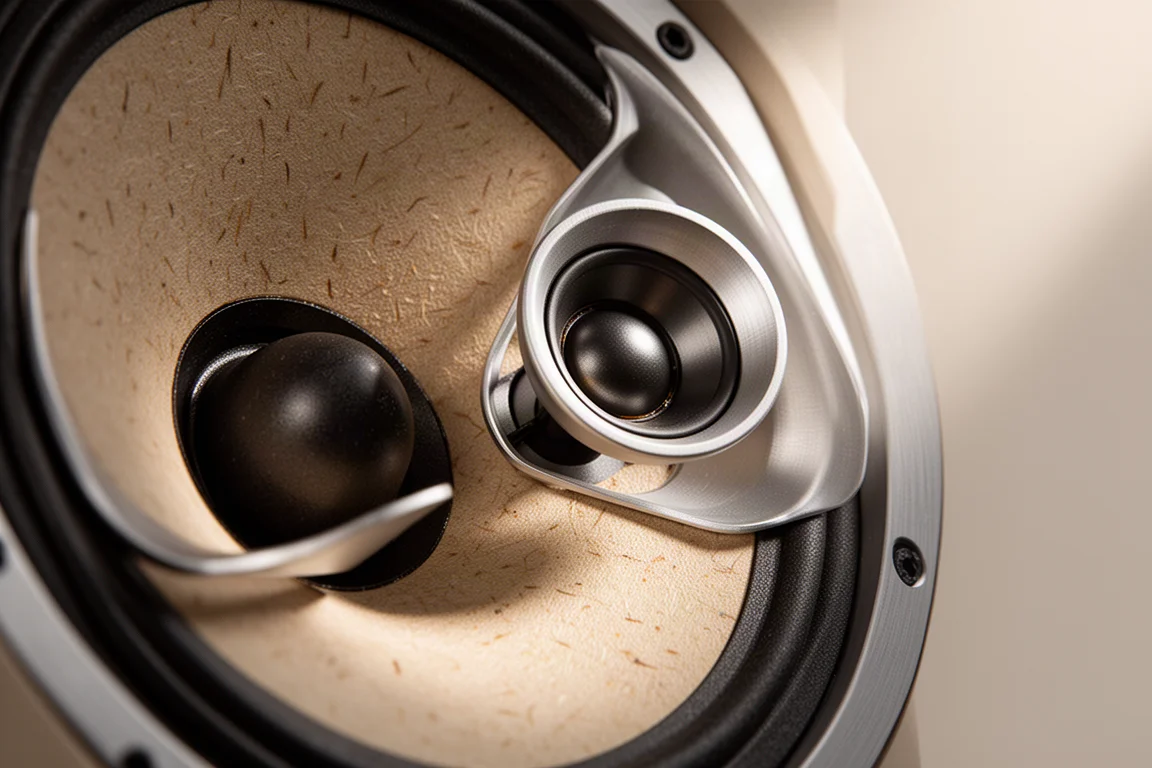
The high-frequency attenuation switch is the other practical feature worth knowing about. It adjusts the tweeter’s response by plus or minus 1 dB, which is genuinely useful in difficult rooms. In a bright space full of hard reflective surfaces, negative 1 dB can keep the speaker from seeming too bright. In a room with wall-to-wall carpet, plus 1 dB can bring some presence back. The speaker ships set to neutral, and the effect of the switch is both audible and measurable.
The JBL 4309 in a Home Theater System
A pair of 4309s handles film sound with real authority. Center imaging is excellent, and it is strongest with the speakers toed in slightly toward the listening position, which keeps dialogue locked in place even without a center channel. Scale and accuracy of instrument and artist placement are remarkable for a standmount.
For a dedicated screening room, this is a speaker worth putting near the top of a shortlist. It brings some of the line-blurring quality of commercial cinema sound into a home space, capable of being delicate and nuanced one moment and outright explosive the next. Bass extension is solid down to 40 Hz, which is plenty for most music and most films, though a subwoofer is still the right call if you want to feel the low-frequency impact of big action sequences. For everyday listening, 40 Hz gets the job done.
How the JBL 4309 Compares With Other Two-Way Speakers
This is a hotly contested part of the market, and the 4309 is not short of rivals.
The Revel M16 is the closest sonic relative, which is unsurprising given that both brands sit under the same parent company. These two speakers are more alike than different, and the M16 sells for less than half the price. Where the JBL pulls ahead is its horn waveguide, which the Revel cannot quite match, along with better cabinet construction and far more distinctive styling. The Revel’s cabinet is the weaker link and can produce some bloom down low.
The Sonus Faber Lumina II also runs around half the price and performs similarly. Its treble is more pronounced, which may read as bright to some listeners, and it gives up a little bass output compared with the JBL, though that gap stops mattering if you run a subwoofer.
The Pro-Ject Speaker Box 5 S2 is comparable in performance and arguably on par with, or even ahead of, the JBL in build quality, for under a grand. Bass output is the compromise: with the Pro-Ject, a subwoofer is not optional.
Against JBL’s own L82, the 4309 is similar in size and sound, and the 4309 is the better constructed of the two. Listeners who simply do not enjoy horns may prefer the L82.
On the Klipsch side, the Heresy IV is a true three-way design costing roughly a thousand to twelve hundred dollars more. It sounds bigger, broader, and far more lively, which is exciting for listeners chasing a live-venue feel. The 600M Mark II is another strong option at well under a grand and has moved closer to the 4309’s balance, though it remains livelier, has more pronounced bass, and uses a rear-facing port that makes it harder to place. The 4309’s adjustable tweeter and long-term listenability give it the edge. Compared with the Q Acoustics Concept 50, dialogue clarity favors the Q Acoustics, while the JBL takes the edge on scale and big blockbuster dynamics.
Taken together, the field offers more performance per dollar than the 4309 does, and it offers more of it every year. What none of those rivals offer is this particular combination of a horn waveguide, an inert cabinet, and a design that looks like it belongs in a control room.
Things to Consider Before Buying
Price is the main hurdle. There are many excellent two-way bookshelf speakers on the market for far less money, and some of them get close to the 4309’s performance. If the vintage aesthetic and the horn waveguide are not priorities for you, the value case gets harder to make.
Horns have also fallen out of fashion, and this speaker does not sound like the horn-loaded designs most listeners know. If you are expecting the lively, forward presentation associated with that tradition, the 4309 will surprise you, and not in the direction you might assume.
There is also the honest caveat that comes with any horn. On a small number of recordings, a touch of megaphone character can appear. It showed up rarely and seemed to trace back to how those recordings were miked rather than to the speaker itself, and it is nothing close to a concern worth losing sleep over. As horn-loaded designs go, this one is about as benign as they come.
Finally, the 4309 is a passive two-way standmount, so it will not deliver the lowest octaves on its own. Budget for a subwoofer if deep action-movie impact matters to you.
Buying Advice
The JBL 4309 is an impressive speaker that both music and film fans are likely to enjoy. It is well built, flexible about placement, easy enough to drive, and unusually honest about what it does: it strives not to color the signal, and it largely succeeds, with just enough midrange presence around 1 kHz to add clarity to vocals and dialogue.
If you are building a dedicated home theater room, this is a speaker that deserves serious consideration, and it works just as well as a stereo pair for music. If your room is bright and reflective, the plus or minus 1 dB tweeter switch gives you a real tool rather than a marketing bullet point. If your room is heavily damped, the same switch can restore presence.
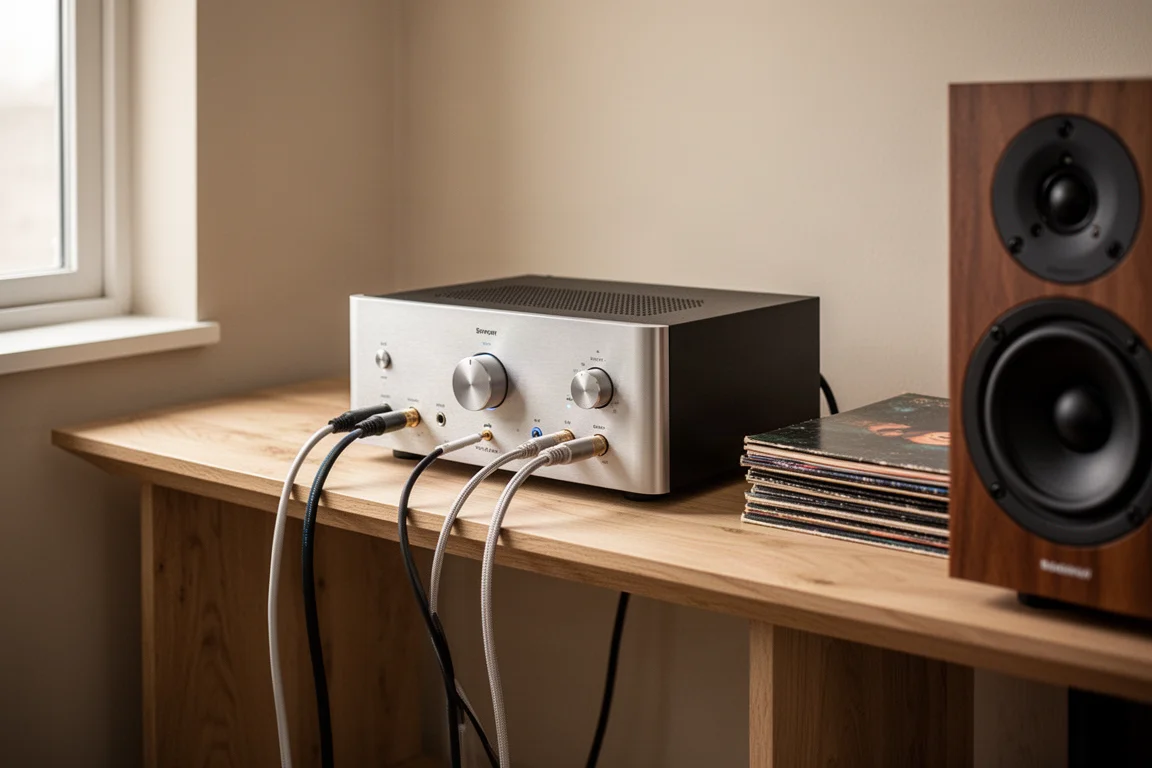
Where you should pause is on value. Speakers costing half as much get close on sound quality, and some match or exceed the cabinet construction. What you pay extra for here is the horn waveguide, the inert cabinet, and a design that looks like nothing else in its price class. If those things matter to you, the 4309 is easy to recommend.
Conclusion
The two-way bookshelf market has never been more competitive, and the JBL 4309 enters it with a speaker that is hard to beat on character. It brings studio-monitor heritage, a horn-loaded tweeter that stays composed, taut bass down to 40 Hz, and placement flexibility many rivals cannot offer. The price and the strength of the competition are the honest counterpoints. Buy it for the horn, the cabinet, and the looks, and you are unlikely to be disappointed.
Product link
View more details for JBL 4309
This product is mentioned in the review. Check the specifications, options, and compatibility before buying.
View more details for JBL 4309Further reading
Related Reviews
Bookshelf Speakers
Acoustic Energy A100 Mark II Review: A Compact Standmount With an Expansive Soundstage
The Acoustic Energy A100 Mark II brings clarity, natural tonality and a wide soundstage to an entry-level standmount, with a few setup details worth knowing first.
Bookshelf Speakers
Acoustic Energy AE-100 Mark II Review: Compact Bookshelf Speakers With Standout Imaging
A compact British two-way bookshelf speaker with deep, layered imaging, fast bass, and a slight treble lift to weigh against a crowded $500 field.
Bookshelf Speakers
Acoustic Energy AE100 MK2 Review: Measured Performance and Four Alternatives
A close look at the Acoustic Energy AE100 MK2 bookshelf speaker, what its measured performance reveals, and four alternatives with different trade-offs.