Powered Speakers
JBL 4305P Review: Compact Powered Speakers With Studio Heritage
A fully active powered speaker pair that borrows professional monitor technology and delivers far more bass and detail than its size suggests.
Introduction
JBL has built loudspeakers for touring sound systems and professional post-production rooms for decades, and the 4305P marks the company’s entry into a new category: a compact, fully powered speaker designed for the home. The design draws directly on the professional 705P monitor, a model used in film soundtrack and recording studios where accuracy matters most, and condenses that engineering into a bookshelf-sized cabinet.
Powered speakers have grown more popular because they simplify a system. Everything needed to make music is built in, so you only need the pair of speakers and possibly a turntable. Most of the powered speaker market sits below $500 per pair, but a newer group of models has emerged that rivals high-performance separate audio systems. The 4305P sits firmly in that group.
Who This Product Is For
The 4305P suits listeners who want fewer components and shorter cable runs without giving up sound quality. It is a natural fit for desktop computer setups, small rooms, and anyone comparing an integrated amplifier plus passive speakers at a similar budget. Because the cabinet is only about 13 inches tall, 8 inches wide, and 9 inches deep, it works in places where a floorstanding speaker will not.
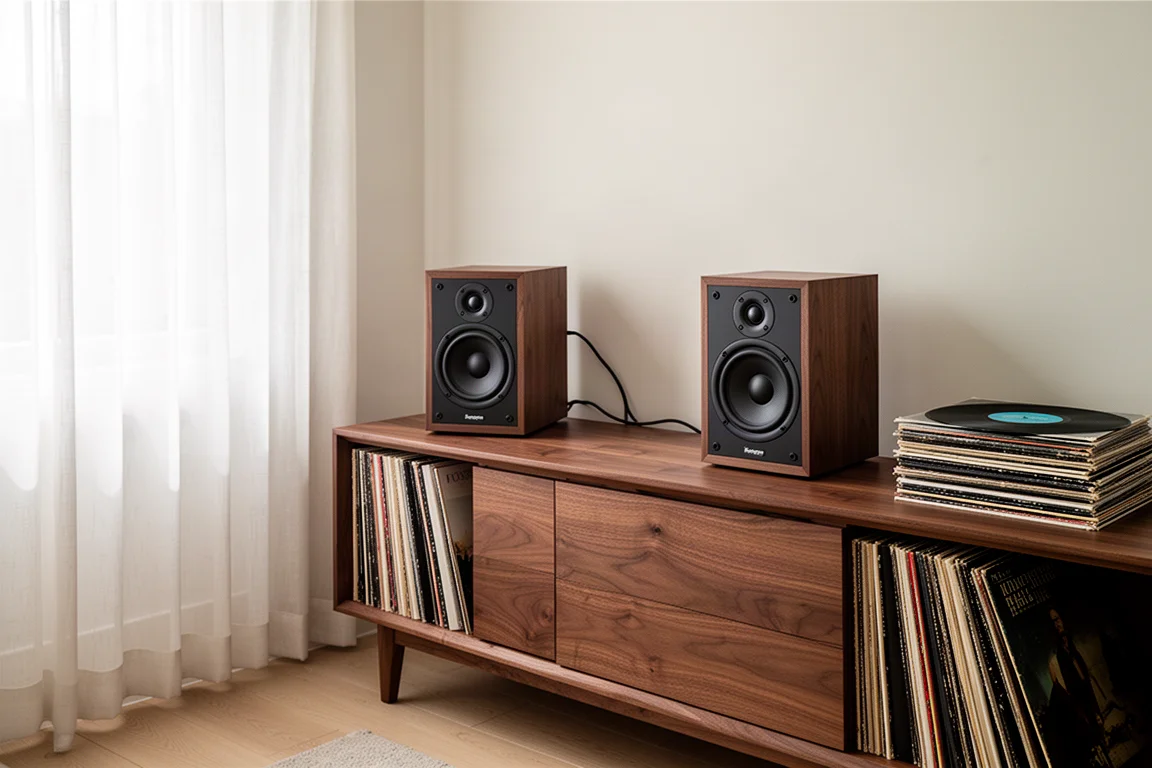
The same pair also covers professional monitoring ground. With balanced inputs, digital connections, and monitoring-grade drivers, it can serve a desk, a small listening room, or a modest studio setup without a separate amplifier or audio interface.
Main Strengths
A Fully Active Design With Dedicated Amplifiers
The 4305P is fully active: a 125 watt amplifier drives each woofer and a 25 watt amplifier drives each high-frequency compression driver. Giving every driver its own amplifier removes the passive crossover found in conventional speakers and performs the crossover with active electronics instead, which avoids the losses a passive network introduces. JBL also applies equalization to fine-tune the output of each individual speaker.
The architectural advantage is straightforward. A passive speaker has to be designed to work with an unknown amplifier, and an amplifier has to be designed to drive a wide range of speakers. In a powered speaker, the drivers and the amplifiers are designed as a single system.
Driver Technology and Controlled Directivity
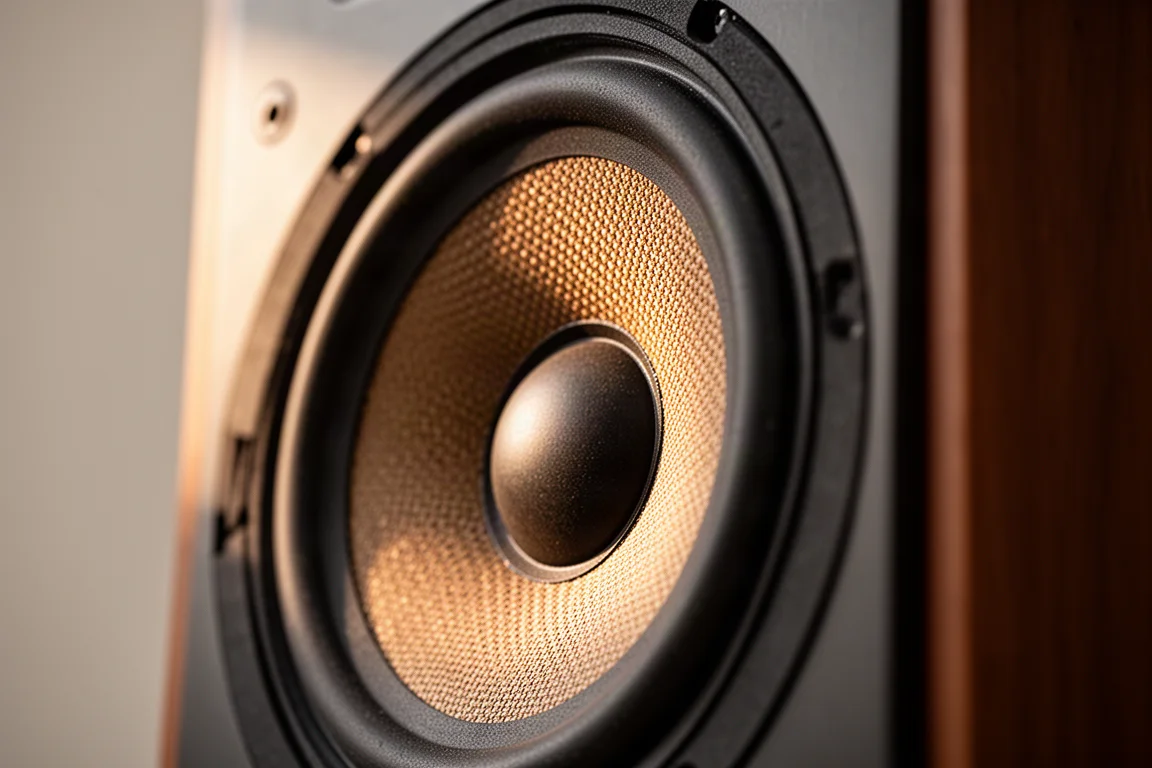
JBL engineers and manufactures its own components, and the 4305P uses the 2410H compression driver paired with an HDI horn. A well-executed compression driver behaves like a hose fitted with a high-pressure nozzle: the output is controlled and focused over a long distance rather than spraying in every direction. That control limits interaction with surrounding walls, which reduces the reflections that blur detail.
Horn-loaded designs carry a mixed reputation because some older examples sounded edgy and bright. JBL’s compression drivers sit at the opposite end of that spectrum, sweet and very fast. The woofer is the 5.25 inch JW130P4, which uses a cast basket for extra rigidity. Internal digital-to-analog conversion runs at 24-bit/192.

Deep, Tuneful Bass From a Compact Cabinet
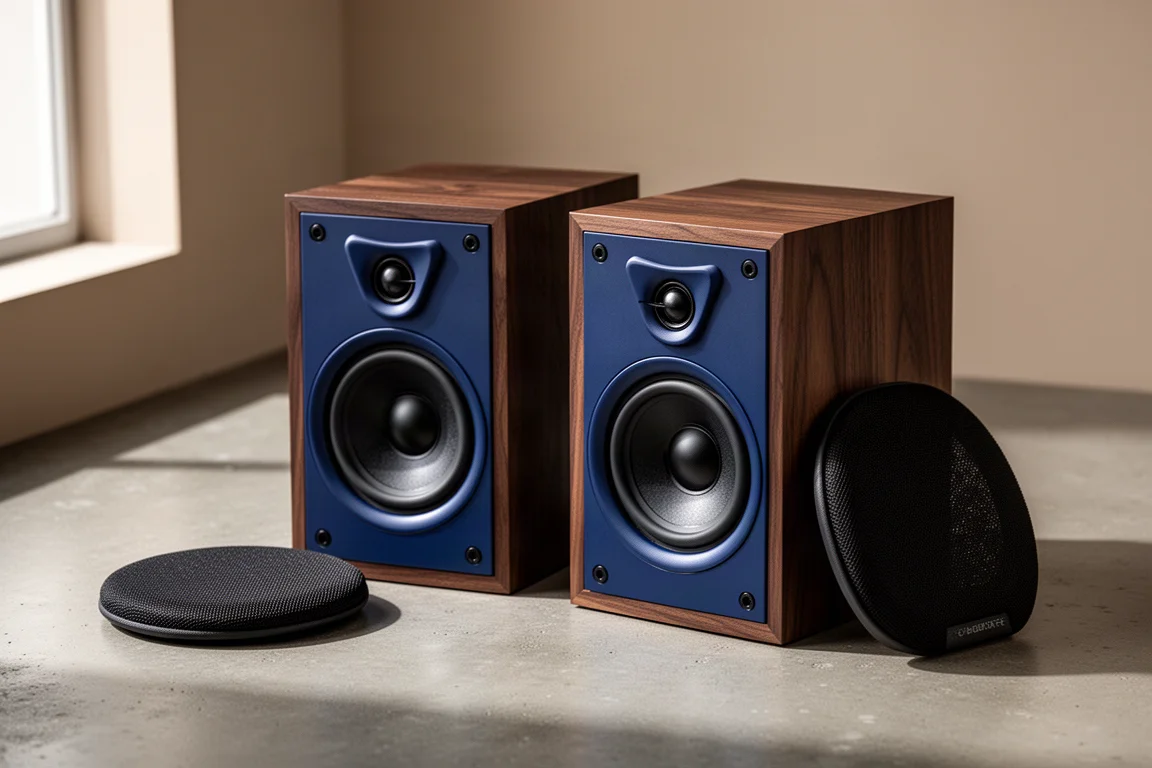
Cabinet size rarely tells the whole story, and this is a good example. Each speaker weighs close to 15 pounds, and the finish options are walnut or black wood veneer. The compression driver stays exposed on top while the grille covers the woofer; the grille is JBL blue on the walnut version and black on the black finish.
Bass performance comes down to the active design and the onboard DSP. Deep low frequencies arrive with plenty of tunefulness and no hint of boom, provided the boundary switch is set correctly for the position.
Flexible Connectivity and Streaming
All connections live on the rear of the main speaker: a pair of combination XLR and quarter-inch phono inputs, a 3.5 mm analog input, a Toslink optical digital input, and an asynchronous USB input for computer audio. Chromecast, Apple AirPlay 2, and Bluetooth handle streaming, and a companion app makes streaming or accessing files on your network simple. A handheld remote covers input selection and volume, and the front panel controls work just as well.
A channel switch lets the connected speaker sit on either the left or the right. The boundary control reduces deep bass output when the speakers are placed close to a wall. The subwoofer output has a useful trick: plugging in a cable engages an 80 Hz high-pass filter on the main speaker, rolling off the low bass so an outboard subwoofer can handle it. The 4305P is also Roon ready for high-resolution streaming.
For best performance the two speakers are linked with an ethernet cable, and there is no length limit on that cable. They can run wirelessly if the layout demands it, at a small cost in resolution.
Listening Notes
In a room roughly 13 by 17 feet with nine foot ceilings, with the speakers about eight feet apart on stands, the 4305P produced far more sound than its size suggests. Used as desktop speakers about five feet apart in the near field, the results were just as convincing, which is unusual for a cabinet this small.
Placement mattered. With the boundary control set flat in the larger room, everything stayed balanced. Moved to an office position closer to side walls, the bass turned a little boomy and coloured the midrange slightly, and a quick change of the boundary switch fixed it.
A recording of “Don’t Get Around Much Anymore” revealed all the small vocal cues and the delicacy of the piano, the kind of detail usually associated with far more expensive systems. “Dialogue” opened with guitar chords before the electric bass and drum kit arrived; the bass was tight and fast, the harmonics of the bass line clearly audible, and the cymbals sounded light and airy. The depth of bass coming out of a cabinet this size was the standout moment of the session.
Scheherazade, performed by the Chicago Symphony Orchestra, begins with a full orchestral blast before settling into an entrancing violin solo. The 4305P handled the full scale without strain and floated the soloist in front of the listening position with all the expression intact. “Lay Me Down” brought deep bass lines and harmony parts that extended well beyond the outer edges of the cabinets.
Things to Consider Before Buying
- There is no HDMI ARC input. A television can be connected through the optical input, which most TVs offer, but HDMI would make everyday TV operation more seamless.
- Best performance requires the ethernet link between the two speakers. Wireless operation is possible but loses a little resolution.
- Bass can turn boomy when the speakers sit close to side walls until the boundary control is adjusted.
- Wireless network setup runs through the Google Home app and takes a couple of minutes.
Buying Advice
At this price point the 4305P is a serious proposition. Anyone weighing an integrated amplifier and speaker combination in the same price range should look here first: the 4305P takes up less space, and the sound it produces rivals what you would expect from a large high-performance tower speaker, and in some respects exceeds it.
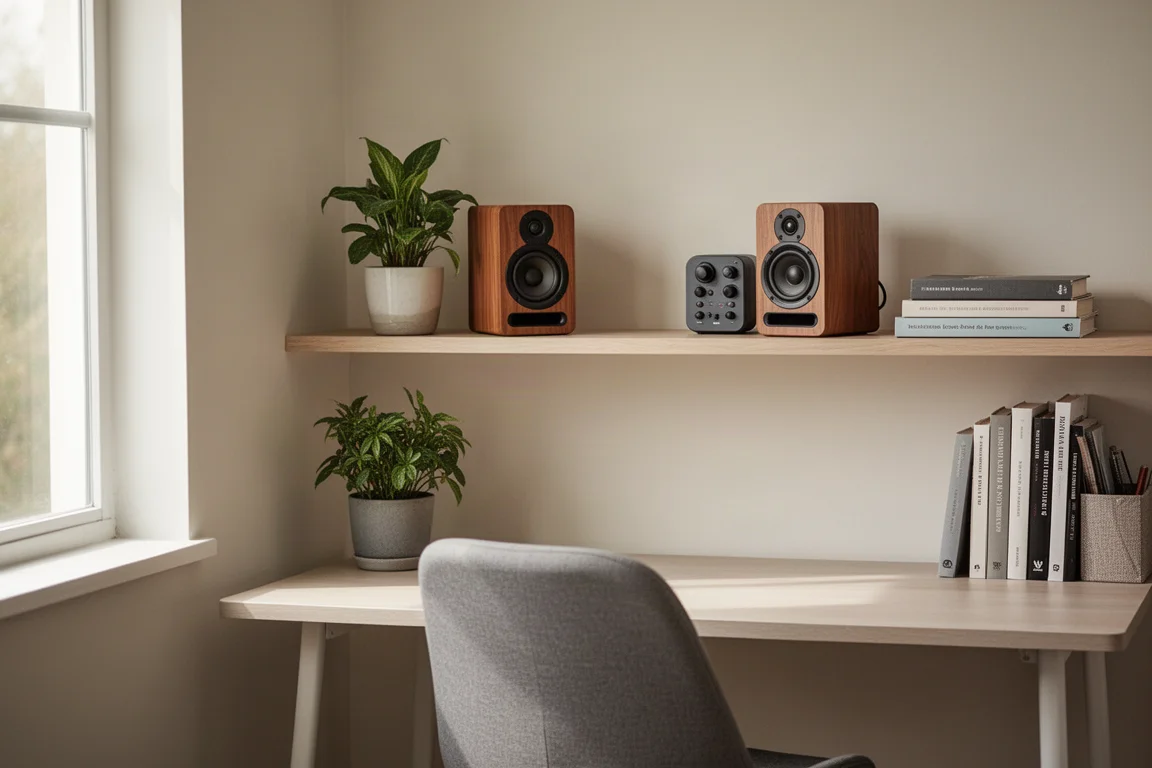
If your priorities are accuracy, low-frequency control, and a small footprint, and you are comfortable connecting a television by optical rather than HDMI, the trade-offs are easy to live with.
Conclusion
The 4305P brings professional monitoring DNA into a home-sized powered speaker, and the result is a pair that sounds far larger than it looks. Dedicated amplification for every driver, a compression driver and horn lifted from studio designs, and a broad set of wired and wireless inputs make it a complete system on its own. Deep, fast bass and a controlled, detailed midrange and treble carry the experience. Competitors in this category should be on their guard.
Product link
View more details for JBL 4305P
This product is mentioned in the review. Check the specifications, options, and compatibility before buying.
View more details for JBL 4305PFurther reading
Related Reviews
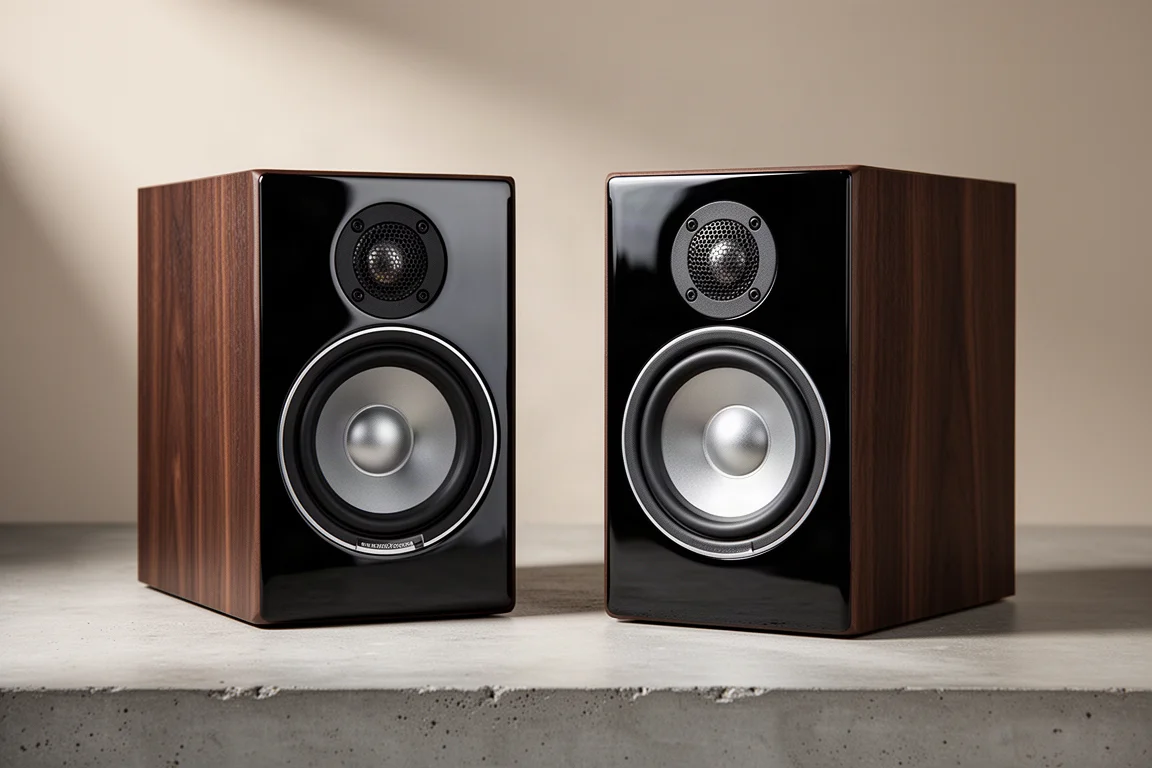
Powered Speakers
AbramTek X50 Review: Powered Speakers With Real Bass and a Full Feature Set
The AbramTek X50 pairs a phono preamp, HDMI ARC, optical, and Bluetooth with genuinely capable sound. Here is what it does well and what to check before buying.
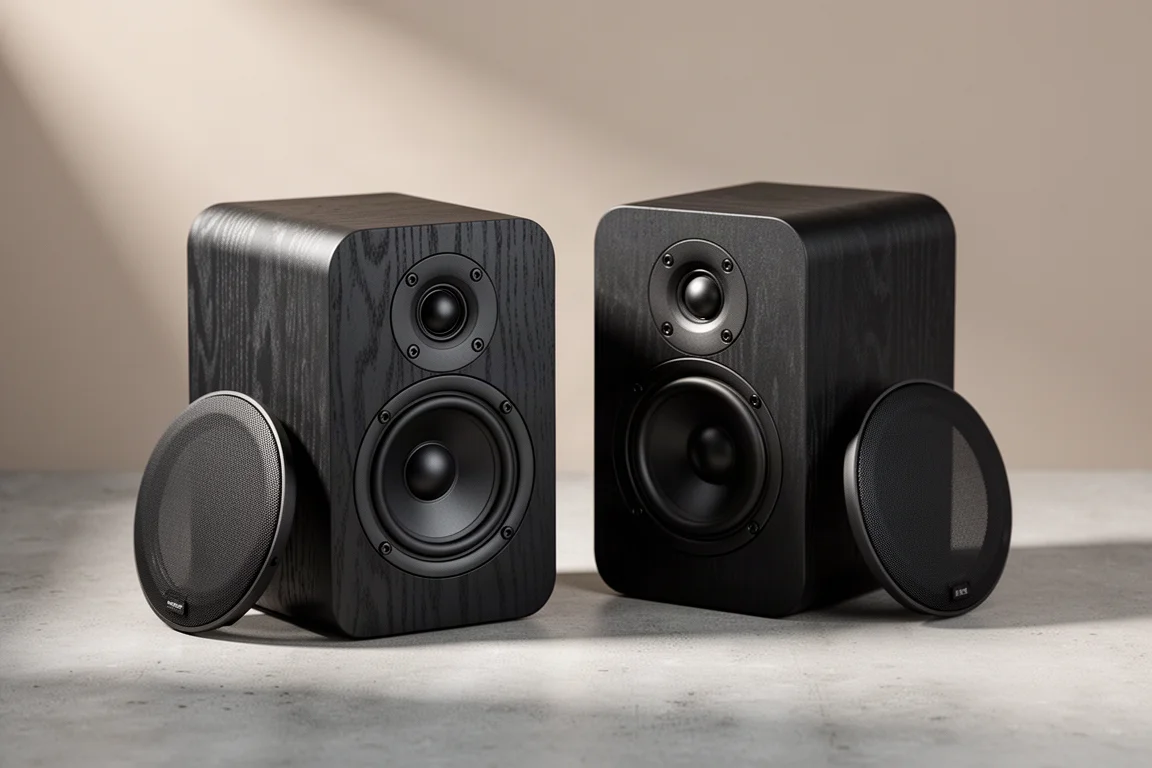
Powered Speakers
Amazon Basics Powered Speaker Review: Useful Features, Compromised Sound
A practical look at the Amazon Basics Powered Speaker: a handy remote and an optical input, held back by shouty upper mids, minimal bass, and erratic pricing.
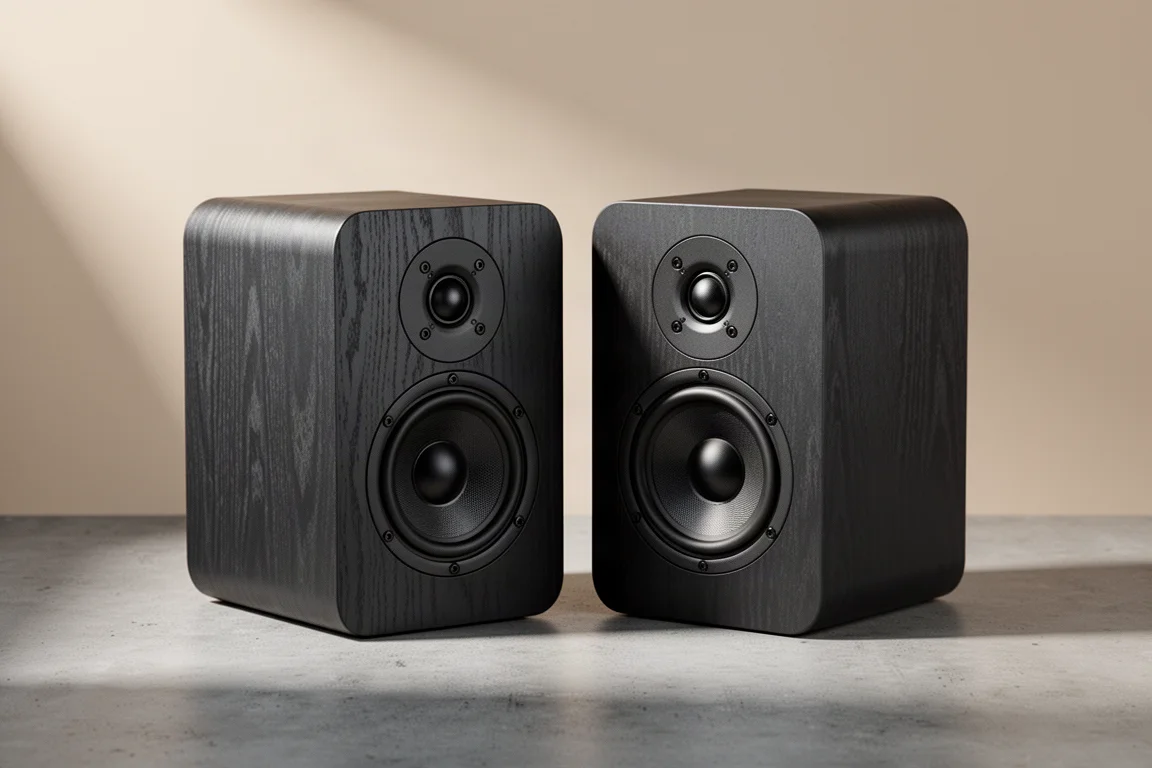
Powered Speakers
Aperion Audio Alaire Review: Compact Powered Speakers With Serious Bass
A compact two-way powered speaker with genuine low-end punch, excellent imaging, and a control scheme that depends entirely on its remote.