Integrated Amplifiers
Java Hi-Fi Carbon Integrated Amplifier Review: GaNFET Meets an LDR Preamp
A close look at a flagship integrated amplifier that pairs gallium nitride amplification with a light dependent resistor preamp stage, plus the parts and trade-offs behind it.
Introduction
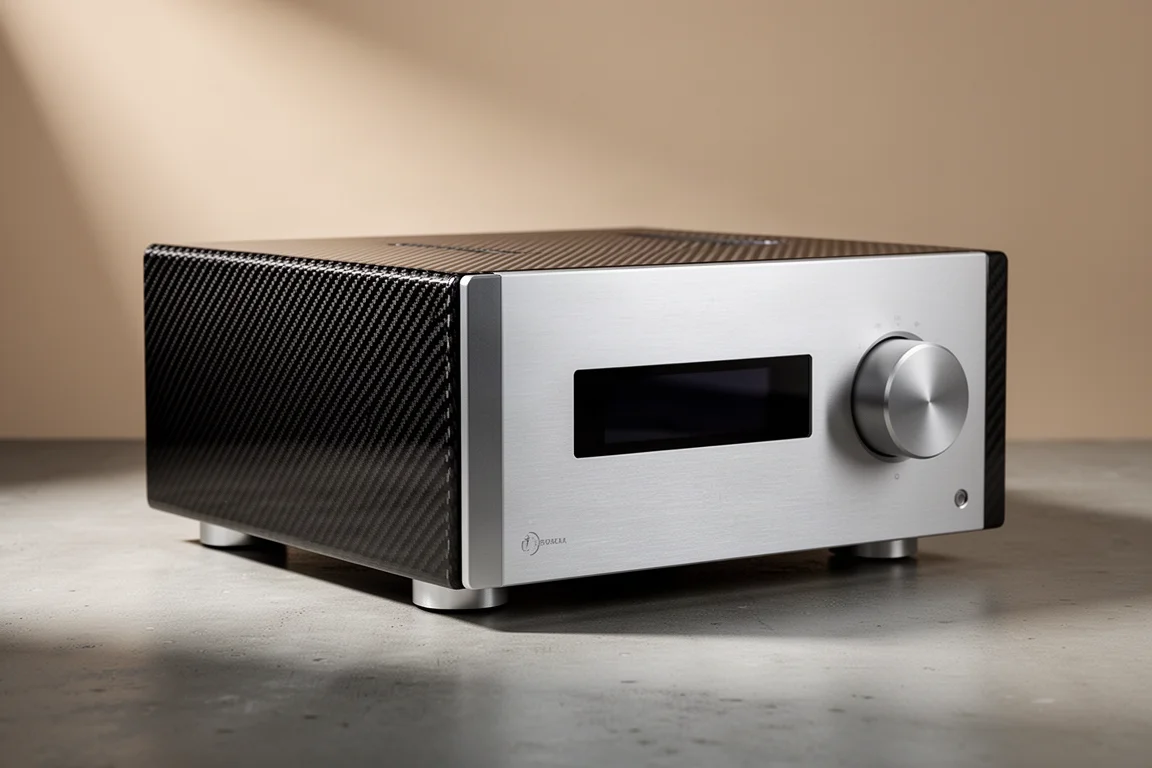
Integrated amplifiers have become the quiet center of many high-end systems, and the Java Hi-Fi Carbon Integrated Amplifier is one of the more distinctive designs in that category. It combines gallium nitride transistor amplification modules with a passive preamplifier built around light dependent resistors, then houses the whole circuit in a carbon fiber and aluminum chassis filled with premium components.
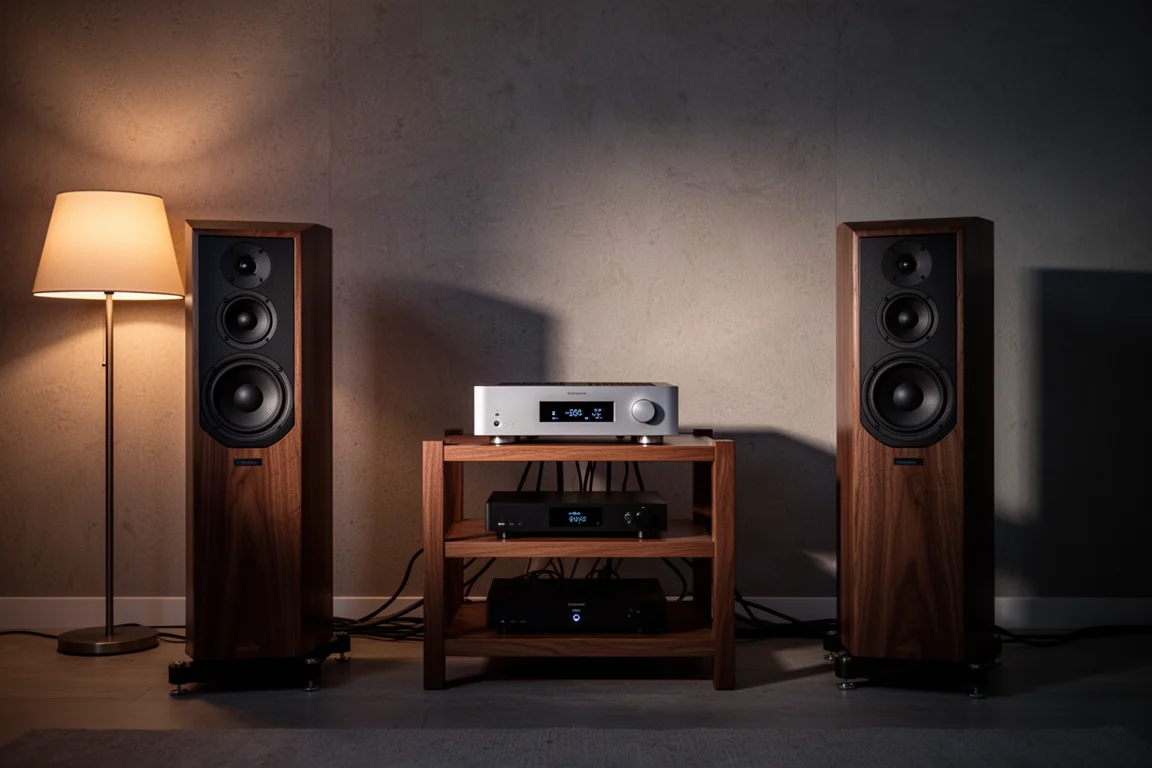
The design goal is specific. Java Hi-Fi wanted the bass grip, extension and dynamics that GaNFET amplification is known for, paired with the midrange and treble character many listeners associate with a good tube preamplifier, without asking the owner to live with tubes. The result sits deliberately between a fully solid state preamplifier and a tube preamplifier in character, and the company has tuned the circuit around that balance rather than around the most impressive number on a specification sheet.
Who the Java Hi-Fi Carbon Integrated Amplifier Is For
This amplifier is aimed at listeners who already know they like the sound of a tube preamplifier feeding a fast, high-current power stage, but who would rather not deal with tube replacement, warm-up or the maintenance that comes with them. It is also a sensible fit for anyone consolidating a system into one box, since the unit includes a DAC section, a moving magnet phono stage, Bluetooth and a remote control.
Because the Carbon version is the flagship configuration, it appeals most to buyers who want the premium connectors, the carbon fiber outer case and the included isolation feet in a single purchase. Buyers who only want the same internal circuit can look at the simpler chassis option instead, and listeners who prefer to assemble their own combination of separates can buy the LDR preamp and the GaNFET amplifier as individual components.
Main Strengths
The strengths here are closely tied to how the amplifier was designed rather than to any single part. Java Hi-Fi built the amplification module specifically for this circuit instead of using an off-the-shelf module, and the matching work between stages is the core of the design.
GaNFET Modules Matched to an LDR Preamplifier
The key parameter during development was optimizing the interface between the passive preamp stage, which uses light dependent resistors, and the signal handed to the GaNFET amplifier modules. Rather than dropping a generic module into a chassis, the company designed its own module to work in the context of the overall circuit.
The LDR volume control is the more unusual element. A light dependent resistor changes its resistance in proportion to the brightness of the light it is exposed to, so turning the volume up increases the current to internal LEDs, which makes them brighter and lowers resistance. Because the control works with photons rather than electrons, the signal path is optically isolated and extremely short.
Light dependent resistors are notoriously difficult to use for volume control because they are inherently nonlinear, which makes fine adjustment hard to achieve. Java Hi-Fi addresses this with calibrated microcontrollers, and the resulting volume control behaves in a very linear fashion, tracking evenly as level increases. Distortion, another known weakness of LDR designs, is contained with stated specifications of 0.03 percent total harmonic distortion, dropping to 0.01 percent below 20 watts.
The tuning of that distortion is deliberate. Instead of chasing the lowest possible figure, the preamp stage is voiced to resemble the characteristics many listeners value in tube preamplifiers. The power supply was then designed to match the GaNFET modules, so every stage was built with the others in mind.
Sound Character and Musical Balance
Bass is the least of the concerns here. The amplifier delivers the robust bass control, extension, texture and dynamics that GaNFET designs are generally good at, and that behavior held up across several different pairs of speakers, including large tower models and compact standmounts.
The real difference compared with other GaNFET designs shows up higher in the range. The LDR preamp stage brings a slightly softer edge to the midrange and high frequencies, along with more depth and width in the soundstage. Attacks and decays are a touch more rounded than a purely solid state preamplifier with GaNFET output, which reads as more relaxed and more musical over long listening sessions, without smearing detail or losing pinpoint placement.
Set against a dedicated tube preamplifier feeding GaNFET monoblocks, this amplifier is not as soft at the edges and its stage is not as wide, deep or holographic. Against a solid state preamplifier with GaNFET output, it offers more width and a gentler top end. The midrange, and particularly the upper midrange, comes across as clean and well balanced, neither bright nor rolled off, with an attack and decay that feels natural.
Connectivity: DAC, Phono Stage, and Bluetooth
The DAC section uses Burr Brown chips, and its softer, more organic presentation complements the overall voicing of the amplifier well. It makes the unit easy to listen to for extended periods and integrates smoothly rather than sounding like an afterthought.
The phono stage is the bigger surprise. It handles moving magnet cartridges only, but it is genuinely well executed rather than a token inclusion. It runs quiet and delivers the same organic, musical character as the rest of the amplifier. Compared with a dedicated high-end phono stage it gives up a clear technical margin, yet as an onboard phono stage inside an integrated amplifier it stands out.

Bluetooth is present but is the least compelling input. It works and would be usable in a pinch, but streaming through the DAC or listening through the phono stage is a more satisfying way to use the amplifier.
Things to Consider Before Buying
Two practical points are worth knowing before committing.
First, the amplifier does not remember the selected input when it is powered off and back on. It returns to the DAC input by default, so anyone who mainly listens to the phono stage will need to reselect that input after each power cycle. The supplied remote makes this quick and can be done without leaving a seat, and the behavior is the kind of thing that can be corrected through a firmware update.
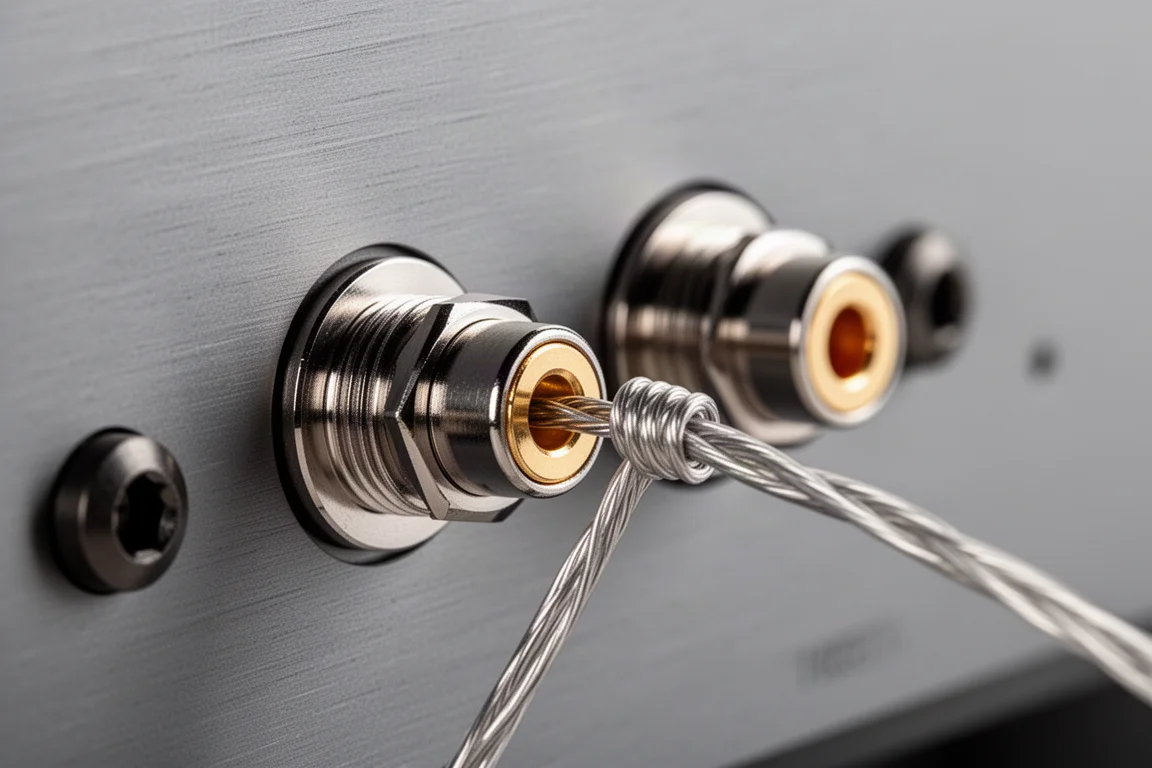
Second, the Carbon version carries a significant premium for its materials and connectors. The chassis uses an 8mm aluminum front panel and a 9mm real carbon fiber outer case, the RCA sockets are pure silver ETI connectors, the ETI speaker binding posts are equally high-end parts, and IsoAcoustics Gaia isolation feet are included. Those parts add real cost, and buyers who do not value them can choose the version with the same internals for considerably less. The Double Shot version goes further still, offering roughly double the power, a fully balanced topology and XLR inputs and outputs only.
Measurement-focused buyers should also note that the stated distortion figures have not been independently verified here, and there are products with stronger measured performance for less money. That is a different priority than the one this amplifier was designed around.
Buying Advice
The decision comes down to what you are actually trying to solve. If you want the bass control and dynamics of GaNFET amplification with a midrange and treble character close to a tube preamplifier, and you would rather avoid tubes entirely, this amplifier delivers that combination in one box with a genuinely good phono stage and a well-matched DAC.
A budget alternative exists: pair a more affordable GaNFET amplifier with a good tube preamplifier. That route can get close to this sound, but it means two boxes, tubes to maintain, and no integrated DAC or phono stage, which is part of why the all-in-one approach holds its value. The version with the same internals in a simpler chassis is the sensible pick for buyers who care about sound rather than the premium materials.
If you already own separates you love, or you prefer the holographic presentation of a true tube preamplifier, this is not a replacement for that setup. It is a compelling option for listeners who want most of that character with none of the upkeep, and who value having everything in a single, well-built unit.
Conclusion
The Java Hi-Fi Carbon Integrated Amplifier is a thoughtfully engineered flagship. Its GaNFET modules and LDR preamp stage were designed together, the volume control behaves linearly despite the inherent difficulty of light dependent resistor designs, and the sound sits in a sweet spot between solid state precision and tube warmth. The premium connectors, carbon fiber case and included isolation feet explain much of the cost, and the simpler chassis option keeps the same internals within reach. For buyers who want tube-like musicality without tubes, it is a genuinely strong candidate.
Product link
View more details for Java Hi-Fi Carbon Integrated Amplifier
This product is mentioned in the review. Check the specifications, options, and compatibility before buying.
View more details for Java Hi-Fi Carbon Integrated AmplifierFurther reading
Related Reviews
Integrated Amplifiers
Advance Paris A10 Classic Review: Vintage Looks and a Lively, Punchy Sound
The Advance Paris A10 Classic pairs glowing blue VU meters and a tube stage with one of the widest input sets on any integrated amplifier. Here is what it does well and what to weigh before spending $2,500.
Integrated Amplifiers
Advance Paris A12 Apex Review: A Modern Integrated Amplifier With Vintage Character
A dual mono integrated amplifier with 180 watts per channel, a tube front end, VU meters, and a connectivity list that covers turntables, televisions, computers, and headphones.
Integrated Amplifiers
Advance Paris Nova Range Review: AI130, AI190 and Modular Upgrades
A practical look at the Advance Paris Nova range, including the AI130 and AI190 integrated amplifiers and the modular streaming, Bluetooth and remote accessories that expand them.