Home Theater Speakers
Jamo S Series 5-Piece Home Theater Set Review: A First System With Real Scale
A five-speaker passive set that gives up some mid-range clarity in exchange for scale, easy amplification, and one of the lowest entry points in home theater audio.
Introduction
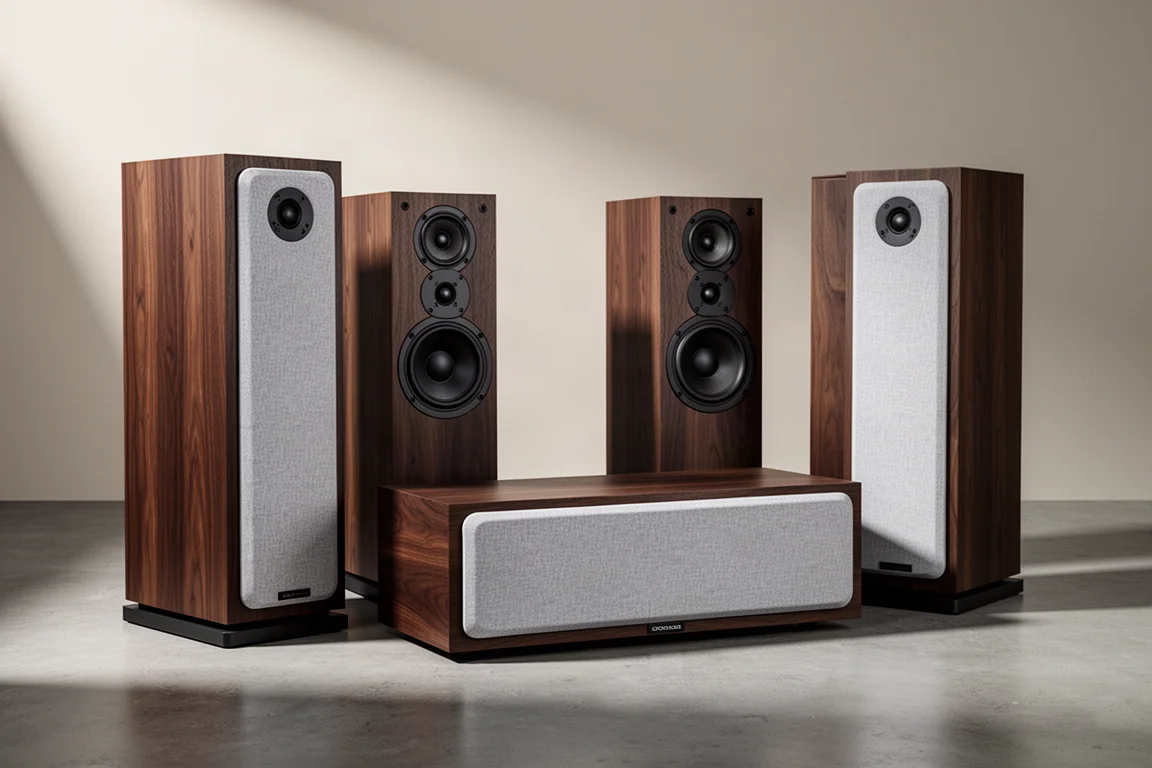
The Jamo S Series five-piece home theater set occupies a strange corner of the speaker market. For a price that many single pairs of bookshelf speakers exceed, it delivers five passive cabinets: a pair of S 803 bookshelves for the front, a pair of smaller S 801 bookshelves, and an S 81 CEN center channel. The bundle has been listed around $147, well below the previous figure of more than $400 for the same collection.
That number is the headline, but it is not the whole story. This set has a clear personality, and understanding it is the difference between a bargain that delights you and a bargain that disappoints you.
Who This Speaker Set Is For
Think of this as a starting point rather than a finishing line. It suits someone building a first home theater around an AV receiver, or someone assembling a second system for a desk, a bedroom, or a spare room where the priority is enjoyable, room-filling sound rather than absolute accuracy.
It also works as an expansion kit. In a larger system, the S 803 pair can handle surround duty and the S 801 pair can serve as height speakers, which is an inexpensive way to add channels to an existing receiver without hunting for matching cabinets.
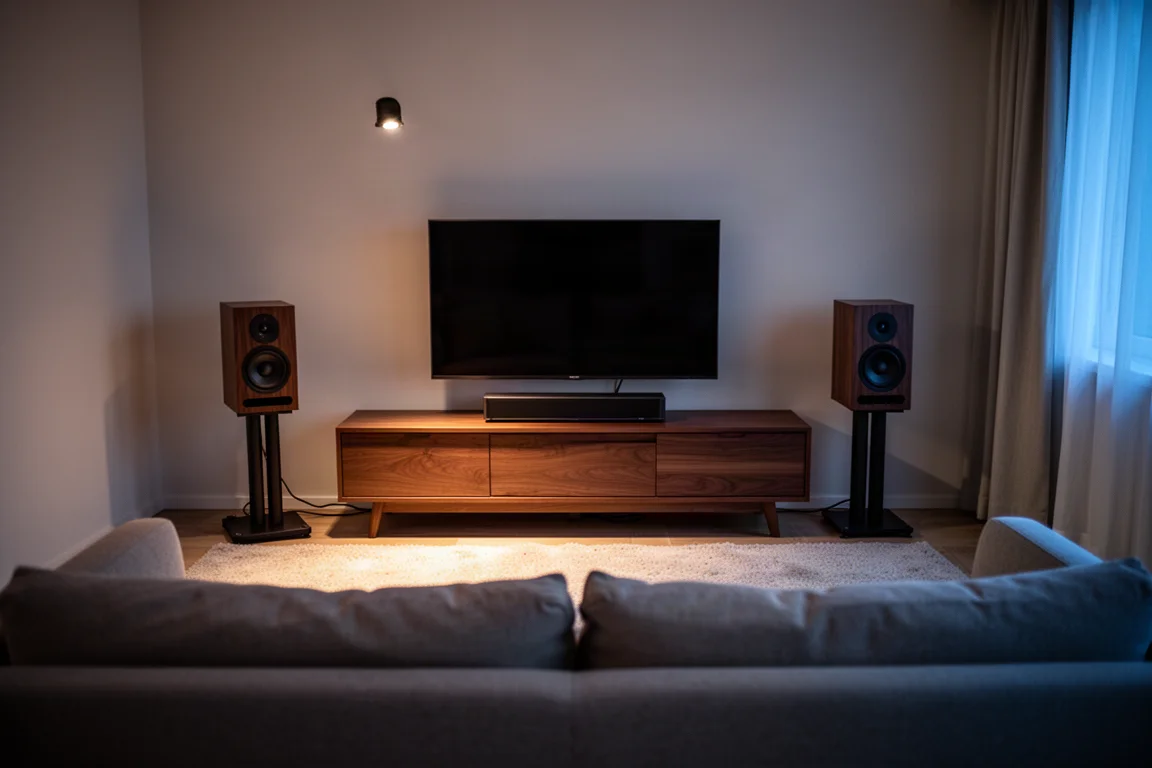
The S 803 carries five-year warranty coverage, and the magnetic grilles plus the three finish options, white, brown, or black, make the set easy to live with in a normal room. Those small practical details matter more than spec sheets suggest when you are buying your first set.
Build, Finish, and Setup Notes
The S 803 is the anchor of the package. It pairs a 1-inch soft dome tweeter with an integrated waveguide and a 5.25-inch poly fiber woofer in a front-ported cabinet. Claimed frequency response runs from 57 Hz to 26,000 Hz, sensitivity is 87 dB, nominal impedance is 8 ohms, and recommended amplifier power is 80 watts. The cabinet measures roughly 7 inches wide, 14 inches high, and 10 inches deep. Around the back there are two sets of binding posts, one of them intended for an optional Atmos module that sits on top of the cabinet, plus two keyhole mounts for wall placement.
The S 801 steps down to a 4-inch poly fiber woofer behind the same style of waveguide tweeter, with a rear bass reflex port, a keyhole mount, 85 dB sensitivity, 8-ohm impedance, and a 60-watt recommended amplifier rating.
The S 81 CEN center channel uses dual 4-inch poly fiber woofers and the same 1-inch waveguide tweeter, covering 71 Hz to 26,000 Hz with 86 dB sensitivity and a 60-watt recommendation. It measures about 18 inches wide, 7.25 inches high, and 8.7 inches deep. A larger S 83 CEN with 5-inch woofers also exists if you want more center channel output.
All of the cabinets wear a vinyl wrap, and the finish looks genuinely good out of the box. The practical note is that vinyl wraps of this type can lift at the corners when cabinets are handled repeatedly, so place them once and leave them alone.
Main Strengths
The most consistent strength of this set is its soundstage and imaging. The waveguide on the tweeter does real work here, spreading the image wider than the cabinet size suggests, and that is the quality that keeps a first system exciting long after the novelty of the price wears off.
There is also a generous low-end lift, centred somewhere in the 80 Hz to 150 Hz region. That boost is what gives the speakers their fullness and thump, and it is a large part of why they sound bigger and more entertaining than their price suggests. On music, especially rock, pop, and electronic material, that extra weight is welcome.
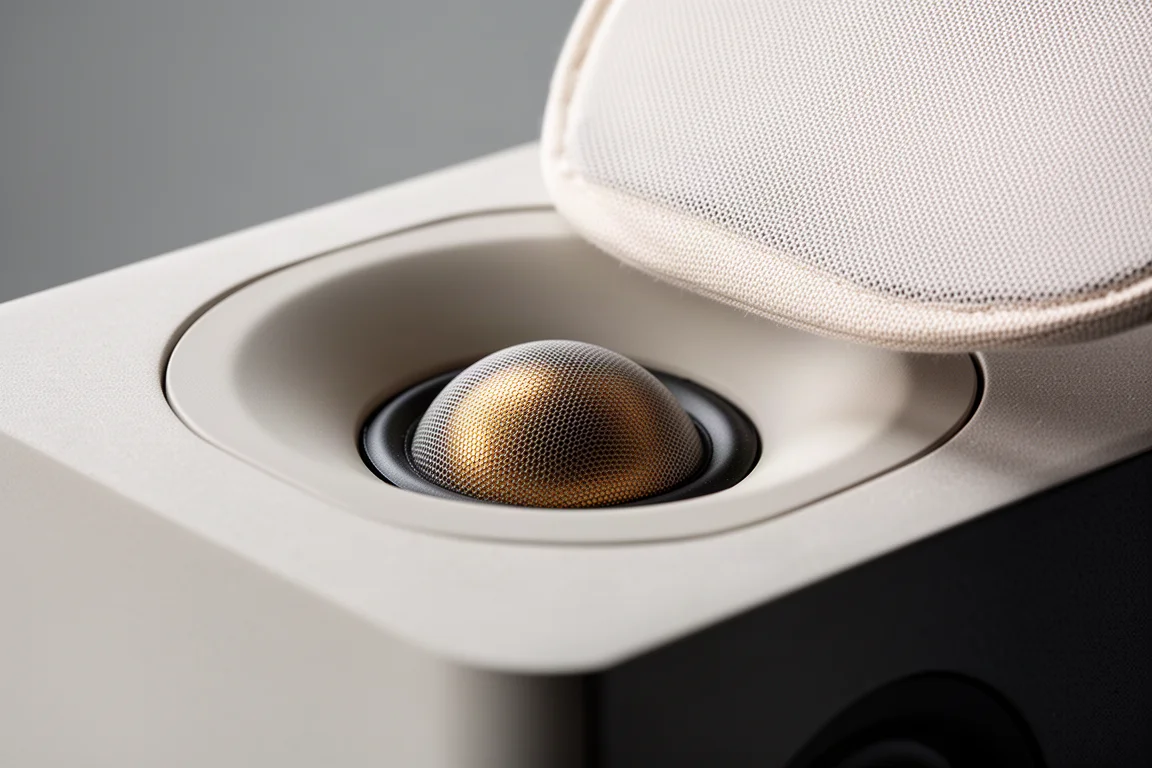
Efficiency is another practical strength. With 87 dB sensitivity on the S 803 and 85 dB on the S 801, the set does not demand expensive amplification. An inexpensive Class D amplifier in the $60 range is enough to drive a pair properly, which keeps the total cost of a two-room build remarkably low.
Where the Sound Falls Short
The trade-off for that bass lift is a scooped mid-range. The response curve is best described as V-shaped: boosted at the bottom, lifted again from roughly 4 kHz upward, and recessed in the middle. The recession is consistent rather than erratic, but it is audible.
On music, the effect is usually flattering. Vocals sit slightly behind the instruments, which smooths over harsh or thin recordings. If your library leans toward singer-songwriter material and acoustic guitar, and you are chasing maximum clarity and texture, this is not the set that will satisfy that itch.
The center channel is where the compromise bites hardest. Dialogue intelligibility is the whole job of a center speaker, and the mid-range dip costs it some clarity in movie playback. Bass boost also tends to mask mid-range detail, so pulling the low end down on the center can clean up vocals noticeably.
If your receiver includes room EQ, the fix is straightforward. A lift of about 3 dB at 1 kHz and 2 dB at 800 Hz brings the mid-range closer to neutral, and a 3 dB cut at 100 Hz on the center channel tidies up dialogue. Without EQ, the center channel is the weakest part of the package.
One more characteristic is worth knowing before you buy. After the boost around 100 Hz, the bass rolls off quickly. Anyone who wants a smooth, gradual low-end taper will not find it here. In a home theater context this is rarely a problem, because a subwoofer is doing the deep work anyway.
Things to Consider Before Buying
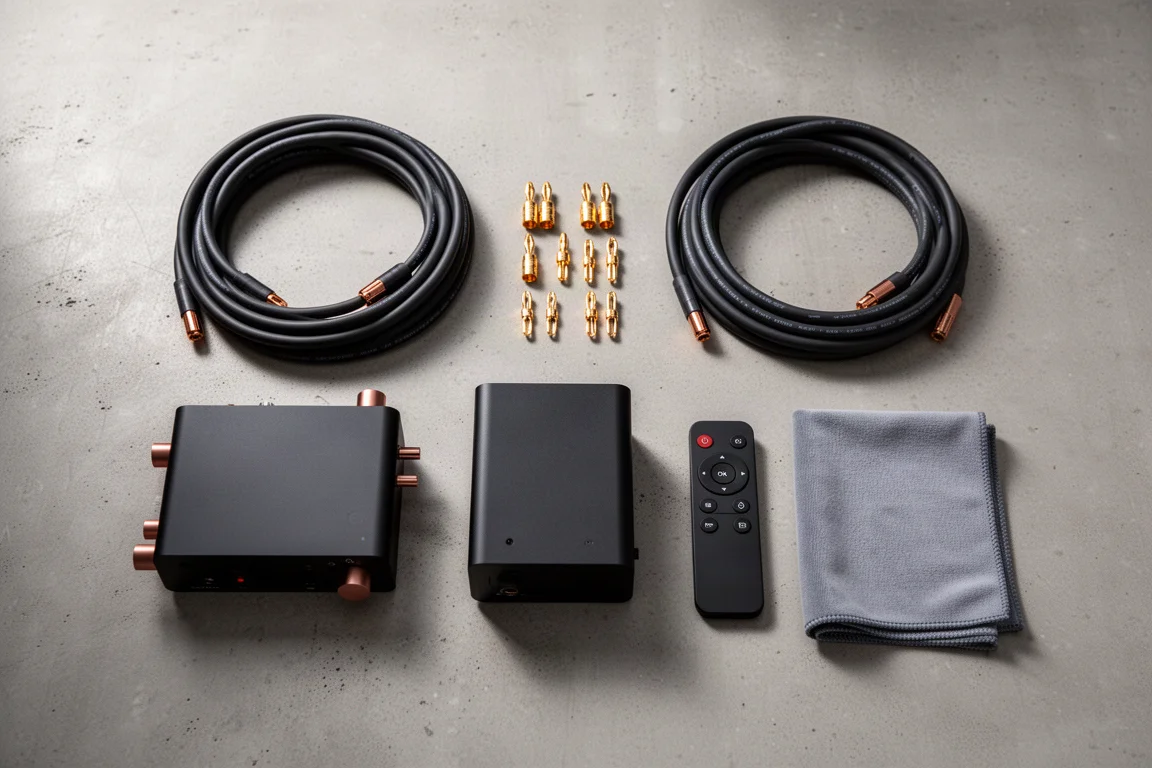
Budget for the parts that are not in the box. This is a passive set, so it needs an AV receiver or an integrated amplifier, and a subwoofer if you want real cinematic weight. Speaker cable and a little patience with placement are part of the cost too.
Also decide how much you value a flat response. This set is deliberately fun rather than neutral, and no amount of tweaking will turn it into a reference monitor. Buyers who want linearity should look at the alternatives below instead.
How It Compares to Other Budget Speakers
There are better small speakers at similar individual prices, and it is worth being honest about that. The Neumi BS5 is the flatter, more neutral option and typically sells for around $100. The Sony SSCS5 is better again, though it usually sits around $125 even when discounted. The ELAC BS41 is also a stronger performer at roughly $125, but it is considerably harder to drive and asks more of your amplifier.
What none of those options do is give you five speakers for $147. Judged as a single pair, the Jamo set is mid-pack. Judged as a complete package, it is in a category of its own, and that is the comparison that matters for a first build.
Buying Advice
If you are new to the hobby and want one purchase that covers a full surround layout, this set is the sensible choice. Pair it with an AV receiver that includes EQ and you can smooth out most of the mid-range dip, which turns a compromise into a genuinely good starter system.
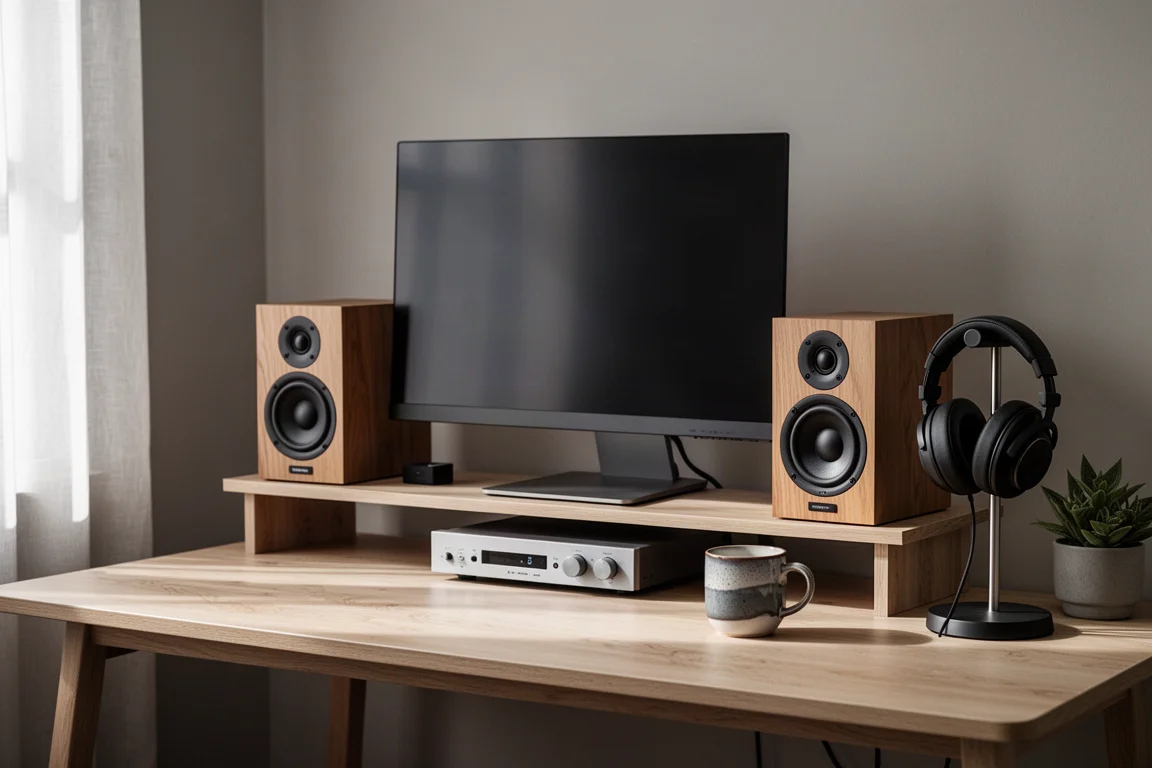
If your budget allows, a modest Class D amplifier around $60 is enough to get a separate two-channel setup running from the same purchase, which means roughly $260 covers two complete systems before you add sources. That is an unusual amount of flexibility for the money.
The one upgrade worth planning for is the center channel. If dialogue clarity matters more to you than saving every dollar, keep the bookshelves and budget for a center speaker with a more neutral mid-range, or make sure your receiver has the EQ tools to compensate.
Conclusion
The Jamo S Series five-piece set is not the most accurate speaker package you can buy, and it does not pretend to be. It is a deliberately entertaining, easy-to-drive collection that trades mid-range precision for scale, bass weight, and a price that makes a real home theater build possible on a starter budget.
Buy it for what it is: a first system, a second system, or an inexpensive way to add surround and height channels to a room you already have. If you accept the mid-range compromise and use the EQ you already own, the value here is hard to argue with.
Product link
View more details for Jamo S Series 5-Piece Home Theater Set
This product is mentioned in the review. Check the specifications, options, and compatibility before buying.
View more details for Jamo S Series 5-Piece Home Theater SetFurther reading
Related Reviews
Home Theater Speakers
Arendal 1723 THX S Monitor vs 1723 THX Monitor: Which Two-Way Monitor Fits Your Room?
A practical comparison of the Arendal 1723 THX S Monitor and the larger 1723 THX Monitor, covering driver size, sensitivity, bass extension, and room fit.
Home Theater Speakers
Emotiva A1 Review: A Small Speaker With Serious Surround Flexibility
A sealed two-way speaker built for Dolby Atmos, surround, and compact desktop duty at $179. Here is what it does well and what to check before buying.
Home Theater Speakers
Emotiva C2+ Review: High Output Center Channel With a Narrow Sweet Spot
The Emotiva C2+ delivers serious output, deep bass for its size and high sensitivity, but its widely spaced midrange drivers create a horizontal sweet spot that rewards centered seating.