Camping Tents
Jack Wolfskin Gossamer Two-Person Tent Review: Space, Doors and a Few Details to Check
A practical look at the Jack Wolfskin Gossamer two-person tent, covering interior space, materials, stake count, packing and what to weigh before buying.
Introduction
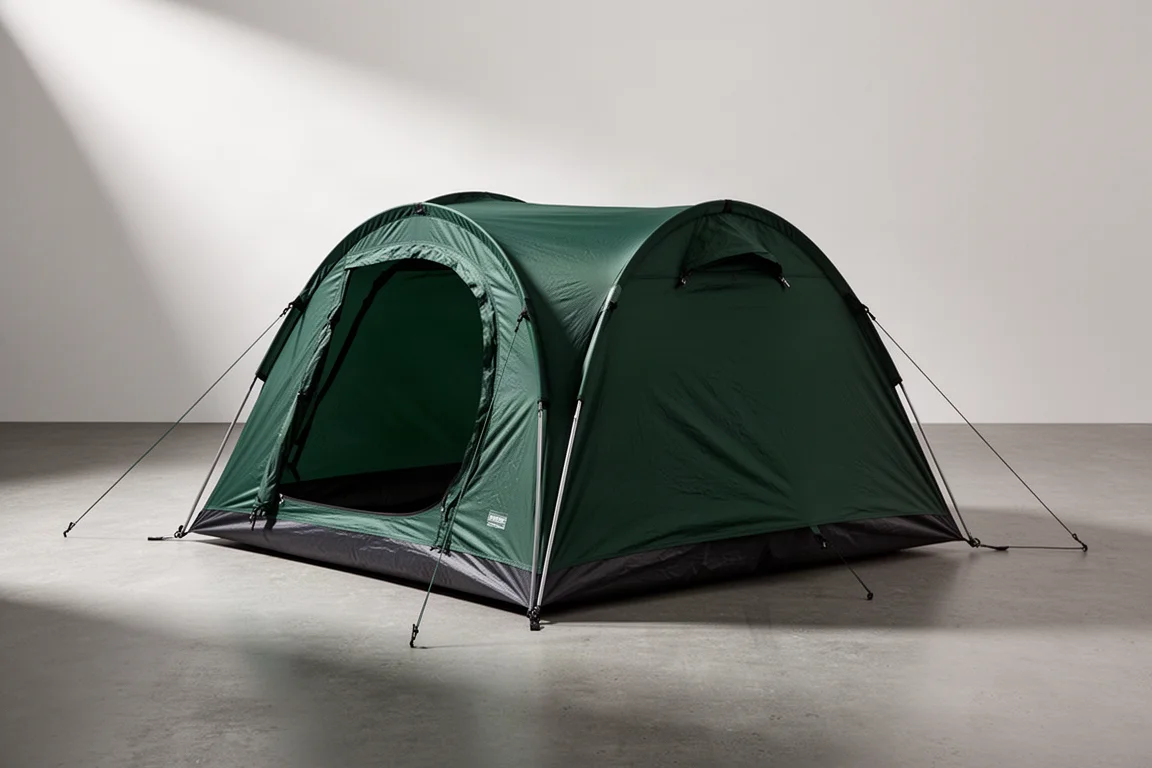
The Jack Wolfskin Gossamer two-person tent is a compact backpacking shelter built around two aluminium poles, a single vestibule and two side doors. It packs to roughly 22.4 by 6.6 inches and weighs close to five pounds, which places it in the practical weekend and overnight category rather than the ultralight one.
The price story is worth noting up front. This tent was bought for about $90 a short time before this assessment, and it is currently listed at around $156. That gap matters, because the value case changes depending on which figure you are looking at.
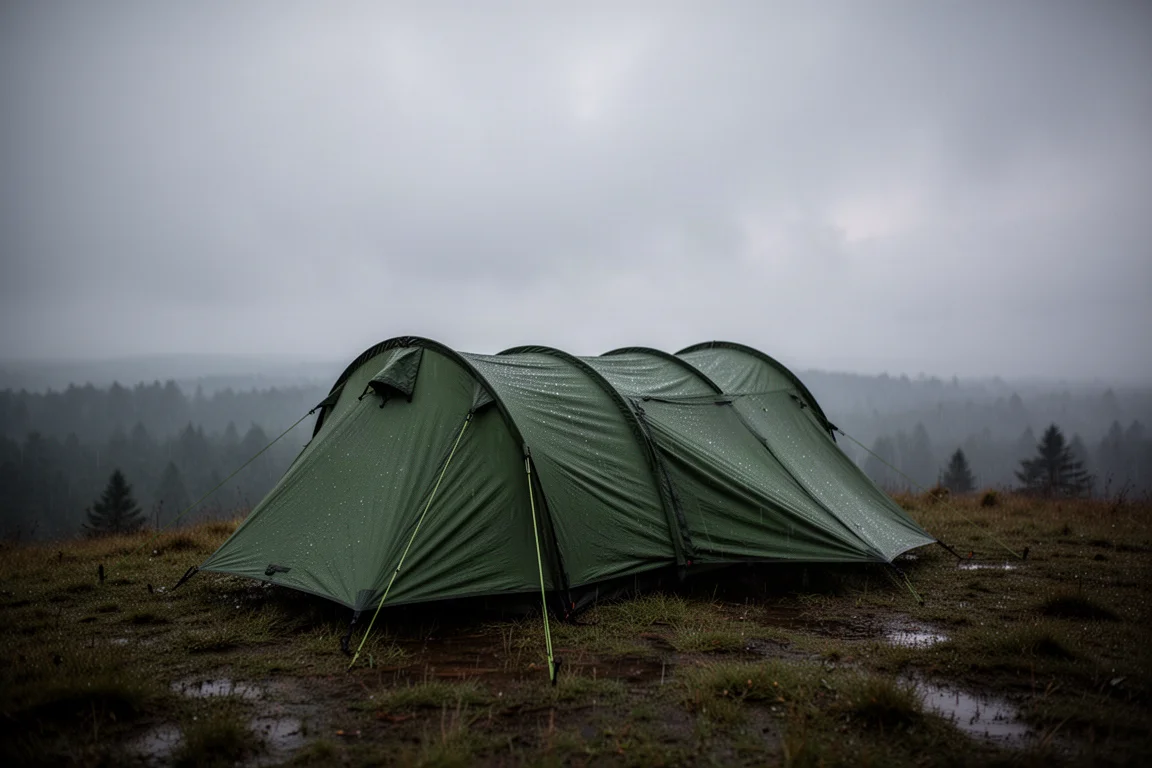
The design leans on a familiar formula: a low, elongated profile, a fly that reaches close to the ground, and a bathtub floor that turns up well above the ground line. Two doors mean each occupant gets their own entry point, and the single vestibule offers enough room for boots and a pack.
Who This Tent Is For
The Gossamer two-person is aimed at campers who want a roomy interior without moving up to a large, heavy family tent. Inside, it is long, reasonably wide and reasonably tall. An occupant around six feet tall can likely sit up and change clothes; anyone taller than that will find headroom tight.
Two people travelling together get the most out of it. The paired doors mean neither person has to climb over the other to get in or out, and the internal layout leaves room for two sleeping pads side by side.
It suits overnight and weekend trips where a five-pound packed weight is acceptable. Backpackers counting every gram will look elsewhere, but for car camping, short approaches and general camping use, the space-to-weight balance is sensible.
Design and Materials
The fly is a 75 denier polyester with a 4,000 mm hydrostatic head rating. The inner body uses a 40 denier polyester mesh, and the floor is a heavier 150 denier polyester rated at 10,000 mm, which is a notably high figure for a tent floor.
The poles are aluminium, 8.7 mm in diameter, a size that is broadly standard in this class. Everything is seam taped from the factory, including the floor.
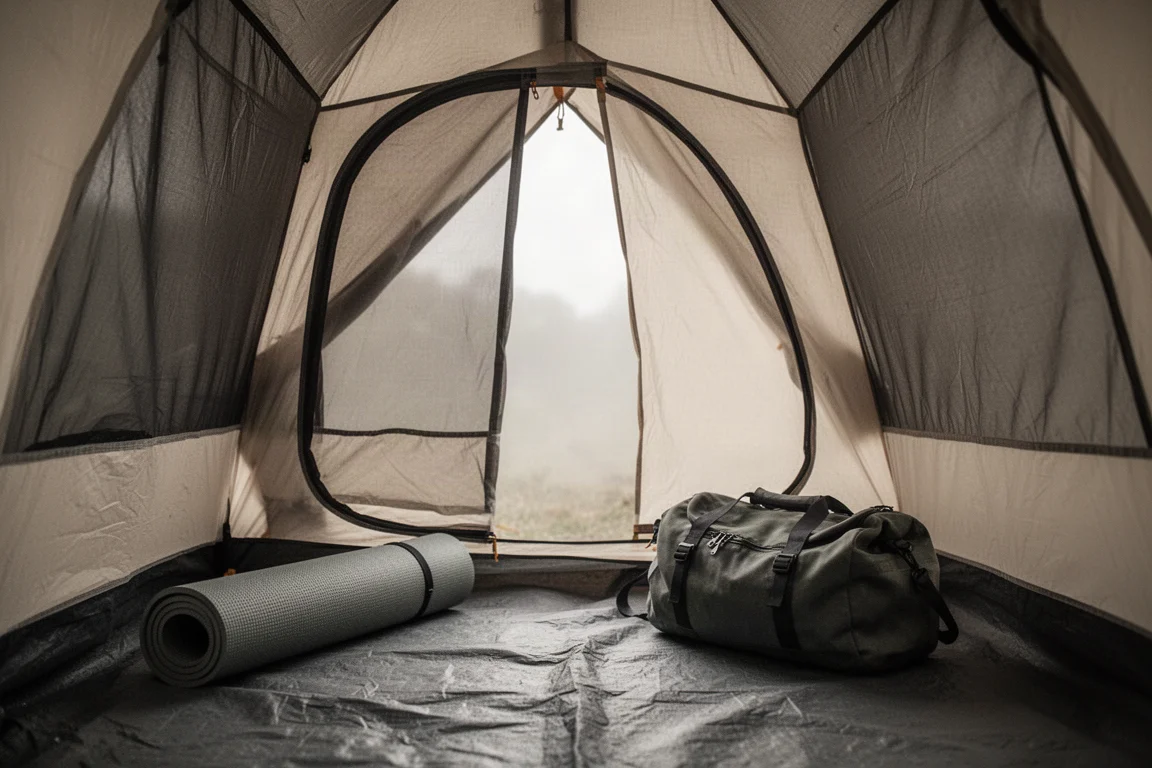
Other details worth knowing: the tent has two internal mesh storage pockets, one on each side, plus an internal suspension line for hanging damp clothing or small items to dry. Two colours are offered, the mountain green shown here and a brighter green option. The measured pack size is 22.4 by 6.6 inches.
Setup and Packing Notes
Pitching is straightforward. There are two poles, one long and one short. The short pole goes at the rear of the tent and the long pole at the front, with the fly going over the top and staking out around the perimeter.
Stake count is the main practical wrinkle. The tent ships with 11 aluminium stakes and two guy lines, and that is not quite enough to set everything up fully. There are enough to pull the fly away from the inner and to stake out one guy line, which leaves a choice between the front and the back. In calm conditions that is fine. If strong wind is possible, packing at least one additional stake lets you secure both ends.
Packing is a different kind of compromise. The body and fly come crammed into the stuff sack with no spare room at all. The poles and stakes can also be squeezed in, but it is a genuine stuff rather than a comfortable fit.
Main Strengths
The strongest argument for this tent is interior space. It does not feel cramped, and the length is generous enough that taller occupants are not pressed against the walls.
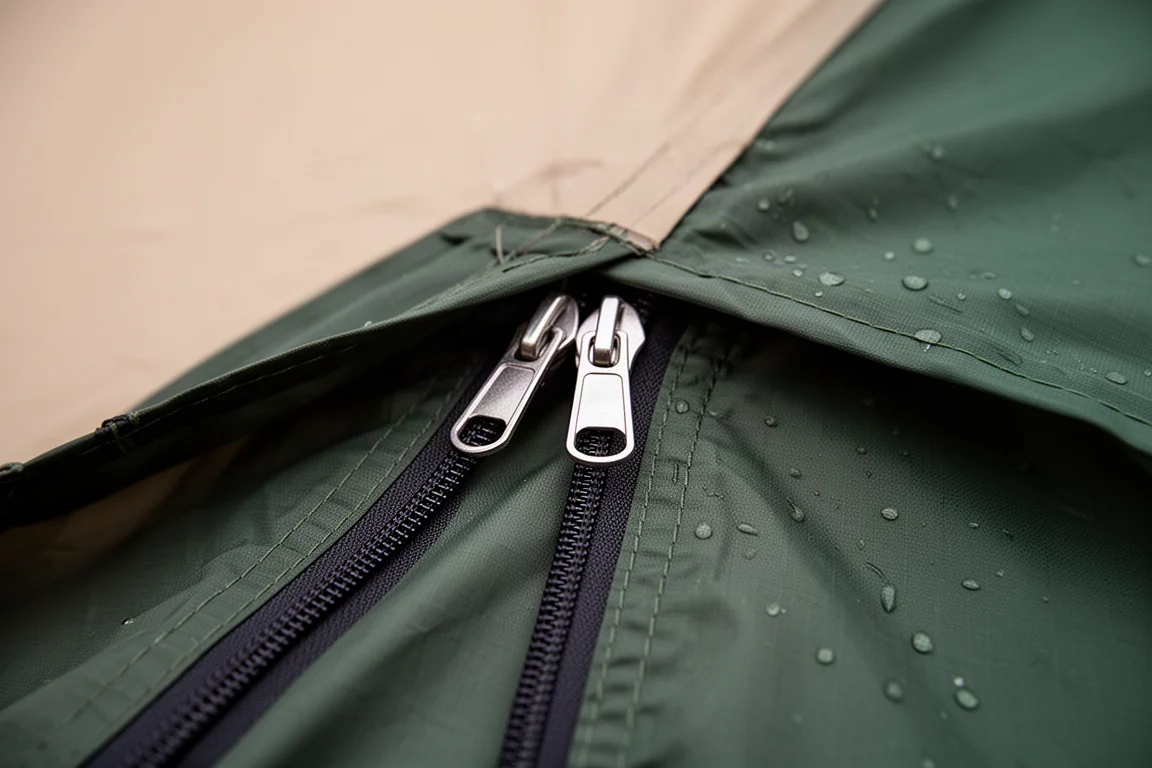
The door design is another plus. Each door has its own zippers and a storm flap covering them. Each side offers two zipper pulls, one at the top that stops around the centre of the door and one that runs all the way around, so a door can be opened completely rather than just cracked.
Build quality looks sound on inspection. There are no loose threads, no light showing through the fly, the seam taping is neat and the mesh is intact. The bathtub floor turns up well above the ground line, which is exactly what you want when the ground is wet.
The internal suspension line and the two mesh pockets are small additions that make a real difference over a couple of nights, and the factory seam sealing means less preparation before a first trip.
Things to Consider Before Buying
Weight and bulk are the obvious trade-offs. At close to five pounds, this is not a tent to choose for long-distance hiking, and the packed volume is larger than the stuff sack dimensions alone might suggest because it is filled to the brim.
There is also the question of stakes, already covered, which may mean one extra purchase before a windy trip.
Then there is the condition in which the tent arrived. One pole was unwrapped, the elastic band holding the pole set was broken, and the tent had been rolled and forced into the stuff sack in a way that looked more like hand packing than a factory finish. Inside, a silica desiccant packet had burst, leaving small beads loose in the tent. Nothing was dirty and the tent itself showed no defects, but it did not present like a factory-fresh item. It is worth checking the contents carefully on arrival and confirming that the poles, fly and inner are all sound.
One more thing to keep in mind: sustained-rain performance and condensation behaviour have not been verified here. The hydrostatic head ratings are encouraging on paper, particularly the floor, but ventilation in cool, damp conditions is the kind of thing that only shows up after a night out.
Care, Repair and Included Extras
The tent comes with a small repair kit: a sleeve for repairing a broken pole, a piece of repair fabric, a mesh patch and seam sealer. That is a thoughtful inclusion at this price level, and it covers the most common field failures.
Because the fly and floor are seam taped at the factory, the seam sealer is best kept for repairs rather than first use. Keeping the poles clean and dry, and folding rather than forcing the fly back into the sack, will make the packed bundle easier to manage over time.
Buying Advice
At the $90 paid here, the Gossamer two-person reads as strong value: a two-door, two-person tent with a seam-taped fly, a 10,000 mm floor and a genuinely usable interior. At the current listing of around $156, it is a less obvious bargain and worth comparing against other two-person shelters in the same range.
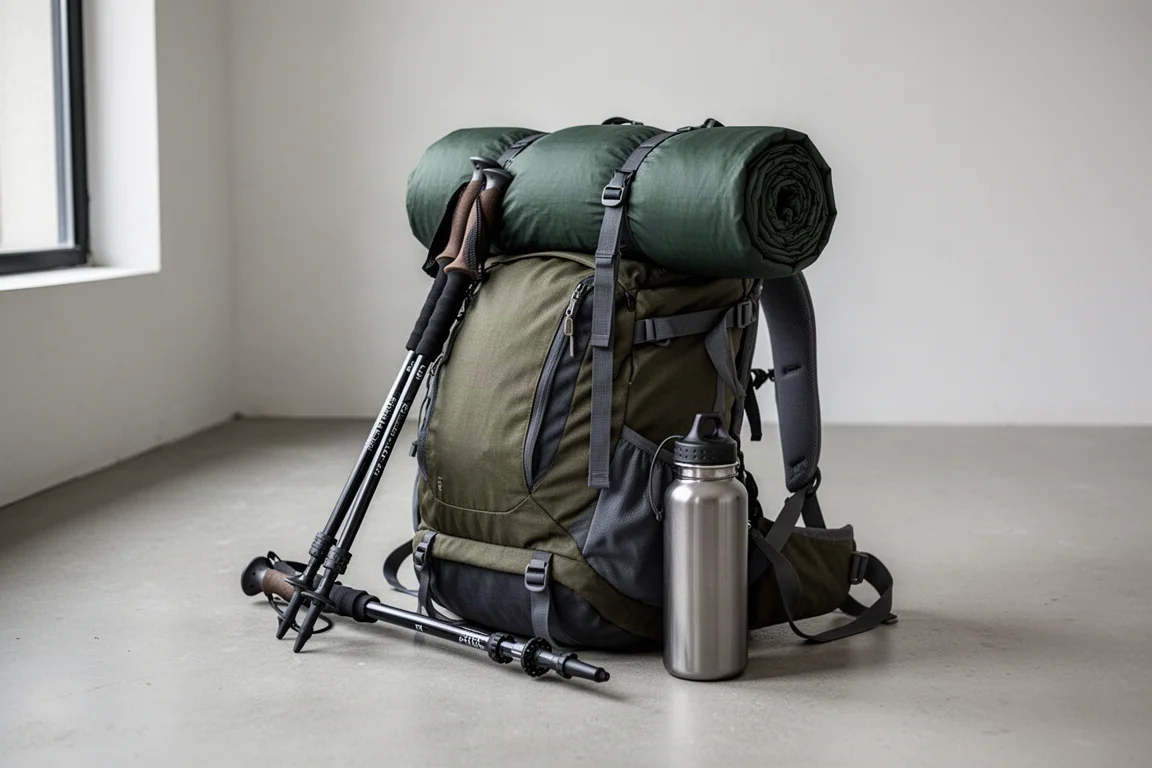
If you are two people camping from a car, on short walks or at a base camp, and you want space and two separate doors more than a low pack weight, this is a reasonable choice. If you are counting ounces for a long trek, or you camp in exposed, windy terrain where you want a full set of guy-out points straight out of the box, budget for extra stakes and weigh the alternatives first.
Conclusion
The Jack Wolfskin Gossamer two-person tent delivers the essentials well: a roomy interior, two doors, sound materials and factory seam sealing. Its compromises are weight, packed bulk and a stake count that falls just short of a full pitch. Buy it for the space and the two-door layout, and check the contents carefully when it arrives.
Product link
View more details for Jack Wolfskin Gossamer Two-Person Tent
This product is mentioned in the review. Check the specifications, options, and compatibility before buying.
View more details for Jack Wolfskin Gossamer Two-Person TentFurther reading
Related Reviews
Camping Tents
3F UL Gear Taiji Two-Person Tent Review: Field Waterproofing Results and Buying Advice
The Taiji pairs an attached fly with a removable inner, but sustained rain exposed untaped vent seams that need sealing before this shelter can be trusted.
Camping Tents
3FUL Gear Lanshan 2 Pro 4-Season Review: A Sub-$200 Single-Wall Trekking Pole Tent
An early look at the 3FUL Gear Lanshan 2 Pro 4-Season, covering its straightforward pitch, generous interior space, and the condensation and seam-sealing questions that come with any single-wall shelter.
Camping Tents
Alps Mountaineering Lynx 1-Person Tent Review: Big Value in a Small Budget Tent
A close look at the Alps Mountaineering Lynx 1-Person Tent, covering real interior dimensions, materials, setup time, ventilation limits, and who should buy it.