360 Cameras
Insta360 X5 vs DJI Osmo 360: Which 360 Camera Suits Your Ride?
A practical comparison of the Insta360 X5 and the DJI Osmo 360 for bike filming, covering lens replacement, sensor size, battery life, audio, and editing workflow.
Introduction
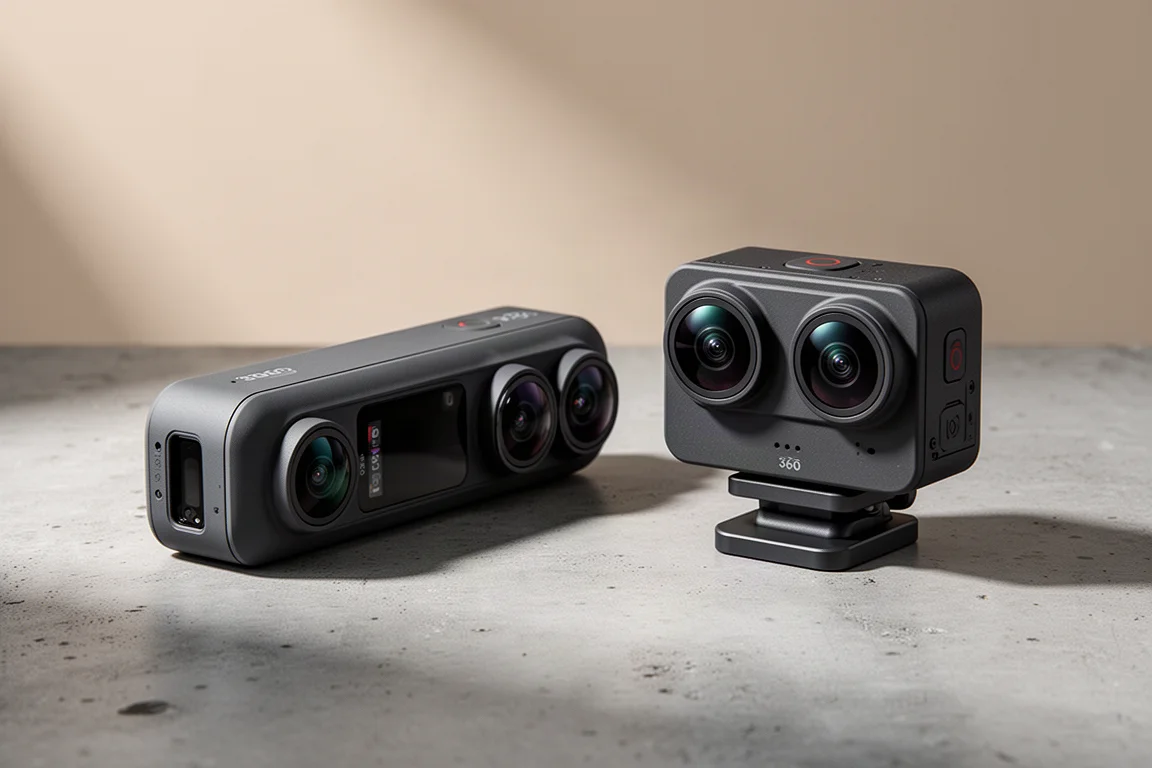
A 360 camera changes how a ride gets recorded. Instead of committing to a single framing at the moment you press record, you capture everything around the bike and choose the angles afterwards. Two current models sit at the centre of that conversation: the Insta360 X5 and the DJI Osmo 360.
Both are built for bike adventures, from road racing to bikepacking, and both record 8K footage that reframes cleanly into standard flat video. They also share more than they differ, which makes the remaining differences the ones that actually matter at purchase time.
This comparison focuses on exactly those differences: lens serviceability, sensor and frame-rate specifications, battery behaviour, mounting, audio, and the editing workflow that turns a ride into something worth publishing.
What Both Cameras Get Right
Start with the similarities, because they cover most of what a rider needs. Both cameras record in 8K, and exporting that footage down to 4K keeps detail high for social platforms and edited projects. Both can also step down to a lower resolution, around 5.7K on the X5 and 6K on the Osmo 360, which is the better choice in low light. Bright sunshine remains the ideal condition for 8K capture on either camera.
Stabilisation is excellent on both, and that matters more than any single specification. A rocky descent or a rough gravel surface stays smooth, and low-light footage remains usable rather than shaky.
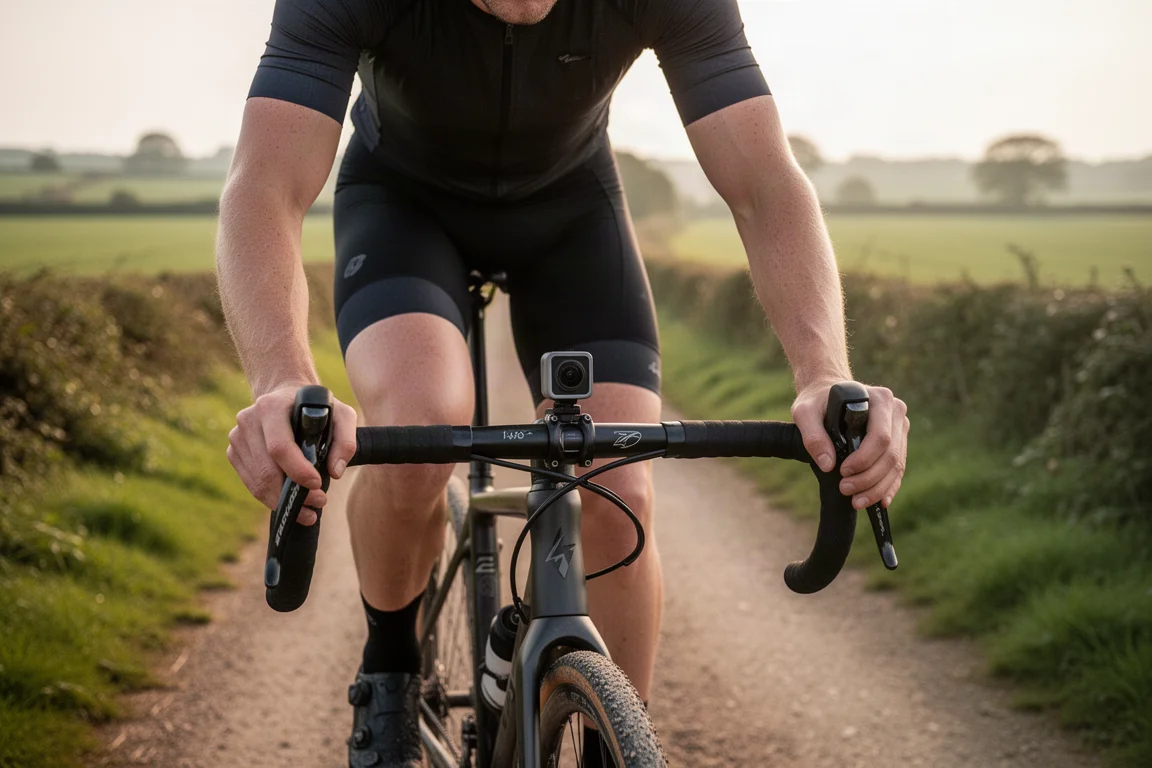
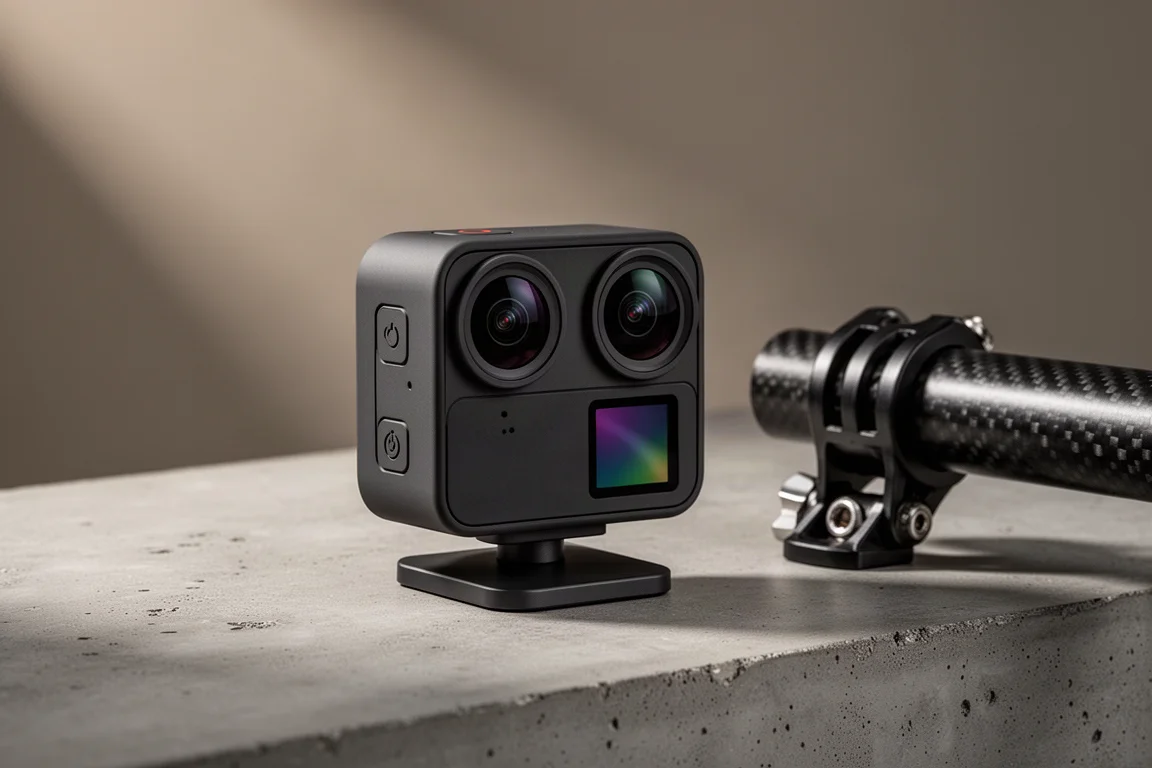
Mounting follows the same philosophy on both cameras. Each uses a magnetic quick-release mount that attaches to handlebars, chest harnesses, or helmets, and each includes a tripod mount as well. The systems are similar in use but not cross-compatible, and both hold securely enough to trust on a fast descent. Each camera also ships with a silicone cover for storage and transport, and both charge over USB-C with screens on either side for menu navigation and playback.
Insta360 X5: Replaceable Lenses and a Mature Editing Ecosystem
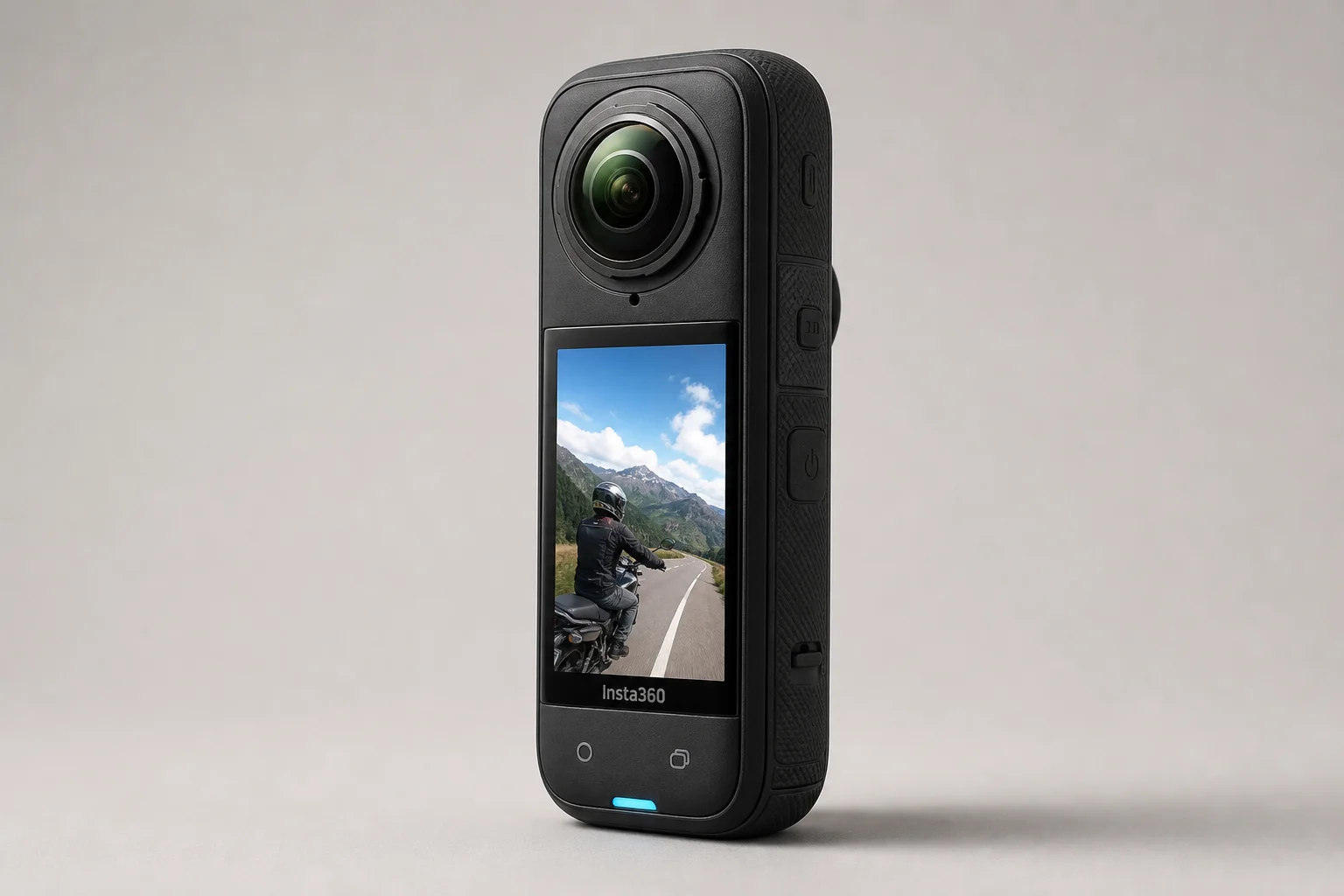
The X5 is the fifth generation of Insta360’s X series, and that maturity shows most clearly in two places: lens serviceability and software.
Lenses can be replaced at home with a small kit. If you scratch a lens, drop the camera, or crash on a rocky trail, you can swap the lens yourself rather than sending the camera away. Given how expensive these cameras are and how easily a lens gets damaged, that is a meaningful long-term advantage. The X5 also offers two lens guard options, a regular version and a premium version, both of which screw onto the front of the lens without affecting image quality.
Runtime is the second advantage. The X5 can run for up to 280 minutes in endurance mode when stepped down to 5.7K, and around 90 minutes at 8K, which covers a typical ride comfortably. Audio gets attention too: a wind guard sits in front of the microphone and onboard processing reduces wind noise, which makes a real difference at speed. Bluetooth microphone support is available on both cameras if you want the cleanest possible audio from a separate mic.
DJI Osmo 360: Compact Body and a Larger Sensor
The Osmo 360 is DJI’s first 360 camera, and its most obvious advantage is physical. It is noticeably smaller, shorter, and squarer than the X5, and roughly 20 grams lighter. In the hand the two feel about the same, but on a bike the smaller body sits lower profile and does not stand out as much.
Specification-wise, the Osmo 360 has the edge in a few areas. It shoots 8K at 50 frames per second where the X5 tops out at 8K 30 frames per second, although 8K 30 is a fair like-for-like comparison point. Its sensor is roughly 28 percent larger and square rather than rectangular, which means fewer wasted pixels. It also records in 10-bit colour, compared with 8-bit on the X5.
There is one clear trade-off. The Osmo 360’s lenses can be replaced, but only by sending the camera back to DJI. That is a slower and less convenient process than an at-home swap, and it is the single biggest practical argument in favour of the X5 for riders who spend time on rocky or wet terrain where a drop or a crash is realistic.
Battery design is a point in DJI’s favour. The Osmo 360 uses the same battery size as other DJI cameras such as the Action 5, so existing owners can share cells. The X5 uses a unique battery that is not compatible with other Insta360 cameras. On runtime, the Osmo 360 is rated at around 100 minutes at 8K and up to 190 minutes at the lower 6K setting, both shorter than the X5 figures.
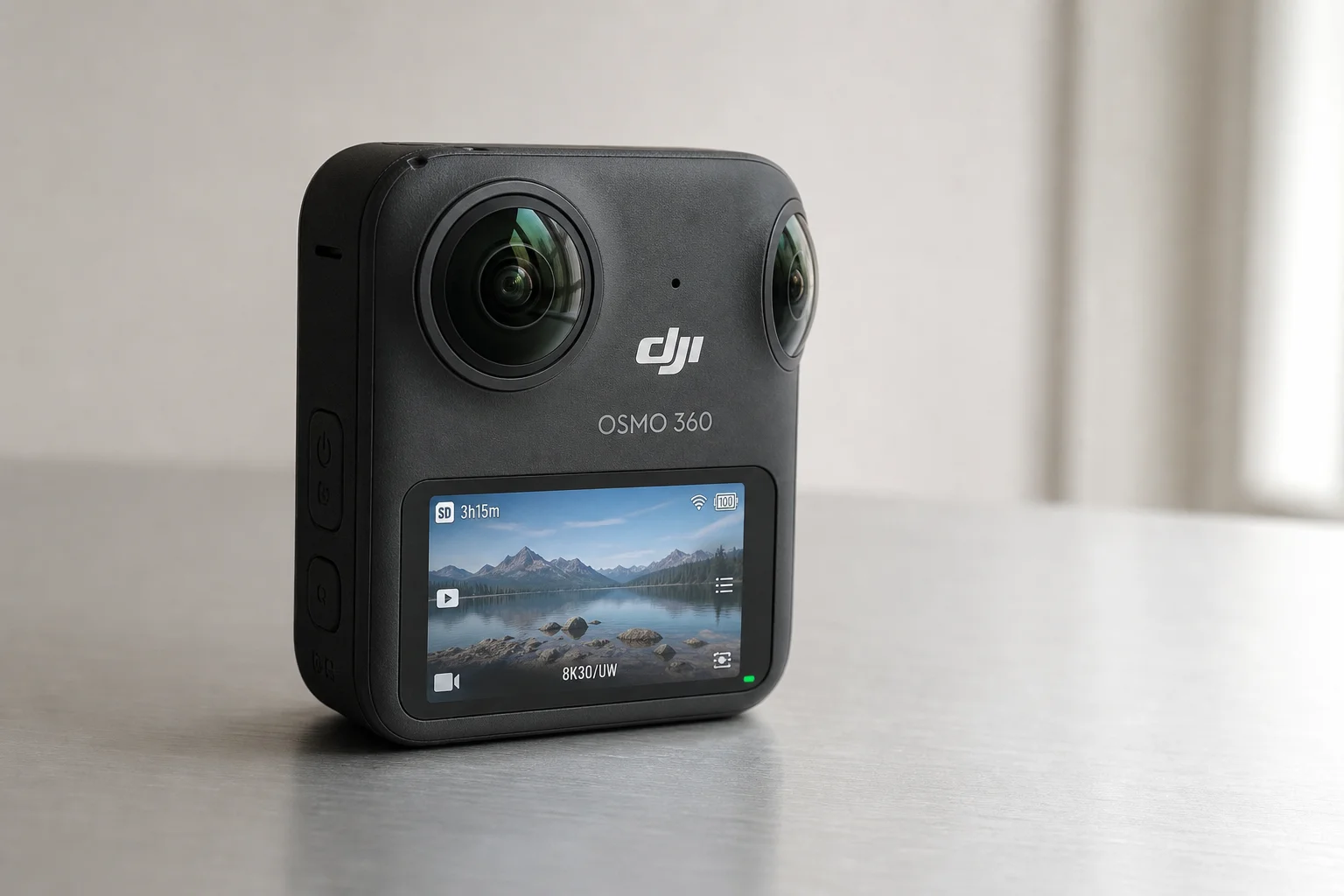
Image Quality, Frame Rates, and Low Light
Both cameras produce sharp, rich 8K footage, and the gap between them comes down to rendering choices rather than outright quality. Contrast, saturation, and dynamic range differ between the two, in much the same way that two flagship phones can render an identical scene differently. Neither is objectively better; it comes down to which look you prefer.
Frame rate is the more concrete difference. The Osmo 360 reaches 8K at 50 frames per second, useful if you want smoother motion or a little slow-motion flexibility, while the X5 caps 8K at 30 frames per second. The Osmo 360’s 10-bit colour and larger square sensor also give it more room to work with in difficult light.
Low light is where resolution choice matters most. Dropping to 5.7K on the X5 or 6K on the Osmo 360 improves results noticeably once the sun goes down, and stabilisation holds up well enough on both to keep night footage usable.
Battery Life, Audio, and Mounting
Battery strategy splits the two cameras. The X5 lasts longer in endurance mode, up to 280 minutes at 5.7K, and roughly 90 minutes at 8K. The Osmo 360 is rated at about 100 minutes at 8K and up to 190 minutes at 6K. Both offer an endurance mode at a lower resolution, which is the setting to choose for a long sportive or gran fondo where the camera needs to keep running all day.
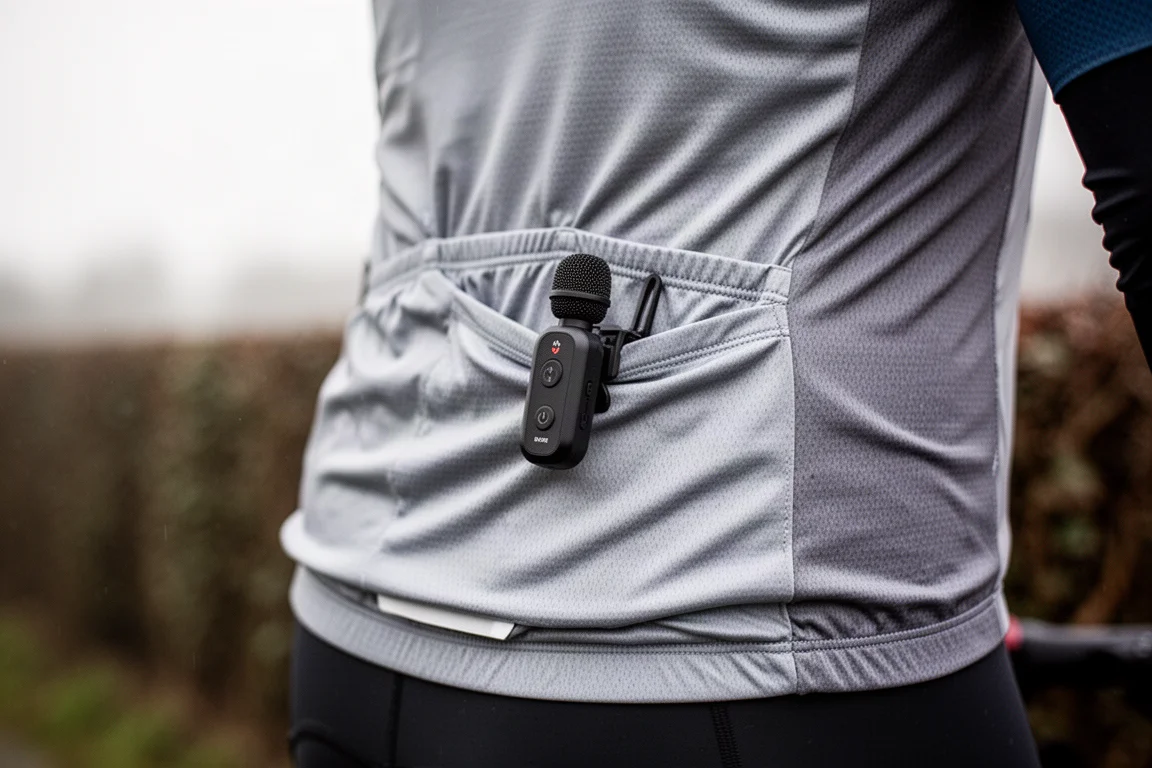
Audio is not the reason anyone buys a 360 camera, and both rely on built-in microphones plus Bluetooth support for an external mic. The X5 has the advantage here, thanks to the wind guard in front of its microphone and processing that cuts wind noise substantially, which keeps speech and ambient sound clear at riding speed.
Mounting is close to a tie. Both use magnetic quick-release mounts, both include a tripod mount, and both attach easily to handlebars, chest harnesses, or helmets. The two systems are not compatible with each other, and both hold firm at speed.
Editing Software and the Post-Ride Workflow
Editing is a bigger part of 360 shooting than it is with a standard action camera, because reframing happens after the ride rather than during it. Both cameras offer a smartphone app and a desktop app for Windows or macOS, and both allow reasonably straightforward editing.
Insta360 is clearly ahead in this area. The software is easier and more intuitive, offers more options, and supports both manual editing for experienced users and a fully automated path that assembles an edit, adds music, and adds subtitles. DJI’s software works but feels basic for a premium product, which is a notable gap given how central editing is to the whole process of getting a ride out to an audience.
Buying Advice: Which 360 Camera Fits Your Riding
The decision comes down to two fairly different priorities.
Choose the Insta360 X5 if you want user-replaceable lenses, longer endurance runtime, better wind-noise handling, and a substantially more capable editing ecosystem. Riders who spend time on rocky or wet trails, where a drop or a crash is realistic, get the most value from that at-home lens swap.
Choose the DJI Osmo 360 if you prefer a smaller, lower-profile body, want 8K at 50 frames per second, 10-bit colour, and a larger square sensor, or already own other DJI cameras and can share batteries. The trade-off is that lens replacement means sending the camera back to DJI, and the editing software is less developed.
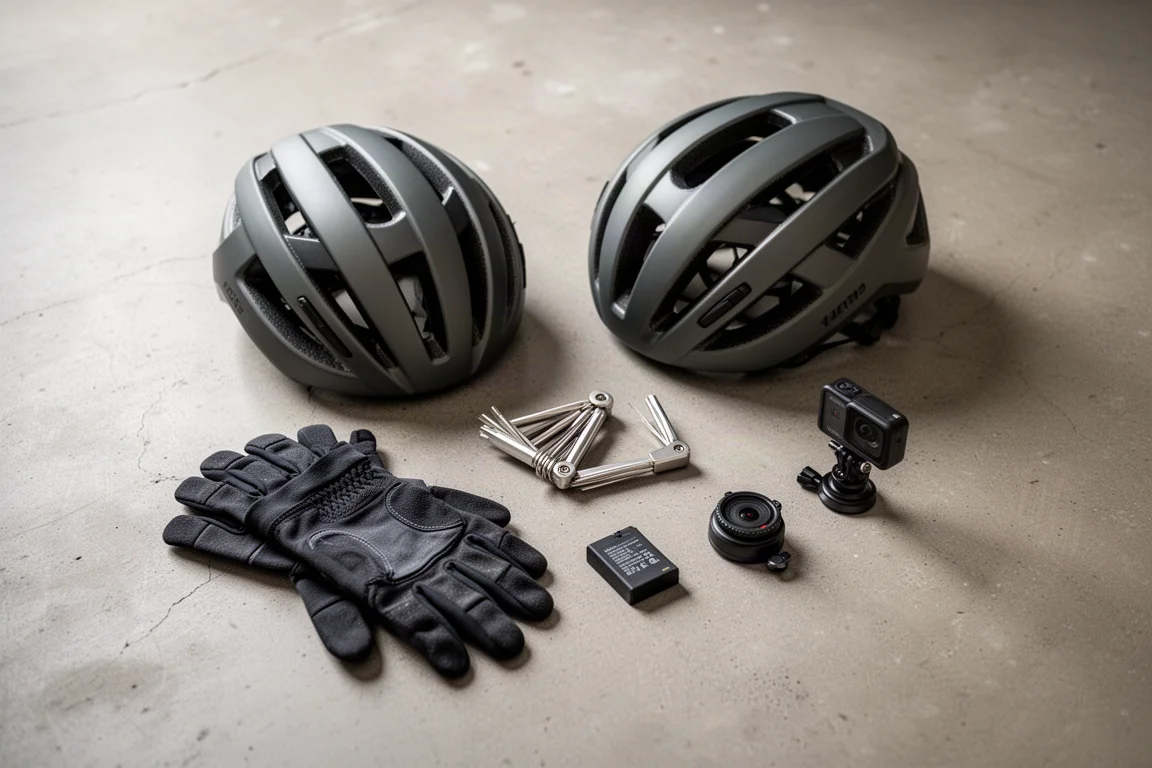
Both are expensive cameras rather than budget purchases, so it is worth matching the choice to how you actually ride. If durability logistics matter most, the X5 has the edge. If size and sensor specifications matter most, the Osmo 360 is the stronger pick.
Conclusion
Both cameras capture immersive, flexible footage of bike adventures, and both make reframing after a ride straightforward. The Insta360 X5 wins on lens serviceability, runtime, audio, and software maturity. The DJI Osmo 360 wins on size, frame rate, sensor size, and colour depth. Pick the trade-off that matches the riding you do.
Further reading
Related Reviews
360 Cameras
DJI Osmo 360 Review: A Compact 8K 360 Camera for Riders and Creators
A close look at the DJI Osmo 360, covering its 1-inch 360 sensor, native 8K capture, magnetic mounting, battery life, built-in storage, and single-lens mode.
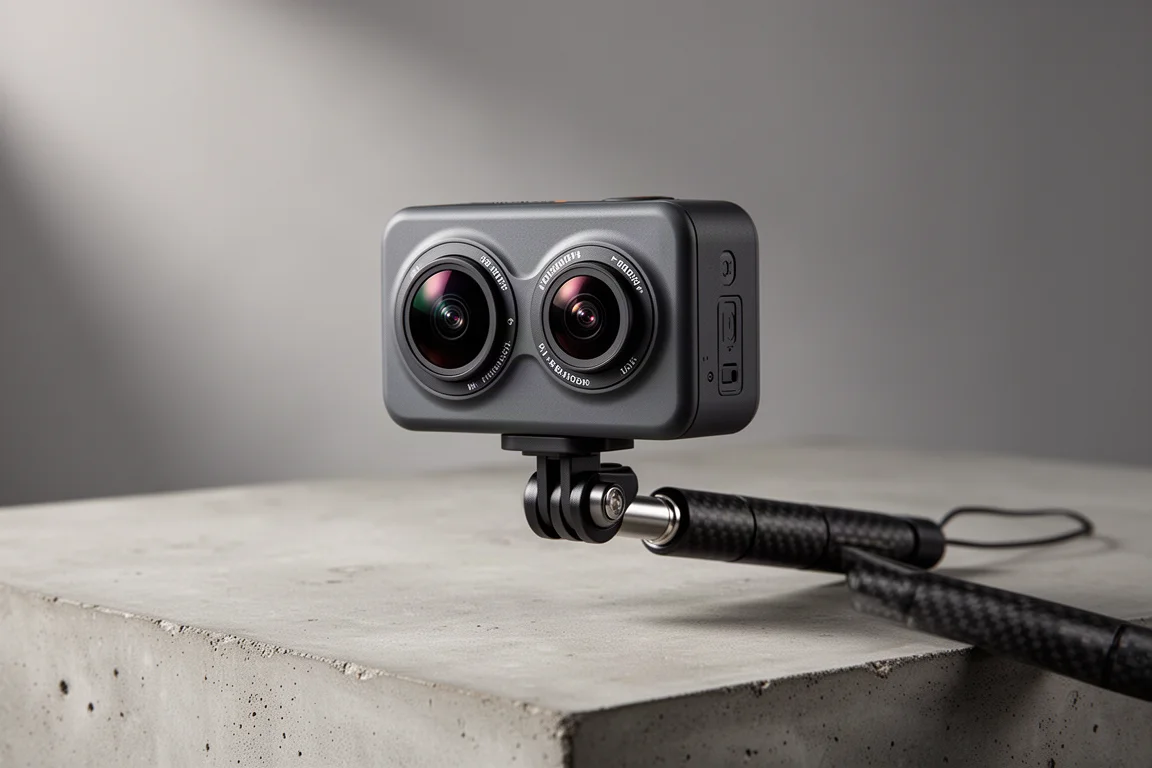
360 Cameras
Insta360 X4 Review: 8K 360 Capture Built for Bike Riders
A practical look at the Insta360 X4, covering 8K capture, reframing workflow, battery life, and the accessories that matter for riders.
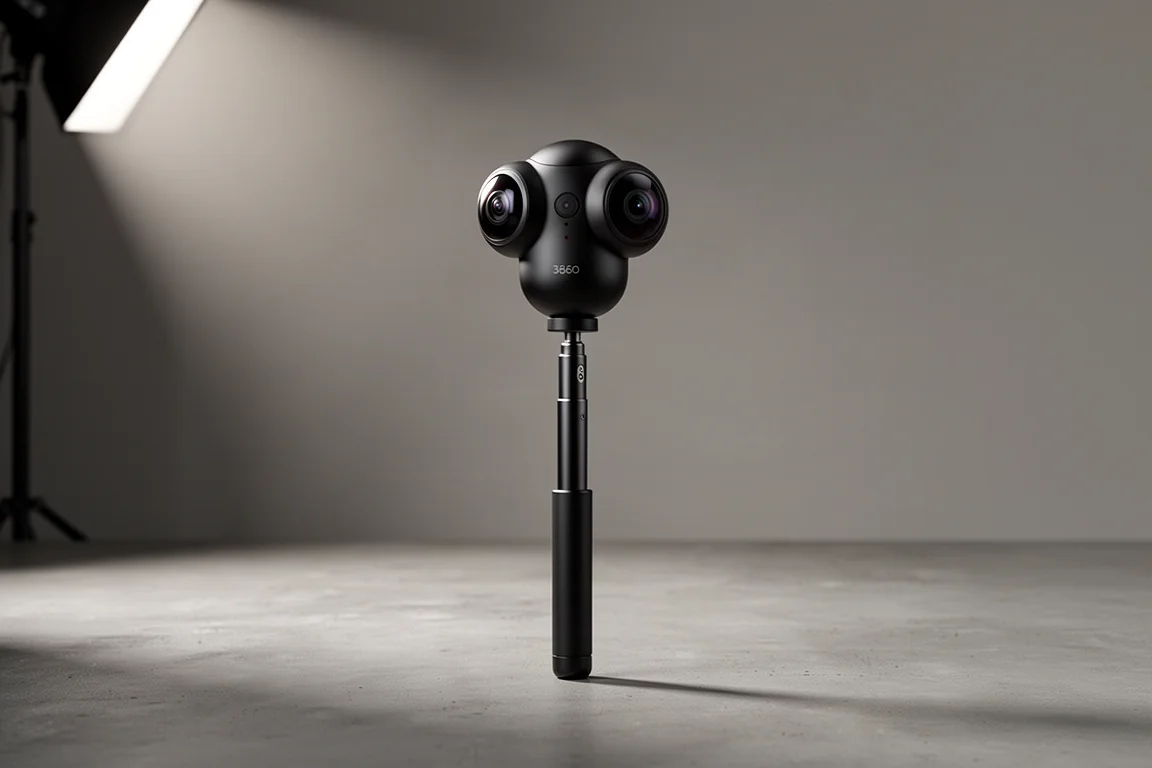
360 Cameras
Insta360 X5 Review: A 360 Camera for Hiking and Self-Filmed Footage
A practical look at the Insta360 X5 for hikers who film their own trips, including where it replaces a heavy mirrorless setup and where it does not.