Music Streamers
Innuos Stream 1 Review: A Modular Streaming Transport Built to Grow
The Innuos Stream 1 pairs a purist, display-free design with modular DAC, USB and storage options, and the optional LPS1 power supply lifts it further.
Introduction
Innuos began as a hobby project in 2009, when software engineers Nuno Vitorino and Amelia Santos started building devices to store and stream music. The brand launched officially in 2014 and gained real momentum in 2016 with the Zen Mk II series, and its core operations now sit in the Algarve in Portugal. More than a decade on, Innuos hardware is a common sight at UK hi-fi shows, and the company has collected a string of industry awards along the way.
The Stream 1 is its new entry-level streaming transport. It replaces the discontinued Zen Mk III music servers and the Pulse series streamers, and it arrives with a fresh modular architecture rather than an evolution of the old chassis. The basic unit costs £2,600, a step up from the £1,800 Zen Mini Mk III S, but it brings more than twice the processing power and considerably better power regulation.
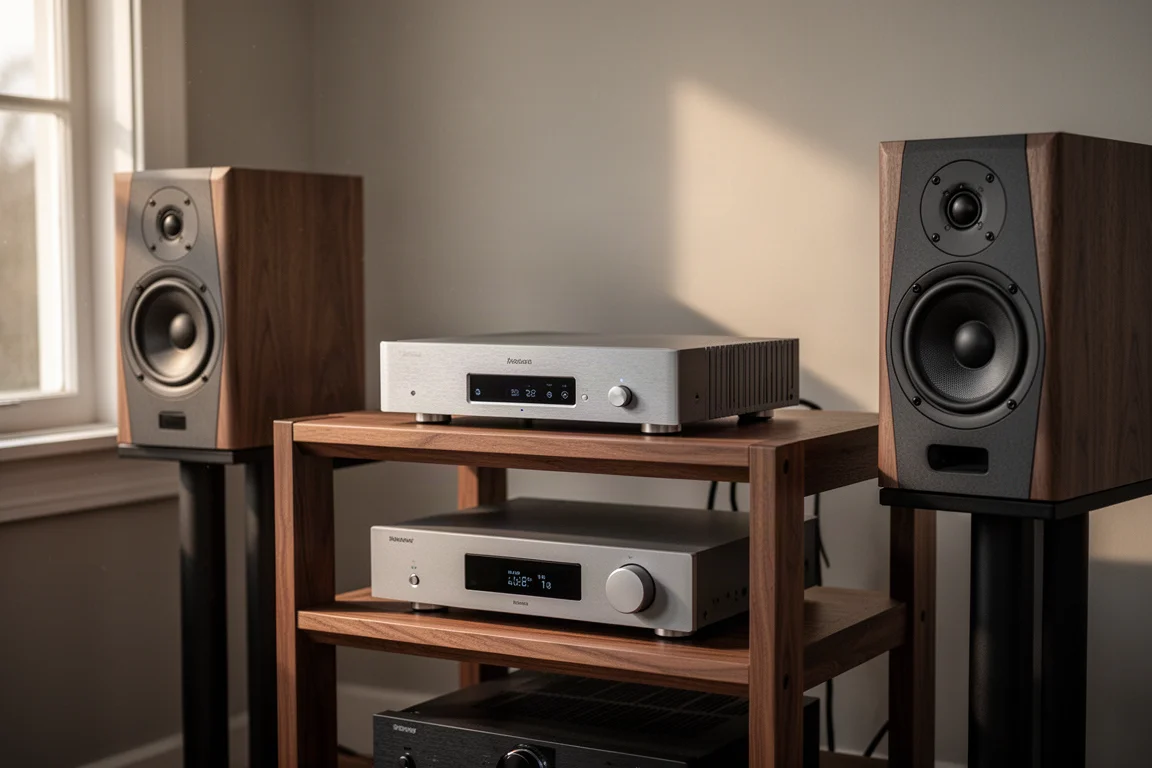
The idea behind the Stream 1 is that you buy only the parts you need. DAC boards, digital outputs, a USB upgrade and internal storage are all optional, and the LPS1 linear power supply can be added later to push performance further. That flexibility is the most interesting thing about the product, and it shapes almost everything below.
Who the Innuos Stream 1 Is For
The Stream 1 is a dedicated streaming transport, not an all-in-one player. It is aimed at listeners who already own a good external DAC and want the front end of their system to do one job well.
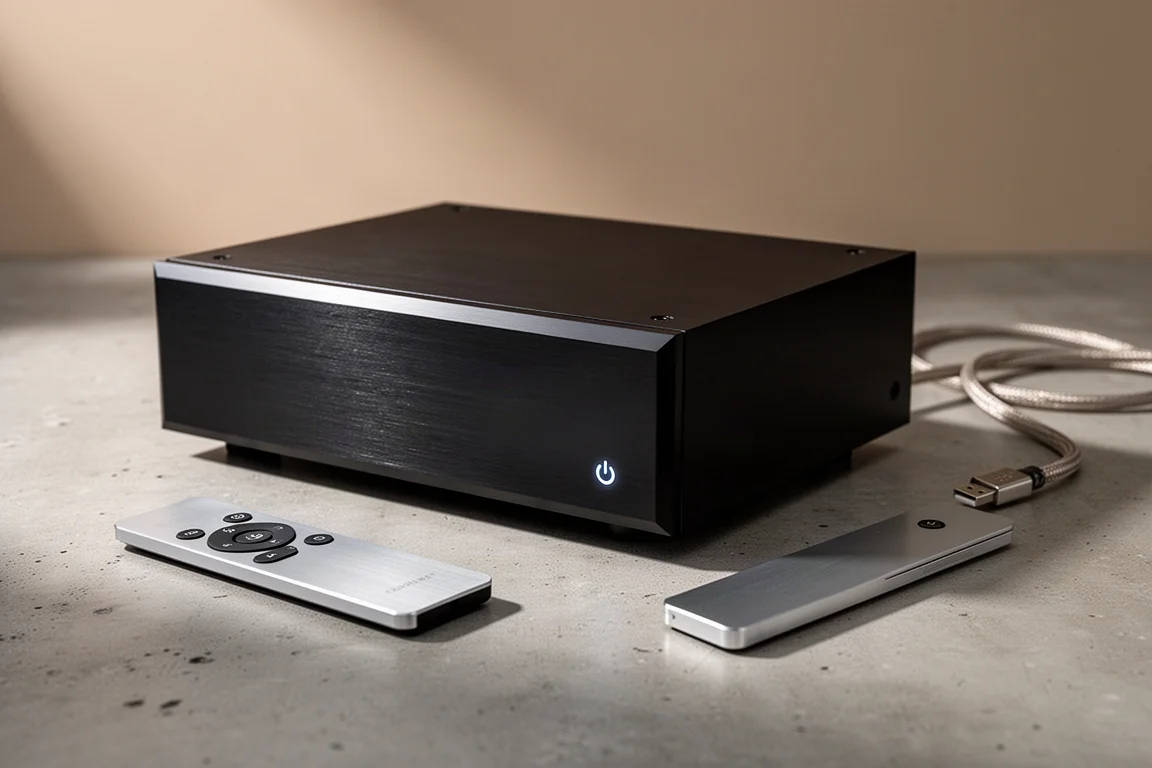
It also suits anyone who prefers a purist approach over a feature list. The front panel carries only a power icon and the brand name, and there is no screen. That restraint is deliberate: streamers without elaborate displays tend to sound better, because there is less EMI, RF and power supply stress to manage.
The Stream 1 additionally makes sense for listeners who want music server functionality in the same box. Internal M.2 NVMe storage can hold a library, and the extra USB-B ports accept external drives or an optical drive for CD ripping.
It is less obviously aimed at anyone who sees digital playback as a solved problem. If a compact streamer feeding an external DAC already satisfies you, the price here will be hard to justify. The gains show up in systems that are resolving enough to reveal them, which usually means amplification and speakers in the several-thousand-pound bracket.
Main Strengths
The Stream 1 gets the fundamentals right: a quiet, well-regulated platform, a genuinely good control app, and an upgrade path that lets the transport grow with the rest of the system.
Modular Design and Hardware Upgrades
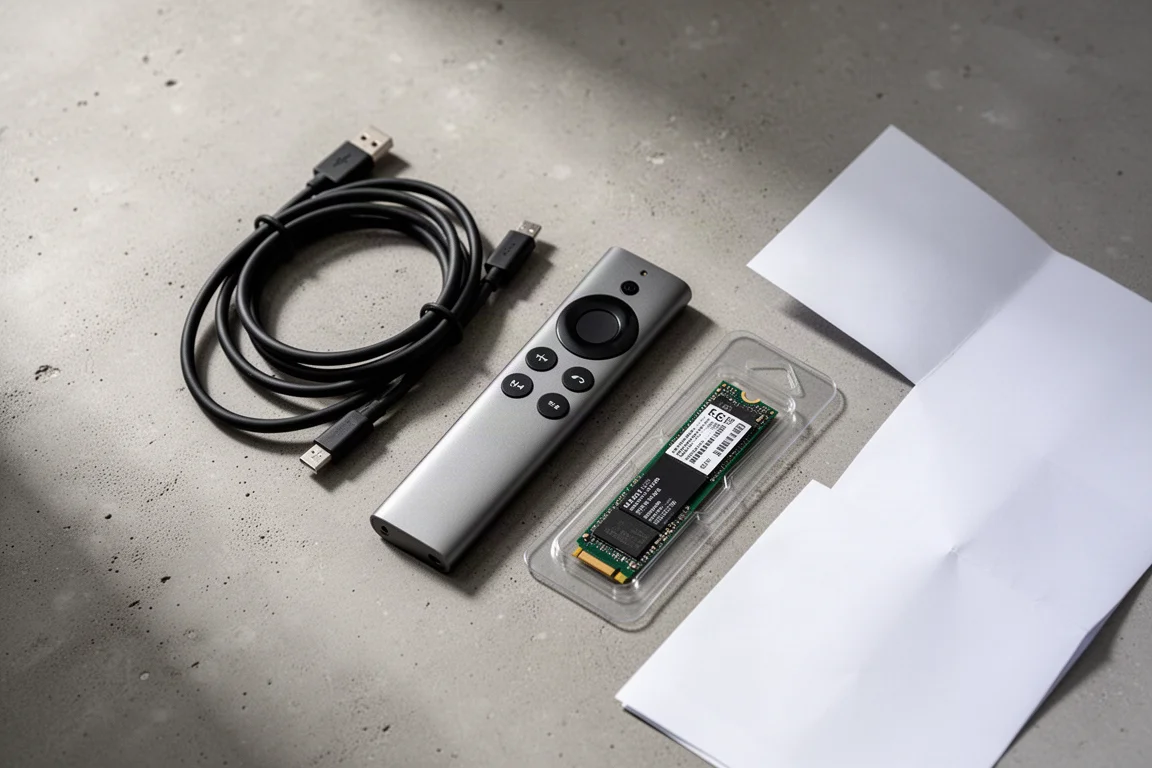
The chassis is half-rack width and looks purposeful rather than decorative. The front panel is a 10 mm (0.4 in) thick CNC machined aluminium slab, anodised in black with diamond cut facets, and illumination is limited to a power icon and the brand name. An aluminium remote control can be specified for an extra £145 for anyone who does not want to rely on a phone or tablet.
Connectivity covers the essentials and a little more. There is a high-speed USB-C port for partnering with an external DAC, a standard USB-B output, and two further USB-B ports for external hard drives or an optical drive for CD ripping. An RJ45 LAN port connects to the router, and a separate Ethernet output passes the network signal to another audio component.
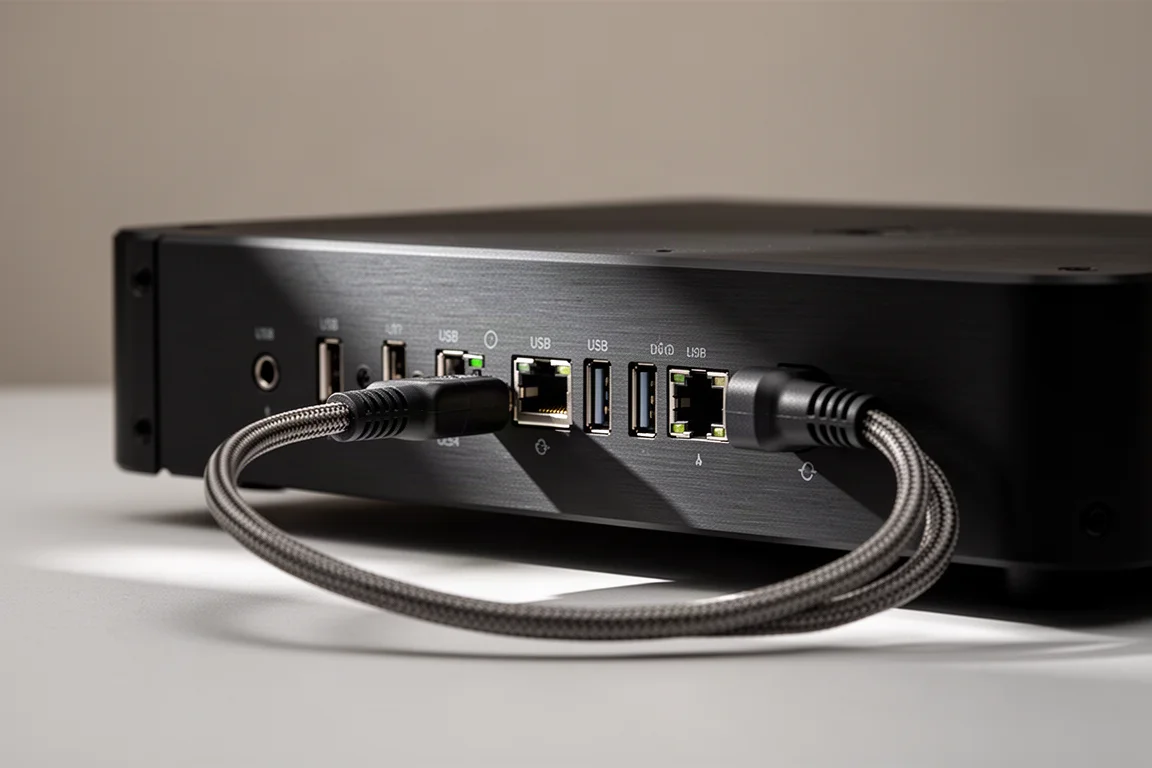
The optional boards are where the modular idea pays off. A performance DAC module based on the AKM Velvet Sound 4493 chip with temperature compensating crystal oscillators costs £1,150, while a more basic DAC module is available for £530. An SPDIF coaxial, optical and AES/EBU board costs £680, and the Phoenix USB board, which uses an oven-controlled crystal oscillator clock, is £1,300. Internal M.2 NVMe storage is also supported, with 2 TB or 4 TB drives pre-fitted for between £350 and £1,350 depending on capacity and retailer. Innuos favours Western Digital Red or Black drives for reliability, and confident users can fit their own and keep the difference.
Under the lid, the changes over the outgoing Zen Mini Mk III S are substantial. The PCB is more heavily customised, the 13th generation Intel quad-core processor improves processing speed by more than 200 percent, and the CX power regulation developed for the more expensive, now discontinued Pulsar has trickled down. Memory moves to 8 GB of DDR5 from DDR3, a real-time kernel lowers latency, and a medical-grade switch-mode power supply replaces the generic wall adapter of the previous model.
The LPS1 linear power supply is the most significant add-on. At £1,150 it uses a 150 VA toroidal transformer and premium Mundorf capacitors, and it can power two devices, with a second regulated DC output available for accessories such as an external DAC or a network switch.
The Sense App and Everyday Use
Control runs through the Innuos Sense app, and it is one of the strongest parts of the package. The interface proved stable over an extended period, with no dropouts and no frozen screens.
The layout is logical. Home, music, system and search sit along the bottom of the screen, the music tab handles libraries and streaming services, and the system tab covers hardware and administration. Moving between screens feels seamless, and the graphical design is easy on the eye.
Rivals often bring touchscreens, parametric EQ and room correction, and those features have real appeal. Innuos goes the other way, keeping the software focused on playback and library management. In practice the Sense app gives up nothing in day-to-day usability, and the trade keeps attention on sound quality rather than on menu options.
Sound Quality and System Matching
As a transport on its own, the Stream 1 is a subtle rather than dramatic step. Against the Lumin U2 Mini, which retails at £1,999, it sounds slightly more compact, while levels of resolution and tonality are close enough that separating the two reliably would need both units side by side. The Stream 1 costs around £600 more, and that premium is easier to justify through the app, the optional DAC and USB boards, and the internal storage than through the transport alone.
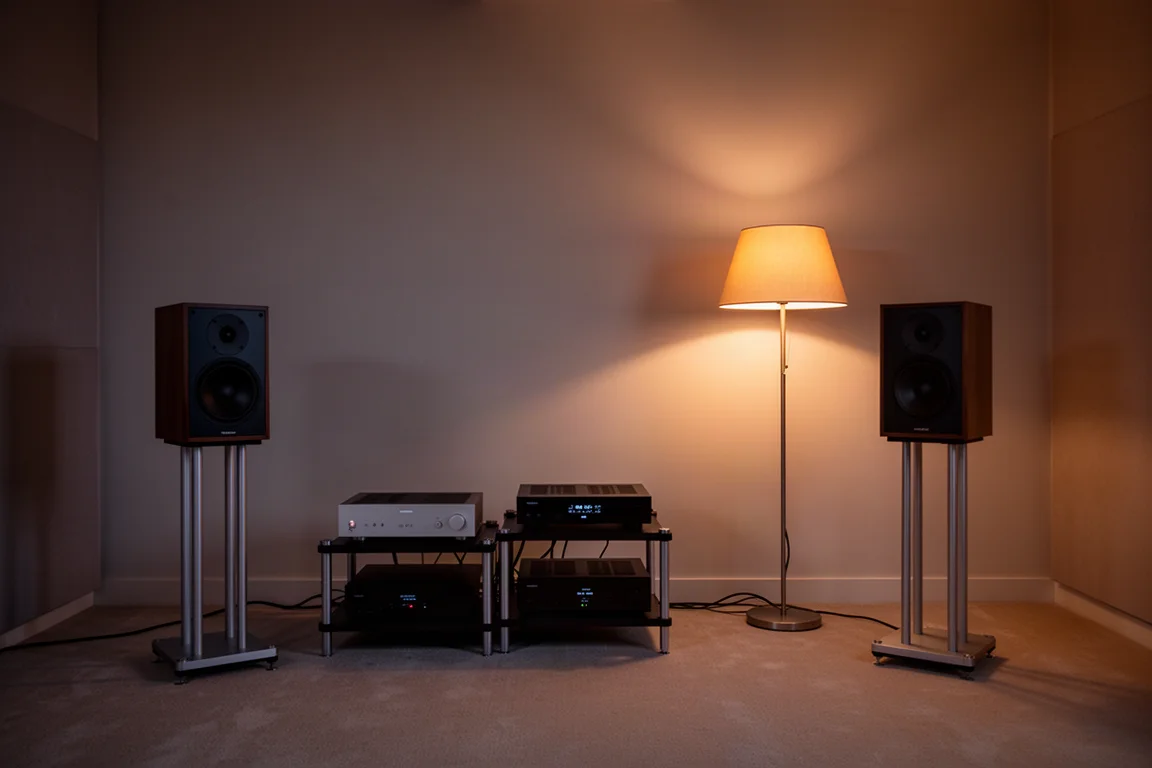
Add the LPS1 and the picture changes. The Stream 1 then matches the Lumin for scale while revealing considerably more micro detail and harmonic structure, and the soundstage becomes better focused and more precise. At that point it is on par with a Volumio Rivo Plus fed by a linear power supply.
The two approaches differ in character rather than in quality. The Innuos carries more weight in the bass and midrange, while the Volumio has tighter bass and crisper midrange transient attacks. The Volumio setup costs considerably less, but it does not offer the same modular flexibility, and its app has been temperamental, though recent firmware updates have improved reliability a great deal. Choosing between them comes down to budget and system matching.
Things to Consider Before Buying
The headline price is only part of the story. At £2,600 for the basic unit, the Stream 1 already sits above most streamers, and the options add up quickly: £1,150 for the LPS1, £1,150 for the performance DAC module, £1,300 for the Phoenix USB board, £680 for the SPDIF board, up to £1,350 for internal storage and £145 for the remote. A fully specified example is a serious investment.
The DAC modules deserve particular thought. The performance module sounds natural, organic and resolving, and it is clearly a well-executed design. Even so, an external DAC costing around £279 bettered it for the space around performers and for uncovering subtle detail. If you already own a capable external DAC, the module is unlikely to be the best use of your budget.
It is also worth being clear about what the Stream 1 does not do. There is no display, no parametric EQ and no room correction, and the feature list is deliberately short by modern standards. Buyers who want those tools will find more of them elsewhere.
Where the Stream 1 Sits in the Market
The entry point for streaming has never been stronger. The WiiM Ultra at £369 is fully featured, with parametric EQ, basic room correction, HDMI ARC, an analogue input and a moving magnet phono stage. The Bluesound Node Nano at £349 strips things back to the essentials and sounds cleaner and more neutral than the WiiM, and the Node Icon at £999 adds a little acoustic mass and opens the soundstage slightly for a much higher price.
Above that sits the Eversolo T8 at £1,299, which brings parametric EQ, room correction, a high-resolution touchscreen and a comprehensive connectivity suite, and represents a worthwhile upgrade over the Node Nano when the rest of the system can show it. The Lumin U2 Mini at £1,999 then marks the traditional price of a good dedicated transport.
For many listeners, the smarter move is to keep a compact streamer as a transport and invest in a good external DAC, because a significant step up at the front end generally means moving into dedicated transports. That is the territory the Stream 1 occupies, and it is worth entering only when the rest of the system is ready for it.
Buying Advice
Start with the basic Stream 1 if you already own a capable external DAC. The internal switch-mode supply is well implemented, the modular boards can be added later, and you avoid paying for features you will not use.
The LPS1 is the upgrade to plan for. It is the single change that moves the Stream 1 from a capable transport to one that competes with considerably more expensive references, and it makes the case for the platform as a whole.
Matching matters as much as the specification. The Innuos leans towards a fuller, weightier presentation, so it suits systems that are already lean or forward. Listeners who want tighter bass and crisper transients, and who are willing to accept a less polished app, will find the Volumio route cheaper.
Finally, be realistic about the system around it. A transport at this price reveals what it is fed, and the Stream 1 is most at home alongside amplification and speakers in the same bracket. Buyers running modest electronics will get more value from a cheaper streamer plus a good external DAC.
Conclusion
The Stream 1 is a clear break from the entry-level Innuos products that came before it. The internal architecture is substantially improved, the modular design means you pay only for what you need, and there are plenty of upgrade paths for the years ahead.
The price has risen to match, and £2,600 is not cheap when the competition offers more features for less. On sound quality, reliability and app usability taken together, though, the Stream 1 is the most complete package in its segment, and adding the LPS1 takes performance to another level entirely.
Product link
View more details for Innuos Stream 1
This product is mentioned in the review. Check the specifications, options, and compatibility before buying.
View more details for Innuos Stream 1Further reading
Related Reviews
Music Streamers
Arylic S10 Plus vs WiiM Mini: Two Affordable Music Streamers Compared
A practical comparison of the Arylic S10 Plus and the WiiM Mini, covering connections, apps, tone controls, and how each internal DAC actually sounds.
Music Streamers
Auralic Aries G1.1 Review: A Streaming Transport That Lifts a Resolving System
A close look at the Auralic Aries G1.1 streaming transport, covering its twin-transformer power supply, Tesla G2 processing, Lightning DS app and the systems where it genuinely pays off.
Music Streamers
Bluesound Nano Review: A Compact Streamer That Keeps Things Simple
The Bluesound Nano is a stripped-down network streamer at $299, with a solid chassis, quick setup, and a clean, punchy sound. Here is what to know before buying.